



hi
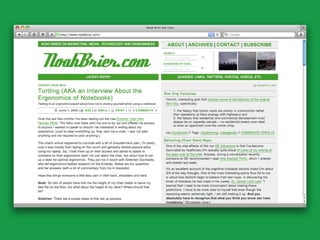
hi, i’m noah
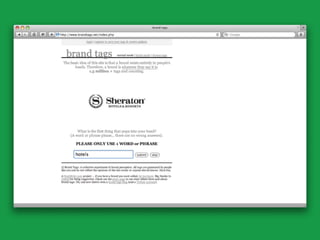
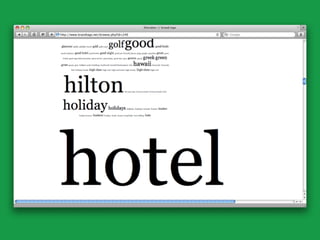
Brand Tags:
The basic idea of this
site is that a brand
exists entirely in
people's heads.
Therefore, a brand is
whatever they say it is.
1.9 million tags
Since May, 2008
What is the future
of creative
development in
media?
Changing rules behind the creation of content and the
new roles brands and agencies now play.
First let’s agree on
a few things.
Everything is
N   media.
    At this point most people have the ability to create
    content, whether that means taking a picture with their
    phone and posting it to the web, publicly saving a link
    or writing a blog read by millions, individuals are
    content creators and media owners.
The medium is the
O   message.
    "The 'message' of any medium or technology is the
    change of scale or pace or pattern that it introduces
    into human affairs."
Content was
    never that
P   important.
    Sure on a micro level it can matter, but the types of
    changes we're seeing are macro, not micro, and
    focusing on content can cause you to lose the forest
    for the trees. (McLuhan once wrote that the "'content'
    of a medium is like the juicy piece of meat carried by
    the burglar to distract the watchdog of the mind.")
The internet isn’t
Q   killing anything.
    It’s easy to say it is, but when you really dig in, it’s just
    not true.
Right, so how is
the creation of
content
changing?
1. Creation
2. Distribution
3. Consumption
Creation
ā€œThe opportunities
for media creation
have been rising
for decades,ā€
Danah Boyd recently wrote.
N   O

P   Q
The majority of
the content being
created is
personal.
The stuff that sat on VHS cassettes and scrapbooks in
years past: Media that wasn’t easily sharable.
The majority of
the content on
the web was
never created to
be monetized.
What’s particularly interesting about this explosion in
content creation is the different players. Whereas
worlds and business models used to be segmented,
they all now sit in the same sea of content, competing
with one another.
Everyone is
   N     playing the same
ibpplk


         game ... by
         different rules.
In the old days,
media companies
fought media
companies.
They were always willing to take down a competitor,
but never at the expense of the industry.
Today, media
companies fight
brands who fight
consumers.
They are all locked up in the a battle for the same
eyeballs.
It’s always
dangerous to fight
the guy with
nothing to lose.
Brands make money differently than media companies
and then consumers generally don’t care about making
money at all off their content. Things can get messy.
Take brands for
instance
Distribution
In the past
distribution was
one of the most
valuable assets.
Even above the costs of creating content, distribution
kept the regular Joe from getting his word out there.
Today everyone
has distribution
available to them.
Sites like YouTube, Flickr and Blogger turn out to be
pretty powerful platforms.
But the most
powerful
distribution
channel is people.
Web users can spread content at incredible speed.
People are as
             obsessed with the
         O   idea of spreading
ibpplk


             an idea as they
             are with the idea
             they're spreading.
For the first time
the consumers of
the news are also
its creators.
That unprecedented look has provided them with a
newfound fascination with how news moves.
The real content
of any web story
is how the story
spread.
"As more and more Americans become aware of the
patterns and forces that shape culture, they begin to
develop their own hypotheses about what will spread
and what won't. Online with minimal cost or risk, they
can test these theories, tweaking different versions of
their would-be viral projects and monitoring the results,
which in turn feed back into how future projects are
made. In viral culture, we are all driven by the ratings,
the numbers, the Internet equivalent of the box-office
gross." [Bill Wasik, And Then There's This: How Stories
Live and Die in Viral Culture]
ā€œIn a networked
culture, there is
also power in
being the person
spreading the
content.ā€
Danah Boyd. The spreader is a creator, a medium in the
vast sea of web content.
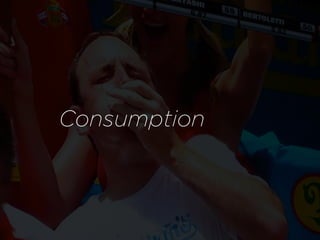
Consumption
What happens in
a world where
there are more
creators than
consumers?
20 hours of video
are uploaded to
YouTube every
minute.
That means every
hour, enough
video is uploaded
to YouTube for
you to watch for
50 days.
That’s 10,512,000
hours of video a
year
Or 1200 years of
content uploaded
in just 12 months.
(And that's only if we continue at our current pace.)
There is more
than enough
content out there
for people to only
watch unique
YouTube videos
for the rest of
their lives.
Think about that for a second.
Quality is in the
         P
ibpplk


             eyes of the
             beholder
Quality matters to
you, not
consumers.
It’s something the industry tells itself to feel better
about what we do.
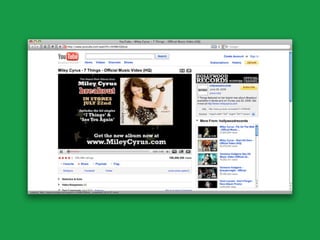
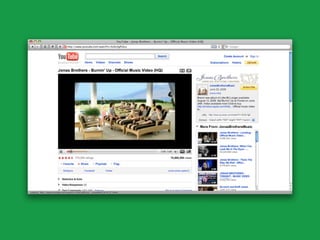
What is the most
popular video in
YouTube history?
106 million views
75 million views
138 million views
So what does it all
mean?
Try things and
iterate.
Face it, you’re not as good at predicting success as you
think you are. It is well-established that things become
popular mostly randomly. Sure you can spend against
it, but even that isn’t a guarantee.
Stay out of the
middle.
This is where content producers are really being
squeezed. As The Economist put it, ā€œAs sales become
ever more concentrated, it is becoming both more
urgent and harder to establish a foothold near the top
of the market. A book or film that fails to attract a mass
audience tumbles quickly into the depressed middle.ā€
Build on prior
success.
Too many brands rebuild their audience for every
campaign, spending the same money to reach the
same people over and over again. Even if you’re not
sure what to do with it yet, you’ve got to recognize the
value of building an audience.
Stop focusing on
the content.
If I am to leave with one thing I want to leave with
McLuhan. "The 'message' of any medium or technology
is the change of scale or pace or pattern that it
introduces into human affairs." If you want to better
understand how things are changing, dig in to the
medium, not the content.
Awesome. Thanks.
Noah Brier
nb@noahbrier.com
http://www.noahbrier.com

Everything is Media

  • 1.
  • 2.
  • 5.
    Brand Tags: The basicidea of this site is that a brand exists entirely in people's heads. Therefore, a brand is whatever they say it is.
  • 8.
  • 10.
    What is thefuture of creative development in media? Changing rules behind the creation of content and the new roles brands and agencies now play.
  • 11.
    First let’s agreeon a few things.
  • 12.
    Everything is N media. At this point most people have the ability to create content, whether that means taking a picture with their phone and posting it to the web, publicly saving a link or writing a blog read by millions, individuals are content creators and media owners.
  • 13.
    The medium isthe O message. "The 'message' of any medium or technology is the change of scale or pace or pattern that it introduces into human affairs."
  • 14.
    Content was never that P important. Sure on a micro level it can matter, but the types of changes we're seeing are macro, not micro, and focusing on content can cause you to lose the forest for the trees. (McLuhan once wrote that the "'content' of a medium is like the juicy piece of meat carried by the burglar to distract the watchdog of the mind.")
  • 15.
    The internet isn’t Q killing anything. It’s easy to say it is, but when you really dig in, it’s just not true.
  • 16.
    Right, so howis the creation of content changing? 1. Creation 2. Distribution 3. Consumption
  • 17.
  • 18.
    ā€œThe opportunities for mediacreation have been rising for decades,ā€ Danah Boyd recently wrote.
  • 19.
    N O P Q
  • 20.
    The majority of thecontent being created is personal. The stuff that sat on VHS cassettes and scrapbooks in years past: Media that wasn’t easily sharable.
  • 21.
    The majority of thecontent on the web was never created to be monetized. What’s particularly interesting about this explosion in content creation is the different players. Whereas worlds and business models used to be segmented, they all now sit in the same sea of content, competing with one another.
  • 22.
    Everyone is N playing the same ibpplk game ... by different rules.
  • 23.
    In the olddays, media companies fought media companies. They were always willing to take down a competitor, but never at the expense of the industry.
  • 24.
    Today, media companies fight brandswho fight consumers. They are all locked up in the a battle for the same eyeballs.
  • 25.
    It’s always dangerous tofight the guy with nothing to lose. Brands make money differently than media companies and then consumers generally don’t care about making money at all off their content. Things can get messy.
  • 26.
  • 32.
  • 33.
    In the past distributionwas one of the most valuable assets. Even above the costs of creating content, distribution kept the regular Joe from getting his word out there.
  • 34.
    Today everyone has distribution availableto them. Sites like YouTube, Flickr and Blogger turn out to be pretty powerful platforms.
  • 35.
    But the most powerful distribution channelis people. Web users can spread content at incredible speed.
  • 36.
    People are as obsessed with the O idea of spreading ibpplk an idea as they are with the idea they're spreading.
  • 37.
    For the firsttime the consumers of the news are also its creators. That unprecedented look has provided them with a newfound fascination with how news moves.
  • 38.
    The real content ofany web story is how the story spread. "As more and more Americans become aware of the patterns and forces that shape culture, they begin to develop their own hypotheses about what will spread and what won't. Online with minimal cost or risk, they can test these theories, tweaking different versions of their would-be viral projects and monitoring the results, which in turn feed back into how future projects are made. In viral culture, we are all driven by the ratings, the numbers, the Internet equivalent of the box-office gross." [Bill Wasik, And Then There's This: How Stories Live and Die in Viral Culture]
  • 39.
    ā€œIn a networked culture,there is also power in being the person spreading the content.ā€ Danah Boyd. The spreader is a creator, a medium in the vast sea of web content.
  • 41.
  • 42.
    What happens in aworld where there are more creators than consumers?
  • 43.
    20 hours ofvideo are uploaded to YouTube every minute.
  • 44.
    That means every hour,enough video is uploaded to YouTube for you to watch for 50 days.
  • 45.
  • 46.
    Or 1200 yearsof content uploaded in just 12 months. (And that's only if we continue at our current pace.)
  • 47.
    There is more thanenough content out there for people to only watch unique YouTube videos for the rest of their lives. Think about that for a second.
  • 48.
    Quality is inthe P ibpplk eyes of the beholder
  • 49.
    Quality matters to you,not consumers. It’s something the industry tells itself to feel better about what we do.
  • 51.
    What is themost popular video in YouTube history?
  • 53.
  • 55.
  • 57.
  • 58.
    So what doesit all mean?
  • 59.
    Try things and iterate. Faceit, you’re not as good at predicting success as you think you are. It is well-established that things become popular mostly randomly. Sure you can spend against it, but even that isn’t a guarantee.
  • 60.
    Stay out ofthe middle. This is where content producers are really being squeezed. As The Economist put it, ā€œAs sales become ever more concentrated, it is becoming both more urgent and harder to establish a foothold near the top of the market. A book or film that fails to attract a mass audience tumbles quickly into the depressed middle.ā€
  • 61.
    Build on prior success. Toomany brands rebuild their audience for every campaign, spending the same money to reach the same people over and over again. Even if you’re not sure what to do with it yet, you’ve got to recognize the value of building an audience.
  • 62.
    Stop focusing on thecontent. If I am to leave with one thing I want to leave with McLuhan. "The 'message' of any medium or technology is the change of scale or pace or pattern that it introduces into human affairs." If you want to better understand how things are changing, dig in to the medium, not the content.
  • 63.