EVALUATION / PERFORMANCE
MEASUREMENT
AND
ASSESSMENT
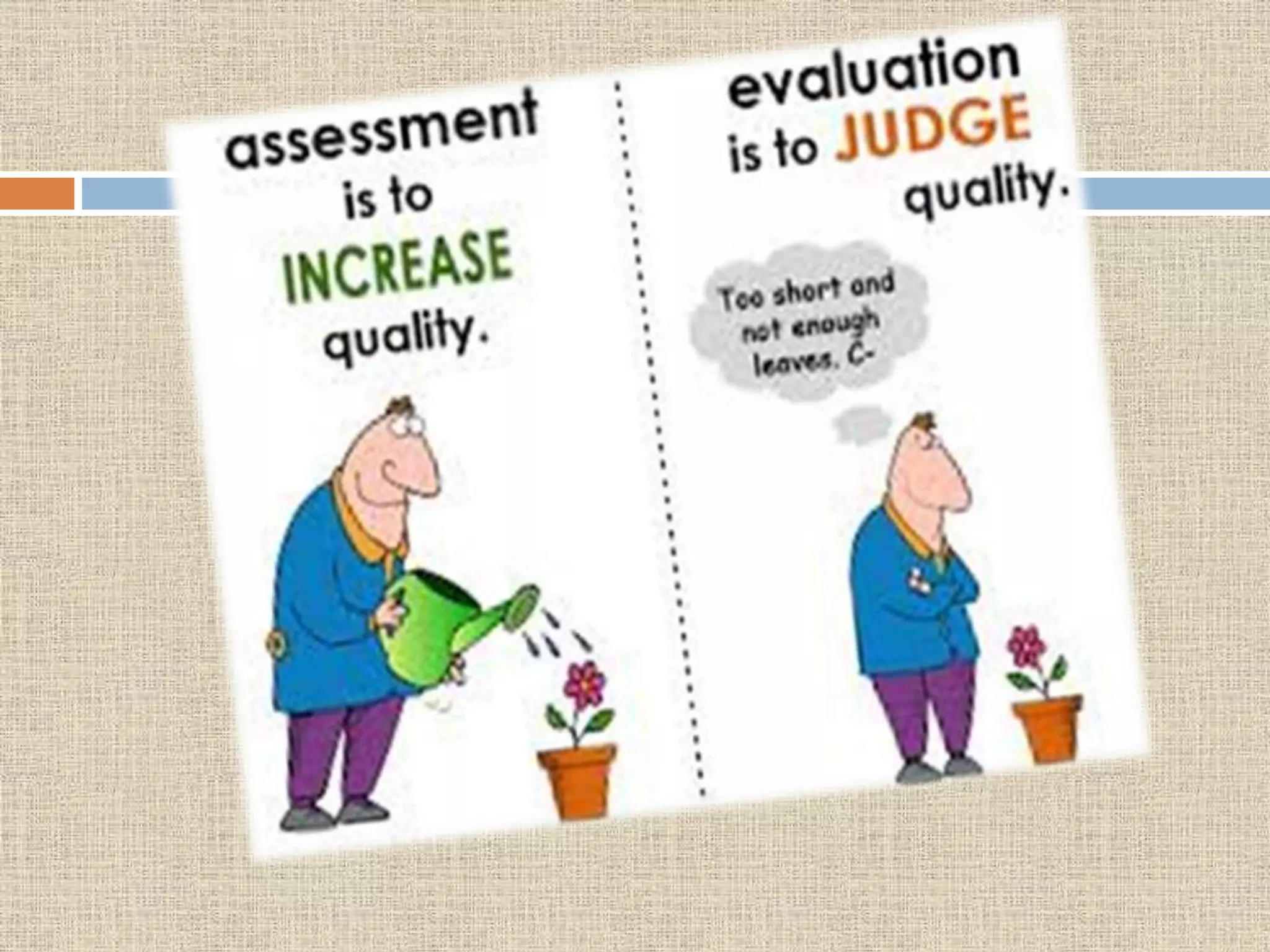
Assessment
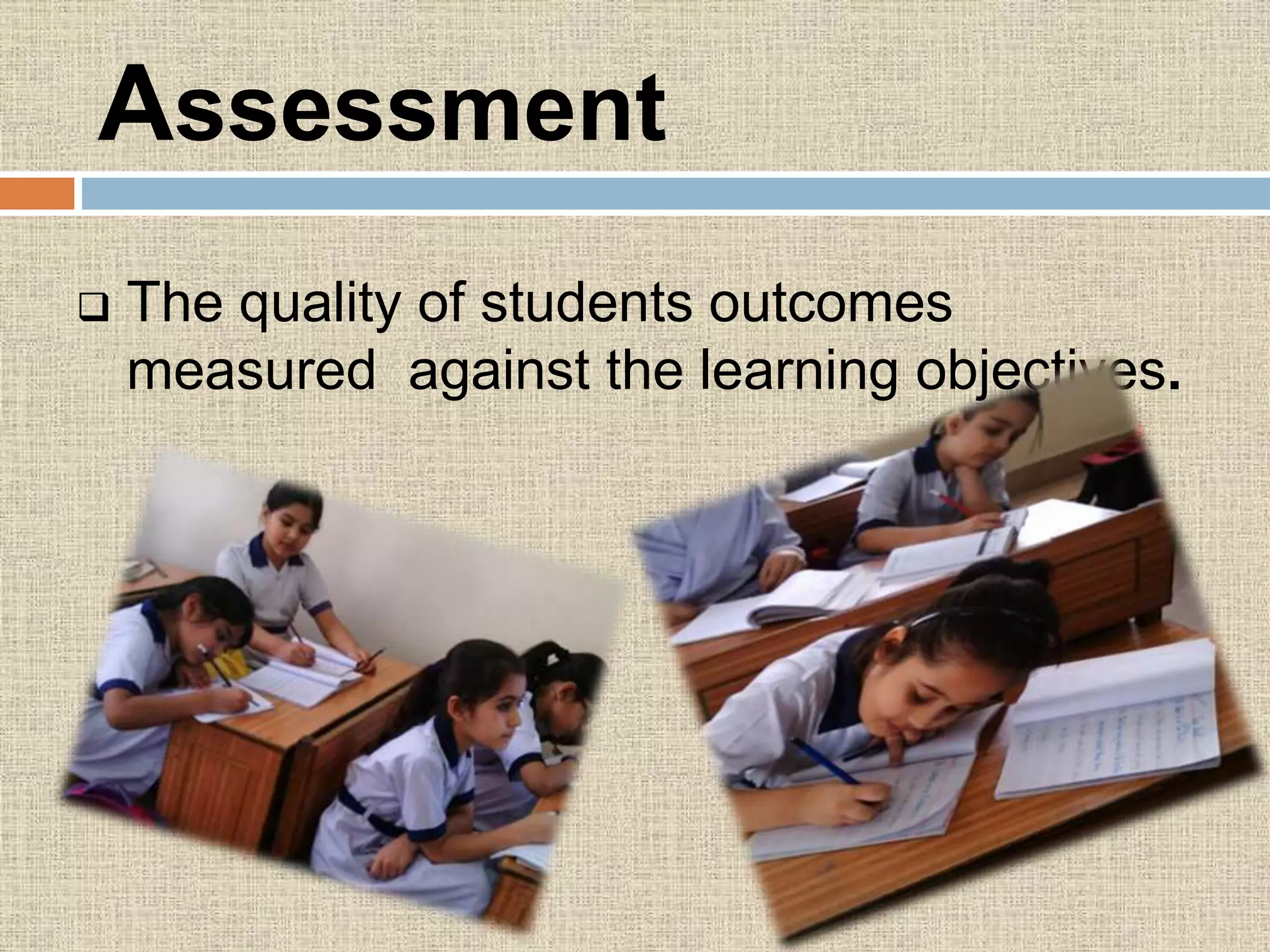
 The quality of students outcomes
measured against the learning objectives.
Evaluation
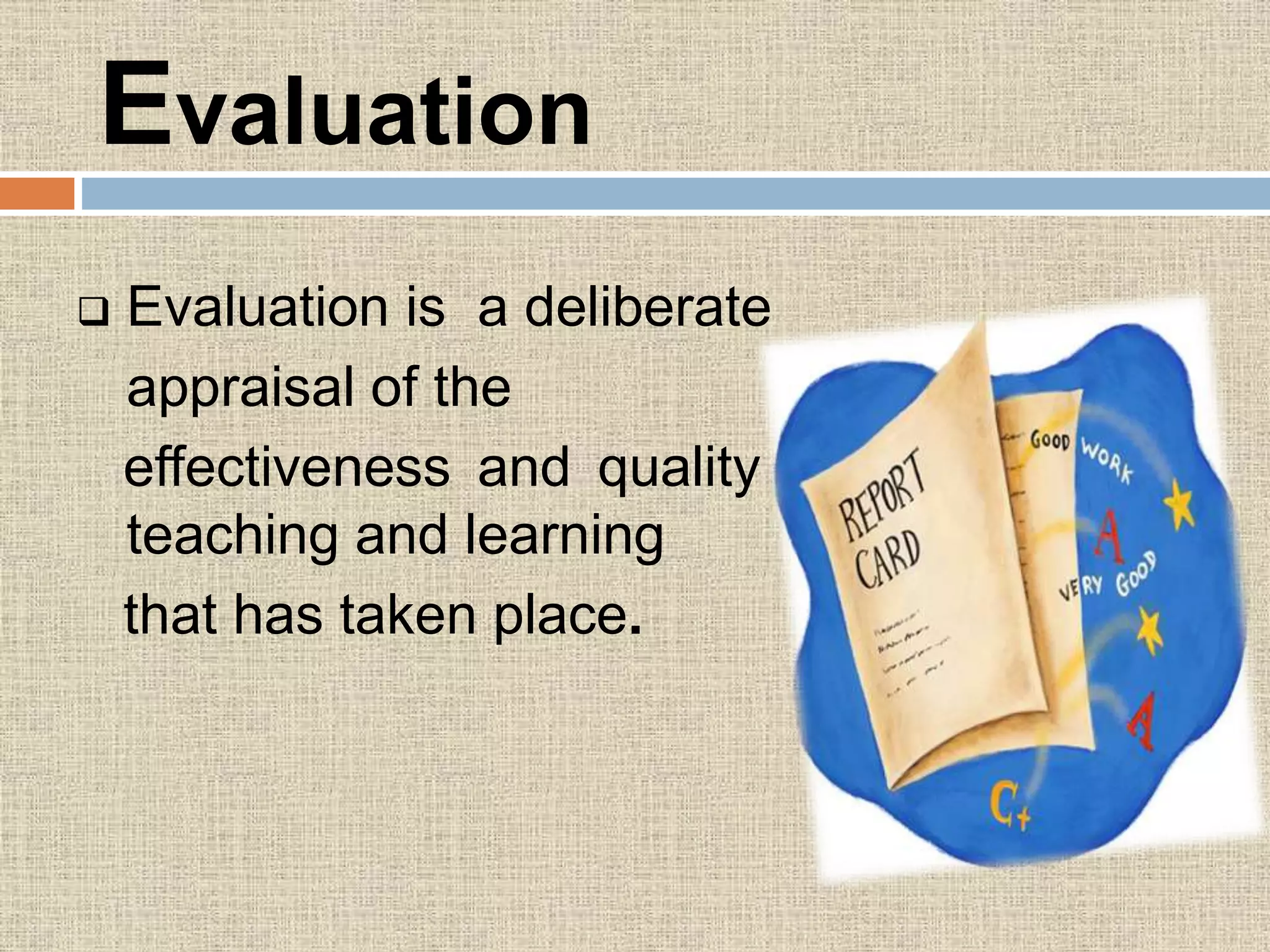
 Evaluation is a deliberate
appraisal of the
effectiveness and quality of
teaching and learning
that has taken place.
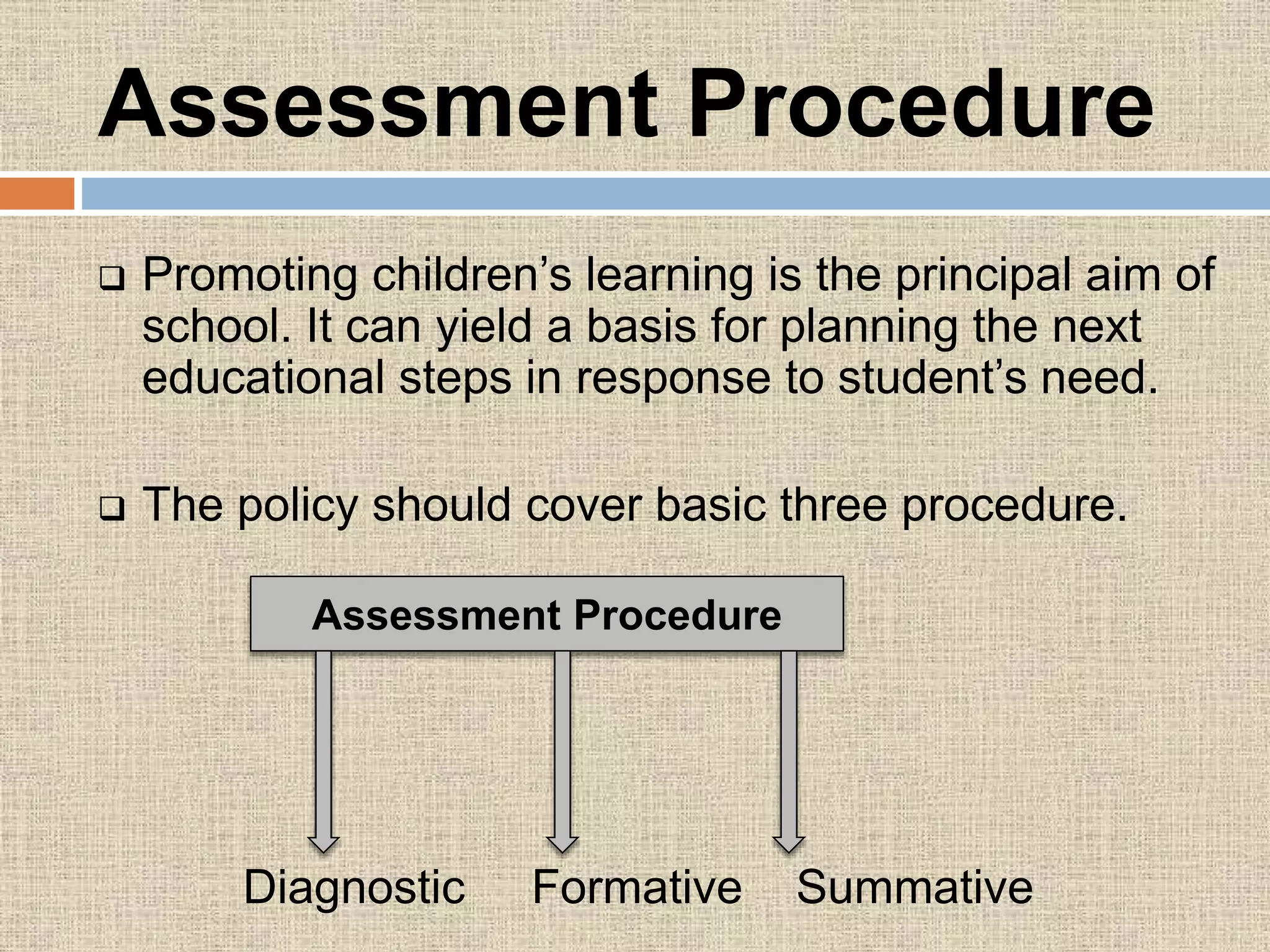
Assessment Procedure
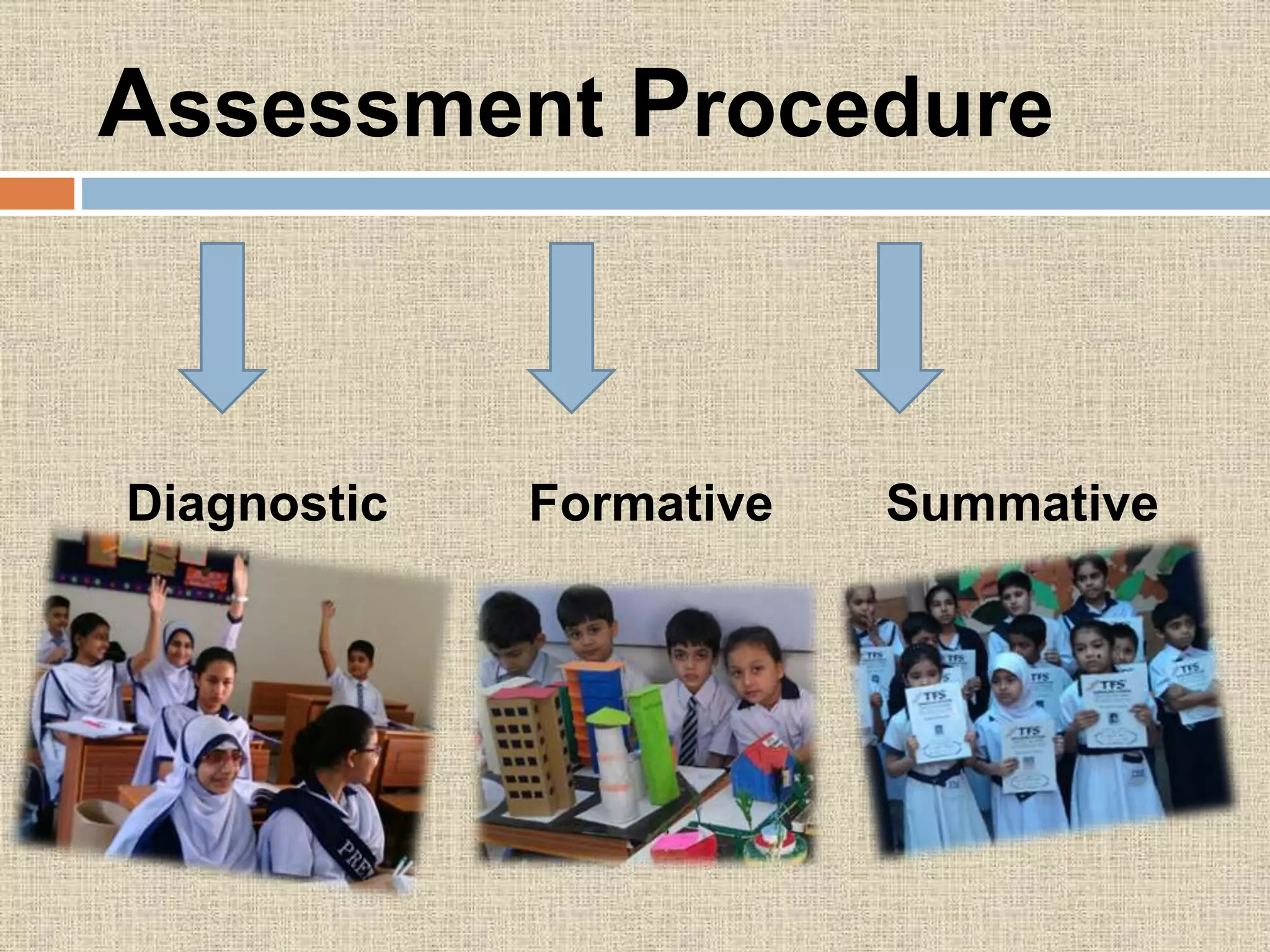
Diagnostic Formative Summative
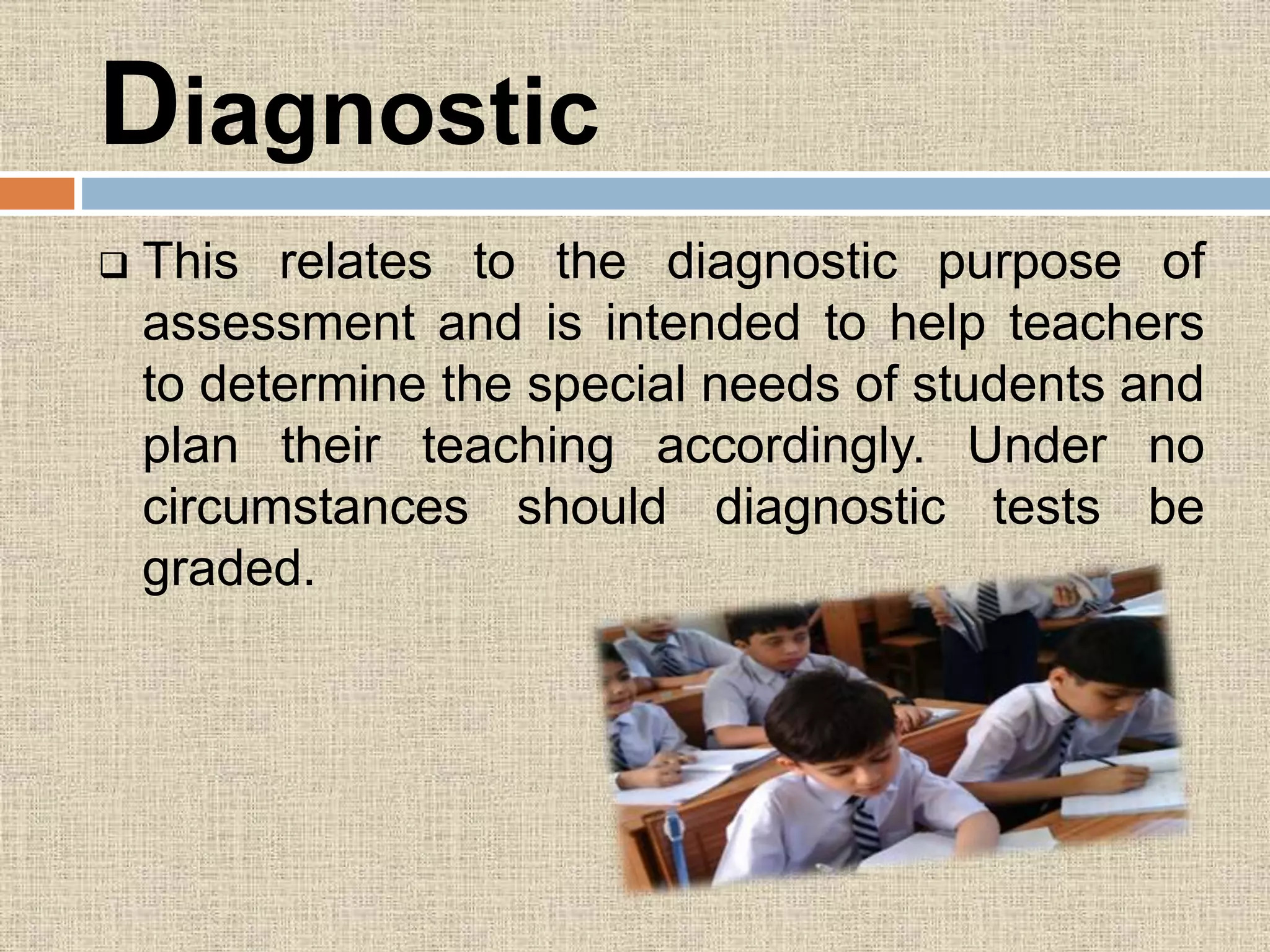
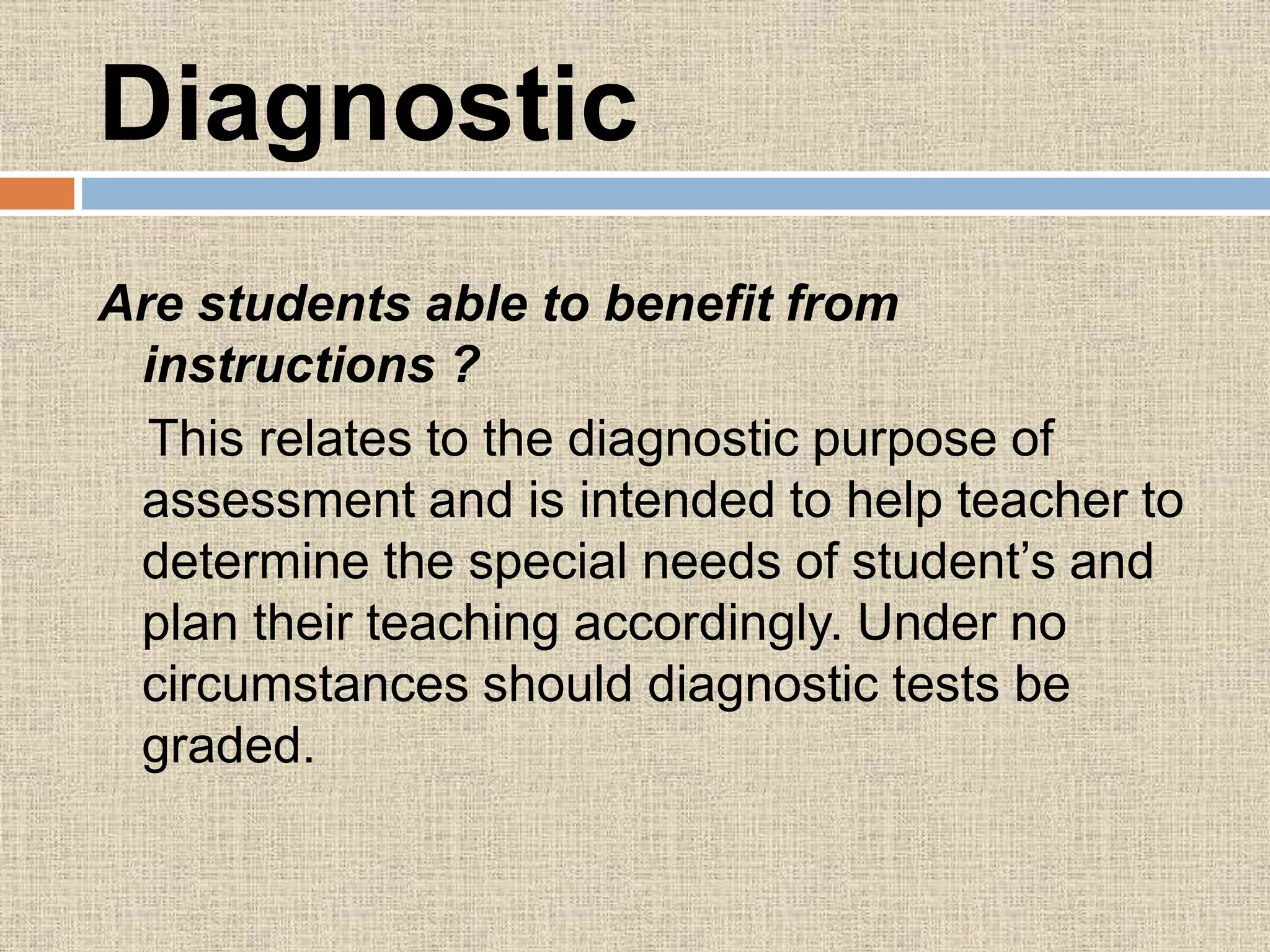
Diagnostic
 This relates to the diagnostic purpose of
assessment and is intended to help teachers
to determine the special needs of students and
plan their teaching accordingly. Under no
circumstances should diagnostic tests be
graded.
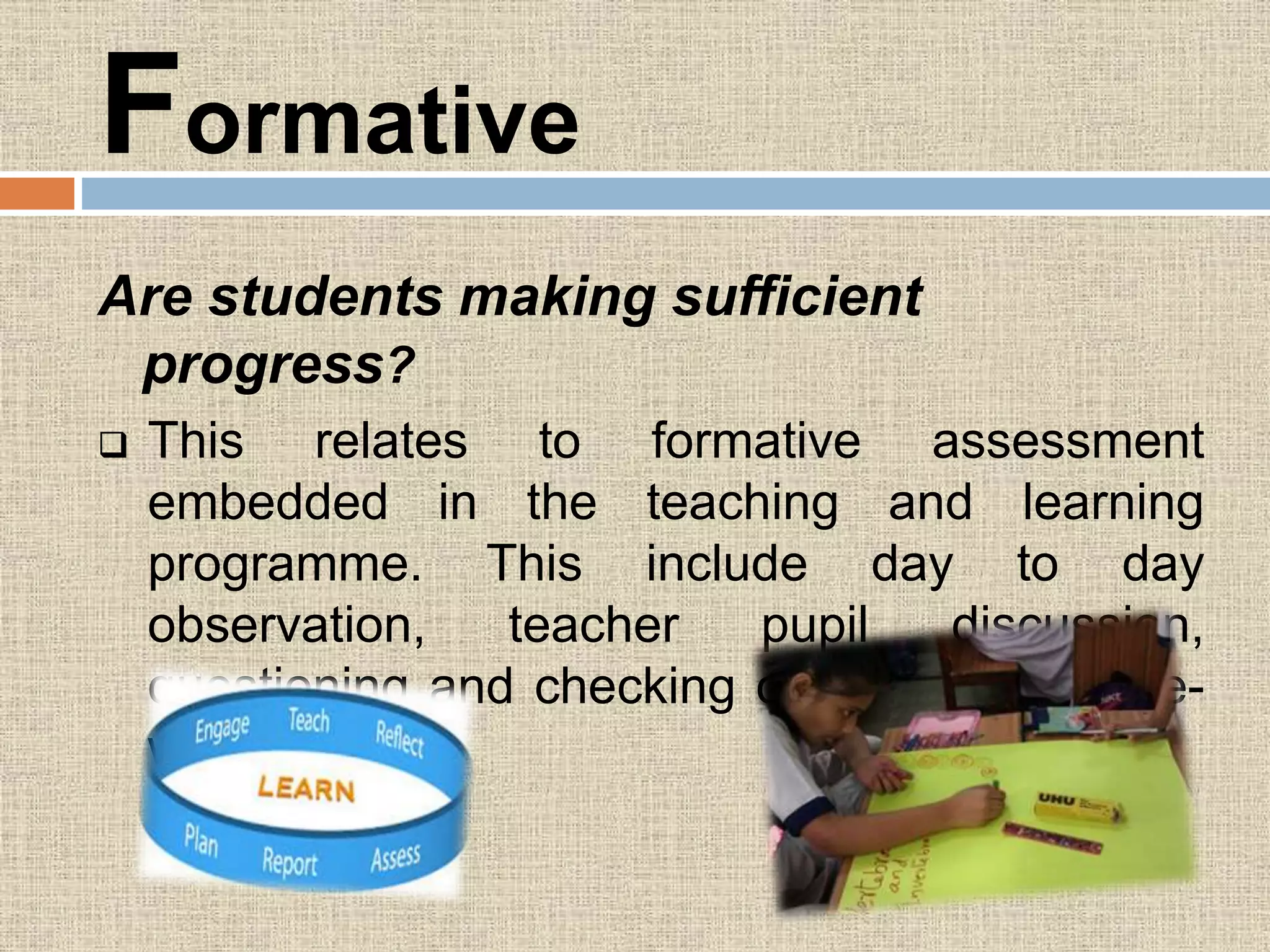
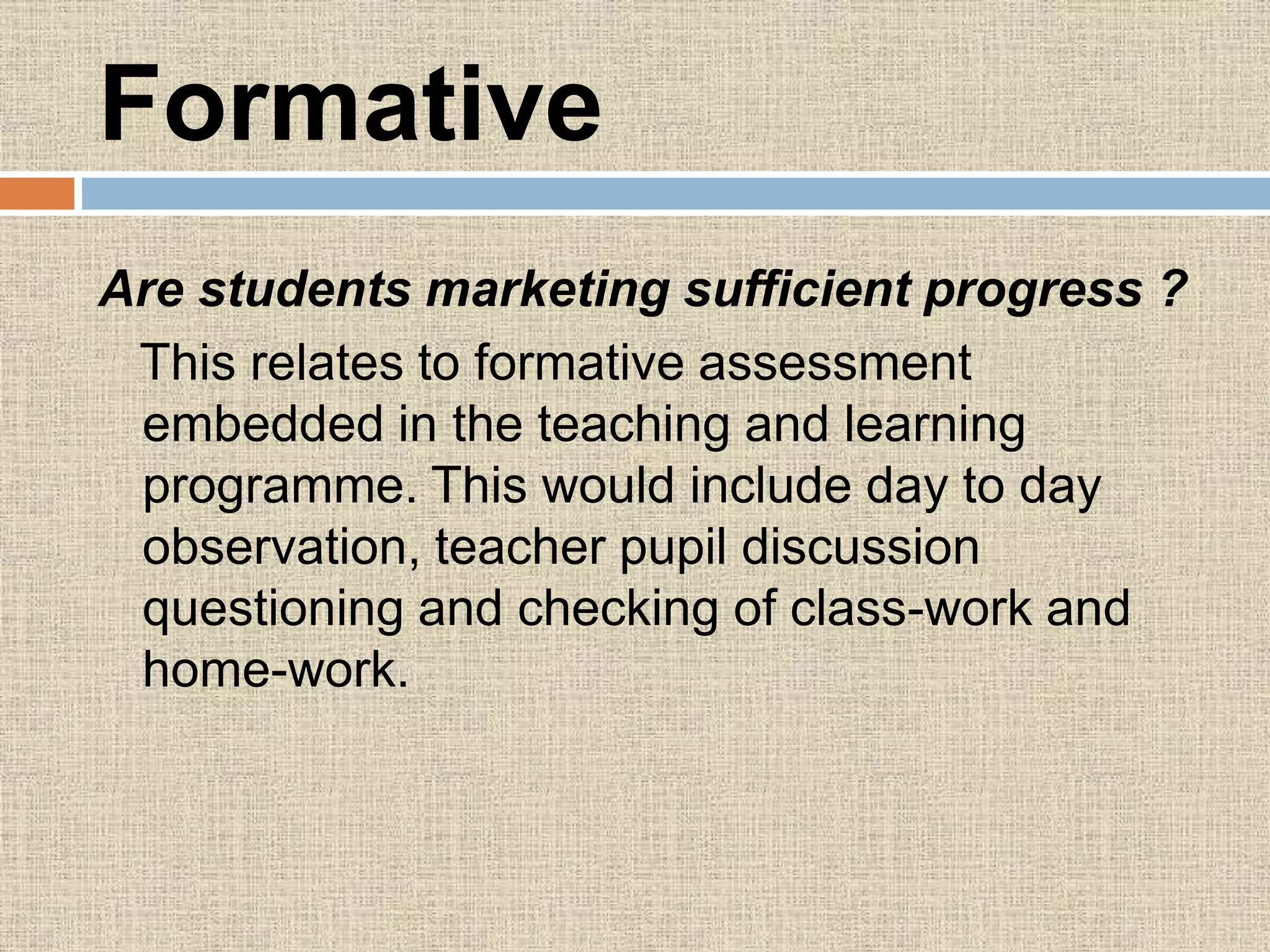
Formative
Are students making sufficient
progress?
 This relates to formative assessment
embedded in the teaching and learning
programme. This include day to day
observation, teacher pupil discussion,
questioning and checking of class and home-
work.
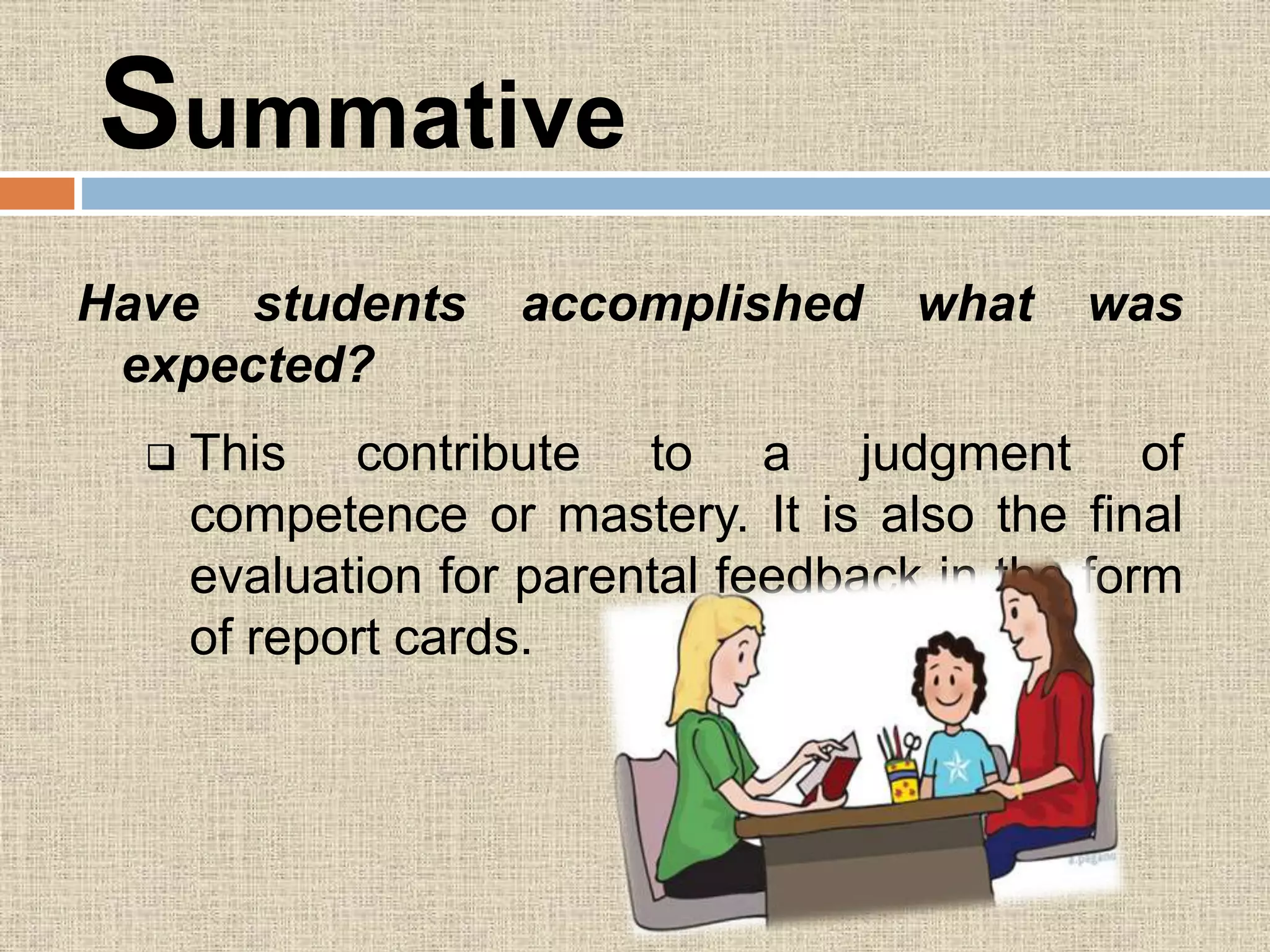
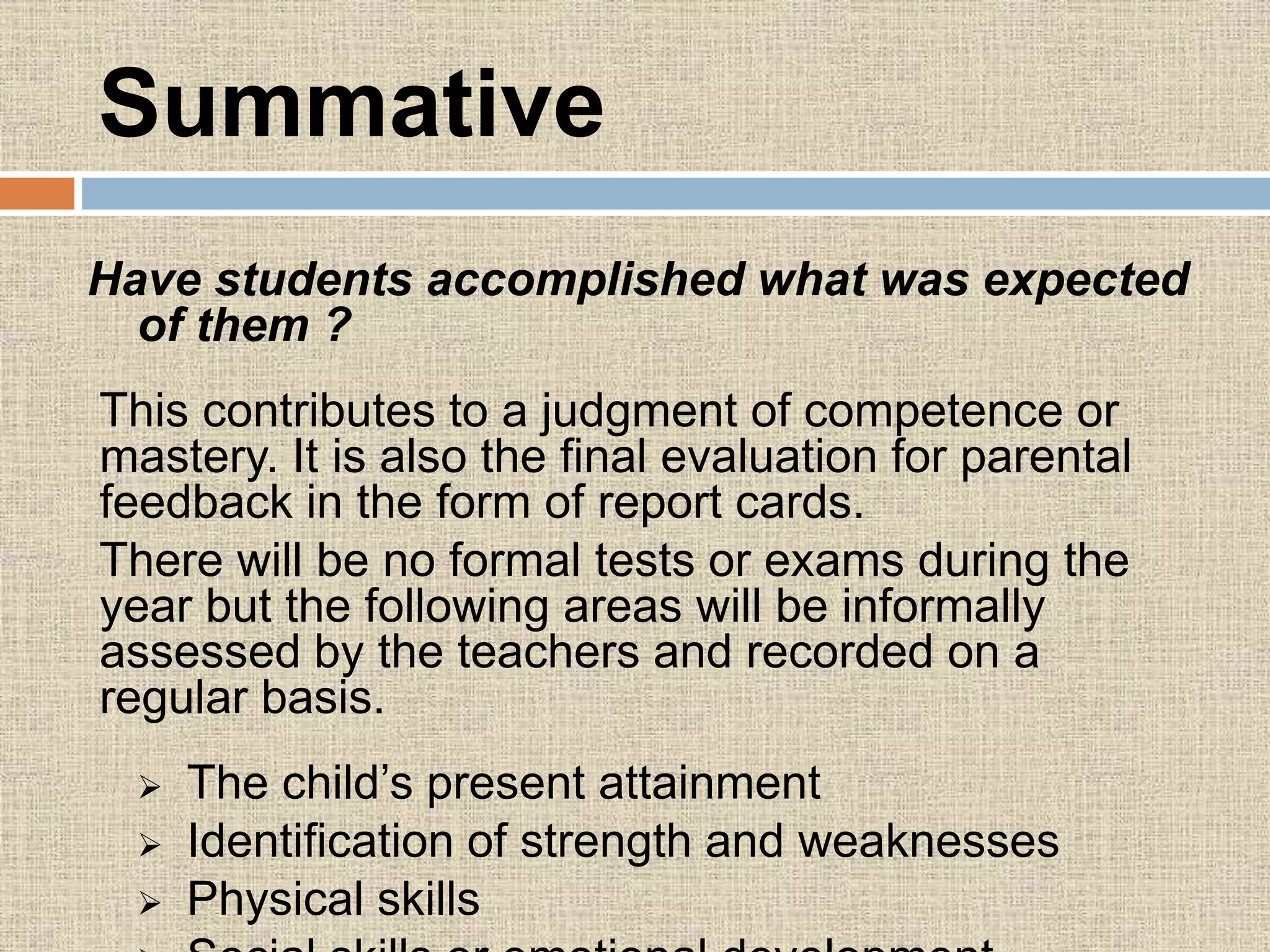
Summative
Have students accomplished what was
expected?
 This contribute to a judgment of
competence or mastery. It is also the final
evaluation for parental feedback in the form
of report cards.
Assessment Policy
 The policy from pre-nursery to grade 2 will be
combination of theses three approaches.
There will be no formal tests or exams during
the year but the following areas will be
informally assessed by the teachers and
recorded on regular basis.
 The child’s present attainment
 Identification of strength and weaknesses
 Physical skills
 Social skills or emotional development
Assessment Policy
(cont.)
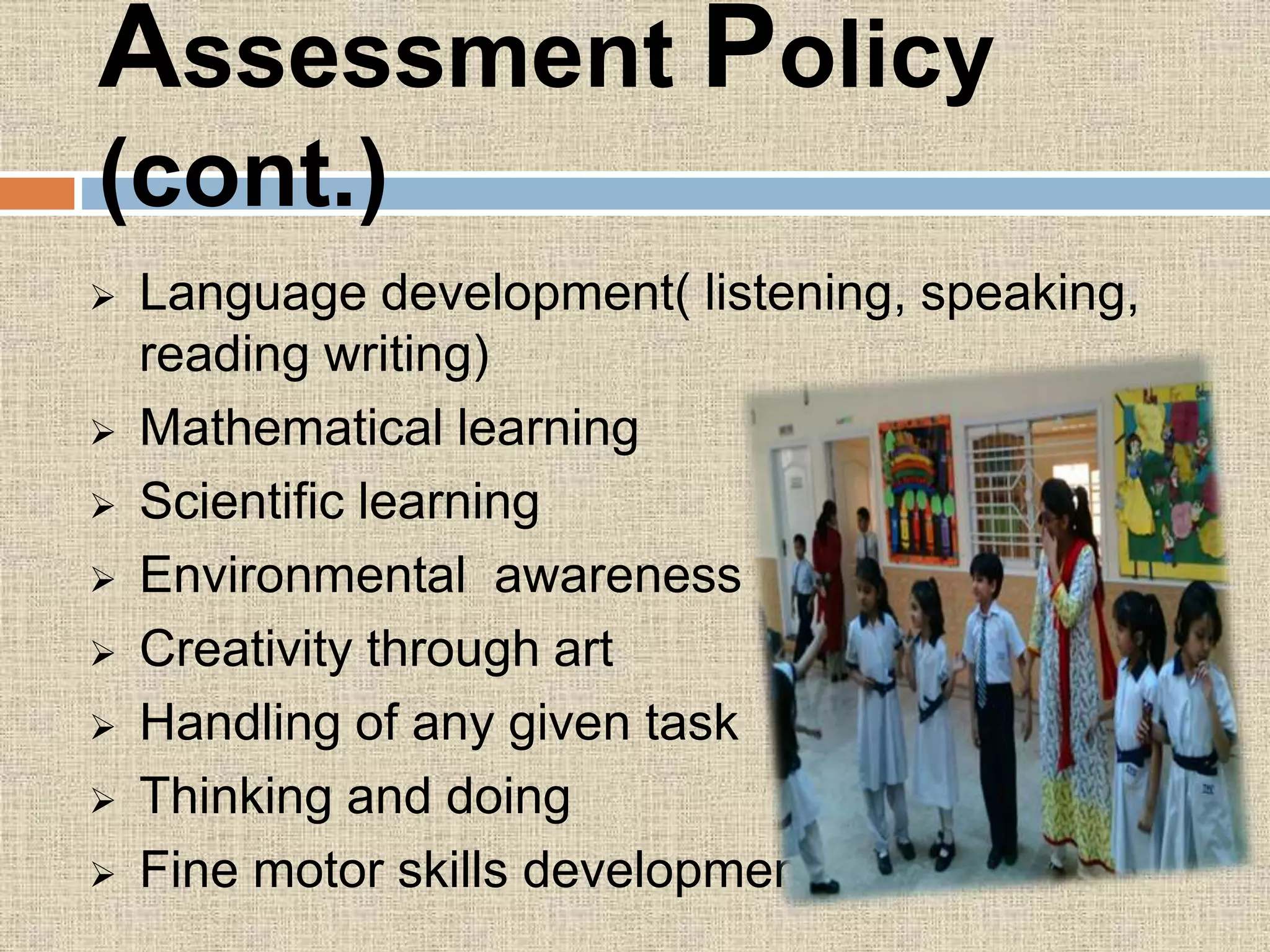
 Language development( listening, speaking,
reading writing)
 Mathematical learning
 Scientific learning
 Environmental awareness
 Creativity through art
 Handling of any given task
 Thinking and doing
 Fine motor skills development
Types of Evaluation
I. Formative Evaluation
Takes place during teaching. Techniques
used for formative evaluation are:
 Observing pupil performance
 Questioning pupils about their
understanding
 Marking while supervising
 Pupil presentation & demonstration
 Pupil self-evaluation
II. Summative Evaluation
Takes place after teaching. Techniques used for
summative evaluation are:
 Marking work exercise, assignments and files
collecting samples of work
 Teacher made tests:
• Short answer
• Multiple-choice
• True false
• Matching
• Completion items and essay questions
• Interviews and demonstration
Types of Evaluation
(Cont.)
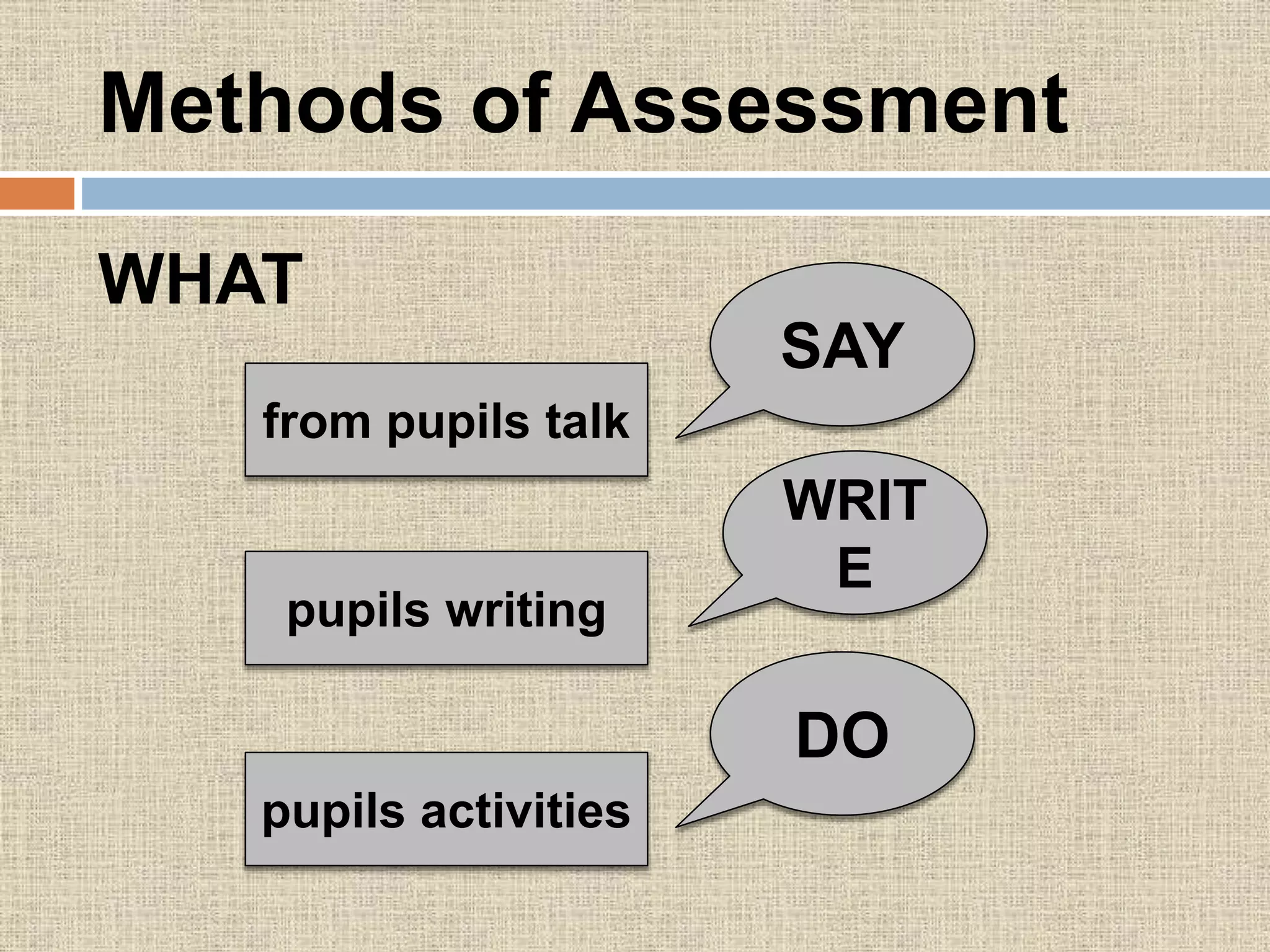
Methods of Assessment
What, Where, will, evidence, be obtained
From pupils talk ---------- Say
Pupils writing ---------- Write
Pupils activities ---------- Do
Talk gives evidence of how children are thinking ,the
extent of their knowledge and understanding of the
curriculum and their ability to exchange ideas and
attitudes.
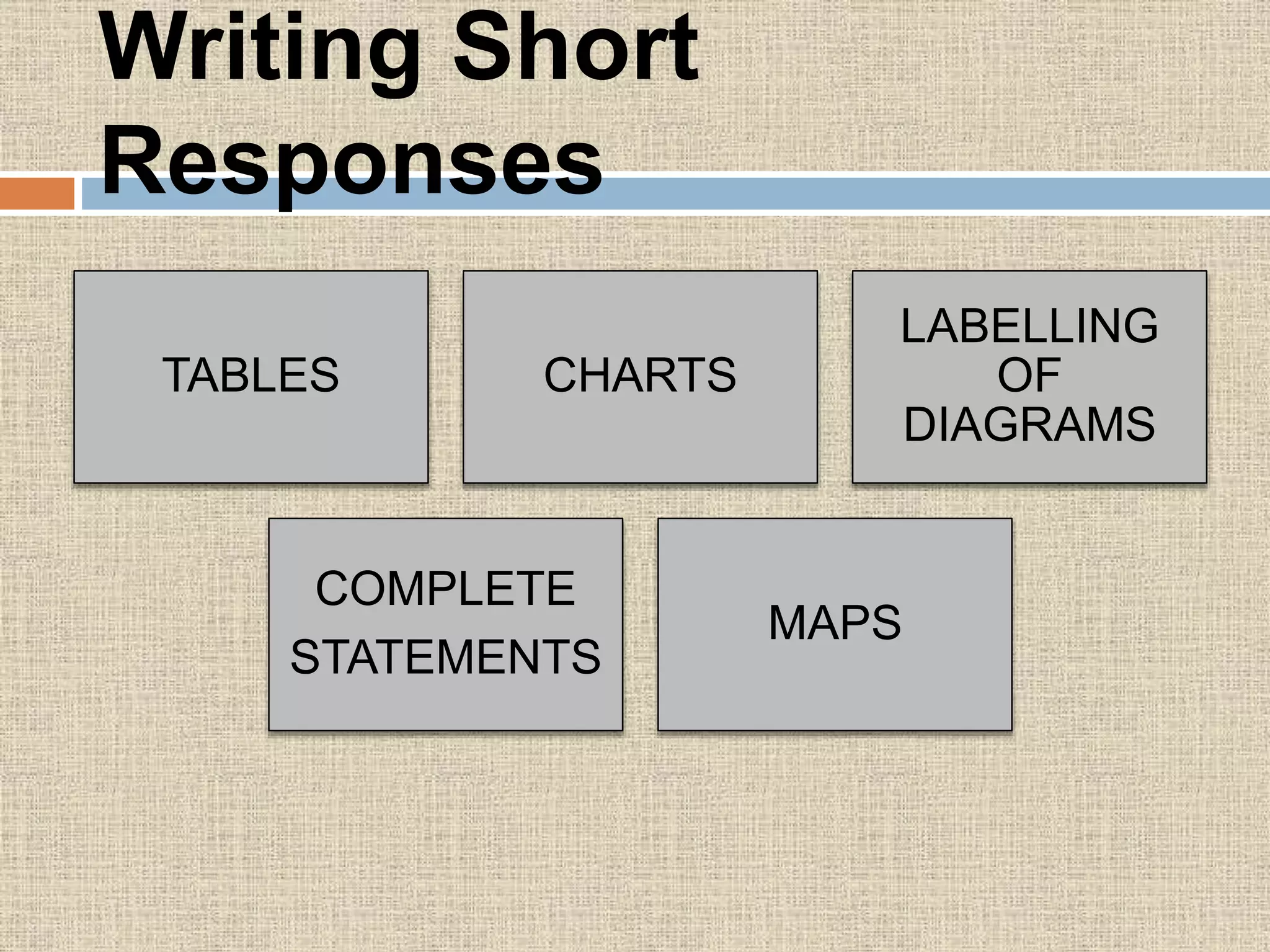
Writing short responses e.g. tables, labeling of
diagrams, completing statements, maps
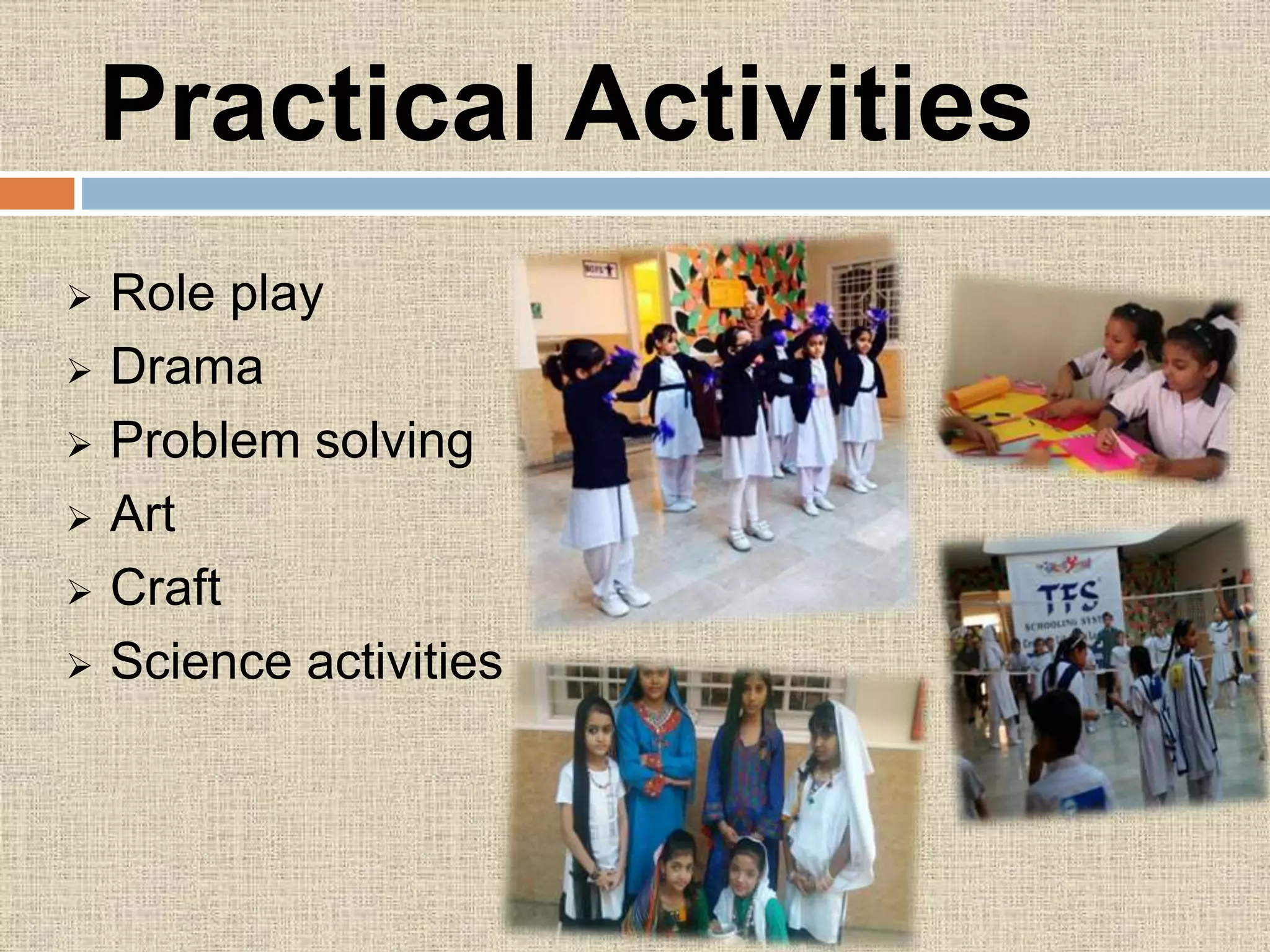
Practical Activities
Role play, drama, problem solving, art , craft science
activities in all the model , display, performance etc or
the process i.e. how pupils plan, tackle the problems
work together.
How? Methods Of Assessment?
There models for the teachers:
 Orally
 Observation
 Analysis of documentary evidence
For the pupils:
 Self assessment
 Peer assessment
Teacher Assessment
Orally: via question and answer of
individual/groups or more instructed
Observation: either unstructured, informal
where teacher notes down
significant behavior in an ongoing
way.
Or structured where the teachers divided a task,
decides upon limited criteria to be observed,
devices a recording format ,sets aside a specific
time.
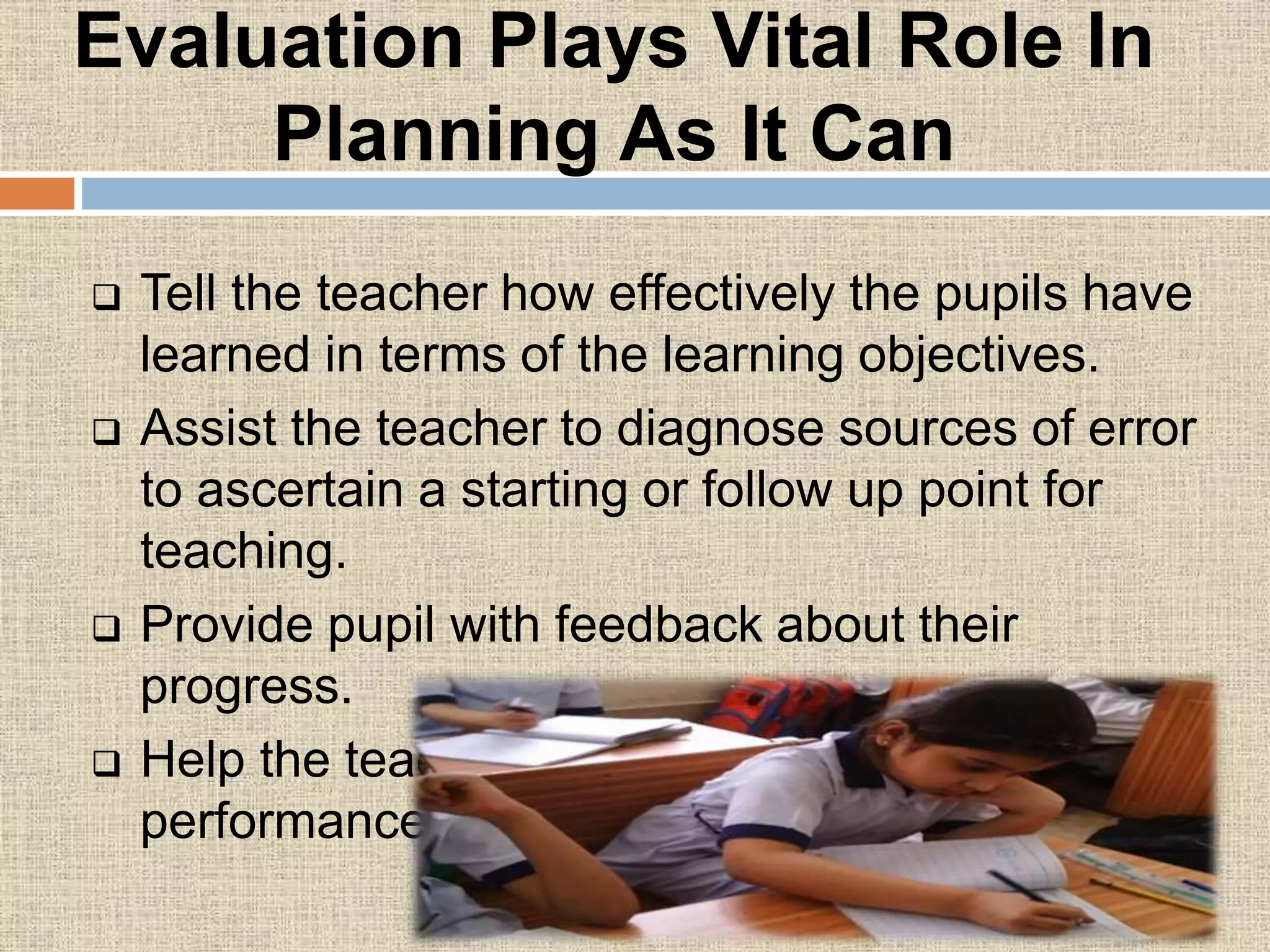
Evaluation Plays Vital Role In
Planning As It Can
 Tell the teacher how effectively the pupils have
learned in terms of the learning objectives.
 Assist the teacher to diagnose sources of error
to ascertain a starting or follow up point for
teaching.
 Provide pupil with feedback about their
progress.
 Help the teacher to compare pupil
performance.
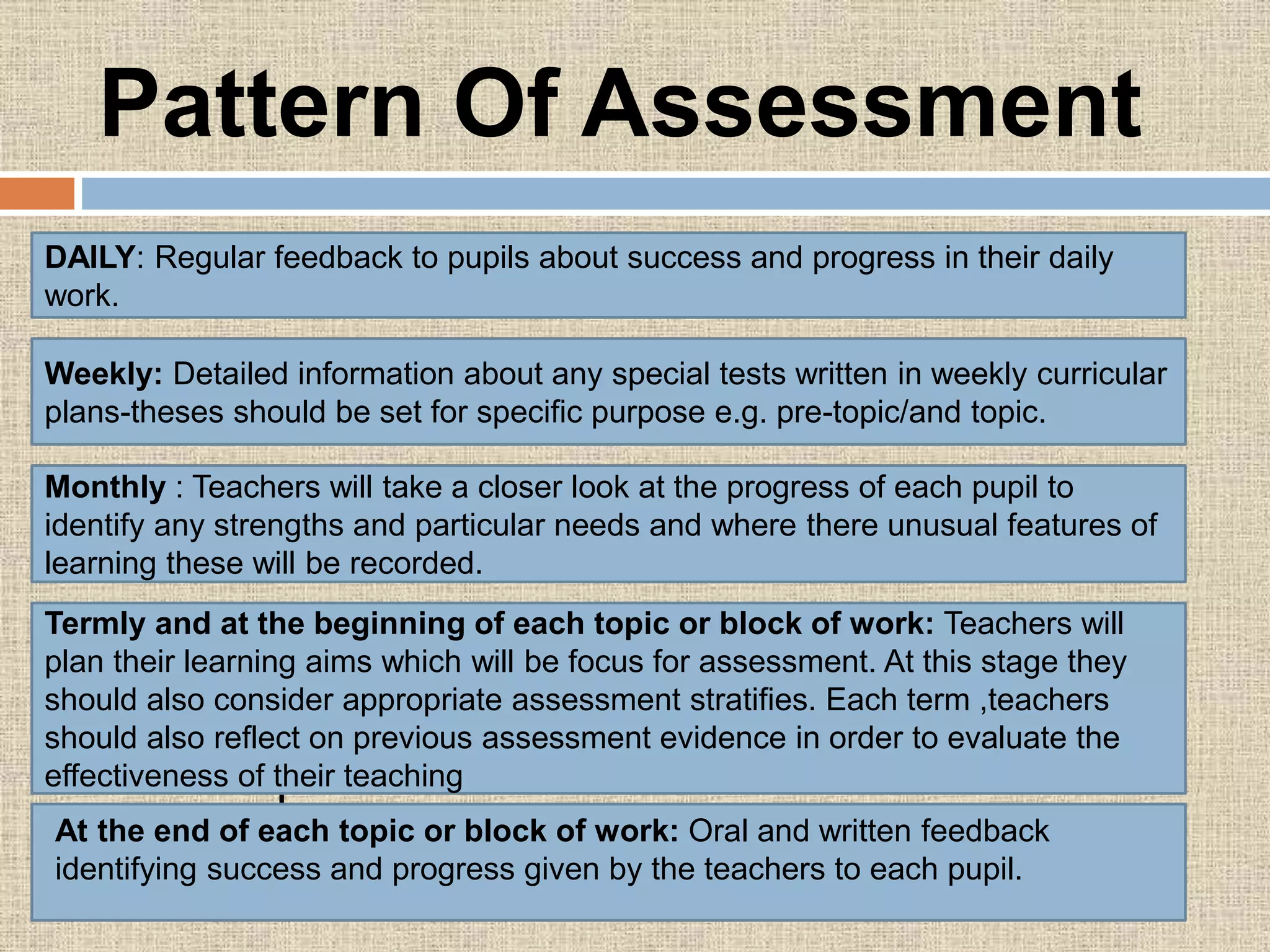
Pattern Of Assessment
Techniques are used for formative evaluation
are:
DAILY: Regular feedback to pupils about success and progress in their daily
work.
Weekly: Detailed information about any special tests written in weekly curricular
plans-theses should be set for specific purpose e.g. pre-topic/and topic.
Monthly : Teachers will take a closer look at the progress of each pupil to
identify any strengths and particular needs and where there unusual features of
learning these will be recorded.
Termly and at the beginning of each topic or block of work: Teachers will
plan their learning aims which will be focus for assessment. At this stage they
should also consider appropriate assessment stratifies. Each term ,teachers
should also reflect on previous assessment evidence in order to evaluate the
effectiveness of their teaching
At the end of each topic or block of work: Oral and written feedback
identifying success and progress given by the teachers to each pupil.
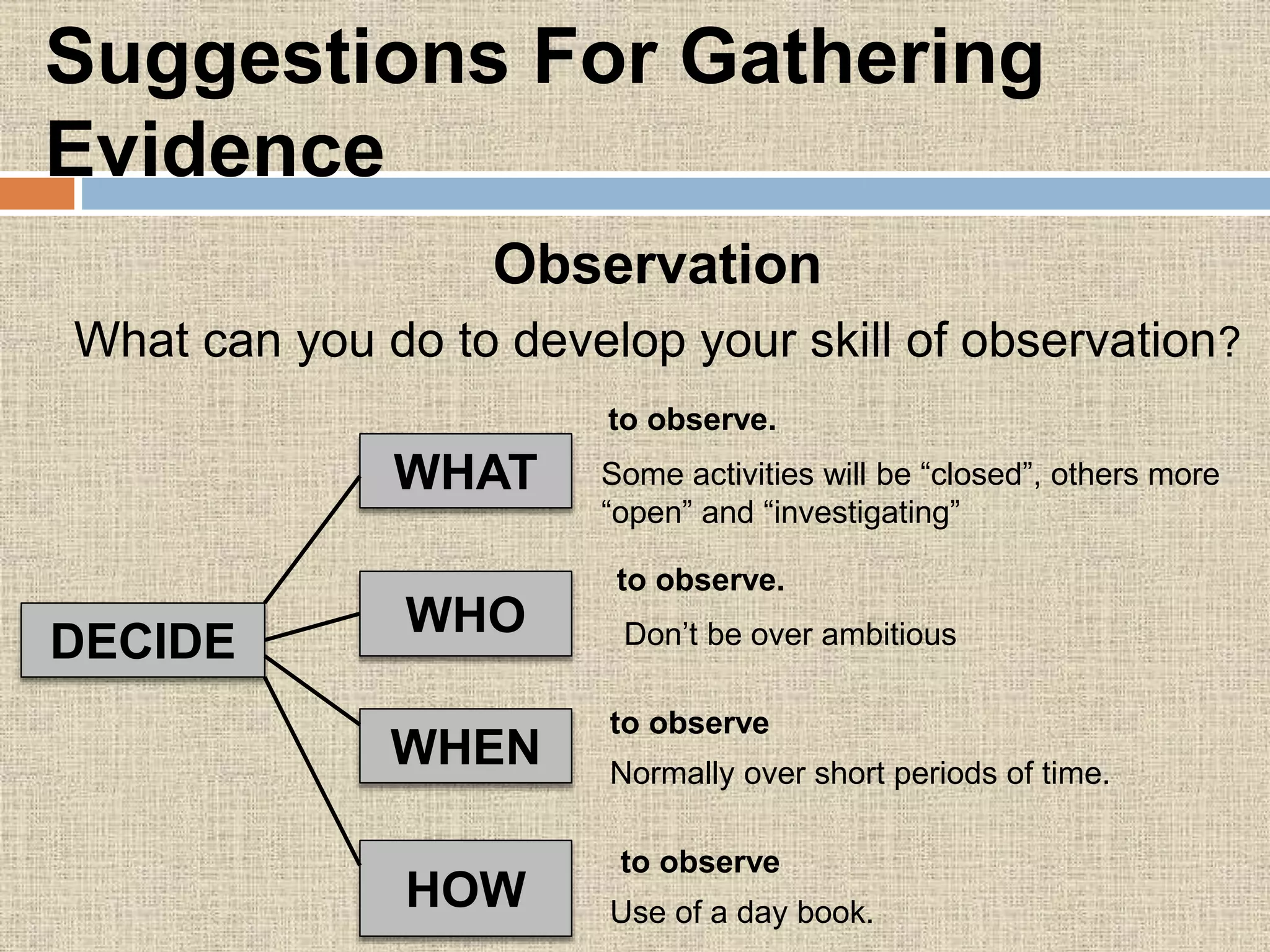
Suggestions For Gathering
Evidence
Observation
What can you do to develop your skill of observation?
to observe.
Some activities will be “closed”, others more
“open” and “investigating”
to observe.
Don’t be over ambitious
to observe
Normally over short periods of time.
to observe
Use of a day book.
DECIDE
WHAT
WHO
WHEN
HOW
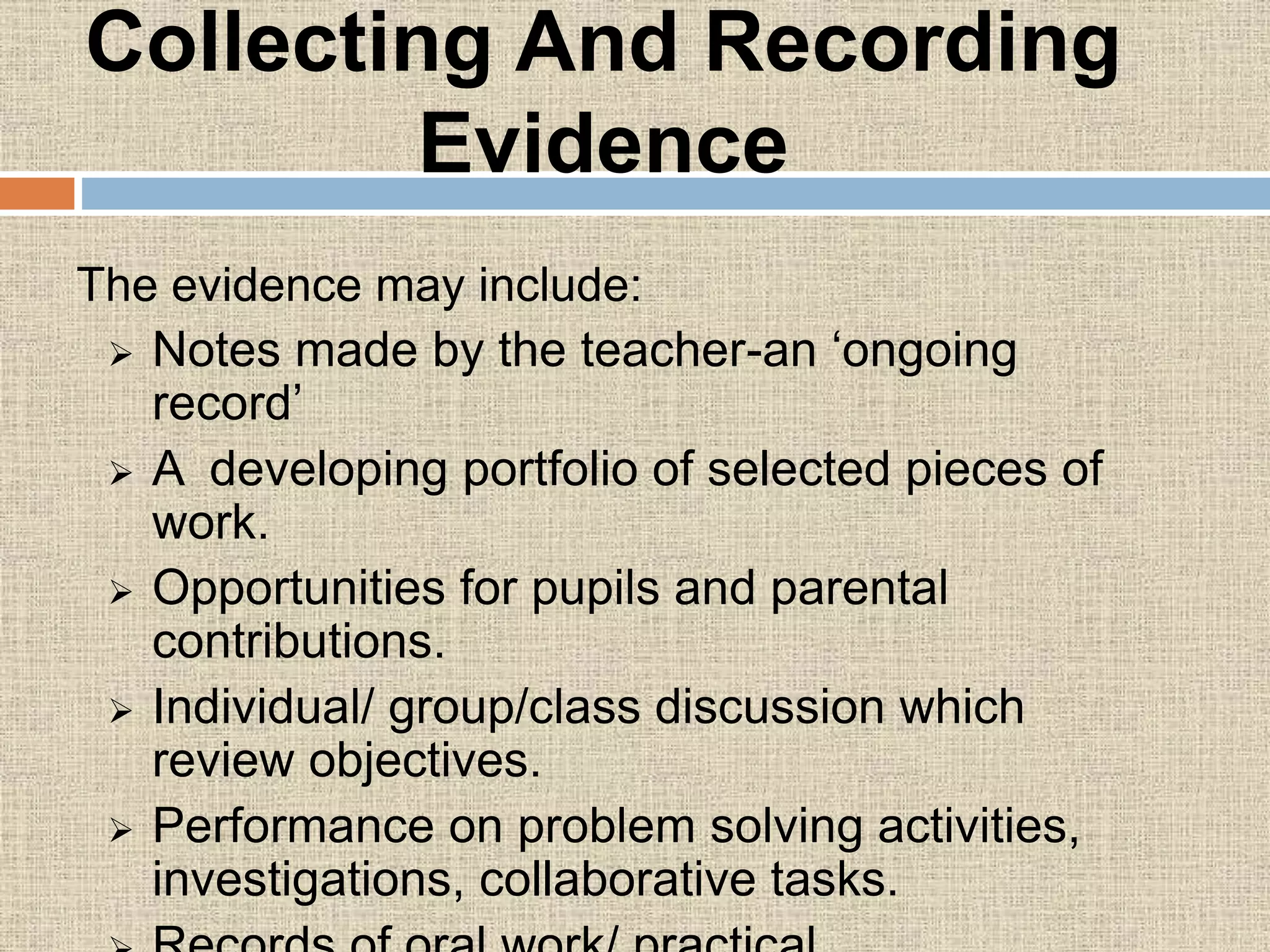
Collecting And Recording
Evidence
The evidence may include:
 Notes made by the teacher-an ‘ongoing
record’
 A developing portfolio of selected pieces of
work.
 Opportunities for pupils and parental
contributions.
 Individual/ group/class discussion which
review objectives.
 Performance on problem solving activities,
investigations, collaborative tasks.
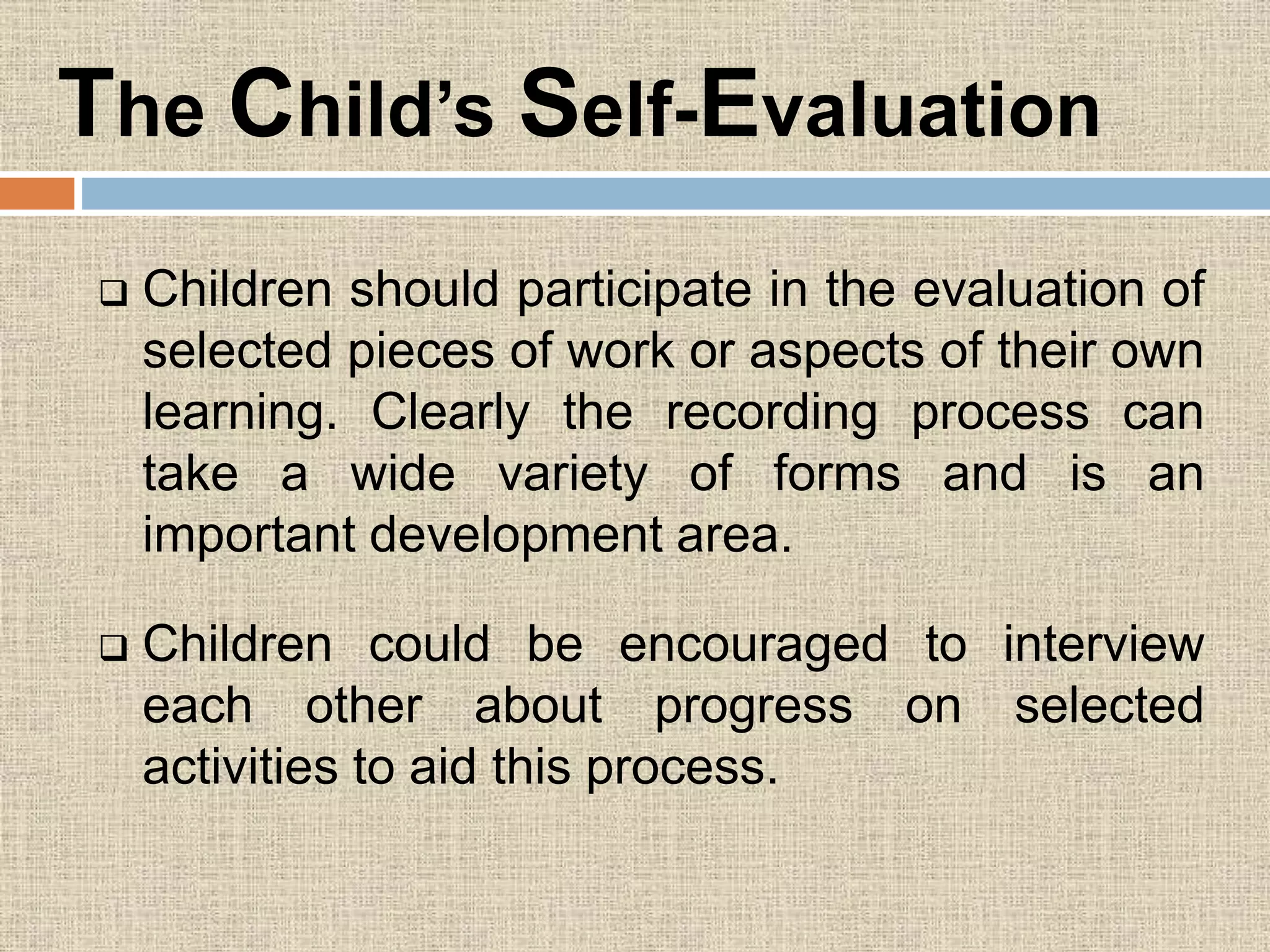
The Child’s Self-Evaluation
 Children should participate in the evaluation of
selected pieces of work or aspects of their own
learning. Clearly the recording process can
take a wide variety of forms and is an
important development area.
 Children could be encouraged to interview
each other about progress on selected
activities to aid this process.
Methods of Assessment
WHAT
from pupils talk
SAY
pupils writing
pupils activities
WRIT
E
DO
Writing Short
Responses
TABLES CHARTS
LABELLING
OF
DIAGRAMS
COMPLETE
STATEMENTS
MAPS
Practical Activities
 Role play
 Drama
 Problem solving
 Art
 Craft
 Science activities
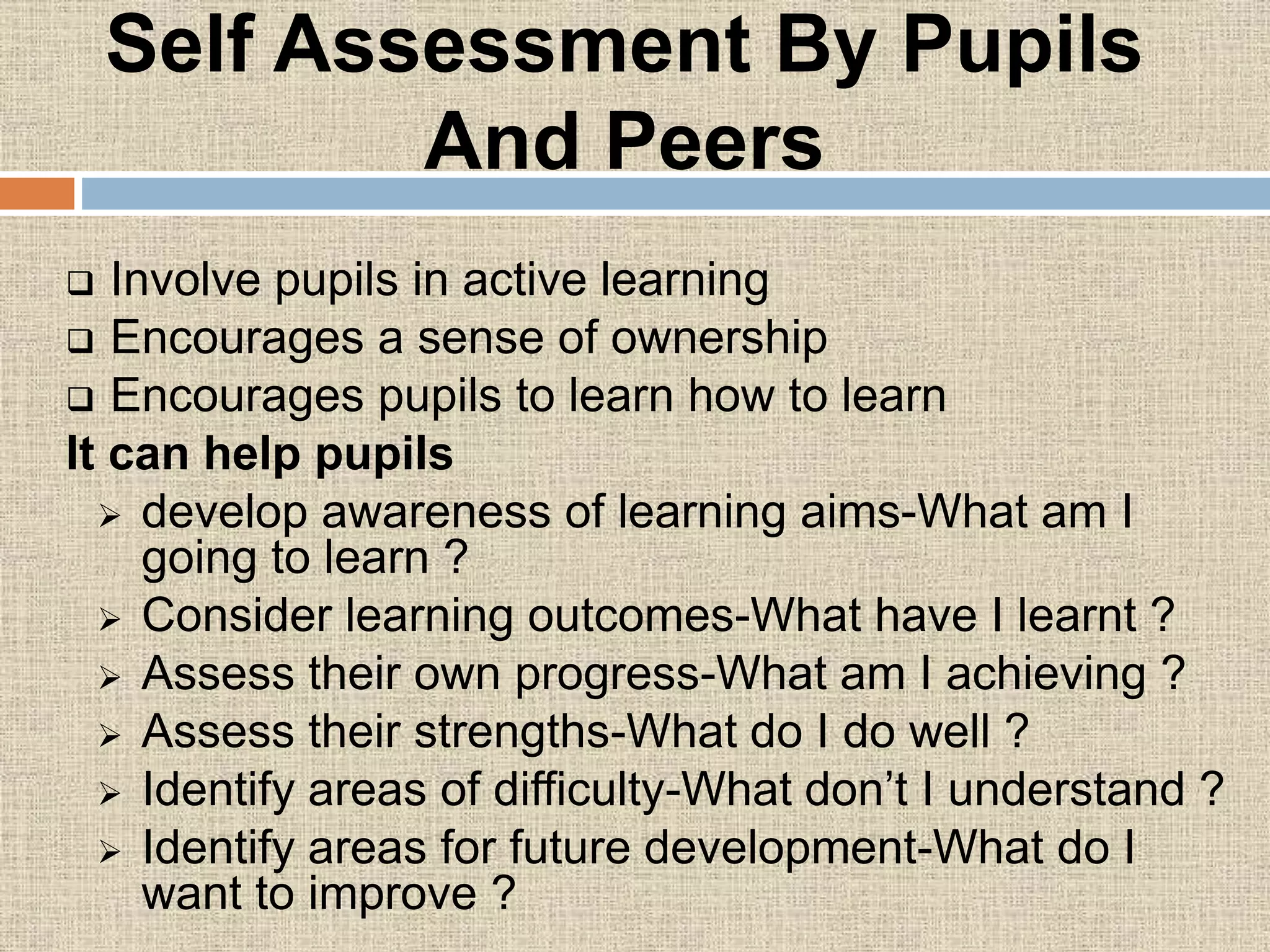
Self Assessment By Pupils
And Peers
 Involve pupils in active learning
 Encourages a sense of ownership
 Encourages pupils to learn how to learn
It can help pupils
 develop awareness of learning aims-What am I
going to learn ?
 Consider learning outcomes-What have I learnt ?
 Assess their own progress-What am I achieving ?
 Assess their strengths-What do I do well ?
 Identify areas of difficulty-What don’t I understand ?
 Identify areas for future development-What do I
want to improve ?
When To Assess ?
 During the lesson
 At the end of the lesson
 End of week/month
 In child’s presence or absence
What use?
If evidence is to be used to demonstrate effectiveness of
learning to pupils:
 How quickly can it be returned ?
 How promote will feedback be ?
 What signs show success or lack of success ?
 What help will be given to overtake lack of success ?
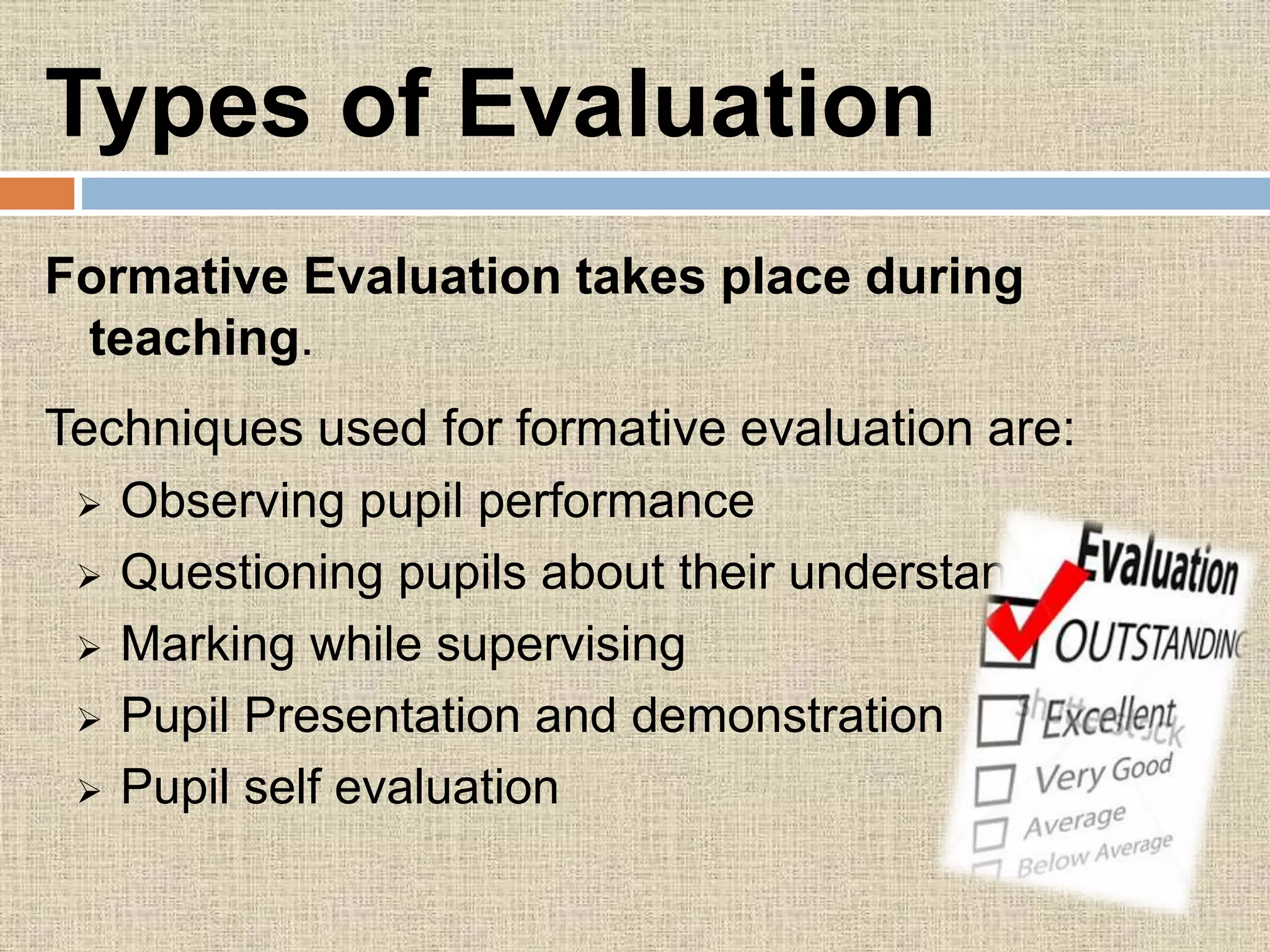
Types of Evaluation
Formative Evaluation takes place during
teaching.
Techniques used for formative evaluation are:
 Observing pupil performance
 Questioning pupils about their understanding
 Marking while supervising
 Pupil Presentation and demonstration
 Pupil self evaluation
Types of Evaluation
(cont.)
Summative Evaluation takes place after
teaching.
Techniques used for summative evaluation are:
 Marking work exercises, assignments and
files
 Collecting samples of work
 Teacher made tests: short answer, multiple
choices, matching, true false, completion
items and essay questions
 Interviews and demonstrations
Evaluation Plays A Vital Role
As It Can
 Tell the teacher how effectively the pupils have
learned in terms of the learning objectives.
 Assist the teacher to diagnose sources of error
to ascertain a starting or follow up point for
teaching.
 Provide pupil with feedback about progress.
 Help the teacher to compare pupil
Assessment Procedure
 Promoting children’s learning is the principal aim of
school. It can yield a basis for planning the next
educational steps in response to student’s need.
 The policy should cover basic three procedure.
Diagnostic Formative Summative
Assessment Procedure
Diagnostic
Are students able to benefit from
instructions ?
This relates to the diagnostic purpose of
assessment and is intended to help teacher to
determine the special needs of student’s and
plan their teaching accordingly. Under no
circumstances should diagnostic tests be
graded.
Formative
Are students marketing sufficient progress ?
This relates to formative assessment
embedded in the teaching and learning
programme. This would include day to day
observation, teacher pupil discussion
questioning and checking of class-work and
home-work.
Summative
Have students accomplished what was expected
of them ?
This contributes to a judgment of competence or
mastery. It is also the final evaluation for parental
feedback in the form of report cards.
There will be no formal tests or exams during the
year but the following areas will be informally
assessed by the teachers and recorded on a
regular basis.
 The child’s present attainment
 Identification of strength and weaknesses
 Physical skills
 Languages development( listening, speaking,
reading, writing)
 Mathematical learning
 Scientific learning
 Environmental awareness
 Creativity through art
 Handling of any given task
 Thinking and doing
 Fine motor skills development
 Manipulating materials
Summative (cont.)
Presented by
Gulzar Sadruddin Hassanally

Evaluation Performance Measurement and Assessment 1

  • 1.
  • 2.
    Assessment  The qualityof students outcomes measured against the learning objectives.
  • 3.
    Evaluation  Evaluation isa deliberate appraisal of the effectiveness and quality of teaching and learning that has taken place.
  • 4.
  • 5.
    Diagnostic  This relatesto the diagnostic purpose of assessment and is intended to help teachers to determine the special needs of students and plan their teaching accordingly. Under no circumstances should diagnostic tests be graded.
  • 6.
    Formative Are students makingsufficient progress?  This relates to formative assessment embedded in the teaching and learning programme. This include day to day observation, teacher pupil discussion, questioning and checking of class and home- work.
  • 7.
    Summative Have students accomplishedwhat was expected?  This contribute to a judgment of competence or mastery. It is also the final evaluation for parental feedback in the form of report cards.
  • 8.
    Assessment Policy  Thepolicy from pre-nursery to grade 2 will be combination of theses three approaches. There will be no formal tests or exams during the year but the following areas will be informally assessed by the teachers and recorded on regular basis.  The child’s present attainment  Identification of strength and weaknesses  Physical skills  Social skills or emotional development
  • 9.
    Assessment Policy (cont.)  Languagedevelopment( listening, speaking, reading writing)  Mathematical learning  Scientific learning  Environmental awareness  Creativity through art  Handling of any given task  Thinking and doing  Fine motor skills development
  • 10.
    Types of Evaluation I.Formative Evaluation Takes place during teaching. Techniques used for formative evaluation are:  Observing pupil performance  Questioning pupils about their understanding  Marking while supervising  Pupil presentation & demonstration  Pupil self-evaluation
  • 11.
    II. Summative Evaluation Takesplace after teaching. Techniques used for summative evaluation are:  Marking work exercise, assignments and files collecting samples of work  Teacher made tests: • Short answer • Multiple-choice • True false • Matching • Completion items and essay questions • Interviews and demonstration Types of Evaluation (Cont.)
  • 12.
    Methods of Assessment What,Where, will, evidence, be obtained From pupils talk ---------- Say Pupils writing ---------- Write Pupils activities ---------- Do Talk gives evidence of how children are thinking ,the extent of their knowledge and understanding of the curriculum and their ability to exchange ideas and attitudes. Writing short responses e.g. tables, labeling of diagrams, completing statements, maps
  • 13.
    Practical Activities Role play,drama, problem solving, art , craft science activities in all the model , display, performance etc or the process i.e. how pupils plan, tackle the problems work together. How? Methods Of Assessment? There models for the teachers:  Orally  Observation  Analysis of documentary evidence For the pupils:  Self assessment  Peer assessment
  • 14.
    Teacher Assessment Orally: viaquestion and answer of individual/groups or more instructed Observation: either unstructured, informal where teacher notes down significant behavior in an ongoing way. Or structured where the teachers divided a task, decides upon limited criteria to be observed, devices a recording format ,sets aside a specific time.
  • 15.
    Evaluation Plays VitalRole In Planning As It Can  Tell the teacher how effectively the pupils have learned in terms of the learning objectives.  Assist the teacher to diagnose sources of error to ascertain a starting or follow up point for teaching.  Provide pupil with feedback about their progress.  Help the teacher to compare pupil performance.
  • 17.
    Pattern Of Assessment Techniquesare used for formative evaluation are: DAILY: Regular feedback to pupils about success and progress in their daily work. Weekly: Detailed information about any special tests written in weekly curricular plans-theses should be set for specific purpose e.g. pre-topic/and topic. Monthly : Teachers will take a closer look at the progress of each pupil to identify any strengths and particular needs and where there unusual features of learning these will be recorded. Termly and at the beginning of each topic or block of work: Teachers will plan their learning aims which will be focus for assessment. At this stage they should also consider appropriate assessment stratifies. Each term ,teachers should also reflect on previous assessment evidence in order to evaluate the effectiveness of their teaching At the end of each topic or block of work: Oral and written feedback identifying success and progress given by the teachers to each pupil.
  • 18.
    Suggestions For Gathering Evidence Observation Whatcan you do to develop your skill of observation? to observe. Some activities will be “closed”, others more “open” and “investigating” to observe. Don’t be over ambitious to observe Normally over short periods of time. to observe Use of a day book. DECIDE WHAT WHO WHEN HOW
  • 19.
    Collecting And Recording Evidence Theevidence may include:  Notes made by the teacher-an ‘ongoing record’  A developing portfolio of selected pieces of work.  Opportunities for pupils and parental contributions.  Individual/ group/class discussion which review objectives.  Performance on problem solving activities, investigations, collaborative tasks.
  • 20.
    The Child’s Self-Evaluation Children should participate in the evaluation of selected pieces of work or aspects of their own learning. Clearly the recording process can take a wide variety of forms and is an important development area.  Children could be encouraged to interview each other about progress on selected activities to aid this process.
  • 21.
    Methods of Assessment WHAT frompupils talk SAY pupils writing pupils activities WRIT E DO
  • 22.
  • 23.
    Practical Activities  Roleplay  Drama  Problem solving  Art  Craft  Science activities
  • 24.
    Self Assessment ByPupils And Peers  Involve pupils in active learning  Encourages a sense of ownership  Encourages pupils to learn how to learn It can help pupils  develop awareness of learning aims-What am I going to learn ?  Consider learning outcomes-What have I learnt ?  Assess their own progress-What am I achieving ?  Assess their strengths-What do I do well ?  Identify areas of difficulty-What don’t I understand ?  Identify areas for future development-What do I want to improve ?
  • 25.
    When To Assess?  During the lesson  At the end of the lesson  End of week/month  In child’s presence or absence What use? If evidence is to be used to demonstrate effectiveness of learning to pupils:  How quickly can it be returned ?  How promote will feedback be ?  What signs show success or lack of success ?  What help will be given to overtake lack of success ?
  • 26.
    Types of Evaluation FormativeEvaluation takes place during teaching. Techniques used for formative evaluation are:  Observing pupil performance  Questioning pupils about their understanding  Marking while supervising  Pupil Presentation and demonstration  Pupil self evaluation
  • 27.
    Types of Evaluation (cont.) SummativeEvaluation takes place after teaching. Techniques used for summative evaluation are:  Marking work exercises, assignments and files  Collecting samples of work  Teacher made tests: short answer, multiple choices, matching, true false, completion items and essay questions  Interviews and demonstrations
  • 28.
    Evaluation Plays AVital Role As It Can  Tell the teacher how effectively the pupils have learned in terms of the learning objectives.  Assist the teacher to diagnose sources of error to ascertain a starting or follow up point for teaching.  Provide pupil with feedback about progress.  Help the teacher to compare pupil
  • 29.
    Assessment Procedure  Promotingchildren’s learning is the principal aim of school. It can yield a basis for planning the next educational steps in response to student’s need.  The policy should cover basic three procedure. Diagnostic Formative Summative Assessment Procedure
  • 30.
    Diagnostic Are students ableto benefit from instructions ? This relates to the diagnostic purpose of assessment and is intended to help teacher to determine the special needs of student’s and plan their teaching accordingly. Under no circumstances should diagnostic tests be graded.
  • 31.
    Formative Are students marketingsufficient progress ? This relates to formative assessment embedded in the teaching and learning programme. This would include day to day observation, teacher pupil discussion questioning and checking of class-work and home-work.
  • 32.
    Summative Have students accomplishedwhat was expected of them ? This contributes to a judgment of competence or mastery. It is also the final evaluation for parental feedback in the form of report cards. There will be no formal tests or exams during the year but the following areas will be informally assessed by the teachers and recorded on a regular basis.  The child’s present attainment  Identification of strength and weaknesses  Physical skills
  • 33.
     Languages development(listening, speaking, reading, writing)  Mathematical learning  Scientific learning  Environmental awareness  Creativity through art  Handling of any given task  Thinking and doing  Fine motor skills development  Manipulating materials Summative (cont.)
  • 34.