Evaluating Sources
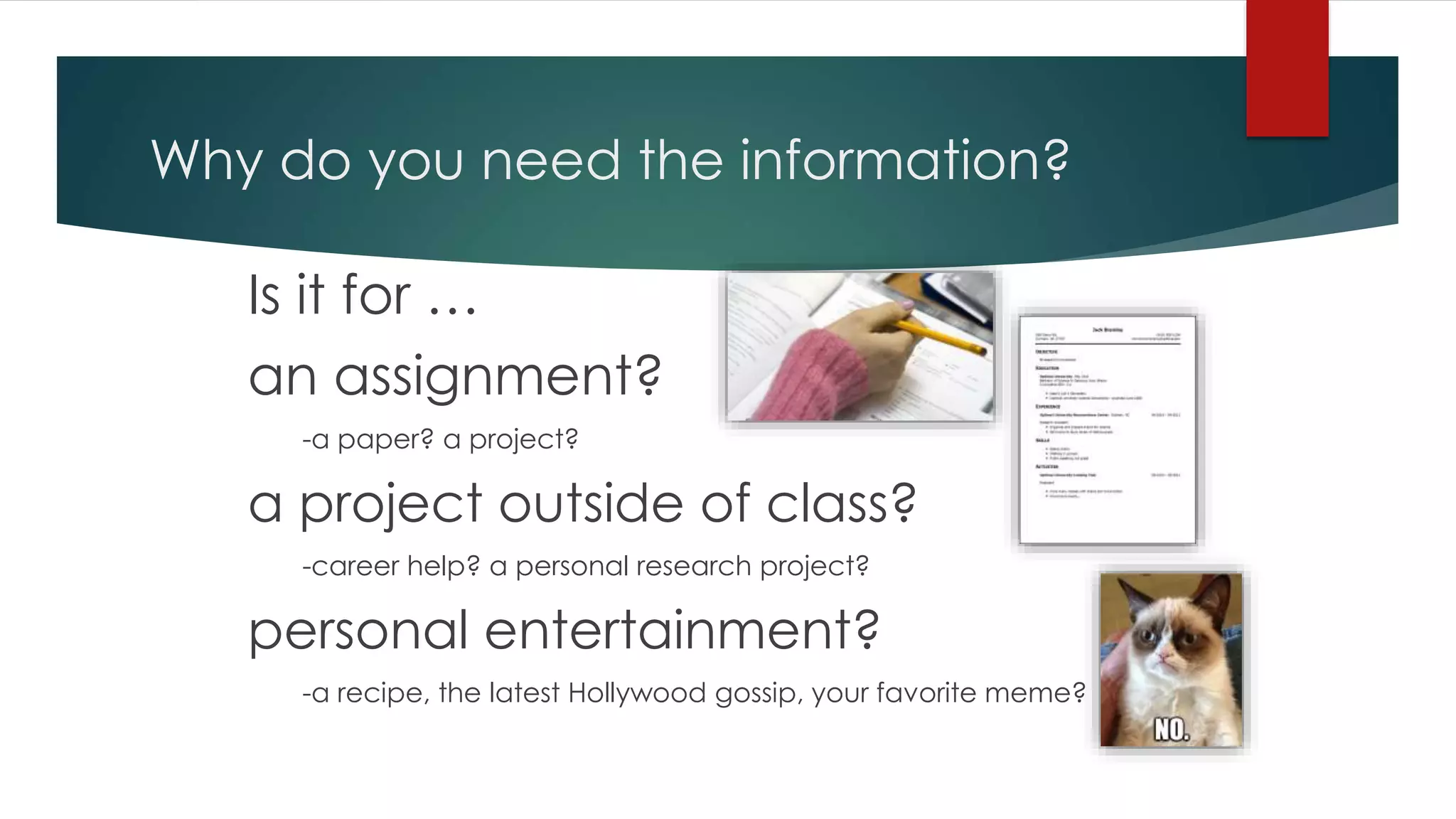
Why do you need the information?
Is it for …
an assignment?
-a paper? a project?
a project outside of class?
-career help? a personal research project?
personal entertainment?
-a recipe, the latest Hollywood gossip, your favorite meme?
Who?
What?
When?
Where?
Why?
Who?
Who wrote or presented this
information?
Does the person have the
qualifications to be presenting
this information?
Is he or she trustworthy?
Clues
 Check for authority of the author by asking:
Does the writer have a degree in the
subject? What are his or her affiliations
(where does the author work)?
What do others in the field think about this
person?
What else has this person written about the
topic? Is he or she an expert?
What?
What is the content in the
source?
Is it relevant to your topic of
study?
Clues
 Check for relevance in:
The title
An abstract if there is one
Subject headings or table of contents if they
are present
A scan of the article
When?
How current is the information?
Is it outdated?
Clues
 Check for currency by looking:
For a date in the citation if you’re
looking at a journal article in a
database
After the title or at the bottom of the
article from a website
Where?
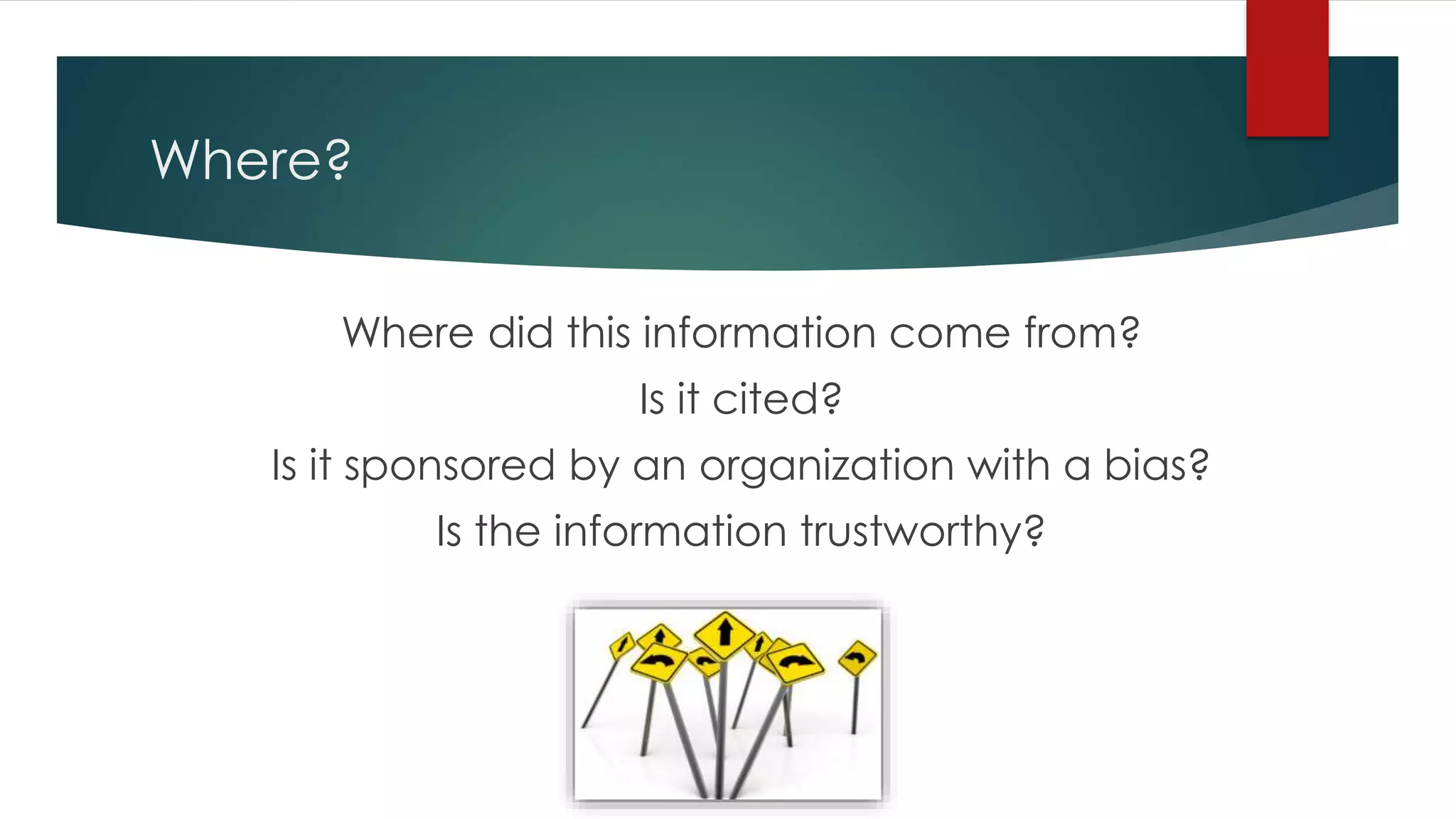
Where did this information come from?
Is it cited?
Is it sponsored by an organization with a bias?
Is the information trustworthy?
Clues
 To check for accuracy and bias, ask
 Is this a controversial topic?
 Is the language of this article trying to lead me to
believe something?
 Is the data sound? Could another conclusion be
made based on the data? Is there data missing?
 Are there many grammatical errors? Is the article
well-structured and organized?
Why?
For what purpose is this
information being offered?
Does the purpose match your
own?
Clues
 To determine the purpose of a source, ask:
 What vocabulary and language is used? Is it for the
general public or an expert scholar?
 Is the platform of the information flashy and
exciting, or simple? Is the source trying to entertain
or inform?
 Are there advertisements?
 Can you see where the author is getting his or her
information? Are there citations or a works cited
list?
Want to
practice your
evaluation skills?
Check out the
link at right. ->
HTTP://WEBEVAL.IEACADE
MY.COM/#

Evaluating Sources

  • 1.
  • 2.
    Why do youneed the information? Is it for … an assignment? -a paper? a project? a project outside of class? -career help? a personal research project? personal entertainment? -a recipe, the latest Hollywood gossip, your favorite meme?
  • 3.
  • 4.
    Who? Who wrote orpresented this information? Does the person have the qualifications to be presenting this information? Is he or she trustworthy?
  • 5.
    Clues  Check forauthority of the author by asking: Does the writer have a degree in the subject? What are his or her affiliations (where does the author work)? What do others in the field think about this person? What else has this person written about the topic? Is he or she an expert?
  • 6.
    What? What is thecontent in the source? Is it relevant to your topic of study?
  • 7.
    Clues  Check forrelevance in: The title An abstract if there is one Subject headings or table of contents if they are present A scan of the article
  • 8.
    When? How current isthe information? Is it outdated?
  • 9.
    Clues  Check forcurrency by looking: For a date in the citation if you’re looking at a journal article in a database After the title or at the bottom of the article from a website
  • 10.
    Where? Where did thisinformation come from? Is it cited? Is it sponsored by an organization with a bias? Is the information trustworthy?
  • 11.
    Clues  To checkfor accuracy and bias, ask  Is this a controversial topic?  Is the language of this article trying to lead me to believe something?  Is the data sound? Could another conclusion be made based on the data? Is there data missing?  Are there many grammatical errors? Is the article well-structured and organized?
  • 12.
    Why? For what purposeis this information being offered? Does the purpose match your own?
  • 13.
    Clues  To determinethe purpose of a source, ask:  What vocabulary and language is used? Is it for the general public or an expert scholar?  Is the platform of the information flashy and exciting, or simple? Is the source trying to entertain or inform?  Are there advertisements?  Can you see where the author is getting his or her information? Are there citations or a works cited list?
  • 14.
    Want to practice your evaluationskills? Check out the link at right. -> HTTP://WEBEVAL.IEACADE MY.COM/#