Evaluating Lessons
 Principles, Purposes &
       Practices


                          1
Objectives
By the end of the session teachers will be able to:
• Understand the meaning of evaluation

• Understand the purpose of evaluation in teaching and
  learning context
• Understand the relationship between reflection and evaluation

• Identify aspects related to the evaluation of student learning
  and teachers’ teaching

• Write the evaluation of a role played lesson

• Review different sources which facilitate the process of
  evaluation
                                                              2
What is Evaluation?
Discuss in pairs the meaning of the term
              ‘Evaluation’.

 Now write a sentence to describe your
            understanding!!


                                           3
‘EVALUATION is….’
a purposeful, cyclical process of collecting, analysing and
     interpreting relevant information in order to make
                   educational decisions.


Moreover it is providing and using information to make decisions on
        the process, the performance and/or the product
                        of a learning event
                                 or
                            REVIEWING

     It is simply the ability to reflect and question yourself!
                                                                      4
There is always a possibility that
our view of a successful lesson
can be different from an outside
   observer – a professional
 judgment according to agreed
           standards!


                                     5
Reflection & Evaluation….

 How are these two linked


                            6
7
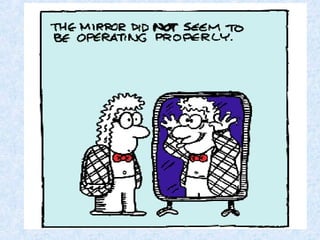
What matters most is how you see yourself!!


                                         8
What matters most is how you see yourself!!


                                         9
10
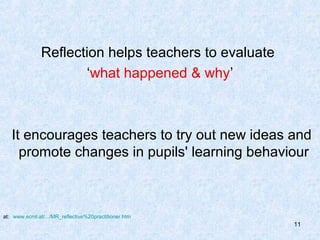
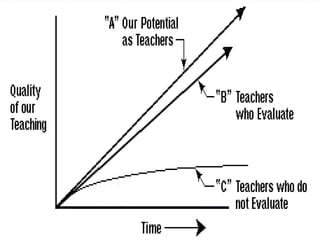
Reflection helps teachers to evaluate
                      ‘what happened & why’


   It encourages teachers to try out new ideas and
     promote changes in pupils' learning behaviour


at: www.ecml.at/.../MR_reflective%20practitioner.htm
                                                       11
12
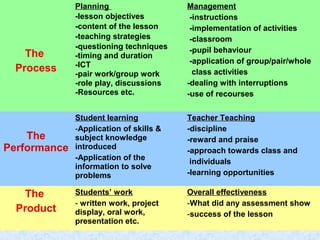
Planning                   Management
              -lesson objectives          -instructions
              -content of the lesson      -implementation of activities
              -teaching strategies        -classroom
              -questioning techniques     -pupil behaviour
    The       -timing and duration
              -ICT                        -application of group/pair/whole
  Process     -pair work/group work        class activities
              -role play, discussions    -dealing with interruptions
              -Resources etc.            -use of recourses

              Student learning           Teacher Teaching
              -Application of skills &   -discipline
    The       subject knowledge          -reward and praise
Performance   introduced                 -approach towards class and
              -Application of the         individuals
              information to solve
              problems                   -learning opportunities

    The       Students’ work             Overall effectiveness
              - written work, project    -What did any assessment show
  Product     display, oral work,        -success of the lesson
              presentation etc.                                      13
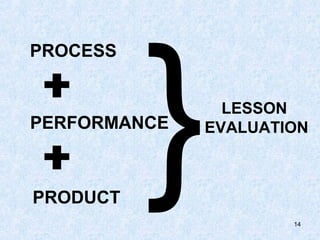
}
PROCESS


                LESSON
PERFORMANCE   EVALUATION


PRODUCT
                      14
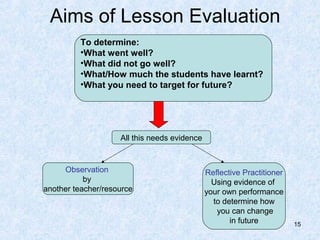
Aims of Lesson Evaluation
         To determine:
         •What went well?
         •What did not go well?
         •What/How much the students have learnt?
         •What you need to target for future?


                    All this needs evidence


     Observation                              Reflective Practitioner
           by                                   Using evidence of
another teacher/resource                      your own performance
                                                to determine how
                                                 you can change
                                                     in future          15
It is imperative that objectives of lesson for
    evaluation are identified in advance.


 Without predetermined objectives, it is not
 possible to judge the progress, growth and
    development of learning in students.

                                            16
Characteristics of a Good
         Evaluation Programme
Evaluation is:

- an Objective-based Process

- a Continuous Process

- a Comprehensive Process

- a Dynamic Process

- a Decision Making Process

                                    17
Diagnostic purpose

– To be able to identify specific areas of learning where
  students need more support and thus make changes
  in plan accordingly.
– To find out the underlying cause of weaknesses in a
  student's learning,
– Needed prior to instruction in order to place the
  student properly by looking at his/her level of
  achievement.


                                                        18
How is evaluation linked to
           assessment ?
• Assessment gives direct information about
  pupils attainment in relation to objectives.
• Results of assessment should be used to plan
  teaching and make decisions about students
  learning needs.
• Evidence should support all judgments

• The link between planning teaching and
  assessment should be strong.
                                                 19
Evaluating
 Student Learning vs. Teacher Teaching
Decide…
• Which aspects of student learning are
  important to assess/check in this lesson?

• Which aspects of your teaching are
  challenging or new for you in this lesson?

         And make a note of these.
                                               20
SAMPLE EVALUATIONS OF
          LESSONS
Read the given samples in groups and answer the
 questions:
Q1. What are the most useful aspects? Why?

Q2. What was least helpful aspects? Why?


Q2. How will these help teachers in improving the
 quality of teaching and learning in her
 classroom?
                                                    21
Student Learning
• Were the students able to understand the meaning of
  homophones? How can I say?
• Were all the students able to create a story using 5
  homophones?
• Did the students understand the task easily? What is the
  evidence?
• Was the content of the lesson suitable for all the
  students? What's the proof?
• Did all the students actively participate in the lesson/
  tasks/ activities/discussions? How many of them
  could/did not?
                          Etc…                               22

                   What should I do now?
Teachers Teaching

• Were my instructions clear?
• Did I manage the tasks/activities/discussions
  effectively?
• Did I plan the tasks according to the level of
  students (not too easy/difficult)?
• What was my role throughout the lesson?
• Was the timing appropriate?

                     Etc…
              What should I do now?                23
… and then combine these ideas together
 under these two headings:

 - student learning
 - teacher’s teaching


                                          24
Other sources which can help in
              evaluation
•   Self evaluation
•   Students feedback
•   Students’ work
•   Peer observation
•   Critical Friend
•   Audio recording
•   Video recording
•   Notes
•   Questionnaires
•   Checklists
                                      25
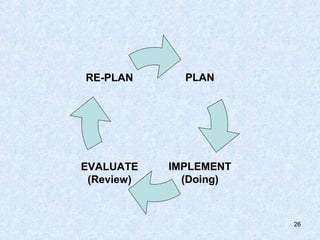
RE-PLAN       PLAN


EVALUATE    IMPLEMENT
 (Review)     (Doing)


                        26
"Teaching for successful learning cannot occur
       without high quality evaluation.“

The quality of any educational system is, thus,
  directly liked with the quality of evaluation


                                                  27
REMEMBER
         A

REFLECTIVE teacher

     is always an

EFFECTIVE teacher.

                     28
Thank you


            29

Evaluating lessons

  • 1.
    Evaluating Lessons Principles,Purposes & Practices 1
  • 2.
    Objectives By the endof the session teachers will be able to: • Understand the meaning of evaluation • Understand the purpose of evaluation in teaching and learning context • Understand the relationship between reflection and evaluation • Identify aspects related to the evaluation of student learning and teachers’ teaching • Write the evaluation of a role played lesson • Review different sources which facilitate the process of evaluation 2
  • 3.
    What is Evaluation? Discussin pairs the meaning of the term ‘Evaluation’. Now write a sentence to describe your understanding!! 3
  • 4.
    ‘EVALUATION is….’ a purposeful,cyclical process of collecting, analysing and interpreting relevant information in order to make educational decisions. Moreover it is providing and using information to make decisions on the process, the performance and/or the product of a learning event or REVIEWING It is simply the ability to reflect and question yourself! 4
  • 5.
    There is alwaysa possibility that our view of a successful lesson can be different from an outside observer – a professional judgment according to agreed standards! 5
  • 6.
    Reflection & Evaluation…. How are these two linked 6
  • 7.
  • 8.
    What matters mostis how you see yourself!! 8
  • 9.
    What matters mostis how you see yourself!! 9
  • 10.
  • 11.
    Reflection helps teachersto evaluate ‘what happened & why’ It encourages teachers to try out new ideas and promote changes in pupils' learning behaviour at: www.ecml.at/.../MR_reflective%20practitioner.htm 11
  • 12.
  • 13.
    Planning Management -lesson objectives -instructions -content of the lesson -implementation of activities -teaching strategies -classroom -questioning techniques -pupil behaviour The -timing and duration -ICT -application of group/pair/whole Process -pair work/group work class activities -role play, discussions -dealing with interruptions -Resources etc. -use of recourses Student learning Teacher Teaching -Application of skills & -discipline The subject knowledge -reward and praise Performance introduced -approach towards class and -Application of the individuals information to solve problems -learning opportunities The Students’ work Overall effectiveness - written work, project -What did any assessment show Product display, oral work, -success of the lesson presentation etc. 13
  • 14.
    } PROCESS LESSON PERFORMANCE EVALUATION PRODUCT 14
  • 15.
    Aims of LessonEvaluation To determine: •What went well? •What did not go well? •What/How much the students have learnt? •What you need to target for future? All this needs evidence Observation Reflective Practitioner by Using evidence of another teacher/resource your own performance to determine how you can change in future 15
  • 16.
    It is imperativethat objectives of lesson for evaluation are identified in advance. Without predetermined objectives, it is not possible to judge the progress, growth and development of learning in students. 16
  • 17.
    Characteristics of aGood Evaluation Programme Evaluation is: - an Objective-based Process - a Continuous Process - a Comprehensive Process - a Dynamic Process - a Decision Making Process 17
  • 18.
    Diagnostic purpose – Tobe able to identify specific areas of learning where students need more support and thus make changes in plan accordingly. – To find out the underlying cause of weaknesses in a student's learning, – Needed prior to instruction in order to place the student properly by looking at his/her level of achievement. 18
  • 19.
    How is evaluationlinked to assessment ? • Assessment gives direct information about pupils attainment in relation to objectives. • Results of assessment should be used to plan teaching and make decisions about students learning needs. • Evidence should support all judgments • The link between planning teaching and assessment should be strong. 19
  • 20.
    Evaluating Student Learningvs. Teacher Teaching Decide… • Which aspects of student learning are important to assess/check in this lesson? • Which aspects of your teaching are challenging or new for you in this lesson? And make a note of these. 20
  • 21.
    SAMPLE EVALUATIONS OF LESSONS Read the given samples in groups and answer the questions: Q1. What are the most useful aspects? Why? Q2. What was least helpful aspects? Why? Q2. How will these help teachers in improving the quality of teaching and learning in her classroom? 21
  • 22.
    Student Learning • Werethe students able to understand the meaning of homophones? How can I say? • Were all the students able to create a story using 5 homophones? • Did the students understand the task easily? What is the evidence? • Was the content of the lesson suitable for all the students? What's the proof? • Did all the students actively participate in the lesson/ tasks/ activities/discussions? How many of them could/did not? Etc… 22 What should I do now?
  • 23.
    Teachers Teaching • Weremy instructions clear? • Did I manage the tasks/activities/discussions effectively? • Did I plan the tasks according to the level of students (not too easy/difficult)? • What was my role throughout the lesson? • Was the timing appropriate? Etc… What should I do now? 23
  • 24.
    … and thencombine these ideas together under these two headings: - student learning - teacher’s teaching 24
  • 25.
    Other sources whichcan help in evaluation • Self evaluation • Students feedback • Students’ work • Peer observation • Critical Friend • Audio recording • Video recording • Notes • Questionnaires • Checklists 25
  • 26.
    RE-PLAN PLAN EVALUATE IMPLEMENT (Review) (Doing) 26
  • 27.
    "Teaching for successfullearning cannot occur without high quality evaluation.“ The quality of any educational system is, thus, directly liked with the quality of evaluation 27
  • 28.
    REMEMBER A REFLECTIVE teacher is always an EFFECTIVE teacher. 28
  • 29.