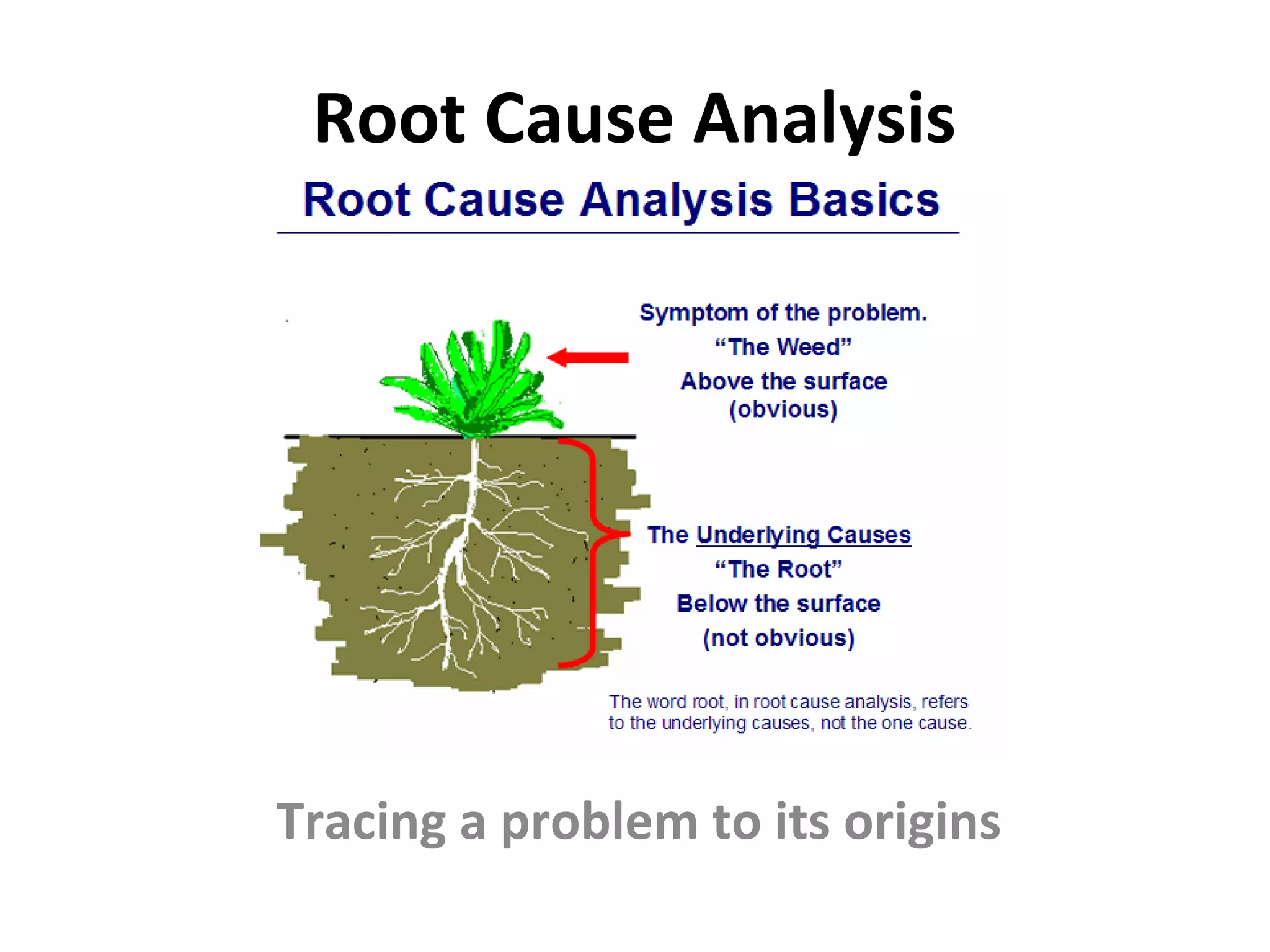
Root Cause Analysis
Tracing a problem to its origins
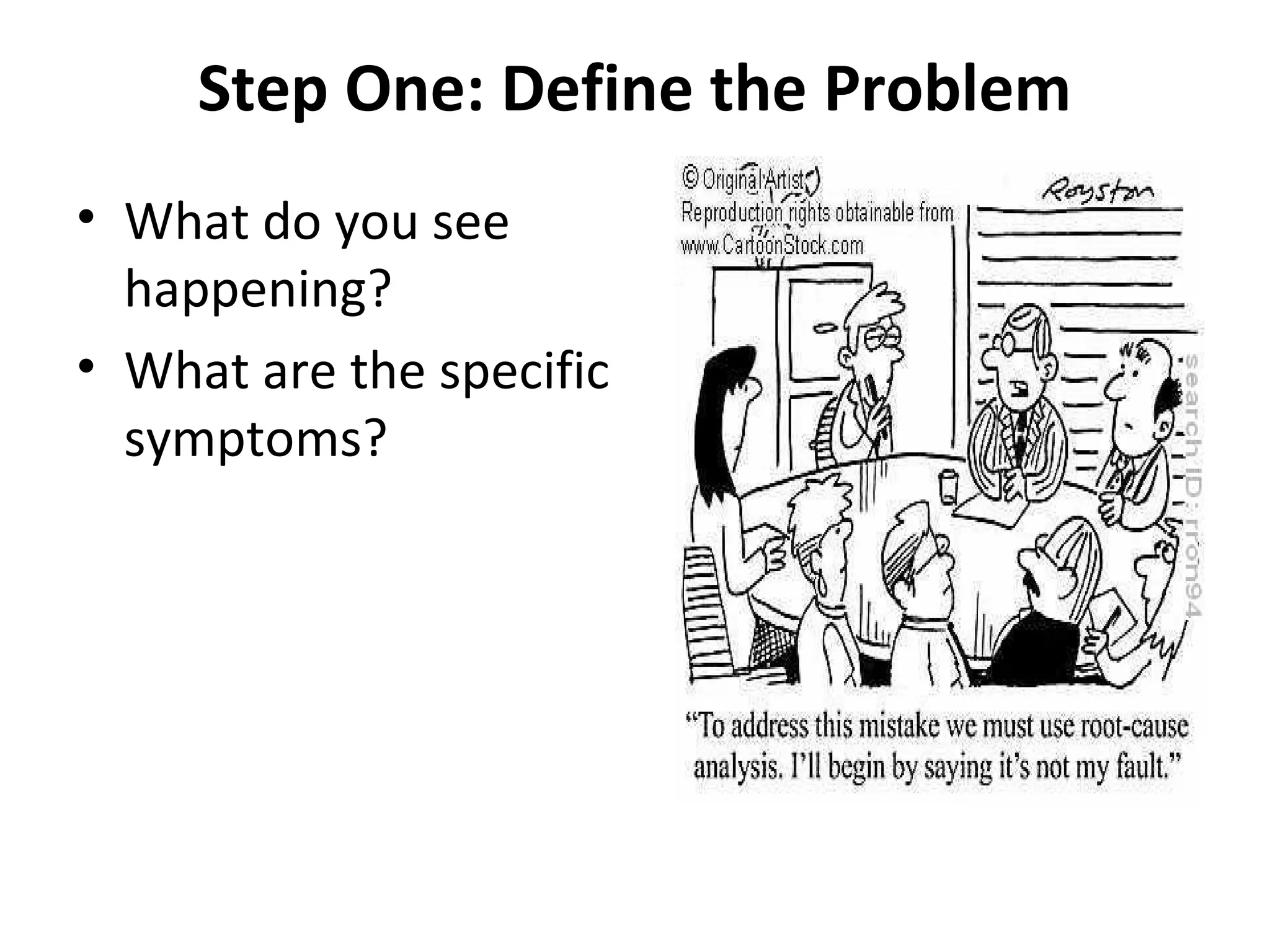
Step One: Define the Problem
• What do you see
happening?
• What are the specific
symptoms?
Step Two: Collect Data
• What proof do you
have that the
problem exists?
• How long has the
problem existed?
• What is the impact of
the problem?
A helpful tool at this stage
is CATWOE. With this
process, you look at the
same situation from
different perspectives: the
Customers, the people
(Actors) who implement the
solutions, the
Transformation process
that's affected, the World
view, the process Owner,
and Environmental
constraints.
Step Three: Identify Possible Causal Factors
• What sequence of
events leads to the
problem?
• What conditions
allow the problem to
occur?
• What other problems
surround the
occurrence of the
central problem?
Use these tools to help identify
causal factors:
• Appreciation – Use the facts and
ask "So what?" to determine all the
possible consequences of a fact.
• 5 Whys – Ask "Why?" until you
get to the root of the problem.
• Drill Down – Break down a
problem into small, detailed parts to
better understand the big picture.
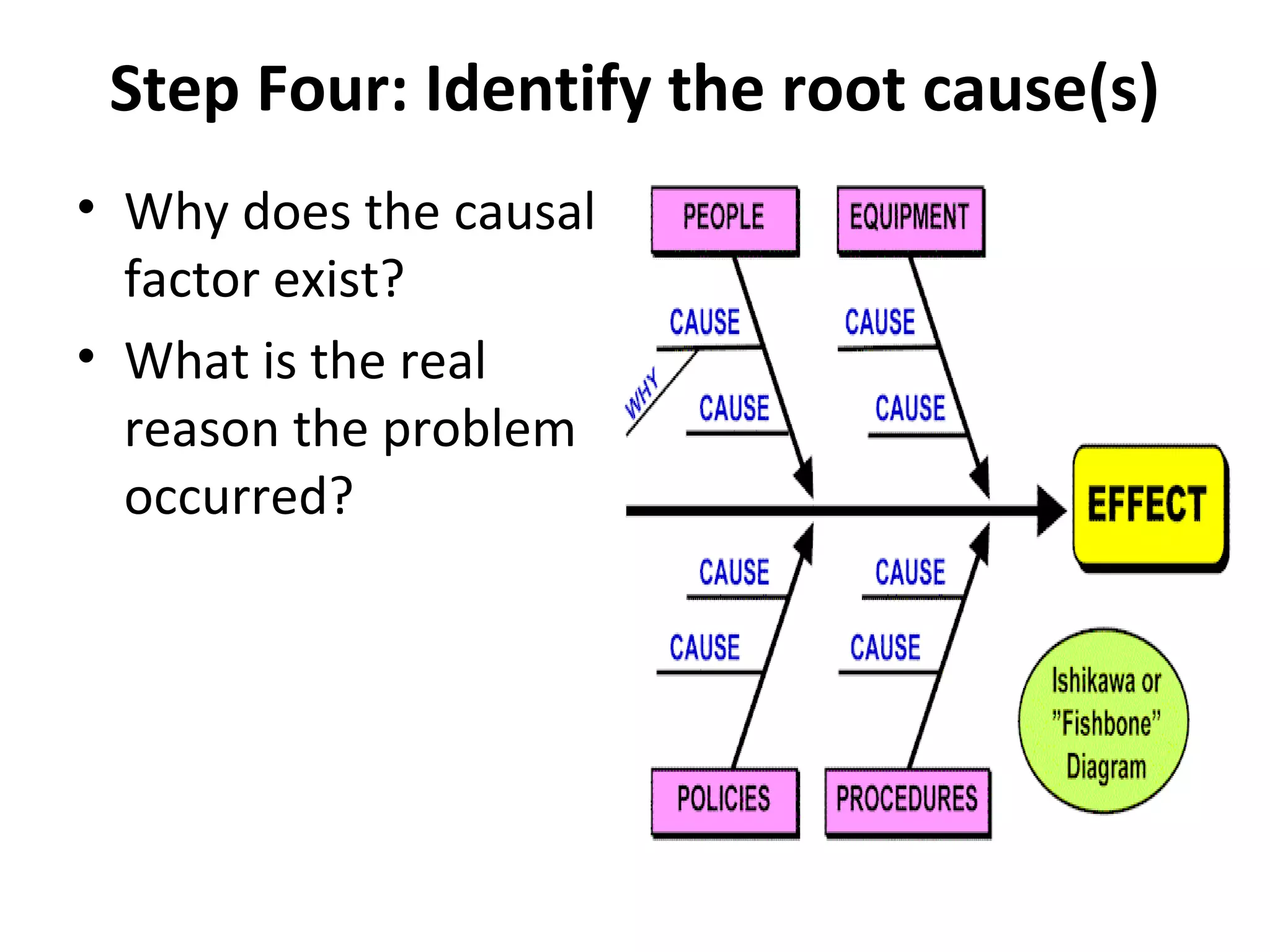
• Cause and Effect Diagrams –
Create a chart of all of the possible
causal factors, to see where the
trouble may have begun.
Step Four: Identify the root cause(s)
• Why does the causal
factor exist?
• What is the real
reason the problem
occurred?
Step Five: Recommend & Implement Solutions
• What can you do to
prevent the problem
from happening again?
• How will the solution
be implemented?
• Who will be
responsible for it?
• What are the risks of
implementing the
solution?
An excellent strategy to adopt is
Kaizen, or continuous
improvement. This is the idea that
continual small changes create
better systems overall. Kaizen also
emphasizes that the people
closest to a process should identify
places for improvement. Again,
with kaizen alive and well in your
company, the root causes of
problems can be identified and
resolved quickly and effectively.
Task
CycleWorld has a network
problem:
2 of the PCs on the
Cycleworld network
cannot access a printer.
Using the root cause
analysis model, how
would you diagnose the
problem and offer a
solution(s)

Root Cause Analysis

  • 1.
    Root Cause Analysis Tracinga problem to its origins
  • 2.
    Step One: Definethe Problem • What do you see happening? • What are the specific symptoms?
  • 3.
    Step Two: CollectData • What proof do you have that the problem exists? • How long has the problem existed? • What is the impact of the problem? A helpful tool at this stage is CATWOE. With this process, you look at the same situation from different perspectives: the Customers, the people (Actors) who implement the solutions, the Transformation process that's affected, the World view, the process Owner, and Environmental constraints.
  • 4.
    Step Three: IdentifyPossible Causal Factors • What sequence of events leads to the problem? • What conditions allow the problem to occur? • What other problems surround the occurrence of the central problem? Use these tools to help identify causal factors: • Appreciation – Use the facts and ask "So what?" to determine all the possible consequences of a fact. • 5 Whys – Ask "Why?" until you get to the root of the problem. • Drill Down – Break down a problem into small, detailed parts to better understand the big picture. • Cause and Effect Diagrams – Create a chart of all of the possible causal factors, to see where the trouble may have begun.
  • 5.
    Step Four: Identifythe root cause(s) • Why does the causal factor exist? • What is the real reason the problem occurred?
  • 6.
    Step Five: Recommend& Implement Solutions • What can you do to prevent the problem from happening again? • How will the solution be implemented? • Who will be responsible for it? • What are the risks of implementing the solution? An excellent strategy to adopt is Kaizen, or continuous improvement. This is the idea that continual small changes create better systems overall. Kaizen also emphasizes that the people closest to a process should identify places for improvement. Again, with kaizen alive and well in your company, the root causes of problems can be identified and resolved quickly and effectively.
  • 7.
    Task CycleWorld has anetwork problem: 2 of the PCs on the Cycleworld network cannot access a printer. Using the root cause analysis model, how would you diagnose the problem and offer a solution(s)