© OECD/IEA 2013
Launch at CEM
12 May, 2014
Energy Technology Perspectives 2014:
Harnessing Electricity’s Potential
© OECD/IEA 2013
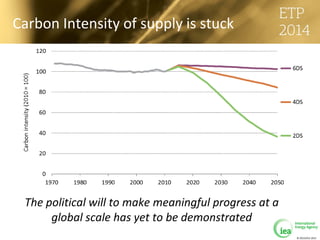
Carbon Intensity of supply is stuck
The political will to make meaningful progress at a
global scale has yet to be demonstrated
© OECD/IEA 2013
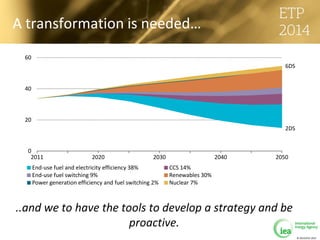
A transformation is needed…
..and we to have the tools to develop a strategy and be
proactive.
0
20
40
60
2011 2020 2030 2040 2050
End-use fuel and electricity efficiency 38% CCS 14%
End-use fuel switching 9% Renewables 30%
Power generation efficiency and fuel switching 2% Nuclear 7%
6DS
2DS
© OECD/IEA 2013
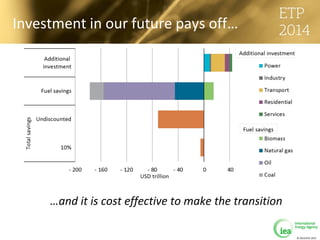
Investment in our future pays off…
…and it is cost effective to make the transition
© OECD/IEA 2013
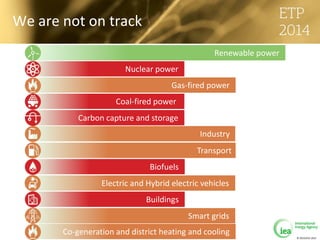
We are not on track
Renewable power
Smart grids
Gas-fired power
Nuclear power
Coal-fired power
Carbon capture and storage
Industry
Biofuels
Buildings
Transport
Electric and Hybrid electric vehicles
Co-generation and district heating and cooling
© OECD/IEA 2013
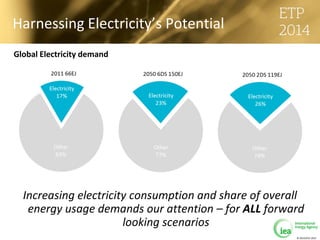
Harnessing Electricity’s Potential
Global Electricity demand
Increasing electricity consumption and share of overall
energy usage demands our attention – for ALL forward
looking scenarios
© OECD/IEA 2013
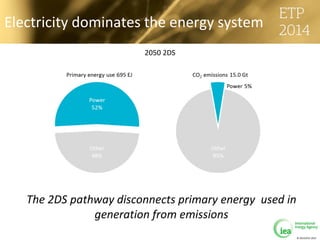
Electricity dominates the energy system
The 2DS pathway disconnects primary energy used in
generation from emissions
20112050 2DS
© OECD/IEA 2013
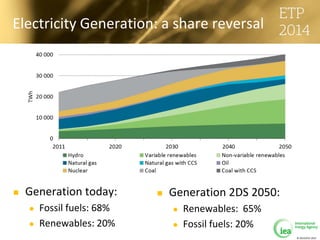
Electricity Generation: a share reversal
 Generation today:
 Fossil fuels: 68%
 Renewables: 20%
 Generation 2DS 2050:
 Renewables: 65%
 Fossil fuels: 20%
© OECD/IEA 2013
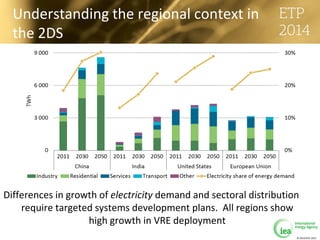
Understanding the regional context in
the 2DS
Differences in growth of electricity demand and sectoral distribution
require targeted systems development plans. All regions show
high growth in VRE deployment
© OECD/IEA 2013
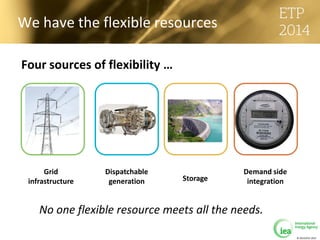
We have the flexible resources
Grid
infrastructure
Dispatchable
generation Storage
Demand side
integration
Four sources of flexibility …
No one flexible resource meets all the needs.
© OECD/IEA 2013
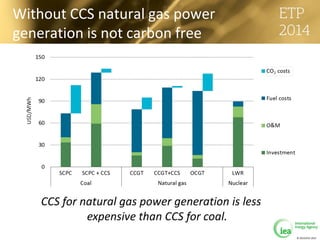
Without CCS natural gas power
generation is not carbon free
CCS for natural gas power generation is less
expensive than CCS for coal.
© OECD/IEA 2013
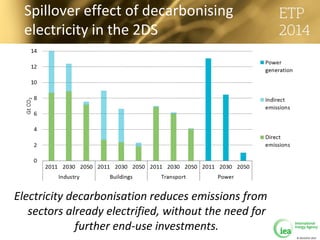
Spillover effect of decarbonising
electricity in the 2DS
Electricity decarbonisation reduces emissions from
sectors already electrified, without the need for
further end-use investments.
© OECD/IEA 2013
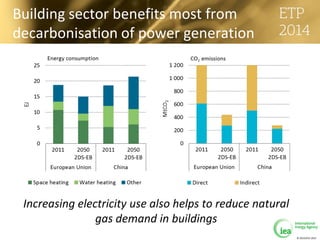
Building sector benefits most from
decarbonisation of power generation
Increasing electricity use also helps to reduce natural
gas demand in buildings
© OECD/IEA 2013
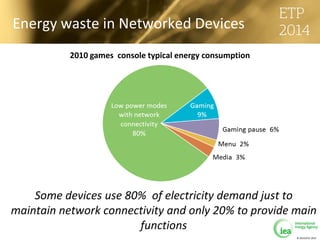
Energy waste in Networked Devices
Some devices use 80% of electricity demand just to
maintain network connectivity and only 20% to provide main
functions
2010 games console typical energy consumption
© OECD/IEA 2013
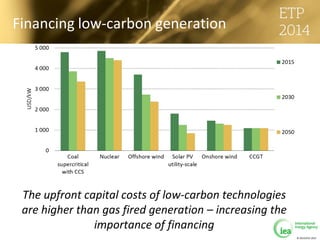
Financing low-carbon generation
The upfront capital costs of low-carbon technologies
are higher than gas fired generation – increasing the
importance of financing
© OECD/IEA 2013
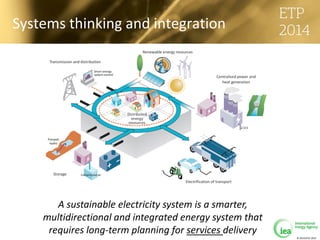
Systems thinking and integration
Today’s energy system paradigm is based on
a unidirectional energy delivery philosophy
A sustainable electricity system is a smarter,
multidirectional and integrated energy system that
requires long-term planning for services delivery
© OECD/IEA 2013
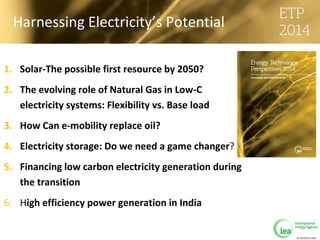
Harnessing Electricity’s Potential
1. Solar-The possible first resource by 2050?
2. The evolving role of Natural Gas in Low-C
electricity systems: Flexibility vs. Base load
3. How Can e-mobility replace oil?
4. Electricity storage: Do we need a game changer?
5. Financing low carbon electricity generation during
the transition
6. High efficiency power generation in India
© OECD/IEA 2013
Thank you

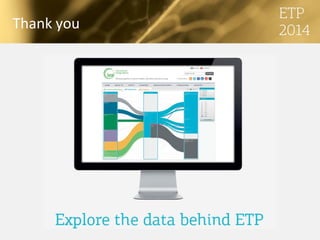
Energy Technology Perspectives 2014

  • 1.
    © OECD/IEA 2013 Launchat CEM 12 May, 2014 Energy Technology Perspectives 2014: Harnessing Electricity’s Potential
  • 2.
    © OECD/IEA 2013 CarbonIntensity of supply is stuck The political will to make meaningful progress at a global scale has yet to be demonstrated
  • 3.
    © OECD/IEA 2013 Atransformation is needed… ..and we to have the tools to develop a strategy and be proactive. 0 20 40 60 2011 2020 2030 2040 2050 End-use fuel and electricity efficiency 38% CCS 14% End-use fuel switching 9% Renewables 30% Power generation efficiency and fuel switching 2% Nuclear 7% 6DS 2DS
  • 4.
    © OECD/IEA 2013 Investmentin our future pays off… …and it is cost effective to make the transition
  • 5.
    © OECD/IEA 2013 Weare not on track Renewable power Smart grids Gas-fired power Nuclear power Coal-fired power Carbon capture and storage Industry Biofuels Buildings Transport Electric and Hybrid electric vehicles Co-generation and district heating and cooling
  • 6.
    © OECD/IEA 2013 HarnessingElectricity’s Potential Global Electricity demand Increasing electricity consumption and share of overall energy usage demands our attention – for ALL forward looking scenarios
  • 7.
    © OECD/IEA 2013 Electricitydominates the energy system The 2DS pathway disconnects primary energy used in generation from emissions 20112050 2DS
  • 8.
    © OECD/IEA 2013 ElectricityGeneration: a share reversal  Generation today:  Fossil fuels: 68%  Renewables: 20%  Generation 2DS 2050:  Renewables: 65%  Fossil fuels: 20%
  • 9.
    © OECD/IEA 2013 Understandingthe regional context in the 2DS Differences in growth of electricity demand and sectoral distribution require targeted systems development plans. All regions show high growth in VRE deployment
  • 10.
    © OECD/IEA 2013 Wehave the flexible resources Grid infrastructure Dispatchable generation Storage Demand side integration Four sources of flexibility … No one flexible resource meets all the needs.
  • 11.
    © OECD/IEA 2013 WithoutCCS natural gas power generation is not carbon free CCS for natural gas power generation is less expensive than CCS for coal.
  • 12.
    © OECD/IEA 2013 Spillovereffect of decarbonising electricity in the 2DS Electricity decarbonisation reduces emissions from sectors already electrified, without the need for further end-use investments.
  • 13.
    © OECD/IEA 2013 Buildingsector benefits most from decarbonisation of power generation Increasing electricity use also helps to reduce natural gas demand in buildings
  • 14.
    © OECD/IEA 2013 Energywaste in Networked Devices Some devices use 80% of electricity demand just to maintain network connectivity and only 20% to provide main functions 2010 games console typical energy consumption
  • 15.
    © OECD/IEA 2013 Financinglow-carbon generation The upfront capital costs of low-carbon technologies are higher than gas fired generation – increasing the importance of financing
  • 16.
    © OECD/IEA 2013 Systemsthinking and integration Today’s energy system paradigm is based on a unidirectional energy delivery philosophy A sustainable electricity system is a smarter, multidirectional and integrated energy system that requires long-term planning for services delivery
  • 17.
    © OECD/IEA 2013 HarnessingElectricity’s Potential 1. Solar-The possible first resource by 2050? 2. The evolving role of Natural Gas in Low-C electricity systems: Flexibility vs. Base load 3. How Can e-mobility replace oil? 4. Electricity storage: Do we need a game changer? 5. Financing low carbon electricity generation during the transition 6. High efficiency power generation in India
  • 18.