Estimation of
Fixed Capital Cost
Dr. K. Shahzad Baig
Memorial University of Newfoundland (MUN) Canada
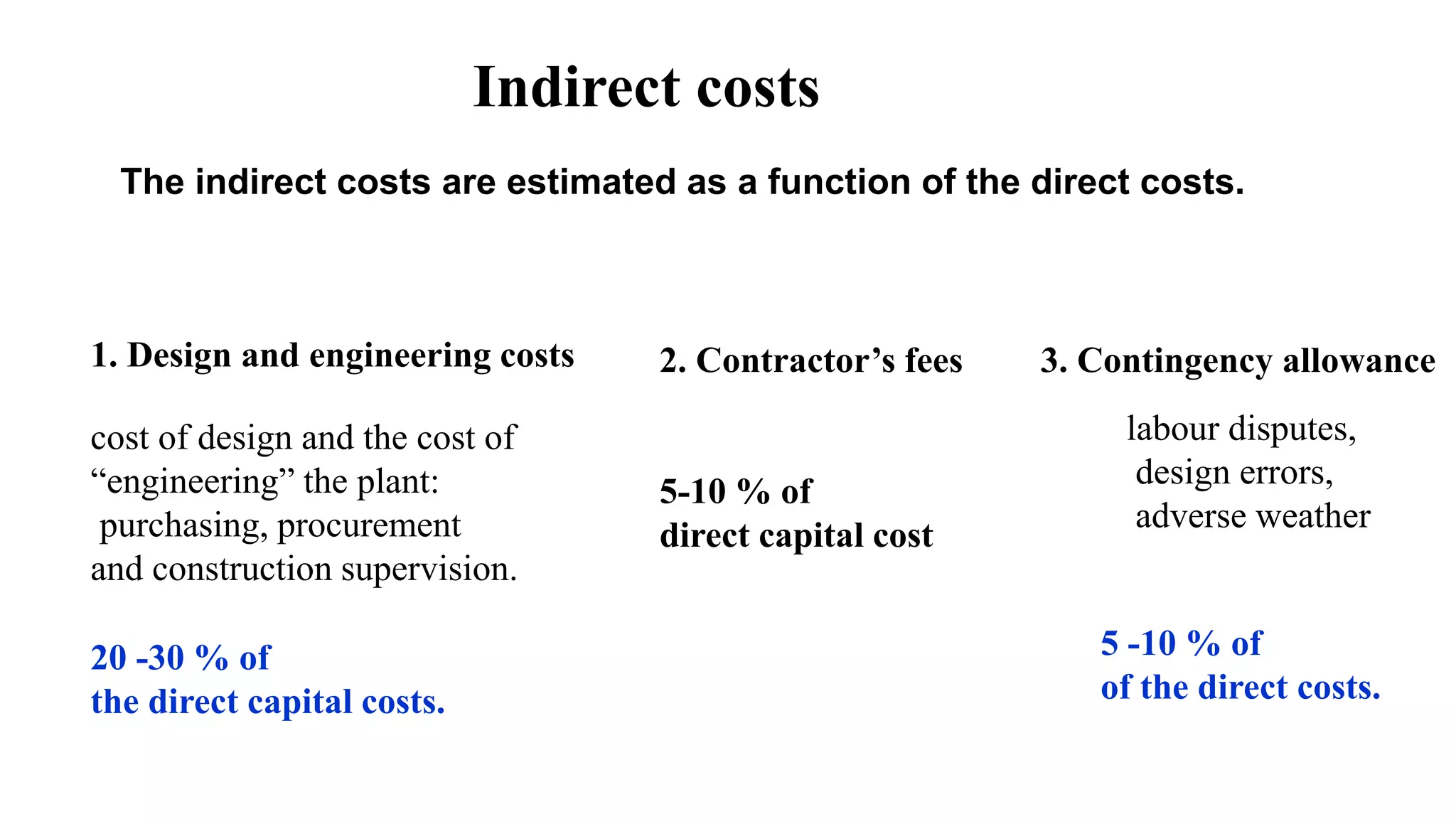
Indirect costs
The indirect costs are estimated as a function of the direct costs.
1. Design and engineering costs
cost of design and the cost of
“engineering” the plant:
purchasing, procurement
and construction supervision.
20 -30 % of
the direct capital costs.
2. Contractor’s fees
5-10 % of
direct capital cost
3. Contingency allowance
labour disputes,
design errors,
adverse weather
5 -10 % of
of the direct costs.
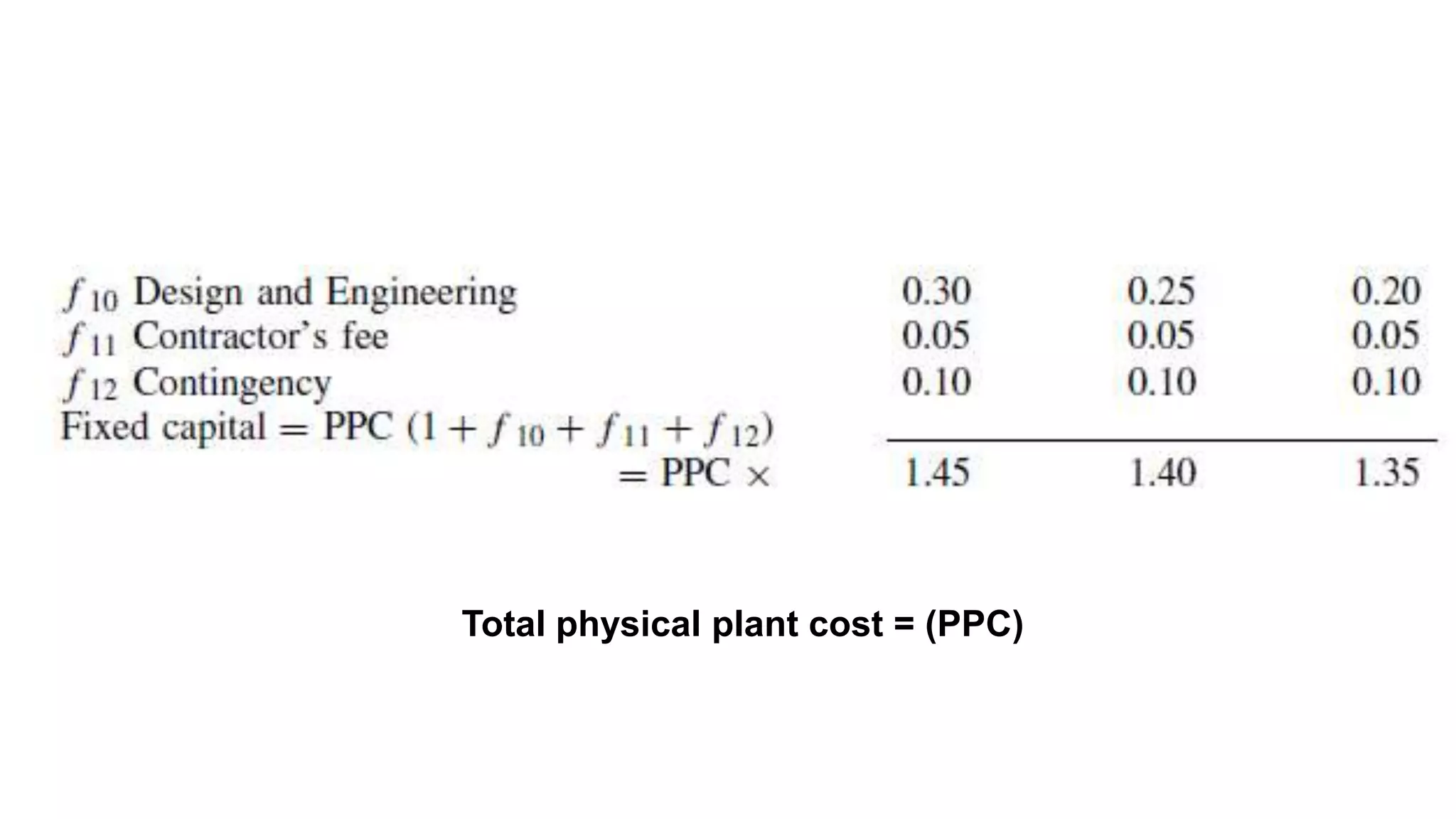
Total physical plant cost = (PPC)
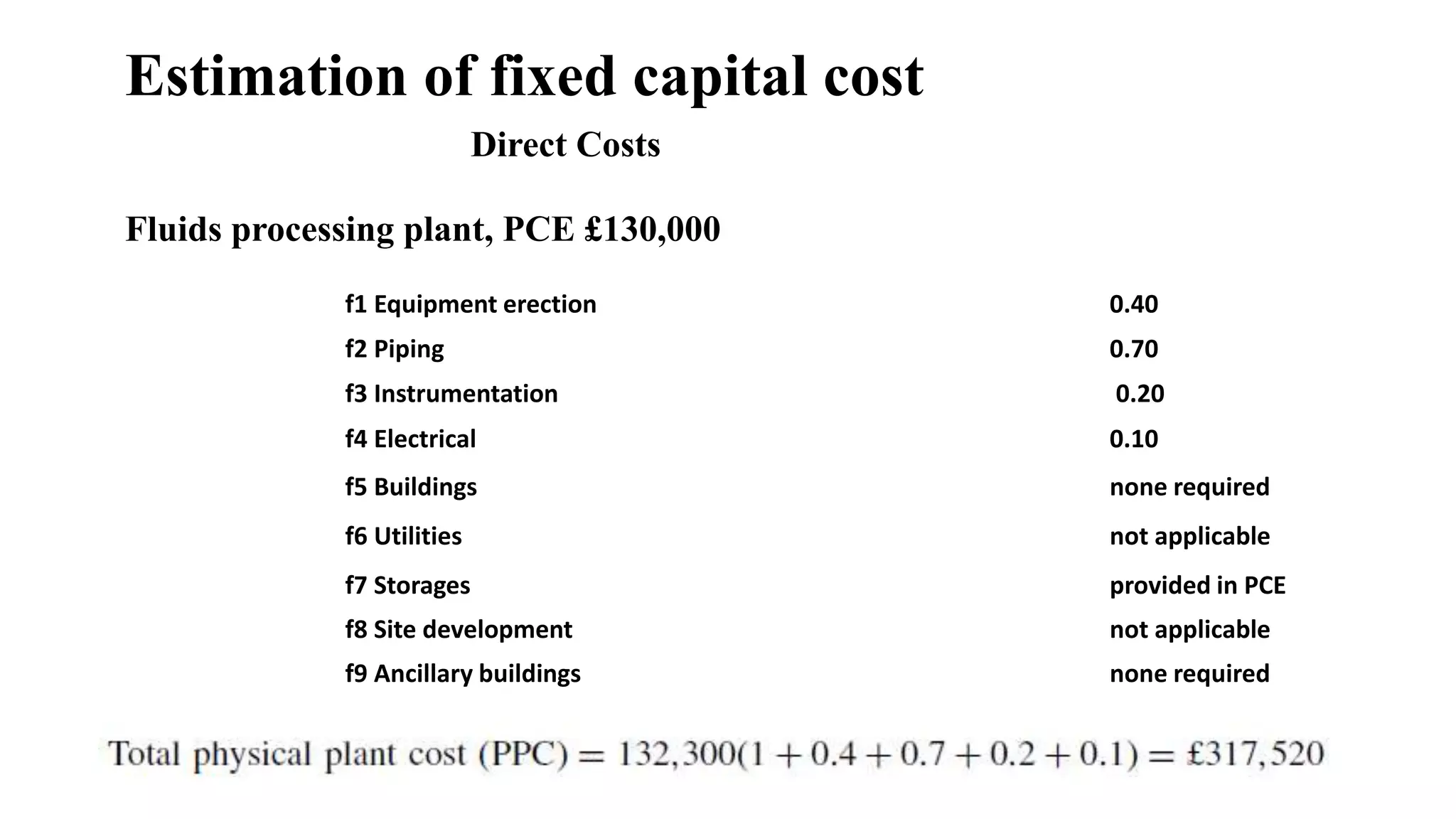
Estimation of fixed capital cost
Direct Costs
Fluids processing plant, PCE £130,000
f1 Equipment erection 0.40
f3 Instrumentation 0.20
f4 Electrical 0.10
f5 Buildings none required
f6 Utilities not applicable
f7 Storages provided in PCE
f8 Site development not applicable
f9 Ancillary buildings none required
f2 Piping 0.70
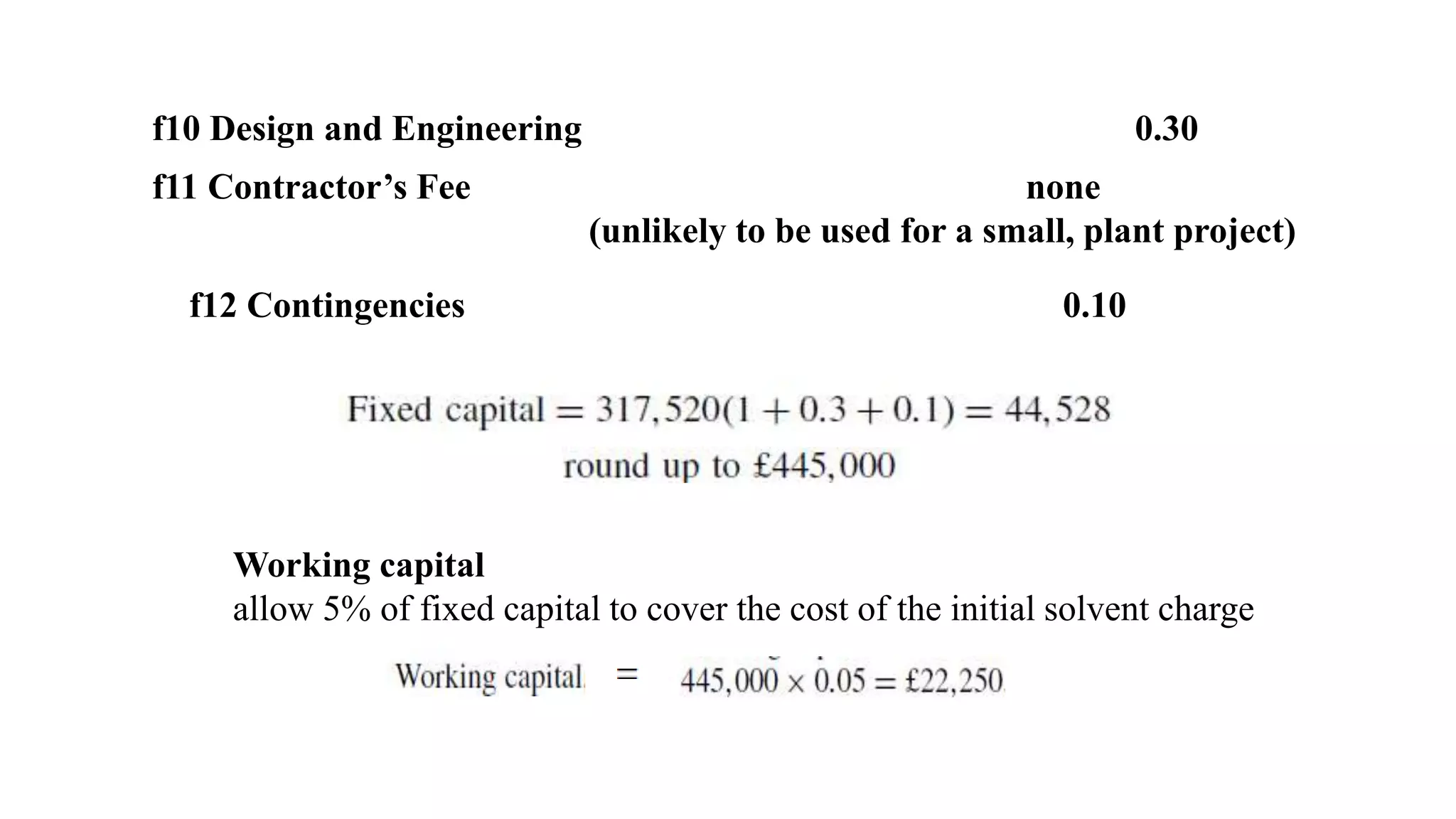
f10 Design and Engineering 0.30
f11 Contractor’s Fee none
(unlikely to be used for a small, plant project)
f12 Contingencies 0.10
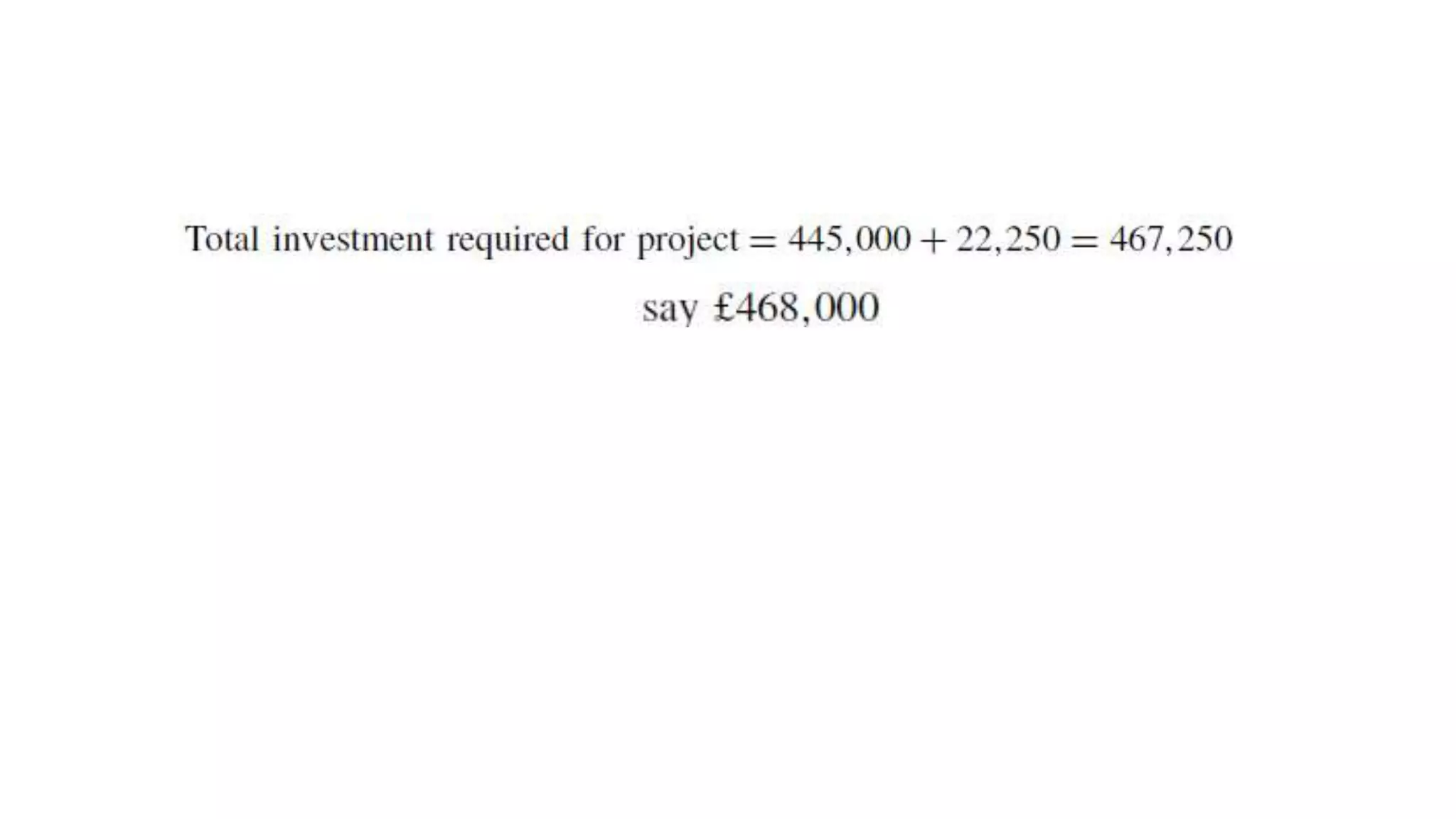
Working capital
allow 5% of fixed capital to cover the cost of the initial solvent charge
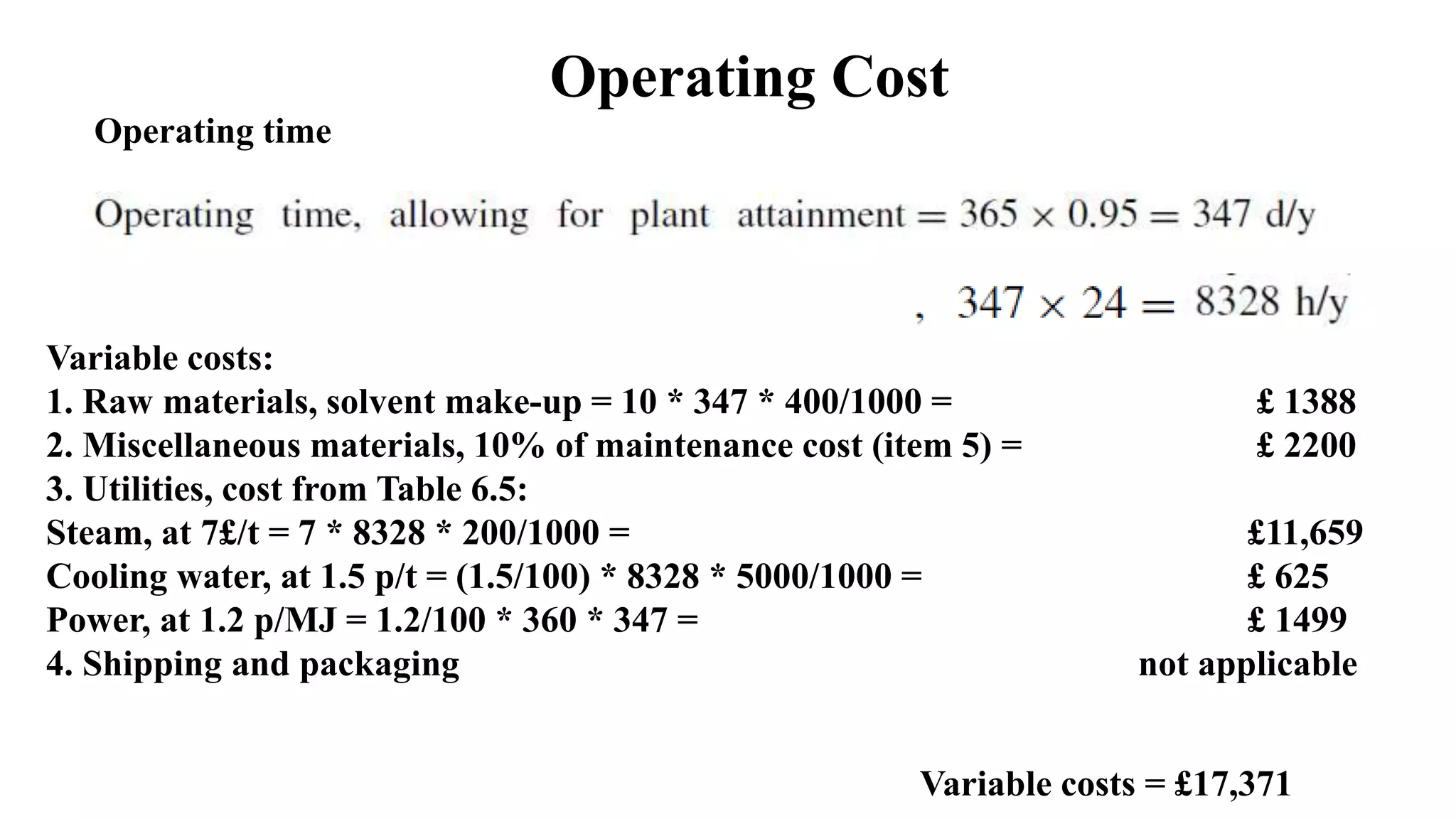
Operating Cost
Operating time
Variable costs:
1. Raw materials, solvent make-up = 10 * 347 * 400/1000 = £ 1388
2. Miscellaneous materials, 10% of maintenance cost (item 5) = £ 2200
3. Utilities, cost from Table 6.5:
Steam, at 7£/t = 7 * 8328 * 200/1000 = £11,659
Cooling water, at 1.5 p/t = (1.5/100) * 8328 * 5000/1000 = £ 625
Power, at 1.2 p/MJ = 1.2/100 * 360 * 347 = £ 1499
4. Shipping and packaging not applicable
Variable costs = £17,371
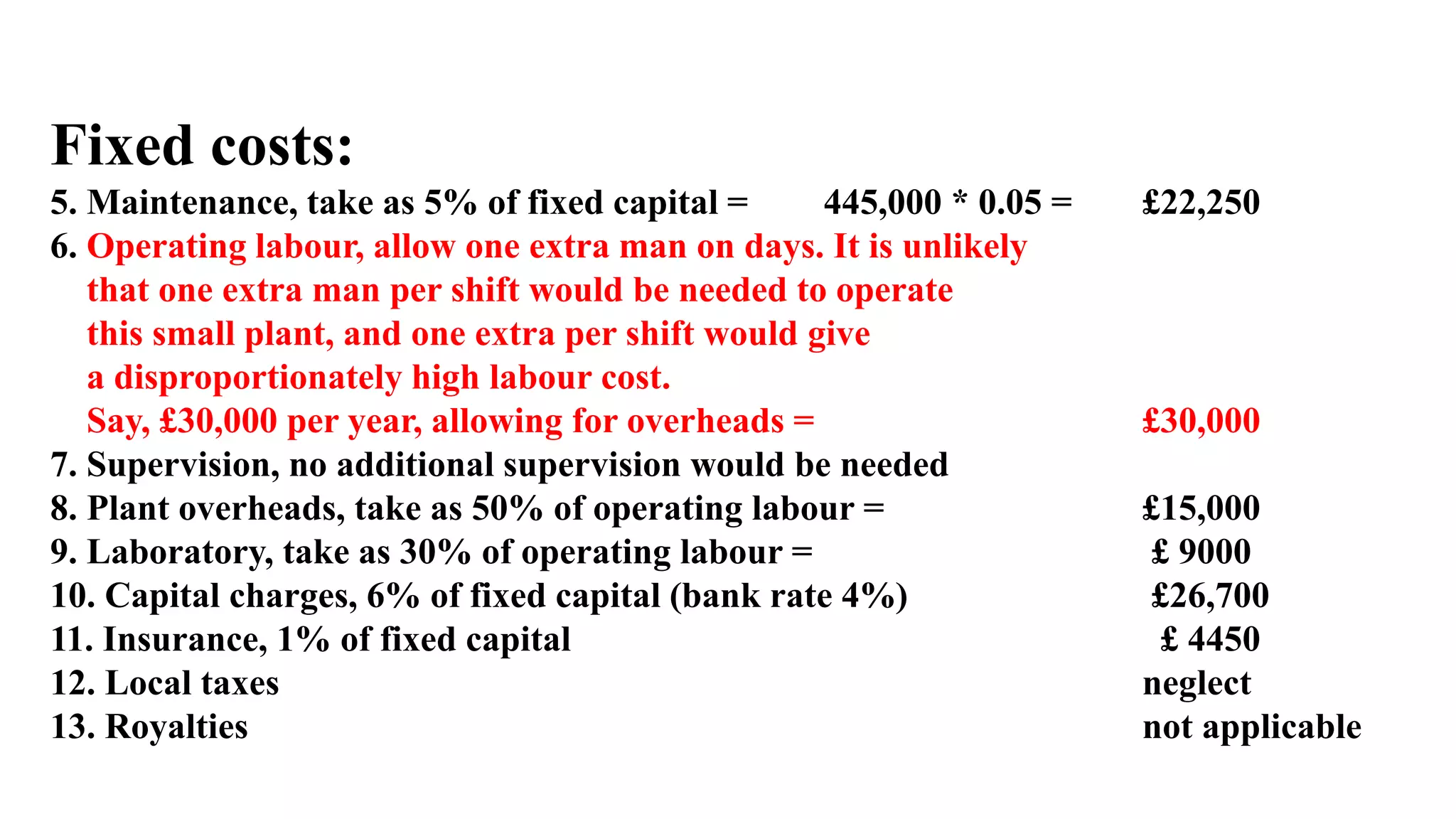
Fixed costs:
5. Maintenance, take as 5% of fixed capital = 445,000 * 0.05 = £22,250
6. Operating labour, allow one extra man on days. It is unlikely
that one extra man per shift would be needed to operate
this small plant, and one extra per shift would give
a disproportionately high labour cost.
Say, £30,000 per year, allowing for overheads = £30,000
7. Supervision, no additional supervision would be needed
8. Plant overheads, take as 50% of operating labour = £15,000
9. Laboratory, take as 30% of operating labour = £ 9000
10. Capital charges, 6% of fixed capital (bank rate 4%) £26,700
11. Insurance, 1% of fixed capital £ 4450
12. Local taxes neglect
13. Royalties not applicable
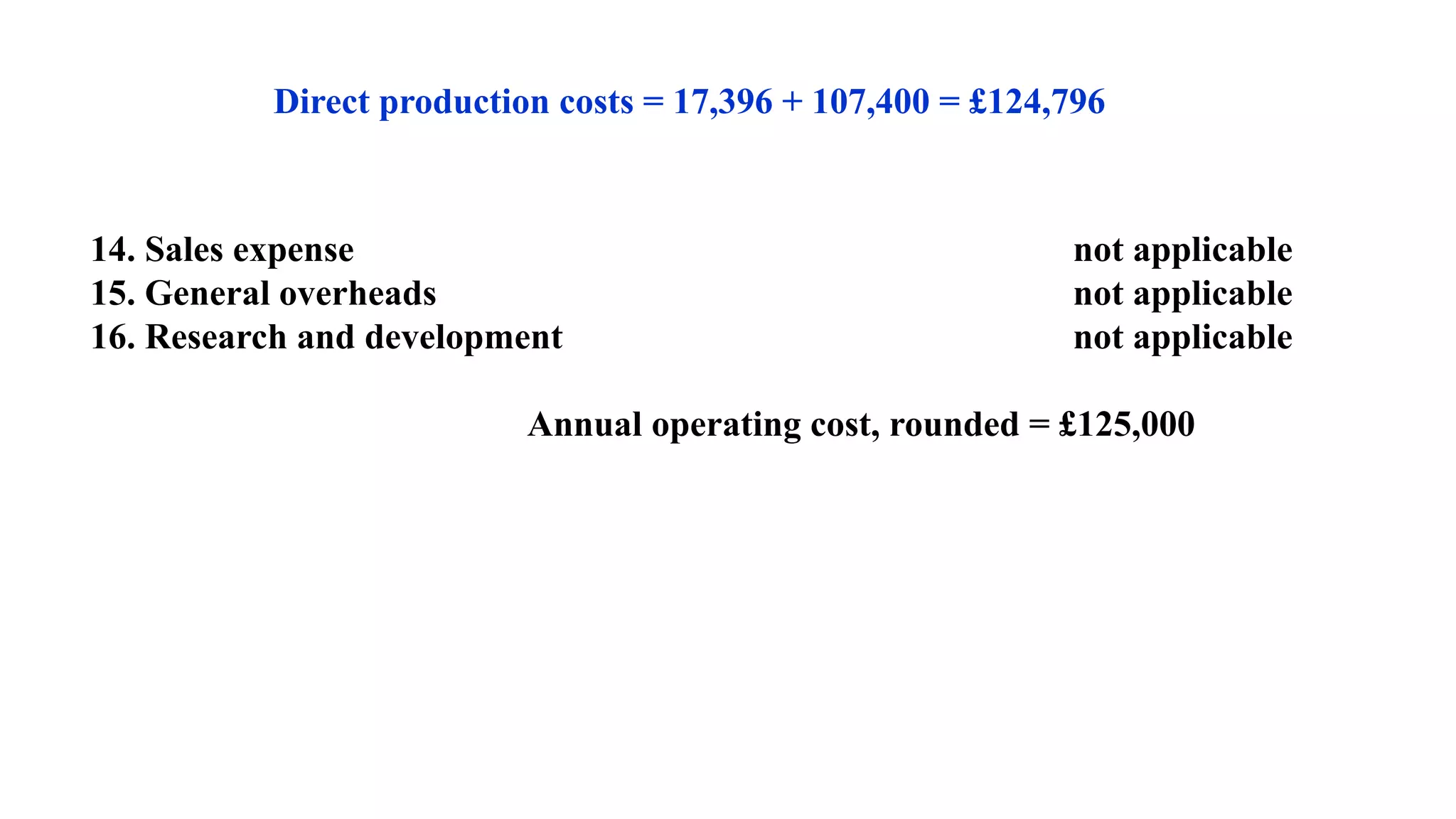
Direct production costs = 17,396 + 107,400 = £124,796
14. Sales expense not applicable
15. General overheads not applicable
16. Research and development not applicable
Annual operating cost, rounded = £125,000
Following books were used in preparation of notes
 Blank, L., Tarquin. A. 2005. Engineering Economy. 6th Edition, McGraw-Hill.
 Eschenbach, T. G. 2003. Engineering Economy”, 2nd Edition, Oxford University Press
 Riggs, J. L., Bedworth, D. D., Randhawa, S. U. 1996. Engineering Economics”, 4th Edition, Tata McGraw-Hill.
 Riggs, J. L., West. T. M. 1986. Essentials of Engineering Economics”, 2nd Edition, McGraw-Hill.
 Peter, M. S., Timmerhaus, K. D. 1991. Plant Design and Economics for Chemical Engineers. 4th Edition, McGraw-Hill.

Estimation of Fixed Capital Cost

  • 1.
    Estimation of Fixed CapitalCost Dr. K. Shahzad Baig Memorial University of Newfoundland (MUN) Canada
  • 2.
    Indirect costs The indirectcosts are estimated as a function of the direct costs. 1. Design and engineering costs cost of design and the cost of “engineering” the plant: purchasing, procurement and construction supervision. 20 -30 % of the direct capital costs. 2. Contractor’s fees 5-10 % of direct capital cost 3. Contingency allowance labour disputes, design errors, adverse weather 5 -10 % of of the direct costs.
  • 3.
  • 4.
    Estimation of fixedcapital cost Direct Costs Fluids processing plant, PCE £130,000 f1 Equipment erection 0.40 f3 Instrumentation 0.20 f4 Electrical 0.10 f5 Buildings none required f6 Utilities not applicable f7 Storages provided in PCE f8 Site development not applicable f9 Ancillary buildings none required f2 Piping 0.70
  • 5.
    f10 Design andEngineering 0.30 f11 Contractor’s Fee none (unlikely to be used for a small, plant project) f12 Contingencies 0.10 Working capital allow 5% of fixed capital to cover the cost of the initial solvent charge
  • 7.
    Operating Cost Operating time Variablecosts: 1. Raw materials, solvent make-up = 10 * 347 * 400/1000 = £ 1388 2. Miscellaneous materials, 10% of maintenance cost (item 5) = £ 2200 3. Utilities, cost from Table 6.5: Steam, at 7£/t = 7 * 8328 * 200/1000 = £11,659 Cooling water, at 1.5 p/t = (1.5/100) * 8328 * 5000/1000 = £ 625 Power, at 1.2 p/MJ = 1.2/100 * 360 * 347 = £ 1499 4. Shipping and packaging not applicable Variable costs = £17,371
  • 8.
    Fixed costs: 5. Maintenance,take as 5% of fixed capital = 445,000 * 0.05 = £22,250 6. Operating labour, allow one extra man on days. It is unlikely that one extra man per shift would be needed to operate this small plant, and one extra per shift would give a disproportionately high labour cost. Say, £30,000 per year, allowing for overheads = £30,000 7. Supervision, no additional supervision would be needed 8. Plant overheads, take as 50% of operating labour = £15,000 9. Laboratory, take as 30% of operating labour = £ 9000 10. Capital charges, 6% of fixed capital (bank rate 4%) £26,700 11. Insurance, 1% of fixed capital £ 4450 12. Local taxes neglect 13. Royalties not applicable
  • 9.
    Direct production costs= 17,396 + 107,400 = £124,796 14. Sales expense not applicable 15. General overheads not applicable 16. Research and development not applicable Annual operating cost, rounded = £125,000
  • 10.
    Following books wereused in preparation of notes  Blank, L., Tarquin. A. 2005. Engineering Economy. 6th Edition, McGraw-Hill.  Eschenbach, T. G. 2003. Engineering Economy”, 2nd Edition, Oxford University Press  Riggs, J. L., Bedworth, D. D., Randhawa, S. U. 1996. Engineering Economics”, 4th Edition, Tata McGraw-Hill.  Riggs, J. L., West. T. M. 1986. Essentials of Engineering Economics”, 2nd Edition, McGraw-Hill.  Peter, M. S., Timmerhaus, K. D. 1991. Plant Design and Economics for Chemical Engineers. 4th Edition, McGraw-Hill.