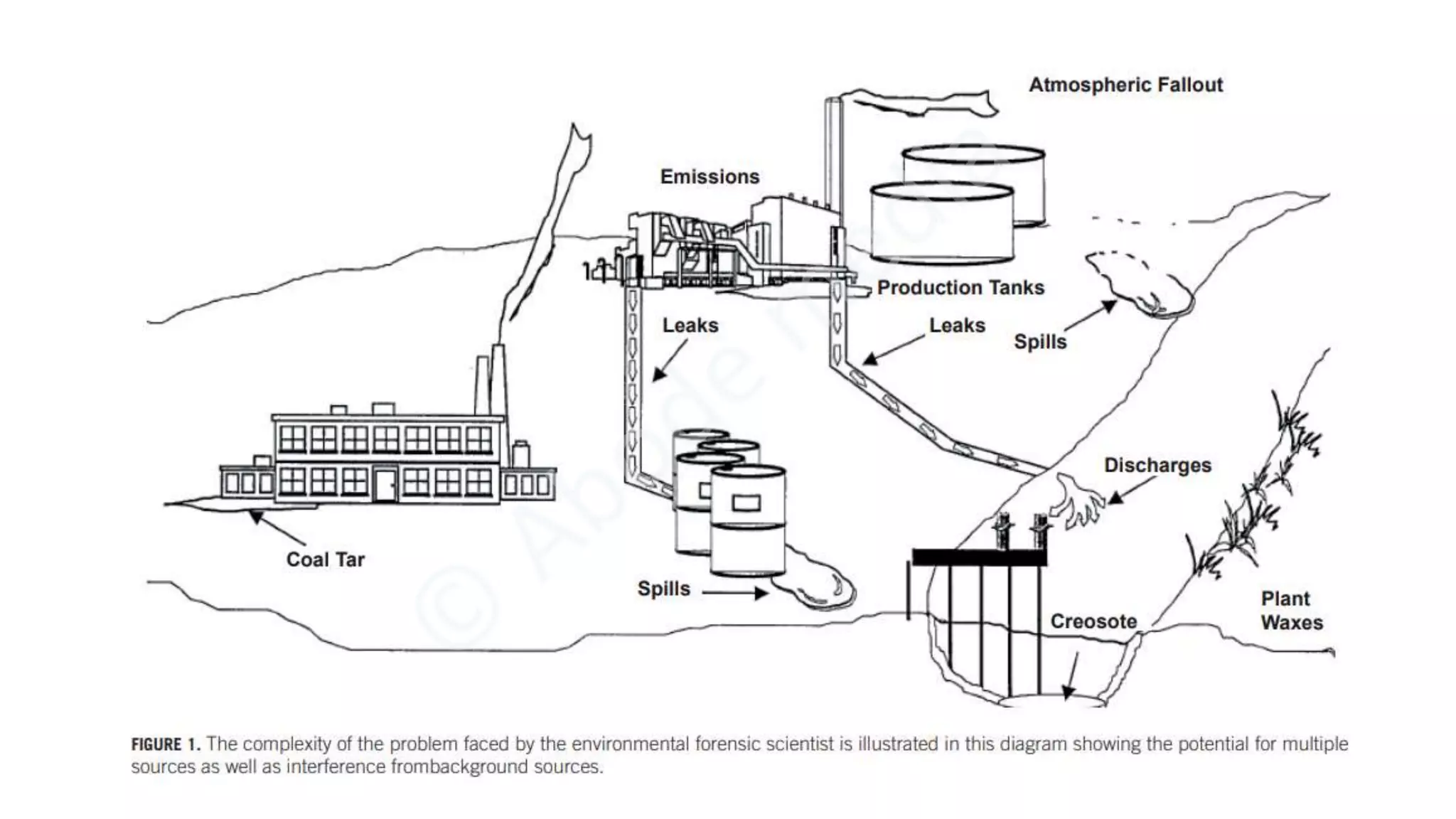
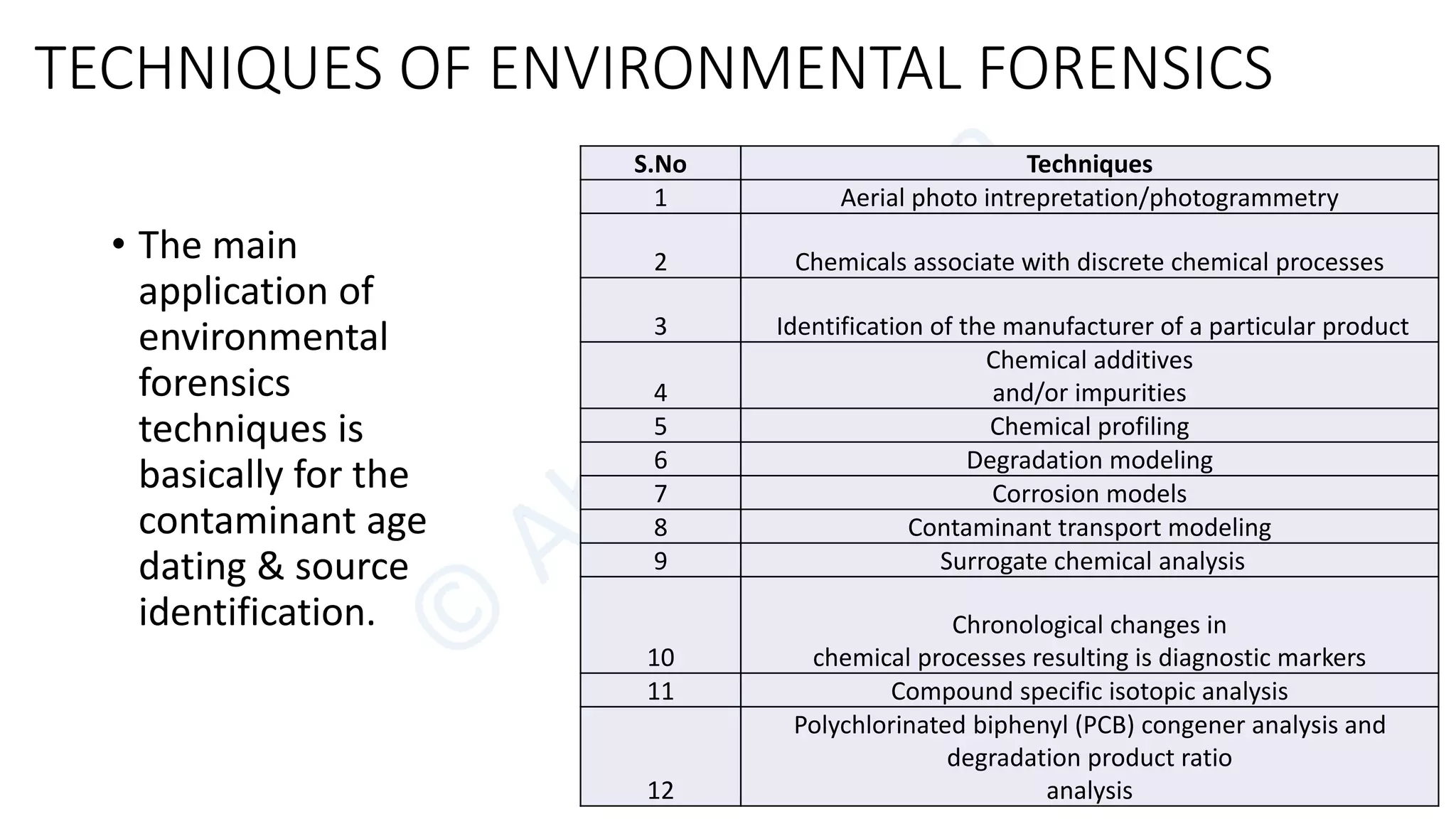
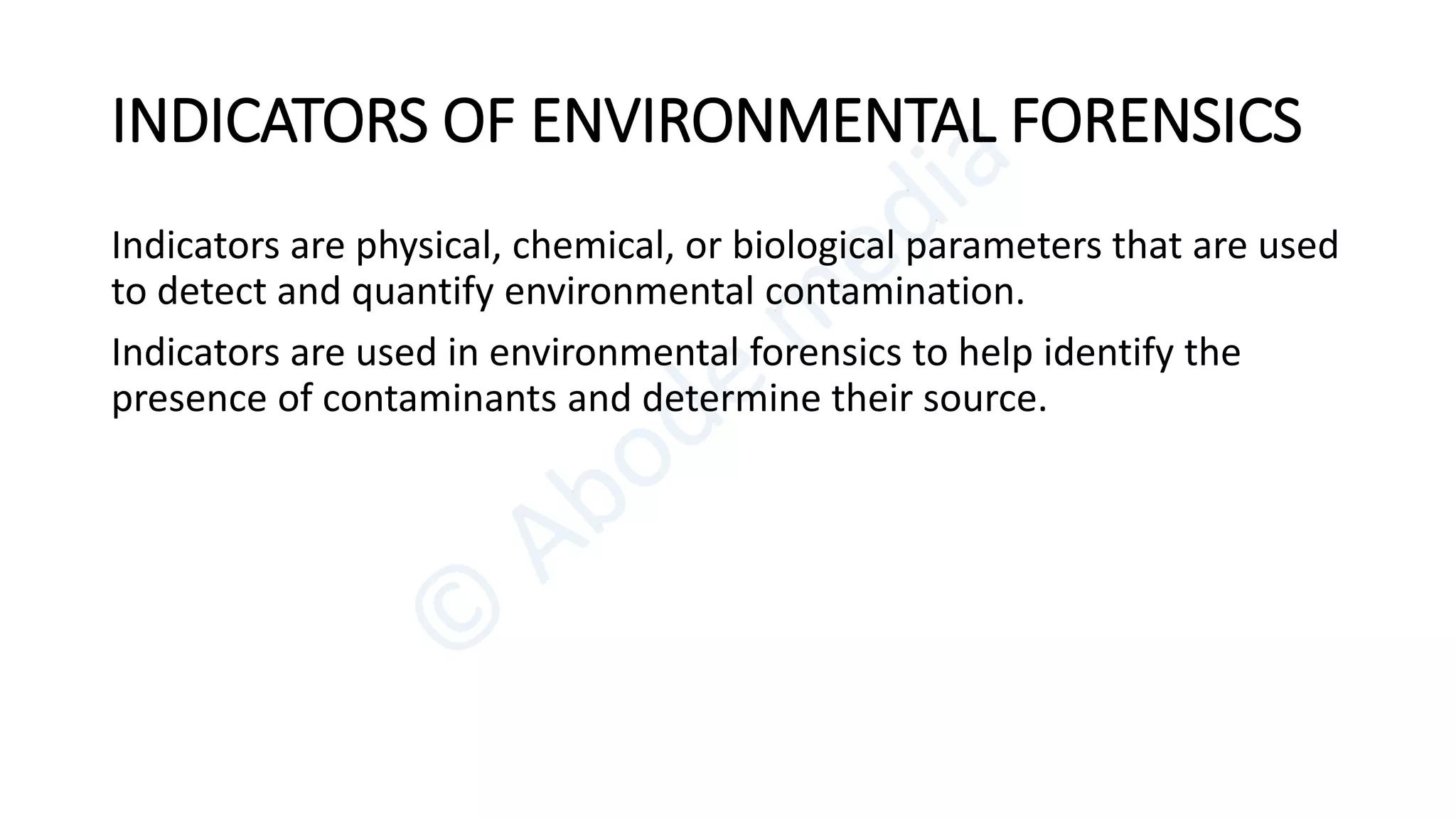
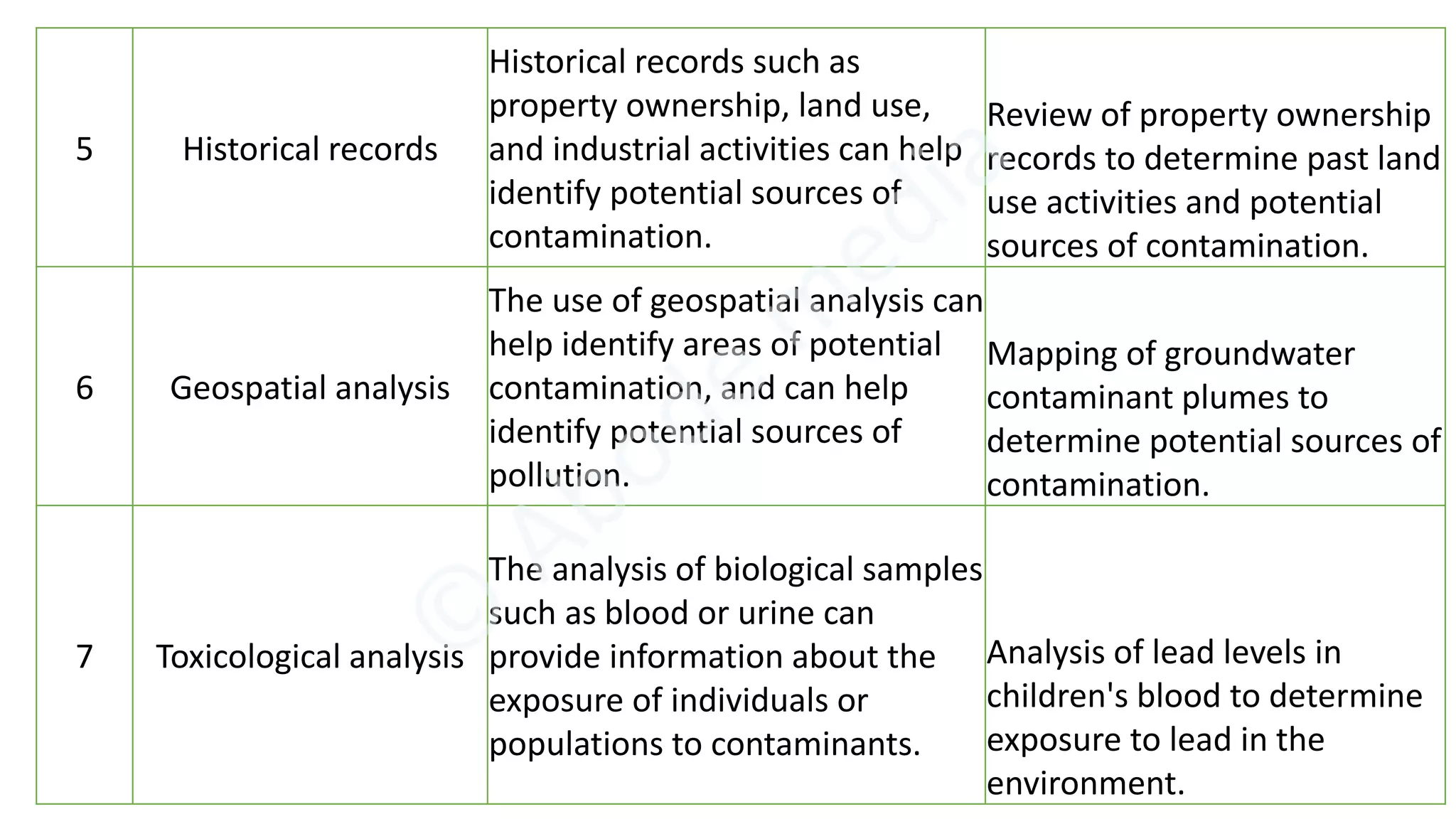
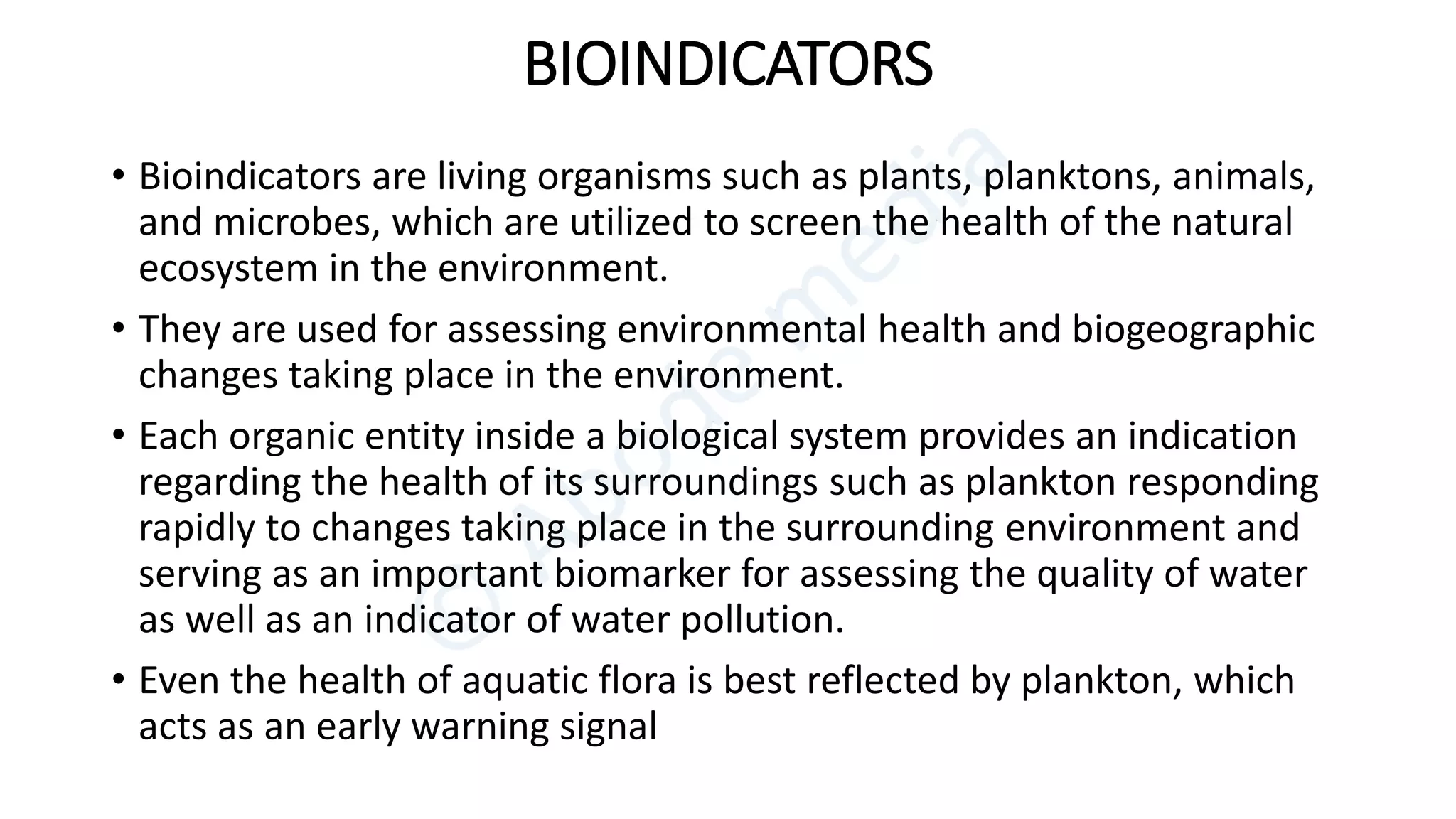
Environmental forensics is defined as the systematic and scientific evaluation of physical, chemical, and historical information to develop conclusions about the source or age of environmental contamination. It uses analytical techniques from various fields like chemistry, biology, and geology to investigate contamination sources, extent of contamination, and provide evidence for legal actions. Environmental forensics can be applied to issues like contaminated sites, air and water pollution, and waste disposal. Key techniques include chemical fingerprinting, isotopic analysis, and examining indicators in the environment like chemical, microbial, plant, and animal indicators to identify contamination sources. Toxicity assessment methods are also important tools to evaluate the effects of contaminants on living organisms and ecosystems.