Presented By
Sijo A
Ph.D. Research Scholar (Microbiology)
School of Biosciences, MACFAST College
Tiruvalla, Kerala
ENVIRONMENT (GREY) BIOTECHNOLOGY
WASTE MANAGEMENT
Introduction
• Waste management and environmental biotechnology play a crucial role in maintaining ecological balance.
• Sustainable waste disposal methods, biodegradation of pollutants, and bioremediation techniques help
mitigate environmental pollution.
• Biotechnological interventions aid in cleaning water bodies, removing oil spills, and reducing heavy metal
contamination.
WASTE MANAGEMENT
Types of Waste
1. Municipal Solid Waste (MSW) – Household and commercial waste.
2. Industrial Waste – By-products of manufacturing processes.
3. Biomedical Waste – Hospital and laboratory waste.
4. E-Waste – Discarded electronic devices.
5. Agricultural Waste – Crop residues, pesticides, and fertilizers.
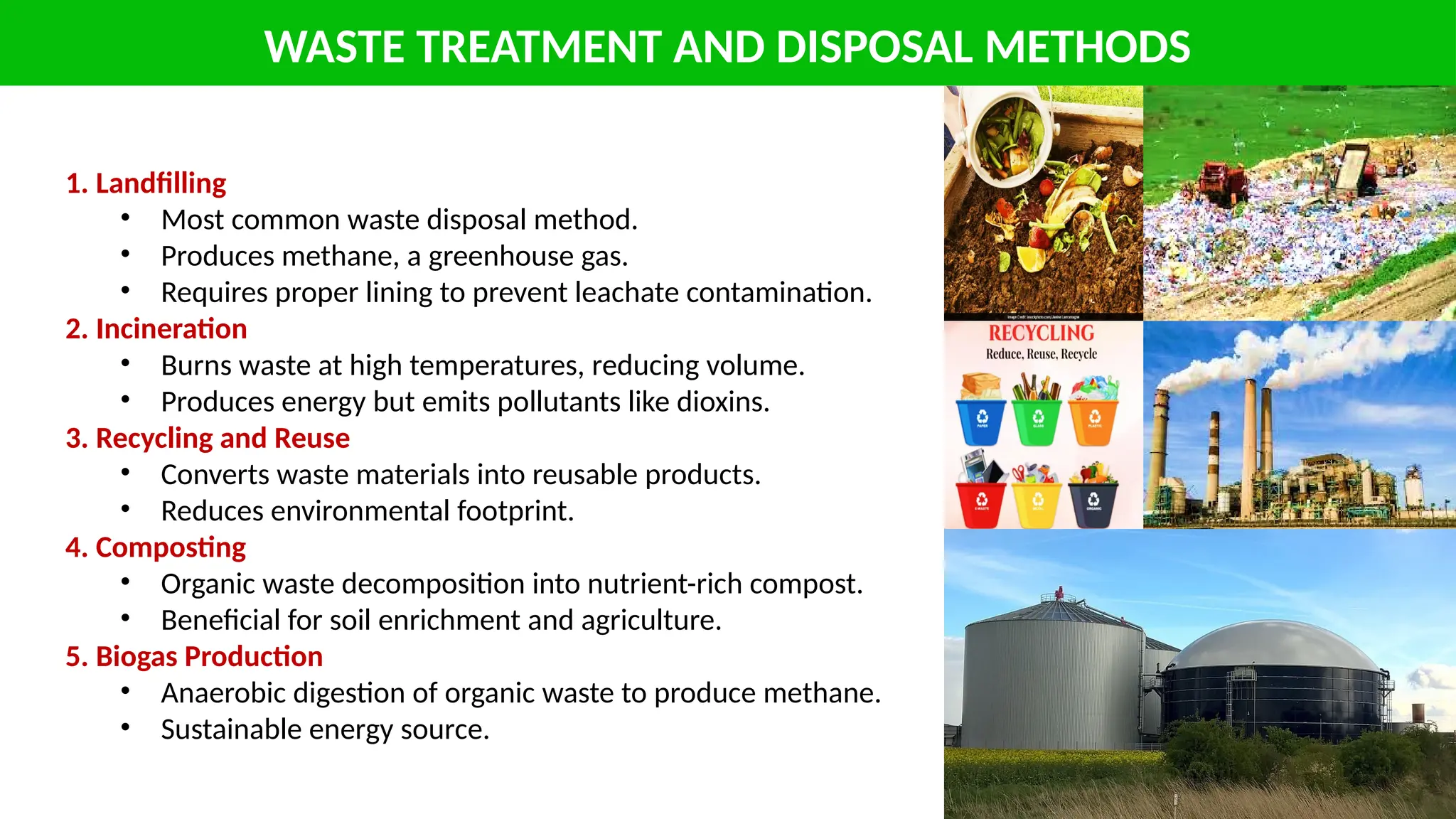
WASTE TREATMENT AND DISPOSAL METHODS
1. Landfilling
• Most common waste disposal method.
• Produces methane, a greenhouse gas.
• Requires proper lining to prevent leachate contamination.
2. Incineration
• Burns waste at high temperatures, reducing volume.
• Produces energy but emits pollutants like dioxins.
3. Recycling and Reuse
• Converts waste materials into reusable products.
• Reduces environmental footprint.
4. Composting
• Organic waste decomposition into nutrient-rich compost.
• Beneficial for soil enrichment and agriculture.
5. Biogas Production
• Anaerobic digestion of organic waste to produce methane.
• Sustainable energy source.
BIODEGRADATION OF HEAVY METALS
Mechanisms of Biodegradation
1. Bioaccumulation – Uptake and storage of metals in microbial cells.
2. Biosorption – Passive binding of metals onto microbial cell surfaces.
3. Enzymatic Transformation – Reduction, oxidation, or methylation of metals.
Microorganisms Involved
• Pseudomonas spp., Bacillus spp., Aspergillus spp.
• Used in detoxifying mercury, lead, cadmium, and chromium.
WATER CLEANING TECHNIQUES
Microbial Water Purification
1. Bacterial Biofilters – Removes nitrates and organic pollutants.
2. Algal Bioreactors – Absorbs heavy metals and nutrients.
3. Constructed Wetlands – Plants and microbes filter contaminants.
4. Phytoremediation – Aquatic plants absorb toxins.
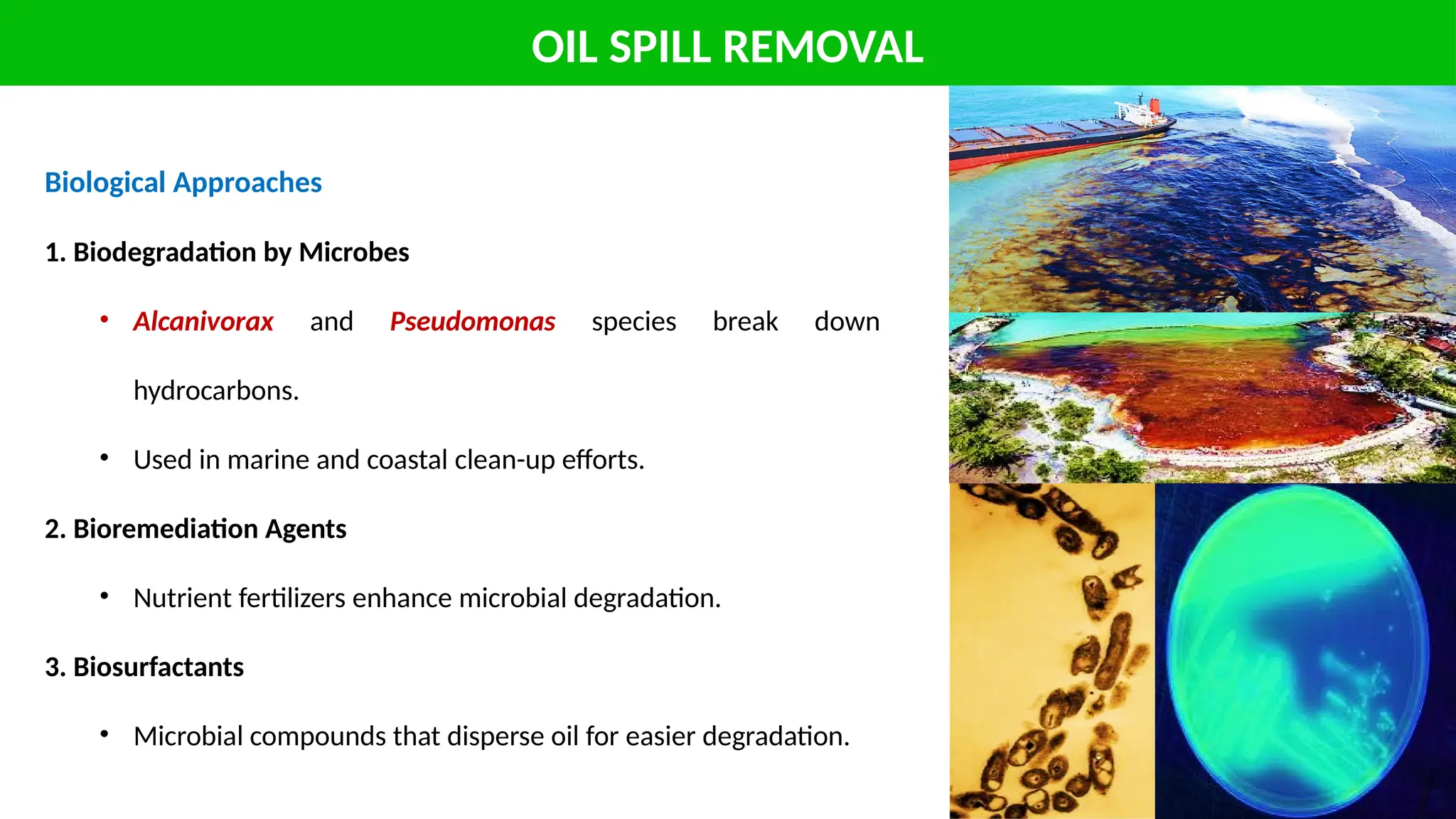
OIL SPILL REMOVAL
Biological Approaches
1. Biodegradation by Microbes
• Alcanivorax and Pseudomonas species break down
hydrocarbons.
• Used in marine and coastal clean-up efforts.
2. Bioremediation Agents
• Nutrient fertilizers enhance microbial degradation.
3. Biosurfactants
• Microbial compounds that disperse oil for easier degradation.
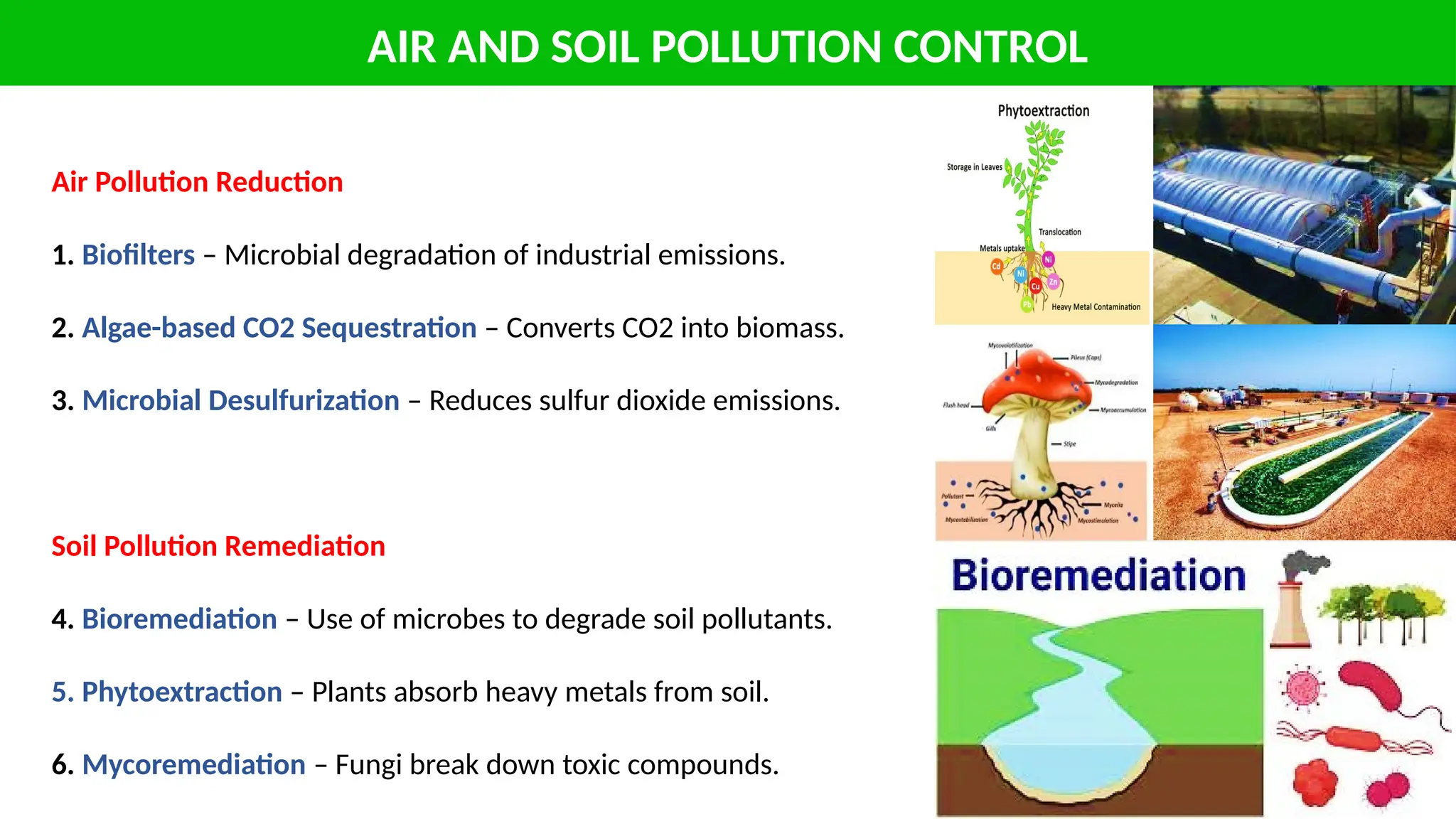
AIR AND SOIL POLLUTION CONTROL
Air Pollution Reduction
1. Biofilters – Microbial degradation of industrial emissions.
2. Algae-based CO2 Sequestration – Converts CO2 into biomass.
3. Microbial Desulfurization – Reduces sulfur dioxide emissions.
Soil Pollution Remediation
4. Bioremediation – Use of microbes to degrade soil pollutants.
5. Phytoextraction – Plants absorb heavy metals from soil.
6. Mycoremediation – Fungi break down toxic compounds.
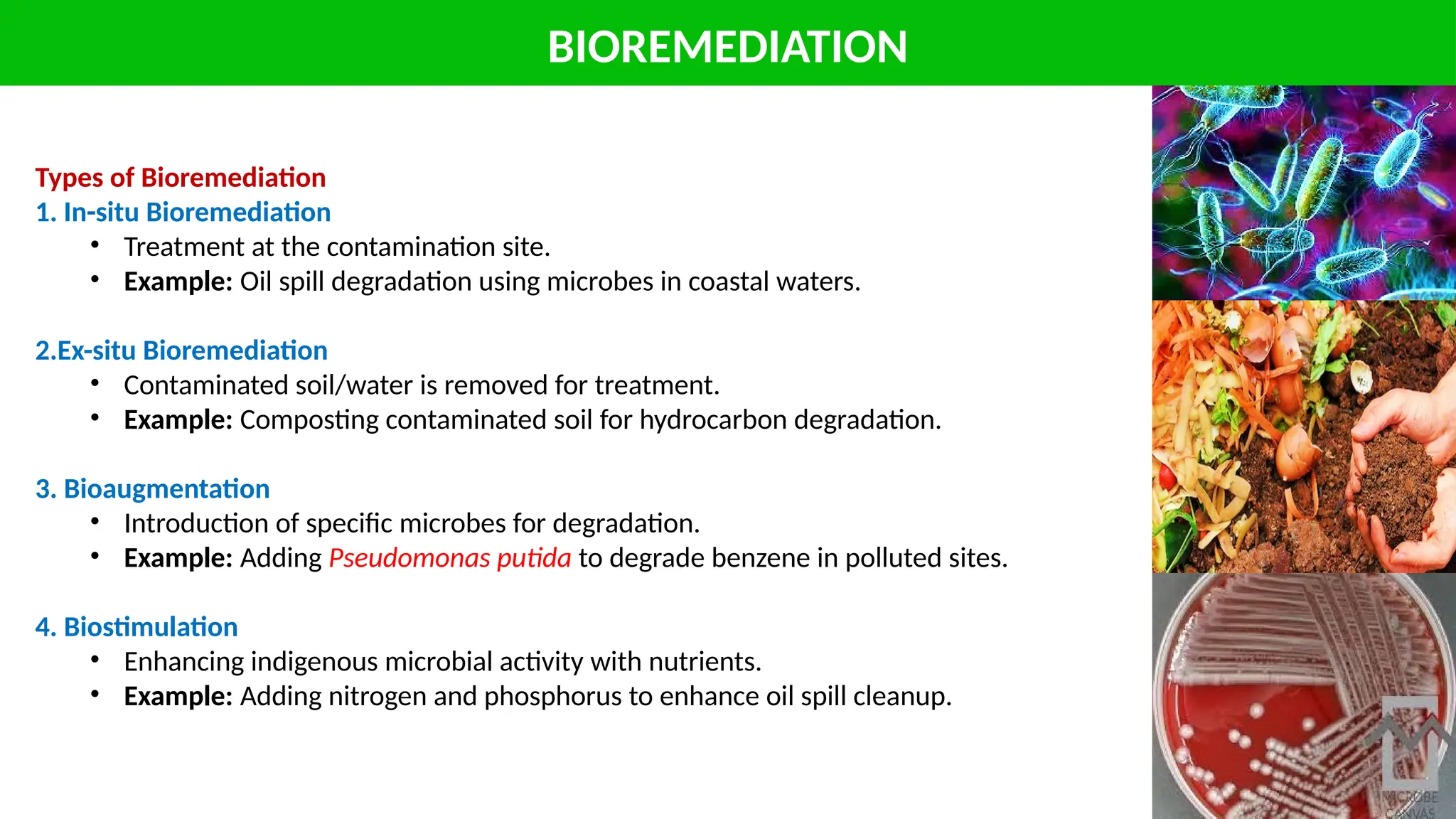
BIOREMEDIATION
Types of Bioremediation
1. In-situ Bioremediation
• Treatment at the contamination site.
• Example: Oil spill degradation using microbes in coastal waters.
2.Ex-situ Bioremediation
• Contaminated soil/water is removed for treatment.
• Example: Composting contaminated soil for hydrocarbon degradation.
3. Bioaugmentation
• Introduction of specific microbes for degradation.
• Example: Adding Pseudomonas putida to degrade benzene in polluted sites.
4. Biostimulation
• Enhancing indigenous microbial activity with nutrients.
• Example: Adding nitrogen and phosphorus to enhance oil spill cleanup.
BIOREMEDIATION
Types of Bioremediation
1. In-situ Bioremediation
• Treatment at the contamination site.
• Example: Oil spill degradation using microbes in coastal waters.
2.Ex-situ Bioremediation
• Contaminated soil/water is removed for treatment.
• Example: Composting contaminated soil for hydrocarbon degradation.
3. Bioaugmentation
• Introduction of specific microbes for degradation.
• Example: Adding Pseudomonas putida to degrade benzene in polluted sites.
4. Biostimulation
• Enhancing indigenous microbial activity with nutrients.
• Example: Adding nitrogen and phosphorus to enhance oil spill cleanup.
BIOMINING
• Biomining is the process of using microorganisms to extract metals from ores and waste
materials through biological methods such as bioleaching and biooxidation.
Microbial Extraction of Metals
1. Bioleaching
1. Bacteria like Acidithiobacillus ferrooxidans extract metals from ores.
2. Used for copper, gold, and uranium mining.
2. Biooxidation
1. Oxidation of minerals to extract valuable metals.
2. Environmentally friendly alternative to chemical leaching.
Advantages of Biomining
• Less toxic than traditional mining.
• Low energy consumption.
• Sustainable metal recovery from low-grade ores.

Environment (Gray) Biotechnology - Global aspects

  • 1.
    Presented By Sijo A Ph.D.Research Scholar (Microbiology) School of Biosciences, MACFAST College Tiruvalla, Kerala ENVIRONMENT (GREY) BIOTECHNOLOGY
  • 2.
    WASTE MANAGEMENT Introduction • Wastemanagement and environmental biotechnology play a crucial role in maintaining ecological balance. • Sustainable waste disposal methods, biodegradation of pollutants, and bioremediation techniques help mitigate environmental pollution. • Biotechnological interventions aid in cleaning water bodies, removing oil spills, and reducing heavy metal contamination.
  • 3.
    WASTE MANAGEMENT Types ofWaste 1. Municipal Solid Waste (MSW) – Household and commercial waste. 2. Industrial Waste – By-products of manufacturing processes. 3. Biomedical Waste – Hospital and laboratory waste. 4. E-Waste – Discarded electronic devices. 5. Agricultural Waste – Crop residues, pesticides, and fertilizers.
  • 4.
    WASTE TREATMENT ANDDISPOSAL METHODS 1. Landfilling • Most common waste disposal method. • Produces methane, a greenhouse gas. • Requires proper lining to prevent leachate contamination. 2. Incineration • Burns waste at high temperatures, reducing volume. • Produces energy but emits pollutants like dioxins. 3. Recycling and Reuse • Converts waste materials into reusable products. • Reduces environmental footprint. 4. Composting • Organic waste decomposition into nutrient-rich compost. • Beneficial for soil enrichment and agriculture. 5. Biogas Production • Anaerobic digestion of organic waste to produce methane. • Sustainable energy source.
  • 5.
    BIODEGRADATION OF HEAVYMETALS Mechanisms of Biodegradation 1. Bioaccumulation – Uptake and storage of metals in microbial cells. 2. Biosorption – Passive binding of metals onto microbial cell surfaces. 3. Enzymatic Transformation – Reduction, oxidation, or methylation of metals. Microorganisms Involved • Pseudomonas spp., Bacillus spp., Aspergillus spp. • Used in detoxifying mercury, lead, cadmium, and chromium.
  • 6.
    WATER CLEANING TECHNIQUES MicrobialWater Purification 1. Bacterial Biofilters – Removes nitrates and organic pollutants. 2. Algal Bioreactors – Absorbs heavy metals and nutrients. 3. Constructed Wetlands – Plants and microbes filter contaminants. 4. Phytoremediation – Aquatic plants absorb toxins.
  • 7.
    OIL SPILL REMOVAL BiologicalApproaches 1. Biodegradation by Microbes • Alcanivorax and Pseudomonas species break down hydrocarbons. • Used in marine and coastal clean-up efforts. 2. Bioremediation Agents • Nutrient fertilizers enhance microbial degradation. 3. Biosurfactants • Microbial compounds that disperse oil for easier degradation.
  • 8.
    AIR AND SOILPOLLUTION CONTROL Air Pollution Reduction 1. Biofilters – Microbial degradation of industrial emissions. 2. Algae-based CO2 Sequestration – Converts CO2 into biomass. 3. Microbial Desulfurization – Reduces sulfur dioxide emissions. Soil Pollution Remediation 4. Bioremediation – Use of microbes to degrade soil pollutants. 5. Phytoextraction – Plants absorb heavy metals from soil. 6. Mycoremediation – Fungi break down toxic compounds.
  • 9.
    BIOREMEDIATION Types of Bioremediation 1.In-situ Bioremediation • Treatment at the contamination site. • Example: Oil spill degradation using microbes in coastal waters. 2.Ex-situ Bioremediation • Contaminated soil/water is removed for treatment. • Example: Composting contaminated soil for hydrocarbon degradation. 3. Bioaugmentation • Introduction of specific microbes for degradation. • Example: Adding Pseudomonas putida to degrade benzene in polluted sites. 4. Biostimulation • Enhancing indigenous microbial activity with nutrients. • Example: Adding nitrogen and phosphorus to enhance oil spill cleanup.
  • 10.
    BIOREMEDIATION Types of Bioremediation 1.In-situ Bioremediation • Treatment at the contamination site. • Example: Oil spill degradation using microbes in coastal waters. 2.Ex-situ Bioremediation • Contaminated soil/water is removed for treatment. • Example: Composting contaminated soil for hydrocarbon degradation. 3. Bioaugmentation • Introduction of specific microbes for degradation. • Example: Adding Pseudomonas putida to degrade benzene in polluted sites. 4. Biostimulation • Enhancing indigenous microbial activity with nutrients. • Example: Adding nitrogen and phosphorus to enhance oil spill cleanup.
  • 11.
    BIOMINING • Biomining isthe process of using microorganisms to extract metals from ores and waste materials through biological methods such as bioleaching and biooxidation. Microbial Extraction of Metals 1. Bioleaching 1. Bacteria like Acidithiobacillus ferrooxidans extract metals from ores. 2. Used for copper, gold, and uranium mining. 2. Biooxidation 1. Oxidation of minerals to extract valuable metals. 2. Environmentally friendly alternative to chemical leaching. Advantages of Biomining • Less toxic than traditional mining. • Low energy consumption. • Sustainable metal recovery from low-grade ores.