Presentation Topic
:
Priyadarshini Lokmanya Tilak Institute of
Management & Research
Characteristic Of Small Scale Industry
BY
Name : Vaibhav Mohan Shende
Roll No. : 82
Guided By : Prof. Maria Saleh
Subject : Entrepreneurship Development
Introduction of SSI
Types of small scale industries
char Characteristics of small scale industries
Conclusion
Introduction Of Small Scale Industry
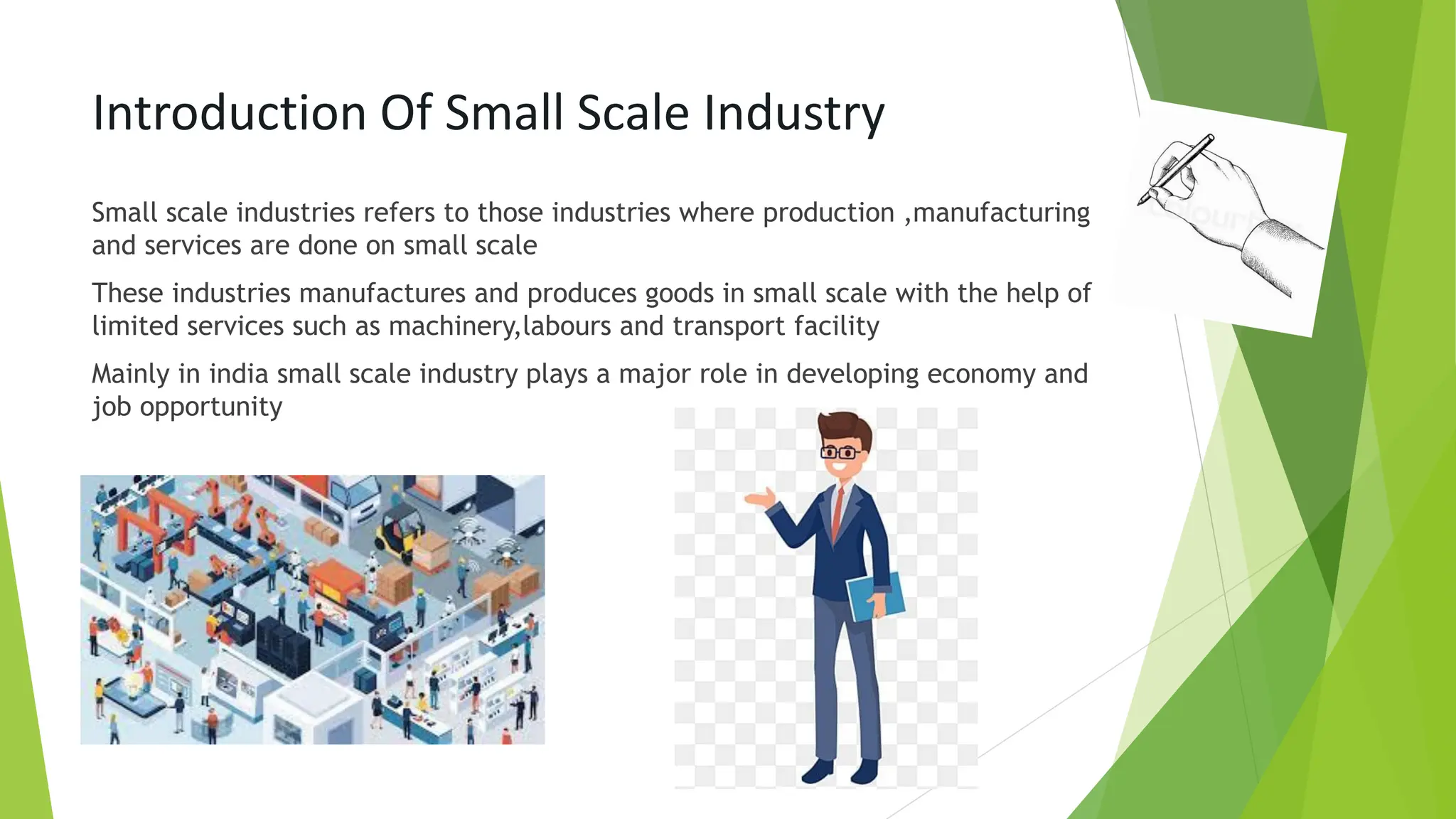
Small scale industries refers to those industries where production ,manufacturing
and services are done on small scale
These industries manufactures and produces goods in small scale with the help of
limited services such as machinery,labours and transport facility
Mainly in india small scale industry plays a major role in developing economy and
job opportunity
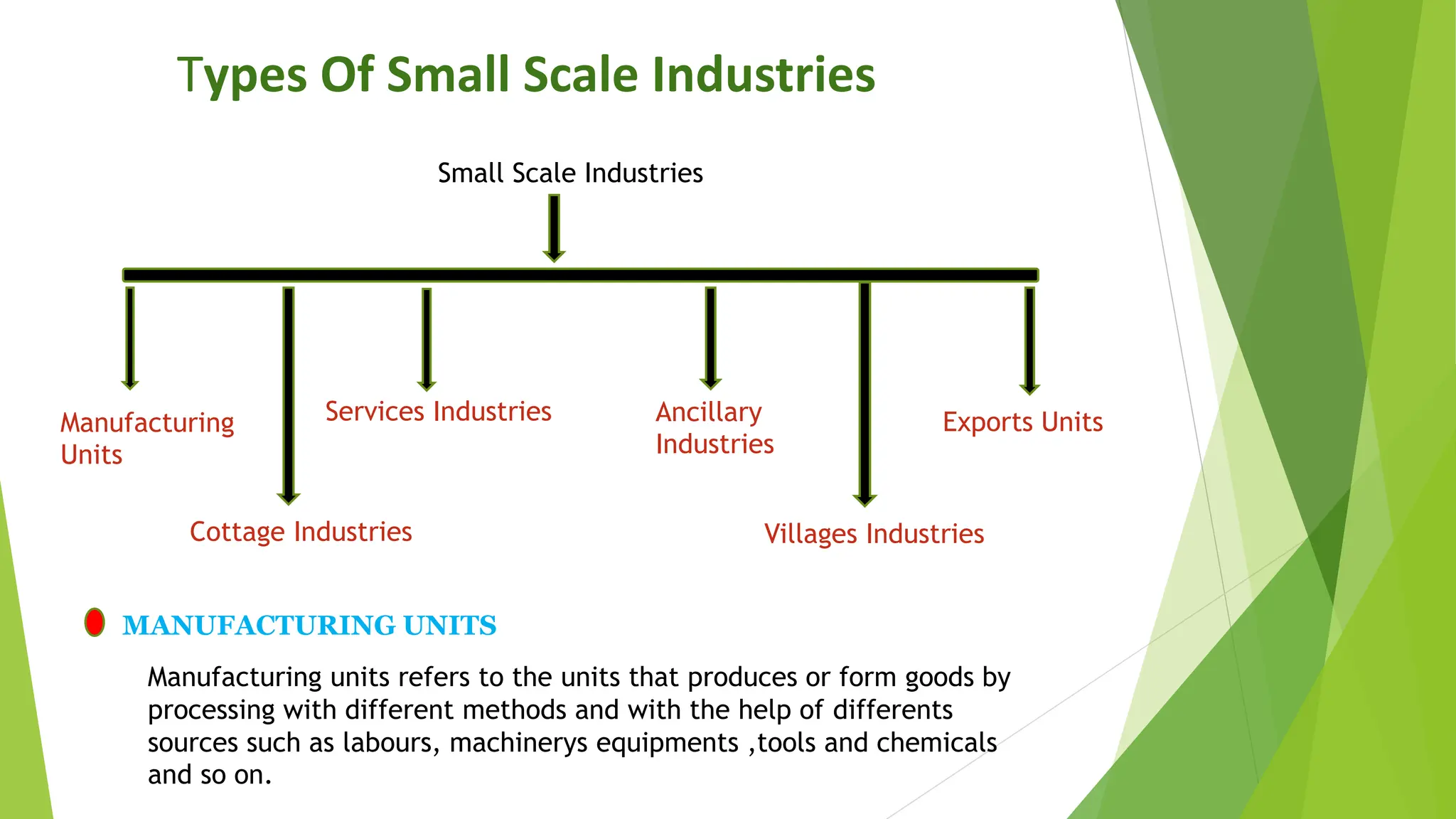
Types Of Small Scale Industries
Small Scale Industries
Manufacturing
Units
Services Industries Ancillary
Industries
Exports Units
Cottage Industries Villages Industries
MANUFACTURING UNITS
Manufacturing units refers to the units that produces or form goods by
processing with different methods and with the help of differents
sources such as labours, machinerys equipments ,tools and chemicals
and so on.
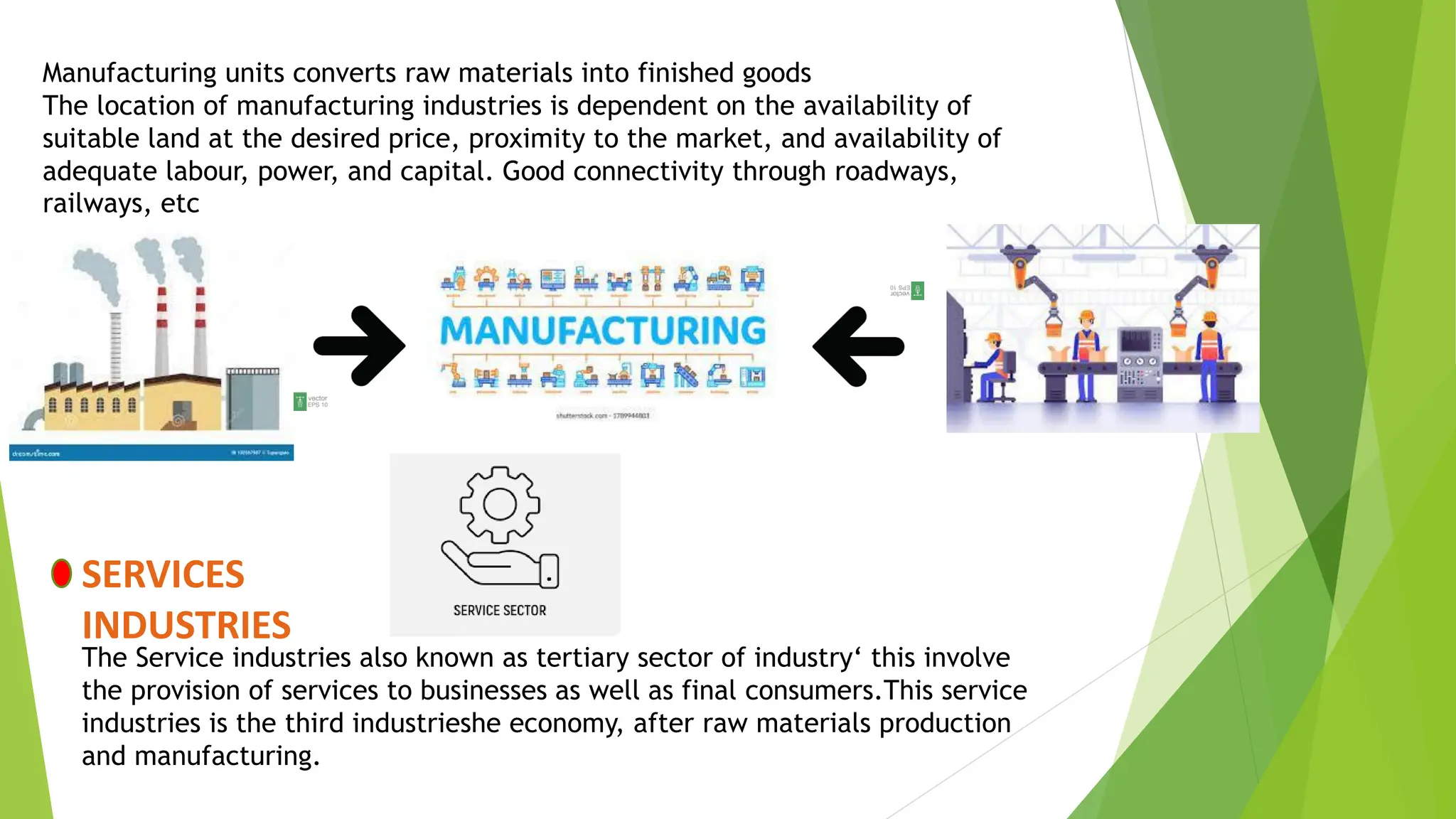
Manufacturing units converts raw materials into finished goods
The location of manufacturing industries is dependent on the availability of
suitable land at the desired price, proximity to the market, and availability of
adequate labour, power, and capital. Good connectivity through roadways,
railways, etc
SERVICES
INDUSTRIES
The Service industries also known as tertiary sector of industry‘ this involve
the provision of services to businesses as well as final consumers.This service
industries is the third industrieshe economy, after raw materials production
and manufacturing.
The service sector includes services like, banking and finance, IT and Technology,
energy sector, education, logistics, export and import, Media, health care,
telecommunication, storage and communication, hotel Industries, legal and law
industry, business services, etc.
Ancillary Industries
Ancillary Industries refers to those industries which helps and works with both
industries sectors [ Primary and Secondary]. This industries provides essential
elements or materials to both primary and secondary such as heavy machinery,
tools,equipments,chemicals and spares parts.
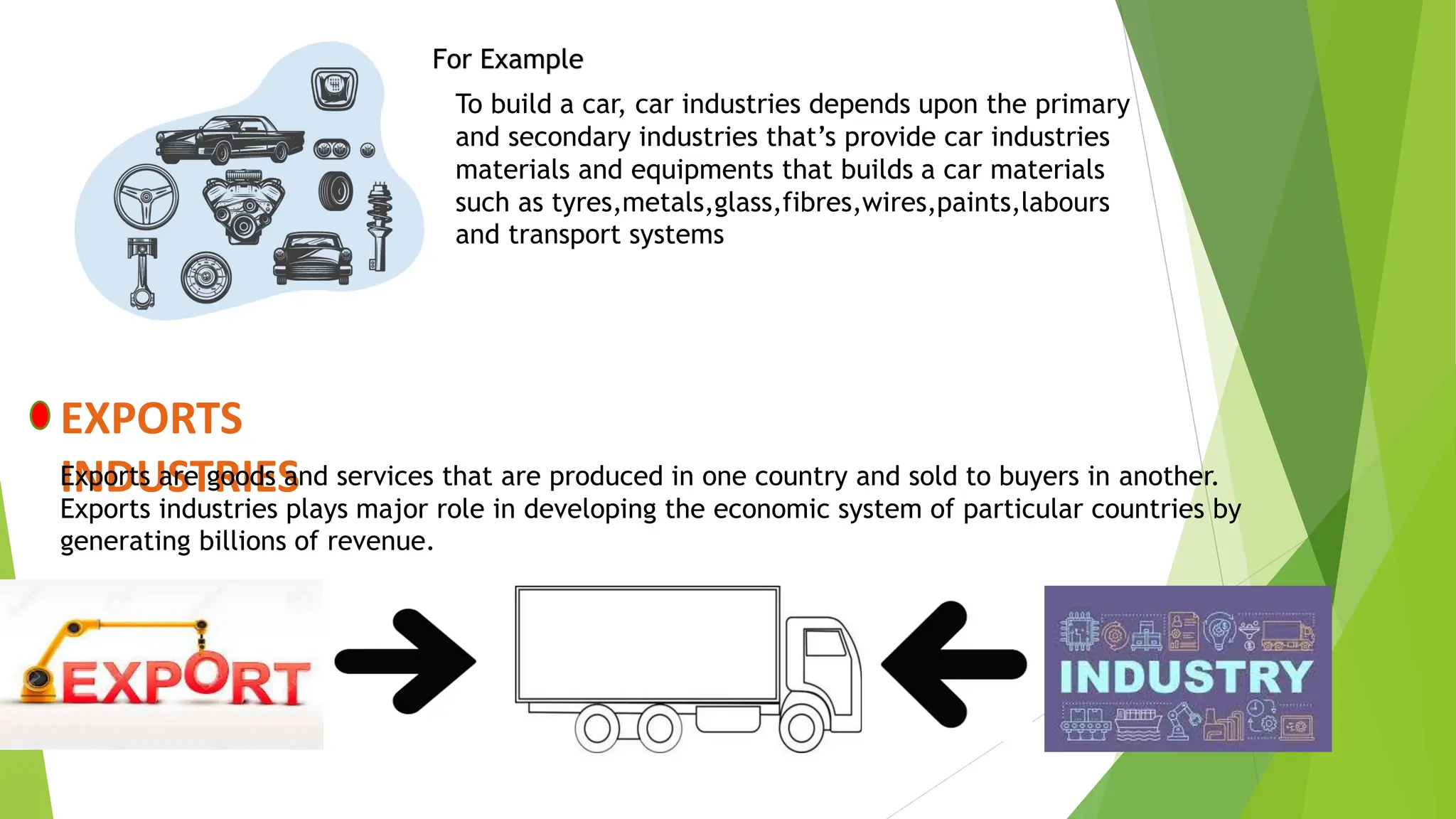
For Example
To build a car, car industries depends upon the primary
and secondary industries that’s provide car industries
materials and equipments that builds a car materials
such as tyres,metals,glass,fibres,wires,paints,labours
and transport systems
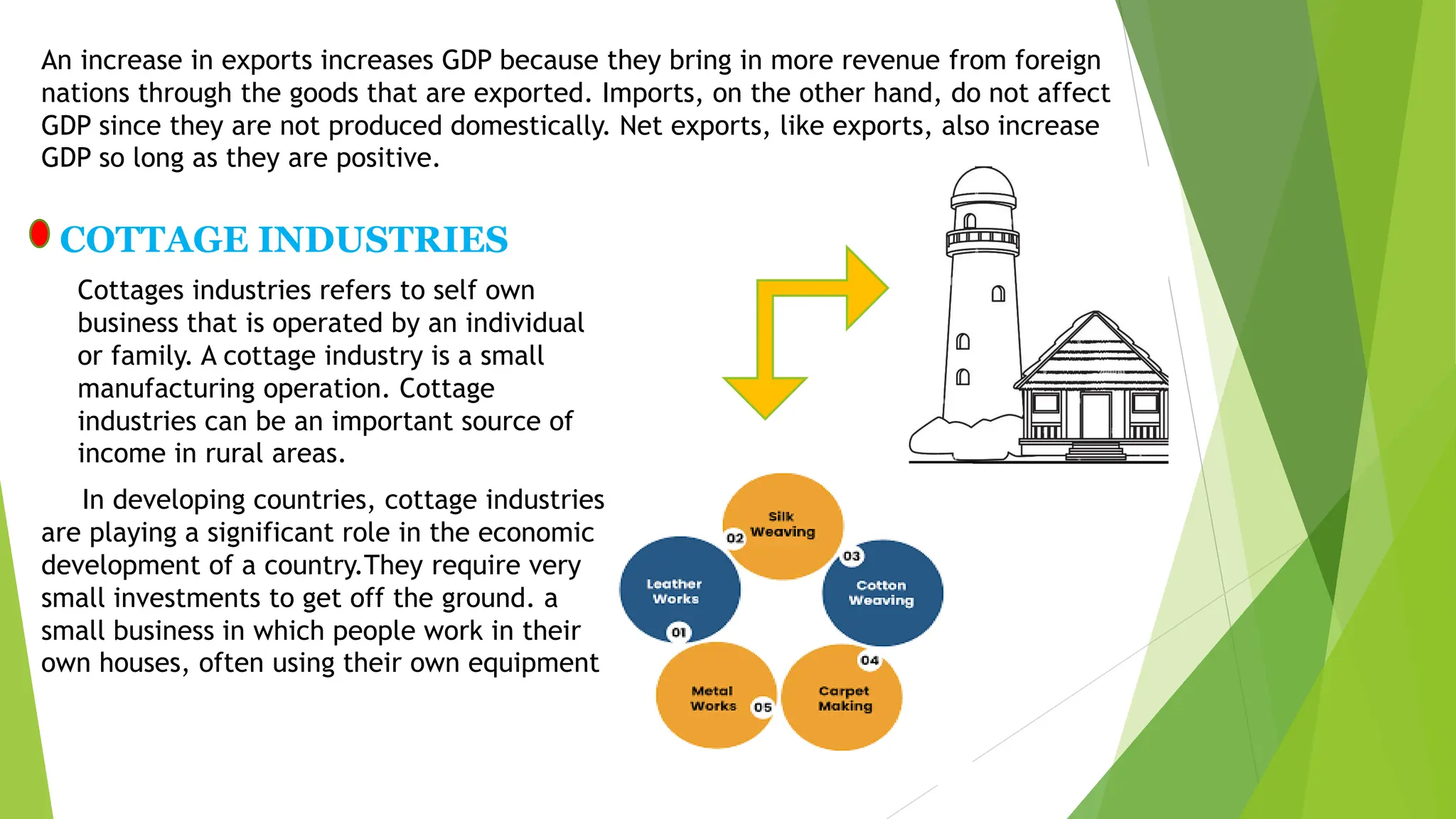
EXPORTS
INDUSTRIES
Exports are goods and services that are produced in one country and sold to buyers in another.
Exports industries plays major role in developing the economic system of particular countries by
generating billions of revenue.
An increase in exports increases GDP because they bring in more revenue from foreign
nations through the goods that are exported. Imports, on the other hand, do not affect
GDP since they are not produced domestically. Net exports, like exports, also increase
GDP so long as they are positive.
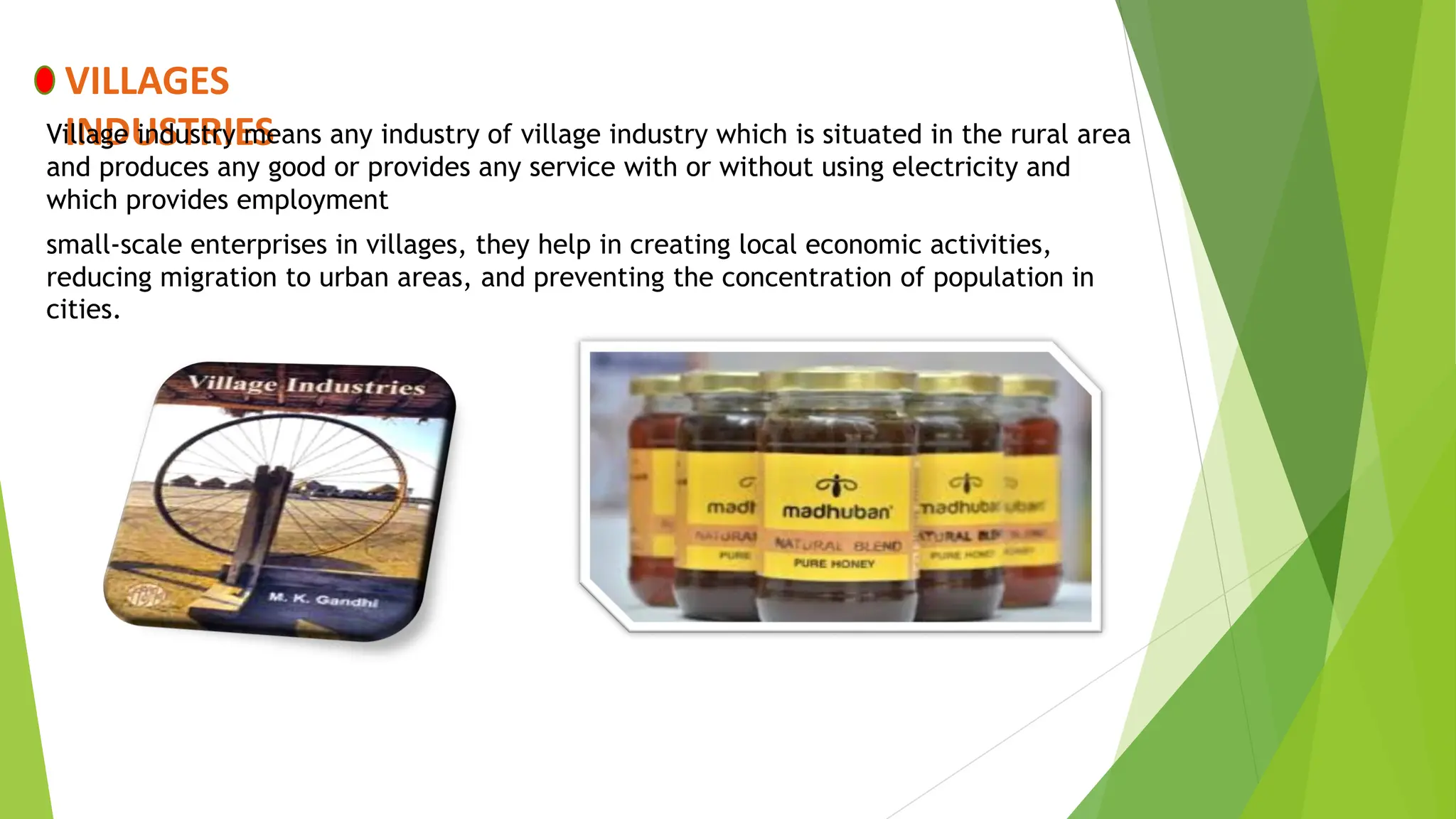
COTTAGE INDUSTRIES
Cottages industries refers to self own
business that is operated by an individual
or family. A cottage industry is a small
manufacturing operation. Cottage
industries can be an important source of
income in rural areas.
In developing countries, cottage industries
are playing a significant role in the economic
development of a country.They require very
small investments to get off the ground. a
small business in which people work in their
own houses, often using their own equipment
VILLAGES
INDUSTRIES
Village industry means any industry of village industry which is situated in the rural area
and produces any good or provides any service with or without using electricity and
which provides employment
small-scale enterprises in villages, they help in creating local economic activities,
reducing migration to urban areas, and preventing the concentration of population in
cities.
Characteristic of small scale industries
Ownership
1.
Ownership states or fact of being owner of something
Ownership refers to legal right of possession or proprietorship
Its is a legal relationship between a person and an object.
2. Labour Requirements
To carry out or look over any task in industries or other
areas the manpower are required to complete the
industrial activity. As small scale industries are low with
capital investment and with technology then the SSI only
depends upon the labours
3. Flexibility
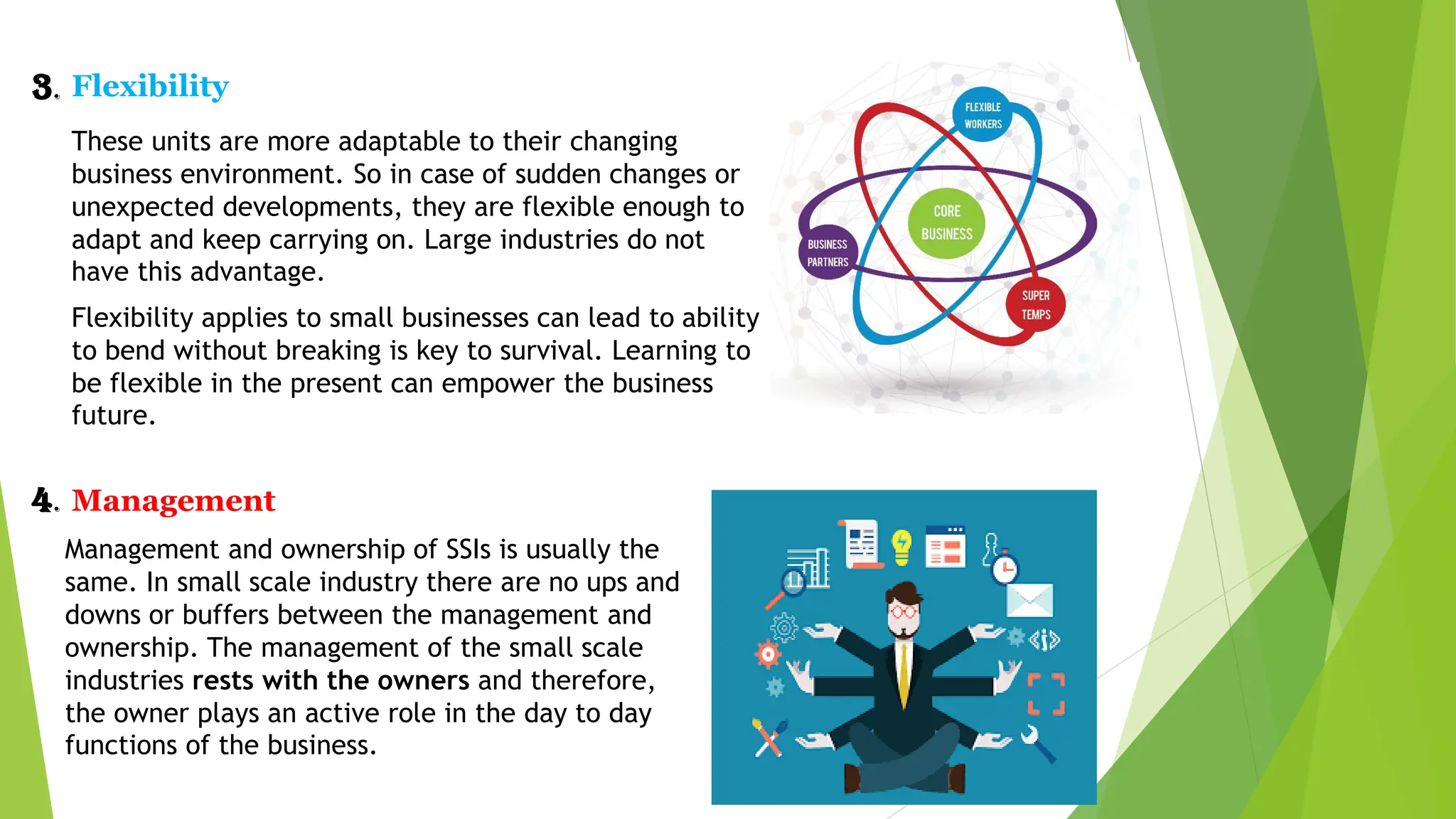
These units are more adaptable to their changing
business environment. So in case of sudden changes or
unexpected developments, they are flexible enough to
adapt and keep carrying on. Large industries do not
have this advantage.
Flexibility applies to small businesses can lead to ability
to bend without breaking is key to survival. Learning to
be flexible in the present can empower the business
future.
4. Management
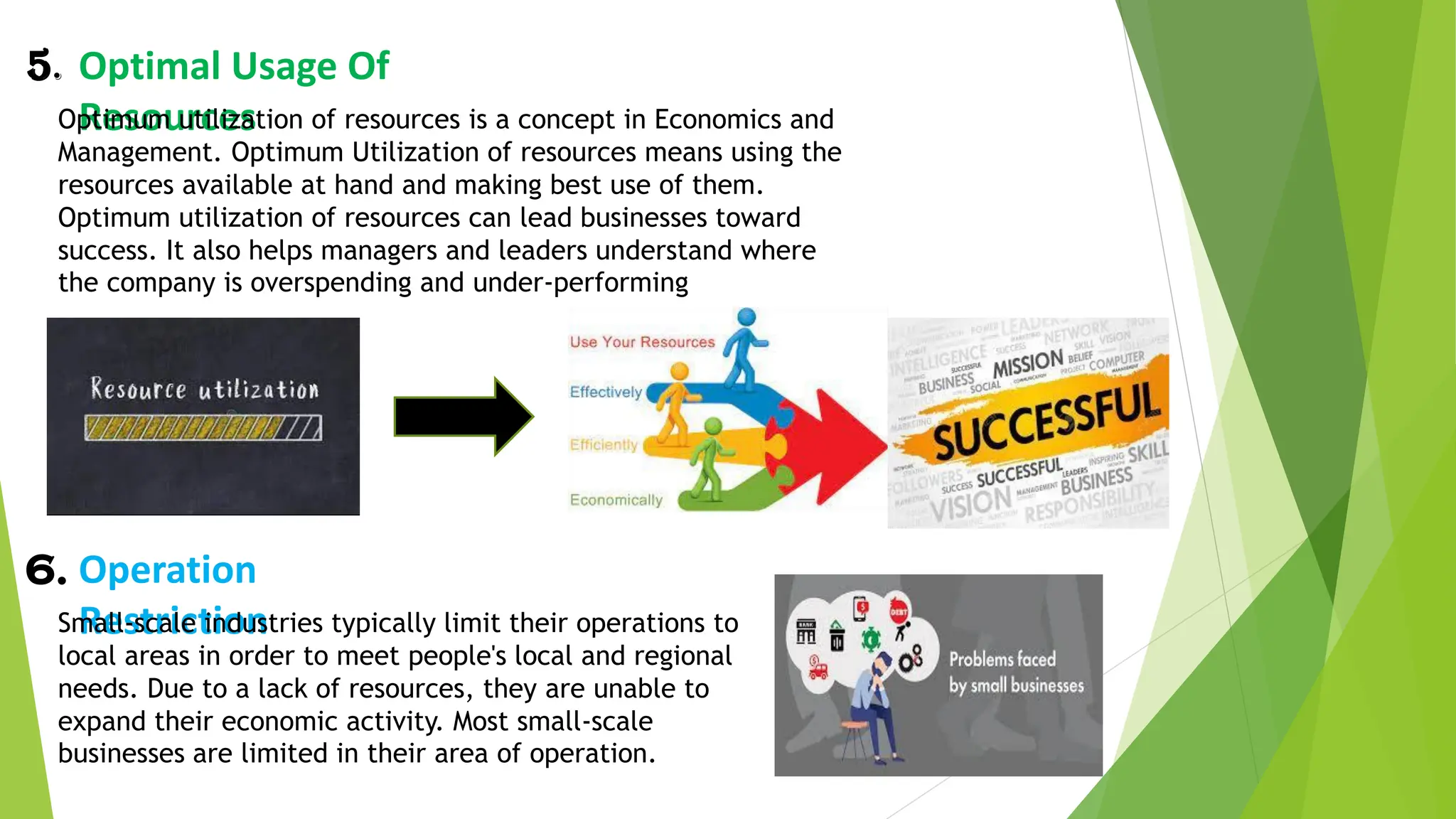
Management and ownership of SSIs is usually the
same. In small scale industry there are no ups and
downs or buffers between the management and
ownership. The management of the small scale
industries rests with the owners and therefore,
the owner plays an active role in the day to day
functions of the business.
5. Optimal Usage Of
Resources
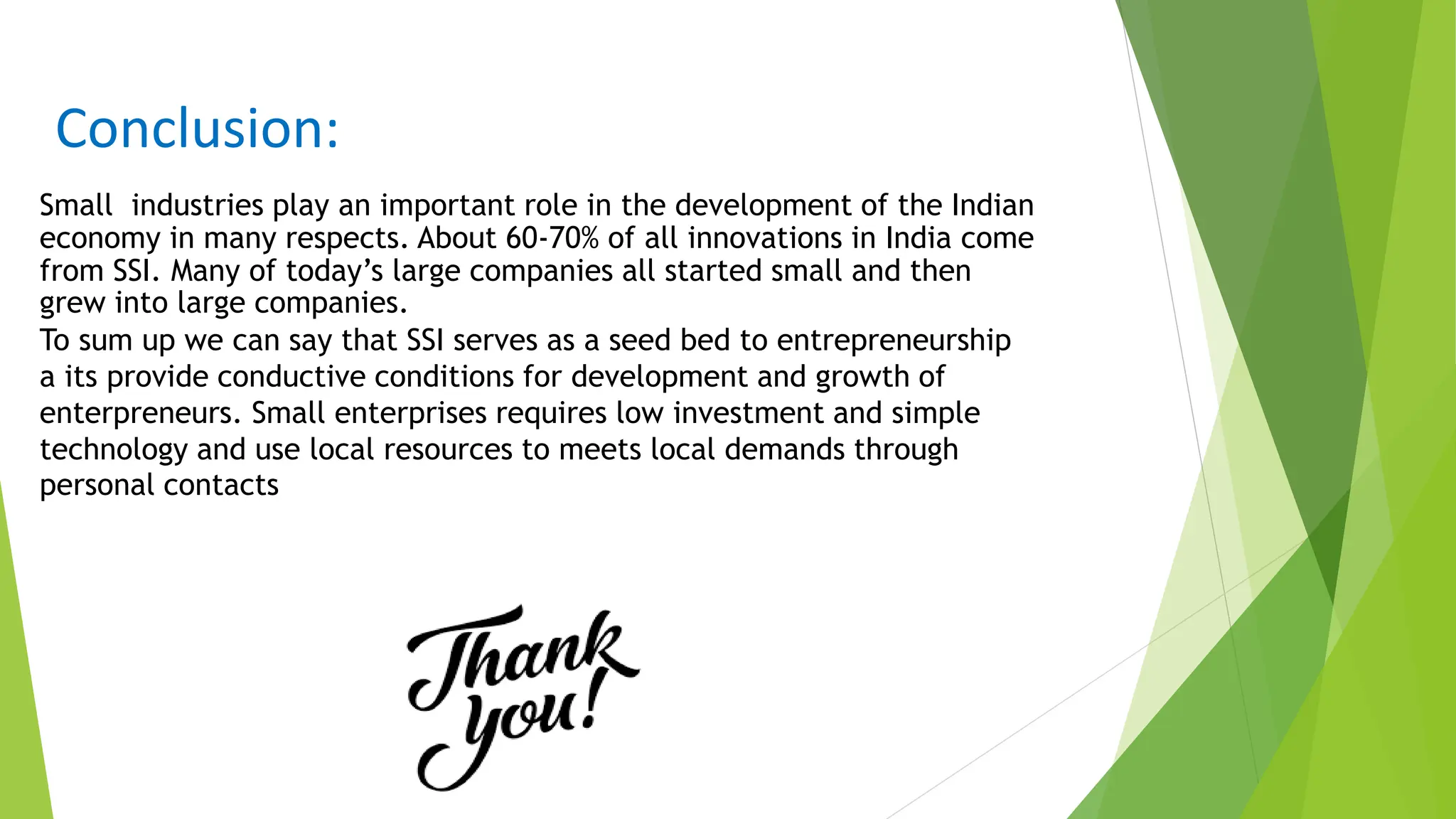
Optimum utilization of resources is a concept in Economics and
Management. Optimum Utilization of resources means using the
resources available at hand and making best use of them.
Optimum utilization of resources can lead businesses toward
success. It also helps managers and leaders understand where
the company is overspending and under-performing
6. Operation
Restriction
Small-scale industries typically limit their operations to
local areas in order to meet people's local and regional
needs. Due to a lack of resources, they are unable to
expand their economic activity. Most small-scale
businesses are limited in their area of operation.
Conclusion:
Small industries play an important role in the development of the Indian
economy in many respects. About 60-70% of all innovations in India come
from SSI. Many of today’s large companies all started small and then
grew into large companies.
To sum up we can say that SSI serves as a seed bed to entrepreneurship
a its provide conductive conditions for development and growth of
enterpreneurs. Small enterprises requires low investment and simple
technology and use local resources to meets local demands through
personal contacts

Entrepreneurship Development Vaibhav M. Shende.pdf

  • 1.
    Presentation Topic : Priyadarshini LokmanyaTilak Institute of Management & Research Characteristic Of Small Scale Industry BY Name : Vaibhav Mohan Shende Roll No. : 82 Guided By : Prof. Maria Saleh Subject : Entrepreneurship Development
  • 2.
    Introduction of SSI Typesof small scale industries char Characteristics of small scale industries Conclusion
  • 3.
    Introduction Of SmallScale Industry Small scale industries refers to those industries where production ,manufacturing and services are done on small scale These industries manufactures and produces goods in small scale with the help of limited services such as machinery,labours and transport facility Mainly in india small scale industry plays a major role in developing economy and job opportunity
  • 4.
    Types Of SmallScale Industries Small Scale Industries Manufacturing Units Services Industries Ancillary Industries Exports Units Cottage Industries Villages Industries MANUFACTURING UNITS Manufacturing units refers to the units that produces or form goods by processing with different methods and with the help of differents sources such as labours, machinerys equipments ,tools and chemicals and so on.
  • 5.
    Manufacturing units convertsraw materials into finished goods The location of manufacturing industries is dependent on the availability of suitable land at the desired price, proximity to the market, and availability of adequate labour, power, and capital. Good connectivity through roadways, railways, etc SERVICES INDUSTRIES The Service industries also known as tertiary sector of industry‘ this involve the provision of services to businesses as well as final consumers.This service industries is the third industrieshe economy, after raw materials production and manufacturing.
  • 6.
    The service sectorincludes services like, banking and finance, IT and Technology, energy sector, education, logistics, export and import, Media, health care, telecommunication, storage and communication, hotel Industries, legal and law industry, business services, etc. Ancillary Industries Ancillary Industries refers to those industries which helps and works with both industries sectors [ Primary and Secondary]. This industries provides essential elements or materials to both primary and secondary such as heavy machinery, tools,equipments,chemicals and spares parts.
  • 7.
    For Example To builda car, car industries depends upon the primary and secondary industries that’s provide car industries materials and equipments that builds a car materials such as tyres,metals,glass,fibres,wires,paints,labours and transport systems EXPORTS INDUSTRIES Exports are goods and services that are produced in one country and sold to buyers in another. Exports industries plays major role in developing the economic system of particular countries by generating billions of revenue.
  • 8.
    An increase inexports increases GDP because they bring in more revenue from foreign nations through the goods that are exported. Imports, on the other hand, do not affect GDP since they are not produced domestically. Net exports, like exports, also increase GDP so long as they are positive. COTTAGE INDUSTRIES Cottages industries refers to self own business that is operated by an individual or family. A cottage industry is a small manufacturing operation. Cottage industries can be an important source of income in rural areas. In developing countries, cottage industries are playing a significant role in the economic development of a country.They require very small investments to get off the ground. a small business in which people work in their own houses, often using their own equipment
  • 9.
    VILLAGES INDUSTRIES Village industry meansany industry of village industry which is situated in the rural area and produces any good or provides any service with or without using electricity and which provides employment small-scale enterprises in villages, they help in creating local economic activities, reducing migration to urban areas, and preventing the concentration of population in cities.
  • 10.
    Characteristic of smallscale industries Ownership 1. Ownership states or fact of being owner of something Ownership refers to legal right of possession or proprietorship Its is a legal relationship between a person and an object. 2. Labour Requirements To carry out or look over any task in industries or other areas the manpower are required to complete the industrial activity. As small scale industries are low with capital investment and with technology then the SSI only depends upon the labours
  • 11.
    3. Flexibility These unitsare more adaptable to their changing business environment. So in case of sudden changes or unexpected developments, they are flexible enough to adapt and keep carrying on. Large industries do not have this advantage. Flexibility applies to small businesses can lead to ability to bend without breaking is key to survival. Learning to be flexible in the present can empower the business future. 4. Management Management and ownership of SSIs is usually the same. In small scale industry there are no ups and downs or buffers between the management and ownership. The management of the small scale industries rests with the owners and therefore, the owner plays an active role in the day to day functions of the business.
  • 12.
    5. Optimal UsageOf Resources Optimum utilization of resources is a concept in Economics and Management. Optimum Utilization of resources means using the resources available at hand and making best use of them. Optimum utilization of resources can lead businesses toward success. It also helps managers and leaders understand where the company is overspending and under-performing 6. Operation Restriction Small-scale industries typically limit their operations to local areas in order to meet people's local and regional needs. Due to a lack of resources, they are unable to expand their economic activity. Most small-scale businesses are limited in their area of operation.
  • 13.
    Conclusion: Small industries playan important role in the development of the Indian economy in many respects. About 60-70% of all innovations in India come from SSI. Many of today’s large companies all started small and then grew into large companies. To sum up we can say that SSI serves as a seed bed to entrepreneurship a its provide conductive conditions for development and growth of enterpreneurs. Small enterprises requires low investment and simple technology and use local resources to meets local demands through personal contacts