

Enterprise Resource Planning
by
Aniket K. Kulkarni
Roll No:- MT14IND003
Industrial Engineering (2014-15)
Mechanical Engg. Department
VNIT Nagpur
ERP ANIKET KULKARNI 1
What is ERP?
• Enterprise resource planning (ERP) is a packaged
business management software that allows an
organization to use a system of integrated
applications to manage the business.
• An ERP system is an attempt to integrate all functions
across a company to a single computer system that
can serve all those functions, specific needs.
ERP ANIKET KULKARNI 2
EVOLUTION
• 1960’s - Systems Just for Inventory Control
• 1970’s - MRP – Material Requirement Planning
(Inventory with material planning & procurement)
• 1980’s - MRP II – Manufacturing Resources Planning
(Extended MRP to shop floor & distribution
Management.)
• Mid 1990’s - ERP – Enterprise Resource Planning
(Covering all the activities of an Enterprise)
• 2000 onwards – ERP II – Collaborative Commerce
(Extending ERP to external business entities)
ERP ANIKET KULKARNI 3
Functionality
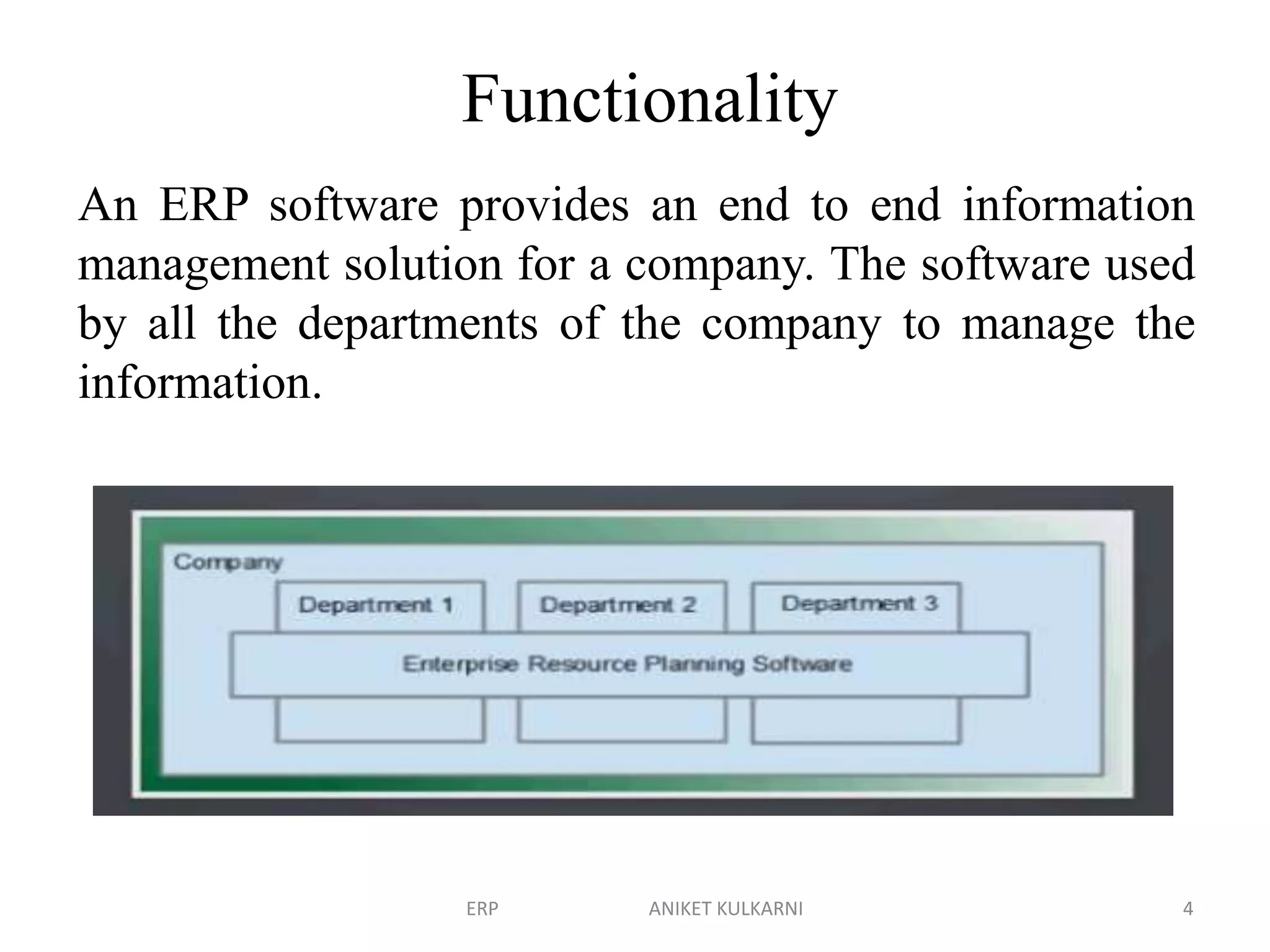
An ERP software provides an end to end information
management solution for a company. The software used
by all the departments of the company to manage the
information.
ERP ANIKET KULKARNI 4
Objective
ERP ANIKET KULKARNI 5
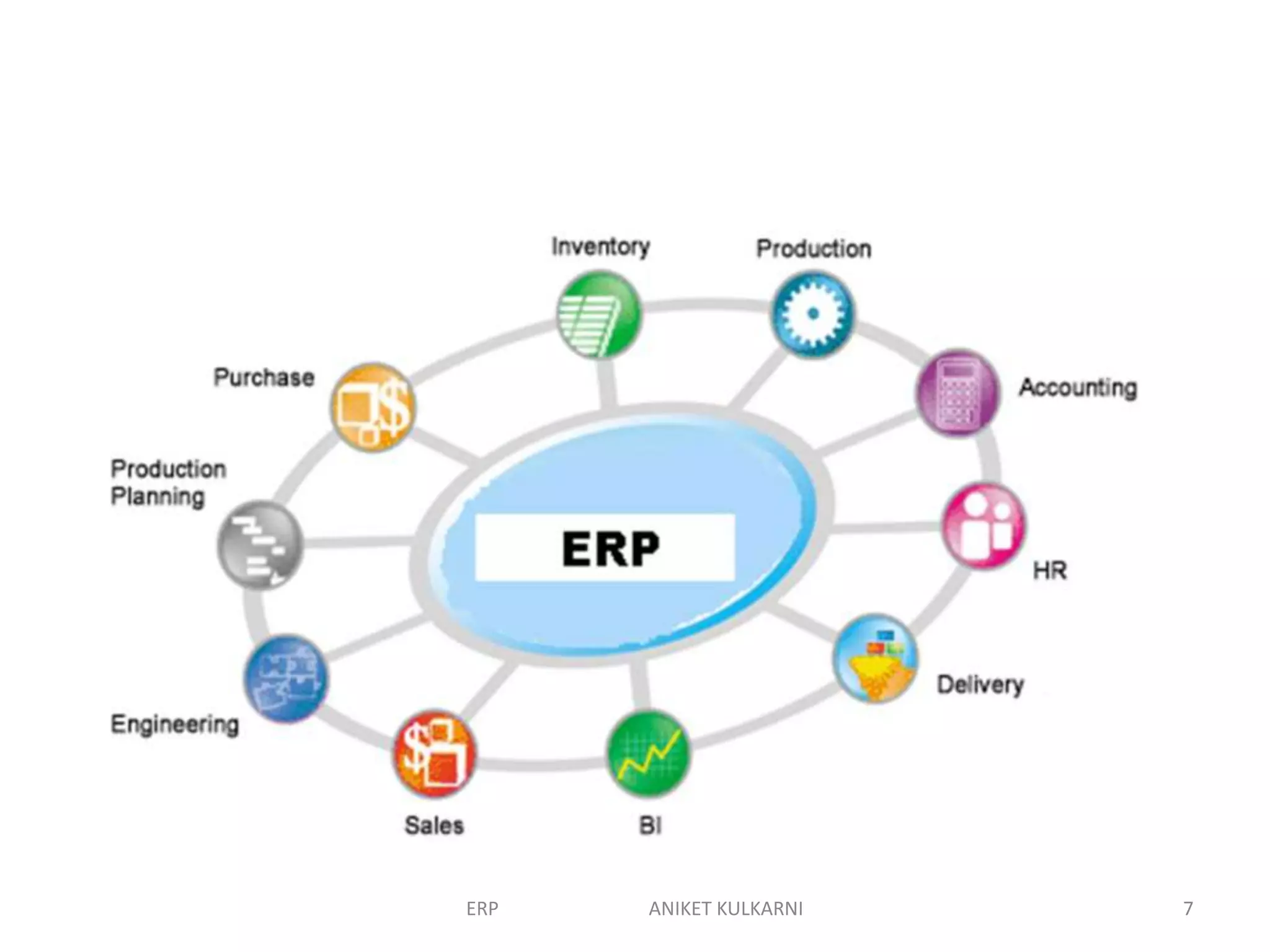
ERP software integrates all the areas of operations
including:
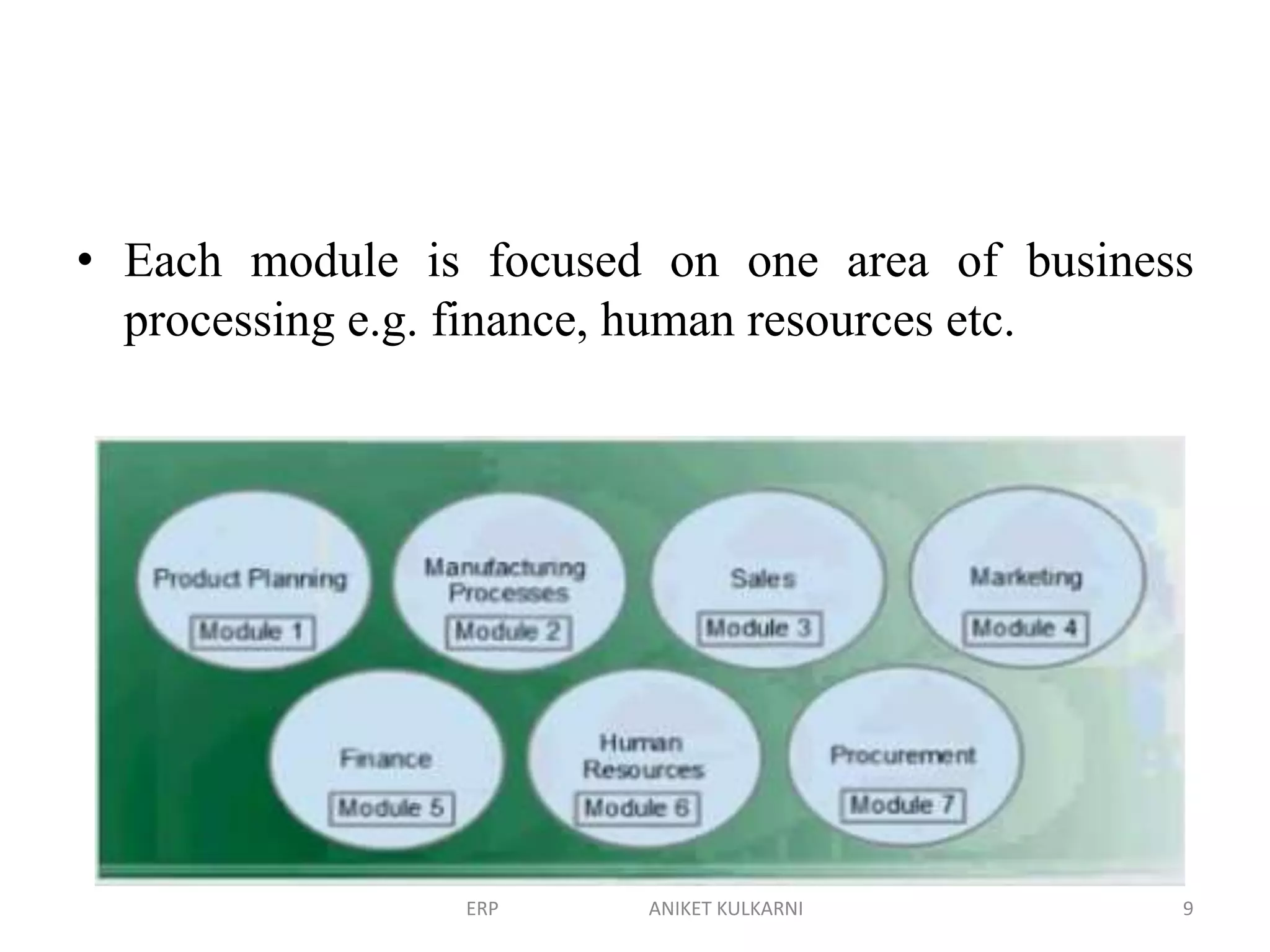
• Product planning
• Manufacturing processes
• Sales
• Marketing
• Human resource management
• Procurement
• finance
ERP ANIKET KULKARNI 6
ERP ANIKET KULKARNI 7
Modular and Integrated
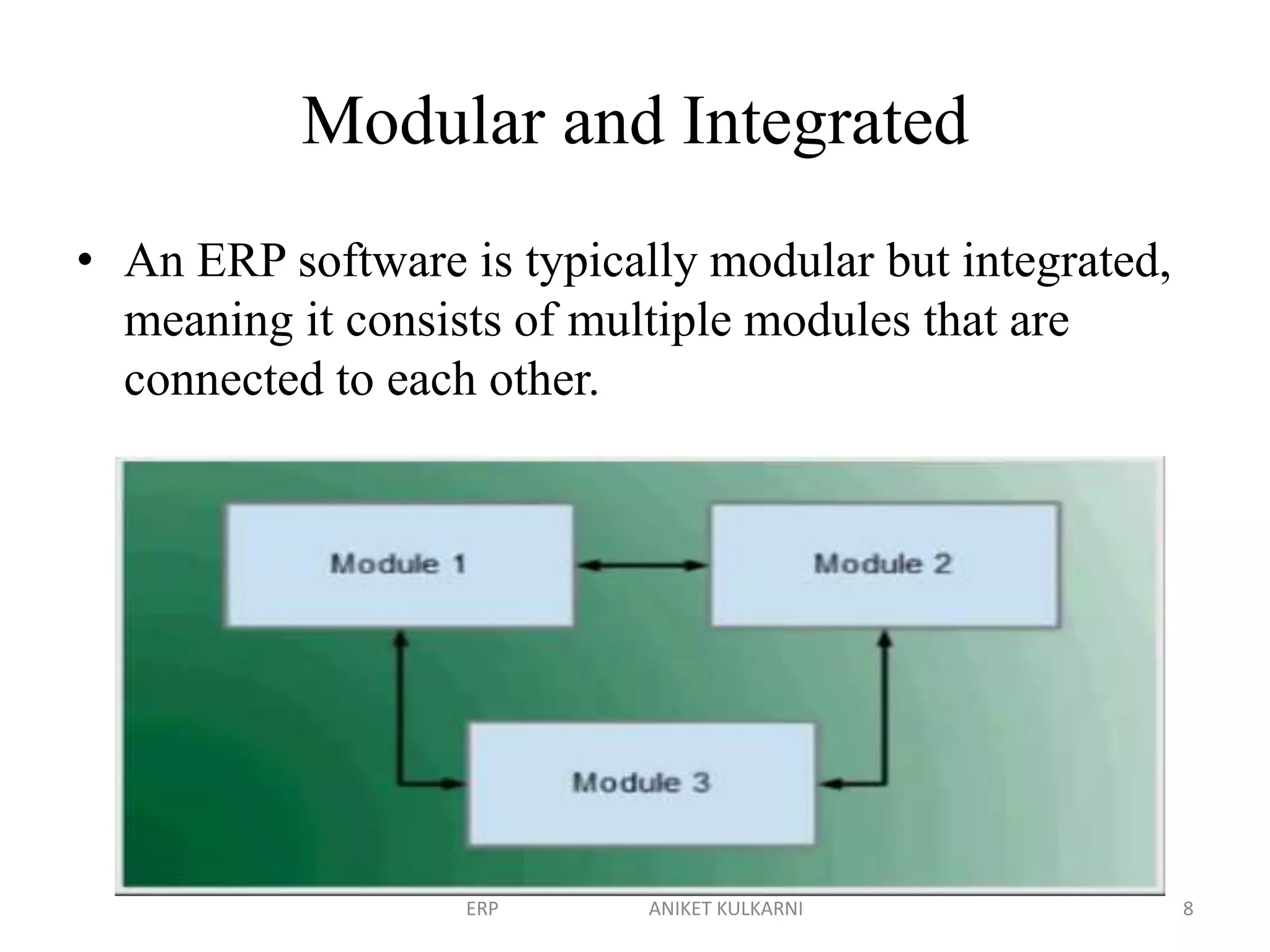
• An ERP software is typically modular but integrated,
meaning it consists of multiple modules that are
connected to each other.
ERP ANIKET KULKARNI 8
• Each module is focused on one area of business
processing e.g. finance, human resources etc.
ERP ANIKET KULKARNI 9
Communication among modules
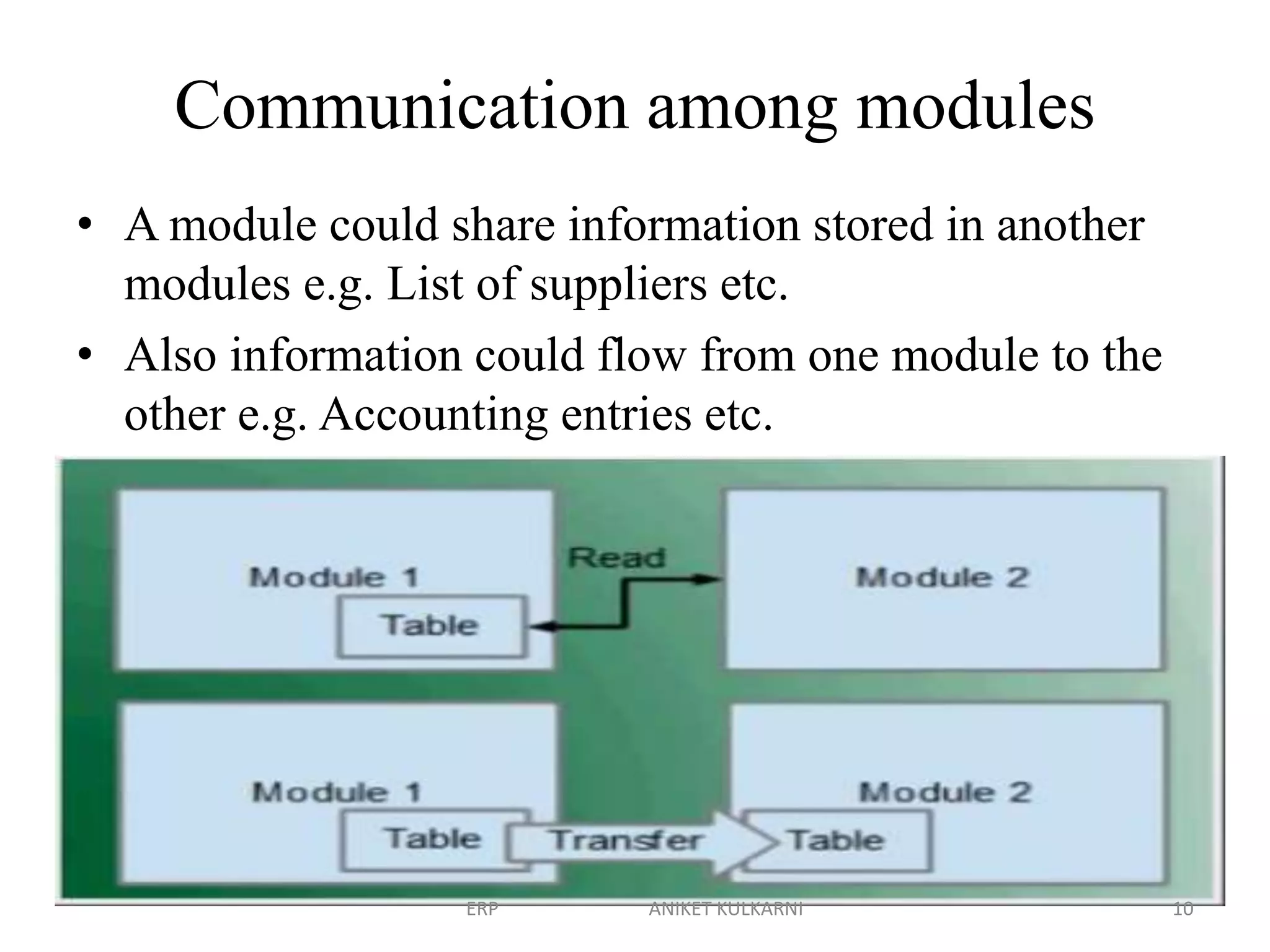
• A module could share information stored in another
modules e.g. List of suppliers etc.
• Also information could flow from one module to the
other e.g. Accounting entries etc.
ERP ANIKET KULKARNI 10
Management Reporting
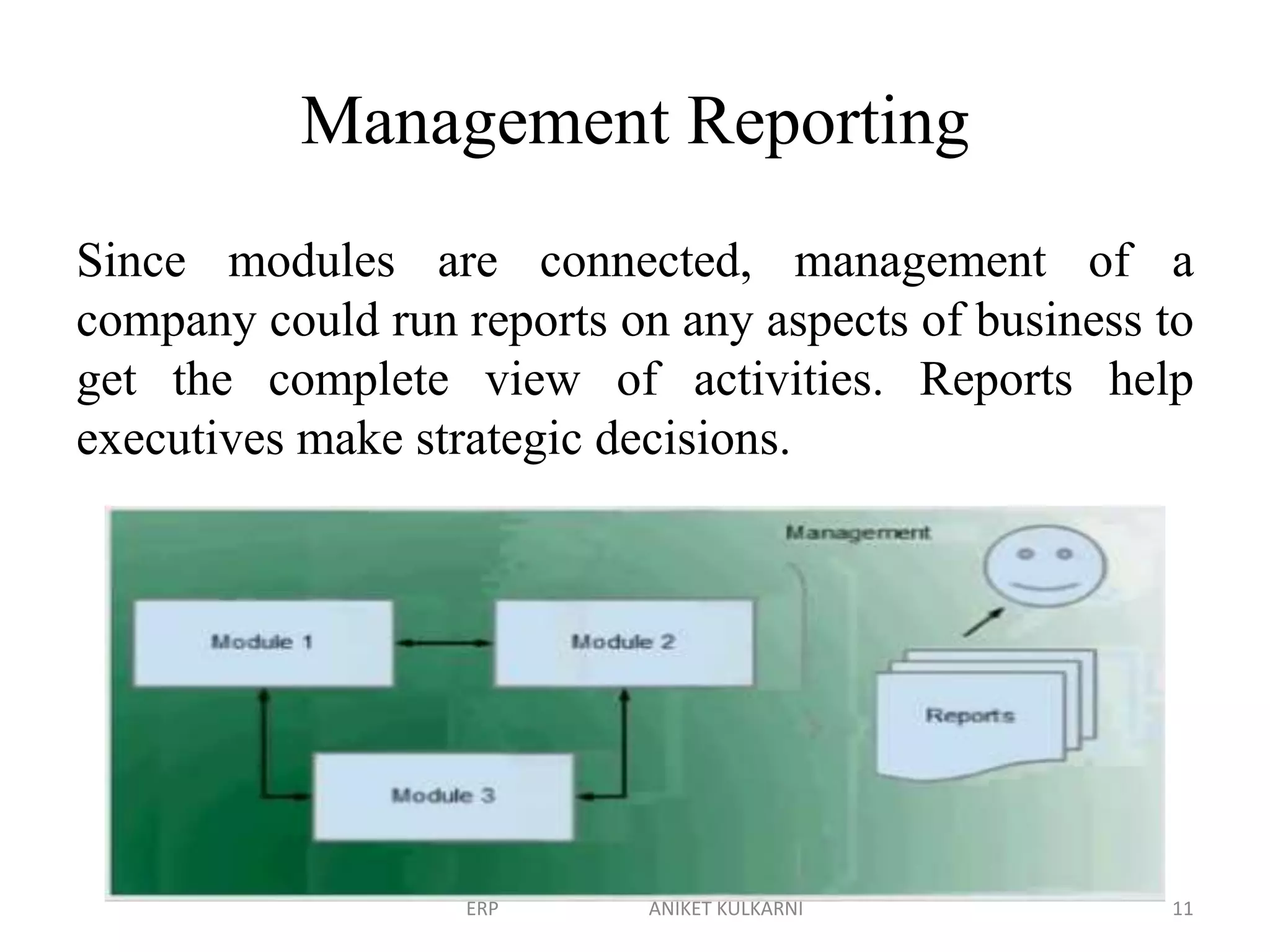
Since modules are connected, management of a
company could run reports on any aspects of business to
get the complete view of activities. Reports help
executives make strategic decisions.
ERP ANIKET KULKARNI 11
Licensing
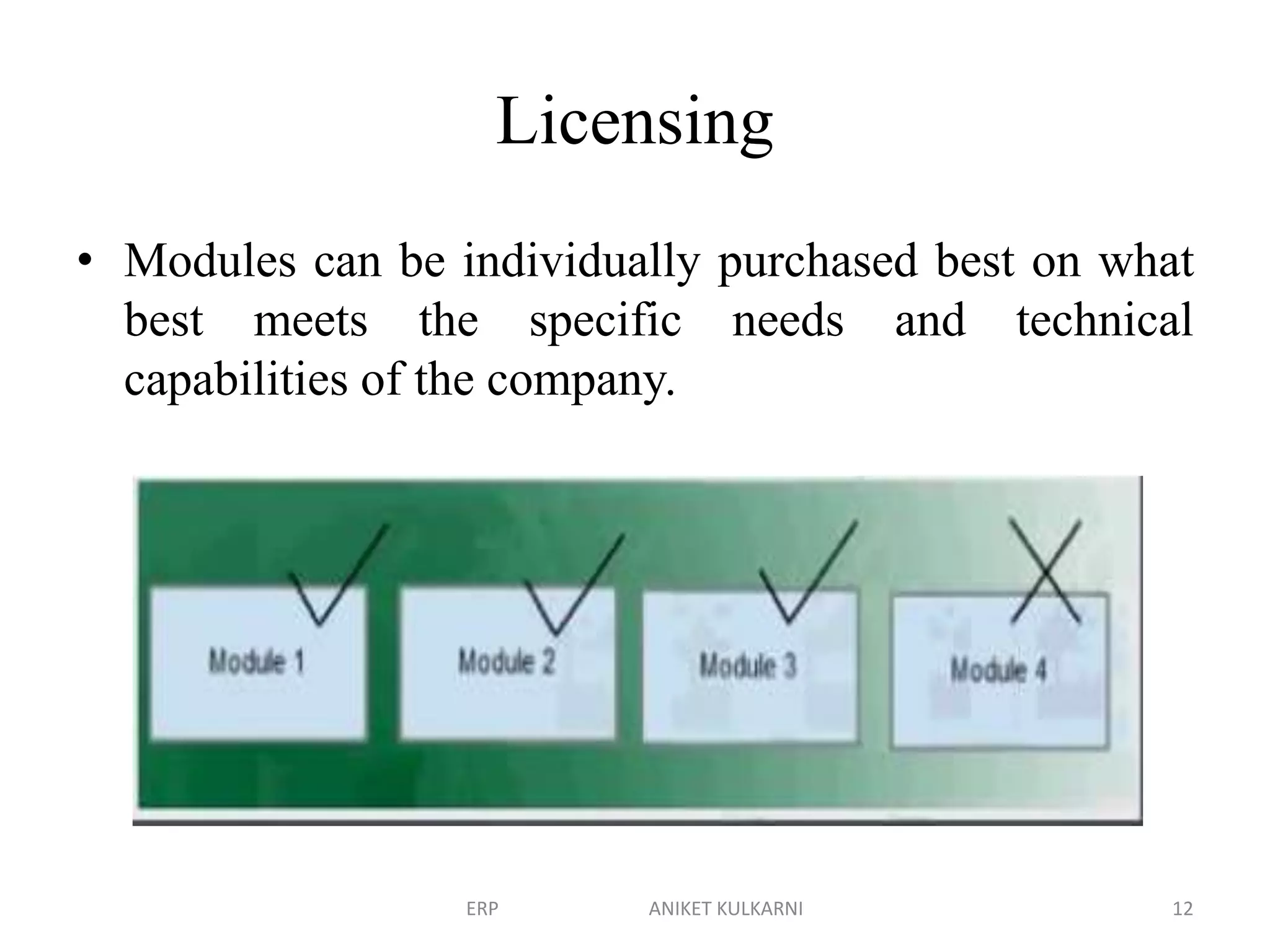
• Modules can be individually purchased best on what
best meets the specific needs and technical
capabilities of the company.
ERP ANIKET KULKARNI 12
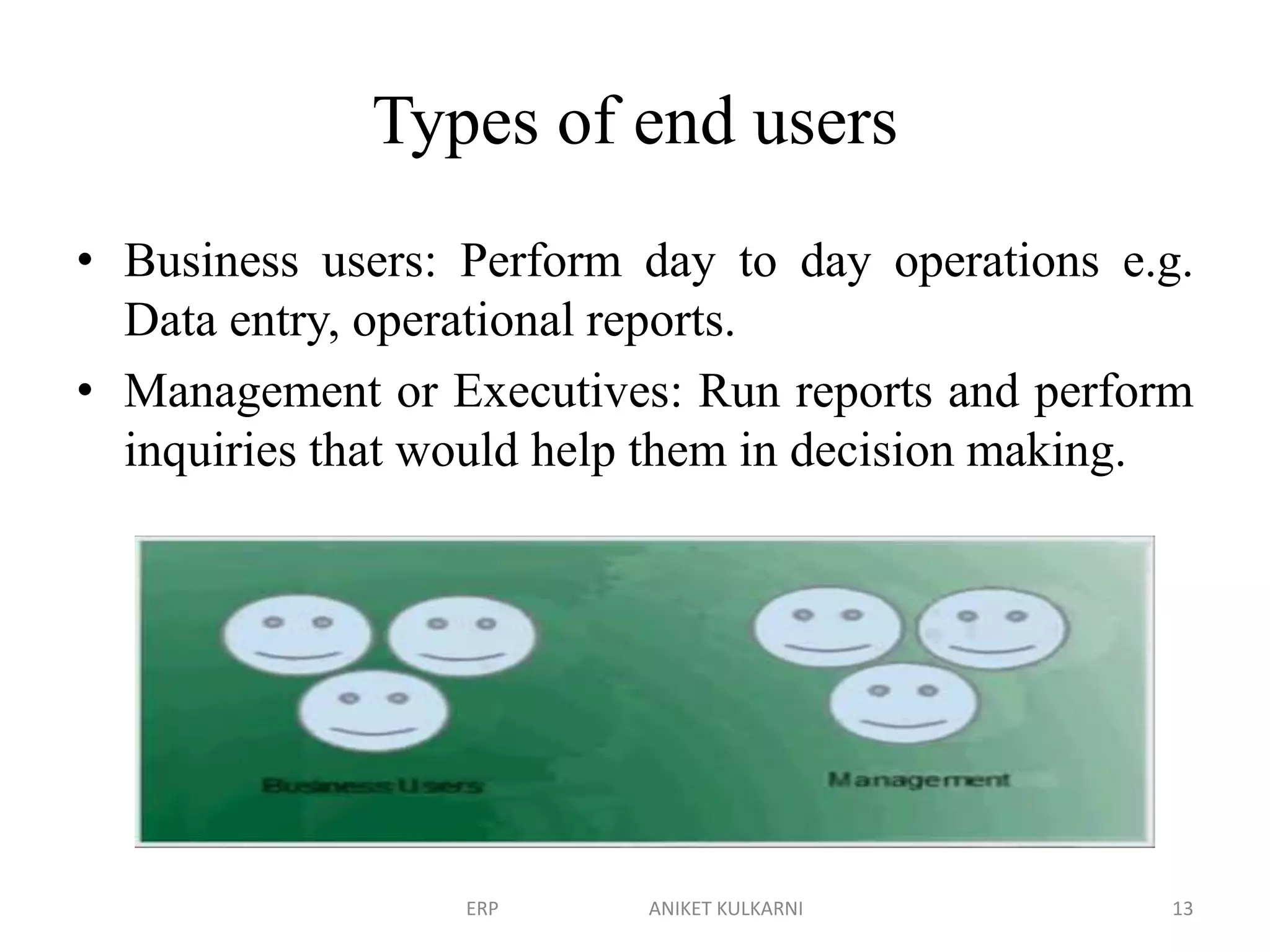
Types of end users
• Business users: Perform day to day operations e.g.
Data entry, operational reports.
• Management or Executives: Run reports and perform
inquiries that would help them in decision making.
ERP ANIKET KULKARNI 13
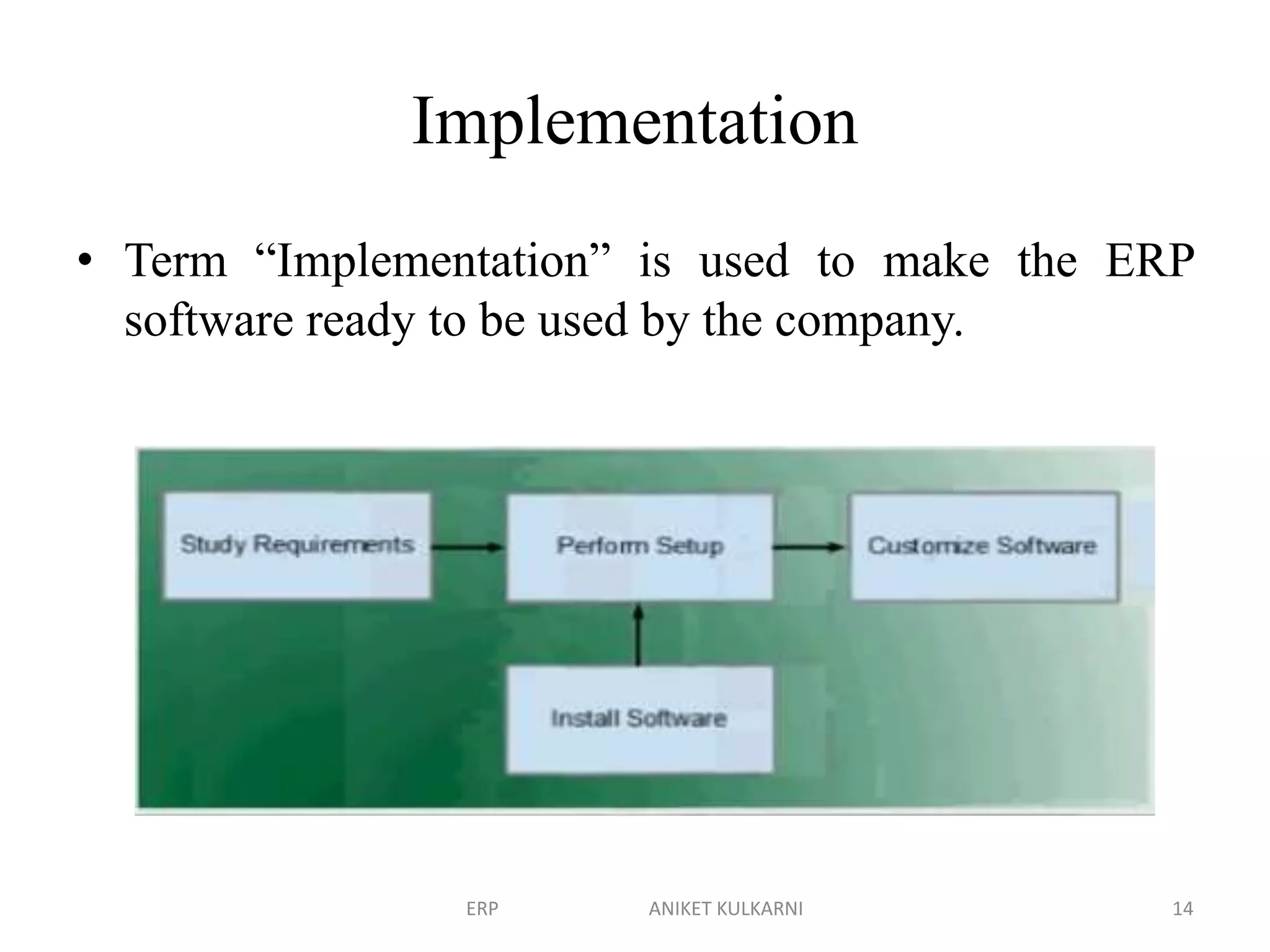
Implementation
• Term “Implementation” is used to make the ERP
software ready to be used by the company.
ERP ANIKET KULKARNI 14
Implementation process
• Study the business requirements. Find out how the
ERP system should be behaving.
• Setup or configure the software such that it starts
working as per business requirements.
• Fill the gaps between business requirements and
functionality offered by the ERP software
ERP ANIKET KULKARNI 15
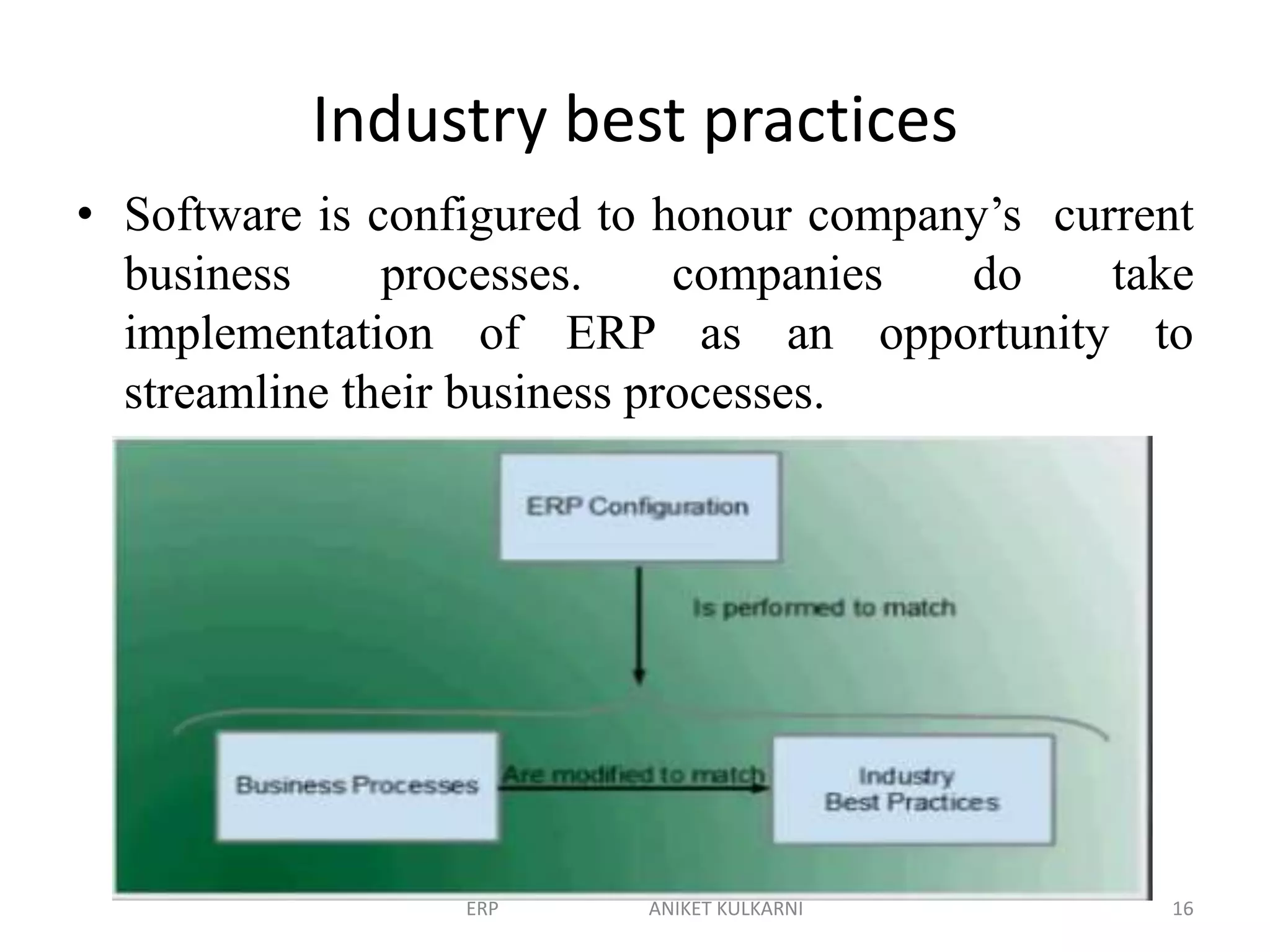
Industry best practices
• Software is configured to honour company’s current
business processes. companies do take
implementation of ERP as an opportunity to
streamline their business processes.
ERP ANIKET KULKARNI 16
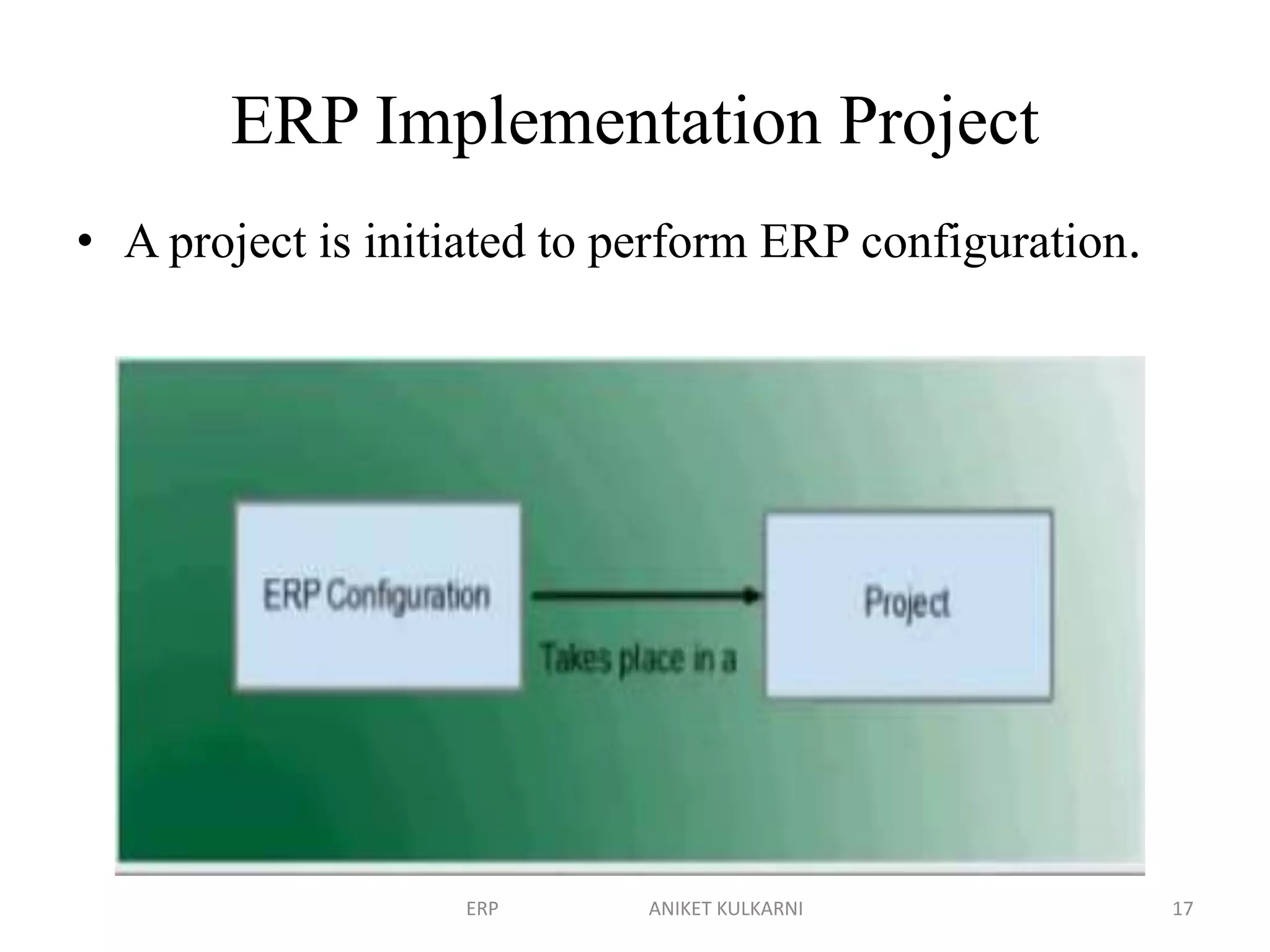
ERP Implementation Project
• A project is initiated to perform ERP configuration.
ERP ANIKET KULKARNI 17
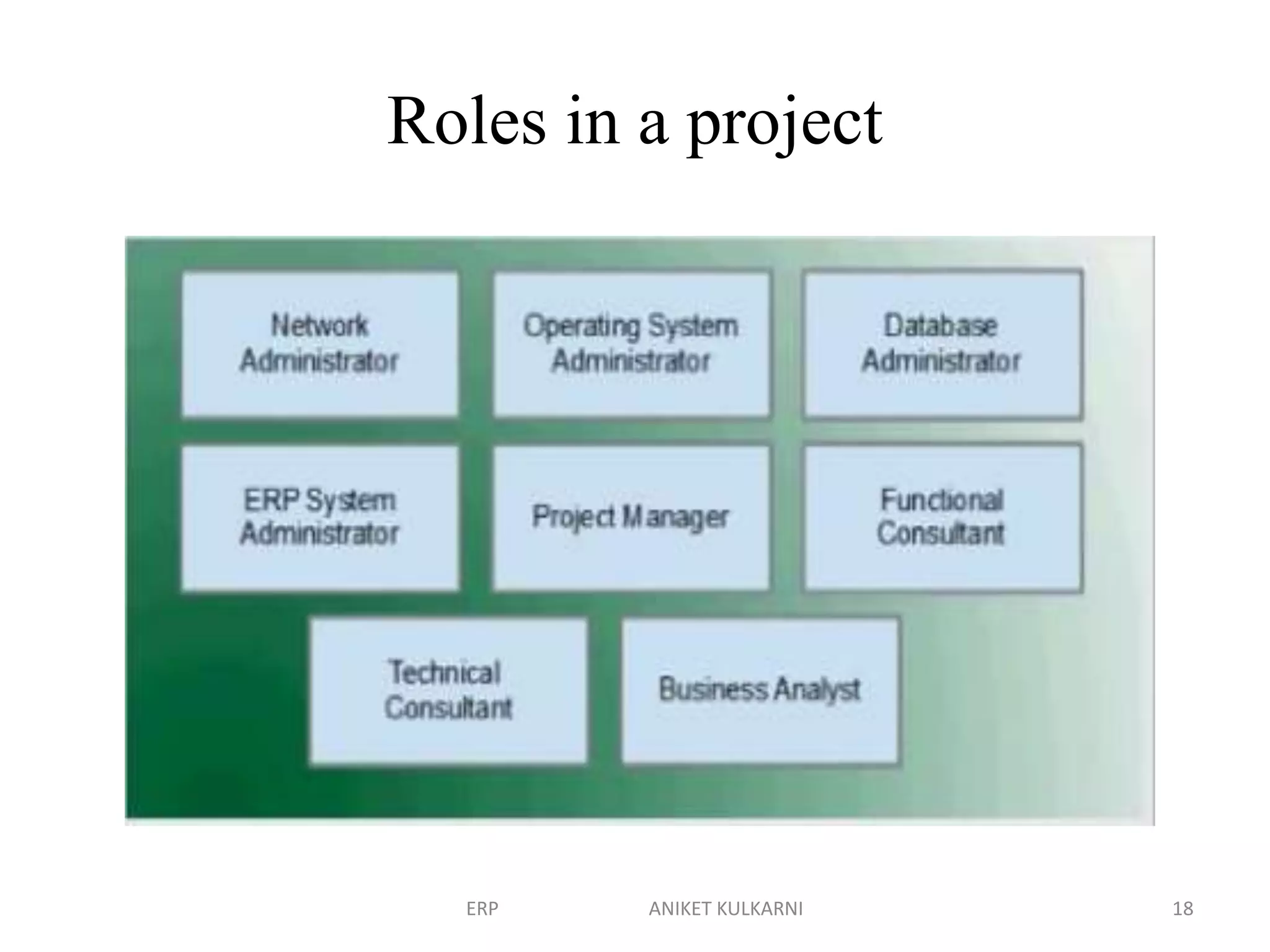
Roles in a project
ERP ANIKET KULKARNI 18
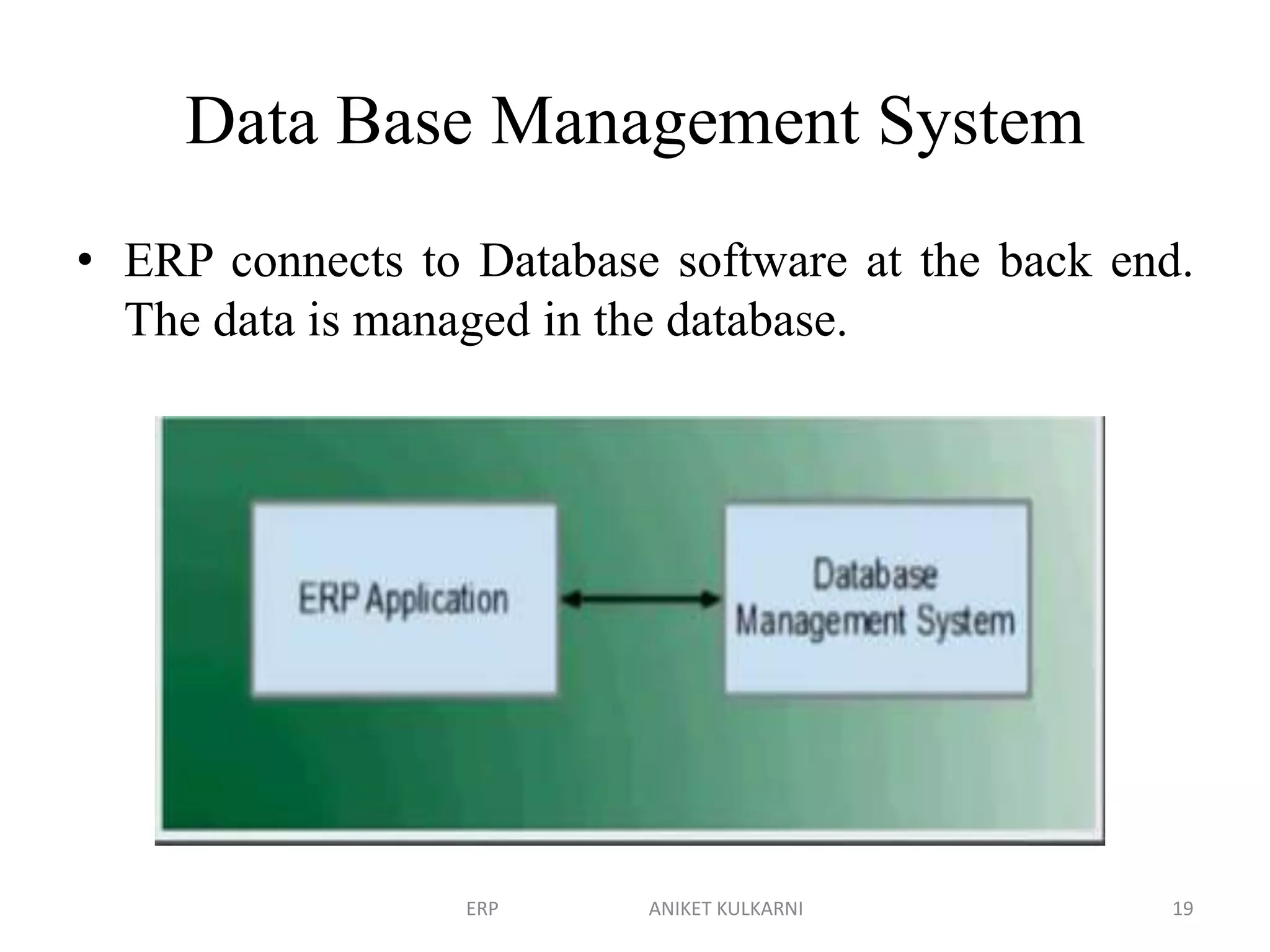
Data Base Management System
• ERP connects to Database software at the back end.
The data is managed in the database.
ERP ANIKET KULKARNI 19
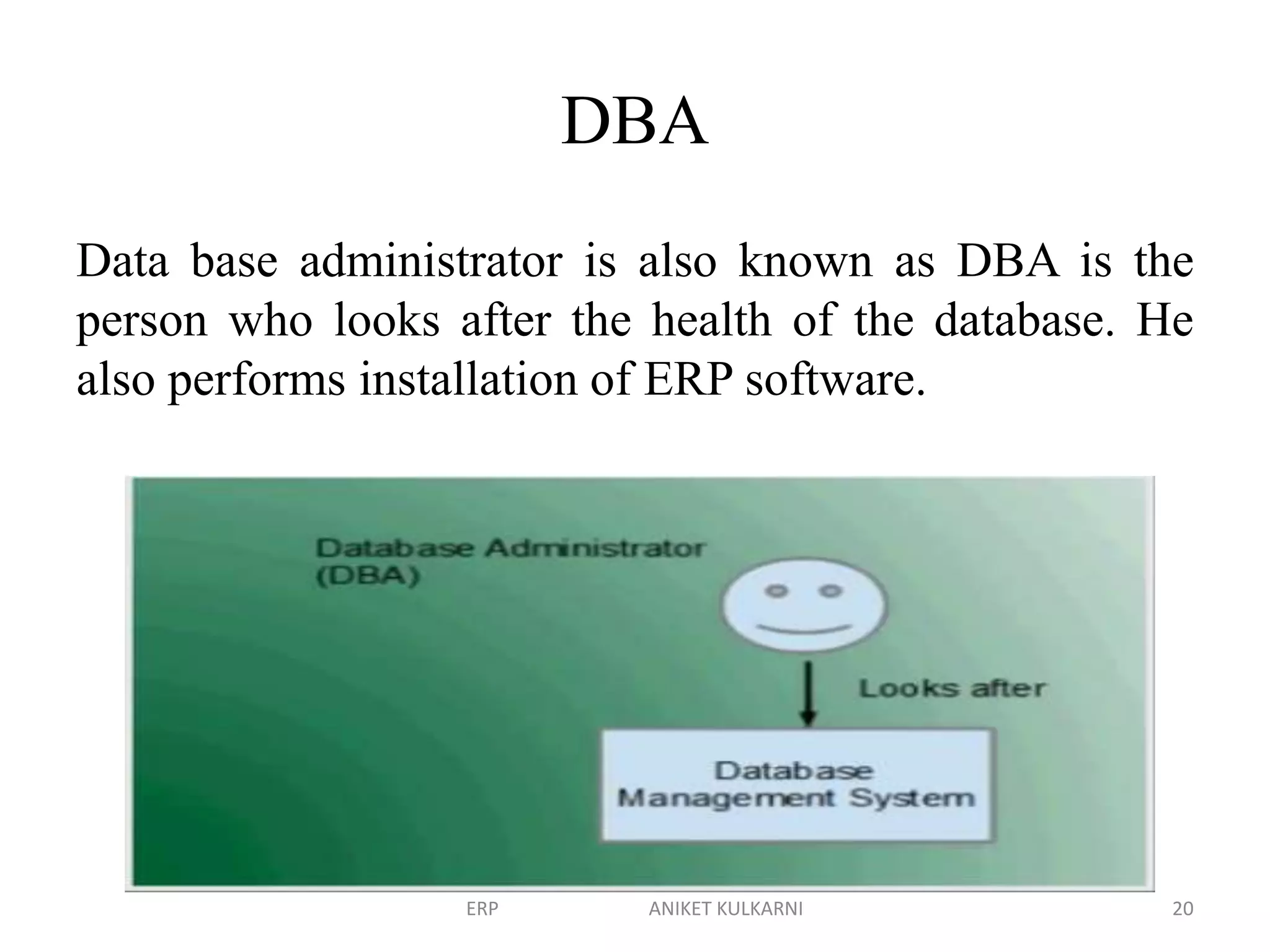
DBA
Data base administrator is also known as DBA is the
person who looks after the health of the database. He
also performs installation of ERP software.
ERP ANIKET KULKARNI 20
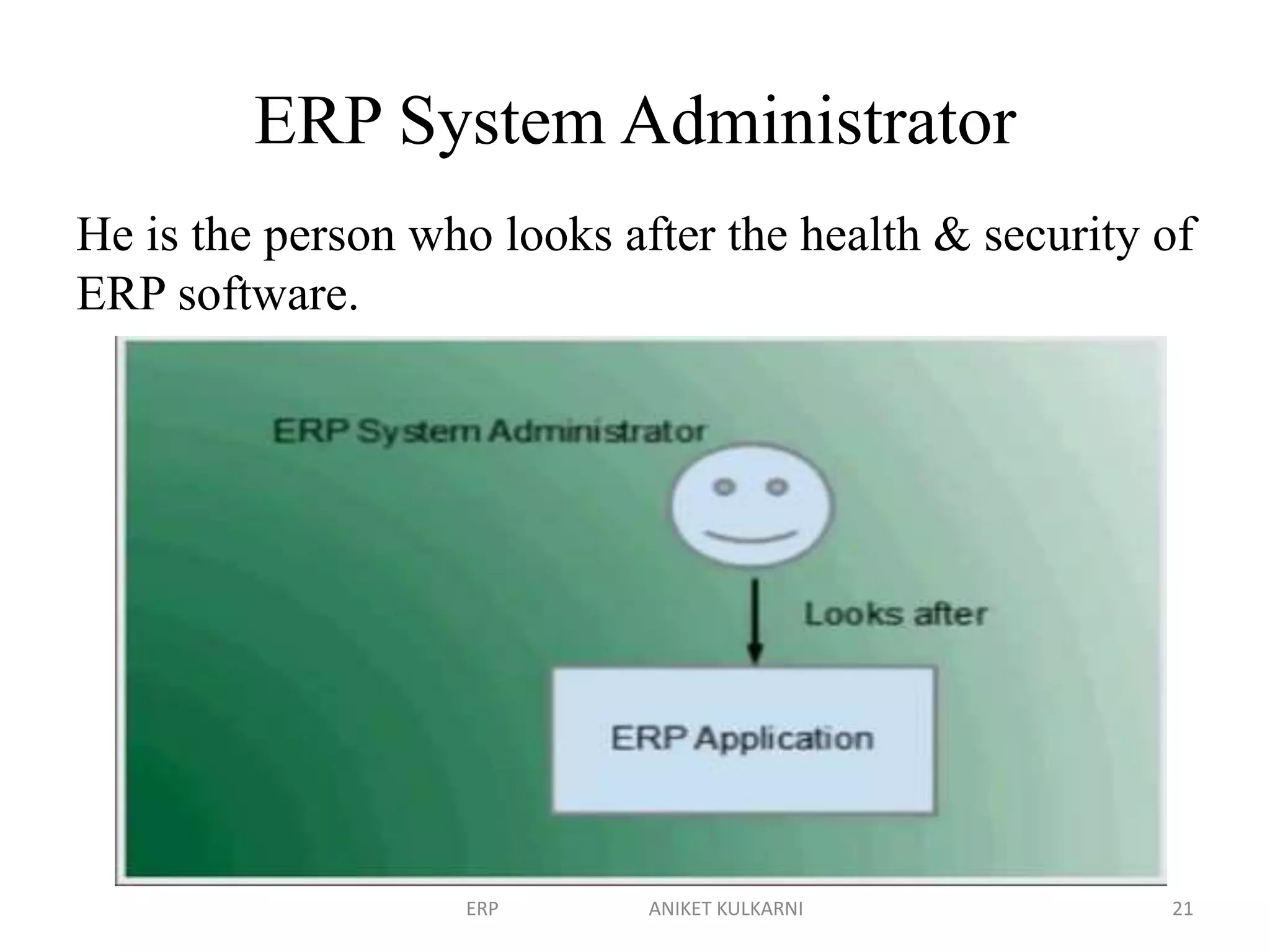
ERP System Administrator
He is the person who looks after the health & security of
ERP software.
ERP ANIKET KULKARNI 21
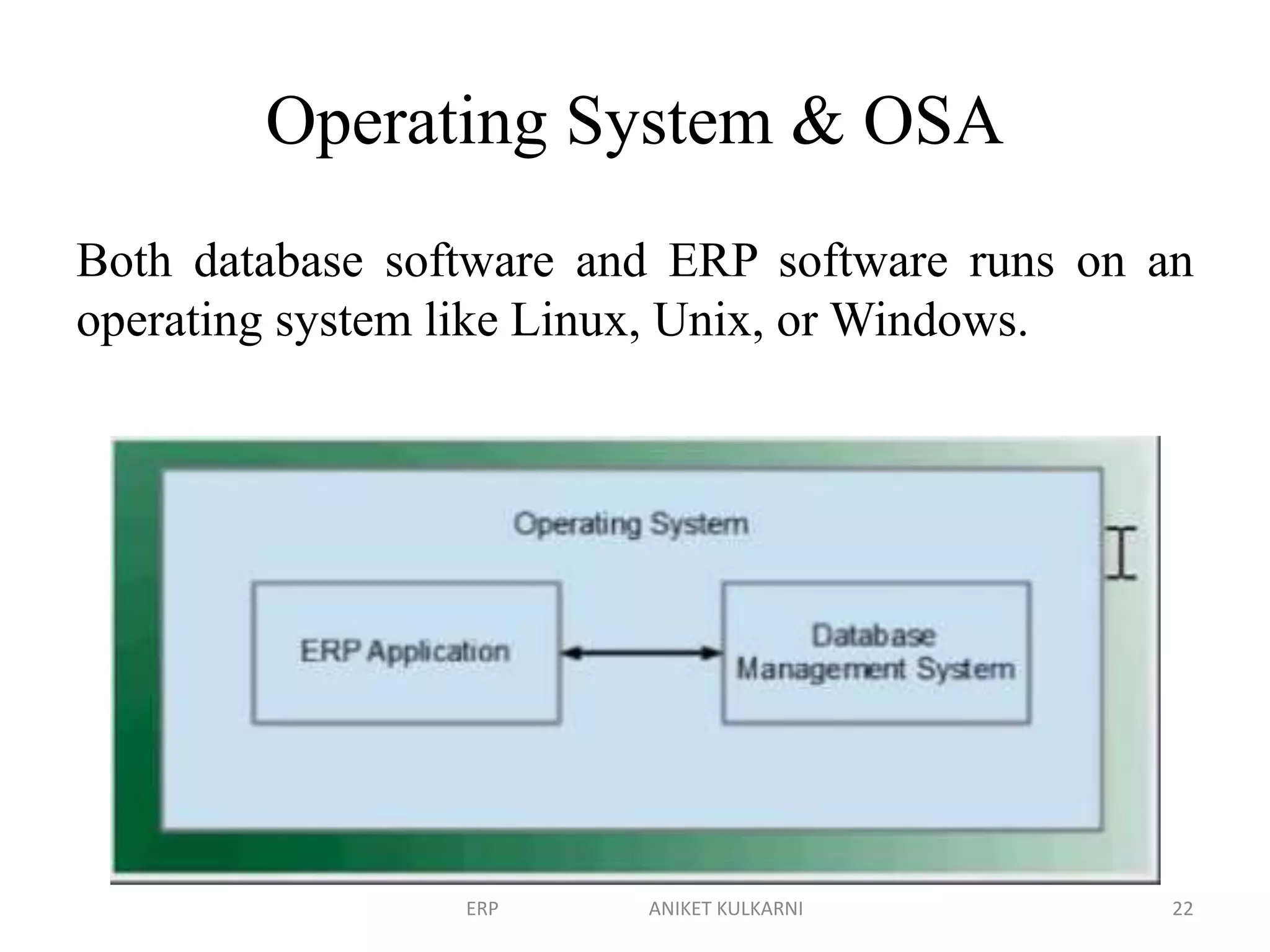
Operating System & OSA
Both database software and ERP software runs on an
operating system like Linux, Unix, or Windows.
ERP ANIKET KULKARNI 22
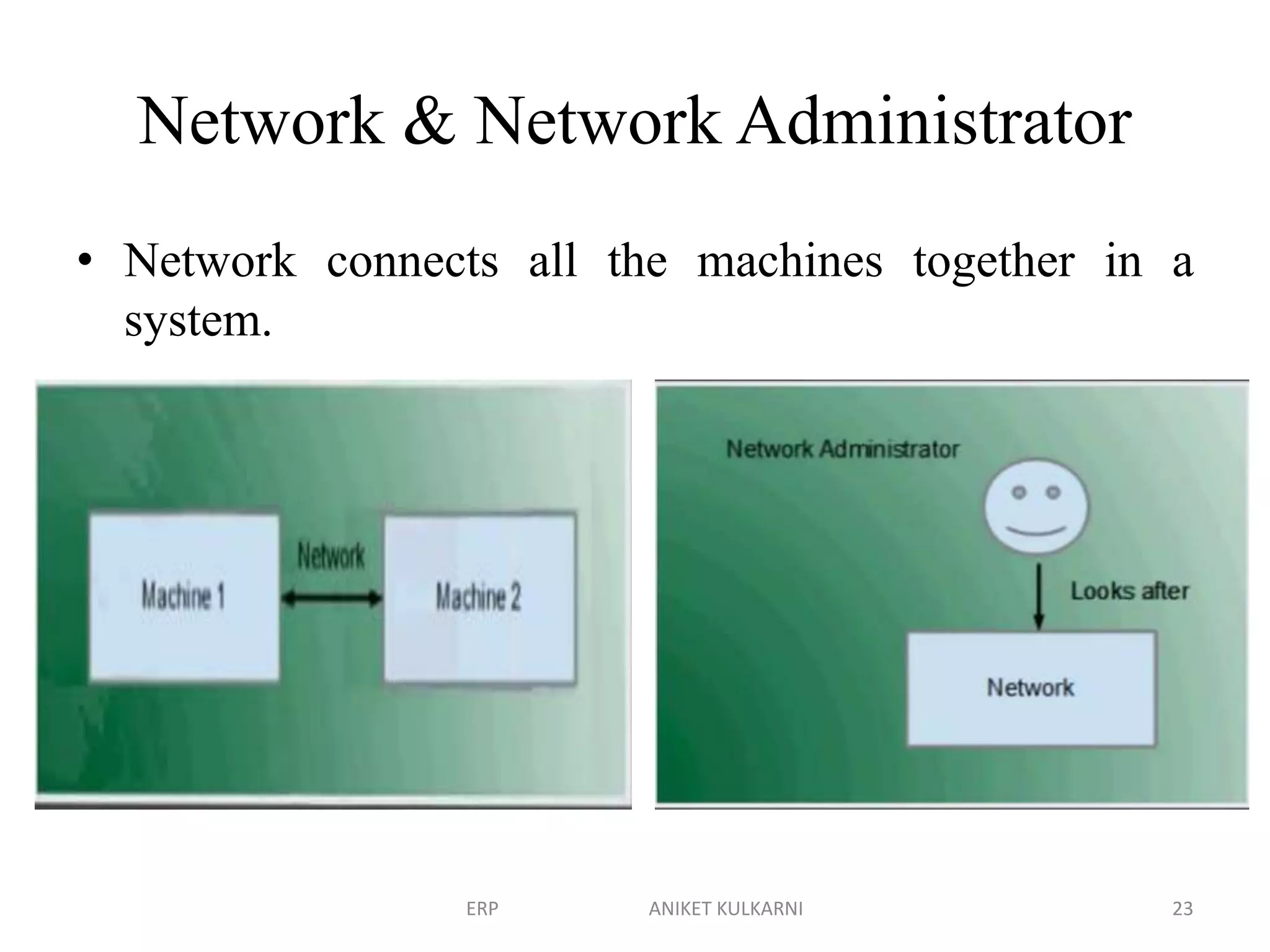
Network & Network Administrator
• Network connects all the machines together in a
system.
ERP ANIKET KULKARNI 23
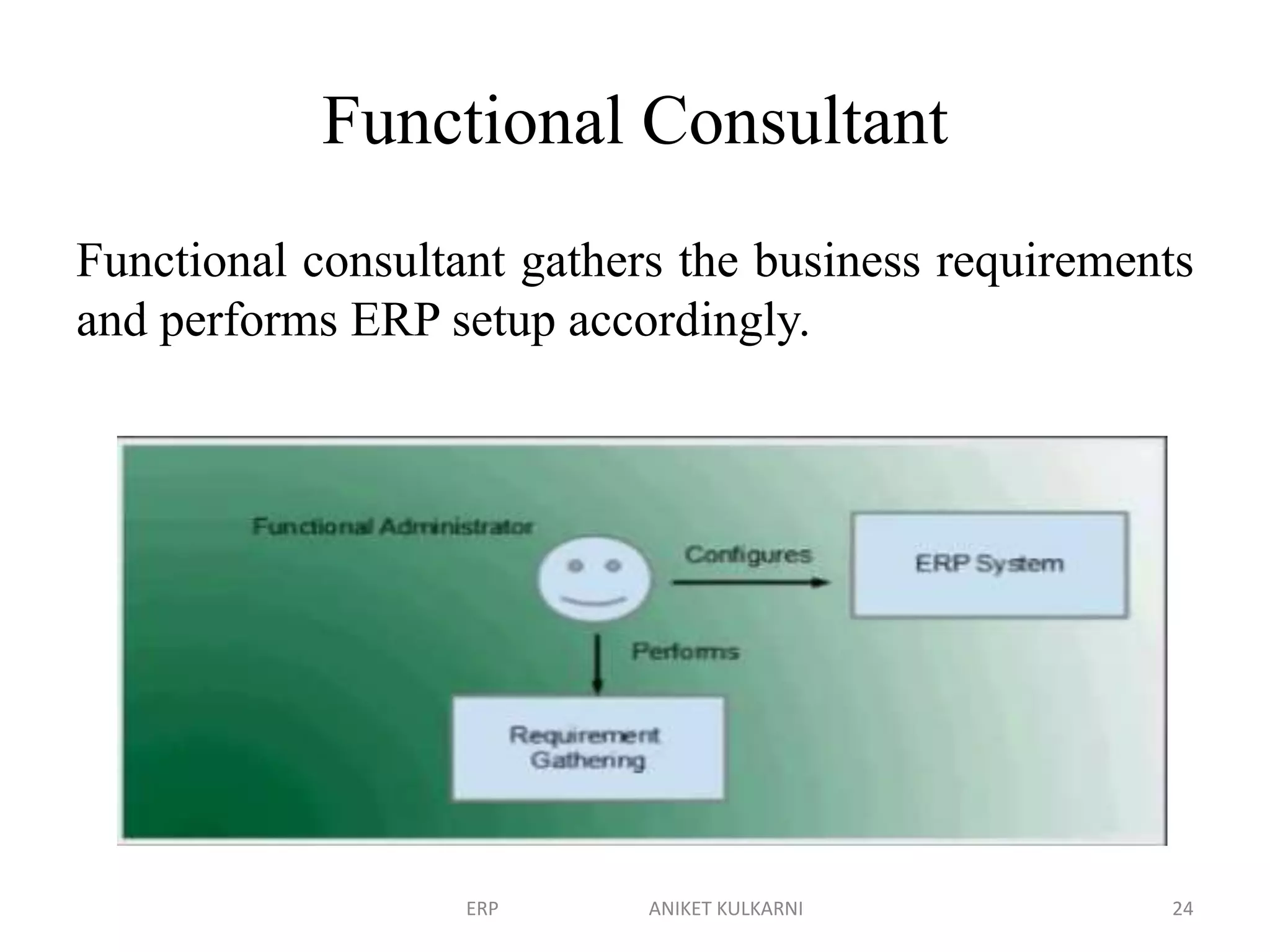
Functional Consultant
Functional consultant gathers the business requirements
and performs ERP setup accordingly.
ERP ANIKET KULKARNI 24
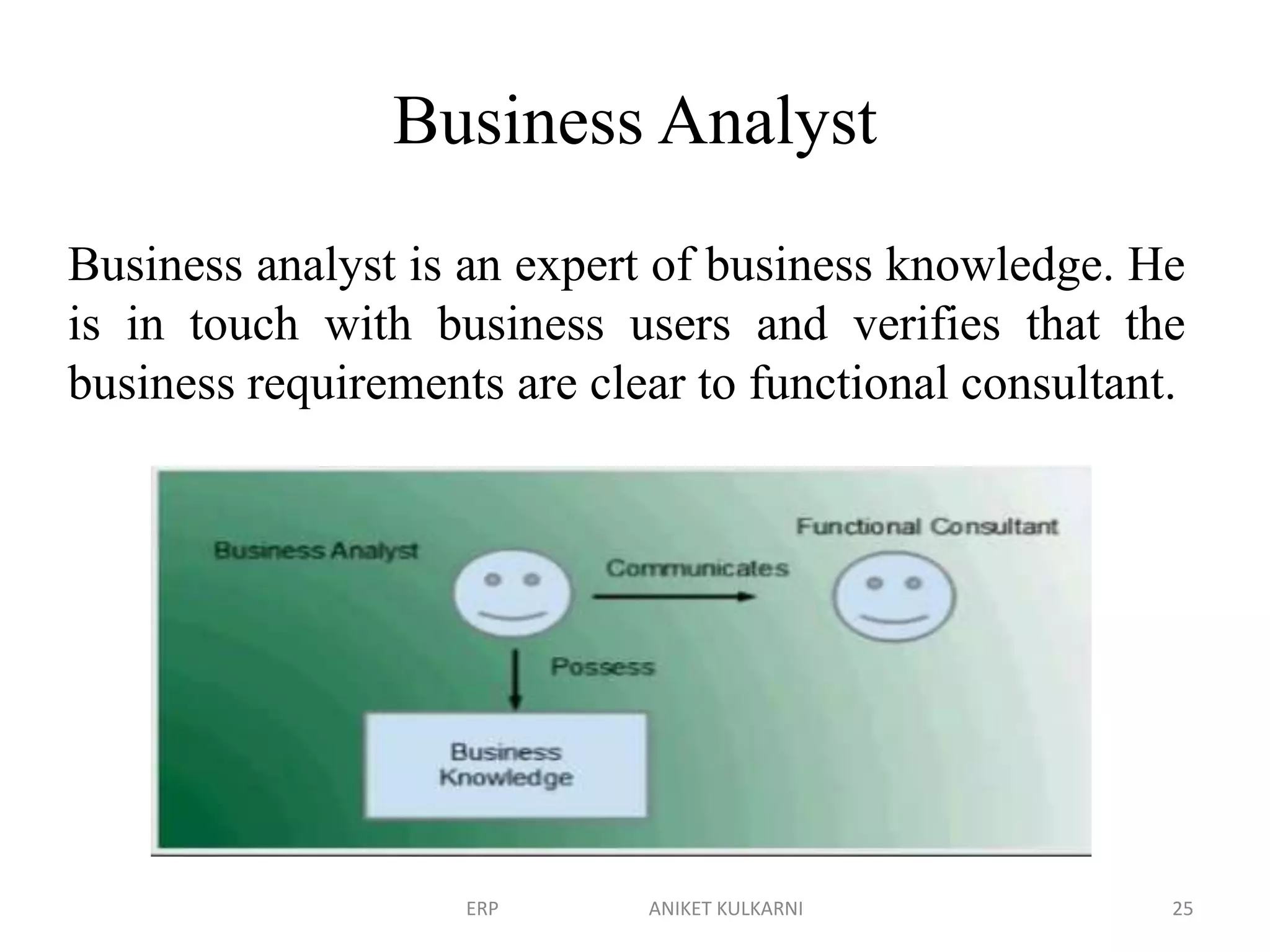
Business Analyst
Business analyst is an expert of business knowledge. He
is in touch with business users and verifies that the
business requirements are clear to functional consultant.
ERP ANIKET KULKARNI 25
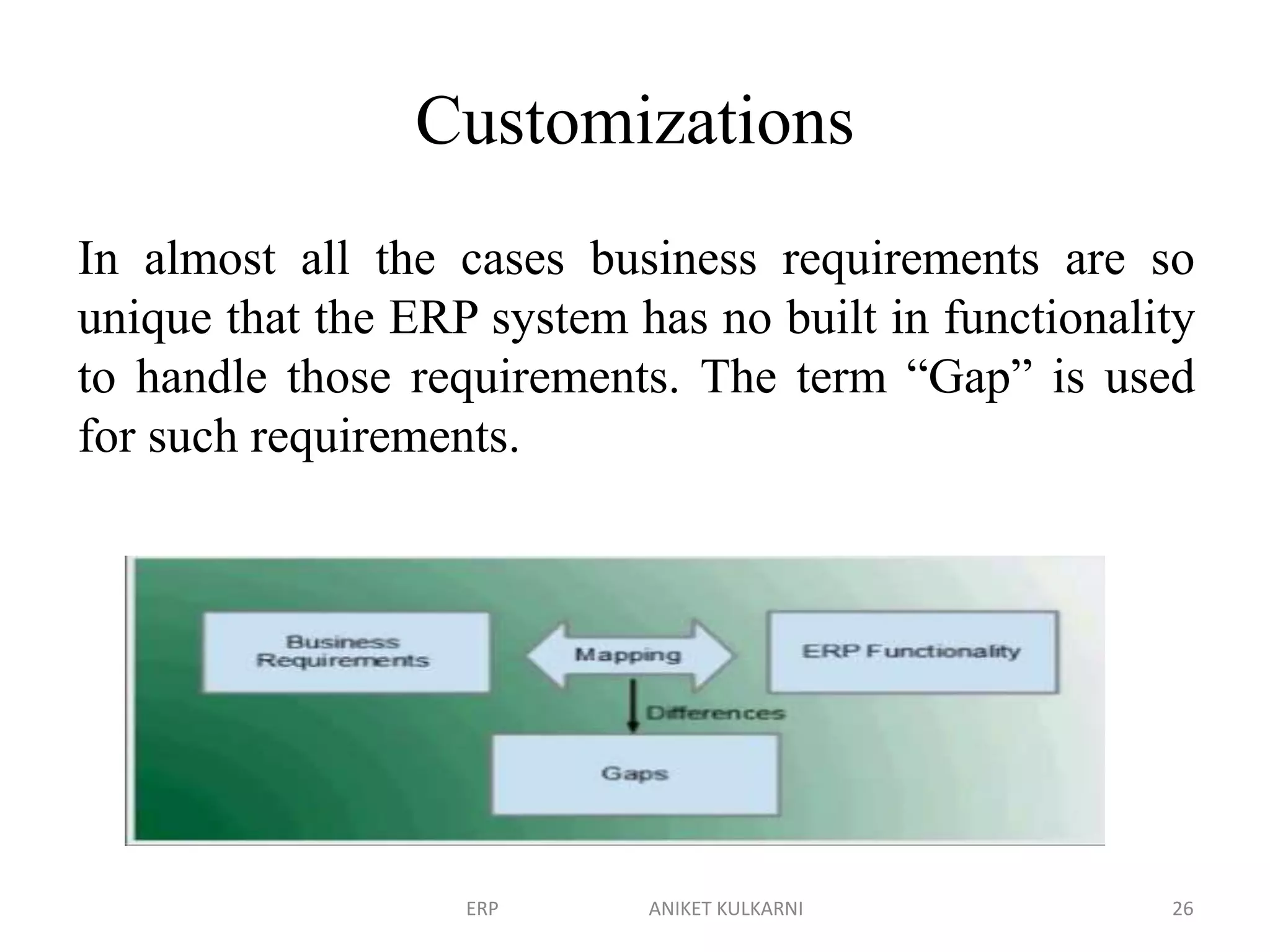
Customizations
In almost all the cases business requirements are so
unique that the ERP system has no built in functionality
to handle those requirements. The term “Gap” is used
for such requirements.
ERP ANIKET KULKARNI 26
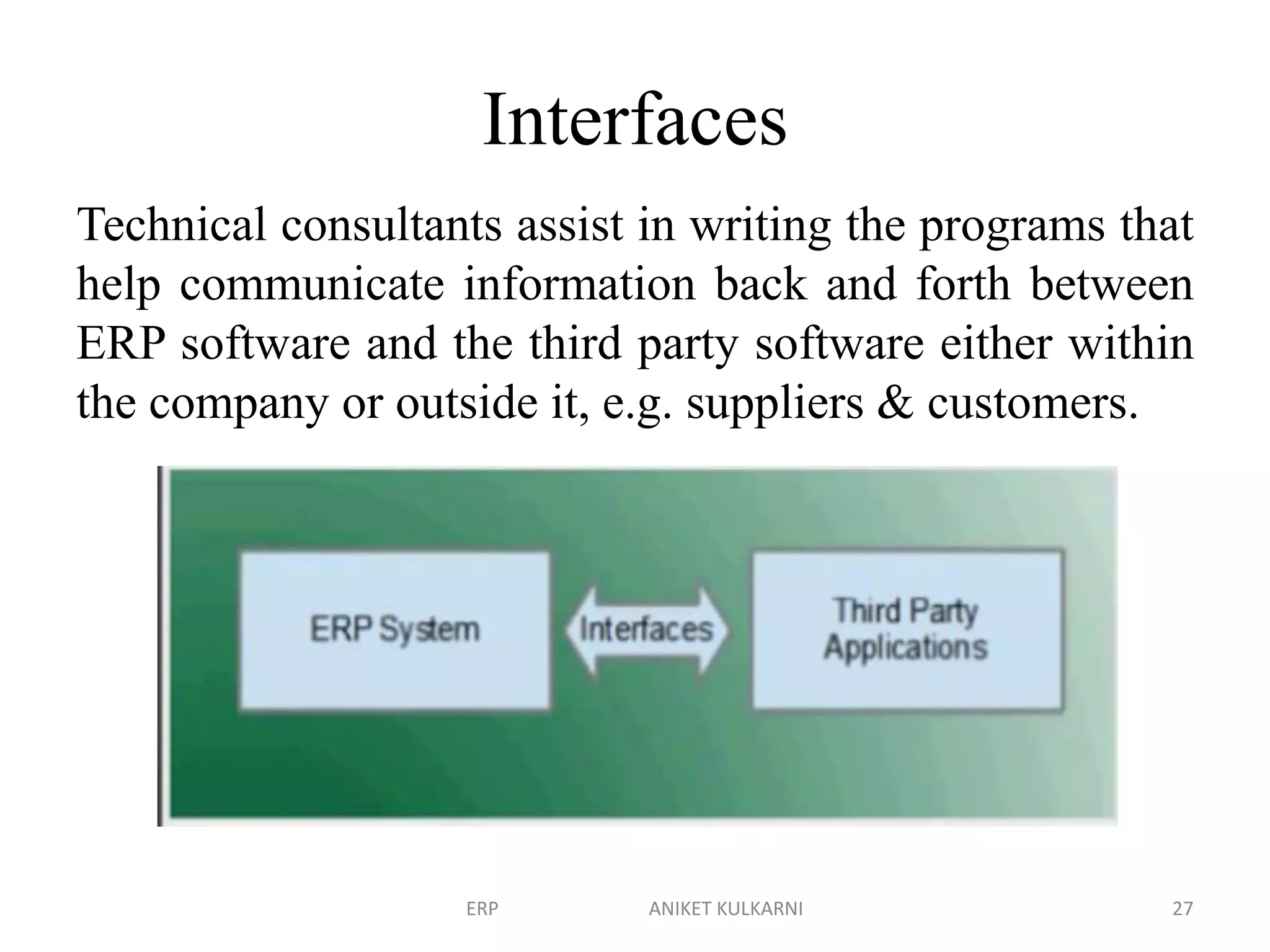
Interfaces
Technical consultants assist in writing the programs that
help communicate information back and forth between
ERP software and the third party software either within
the company or outside it, e.g. suppliers & customers.
ERP ANIKET KULKARNI 27
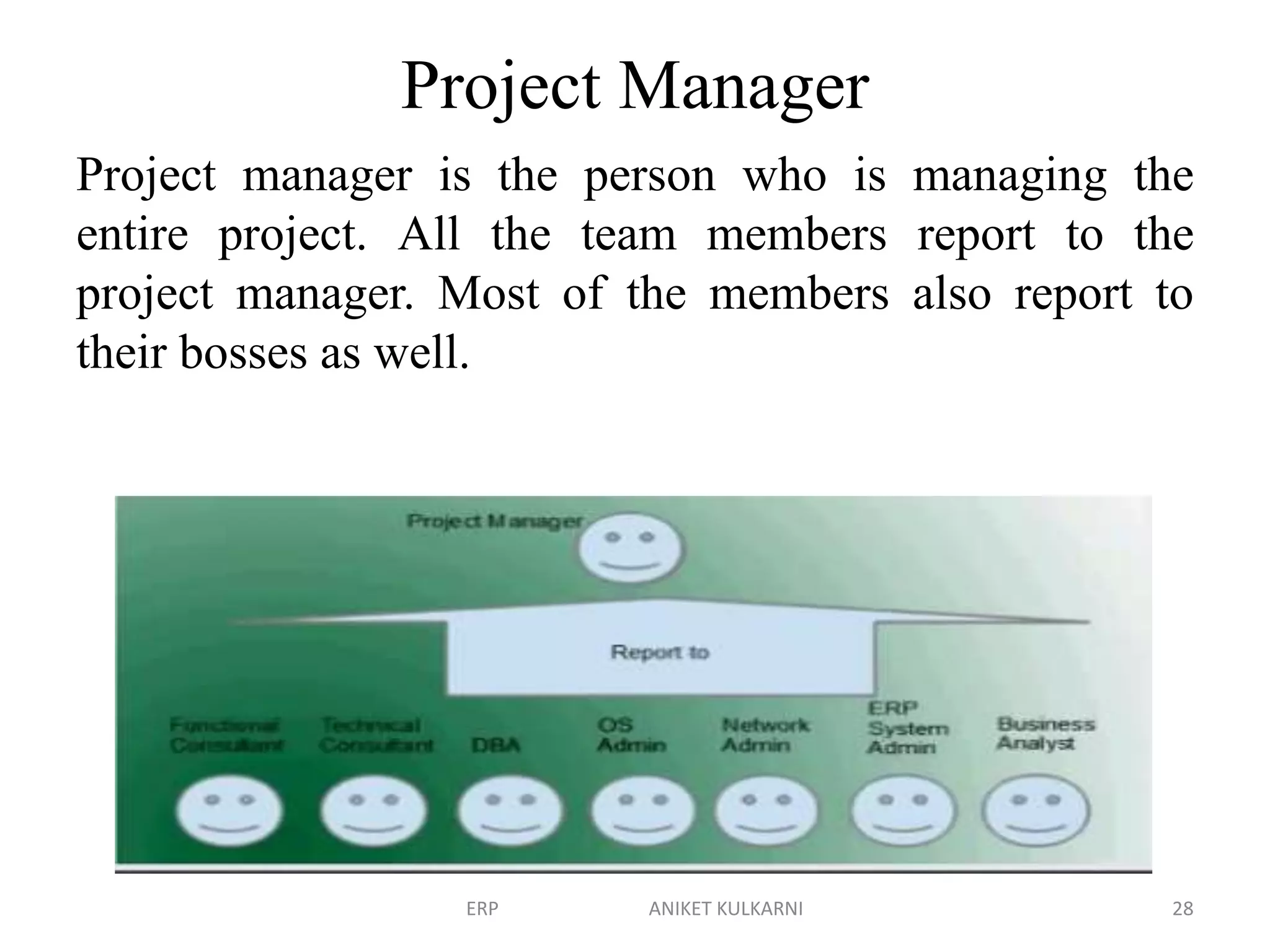
Project Manager
Project manager is the person who is managing the
entire project. All the team members report to the
project manager. Most of the members also report to
their bosses as well.
ERP ANIKET KULKARNI 28
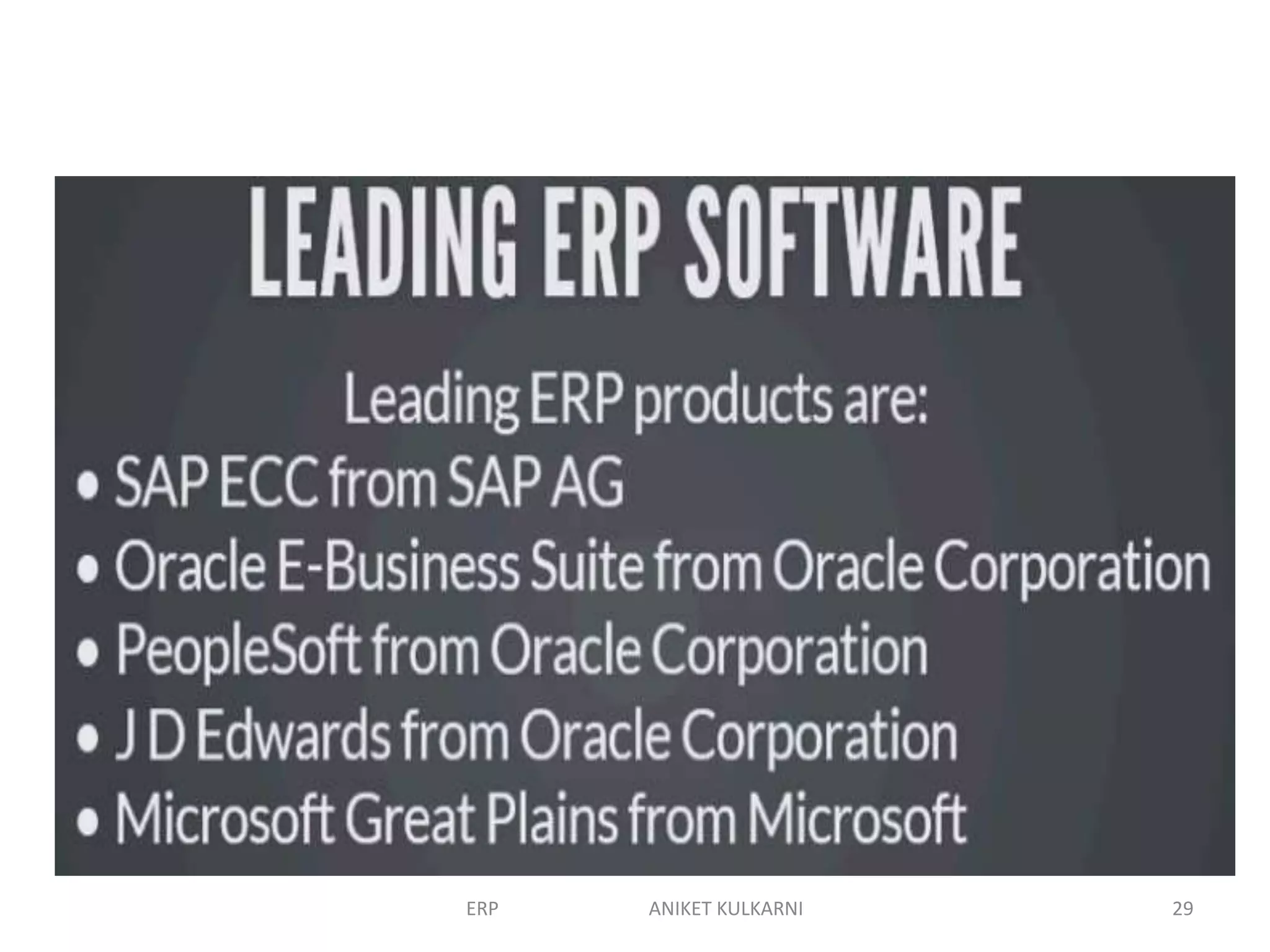
ERP ANIKET KULKARNI 29
ERP ANIKET KULKARNI 30
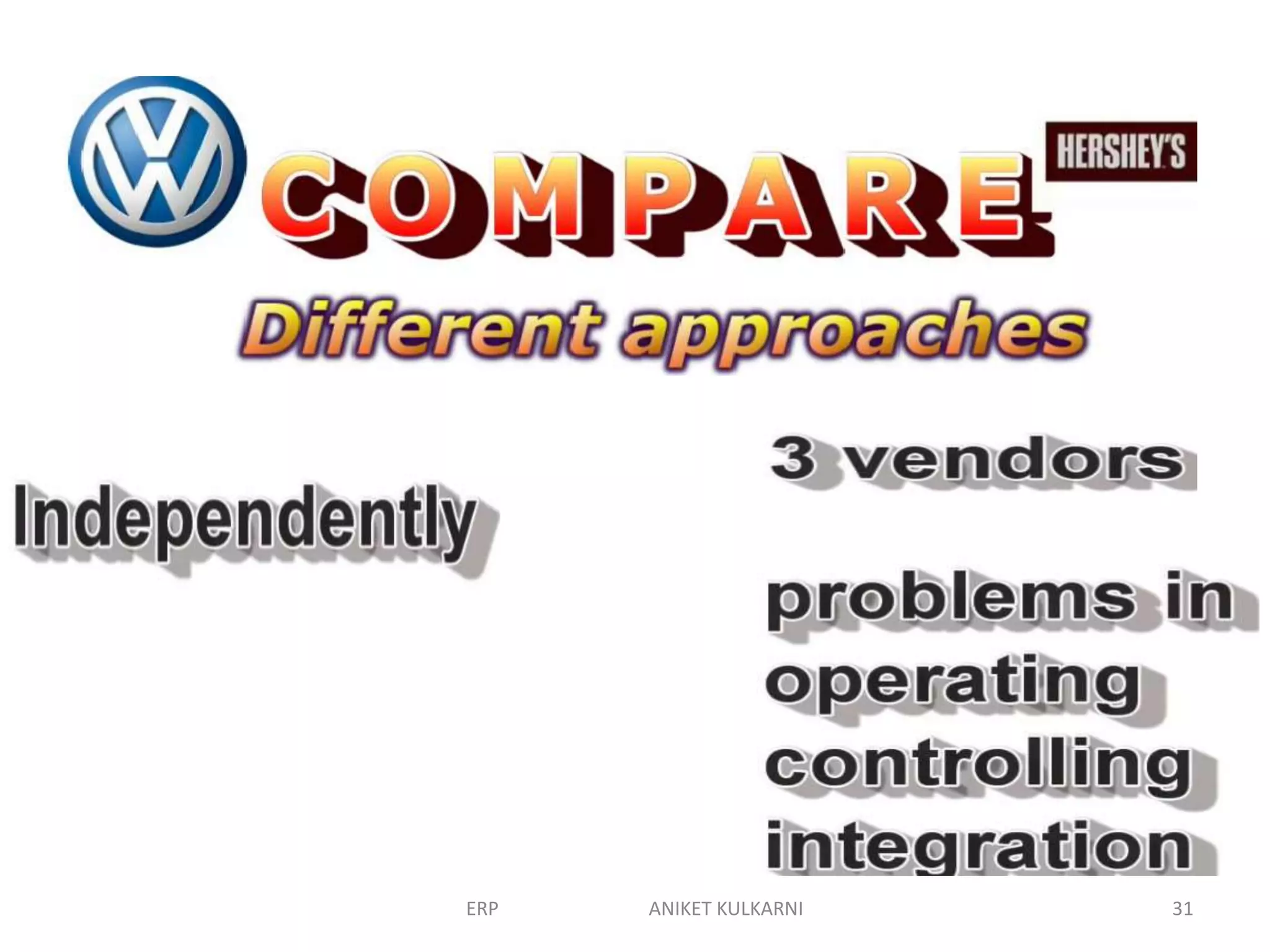
ERP ANIKET KULKARNI 31
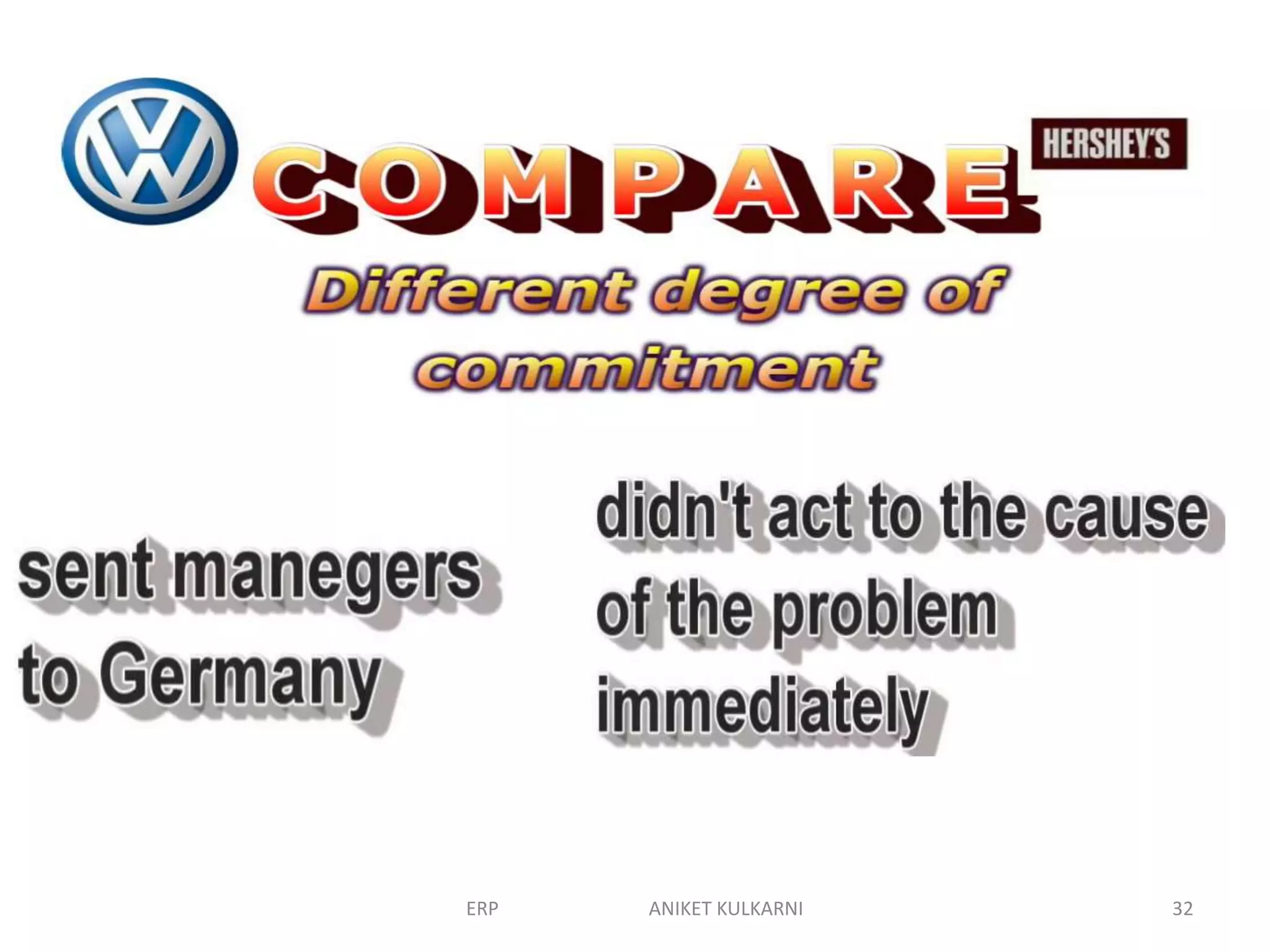
ERP ANIKET KULKARNI 32
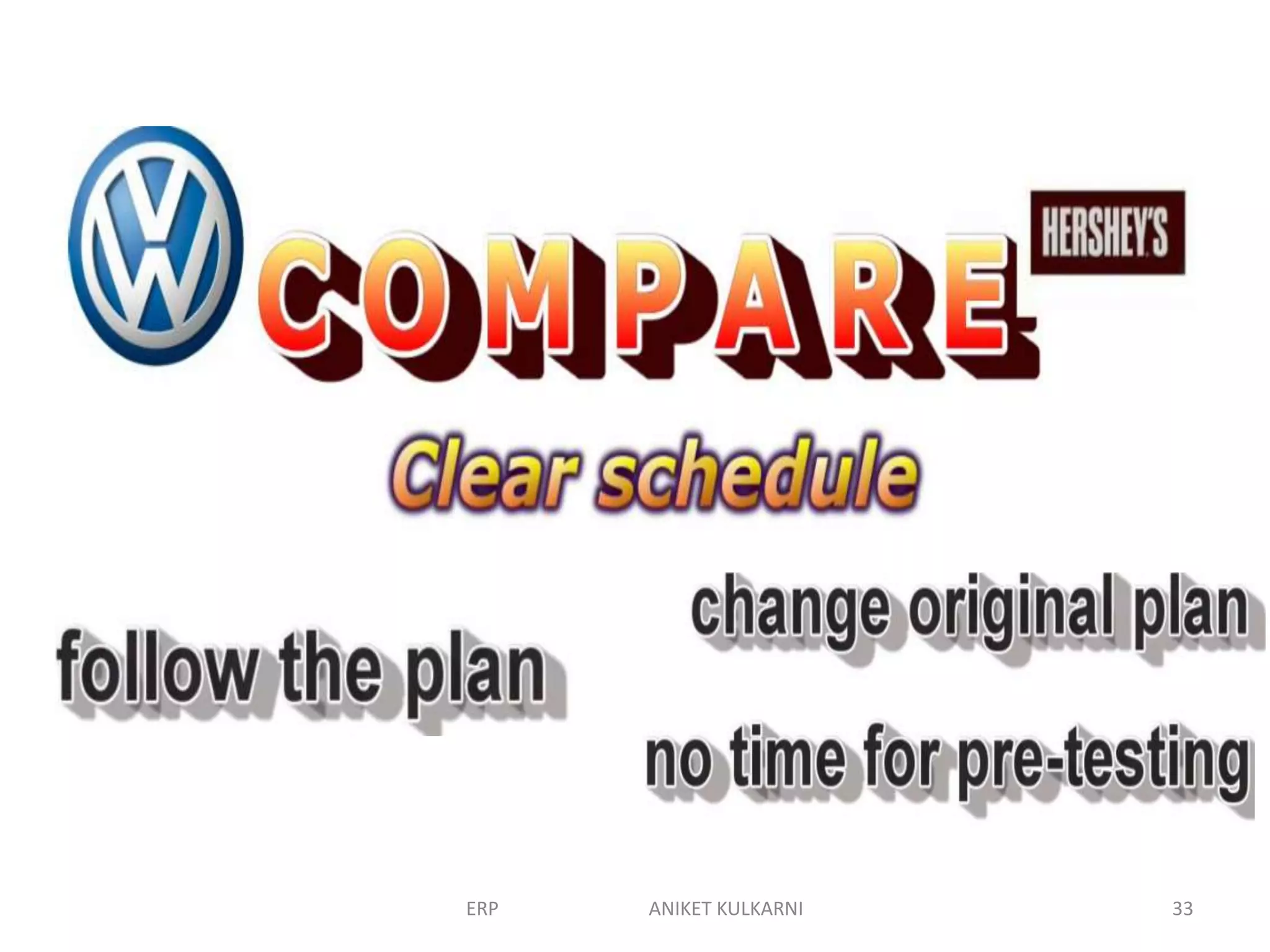
ERP ANIKET KULKARNI 33
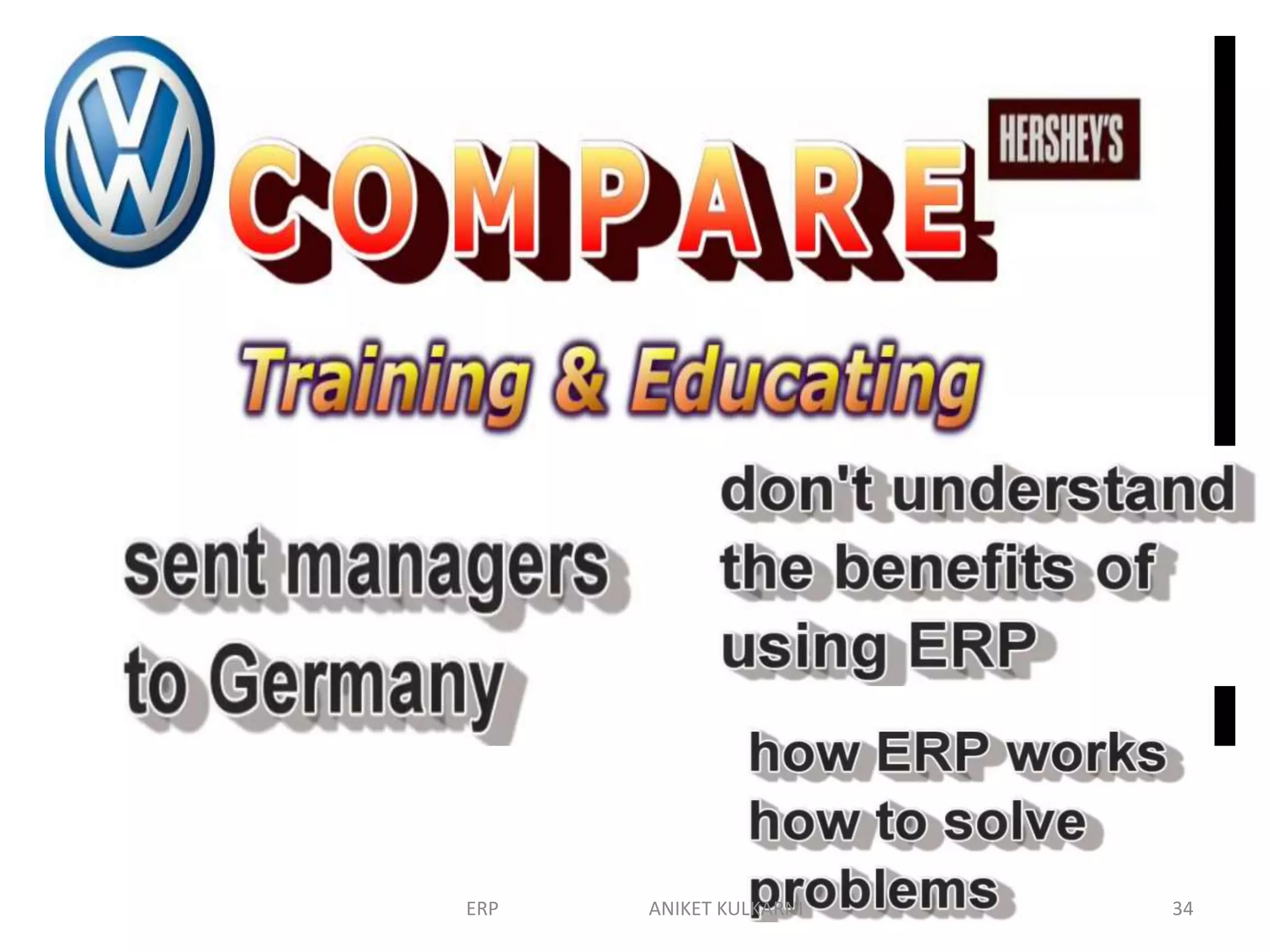
ERP ANIKET KULKARNI 34
New Developments In ERP
• Availability of web-based and wireless ERP systems.
• Adoption of easy-to-install ERP systems.
• Linkage to other software systems, e.g., supply chain
management system, e-commerce, customer
relationship management system.
ERP ANIKET KULKARNI 35
References
• http://www.slideshare.net/amits797/enterpri
se-resource-planning
• http://en.wikipedia.org/wiki/List_of_ERP_soft
ware_packages
• http://www.sap.com/india/pc/bp/erp/softwar
e/overview.html
ERP ANIKET KULKARNI 36
Thank you
ERP ANIKET KULKARNI 37
Questionnaire
1. In what ways ERP is different from MRP & MRP-II ?
2. What are the possible mistakes committed during
implementation of an ERP system?
3. What are the different business areas covered by SAP
ECC & ORACLE E-BUSINESS SUITE ?
4. What is ERP II ?
5. What are the common goals of ERP and TQM ?
ERP ANIKET KULKARNI 38

enterprise resource planning

  • 1.
    Enterprise Resource Planning by AniketK. Kulkarni Roll No:- MT14IND003 Industrial Engineering (2014-15) Mechanical Engg. Department VNIT Nagpur ERP ANIKET KULKARNI 1
  • 2.
    What is ERP? •Enterprise resource planning (ERP) is a packaged business management software that allows an organization to use a system of integrated applications to manage the business. • An ERP system is an attempt to integrate all functions across a company to a single computer system that can serve all those functions, specific needs. ERP ANIKET KULKARNI 2
  • 3.
    EVOLUTION • 1960’s -Systems Just for Inventory Control • 1970’s - MRP – Material Requirement Planning (Inventory with material planning & procurement) • 1980’s - MRP II – Manufacturing Resources Planning (Extended MRP to shop floor & distribution Management.) • Mid 1990’s - ERP – Enterprise Resource Planning (Covering all the activities of an Enterprise) • 2000 onwards – ERP II – Collaborative Commerce (Extending ERP to external business entities) ERP ANIKET KULKARNI 3
  • 4.
    Functionality An ERP softwareprovides an end to end information management solution for a company. The software used by all the departments of the company to manage the information. ERP ANIKET KULKARNI 4
  • 5.
  • 6.
    ERP software integratesall the areas of operations including: • Product planning • Manufacturing processes • Sales • Marketing • Human resource management • Procurement • finance ERP ANIKET KULKARNI 6
  • 7.
  • 8.
    Modular and Integrated •An ERP software is typically modular but integrated, meaning it consists of multiple modules that are connected to each other. ERP ANIKET KULKARNI 8
  • 9.
    • Each moduleis focused on one area of business processing e.g. finance, human resources etc. ERP ANIKET KULKARNI 9
  • 10.
    Communication among modules •A module could share information stored in another modules e.g. List of suppliers etc. • Also information could flow from one module to the other e.g. Accounting entries etc. ERP ANIKET KULKARNI 10
  • 11.
    Management Reporting Since modulesare connected, management of a company could run reports on any aspects of business to get the complete view of activities. Reports help executives make strategic decisions. ERP ANIKET KULKARNI 11
  • 12.
    Licensing • Modules canbe individually purchased best on what best meets the specific needs and technical capabilities of the company. ERP ANIKET KULKARNI 12
  • 13.
    Types of endusers • Business users: Perform day to day operations e.g. Data entry, operational reports. • Management or Executives: Run reports and perform inquiries that would help them in decision making. ERP ANIKET KULKARNI 13
  • 14.
    Implementation • Term “Implementation”is used to make the ERP software ready to be used by the company. ERP ANIKET KULKARNI 14
  • 15.
    Implementation process • Studythe business requirements. Find out how the ERP system should be behaving. • Setup or configure the software such that it starts working as per business requirements. • Fill the gaps between business requirements and functionality offered by the ERP software ERP ANIKET KULKARNI 15
  • 16.
    Industry best practices •Software is configured to honour company’s current business processes. companies do take implementation of ERP as an opportunity to streamline their business processes. ERP ANIKET KULKARNI 16
  • 17.
    ERP Implementation Project •A project is initiated to perform ERP configuration. ERP ANIKET KULKARNI 17
  • 18.
    Roles in aproject ERP ANIKET KULKARNI 18
  • 19.
    Data Base ManagementSystem • ERP connects to Database software at the back end. The data is managed in the database. ERP ANIKET KULKARNI 19
  • 20.
    DBA Data base administratoris also known as DBA is the person who looks after the health of the database. He also performs installation of ERP software. ERP ANIKET KULKARNI 20
  • 21.
    ERP System Administrator Heis the person who looks after the health & security of ERP software. ERP ANIKET KULKARNI 21
  • 22.
    Operating System &OSA Both database software and ERP software runs on an operating system like Linux, Unix, or Windows. ERP ANIKET KULKARNI 22
  • 23.
    Network & NetworkAdministrator • Network connects all the machines together in a system. ERP ANIKET KULKARNI 23
  • 24.
    Functional Consultant Functional consultantgathers the business requirements and performs ERP setup accordingly. ERP ANIKET KULKARNI 24
  • 25.
    Business Analyst Business analystis an expert of business knowledge. He is in touch with business users and verifies that the business requirements are clear to functional consultant. ERP ANIKET KULKARNI 25
  • 26.
    Customizations In almost allthe cases business requirements are so unique that the ERP system has no built in functionality to handle those requirements. The term “Gap” is used for such requirements. ERP ANIKET KULKARNI 26
  • 27.
    Interfaces Technical consultants assistin writing the programs that help communicate information back and forth between ERP software and the third party software either within the company or outside it, e.g. suppliers & customers. ERP ANIKET KULKARNI 27
  • 28.
    Project Manager Project manageris the person who is managing the entire project. All the team members report to the project manager. Most of the members also report to their bosses as well. ERP ANIKET KULKARNI 28
  • 29.
  • 30.
  • 31.
  • 32.
  • 33.
  • 34.
  • 35.
    New Developments InERP • Availability of web-based and wireless ERP systems. • Adoption of easy-to-install ERP systems. • Linkage to other software systems, e.g., supply chain management system, e-commerce, customer relationship management system. ERP ANIKET KULKARNI 35
  • 36.
  • 37.
  • 38.
    Questionnaire 1. In whatways ERP is different from MRP & MRP-II ? 2. What are the possible mistakes committed during implementation of an ERP system? 3. What are the different business areas covered by SAP ECC & ORACLE E-BUSINESS SUITE ? 4. What is ERP II ? 5. What are the common goals of ERP and TQM ? ERP ANIKET KULKARNI 38