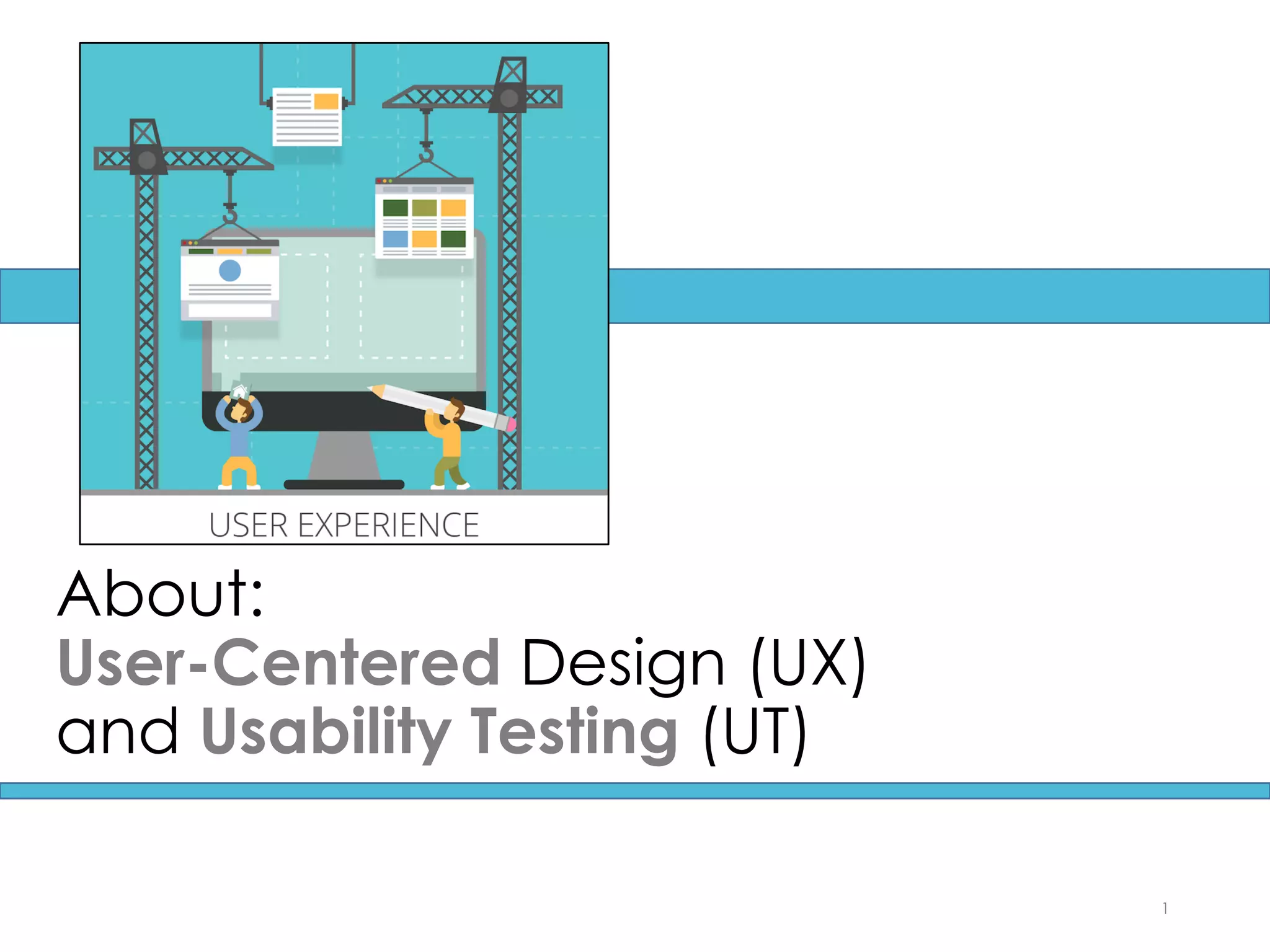
About:
User-Centered Design (UX)
and Usability Testing (UT)
1
User Centered
Design (UX)
• UX is a rhetorically based
philosophy of design that
considers users’ needs and
wants and limitations when
designing a product.
2
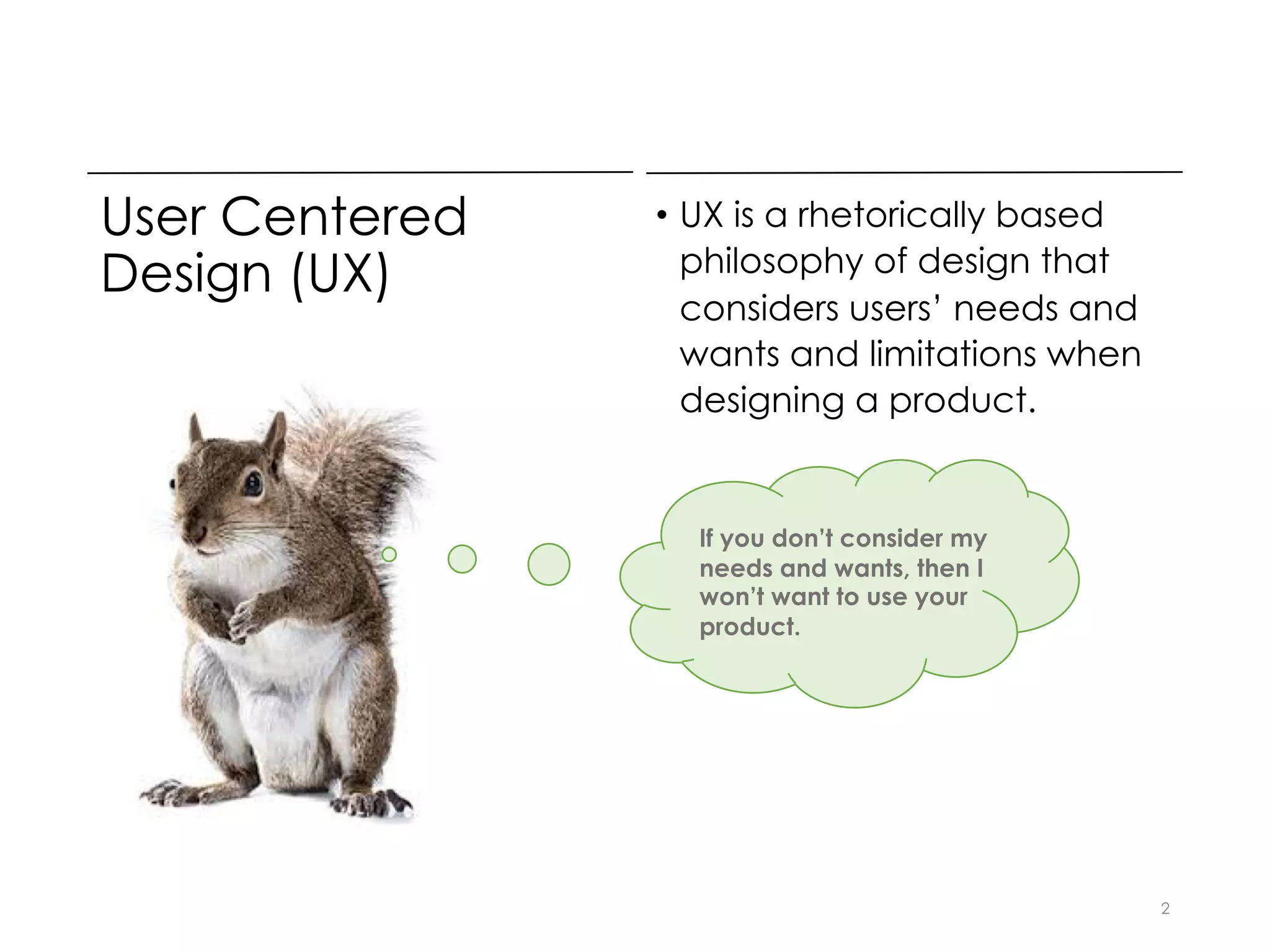
If you don’t consider my
needs and wants, then I
won’t want to use your
product.
Usability Testing (UT) UT is a method for finding
out if a product works for
users.
3
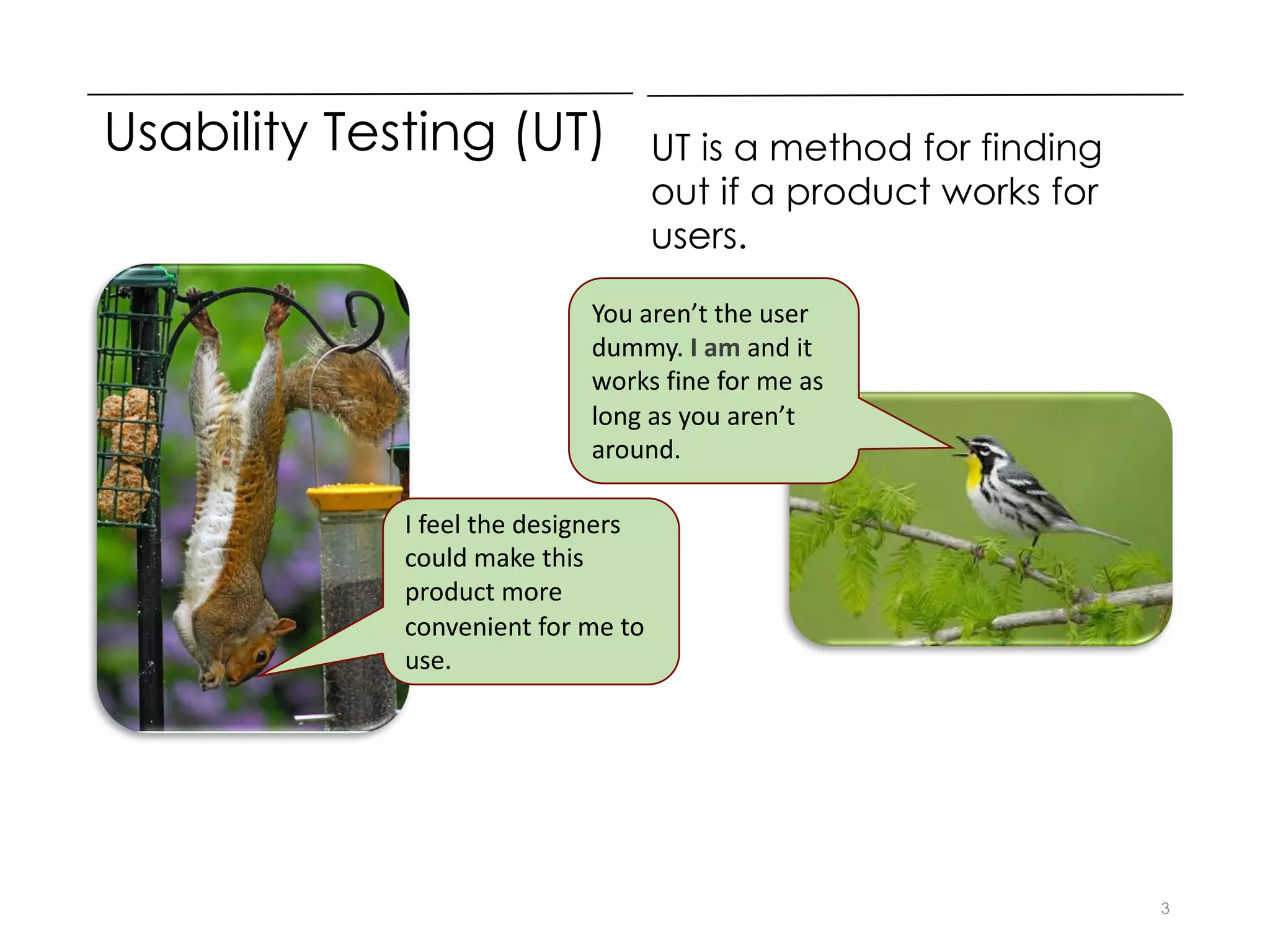
I feel the designers
could make this
product more
convenient for me to
use.
You aren’t the user
dummy. I am and it
works fine for me as
long as you aren’t
around.
Five components
of usability.
1. Effective
2. Efficient
3. Engaging
4. Error Tolerant
5. Easy to Learn
4
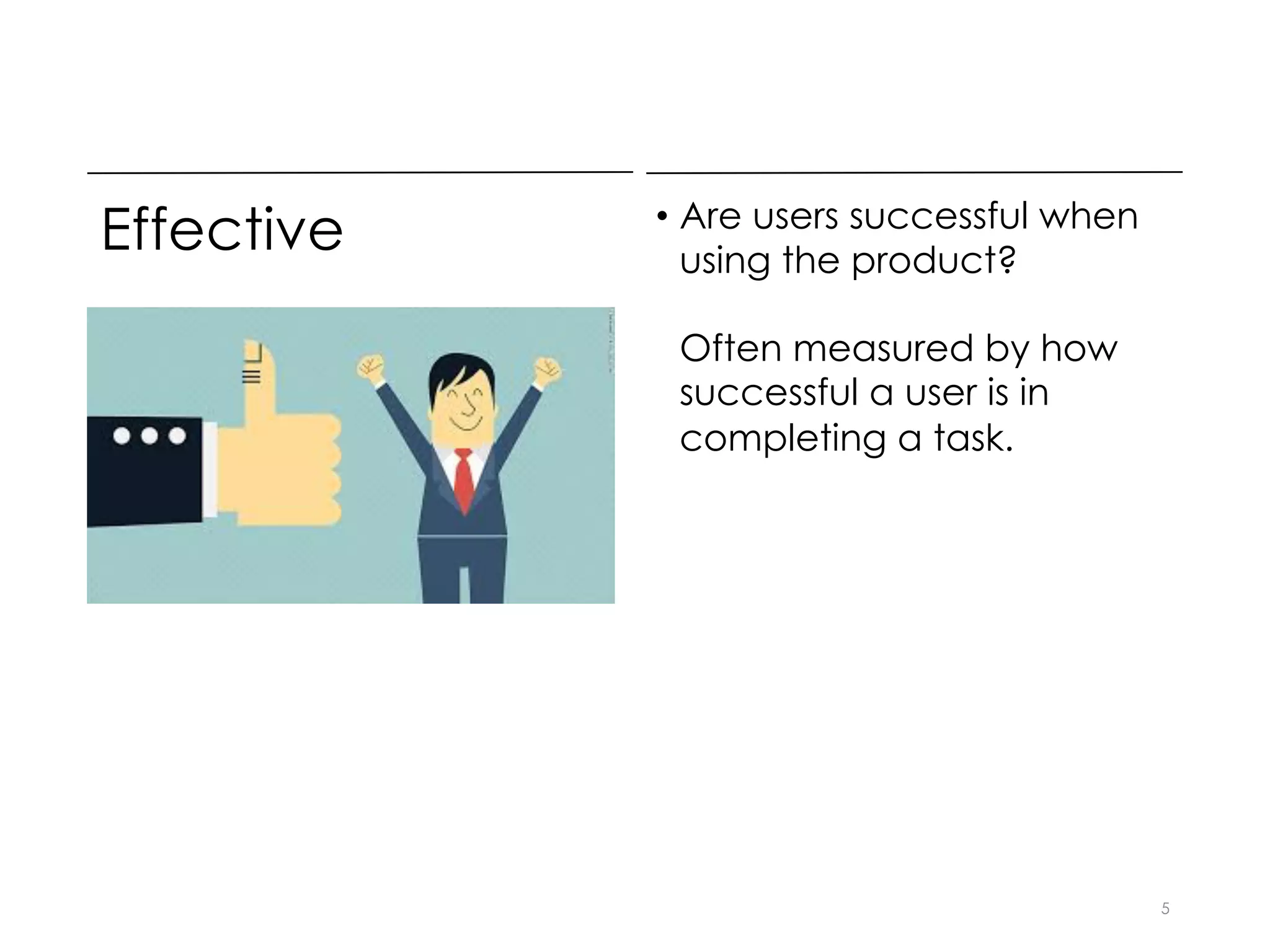
Effective • Are users successful when
using the product?
Often measured by how
successful a user is in
completing a task.
5
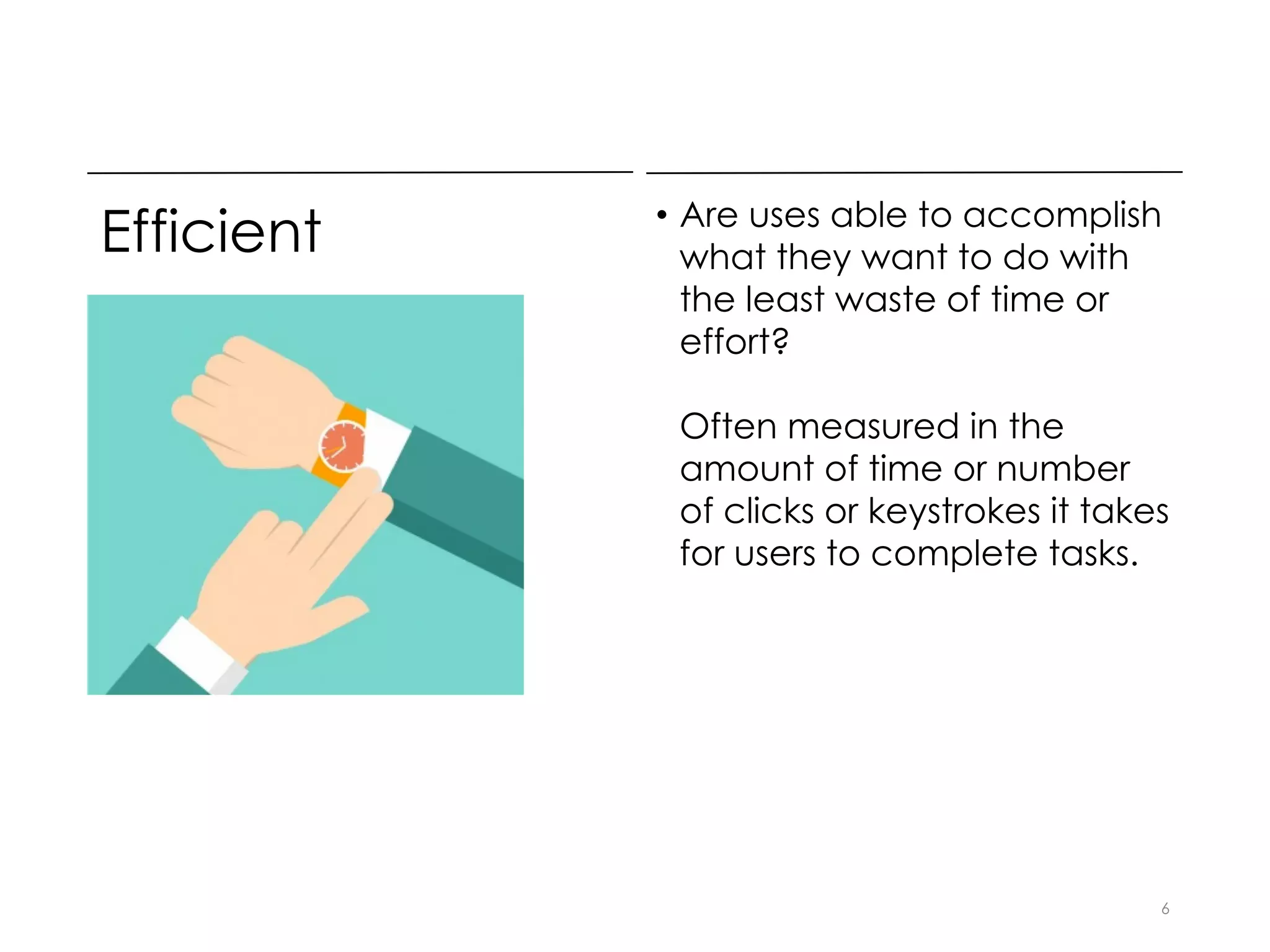
Efficient • Are uses able to accomplish
what they want to do with
the least waste of time or
effort?
Often measured in the
amount of time or number
of clicks or keystrokes it takes
for users to complete tasks.
6
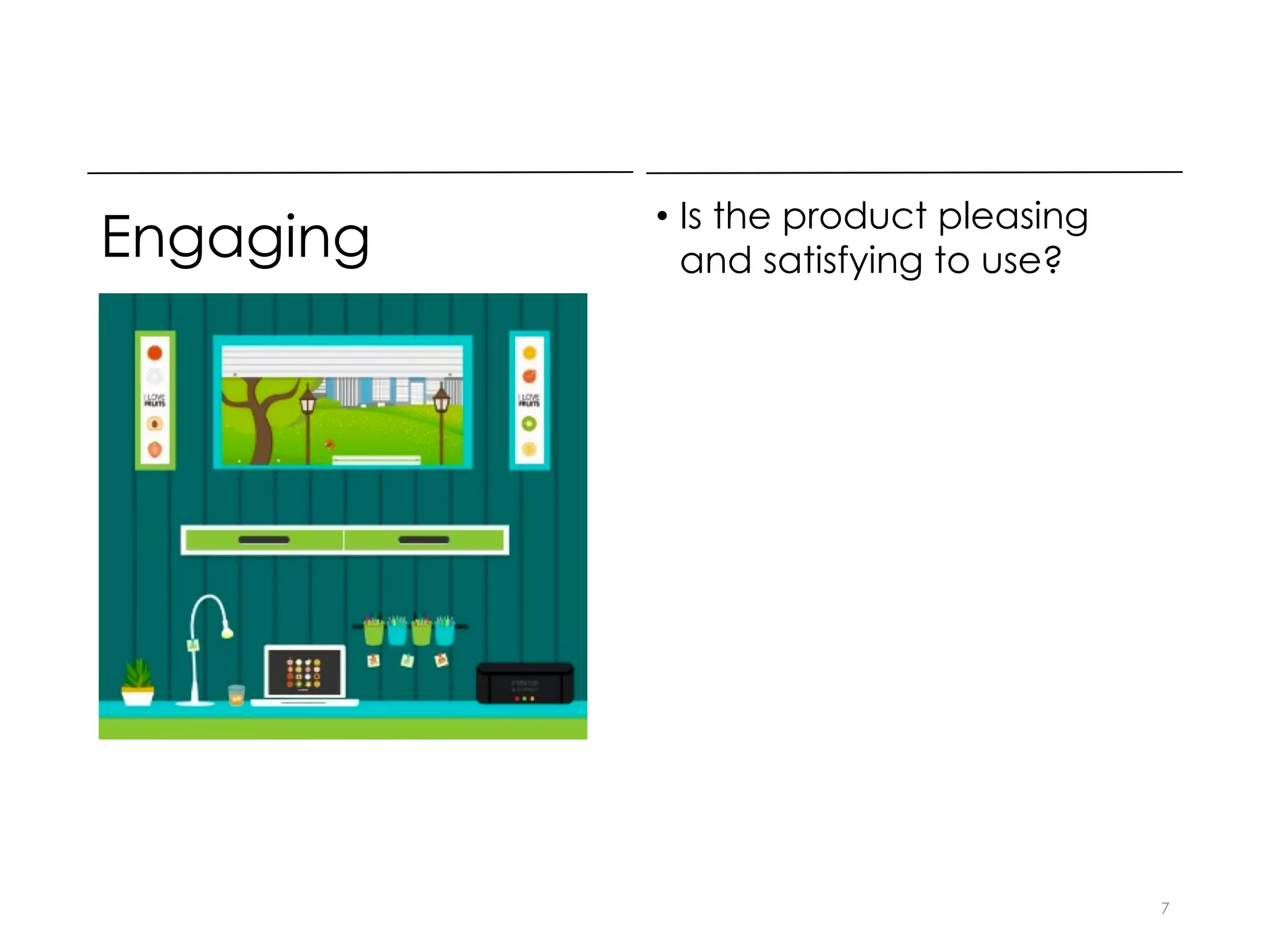
Engaging • Is the product pleasing
and satisfying to use?
7
Error Tolerant
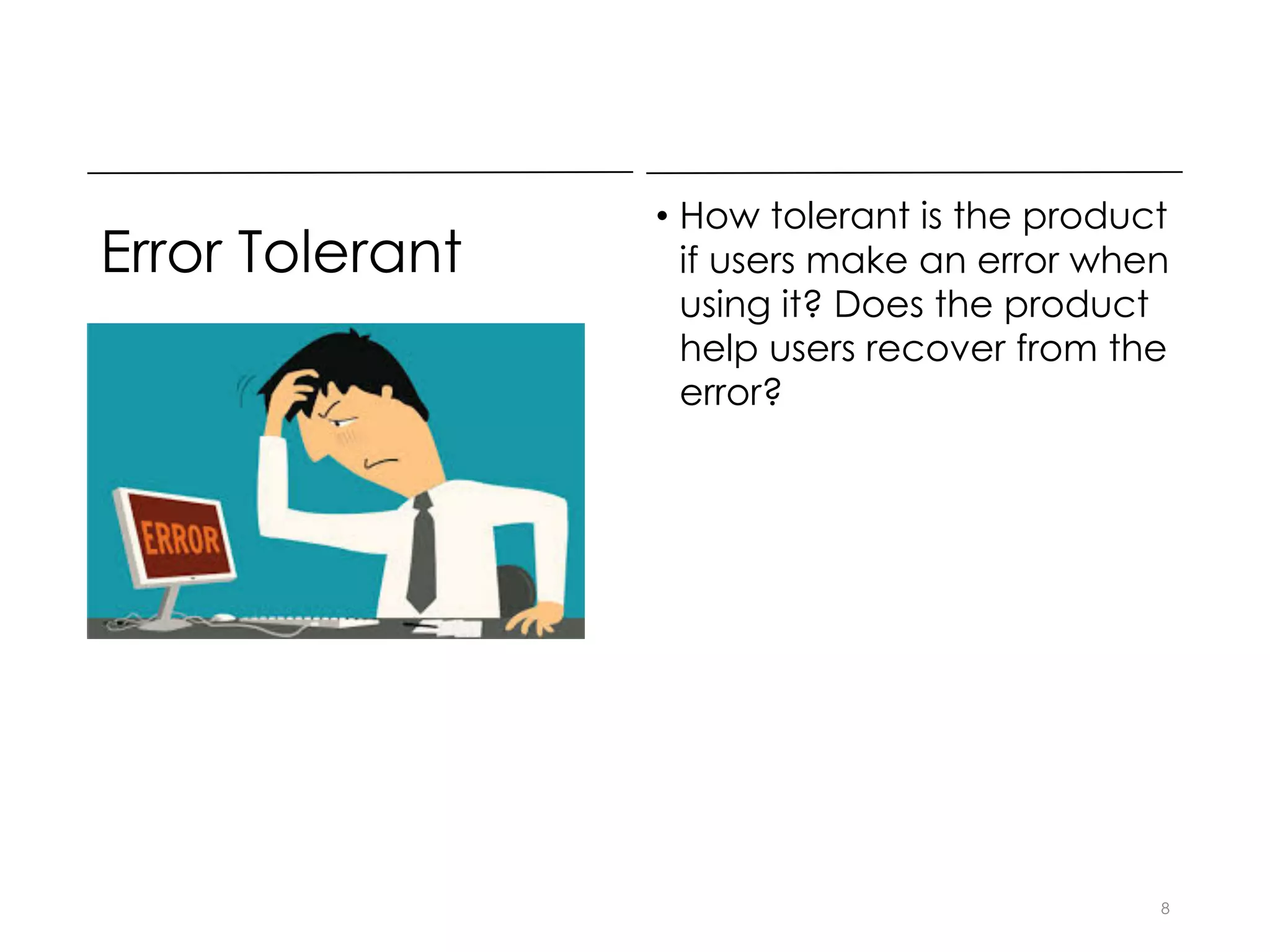
• How tolerant is the product
if users make an error when
using it? Does the product
help users recover from the
error?
8
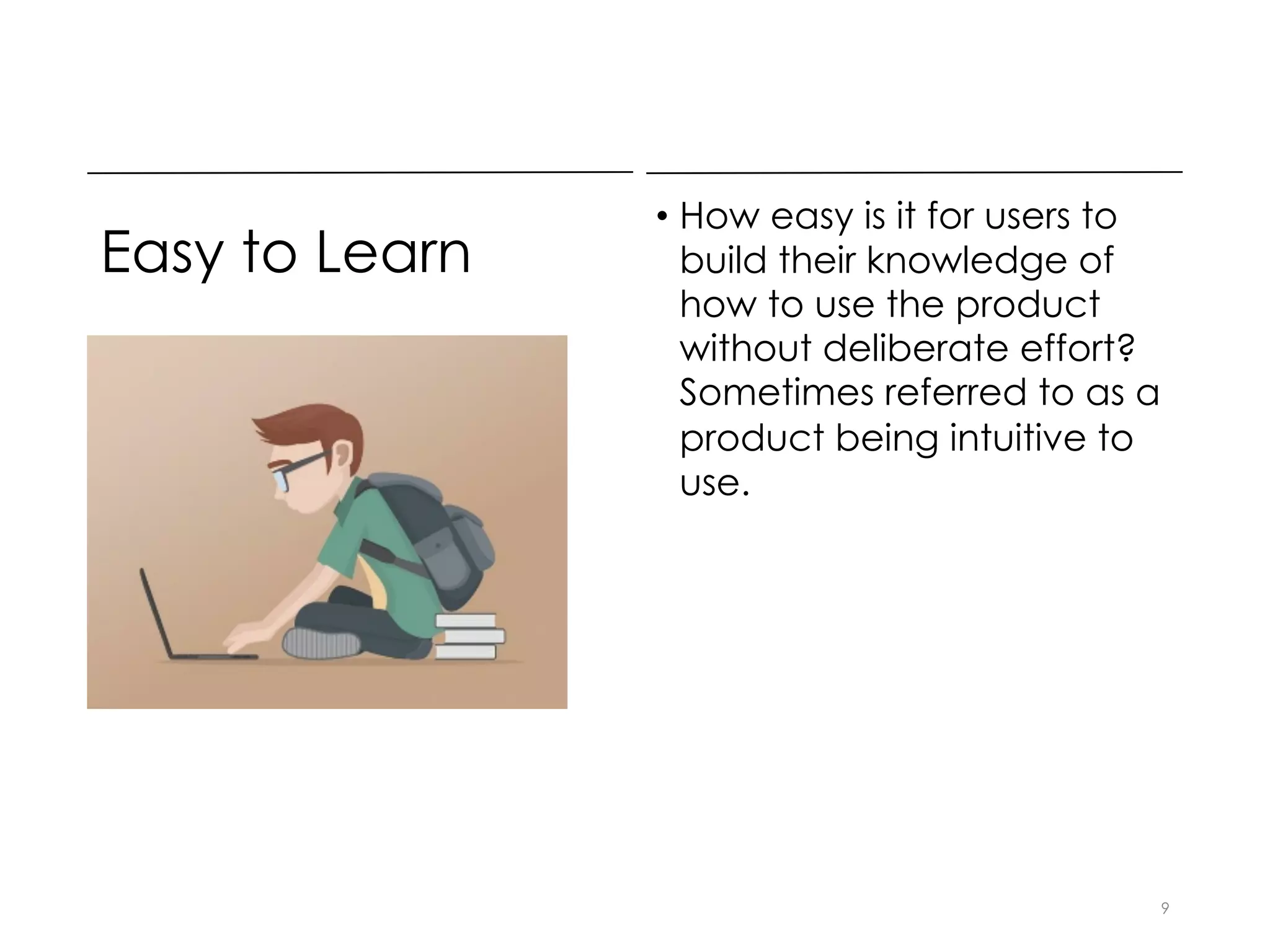
Easy to Learn
• How easy is it for users to
build their knowledge of
how to use the product
without deliberate effort?
Sometimes referred to as a
product being intuitive to
use.
9
Types of Usability Tests
10
• Lab based testing involves recruiting participants and observing their
behavior as they do a series of tasks. Often involves video-taping the
user and several observers.
• Survey testing involves asking users of a product to respond to a
series of questions about their user experience.
• Cognitive walkthrough involves an evaluator who does a set of
specific tasks rather than the actual user. The idea is for the evaluator
to assume the role of user.
For this project, you
will design and
complete a
cognitive
walkthrough
type usability test.
11

Engl317 project4 slidedoc1_about_usabilitytesting

  • 1.
    About: User-Centered Design (UX) andUsability Testing (UT) 1
  • 2.
    User Centered Design (UX) •UX is a rhetorically based philosophy of design that considers users’ needs and wants and limitations when designing a product. 2 If you don’t consider my needs and wants, then I won’t want to use your product.
  • 3.
    Usability Testing (UT)UT is a method for finding out if a product works for users. 3 I feel the designers could make this product more convenient for me to use. You aren’t the user dummy. I am and it works fine for me as long as you aren’t around.
  • 4.
    Five components of usability. 1.Effective 2. Efficient 3. Engaging 4. Error Tolerant 5. Easy to Learn 4
  • 5.
    Effective • Areusers successful when using the product? Often measured by how successful a user is in completing a task. 5
  • 6.
    Efficient • Areuses able to accomplish what they want to do with the least waste of time or effort? Often measured in the amount of time or number of clicks or keystrokes it takes for users to complete tasks. 6
  • 7.
    Engaging • Isthe product pleasing and satisfying to use? 7
  • 8.
    Error Tolerant • Howtolerant is the product if users make an error when using it? Does the product help users recover from the error? 8
  • 9.
    Easy to Learn •How easy is it for users to build their knowledge of how to use the product without deliberate effort? Sometimes referred to as a product being intuitive to use. 9
  • 10.
    Types of UsabilityTests 10 • Lab based testing involves recruiting participants and observing their behavior as they do a series of tasks. Often involves video-taping the user and several observers. • Survey testing involves asking users of a product to respond to a series of questions about their user experience. • Cognitive walkthrough involves an evaluator who does a set of specific tasks rather than the actual user. The idea is for the evaluator to assume the role of user.
  • 11.
    For this project,you will design and complete a cognitive walkthrough type usability test. 11