Energy Efficiency
1
Introduction to Energy Efficiency
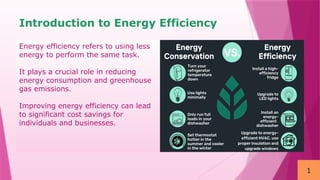
Energy efficiency refers to using less
energy to perform the same task.
It plays a crucial role in reducing
energy consumption and greenhouse
gas emissions.
Improving energy efficiency can lead
to significant cost savings for
individuals and businesses.
2
Importance of Energy Efficiency
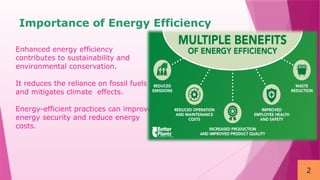
Enhanced energy efficiency
contributes to sustainability and
environmental conservation.
It reduces the reliance on fossil fuels
and mitigates climate effects.
Energy-efficient practices can improve
energy security and reduce energy
costs.
3
Energy Efficiency in Buildings
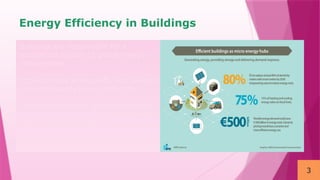
Buildings are responsible for a
substantial portion of global energy
consumption.
Implementing energy-efficient designs
can significantly lower utility bills.
Common strategies include improved
insulation, energy-efficient windows,
and smart thermostats.
4
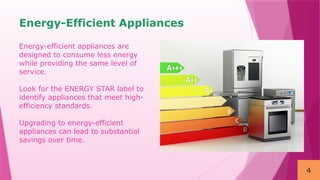
Energy-Efficient Appliances
Energy-efficient appliances are
designed to consume less energy
while providing the same level of
service.
Look for the ENERGY STAR label to
identify appliances that meet high-
efficiency standards.
Upgrading to energy-efficient
appliances can lead to substantial
savings over time.
5
Role of Renewable Energy
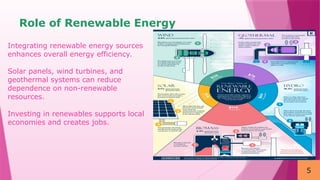
Integrating renewable energy sources
enhances overall energy efficiency.
Solar panels, wind turbines, and
geothermal systems can reduce
dependence on non-renewable
resources.
Investing in renewables supports local
economies and creates jobs.
6
Transportation and Energy Efficiency
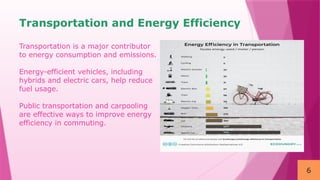
Transportation is a major contributor
to energy consumption and emissions.
Energy-efficient vehicles, including
hybrids and electric cars, help reduce
fuel usage.
Public transportation and carpooling
are effective ways to improve energy
efficiency in commuting.
7
Energy Management Systems
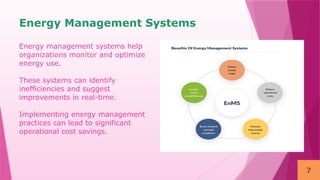
Energy management systems help
organizations monitor and optimize
energy use.
These systems can identify
inefficiencies and suggest
improvements in real-time.
Implementing energy management
practices can lead to significant
operational cost savings.
8
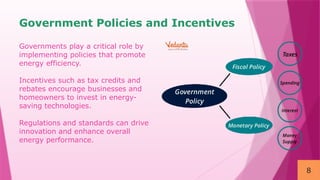
Government Policies and Incentives
Governments play a critical role by
implementing policies that promote
energy efficiency.
Incentives such as tax credits and
rebates encourage businesses and
homeowners to invest in energy-
saving technologies.
Regulations and standards can drive
innovation and enhance overall
energy performance.
9
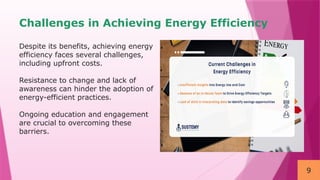
Challenges in Achieving Energy Efficiency
Despite its benefits, achieving energy
efficiency faces several challenges,
including upfront costs.
Resistance to change and lack of
awareness can hinder the adoption of
energy-efficient practices.
Ongoing education and engagement
are crucial to overcoming these
barriers.
10
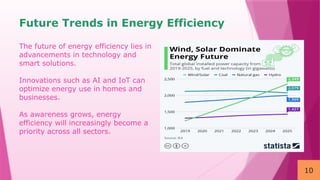
Future Trends in Energy Efficiency
The future of energy efficiency lies in
advancements in technology and
smart solutions.
Innovations such as AI and IoT can
optimize energy use in homes and
businesses.
As awareness grows, energy
efficiency will increasingly become a
priority across all sectors.
11
References
U.S. Department of Energy. (2023).
Energy Efficiency. Retrieved from
[energy.gov](https://www.energy.gov
).
International Energy Agency. (2023).
Energy Efficiency 202
Retrieved from
[iea.org](https://www.iea.org).

energy efficiency bbbbbbbbbbbbbbbbbbbbbbbbbbbbbbbbbbbbbbb

  • 1.
  • 2.
    1 Introduction to EnergyEfficiency Energy efficiency refers to using less energy to perform the same task. It plays a crucial role in reducing energy consumption and greenhouse gas emissions. Improving energy efficiency can lead to significant cost savings for individuals and businesses.
  • 3.
    2 Importance of EnergyEfficiency Enhanced energy efficiency contributes to sustainability and environmental conservation. It reduces the reliance on fossil fuels and mitigates climate effects. Energy-efficient practices can improve energy security and reduce energy costs.
  • 4.
    3 Energy Efficiency inBuildings Buildings are responsible for a substantial portion of global energy consumption. Implementing energy-efficient designs can significantly lower utility bills. Common strategies include improved insulation, energy-efficient windows, and smart thermostats.
  • 5.
    4 Energy-Efficient Appliances Energy-efficient appliancesare designed to consume less energy while providing the same level of service. Look for the ENERGY STAR label to identify appliances that meet high- efficiency standards. Upgrading to energy-efficient appliances can lead to substantial savings over time.
  • 6.
    5 Role of RenewableEnergy Integrating renewable energy sources enhances overall energy efficiency. Solar panels, wind turbines, and geothermal systems can reduce dependence on non-renewable resources. Investing in renewables supports local economies and creates jobs.
  • 7.
    6 Transportation and EnergyEfficiency Transportation is a major contributor to energy consumption and emissions. Energy-efficient vehicles, including hybrids and electric cars, help reduce fuel usage. Public transportation and carpooling are effective ways to improve energy efficiency in commuting.
  • 8.
    7 Energy Management Systems Energymanagement systems help organizations monitor and optimize energy use. These systems can identify inefficiencies and suggest improvements in real-time. Implementing energy management practices can lead to significant operational cost savings.
  • 9.
    8 Government Policies andIncentives Governments play a critical role by implementing policies that promote energy efficiency. Incentives such as tax credits and rebates encourage businesses and homeowners to invest in energy- saving technologies. Regulations and standards can drive innovation and enhance overall energy performance.
  • 10.
    9 Challenges in AchievingEnergy Efficiency Despite its benefits, achieving energy efficiency faces several challenges, including upfront costs. Resistance to change and lack of awareness can hinder the adoption of energy-efficient practices. Ongoing education and engagement are crucial to overcoming these barriers.
  • 11.
    10 Future Trends inEnergy Efficiency The future of energy efficiency lies in advancements in technology and smart solutions. Innovations such as AI and IoT can optimize energy use in homes and businesses. As awareness grows, energy efficiency will increasingly become a priority across all sectors.
  • 12.
    11 References U.S. Department ofEnergy. (2023). Energy Efficiency. Retrieved from [energy.gov](https://www.energy.gov ). International Energy Agency. (2023). Energy Efficiency 202 Retrieved from [iea.org](https://www.iea.org).

Editor's Notes

  • #2 Image source: https://www.ecowatch.com/energy-efficiency-101.html
  • #3 Image source: https://betterbuildingssolutioncenter.energy.gov/beat-blog/multiple-benefits-energy-efficiency
  • #4 Image source: http://bpie.eu/news/infographic-efficient-buildings-as-micro-energy-hubs/
  • #5 Image source: https://boneheatingandcooling.com/how-is-an-energy-efficient-appliance-beneficial/
  • #6 Image source: https://elements.visualcapitalist.com/what-are-the-five-major-types-of-renewable-energy/
  • #7 Image source: https://ecohungry.com/energy-efficiency-in-transportation/
  • #8 Image source: https://galooli.com/blog/the-essential-guide-to-energy-management-systems/
  • #9 Image source: https://ravengazetteer.com/article/how-government-policies-affect-businesses-history-evolution-and-overview
  • #10 Image source: https://sustainabilityeducationacademy.com/achieving-energy-efficiency-explained-how/
  • #11 Image source: https://moreenergy.org/wind-solar-dominate-energy-future/