DEFINITION
“Drugs that produce or induce vomiting are called
emetics”
VOMITING-
 It is the forceful expulsion of the contents of the
stomach via mouth or sometimes nose.
 Vomiting reflex is stimulated by two centers in the
medulla-
– Vomiting center
– Chemoreceptor trigger zone (CTZ)
CTZ stimulated by-
• Excessive stomach distention.
• Increasing ICP by direct stimulation.
• Stimulation of the vestibular receptors in the inner ear.
• Direct stimulation by various chemicals including
fumes, certain drugs, and debris from cellular death.
• CTZ stimulated by several different process and
initiates a complex series of responses like first prepare
for vomiting and then cause strong backward
peristalsis to rid the stomach of it’s content.
MODE OF ACTION OF EMETICS
• They stimulate chemoreceptor trigger zone and
gastric mucosa to induce vomiting.
• To treat poisoning.
• To induce vomiting
• Over dose treatment of drugs.
INDICATION
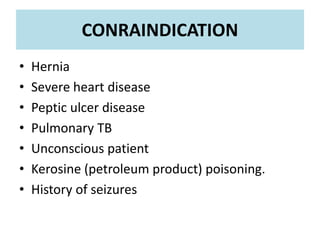
• Hernia
• Severe heart disease
• Peptic ulcer disease
• Pulmonary TB
• Unconscious patient
• Kerosine (petroleum product) poisoning.
• History of seizures
CONRAINDICATION
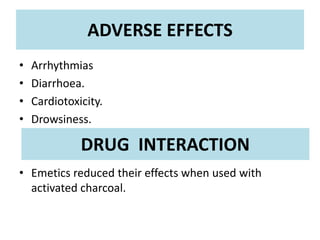
• Arrhythmias
• Diarrhoea.
• Cardiotoxicity.
• Drowsiness.
• Emetics reduced their effects when used with
activated charcoal.
ADVERSE EFFECTS
DRUG INTERACTION
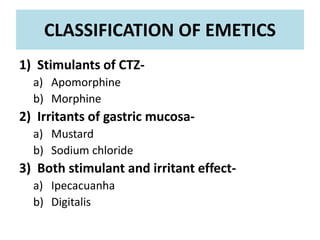
CLASSIFICATION OF EMETICS
1) Stimulants of CTZ-
a) Apomorphine
b) Morphine
2) Irritants of gastric mucosa-
a) Mustard
b) Sodium chloride
3) Both stimulant and irritant effect-
a) Ipecacuanha
b) Digitalis
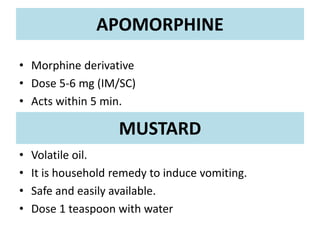
APOMORPHINE
• Morphine derivative
• Dose 5-6 mg (IM/SC)
• Acts within 5 min.
• Volatile oil.
• It is household remedy to induce vomiting.
• Safe and easily available.
• Dose 1 teaspoon with water
MUSTARD
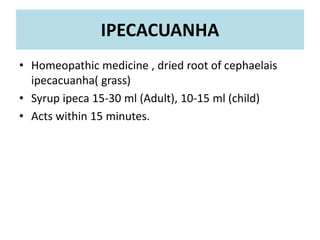
• Homeopathic medicine , dried root of cephaelais
ipecacuanha( grass)
• Syrup ipeca 15-30 ml (Adult), 10-15 ml (child)
• Acts within 15 minutes.
IPECACUANHA
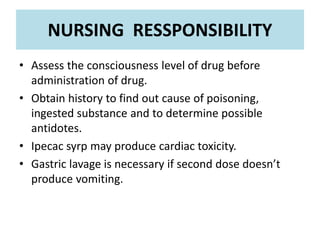
NURSING RESSPONSIBILITY
• Assess the consciousness level of drug before
administration of drug.
• Obtain history to find out cause of poisoning,
ingested substance and to determine possible
antidotes.
• Ipecac syrp may produce cardiac toxicity.
• Gastric lavage is necessary if second dose doesn’t
produce vomiting.

Emetics

  • 2.
    DEFINITION “Drugs that produceor induce vomiting are called emetics” VOMITING-  It is the forceful expulsion of the contents of the stomach via mouth or sometimes nose.  Vomiting reflex is stimulated by two centers in the medulla- – Vomiting center – Chemoreceptor trigger zone (CTZ)
  • 3.
    CTZ stimulated by- •Excessive stomach distention. • Increasing ICP by direct stimulation. • Stimulation of the vestibular receptors in the inner ear. • Direct stimulation by various chemicals including fumes, certain drugs, and debris from cellular death. • CTZ stimulated by several different process and initiates a complex series of responses like first prepare for vomiting and then cause strong backward peristalsis to rid the stomach of it’s content.
  • 4.
    MODE OF ACTIONOF EMETICS • They stimulate chemoreceptor trigger zone and gastric mucosa to induce vomiting. • To treat poisoning. • To induce vomiting • Over dose treatment of drugs. INDICATION
  • 5.
    • Hernia • Severeheart disease • Peptic ulcer disease • Pulmonary TB • Unconscious patient • Kerosine (petroleum product) poisoning. • History of seizures CONRAINDICATION
  • 6.
    • Arrhythmias • Diarrhoea. •Cardiotoxicity. • Drowsiness. • Emetics reduced their effects when used with activated charcoal. ADVERSE EFFECTS DRUG INTERACTION
  • 7.
    CLASSIFICATION OF EMETICS 1)Stimulants of CTZ- a) Apomorphine b) Morphine 2) Irritants of gastric mucosa- a) Mustard b) Sodium chloride 3) Both stimulant and irritant effect- a) Ipecacuanha b) Digitalis
  • 8.
    APOMORPHINE • Morphine derivative •Dose 5-6 mg (IM/SC) • Acts within 5 min. • Volatile oil. • It is household remedy to induce vomiting. • Safe and easily available. • Dose 1 teaspoon with water MUSTARD
  • 9.
    • Homeopathic medicine, dried root of cephaelais ipecacuanha( grass) • Syrup ipeca 15-30 ml (Adult), 10-15 ml (child) • Acts within 15 minutes. IPECACUANHA
  • 10.
    NURSING RESSPONSIBILITY • Assessthe consciousness level of drug before administration of drug. • Obtain history to find out cause of poisoning, ingested substance and to determine possible antidotes. • Ipecac syrp may produce cardiac toxicity. • Gastric lavage is necessary if second dose doesn’t produce vomiting.