HYPEREMESIS
GRAVIDARUM
Presented by-
JOISY S JOY
Lecturer
Mai Khadija Institute of
Nursing Sciences,
Jodhpur.
Definition
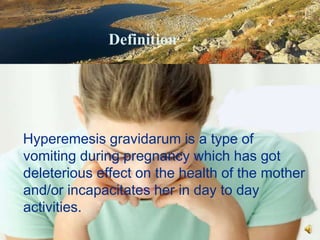
Hyperemesis gravidarum is a type of
vomiting during pregnancy which has got
deleterious effect on the health of the mother
and/or incapacitates her in day to day
activities.
Incidence
• It is now a rarity in hospital practice. It is less than 1
in 1000 pregnancies.
• Limited to the first trimester
• More common in first pregnancy with a tendency to
recur again in subsequent pregnancies.
• Familial history
• More prevalent in hydatidiform mole and multiple
pregnancy.
• More common in unplanned pregnancies.
Etiology
• High levels of HCG or undue sensitivity to
normal levels of HCG may cause vomiting.
Psychological factors are also thought to
play an important role. Women with
previous history of hyperemesis are likely
to experience it in subsequent
pregnancies. An allergic factor may also
be a cause since large amounts of
histamine are found in cases of
hyperemesis.
Clinical Manifestations
1. Early
2. Late (moderate to severe)
Early: vomiting occurs throughout the day.
There is no evidence of dehydration or
starvation.
Late: evidences of dehydration and starvation
are present.
Symptoms:
• Vomiting increased in frequency with retching
• Diarrhea at times
• Urine quantity diminished even to the stage of
oliguria
• Epigastric pain
• Constipation
• Patient confined to bed
Signs:
• Features of dehydration and ketoacidosis-
• Dry coated tongue
• Sunken eyes
• Acetone smell in breath
• Tachycardia
• Hypotension
• Rise in temperature
• Jaundice (late feature)
• Loss of weight
• Anxious look
• Skin inelastic
Diagnostic evaluation
• Urinalysis
• Biochemical and circulatory changes-
routine and periodic estimation of the serum
electrolytes
• Ophthalmoscopic examination
• ECG
• Ultrasonography
Complications
1) Neurologic complications
• Wernicke’s encephalopathy due to
thiamine deficiency
• Pontine myelinolysis
• Peripheral neuritis
• Korsakoff’s psychosis
2) Stress ulcer in stomach
3) Oesophageal tear
4) Jaundice
5) Convulsions
6) Coma
7) Renal failure
8) Diplopia
Management
1. Medical management
2. Nursing management
Medical management
Hospitalization
Antiemetic drugs promethazine 25 mg or
prochlorperazine 5 mg or trifluopromazine
10 mg may be administered twice or thrice
daily IM. Vitamin B6, metoclopramide and
doxylamine are also safe.
Hydrocortisone 100 mg IV in the drip is
given. Oral method prednisolone is also
used in severe cases.
Nutritional support with vitamin B1, vitamin
B6, vitamin C and vitamin B12 are given.
Correction of fluid and electrolyte
imbalance with intravenous fluids.
Therapeutic termination of pregnancy if
the woman’s condition deteriorates in spite
of therapy.
Nursing management
1. Assessment
2. Physical examination
3. Diagnosis
4. Intervention
Nursing diagnosis
Fluid volume deficit related to
hyperemesis gravidarum as evidenced by
excessive vomiting.
Ineffective health maintenance related to
ketoacidosis as evidenced by rise in
temperature and tachycardia.
Imbalanced nutrition: less than body
requirement related to hyperemesis
gravidarum as evidenced by loss of
weight.
Nausea related to the disease condition
as evidenced by sensation of retching.
Knowledge deficit related to the disease
condition as evidenced by anxious look of
the client.
Nursing intervention
1. Sympathetic but firm handling of the client
is essential.
2. Social and psychological support should
be extended.
3. Hyperemesis progress chart is helpful to
assess the progress of client while in
hospital.
3. Daily record of pulse, temperature, blood
pressure at least twice daily, intake-
output, urine for acetone, protein, bile,
blood biochemistry and ECG are
important.
4. Identify, record report change in
condition/improvement as manifested,
e.g. feeling of hunger, better look,
disappearance of acetone from urine,
moist tongue, falling pulse rate and rising
blood pressure and increase in urine
output.
5. Start oral feeding before intravenous fluid is
omitted. At first, dry carbohydrate foods like
biscuits, bread and toast are given. The diet
needs to be normalized quickly as the
stomach is more likely to retain solids than
liquids.
6. Meals at frequent intervals such as 6 times a
day are tolerated better.
7. Termination of pregnancy is rarely indicated.
8. Prepare client and assist for the termination
procedures which may be vaginal or through
hysterectomy.
Summary
Excessive vomiting of pregnancy incapacitating the
day-to-day activities and/or deteriorating the health of
the mother is called hyperemesis gravidarum. It is rare
now a day. It is common in the first birth and limited to
early pregnancy. The exact cause is not known but
once vomiting starts, probably neurogenic elements
aggravate the state. The clinical manifestations are
due to the effects of dehydration, starvation and
ketoacidosis. If not rectified promptly, the condition
may turn fatal. Management consists of hospitalization,
sympathetic but firm handling of the client, antiemetic
drugs, replacement of fluids by infusion etc. termination
of pregnancy is rarely indicated.
THANK YOU

emesis .ppt

  • 1.
    HYPEREMESIS GRAVIDARUM Presented by- JOISY SJOY Lecturer Mai Khadija Institute of Nursing Sciences, Jodhpur.
  • 2.
    Definition Hyperemesis gravidarum isa type of vomiting during pregnancy which has got deleterious effect on the health of the mother and/or incapacitates her in day to day activities.
  • 3.
    Incidence • It isnow a rarity in hospital practice. It is less than 1 in 1000 pregnancies. • Limited to the first trimester • More common in first pregnancy with a tendency to recur again in subsequent pregnancies. • Familial history • More prevalent in hydatidiform mole and multiple pregnancy. • More common in unplanned pregnancies.
  • 4.
    Etiology • High levelsof HCG or undue sensitivity to normal levels of HCG may cause vomiting. Psychological factors are also thought to play an important role. Women with previous history of hyperemesis are likely to experience it in subsequent pregnancies. An allergic factor may also be a cause since large amounts of histamine are found in cases of hyperemesis.
  • 5.
    Clinical Manifestations 1. Early 2.Late (moderate to severe) Early: vomiting occurs throughout the day. There is no evidence of dehydration or starvation.
  • 6.
    Late: evidences ofdehydration and starvation are present. Symptoms: • Vomiting increased in frequency with retching • Diarrhea at times • Urine quantity diminished even to the stage of oliguria • Epigastric pain • Constipation • Patient confined to bed
  • 7.
    Signs: • Features ofdehydration and ketoacidosis- • Dry coated tongue • Sunken eyes • Acetone smell in breath • Tachycardia • Hypotension • Rise in temperature • Jaundice (late feature) • Loss of weight • Anxious look • Skin inelastic
  • 8.
    Diagnostic evaluation • Urinalysis •Biochemical and circulatory changes- routine and periodic estimation of the serum electrolytes • Ophthalmoscopic examination • ECG • Ultrasonography
  • 9.
    Complications 1) Neurologic complications •Wernicke’s encephalopathy due to thiamine deficiency • Pontine myelinolysis • Peripheral neuritis • Korsakoff’s psychosis
  • 10.
    2) Stress ulcerin stomach 3) Oesophageal tear 4) Jaundice 5) Convulsions 6) Coma 7) Renal failure 8) Diplopia
  • 11.
  • 12.
    Medical management Hospitalization Antiemetic drugspromethazine 25 mg or prochlorperazine 5 mg or trifluopromazine 10 mg may be administered twice or thrice daily IM. Vitamin B6, metoclopramide and doxylamine are also safe. Hydrocortisone 100 mg IV in the drip is given. Oral method prednisolone is also used in severe cases.
  • 13.
    Nutritional support withvitamin B1, vitamin B6, vitamin C and vitamin B12 are given. Correction of fluid and electrolyte imbalance with intravenous fluids. Therapeutic termination of pregnancy if the woman’s condition deteriorates in spite of therapy.
  • 14.
    Nursing management 1. Assessment 2.Physical examination 3. Diagnosis 4. Intervention
  • 15.
    Nursing diagnosis Fluid volumedeficit related to hyperemesis gravidarum as evidenced by excessive vomiting. Ineffective health maintenance related to ketoacidosis as evidenced by rise in temperature and tachycardia.
  • 16.
    Imbalanced nutrition: lessthan body requirement related to hyperemesis gravidarum as evidenced by loss of weight. Nausea related to the disease condition as evidenced by sensation of retching. Knowledge deficit related to the disease condition as evidenced by anxious look of the client.
  • 17.
    Nursing intervention 1. Sympatheticbut firm handling of the client is essential. 2. Social and psychological support should be extended. 3. Hyperemesis progress chart is helpful to assess the progress of client while in hospital.
  • 18.
    3. Daily recordof pulse, temperature, blood pressure at least twice daily, intake- output, urine for acetone, protein, bile, blood biochemistry and ECG are important. 4. Identify, record report change in condition/improvement as manifested, e.g. feeling of hunger, better look, disappearance of acetone from urine, moist tongue, falling pulse rate and rising blood pressure and increase in urine output.
  • 19.
    5. Start oralfeeding before intravenous fluid is omitted. At first, dry carbohydrate foods like biscuits, bread and toast are given. The diet needs to be normalized quickly as the stomach is more likely to retain solids than liquids. 6. Meals at frequent intervals such as 6 times a day are tolerated better. 7. Termination of pregnancy is rarely indicated. 8. Prepare client and assist for the termination procedures which may be vaginal or through hysterectomy.
  • 20.
    Summary Excessive vomiting ofpregnancy incapacitating the day-to-day activities and/or deteriorating the health of the mother is called hyperemesis gravidarum. It is rare now a day. It is common in the first birth and limited to early pregnancy. The exact cause is not known but once vomiting starts, probably neurogenic elements aggravate the state. The clinical manifestations are due to the effects of dehydration, starvation and ketoacidosis. If not rectified promptly, the condition may turn fatal. Management consists of hospitalization, sympathetic but firm handling of the client, antiemetic drugs, replacement of fluids by infusion etc. termination of pregnancy is rarely indicated.
  • 21.