Email Security
Eng.Ahmed Ali El-Kosairy
eng.aelkosairy@gmail.com
Threats


Threats to the security of e-mail itself
−

Loss of confidentiality
E-mails are sent in clear over open networks

E-mails stored on potentially insecure clients and
mail servers


−

Loss of integrity


−
−
−

No integrity protection on e-mails; body can be
altered in transit or on mail server

Lack of data origin authentication
Lack of non-repudiation
Lack of notification of receipt
Threats Enabled by E-mail





Disclosure of sensitive information
Exposure of systems to malicious code
Denial-of-Service (DoS)
Unauthorized accesses etc.
What are the Options


Secure the server to client connections (easy thing first)
−
−



POP, IMAP over ssh, SSL
https access to webmail

Secure the end-to-end email delivery
−
−

The PGPs of the world
Still need to get the other party to be PGP aware
Email based Attacks
Buffer over-flow attack
−


Fix the code

Shell script attack
−

Scan before send to the shell

Web bugs (for tracking)

- Hardening the mail server
Email SPAM



Cost to exceed $10 billion
SPAM filtering
−
−
−

Content based – required hits
White list
Black list
PGP







PGP=“Pretty Good Privacy”
First released in 1991, developed by Phil Zimmerman
Freeware: OpenPGP and variants:
OpenPGP specified in RFC 2440 and defined by IETF OpenPGP
working group.
− www.ietf.org/html.charters/openpgp-charter.html
Available as plug-in for popular e-mail clients, can also be used as
stand-alone software.
PGP


Functionality
−
−



Encryption for confidentiality.
Signature for non-repudiation/authenticity.

Sign before encrypt, so signatures on unencrypted data can be detached and stored separately.
PGP Algorithms



Broad range of algorithms supported:
Symmetric encryption:
−



Public key encryption of session keys:
−



RSA or ElGamal.

Hashing:
−



DES, 3DES, AES and others.

SHA-1, MD-5 and others.

Signature:
−

RSA, DSS, ECDSA and others.
PGP Authentication
This is a digital signature scheme with
hashing.
1. Alice has (private/public) key pair (Ad/Ae)
and she wants to send a digitally signed
message m to Bob.
2. Alice hashes the message using SHA-1 to
obtain
SHA(m).
10
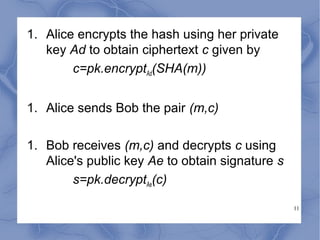
1. Alice encrypts the hash using her private
key Ad to obtain ciphertext c given by
c=pk.encryptAd(SHA(m))
1. Alice sends Bob the pair (m,c)
1. Bob receives (m,c) and decrypts c using
Alice's public key Ae to obtain signature s
s=pk.decryptAe(c)
11
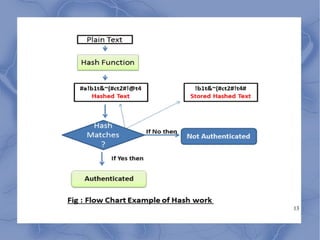
1. He computes the hash of m using SHA-1
and if this hash value is equal to s then the
message is authenticated.
Bob is sure that the message is correct and
that is does come from Alice. Furthermore
Alice cannot later deny sending the
message since only Alice has access to her
private key Ad which works in conjunction
with the public key Ae.
12
13
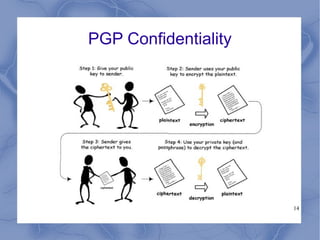
PGP Confidentiality

14

Email security

  • 1.
    Email Security Eng.Ahmed AliEl-Kosairy eng.aelkosairy@gmail.com
  • 2.
    Threats  Threats to thesecurity of e-mail itself − Loss of confidentiality E-mails are sent in clear over open networks  E-mails stored on potentially insecure clients and mail servers  − Loss of integrity  − − − No integrity protection on e-mails; body can be altered in transit or on mail server Lack of data origin authentication Lack of non-repudiation Lack of notification of receipt
  • 3.
    Threats Enabled byE-mail     Disclosure of sensitive information Exposure of systems to malicious code Denial-of-Service (DoS) Unauthorized accesses etc.
  • 4.
    What are theOptions  Secure the server to client connections (easy thing first) − −  POP, IMAP over ssh, SSL https access to webmail Secure the end-to-end email delivery − − The PGPs of the world Still need to get the other party to be PGP aware
  • 5.
    Email based Attacks Bufferover-flow attack −  Fix the code Shell script attack − Scan before send to the shell Web bugs (for tracking) - Hardening the mail server
  • 6.
    Email SPAM   Cost toexceed $10 billion SPAM filtering − − − Content based – required hits White list Black list
  • 7.
    PGP      PGP=“Pretty Good Privacy” Firstreleased in 1991, developed by Phil Zimmerman Freeware: OpenPGP and variants: OpenPGP specified in RFC 2440 and defined by IETF OpenPGP working group. − www.ietf.org/html.charters/openpgp-charter.html Available as plug-in for popular e-mail clients, can also be used as stand-alone software.
  • 8.
    PGP  Functionality − −  Encryption for confidentiality. Signaturefor non-repudiation/authenticity. Sign before encrypt, so signatures on unencrypted data can be detached and stored separately.
  • 9.
    PGP Algorithms  Broad rangeof algorithms supported: Symmetric encryption: −  Public key encryption of session keys: −  RSA or ElGamal. Hashing: −  DES, 3DES, AES and others. SHA-1, MD-5 and others. Signature: − RSA, DSS, ECDSA and others.
  • 10.
    PGP Authentication This isa digital signature scheme with hashing. 1. Alice has (private/public) key pair (Ad/Ae) and she wants to send a digitally signed message m to Bob. 2. Alice hashes the message using SHA-1 to obtain SHA(m). 10
  • 11.
    1. Alice encryptsthe hash using her private key Ad to obtain ciphertext c given by c=pk.encryptAd(SHA(m)) 1. Alice sends Bob the pair (m,c) 1. Bob receives (m,c) and decrypts c using Alice's public key Ae to obtain signature s s=pk.decryptAe(c) 11
  • 12.
    1. He computesthe hash of m using SHA-1 and if this hash value is equal to s then the message is authenticated. Bob is sure that the message is correct and that is does come from Alice. Furthermore Alice cannot later deny sending the message since only Alice has access to her private key Ad which works in conjunction with the public key Ae. 12
  • 13.
  • 14.

Editor's Notes

  • #4 Story: mailing of patent list to academic mailing list.
  • #9 In fact PGP-processed data can be used with any transport protocol. PGP-processed message is simply placed Into e-mail client edit window.