Medicine	
  2.0,	
  Emergency	
  
      Departments,	
  &	
  Public	
  Health:
                                           	
  
           Beyond	
  the	
  basics   	
  
Esther	
  Choo	
  MD	
  MPH,	
  Alpert	
  Medical	
  School,	
  Brown	
  Univ.	
  
  Nick	
  Genes	
  MD	
  PhD,	
  Mt.	
  Sinai	
  School	
  of	
  Medicine 	
  
Megan	
  Ranney	
  MD	
  MPH,	
  Alpert	
  Medical	
  School,	
  Brown	
  
                                     Univ.


Goals	
  of	
  this	
  didacKc	
  
1.  Why	
  the	
  Emergency	
  Department	
  seNng	
  is	
  
    ripe	
  for	
  innovaKon	
  
2.  What	
  is	
  currently	
  being	
  done	
  in	
  the	
  ED	
  
    seNng:	
  
   -­‐    Computer	
  
   -­‐    Mobile	
  phone	
  
   -­‐    Social	
  media	
  
3.  How	
  we	
  could	
  disrupt	
  the	
  status	
  quo…	
  
But	
  before	
  we	
  get	
  started….	
  
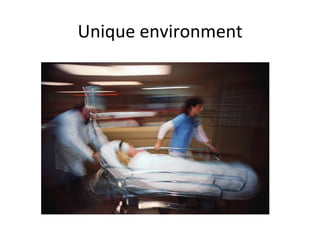
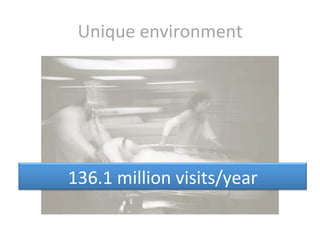
Unique	
  environment	
  
Unique	
  environment	


136.1	
  million	
  visits/year	
  
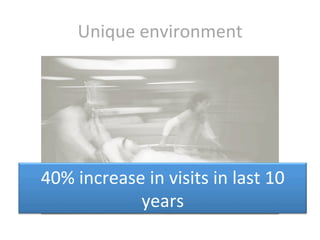
Unique	
  environment	


40%	
  increase	
  in	
  visits	
  in	
  last	
  10	
  
               years	
  
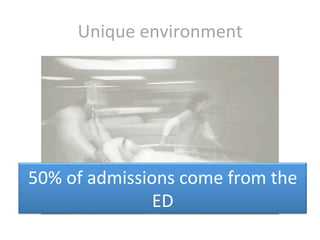
Unique	
  environment	


50%	
  of	
  admissions	
  come	
  from	
  the	
  
                     ED	
  
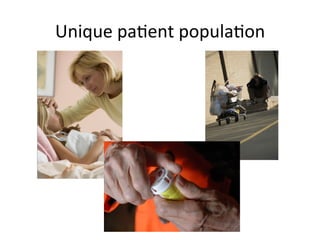
Unique	
  paKent	
  populaKon	
  
Unique	
  paKent	
  populaKon	


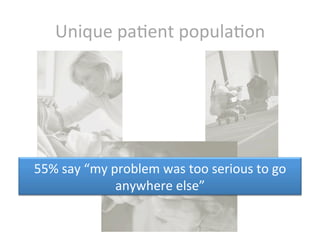
55%	
  say	
  “my	
  problem	
  was	
  too	
  serious	
  to	
  go	
  
                      anywhere	
  else”	
  
Unique	
  paKent	
  populaKon	


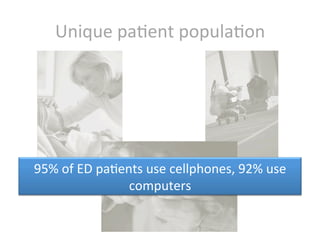
95%	
  of	
  ED	
  paKents	
  use	
  cellphones,	
  92%	
  use	
  
                        computers	
  
Unique	
  Kme	
  constraints	
  
Unique	
  Kme	
  constraints	


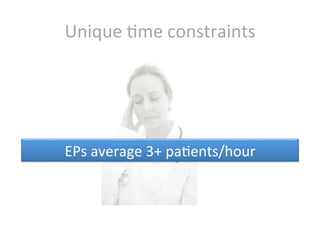
EPs	
  average	
  3+	
  paKents/hour	
  
Unique	
  Kme	
  constraints	


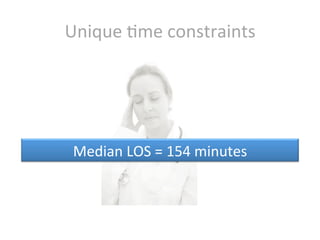
 Median	
  LOS	
  =	
  154	
  minutes	
  
Unique	
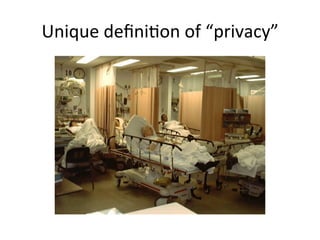
  definiKon	
  of	
  “privacy”	
  
Unique	
  definiKon	
  of	
  “privacy”	


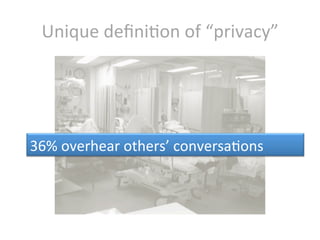
36%	
  overhear	
  others’	
  conversaKons	
  
Unique	
  set	
  of	
  care	
  providers
                                       	
  
References
                                                        	
  
•    Babcock	
  Irvin	
  C,	
  Wyer	
  PC,	
  Gerson	
  LW.	
  PrevenKve	
  care	
  in	
  the	
  emergency	
  department,	
  Part	
  II:	
  
     Clinical	
  prevenKve	
  services-­‐-­‐an	
  emergency	
  medicine	
  evidence-­‐based	
  review.	
  Acad	
  Emerg	
  
     Med	
  2000	
  7(9):1042-­‐54.	
  
•    NHAMCS,	
  “2009	
  Emergency	
  Department	
  Visits:	
  Summary	
  Tables	
  “,	
  May	
  2012	
  
•    Centers	
  for	
  Disease	
  Control	
  and	
  PrevenKon’s	
  NaKonal	
  Center	
  for	
  Health	
  StaKsKcs:	
  
     “Emergency	
  Room	
  Use	
  Among	
  Adults	
  Aged	
  18–64:	
  Early	
  Release	
  of	
  EsKmates	
  From	
  the	
  
     NaKonal	
  Health	
  Interview	
  Survey,	
  January–June	
  2011,”	
  May	
  2012	
  
•    Ranney	
  ML,	
  Choo	
  EK,	
  et	
  al	
  “Emergency	
  Department	
  PaKents’	
  Preferences	
  for	
  Technology-­‐
     Based	
  Behavioral	
  IntervenKons.”	
  Ann	
  Emerg	
  Med	
  2012	
  60(2):218-­‐227	
  
•    Choo	
  EK,	
  Ranney	
  ML,	
  et	
  al	
  “A	
  systemaKc	
  review	
  of	
  emergency	
  department	
  technology-­‐based	
  
     behavioral	
  health	
  intervenKons”	
  Acad	
  Emerg	
  Med	
  2012	
  19(3):318-­‐28	
  
•    Moskop	
  JC	
  et	
  al.	
  “From	
  Hippocrates	
  to	
  HIPAA:	
  Privacy	
  and	
  ConfidenKality	
  in	
  Emergency	
  
     Medicine	
  Part	
  II:	
  Challenges	
  in	
  the	
  Emergency	
  Department.”	
  Ann	
  Emerg	
  Med	
  2005	
  45(1):
     60-­‐67	
  
•    US	
  General	
  AccounKng	
  Office,	
  “'Hospital	
  Emergency	
  Departments:	
  Crowded	
  CondiKons	
  Vary	
  
     among	
  Hospitals	
  and	
  CommuniKes”,	
  March	
  28,	
  2003	
  
InteracKve	
  Computer	
  
  Programs	
  in	
  the	
  ED	
  

       Esther	
  K.	
  Choo,	
  MD	
  MPH  	
  
  Department	
  of	
  Emergency	
  Medicine          	
  
    Warren	
  Alpert	
  Medical	
  School       	
  
           Brown	
  University        	
  
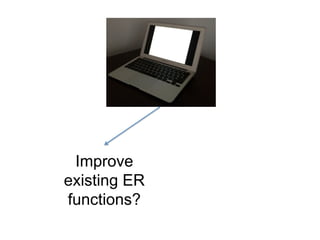
Improve
existing ER
functions?
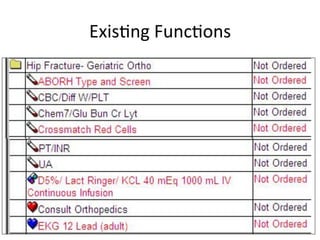
ExisKng	
  FuncKons


 PM Roy, JM Chrétien, SPEED decision
 support for diagnosis of pulmonary
 embolism
Improve      Expand ER
existing ER   functions?
functions?
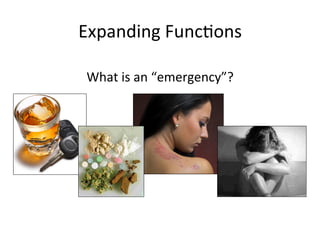
Expanding	
  FuncKons


 What	
  is	
  an	
  “emergency”?	


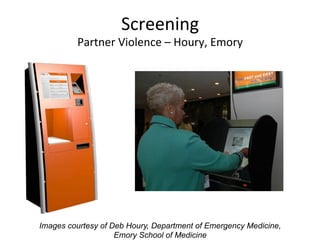
Screening	
  
         Partner	
  Violence	
  –	
  Houry,	
  Emory	


Images courtesy of Deb Houry, Department of Emergency Medicine,
                    Emory School of Medicine
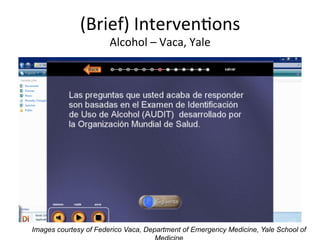
(Brief)	
  IntervenKons              	


                  Alcohol	
  –	
  Vaca,	
  Yale


Images courtesy of Federico Vaca, Department of Emergency Medicine, Yale School of
(Brief)IntervenKons


    Alcohol	
  &	
  Youth	
  Violence	
  –	
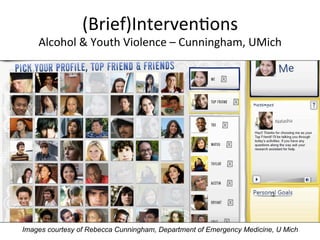
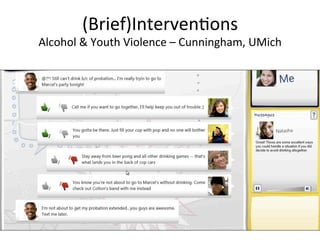
  Cunningham,	
  UMich


Images courtesy of Rebecca Cunningham, Department of Emergency Medicine, U Mich
(Brief)IntervenKons
                             	
  
Alcohol	
  &	
  Youth	
  Violence	
  –	
  Cunningham,	
  UMich	
  
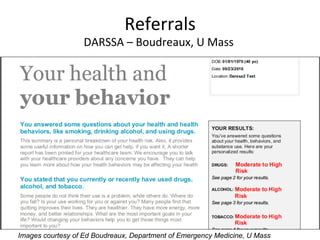
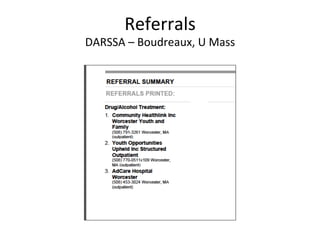
Referrals
                                      	
  
                   DARSSA	
  –	
  Boudreaux,	
  U	
  Mass	


Images courtesy of Ed Boudreaux, Department of Emergency Medicine, U Mass
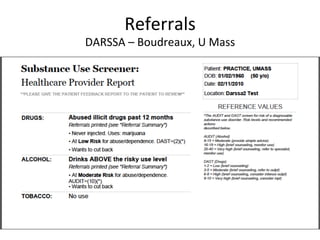
Referrals
                  	
  
DARSSA	
  –	
  Boudreaux,	
  U	
  Mass
                                     	
  
Referrals
                  	
  
DARSSA	
  –	
  Boudreaux,	
  U	
  Mass
                                     	
  
Future	
  DirecKons?	


      [Need graphic]
References
                                                                 	
  
Boudreaux,	
  ED	
  et	
  al,	
  2009.	
  The	
  Dynamic	
  Assessment	
  and	
  Referral	
  System	
  for	
  Substance	
  Abuse	
  (DARSSA):	
  
development,	
  funcKonality,	
  and	
  end-­‐user	
  saKsfacKon.	
  Drug	
  and	
  alcohol	
  dependence	
  99,	
  37-­‐46.	
  
Cunningham,	
  RM	
  et	
  al,	
  2012.	
  Brief	
  MoKvaKonal	
  Interviewing	
  IntervenKon	
  for	
  Peer	
  Violence	
  and	
  Alcohol	
  Use	
  in	
  
Teens:	
  One-­‐Year	
  Follow-­‐up.	
  Pediatrics	
  129,	
  1083-­‐90.	
  
Houry,	
  D	
  et	
  al,	
  2008.	
  Does	
  screening	
  in	
  the	
  emergency	
  department	
  hurt	
  or	
  help	
  vicKms	
  of	
  inKmate	
  partner	
  
violence?	
  Annals	
  of	
  emergency	
  medicine	
  51,	
  433-­‐42,	
  442.e1-­‐7.	
  
Rhodes,	
  K.V.,	
  Lauderdale,	
  D.S.,	
  He,	
  T.,	
  Howes,	
  D.S.,	
  Levinson,	
  W.,	
  2002.	
  Between	
  me	
  and	
  the	
  computer:	
  
increased	
  detecKon	
  of	
  inKmate	
  partner	
  violence	
  using	
  a	
  computer	
  quesKonnaire.	
  Annals	
  of	
  emergency	
  
medicine	
  40,	
  476-­‐84.	
  
Roy,	
  PM	
  et	
  al,	
  2009.	
  A	
  computerized	
  handheld	
  decision-­‐support	
  system	
  to	
  improve	
  pulmonary	
  embolism	
  
diagnosis:	
  a	
  randomized	
  trial.	
  Ann	
  Intern	
  Med.151,	
  677-­‐86.	
  
Vaca,	
  FE	
  et	
  al,	
  2011.	
  Six-­‐month	
  follow-­‐up	
  of	
  computerized	
  alcohol	
  screening,	
  brief	
  intervenKon,	
  and	
  referral	
  to	
  
treatment	
  in	
  the	
  emergency	
  department.	
  Substance	
  abuse	
  :	
  official	
  publicaKon	
  of	
  the	
  AssociaKon	
  for	
  Medical	
  
EducaKon	
  and	
  Research	
  in	
  Substance	
  Abuse	
  32,	
  144-­‐52.	


Mobile	
  phones,	
  public	
  health,	
  &	
  
     Emergency	
  Medicine        	
  
                Where	
  are	
  we	
  now?	


               Where	
  are	
  we	
  going?
                             	
  
         Megan	
  L.	
  Ranney	
  MD	
  MPH         	
  
     Dept	
  of	
  EM,	
  Warren	
  Alpert	
  Medical	
  
             School,	
  Brown	
  University    	


                   @meganranney	
  
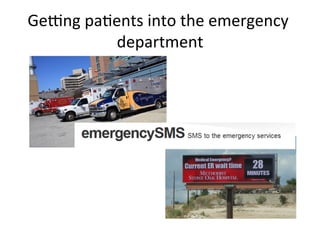
GeNng	
  paKents	
  into	
  the	
  emergency	
  
             department       	
  
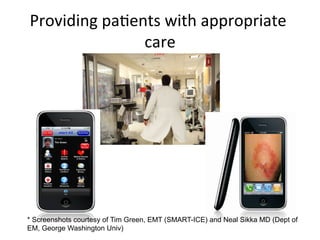
Providing	
  paKents	
  with	
  appropriate	
  
                  care   	


* Screenshots courtesy of Tim Green, EMT (SMART-ICE) and Neal Sikka MD (Dept of
EM, George Washington Univ)
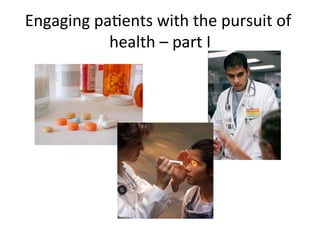
Engaging	
  paKents	
  with	
  the	
  pursuit	
  of	
  
              health	
  –	
  part	
  I
                                     	
  
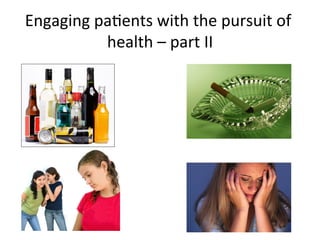
Engaging	
  paKents	
  with	
  the	
  pursuit	
  of	
  
             health	
  –	
  part	
  II
                                     	
  
Engaging	
  paKents	
  with	
  the	
  pursuit	
  of	
  
             health	
  –	
  part	
  II
                                     	
  
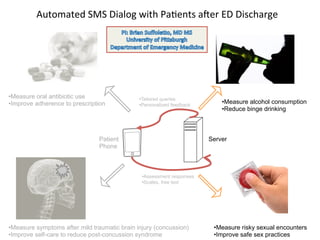
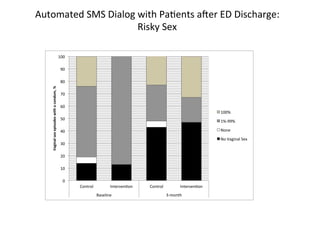
Automated	
  SMS	
  Dialog	
  with	
  PaKents	
  arer	
  ED	
  Discharge	


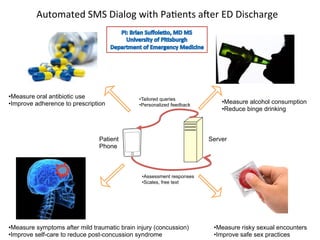
• Measure oral antibiotic use                  • Tailored queries
• Improve adherence to prescription            • Personalized feedback
                                                                             • Measure alcohol consumption
                                                                             • Reduce binge drinking


                                Patient                                  Server
                                Phone


                                                • Assessment responses
                                                • Scales, free text


• Measure symptoms after mild traumatic brain injury (concussion)         • Measure risky sexual encounters
• Improve self-care to reduce post-concussion syndrome                    • Improve safe sex practices
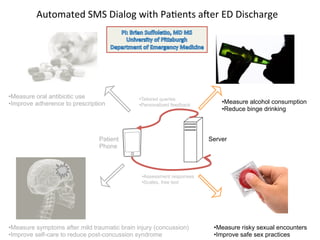
Automated	
  SMS	
  Dialog	
  with	
  PaKents	
  arer	
  ED	
  Discharge	


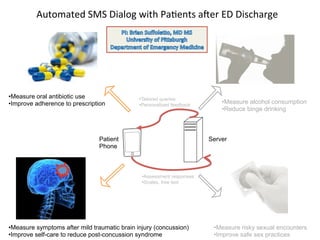
• Measure oral antibiotic use                  • Tailored queries
• Improve adherence to prescription            • Personalized feedback
                                                                             • Measure alcohol consumption
                                                                             • Reduce binge drinking


                                Patient                                  Server
                                Phone


                                                • Assessment responses
                                                • Scales, free text


• Measure symptoms after mild traumatic brain injury (concussion)         • Measure risky sexual encounters
• Improve self-care to reduce post-concussion syndrome                    • Improve safe sex practices
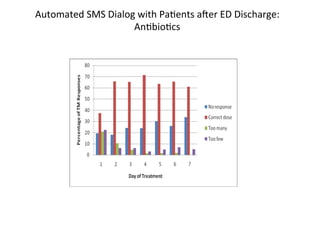
Automated	
  SMS	
  Dialog	
  with	
  PaKents	
  arer	
  ED	
  Discharge:	
  
                          AnKbioKcs	
  
Automated	
  SMS	
  Dialog	
  with	
  PaKents	
  arer	
  ED	
  Discharge	


• Measure oral antibiotic use                  • Tailored queries
• Improve adherence to prescription            • Personalized feedback
                                                                             • Measure alcohol consumption
                                                                             • Reduce binge drinking


                                Patient                                  Server
                                Phone


                                                • Assessment responses
                                                • Scales, free text


• Measure symptoms after mild traumatic brain injury (concussion)         • Measure risky sexual encounters
• Improve self-care to reduce post-concussion syndrome                    • Improve safe sex practices
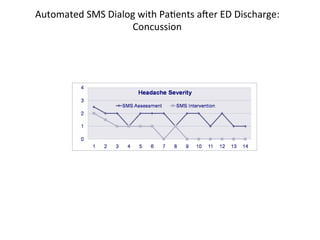
Automated	
  SMS	
  Dialog	
  with	
  PaKents	
  arer	
  ED	
  Discharge:	
  
                          Concussion	
  
Automated	
  SMS	
  Dialog	
  with	
  PaKents	
  arer	
  ED	
  Discharge	


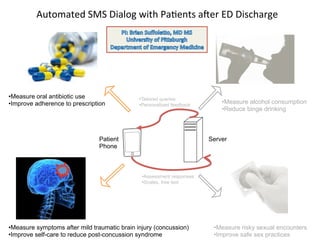
• Measure oral antibiotic use                  • Tailored queries
• Improve adherence to prescription            • Personalized feedback
                                                                             • Measure alcohol consumption
                                                                             • Reduce binge drinking


                                Patient                                  Server
                                Phone


                                                • Assessment responses
                                                • Scales, free text


• Measure symptoms after mild traumatic brain injury (concussion)         • Measure risky sexual encounters
• Improve self-care to reduce post-concussion syndrome                    • Improve safe sex practices
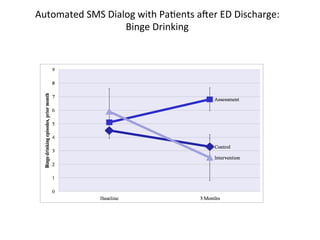
Automated	
  SMS	
  Dialog	
  with	
  PaKents	
  arer	
  ED	
  Discharge:	
  	
  
                        Binge	
  Drinking	
  
Automated	
  SMS	
  Dialog	
  with	
  PaKents	
  arer	
  ED	
  Discharge	


• Measure oral antibiotic use                  • Tailored queries
• Improve adherence to prescription            • Personalized feedback
                                                                             • Measure alcohol consumption
                                                                             • Reduce binge drinking


                                Patient                                  Server
                                Phone


                                                • Assessment responses
                                                • Scales, free text


• Measure symptoms after mild traumatic brain injury (concussion)         • Measure risky sexual encounters
• Improve self-care to reduce post-concussion syndrome                    • Improve safe sex practices
Automated	
  SMS	
  Dialog	
  with	
  PaKents	
  arer	
  ED	
  Discharge:	
  	
  
                              Risky	
  Sex	
  

                                                                   100	
  

                                                                     90	
  

                                                                     80	
  
     Vaginal	
  sex	
  episodes	
  with	
  a	
  condom,	
  %	


                                                                     70	
  

                                                                     60	
  
                                                                                                                                                                   100%	
  
                                                                     50	
  
                                                                                                                                                                   1%-­‐99%	
  

                                                                     40	
                                                                                          None	
  

                                                                                                                                                                   No	
  Vaginal	
  Sex	
  
                                                                     30	
  

                                                                     20	
  

                                                                     10	
  

                                                                       0	
  
                                                                               Control	
               IntervenKon	
     Control	
               IntervenKon	
  
                                                                                             Baseline	
                                3-­‐month	
  
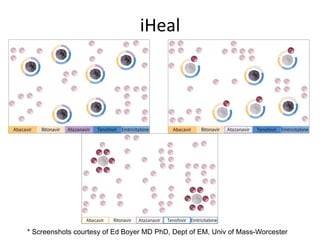
iHeal


* Screenshots courtesy of Ed Boyer MD PhD, Dept of EM, Univ of Mass-Worcester
What	
  is	
  the	
  wave	
  of	
  the	
  future?	
  
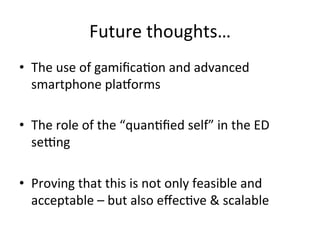
Future	
  thoughts…	
  
•  The	
  use	
  of	
  gamificaKon	
  and	
  advanced	
  
   smartphone	
  plasorms	
  

•  The	
  role	
  of	
  the	
  “quanKfied	
  self”	
  in	
  the	
  ED	
  
     seNng	


•  Proving	
  that	
  this	
  is	
  not	
  only	
  feasible	
  and	
  
     acceptable	
  –	
  but	
  also	
  effecKve	
  &	
  scalable	


Contact	
  InformaKon	
  
•  Ed	
  Boyer	
  MD	
  PhD,	
  Dept	
  of	
  EM,	
  University	
  of	
  
   Massachuseus-­‐Worcester	
  
   Edward.Boyer@umassmemorial.org	
  	
  
•  Megan	
  Ranney	
  MD	
  MPH,	
  Dept	
  of	
  EM,	
  Brown	
  
   University	
  megan_ranney@brown.edu	
  
•  Neal	
  Sikka,	
  MD,	
  Dept	
  of	
  EM,	
  George	
  
   Washington	
  University	
  nsikka@mfa.gwu.edu	
  
•  Brian	
  Suffoleuo,	
  MD	
  MS,	
  Dept	
  of	
  EM,	
  
   University	
  of	
  Piusburgh	
  suxp@upmc.edu	
  
References
                                                                   	
  
•    Boyer	
  EW,	
  Fletcher	
  R,	
  Fay	
  RJ,	
  Smelson	
  D,	
  Ziedonis	
  D,	
  Picard	
  RW.	
  Preliminary	
  efforts	
  directed	
  toward	
  the	
  
     detecKon	
  of	
  craving	
  of	
  illicit	
  substances:	
  the	
  iHeal	
  project.	
  J	
  Med	
  Toxicol.	
  2012	
  Mar;8(1):5-­‐9.	
  
•    Dolan	
  PL.	
  “Emergency	
  departments	
  turn	
  to	
  texKng	
  waiKng	
  Kmes.”	
  American	
  Medical	
  News	
  2011	
  Aug	
  22:	
  	
  
     hup://www.ama-­‐assn.org/amednews/2011/08/22/bisb0822.htm	
  
•    Kim	
  MJ,	
  Park	
  JM,	
  Je	
  SM,	
  You	
  JS,	
  Park	
  YS,	
  Chung	
  HS,	
  Chung	
  SP,	
  Lee	
  HS.	
  Effects	
  of	
  a	
  short	
  text	
  message	
  
     reminder	
  system	
  on	
  emergency	
  department	
  length	
  of	
  stay.	
  Int	
  J	
  Med	
  Inform.	
  2012	
  May;81(5):296-­‐302	
  	
  
•    Ranney	
  ML,	
  Choo	
  EK,	
  Wang	
  Y,	
  Baum	
  A,	
  Clark	
  MA,	
  Mello	
  MJ.	
  Emergency	
  department	
  paKents'	
  preferences	
  
     for	
  technology-­‐based	
  behavioral	
  intervenKons.	
  Ann	
  Emerg	
  Med.	
  2012	
  Aug;60(2):218-­‐227.e48.	
  
•    Sikka	
  N,	
  Pirri	
  M,	
  Carlin	
  KN,	
  Strauss	
  R,	
  Rahimi	
  F,	
  Pines	
  J.	
  The	
  Use	
  of	
  Mobile	
  Phone	
  Cameras	
  in	
  Guiding	
  
     Treatment	
  Decisions	
  for	
  LaceraKon	
  Care.	
  Telemed	
  J	
  E	
  Health.	
  2012	
  Jul	
  23.	
  	
  
•    Sikka	
  N,	
  Carlin	
  KN,	
  Pines	
  J,	
  Pirri	
  M,	
  Strauss	
  R,	
  Rahimi	
  F.	
  The	
  use	
  of	
  mobile	
  phones	
  for	
  acute	
  wound	
  care:	
  
     aNtudes	
  and	
  opinions	
  of	
  emergency	
  department	
  paKents.	
  J	
  Health	
  Commun.	
  2012;17	
  Suppl	
  1:37-­‐42	
  
•    Suffoleuo	
  B,	
  Calabria	
  J,	
  Ross	
  A,	
  Callaway	
  C,	
  Yealy	
  DM.	
  A	
  mobile	
  phone	
  text	
  message	
  program	
  to	
  measure	
  
     oral	
  anKbioKc	
  use	
  and	
  provide	
  feedback	
  on	
  adherence	
  to	
  paKents	
  discharged	
  from	
  the	
  emergency	
  
     department.	
  Acad	
  Emerg	
  Med.	
  2012	
  Aug;19(8):949-­‐58.	
  	
  
•    Suffoleuo	
  B,	
  Callaway	
  C,	
  Kristan	
  J,	
  Kraemer	
  K,	
  Clark	
  DB.	
  Text-­‐message-­‐based	
  drinking	
  assessments	
  and	
  
     brief	
  intervenKons	
  for	
  young	
  adults	
  discharged	
  from	
  the	
  emergency	
  department.	
  Alcohol	
  Clin	
  Exp	
  Res.	
  
     2012	
  Mar;36(3):552-­‐60.	
  
•    hup://ice4safety.com/	
  
•    hup://www.emergencysms.org.uk/	
  
Social	
  Networks	
  in	


Emergency	
  Medicine         	
  

   Nicholas	
  Genes,	
  MD,	
  PhD    	
  
 Mount	
  Sinai	
  School	
  of	
  Medicine 	


             @nickgenes       	
  
EM,	
  as	
  a	
  specialty,	
  in	
  social	
  networks
                                                         	
  
•  great	
  content	
  for	
  educaKon,	
  discussion	
  

•  less	
  opportunity	
  for	
  doctor/paKent	
  interacKon	
  

•  sKll,	
  online	
  social	
  networks	
  have	
  potenKal	
  to	
  
   improve	
  emergency	
  preparedness	
  &	
  response	
  
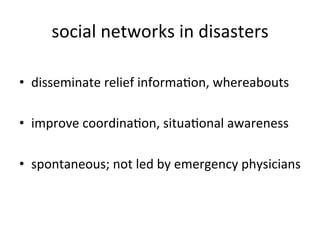
social	
  networks	
  in	
  disasters


•  disseminate	
  relief	
  informaKon,	
  whereabouts	
  

•  improve	
  coordinaKon,	
  situaKonal	
  awareness	
  

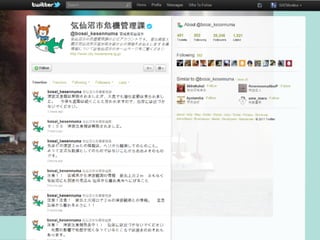
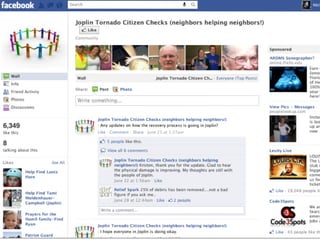
•  spontaneous;	
  not	
  led	
  by	
  emergency	
  physicians


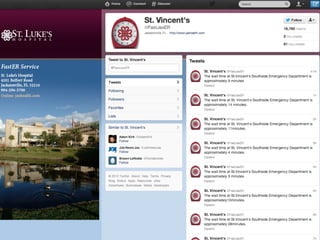
EM-­‐led	
  efforts


•  educaKon,	
  reminders,	
  ED	
  status	


•  idenKfy	
  resources	


•  warnings	
  (and	
  assessment	
  of	
  reach,	
  efficacy)	
  
biosurveillance	
  with	


             online	
  social	
  networks    	
  
•  Eysenbach	
  –	
  infodemiology	
  (2006)	
  

•  Polgreen	
  –	
  Twiuer	
  &	
  H1N1	
  (2011)	
  

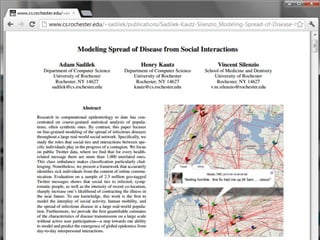
•  Sadilek	
  –	
  Twiuer	
  NLP	
  +	
  geolocaKon	
  (2012)	
  

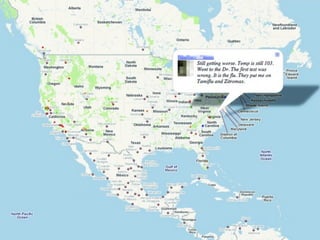
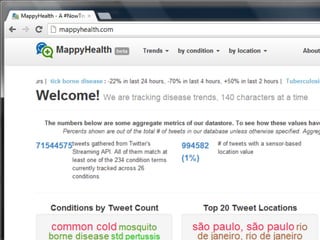
•  MappyHealth	
  –	
  realKme	
  (2012)	
  
Twiuer	
  research	
  for	
  emergency	
  med	
  

•  content	
  relevant	
  for	
  ED	
  preparaKon,	
  training	
  

•  a	
  public	
  API	
  for	
  searching	
  recent	
  tweets	


•  established	
  linguisKc	
  analysis	
  methods	
  

•  then	
  one	
  day…	
  
is	
  there	
  a	
  need	
  for	
  Twiuer	
  tox?	
  
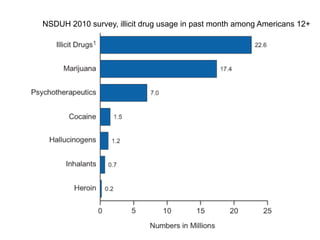
•  NSDUH	
  survey	
  data	
  is	
  comprehensive	
  but	
  old	
  

•  DAWN,	
  poison	
  control	
  funding	
  declining	
  

•  separaKng	
  real	
  trends	
  from	
  media	
  hype	
  
   means	
  beuer	
  trained,	
  prepared	
  EDs	
  
determining	
  drug	
  usage	
  in	
  tweets
                                            	
  
•  develop	
  corpora	
  of	
  tweets	
  for	
  different	
  drugs	
  

•  classify	
  tweets,	
  determine	
  inter-­‐rater	
  agreement	


•  use	
  NLP	
  to	
  train	
  AI,	
  review	
  with	
  human	
  oversight	
  

•  characterize,	
  correlate	
  with	
  NSDUH	
  survey	
  data	
  
NSDUH 2010 survey, illicit drug usage in past month among Americans 12+
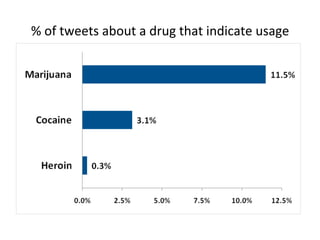
%	
  of	
  tweets	
  about	
  a	
  drug	
  that	
  indicate	
  usage	
  
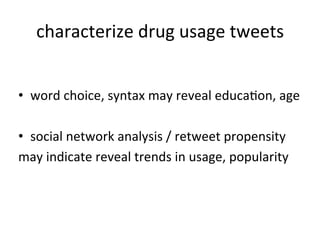
characterize	
  drug	
  usage	
  tweets


•  word	
  choice,	
  syntax	
  may	
  reveal	
  educaKon,	
  age	
  

•  social	
  network	
  analysis	
  /	
  retweet	
  propensity	
  	
  
may	
  indicate	
  reveal	
  trends	
  in	
  usage,	
  popularity	
  	
  
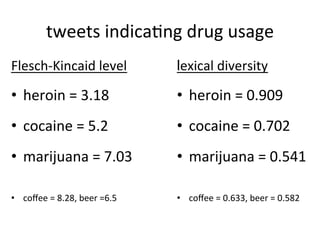
tweets	
  indicaKng	
  drug	
  usage	
  
Flesch-­‐Kincaid	
  level	
  	
              lexical	
  diversity	
  

•  heroin	
  =	
  3.18	
                     •  heroin	
  =	
  0.909	
  
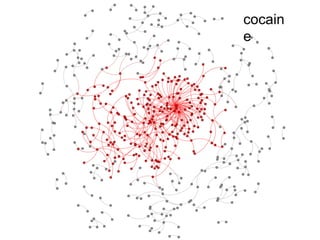
•  cocaine	
  =	
  5.2	
                     •  cocaine	
  =	
  0.702	
  
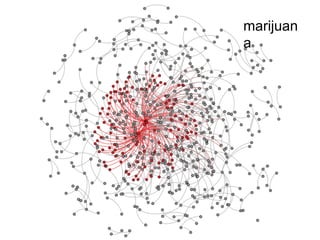
•  marijuana	
  =	
  7.03	
                  •  marijuana	
  =	
  0.541	
  

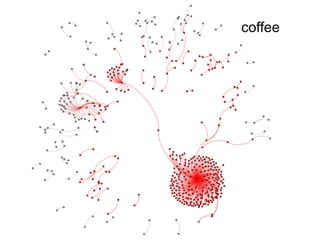
•  coffee	
  =	
  8.28,	
  beer	
  =6.5	
     •  coffee	
  =	
  0.633,	
  beer	
  =	
  0.582	
  
cocain
e
marijuan
a
coffee
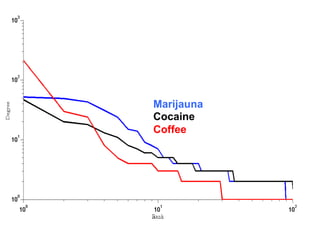
Marijauna
Cocaine
Coffee
next	
  steps	
  (for	
  Twiuer	
  toxicology)
                                              	
  
•  Expand	
  corpora	
  with	
  algorithmic	
  processing	
  

•  correlate	
  tweets	
  with	
  NSDUH	
  data	
  (locaKon?)	
  

•  idenKfy	
  trends	
  in	
  drug	
  use	
  /	
  toxicosurveillance	


•  follow	
  users’	
  tweets	
  over	
  Kme	
  to	
  assess	
  risk,	
  
   recidivism,	
  resource	
  uKlizaKon	
  
next	
  steps	
  (for	
  EM	
  social	
  networks)


•  share	
  data,	
  coding,	
  methods	
  

•  collaborate	
  &	
  promote	
  

•  assess	
  readiness,	
  need,	
  and	
  guide	
  paKents	
  to	
  
   appropriate	
  resources	
  for	
  emergency	
  care	
  
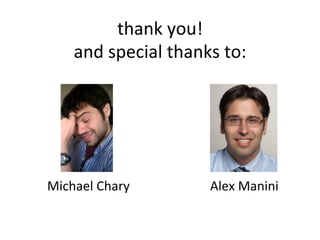
thank	
  you! 	
  
                      and	
  special	
  thanks	
  to:


       Michael	
  Chary	


  Alex	
  Manini	
  	
  
contact	
  info	
  /	
  further	
  reading	
  

Nicholas	
  Genes,	
  MD,	
  PhD	
  
nickgenes.com	
  
@nickgenes	


references,	
  links	
  &	
  more:	
  
tox.sinaiem.org	
  

Medicine 2.0 for the Emergency Department & Public Health - Beyond the Basics

  • 1.
    Medicine  2.0,  Emergency   Departments,  &  Public  Health:   Beyond  the  basics   Esther  Choo  MD  MPH,  Alpert  Medical  School,  Brown  Univ.   Nick  Genes  MD  PhD,  Mt.  Sinai  School  of  Medicine   Megan  Ranney  MD  MPH,  Alpert  Medical  School,  Brown   Univ.    
  • 2.
    Goals  of  this  didacKc   1.  Why  the  Emergency  Department  seNng  is   ripe  for  innovaKon   2.  What  is  currently  being  done  in  the  ED   seNng:   -­‐  Computer   -­‐  Mobile  phone   -­‐  Social  media   3.  How  we  could  disrupt  the  status  quo…  
  • 3.
    But  before  we  get  started….  
  • 4.
  • 5.
    Unique  environment   136.1  million  visits/year  
  • 6.
    Unique  environment   40%  increase  in  visits  in  last  10   years  
  • 7.
    Unique  environment   50%  of  admissions  come  from  the   ED  
  • 8.
  • 9.
    Unique  paKent  populaKon   55%  say  “my  problem  was  too  serious  to  go   anywhere  else”  
  • 10.
    Unique  paKent  populaKon   95%  of  ED  paKents  use  cellphones,  92%  use   computers  
  • 11.
  • 12.
    Unique  Kme  constraints   EPs  average  3+  paKents/hour  
  • 13.
    Unique  Kme  constraints   Median  LOS  =  154  minutes  
  • 14.
    Unique  definiKon  of  “privacy”  
  • 15.
    Unique  definiKon  of  “privacy”   36%  overhear  others’  conversaKons  
  • 16.
    Unique  set  of  care  providers  
  • 17.
    References   •  Babcock  Irvin  C,  Wyer  PC,  Gerson  LW.  PrevenKve  care  in  the  emergency  department,  Part  II:   Clinical  prevenKve  services-­‐-­‐an  emergency  medicine  evidence-­‐based  review.  Acad  Emerg   Med  2000  7(9):1042-­‐54.   •  NHAMCS,  “2009  Emergency  Department  Visits:  Summary  Tables  “,  May  2012   •  Centers  for  Disease  Control  and  PrevenKon’s  NaKonal  Center  for  Health  StaKsKcs:   “Emergency  Room  Use  Among  Adults  Aged  18–64:  Early  Release  of  EsKmates  From  the   NaKonal  Health  Interview  Survey,  January–June  2011,”  May  2012   •  Ranney  ML,  Choo  EK,  et  al  “Emergency  Department  PaKents’  Preferences  for  Technology-­‐ Based  Behavioral  IntervenKons.”  Ann  Emerg  Med  2012  60(2):218-­‐227   •  Choo  EK,  Ranney  ML,  et  al  “A  systemaKc  review  of  emergency  department  technology-­‐based   behavioral  health  intervenKons”  Acad  Emerg  Med  2012  19(3):318-­‐28   •  Moskop  JC  et  al.  “From  Hippocrates  to  HIPAA:  Privacy  and  ConfidenKality  in  Emergency   Medicine  Part  II:  Challenges  in  the  Emergency  Department.”  Ann  Emerg  Med  2005  45(1): 60-­‐67   •  US  General  AccounKng  Office,  “'Hospital  Emergency  Departments:  Crowded  CondiKons  Vary   among  Hospitals  and  CommuniKes”,  March  28,  2003  
  • 18.
    InteracKve  Computer   Programs  in  the  ED   Esther  K.  Choo,  MD  MPH   Department  of  Emergency  Medicine   Warren  Alpert  Medical  School   Brown  University  
  • 19.
  • 20.
    ExisKng  FuncKons   PM Roy, JM Chrétien, SPEED decision support for diagnosis of pulmonary embolism
  • 21.
    Improve Expand ER existing ER functions? functions?
  • 22.
    Expanding  FuncKons     What  is  an  “emergency”?                
  • 23.
    Screening   Partner  Violence  –  Houry,  Emory   Images courtesy of Deb Houry, Department of Emergency Medicine, Emory School of Medicine
  • 24.
    (Brief)  IntervenKons     Alcohol  –  Vaca,  Yale Images courtesy of Federico Vaca, Department of Emergency Medicine, Yale School of
  • 25.
    (Brief)IntervenKons     Alcohol  &  Youth  Violence  –  Cunningham,  UMich Images courtesy of Rebecca Cunningham, Department of Emergency Medicine, U Mich
  • 26.
    (Brief)IntervenKons   Alcohol  &  Youth  Violence  –  Cunningham,  UMich  
  • 27.
    Referrals   DARSSA  –  Boudreaux,  U  Mass     Images courtesy of Ed Boudreaux, Department of Emergency Medicine, U Mass
  • 28.
    Referrals   DARSSA  –  Boudreaux,  U  Mass  
  • 29.
    Referrals   DARSSA  –  Boudreaux,  U  Mass  
  • 30.
  • 31.
    References   Boudreaux,  ED  et  al,  2009.  The  Dynamic  Assessment  and  Referral  System  for  Substance  Abuse  (DARSSA):   development,  funcKonality,  and  end-­‐user  saKsfacKon.  Drug  and  alcohol  dependence  99,  37-­‐46.   Cunningham,  RM  et  al,  2012.  Brief  MoKvaKonal  Interviewing  IntervenKon  for  Peer  Violence  and  Alcohol  Use  in   Teens:  One-­‐Year  Follow-­‐up.  Pediatrics  129,  1083-­‐90.   Houry,  D  et  al,  2008.  Does  screening  in  the  emergency  department  hurt  or  help  vicKms  of  inKmate  partner   violence?  Annals  of  emergency  medicine  51,  433-­‐42,  442.e1-­‐7.   Rhodes,  K.V.,  Lauderdale,  D.S.,  He,  T.,  Howes,  D.S.,  Levinson,  W.,  2002.  Between  me  and  the  computer:   increased  detecKon  of  inKmate  partner  violence  using  a  computer  quesKonnaire.  Annals  of  emergency   medicine  40,  476-­‐84.   Roy,  PM  et  al,  2009.  A  computerized  handheld  decision-­‐support  system  to  improve  pulmonary  embolism   diagnosis:  a  randomized  trial.  Ann  Intern  Med.151,  677-­‐86.   Vaca,  FE  et  al,  2011.  Six-­‐month  follow-­‐up  of  computerized  alcohol  screening,  brief  intervenKon,  and  referral  to   treatment  in  the  emergency  department.  Substance  abuse  :  official  publicaKon  of  the  AssociaKon  for  Medical   EducaKon  and  Research  in  Substance  Abuse  32,  144-­‐52.    
  • 32.
    Mobile  phones,  public  health,  &   Emergency  Medicine   Where  are  we  now?     Where  are  we  going?   Megan  L.  Ranney  MD  MPH   Dept  of  EM,  Warren  Alpert  Medical   School,  Brown  University     @meganranney  
  • 33.
    GeNng  paKents  into  the  emergency   department  
  • 34.
    Providing  paKents  with  appropriate   care   * Screenshots courtesy of Tim Green, EMT (SMART-ICE) and Neal Sikka MD (Dept of EM, George Washington Univ)
  • 35.
    Engaging  paKents  with  the  pursuit  of   health  –  part  I  
  • 36.
    Engaging  paKents  with  the  pursuit  of   health  –  part  II  
  • 37.
    Engaging  paKents  with  the  pursuit  of   health  –  part  II  
  • 38.
    Automated  SMS  Dialog  with  PaKents  arer  ED  Discharge   • Measure oral antibiotic use • Tailored queries • Improve adherence to prescription • Personalized feedback • Measure alcohol consumption • Reduce binge drinking Patient Server Phone • Assessment responses • Scales, free text • Measure symptoms after mild traumatic brain injury (concussion) • Measure risky sexual encounters • Improve self-care to reduce post-concussion syndrome • Improve safe sex practices
  • 39.
    Automated  SMS  Dialog  with  PaKents  arer  ED  Discharge   • Measure oral antibiotic use • Tailored queries • Improve adherence to prescription • Personalized feedback • Measure alcohol consumption • Reduce binge drinking Patient Server Phone • Assessment responses • Scales, free text • Measure symptoms after mild traumatic brain injury (concussion) • Measure risky sexual encounters • Improve self-care to reduce post-concussion syndrome • Improve safe sex practices
  • 40.
    Automated  SMS  Dialog  with  PaKents  arer  ED  Discharge:   AnKbioKcs  
  • 41.
    Automated  SMS  Dialog  with  PaKents  arer  ED  Discharge   • Measure oral antibiotic use • Tailored queries • Improve adherence to prescription • Personalized feedback • Measure alcohol consumption • Reduce binge drinking Patient Server Phone • Assessment responses • Scales, free text • Measure symptoms after mild traumatic brain injury (concussion) • Measure risky sexual encounters • Improve self-care to reduce post-concussion syndrome • Improve safe sex practices
  • 42.
    Automated  SMS  Dialog  with  PaKents  arer  ED  Discharge:   Concussion  
  • 43.
    Automated  SMS  Dialog  with  PaKents  arer  ED  Discharge   • Measure oral antibiotic use • Tailored queries • Improve adherence to prescription • Personalized feedback • Measure alcohol consumption • Reduce binge drinking Patient Server Phone • Assessment responses • Scales, free text • Measure symptoms after mild traumatic brain injury (concussion) • Measure risky sexual encounters • Improve self-care to reduce post-concussion syndrome • Improve safe sex practices
  • 44.
    Automated  SMS  Dialog  with  PaKents  arer  ED  Discharge:     Binge  Drinking  
  • 45.
    Automated  SMS  Dialog  with  PaKents  arer  ED  Discharge   • Measure oral antibiotic use • Tailored queries • Improve adherence to prescription • Personalized feedback • Measure alcohol consumption • Reduce binge drinking Patient Server Phone • Assessment responses • Scales, free text • Measure symptoms after mild traumatic brain injury (concussion) • Measure risky sexual encounters • Improve self-care to reduce post-concussion syndrome • Improve safe sex practices
  • 46.
    Automated  SMS  Dialog  with  PaKents  arer  ED  Discharge:     Risky  Sex   100   90   80   Vaginal  sex  episodes  with  a  condom,  %   70   60   100%   50   1%-­‐99%   40   None   No  Vaginal  Sex   30   20   10   0   Control   IntervenKon   Control   IntervenKon   Baseline   3-­‐month  
  • 47.
    iHeal   * Screenshots courtesy of Ed Boyer MD PhD, Dept of EM, Univ of Mass-Worcester
  • 48.
    What  is  the  wave  of  the  future?  
  • 49.
    Future  thoughts…   • The  use  of  gamificaKon  and  advanced   smartphone  plasorms   •  The  role  of  the  “quanKfied  self”  in  the  ED   seNng     •  Proving  that  this  is  not  only  feasible  and   acceptable  –  but  also  effecKve  &  scalable    
  • 50.
    Contact  InformaKon   • Ed  Boyer  MD  PhD,  Dept  of  EM,  University  of   Massachuseus-­‐Worcester   Edward.Boyer@umassmemorial.org     •  Megan  Ranney  MD  MPH,  Dept  of  EM,  Brown   University  megan_ranney@brown.edu   •  Neal  Sikka,  MD,  Dept  of  EM,  George   Washington  University  nsikka@mfa.gwu.edu   •  Brian  Suffoleuo,  MD  MS,  Dept  of  EM,   University  of  Piusburgh  suxp@upmc.edu  
  • 51.
    References   •  Boyer  EW,  Fletcher  R,  Fay  RJ,  Smelson  D,  Ziedonis  D,  Picard  RW.  Preliminary  efforts  directed  toward  the   detecKon  of  craving  of  illicit  substances:  the  iHeal  project.  J  Med  Toxicol.  2012  Mar;8(1):5-­‐9.   •  Dolan  PL.  “Emergency  departments  turn  to  texKng  waiKng  Kmes.”  American  Medical  News  2011  Aug  22:     hup://www.ama-­‐assn.org/amednews/2011/08/22/bisb0822.htm   •  Kim  MJ,  Park  JM,  Je  SM,  You  JS,  Park  YS,  Chung  HS,  Chung  SP,  Lee  HS.  Effects  of  a  short  text  message   reminder  system  on  emergency  department  length  of  stay.  Int  J  Med  Inform.  2012  May;81(5):296-­‐302     •  Ranney  ML,  Choo  EK,  Wang  Y,  Baum  A,  Clark  MA,  Mello  MJ.  Emergency  department  paKents'  preferences   for  technology-­‐based  behavioral  intervenKons.  Ann  Emerg  Med.  2012  Aug;60(2):218-­‐227.e48.   •  Sikka  N,  Pirri  M,  Carlin  KN,  Strauss  R,  Rahimi  F,  Pines  J.  The  Use  of  Mobile  Phone  Cameras  in  Guiding   Treatment  Decisions  for  LaceraKon  Care.  Telemed  J  E  Health.  2012  Jul  23.     •  Sikka  N,  Carlin  KN,  Pines  J,  Pirri  M,  Strauss  R,  Rahimi  F.  The  use  of  mobile  phones  for  acute  wound  care:   aNtudes  and  opinions  of  emergency  department  paKents.  J  Health  Commun.  2012;17  Suppl  1:37-­‐42   •  Suffoleuo  B,  Calabria  J,  Ross  A,  Callaway  C,  Yealy  DM.  A  mobile  phone  text  message  program  to  measure   oral  anKbioKc  use  and  provide  feedback  on  adherence  to  paKents  discharged  from  the  emergency   department.  Acad  Emerg  Med.  2012  Aug;19(8):949-­‐58.     •  Suffoleuo  B,  Callaway  C,  Kristan  J,  Kraemer  K,  Clark  DB.  Text-­‐message-­‐based  drinking  assessments  and   brief  intervenKons  for  young  adults  discharged  from  the  emergency  department.  Alcohol  Clin  Exp  Res.   2012  Mar;36(3):552-­‐60.   •  hup://ice4safety.com/   •  hup://www.emergencysms.org.uk/  
  • 52.
    Social  Networks  in     Emergency  Medicine   Nicholas  Genes,  MD,  PhD   Mount  Sinai  School  of  Medicine     @nickgenes  
  • 53.
    EM,  as  a  specialty,  in  social  networks   •  great  content  for  educaKon,  discussion   •  less  opportunity  for  doctor/paKent  interacKon   •  sKll,  online  social  networks  have  potenKal  to   improve  emergency  preparedness  &  response  
  • 56.
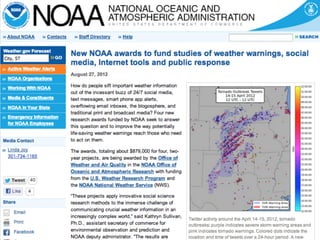
    social  networks  in  disasters   •  disseminate  relief  informaKon,  whereabouts   •  improve  coordinaKon,  situaKonal  awareness   •  spontaneous;  not  led  by  emergency  physicians    
  • 60.
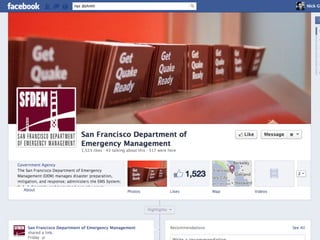
    EM-­‐led  efforts   •  educaKon,  reminders,  ED  status     •  idenKfy  resources     •  warnings  (and  assessment  of  reach,  efficacy)  
  • 62.
    biosurveillance  with     online  social  networks   •  Eysenbach  –  infodemiology  (2006)   •  Polgreen  –  Twiuer  &  H1N1  (2011)   •  Sadilek  –  Twiuer  NLP  +  geolocaKon  (2012)   •  MappyHealth  –  realKme  (2012)  
  • 66.
    Twiuer  research  for  emergency  med   •  content  relevant  for  ED  preparaKon,  training   •  a  public  API  for  searching  recent  tweets     •  established  linguisKc  analysis  methods   •  then  one  day…  
  • 68.
    is  there  a  need  for  Twiuer  tox?   •  NSDUH  survey  data  is  comprehensive  but  old   •  DAWN,  poison  control  funding  declining   •  separaKng  real  trends  from  media  hype   means  beuer  trained,  prepared  EDs  
  • 69.
    determining  drug  usage  in  tweets   •  develop  corpora  of  tweets  for  different  drugs   •  classify  tweets,  determine  inter-­‐rater  agreement     •  use  NLP  to  train  AI,  review  with  human  oversight   •  characterize,  correlate  with  NSDUH  survey  data  
  • 73.
    NSDUH 2010 survey,illicit drug usage in past month among Americans 12+
  • 74.
    %  of  tweets  about  a  drug  that  indicate  usage  
  • 75.
    characterize  drug  usage  tweets   •  word  choice,  syntax  may  reveal  educaKon,  age   •  social  network  analysis  /  retweet  propensity     may  indicate  reveal  trends  in  usage,  popularity    
  • 76.
    tweets  indicaKng  drug  usage   Flesch-­‐Kincaid  level     lexical  diversity   •  heroin  =  3.18   •  heroin  =  0.909   •  cocaine  =  5.2   •  cocaine  =  0.702   •  marijuana  =  7.03   •  marijuana  =  0.541   •  coffee  =  8.28,  beer  =6.5   •  coffee  =  0.633,  beer  =  0.582  
  • 77.
  • 78.
  • 79.
  • 80.
  • 81.
    next  steps  (for  Twiuer  toxicology)   •  Expand  corpora  with  algorithmic  processing   •  correlate  tweets  with  NSDUH  data  (locaKon?)   •  idenKfy  trends  in  drug  use  /  toxicosurveillance     •  follow  users’  tweets  over  Kme  to  assess  risk,   recidivism,  resource  uKlizaKon  
  • 82.
    next  steps  (for  EM  social  networks)   •  share  data,  coding,  methods   •  collaborate  &  promote   •  assess  readiness,  need,  and  guide  paKents  to   appropriate  resources  for  emergency  care  
  • 83.
    thank  you!   and  special  thanks  to:           Michael  Chary                                                  Alex  Manini    
  • 84.
    contact  info  /  further  reading   Nicholas  Genes,  MD,  PhD   nickgenes.com   @nickgenes     references,  links  &  more:   tox.sinaiem.org