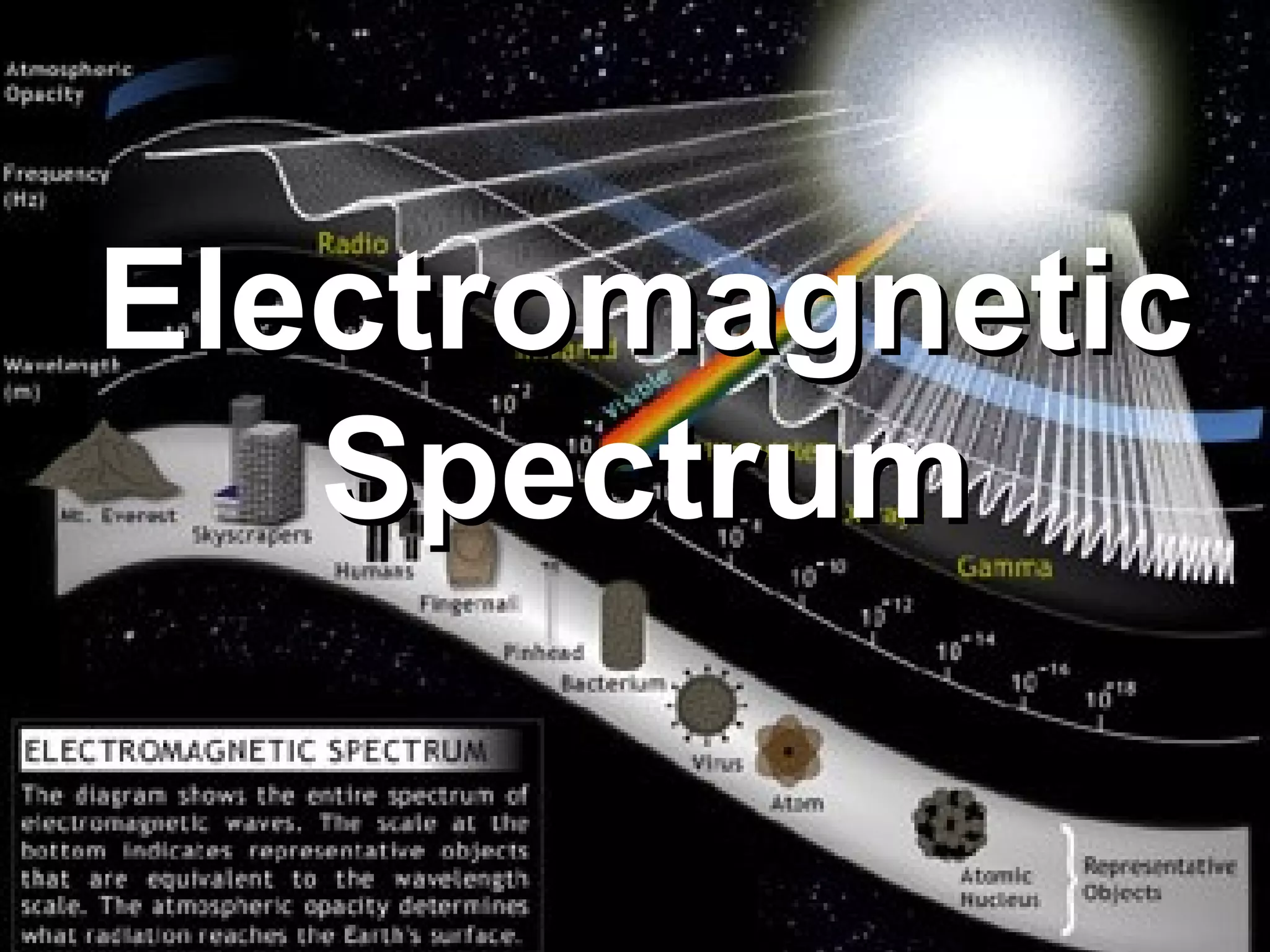
Electromagnetic
   Spectrum
Instructions

• Duration of Lesson: 60 Min

• Read through this powerpoint presentation
  and attempt the EM wave quiz
• You can also find this chapter in your
  textbook, chapter :
 The grades of the quiz will be taken into you CA for semester
 2, and you can only do it ONCE, so please make sure you
 understand the content of this unit.
Introduction
Objectives:
At the end of the lesson, you will be able to

•   Describe the main components of the
    electromagnetic spectrum.
•   State the properties of ALL EM waves.
•   Discuss the role of the respective EM waves
    and some of their applications.
What are Electromagnetic
           Waves ?
• If you have ever tuned in to listen to a radio,
  spoken on a handphone, turned on a light, had
  an X-ray taken, felt the warmth of sun on your
  skin.

• You have experienced electromagnetic wave
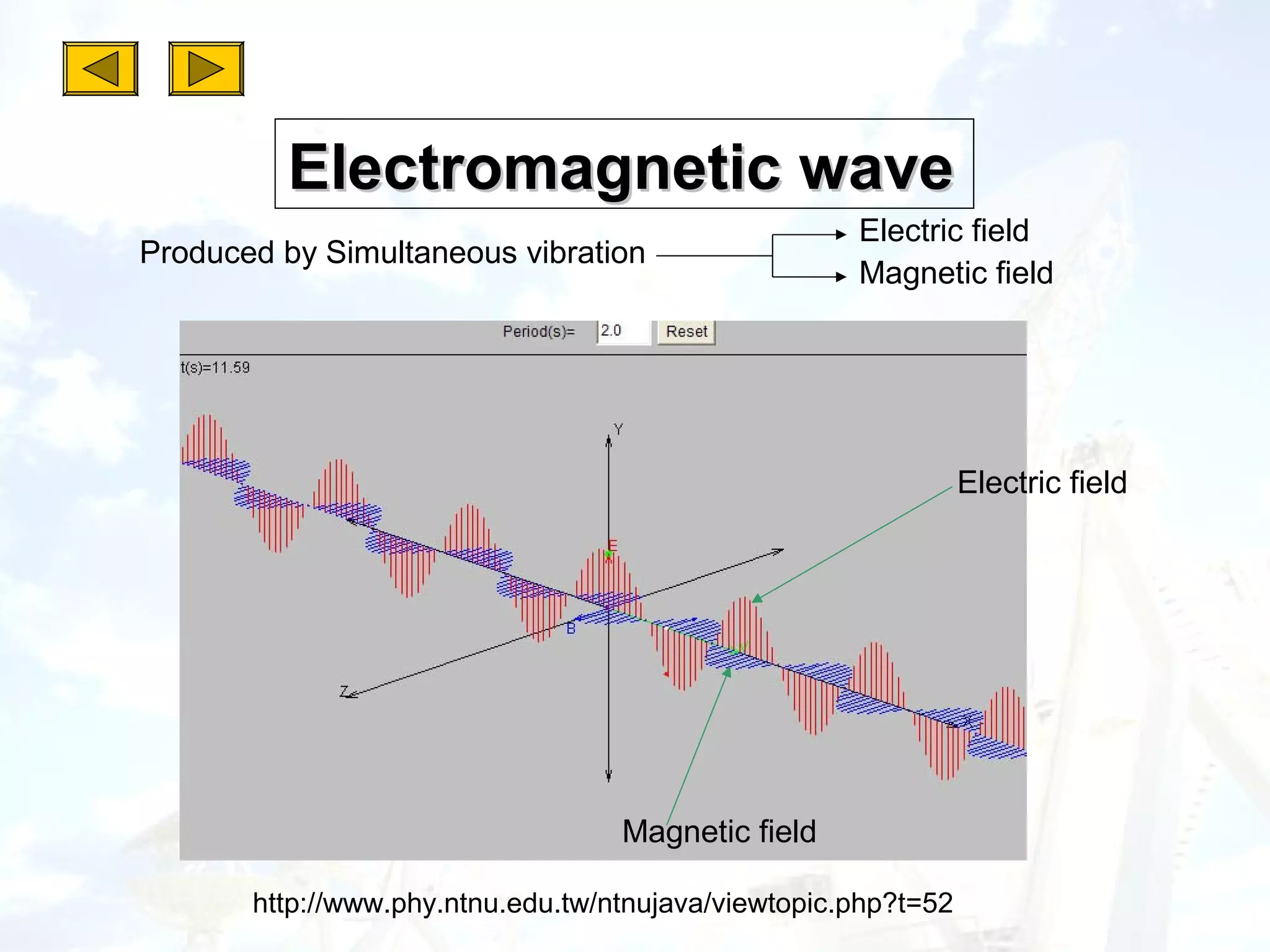
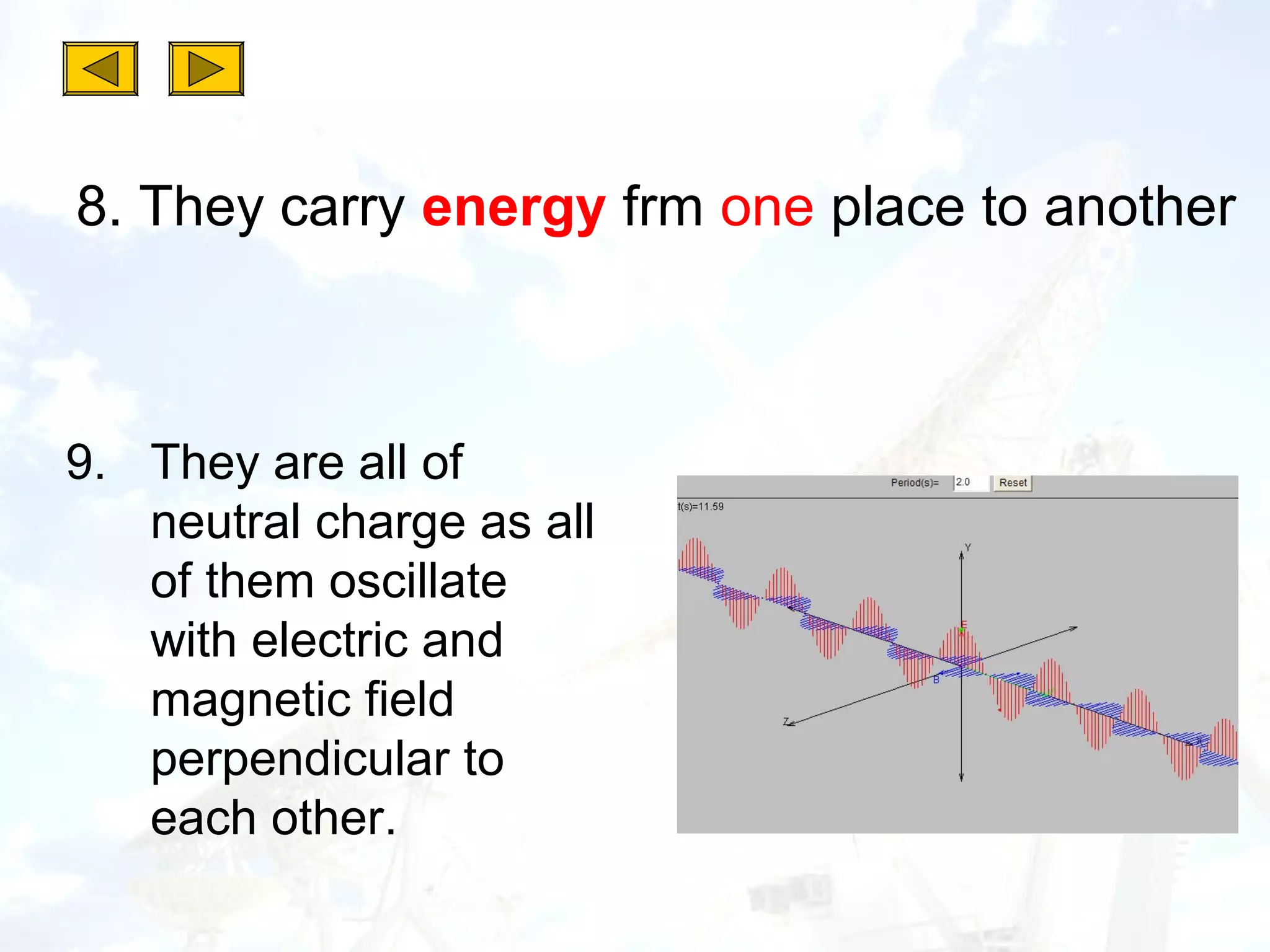
Electromagnetic wave
                                                     Electric field
Produced by Simultaneous vibration
                                                     Magnetic field


                                                                Electric field


                                   Magnetic field

       http://www.phy.ntnu.edu.tw/ntnujava/viewtopic.php?t=52
Wavelength of Electromagnetic Waves
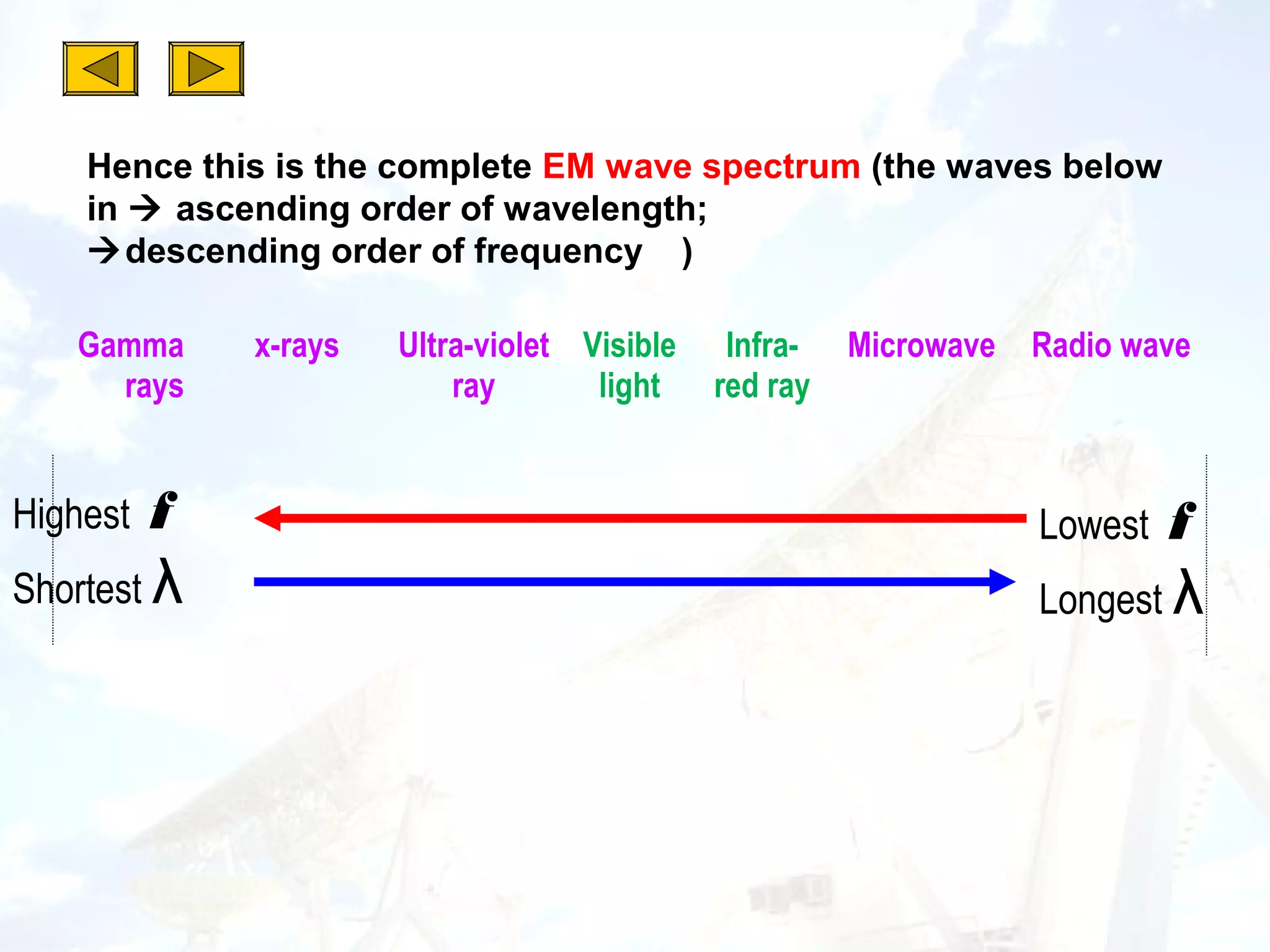
Hence this is the complete EM wave spectrum (the waves below
    in  ascending order of wavelength;
    descending order of frequency )

   Gamma      x-rays   Ultra-violet Visible    Infra-   Microwave   Radio wave
     rays                  ray       light    red ray


Highest   f                                                         Lowest   f
Shortest λ                                                          Longest λ
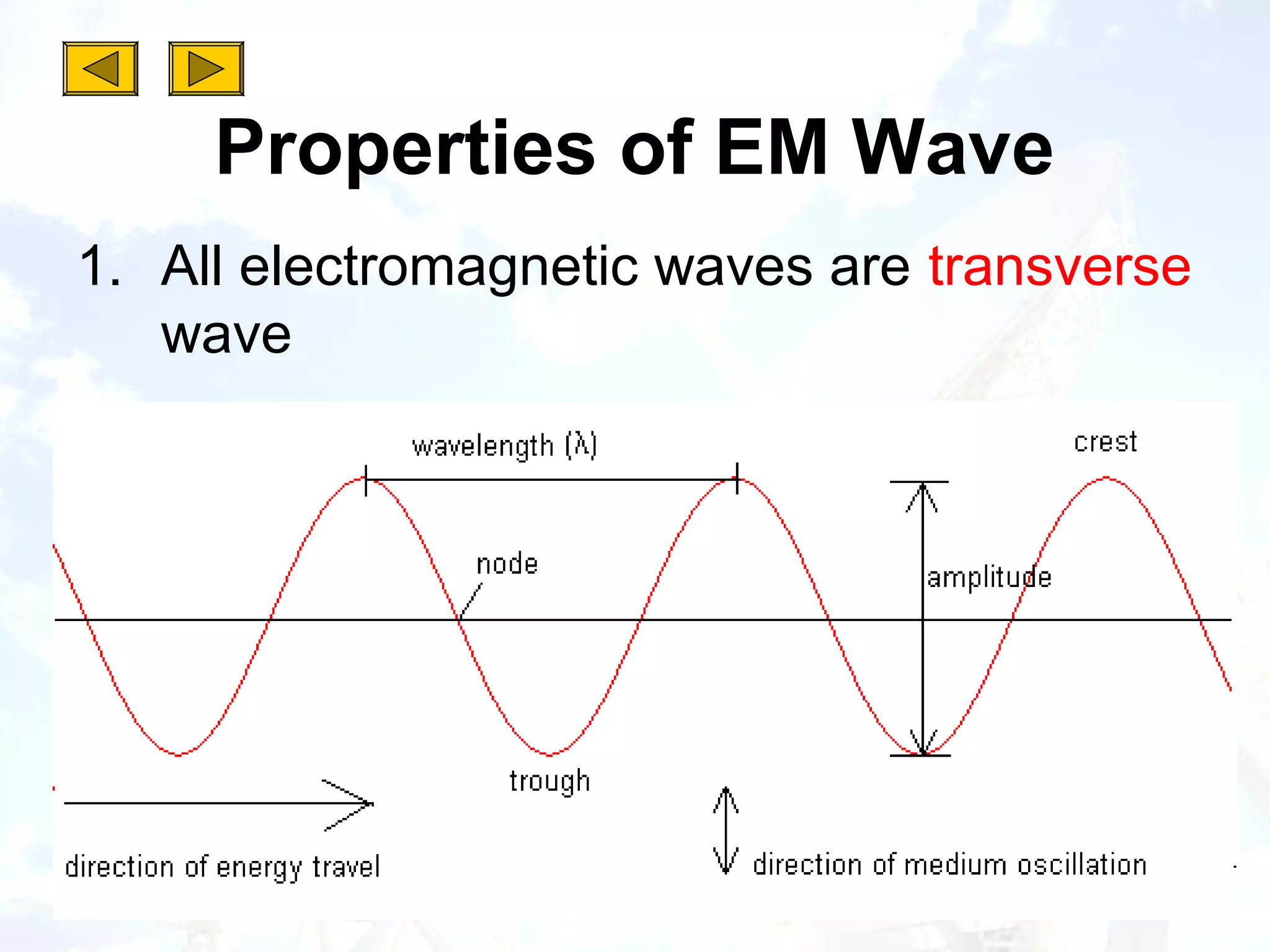
Properties of EM Wave
1. All electromagnetic waves are transverse
   wave
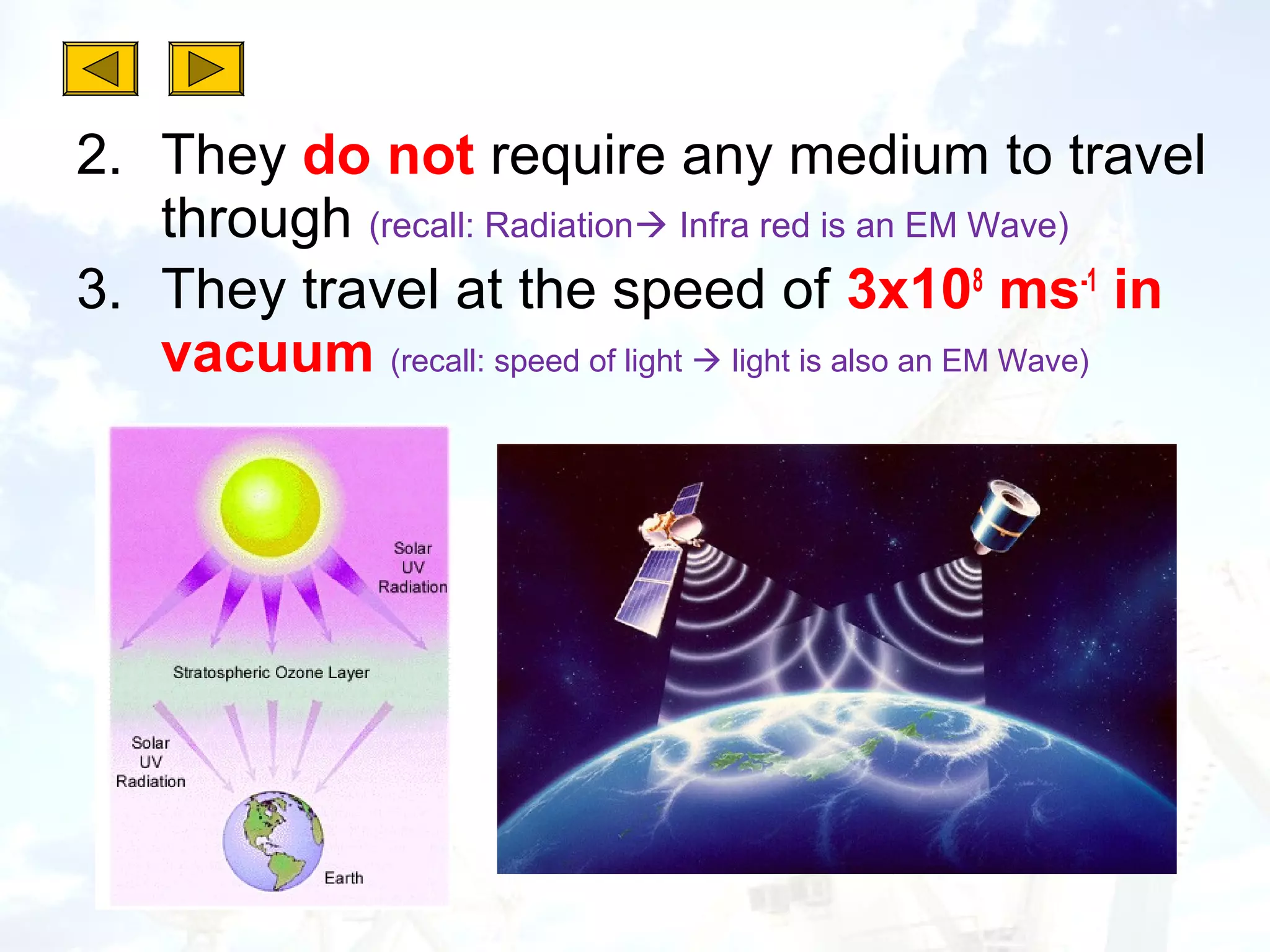
2. They do not require any medium to travel
   through (recall: Radiation Infra red is an EM Wave)
3. They travel at the speed of 3x10⁸ ms-1 in
   vacuum (recall: speed of light  light is also an EM Wave)
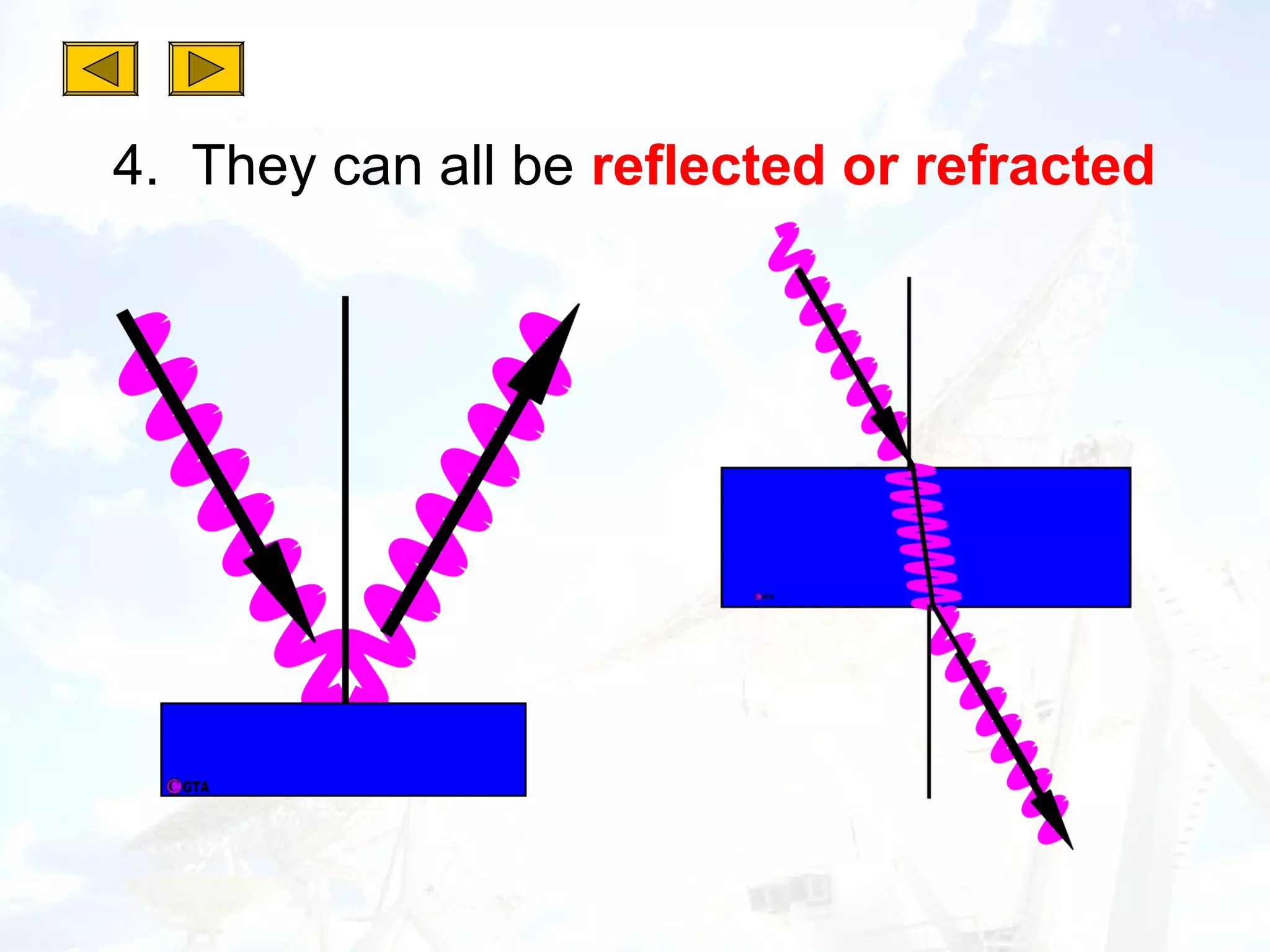
4. They can all be reflected or refracted
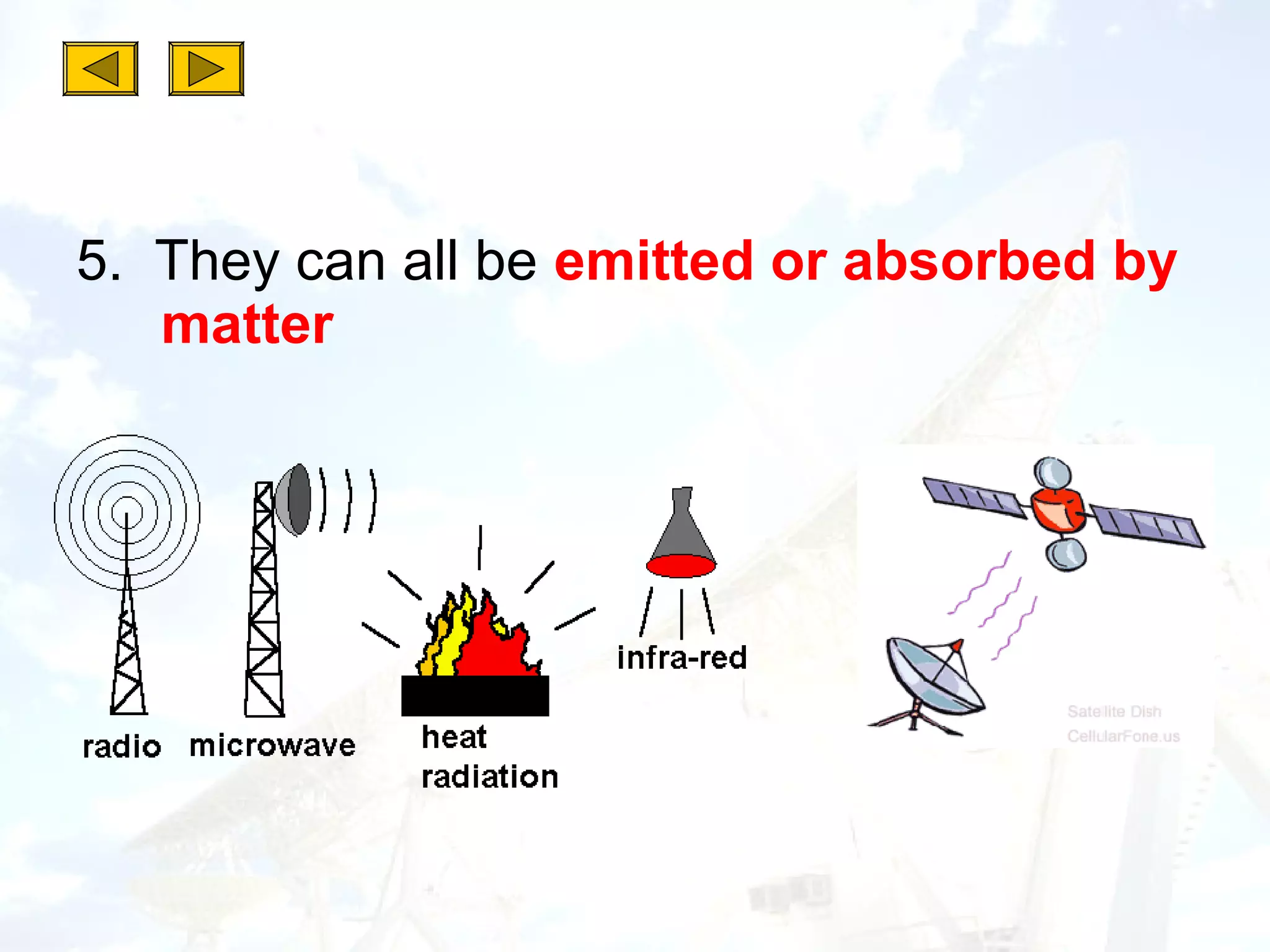
5. They can all be emitted or absorbed by
   matter
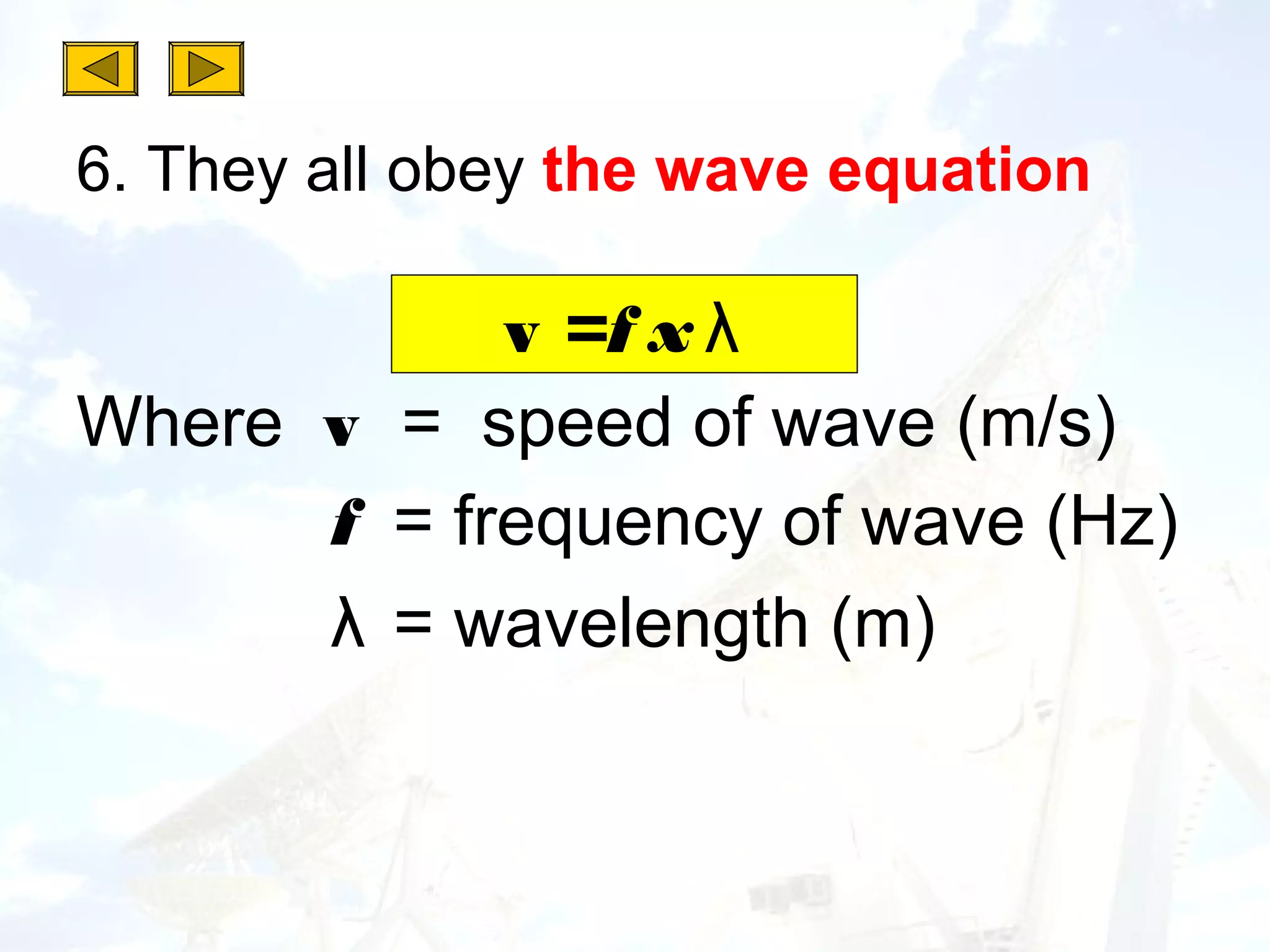
6. They all obey the wave equation

            v =f x λ
Where v = speed of wave (m/s)
      f = frequency of wave (Hz)
      λ = wavelength (m)
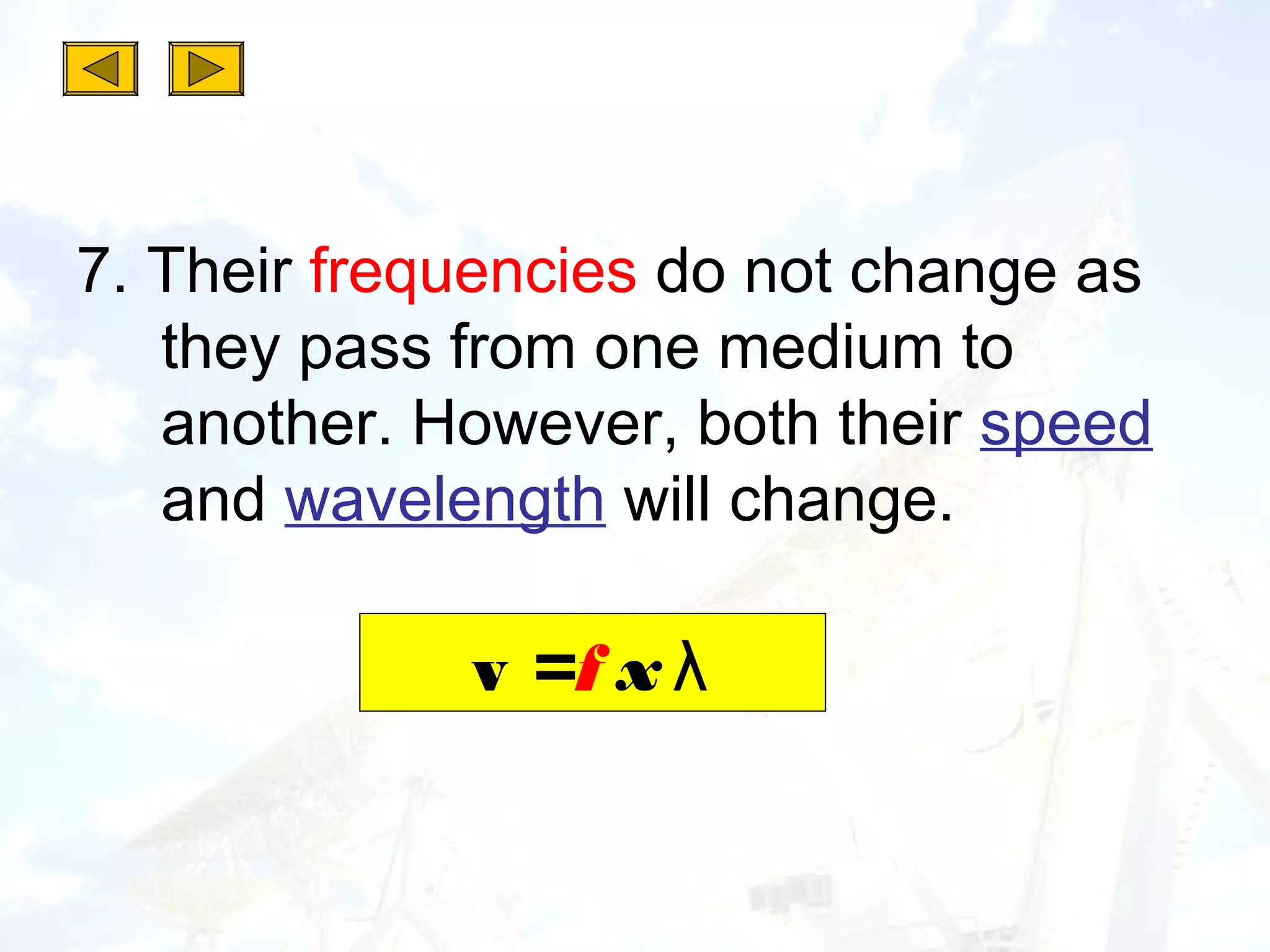
7. Their frequencies do not change as
   they pass from one medium to
   another. However, both their speed
   and wavelength will change.

             v =f x λ
8. They carry energy frm one place to another


9. They are all of
   neutral charge as all
   of them oscillate
   with electric and
   magnetic field
   perpendicular to
   each other.
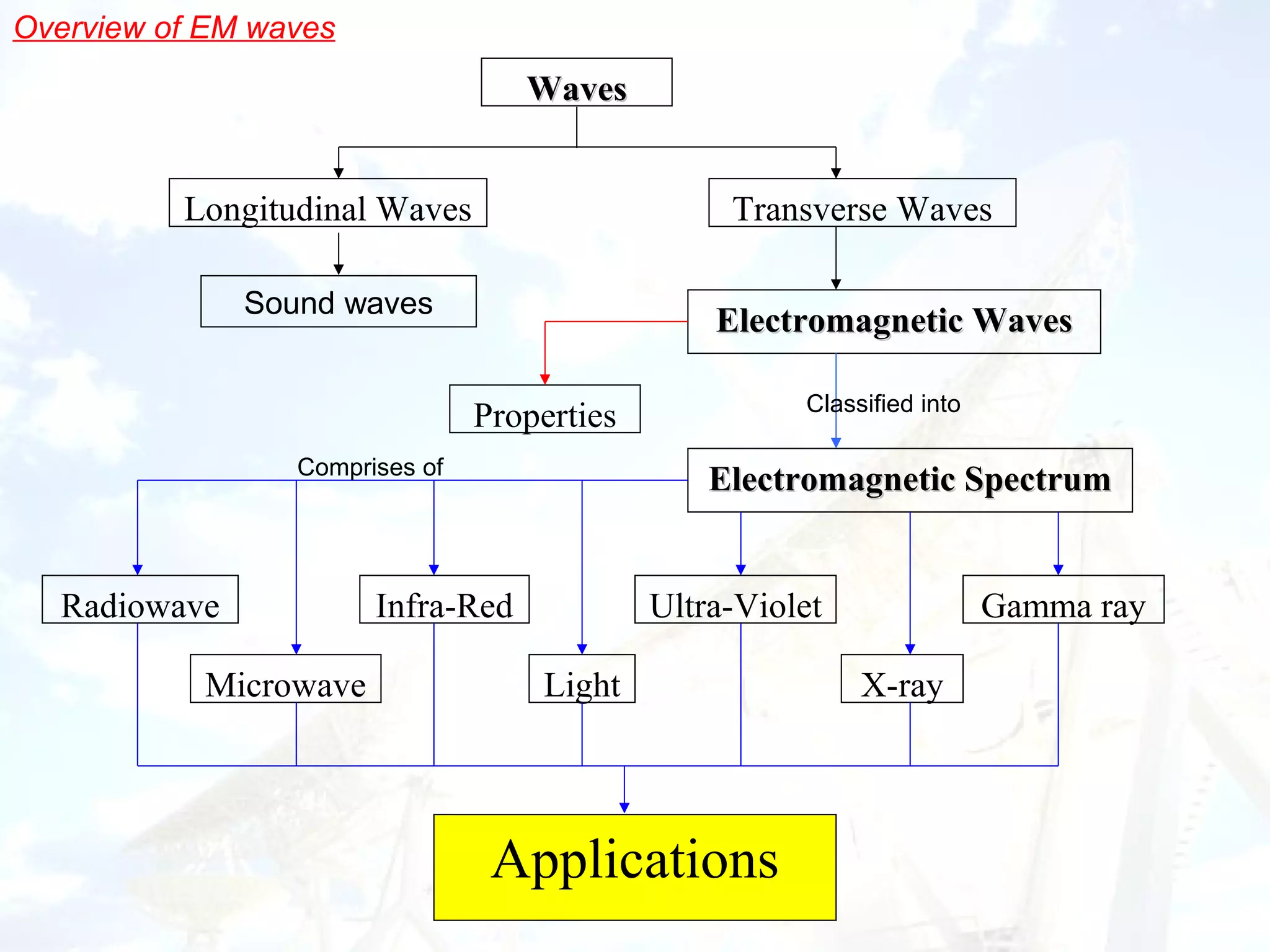
Overview of EM waves
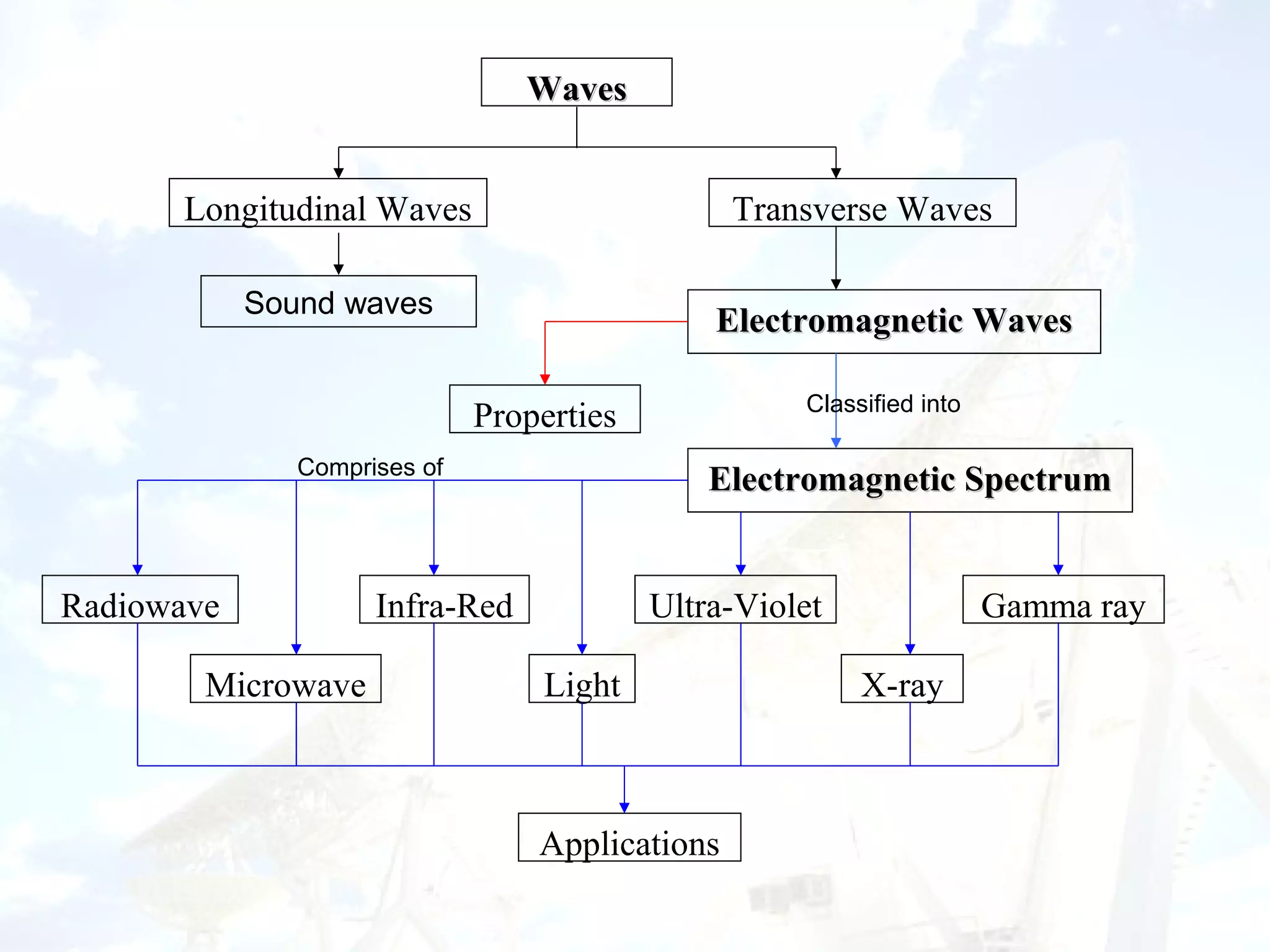
                                   Waves


          Longitudinal Waves                      Transverse Waves

              Sound waves
                                                 Electromagnetic Waves

                                                       Classified into
                                Properties
                 Comprises of
                                                 Electromagnetic Spectrum


  Radiowave            Infra-Red             Ultra-Violet                Gamma ray

           Microwave                Light                   X-ray


                                 Applications
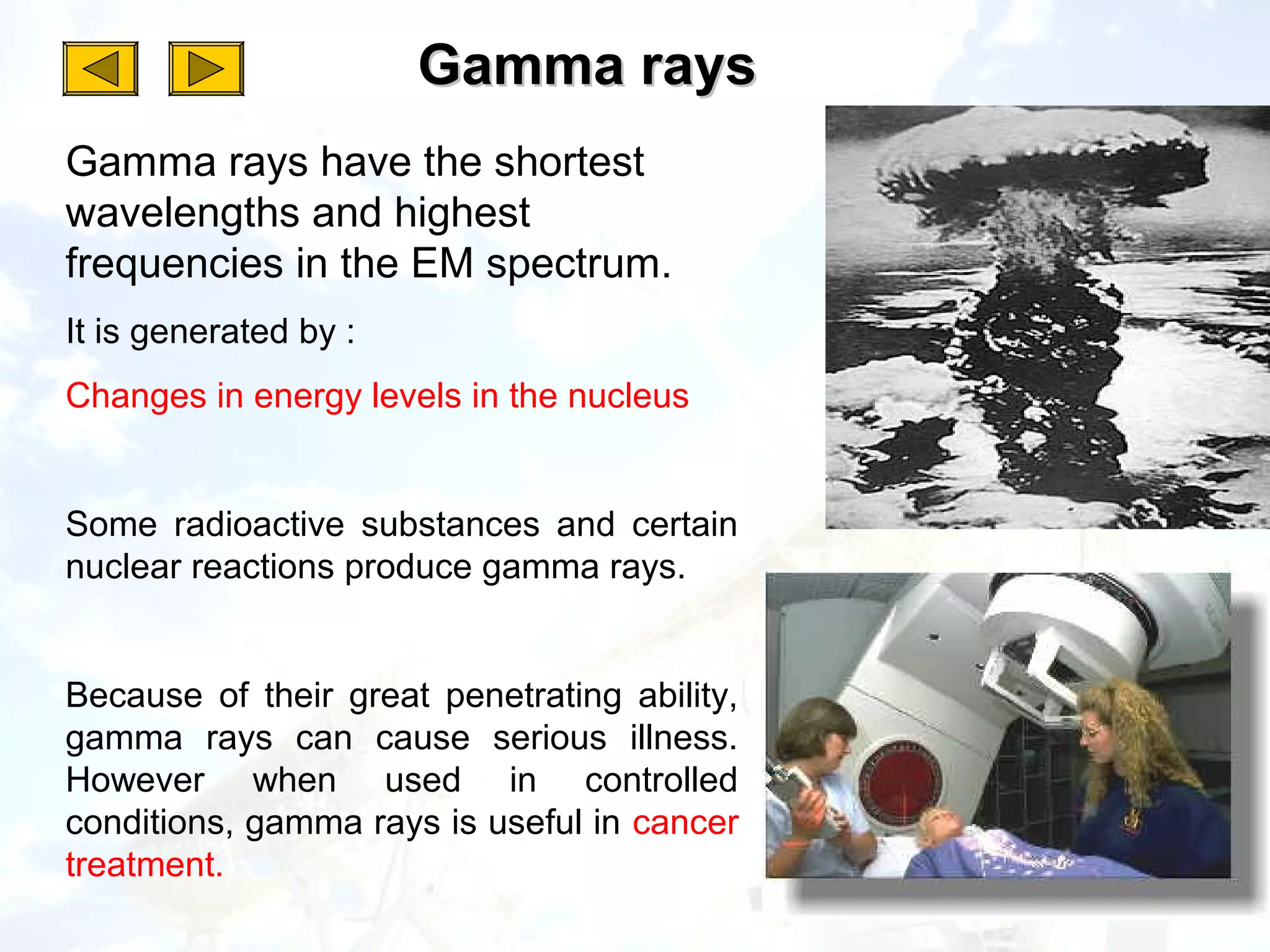
Gamma rays
Gamma rays have the shortest
wavelengths and highest
frequencies in the EM spectrum.
It is generated by :
Changes in energy levels in the nucleus


Some radioactive substances and certain
nuclear reactions produce gamma rays.


Because of their great penetrating ability,
gamma rays can cause serious illness.
However when used in controlled
conditions, gamma rays is useful in cancer
treatment.
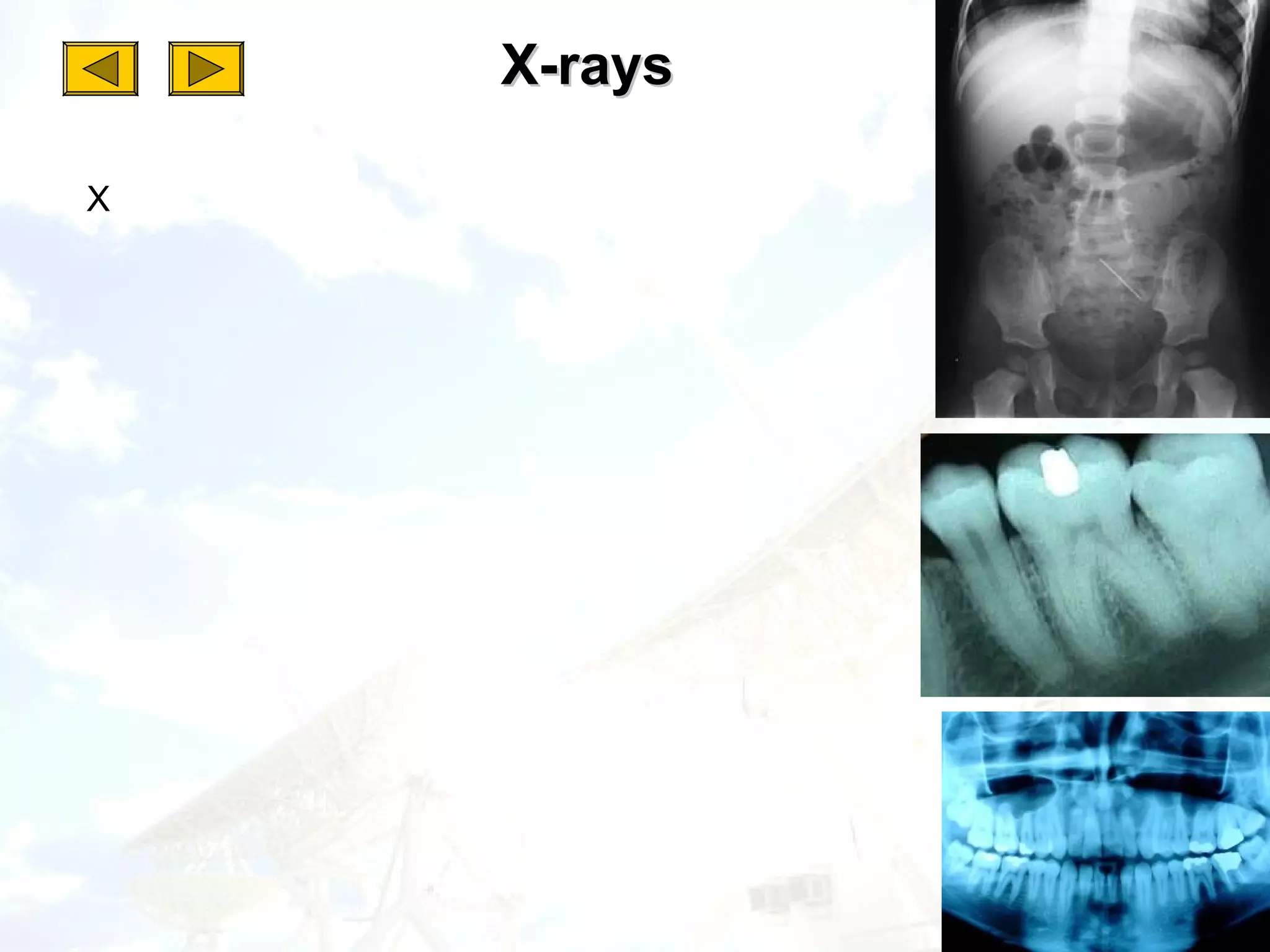
X-rays

X
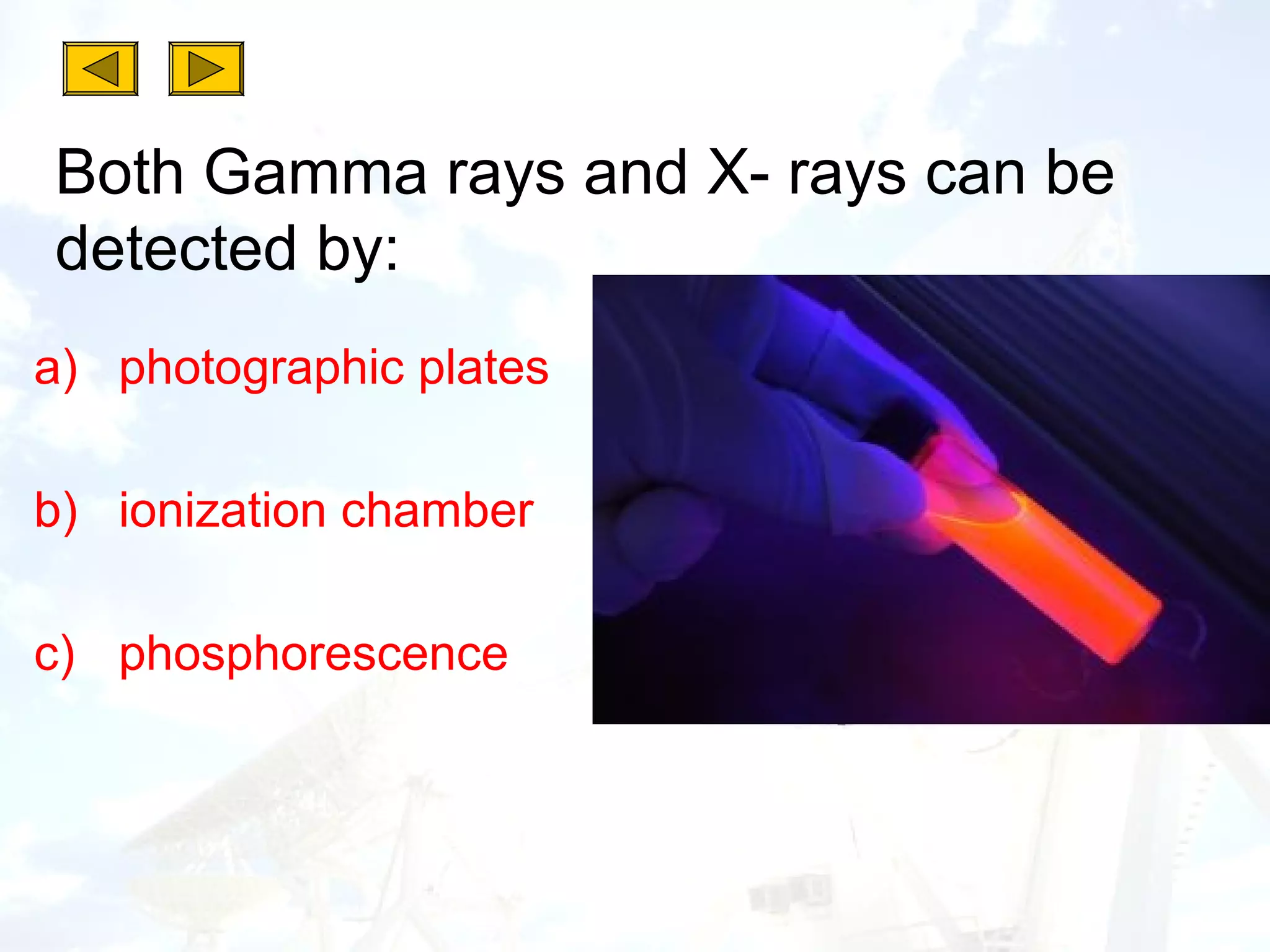
Both Gamma rays and X- rays can be
detected by:
a) photographic plates

b) ionization chamber

c) phosphorescence
Ultra-violet
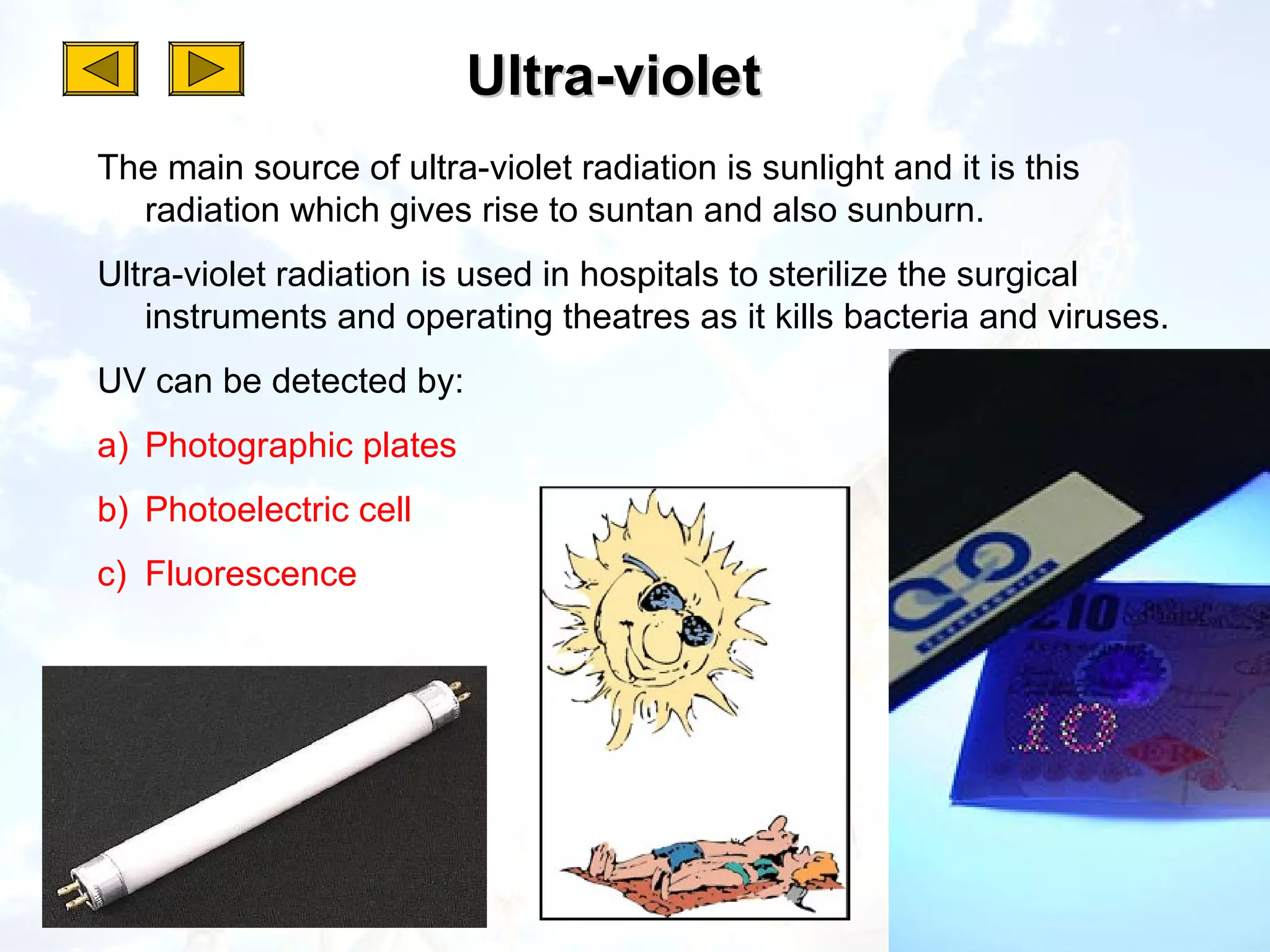
The main source of ultra-violet radiation is sunlight and it is this
  radiation which gives rise to suntan and also sunburn.
Ultra-violet radiation is used in hospitals to sterilize the surgical
   instruments and operating theatres as it kills bacteria and viruses.
UV can be detected by:
a) Photographic plates
b) Photoelectric cell
c) Fluorescence
Visible Light
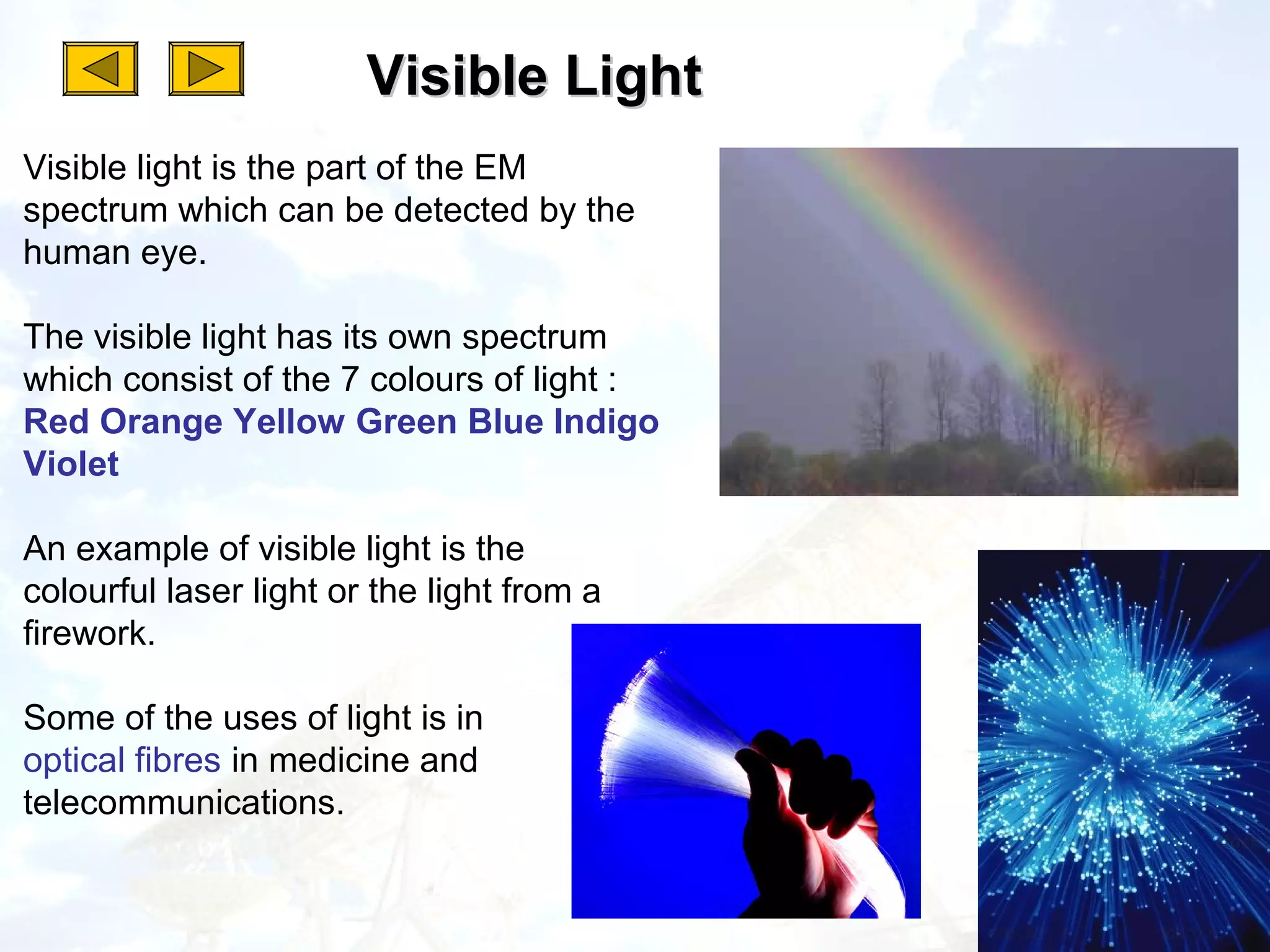
Visible light is the part of the EM
spectrum which can be detected by the
human eye.

The visible light has its own spectrum
which consist of the 7 colours of light :
Red Orange Yellow Green Blue Indigo
Violet

An example of visible light is the
colourful laser light or the light from a
firework.

Some of the uses of light is in
optical fibres in medicine and
telecommunications.
Infra-red waves
Heat can be transferred through infrared
radiation.
We often think of infra red as being the same
thing as 'heat', because it makes our skin feel
warm.


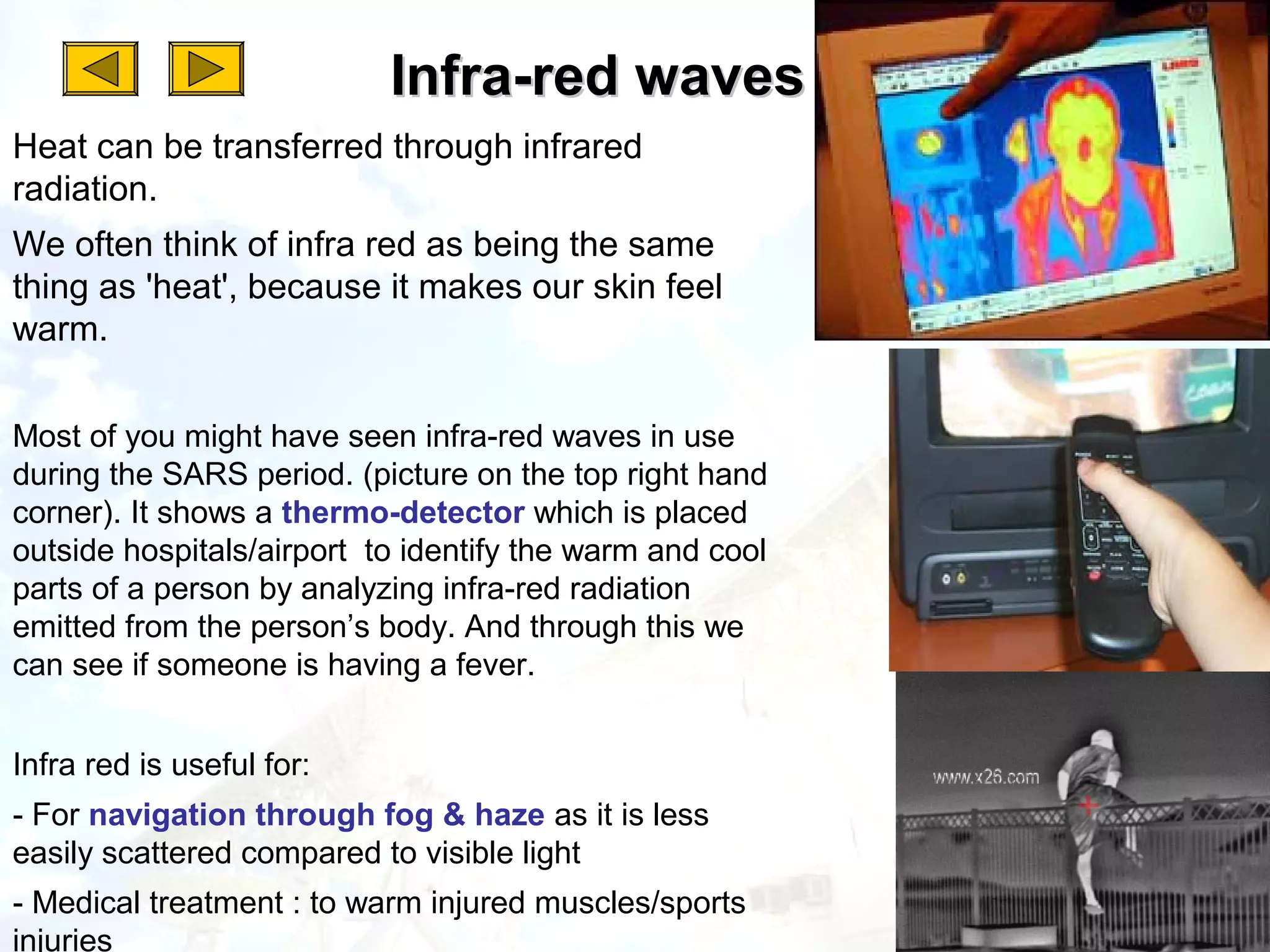
Most of you might have seen infra-red waves in use
during the SARS period. (picture on the top right hand
corner). It shows a thermo-detector which is placed
outside hospitals/airport to identify the warm and cool
parts of a person by analyzing infra-red radiation
emitted from the person’s body. And through this we
can see if someone is having a fever.


Infra red is useful for:
- For navigation through fog & haze as it is less
easily scattered compared to visible light
- Medical treatment : to warm injured muscles/sports
injuries
Microwaves
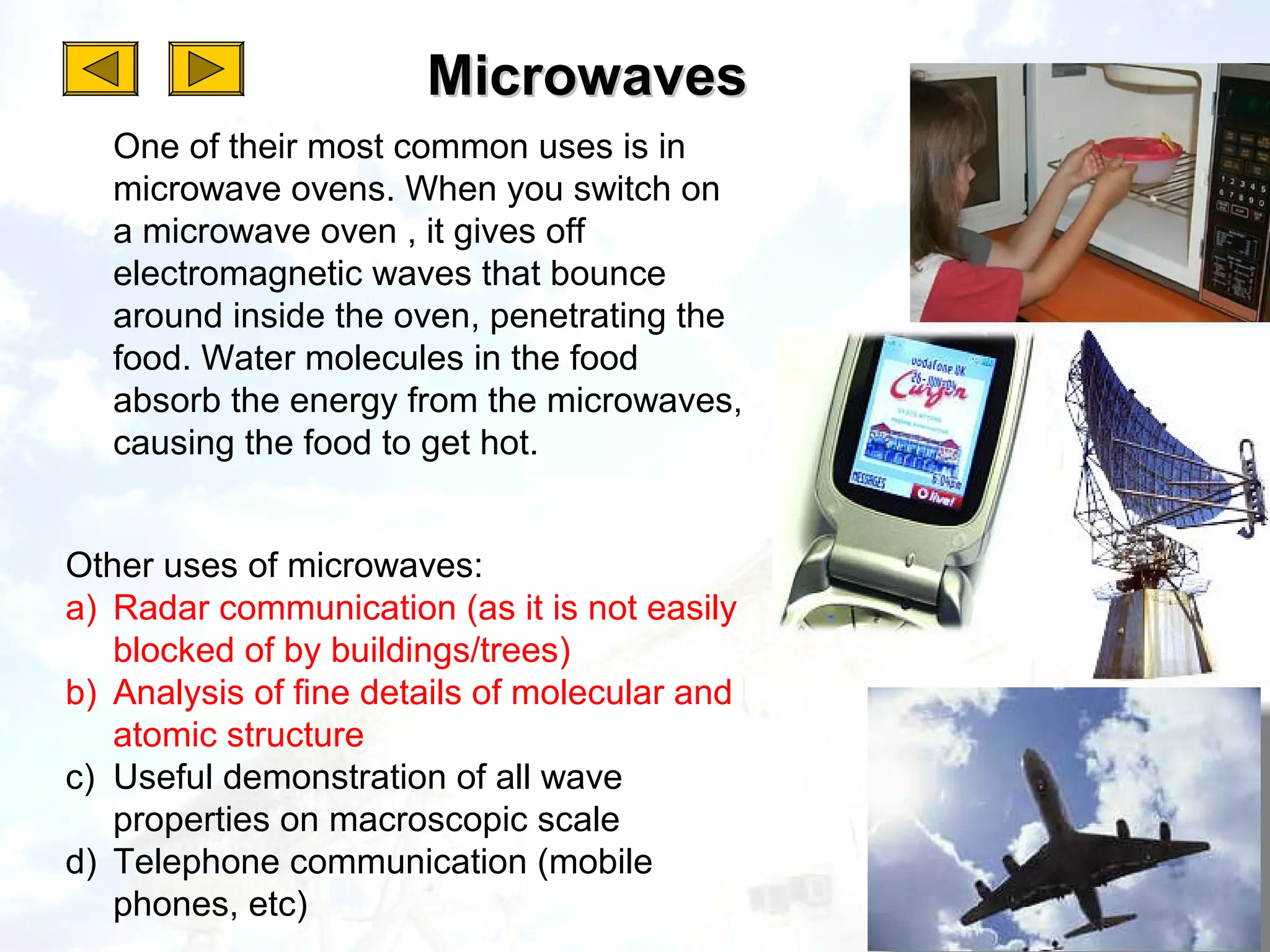
   One of their most common uses is in
   microwave ovens. When you switch on
   a microwave oven , it gives off
   electromagnetic waves that bounce
   around inside the oven, penetrating the
   food. Water molecules in the food
   absorb the energy from the microwaves,
   causing the food to get hot.


Other uses of microwaves:
a) Radar communication (as it is not easily
   blocked of by buildings/trees)
b) Analysis of fine details of molecular and
   atomic structure
c) Useful demonstration of all wave
   properties on macroscopic scale
d) Telephone communication (mobile
   phones, etc)
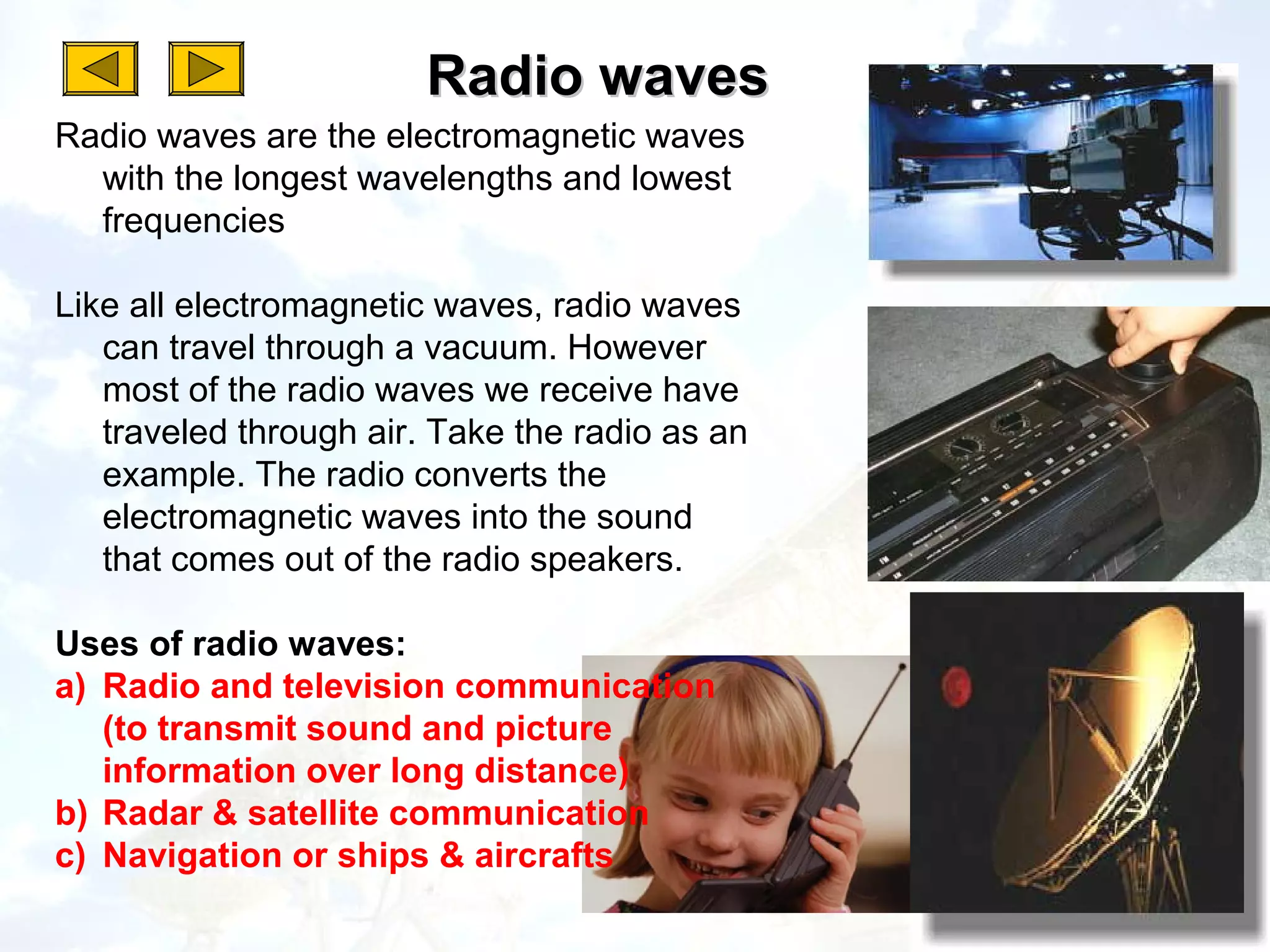
Radio waves
Radio waves are the electromagnetic waves
  with the longest wavelengths and lowest
  frequencies

Like all electromagnetic waves, radio waves
   can travel through a vacuum. However
   most of the radio waves we receive have
   traveled through air. Take the radio as an
   example. The radio converts the
   electromagnetic waves into the sound
   that comes out of the radio speakers.

Uses of radio waves:
a) Radio and television communication
   (to transmit sound and picture
   information over long distance)
b) Radar & satellite communication
c) Navigation or ships & aircrafts
Waves


      Longitudinal Waves                         Transverse Waves

            Sound waves
                                               Electromagnetic Waves

                                                     Classified into
                              Properties
               Comprises of
                                               Electromagnetic Spectrum


Radiowave            Infra-Red             Ultra-Violet                Gamma ray

        Microwave                 Light                   X-ray


                                  Applications
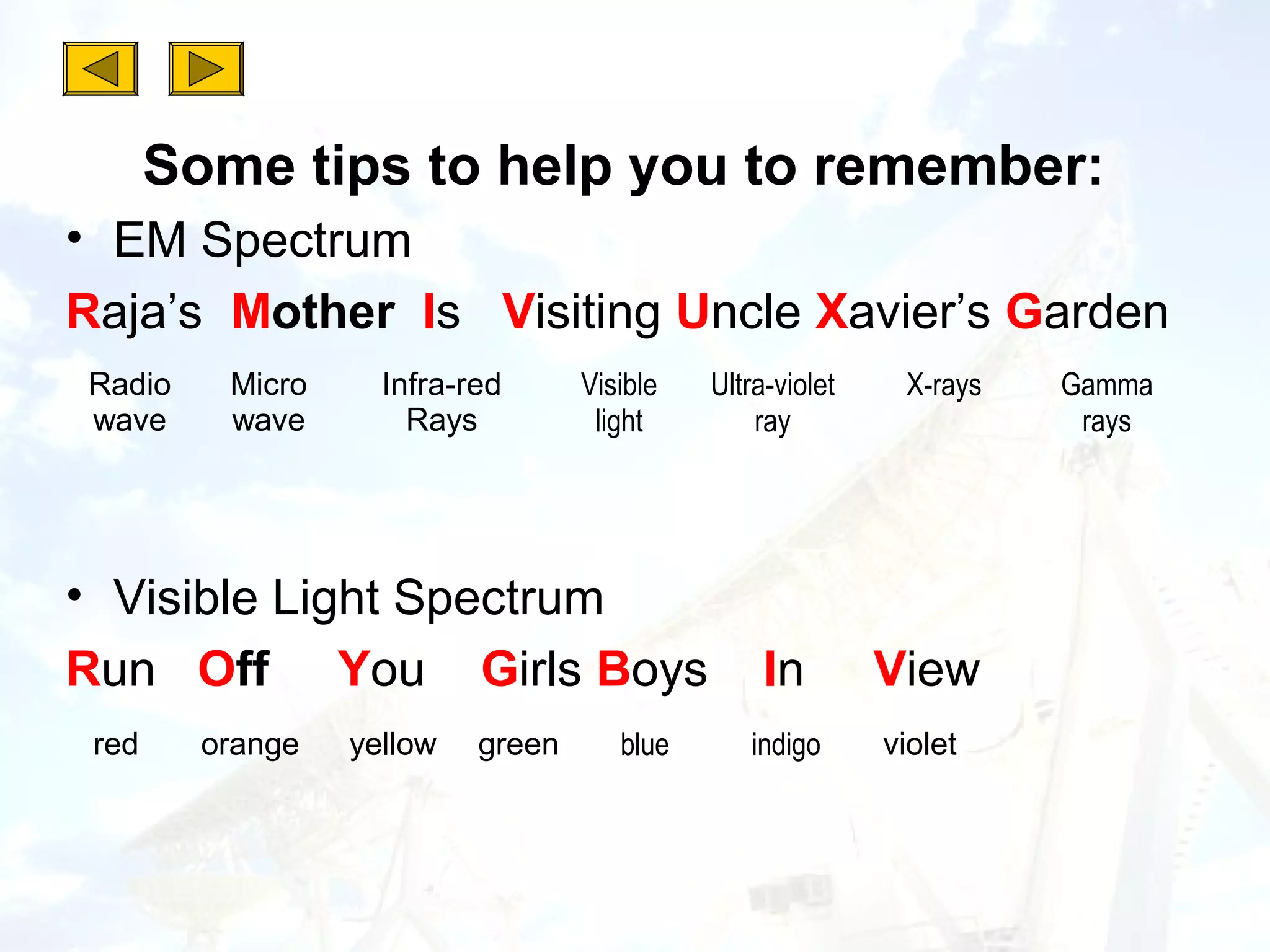
Some tips to help you to remember:
• EM Spectrum
Raja’s Mother Is Visiting Uncle Xavier’s Garden
Radio     Micro     Infra-red      Visible   Ultra-violet    X-rays   Gamma
wave      wave        Rays          light        ray                   rays


• Visible Light Spectrum
Run Off You Girls Boys                            In        View
 red     orange   yellow   green      blue      indigo      violet
Congratulations!
        You’ve completed the
   ELECTROMAGNETIC WAVES lesson


  Please take the quiz when you’re
             ready !
(Remember the Quiz will be closed by Friday, 7 Sept,
                   23.59PM)
  See you soon in Physics Class!

Electromagnetic waves

  • 1.
  • 2.
    Instructions • Duration ofLesson: 60 Min • Read through this powerpoint presentation and attempt the EM wave quiz • You can also find this chapter in your textbook, chapter : The grades of the quiz will be taken into you CA for semester 2, and you can only do it ONCE, so please make sure you understand the content of this unit.
  • 3.
    Introduction Objectives: At the endof the lesson, you will be able to • Describe the main components of the electromagnetic spectrum. • State the properties of ALL EM waves. • Discuss the role of the respective EM waves and some of their applications.
  • 4.
    What are Electromagnetic Waves ? • If you have ever tuned in to listen to a radio, spoken on a handphone, turned on a light, had an X-ray taken, felt the warmth of sun on your skin. • You have experienced electromagnetic wave
  • 5.
    Electromagnetic wave Electric field Produced by Simultaneous vibration Magnetic field Electric field Magnetic field http://www.phy.ntnu.edu.tw/ntnujava/viewtopic.php?t=52
  • 6.
  • 7.
    Hence this isthe complete EM wave spectrum (the waves below in  ascending order of wavelength; descending order of frequency ) Gamma x-rays Ultra-violet Visible Infra- Microwave Radio wave rays ray light red ray Highest f Lowest f Shortest λ Longest λ
  • 8.
    Properties of EMWave 1. All electromagnetic waves are transverse wave
  • 9.
    2. They donot require any medium to travel through (recall: Radiation Infra red is an EM Wave) 3. They travel at the speed of 3x10⁸ ms-1 in vacuum (recall: speed of light  light is also an EM Wave)
  • 10.
    4. They canall be reflected or refracted
  • 11.
    5. They canall be emitted or absorbed by matter
  • 12.
    6. They allobey the wave equation v =f x λ Where v = speed of wave (m/s) f = frequency of wave (Hz) λ = wavelength (m)
  • 13.
    7. Their frequenciesdo not change as they pass from one medium to another. However, both their speed and wavelength will change. v =f x λ
  • 14.
    8. They carryenergy frm one place to another 9. They are all of neutral charge as all of them oscillate with electric and magnetic field perpendicular to each other.
  • 15.
    Overview of EMwaves Waves Longitudinal Waves Transverse Waves Sound waves Electromagnetic Waves Classified into Properties Comprises of Electromagnetic Spectrum Radiowave Infra-Red Ultra-Violet Gamma ray Microwave Light X-ray Applications
  • 16.
    Gamma rays Gamma rayshave the shortest wavelengths and highest frequencies in the EM spectrum. It is generated by : Changes in energy levels in the nucleus Some radioactive substances and certain nuclear reactions produce gamma rays. Because of their great penetrating ability, gamma rays can cause serious illness. However when used in controlled conditions, gamma rays is useful in cancer treatment.
  • 17.
  • 18.
    Both Gamma raysand X- rays can be detected by: a) photographic plates b) ionization chamber c) phosphorescence
  • 19.
    Ultra-violet The main sourceof ultra-violet radiation is sunlight and it is this radiation which gives rise to suntan and also sunburn. Ultra-violet radiation is used in hospitals to sterilize the surgical instruments and operating theatres as it kills bacteria and viruses. UV can be detected by: a) Photographic plates b) Photoelectric cell c) Fluorescence
  • 20.
    Visible Light Visible lightis the part of the EM spectrum which can be detected by the human eye. The visible light has its own spectrum which consist of the 7 colours of light : Red Orange Yellow Green Blue Indigo Violet An example of visible light is the colourful laser light or the light from a firework. Some of the uses of light is in optical fibres in medicine and telecommunications.
  • 21.
    Infra-red waves Heat canbe transferred through infrared radiation. We often think of infra red as being the same thing as 'heat', because it makes our skin feel warm. Most of you might have seen infra-red waves in use during the SARS period. (picture on the top right hand corner). It shows a thermo-detector which is placed outside hospitals/airport to identify the warm and cool parts of a person by analyzing infra-red radiation emitted from the person’s body. And through this we can see if someone is having a fever. Infra red is useful for: - For navigation through fog & haze as it is less easily scattered compared to visible light - Medical treatment : to warm injured muscles/sports injuries
  • 22.
    Microwaves One of their most common uses is in microwave ovens. When you switch on a microwave oven , it gives off electromagnetic waves that bounce around inside the oven, penetrating the food. Water molecules in the food absorb the energy from the microwaves, causing the food to get hot. Other uses of microwaves: a) Radar communication (as it is not easily blocked of by buildings/trees) b) Analysis of fine details of molecular and atomic structure c) Useful demonstration of all wave properties on macroscopic scale d) Telephone communication (mobile phones, etc)
  • 23.
    Radio waves Radio wavesare the electromagnetic waves with the longest wavelengths and lowest frequencies Like all electromagnetic waves, radio waves can travel through a vacuum. However most of the radio waves we receive have traveled through air. Take the radio as an example. The radio converts the electromagnetic waves into the sound that comes out of the radio speakers. Uses of radio waves: a) Radio and television communication (to transmit sound and picture information over long distance) b) Radar & satellite communication c) Navigation or ships & aircrafts
  • 24.
    Waves Longitudinal Waves Transverse Waves Sound waves Electromagnetic Waves Classified into Properties Comprises of Electromagnetic Spectrum Radiowave Infra-Red Ultra-Violet Gamma ray Microwave Light X-ray Applications
  • 25.
    Some tips tohelp you to remember: • EM Spectrum Raja’s Mother Is Visiting Uncle Xavier’s Garden Radio Micro Infra-red Visible Ultra-violet X-rays Gamma wave wave Rays light ray rays • Visible Light Spectrum Run Off You Girls Boys In View red orange yellow green blue indigo violet
  • 26.
    Congratulations! You’ve completed the ELECTROMAGNETIC WAVES lesson Please take the quiz when you’re ready ! (Remember the Quiz will be closed by Friday, 7 Sept, 23.59PM) See you soon in Physics Class!