DR.MAHESWARI JAIKUMAR
maheswarijaikumar2103@gmail.com
DEFINITION
• The electrical resistance of a circuit
component or device is defined as
the ratio of the voltage applied to
the electric current which flows
through it:
• If the resistance is constant over a
considerable range of voltage, then
Ohm's law, I = V/R, can be used to
predict the behavior of the material.
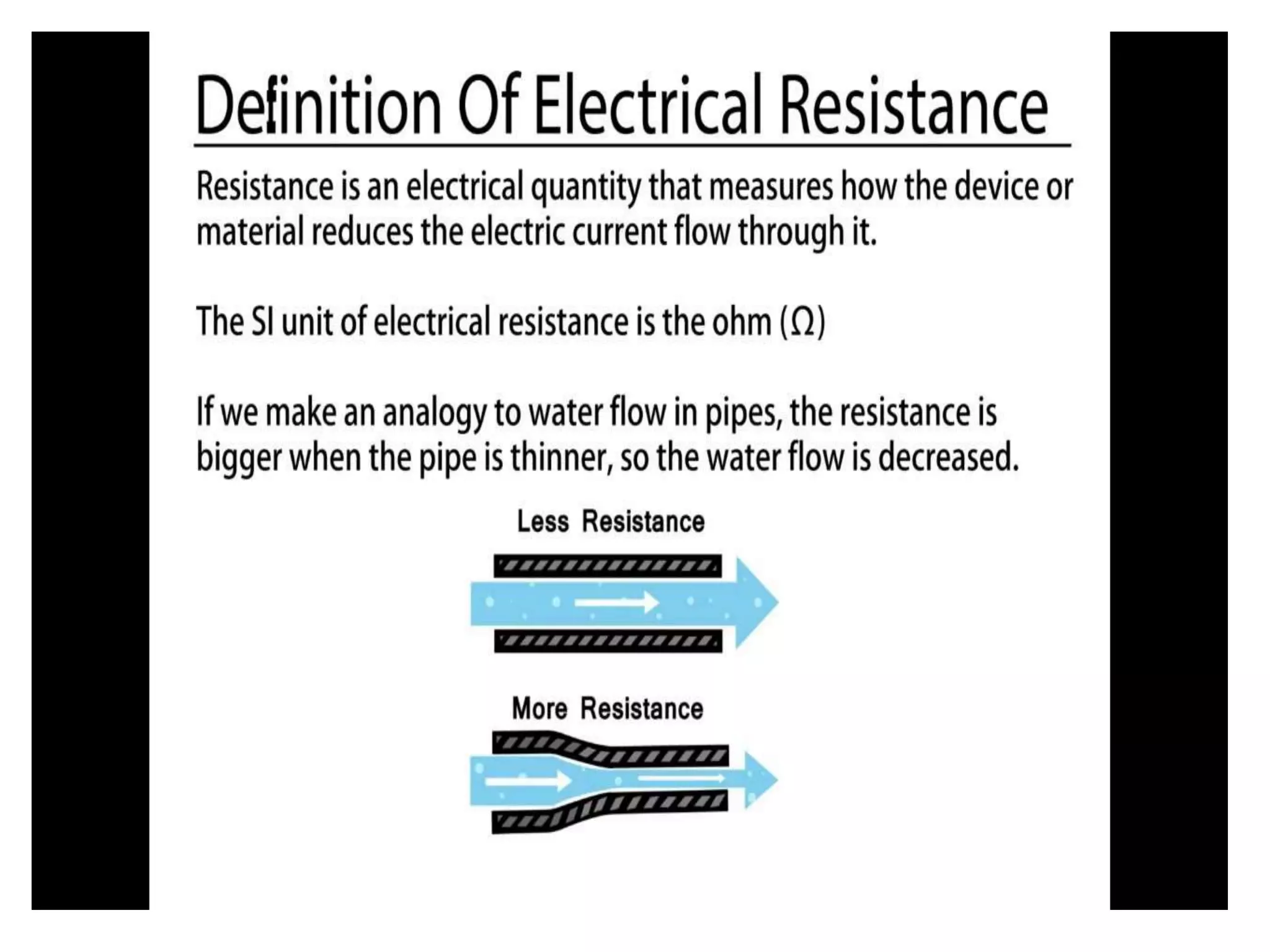
• Resistance is a measure of the
opposition to current flow in an
electrical circuit.
• Resistance is measured in ohms,
symbolized by the Greek letter
omega (Ω). ... Conductors: Materials
that offer very
little resistance where electrons can
move easily.
OHM’s LAW & RESISTANCE
• Ohm's law states that the voltage or
potential difference between two
points is directly proportional to the
current or electricity passing
through the resistance, and directly
proportional to the resistance of the
circuit. The formula for Ohm's law is
V=IR.
RESISTANCE EQUATION
FACTORS INFLUENCING
RESISTANCE
• The resistance of an object depends in
large part on the material it is made of.
• Objects made of electrical
insulators like rubber tend to have very
high resistance and low conductivity,
while objects made of electrical
conductors like metals tend to have very
low resistance and high conductivity.
• This relationship is quantified
by resistivity or conductivity.
• The nature of a material is not the
only factor in resistance and
conductance, it also depends on the
size and shape of an object because
these properties are extensive
rather than intensive.
• For example, a wire's resistance is
higher if it is long and thin, and
lower if it is short and thick.
• All objects resist electrical current,
except for superconductors, which
have a resistance of zero.
MEASUREMENT OF RESISTANCE
An instrument for measuring resistance
is called an ohmmeter.
Simple ohmmeters cannot measure low
resistances accurately because the
resistance of their measuring leads
causes a voltage drop that interferes
with the measurement, so more
accurate devices use four-terminal
sensing.
SUMMARY OF KEY POINTS
No PROPERTY FACT
1 Definition
Resistance is the physical property of a substance
because of which it opposes the flow of current i.e.
electrons.
2 Proportionality
Resistance is directly proportional to the length and
temperature while it is inversely proportional to the
cross-sectional area of the material.
3 Symbol R
4 Formula
R = V/I or,
R = ρ(L/A)
V = Voltage, I = Current, ρ = Resistivity
5 SI Units The SI unit of resistance is Ohms
6 Applications The property of resistance is used in several places
like heaters, fuses, sensors, etc.
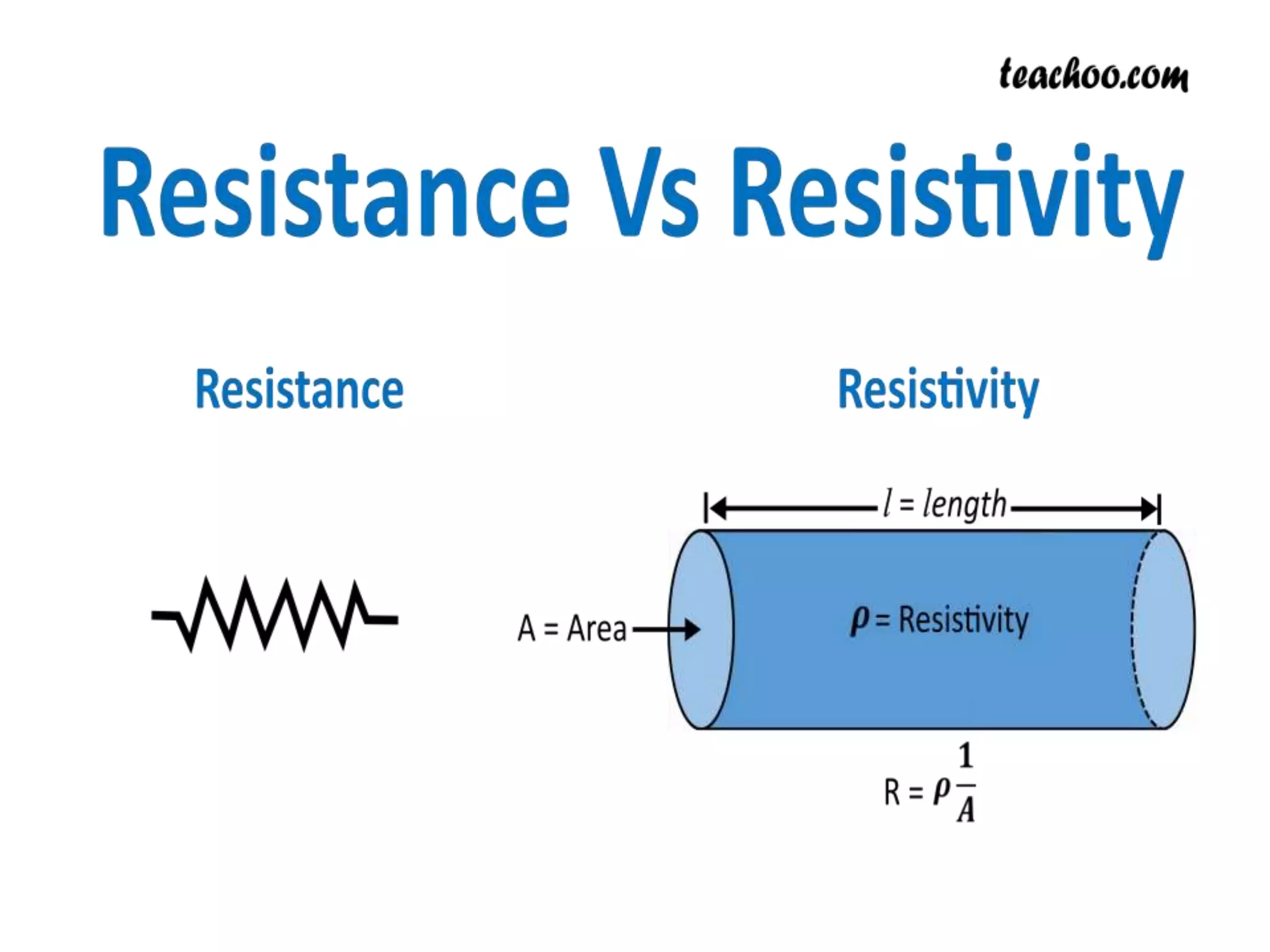
RESISTIVITY (ρ)
• Resistivity is the physical
property of a particular
substance which is having
particular dimensions.
• Resistivity is only proportional to
the nature and temperature of
the particular material.
FORMULA TO CALCULATE
RESISTIVITY
ρ = (R×A)/L
R = Resistance
L= Length
A = Cross-sectional area
• The SI unit of resistivity is Ohms-meter.
DIFFERENCE
• One of the major difference
between the resistance and
the resistivity of the material is that
the resistance opposes the flow of
free electrons whereas
the resistivity is the property of the
material which defines
the resistance of the material having
specific dimension.
THANK YOU

ELECTRICAL RESISTANCE

  • 1.
  • 3.
    DEFINITION • The electricalresistance of a circuit component or device is defined as the ratio of the voltage applied to the electric current which flows through it: • If the resistance is constant over a considerable range of voltage, then Ohm's law, I = V/R, can be used to predict the behavior of the material.
  • 4.
    • Resistance isa measure of the opposition to current flow in an electrical circuit. • Resistance is measured in ohms, symbolized by the Greek letter omega (Ω). ... Conductors: Materials that offer very little resistance where electrons can move easily.
  • 6.
    OHM’s LAW &RESISTANCE • Ohm's law states that the voltage or potential difference between two points is directly proportional to the current or electricity passing through the resistance, and directly proportional to the resistance of the circuit. The formula for Ohm's law is V=IR.
  • 7.
  • 8.
    FACTORS INFLUENCING RESISTANCE • Theresistance of an object depends in large part on the material it is made of. • Objects made of electrical insulators like rubber tend to have very high resistance and low conductivity, while objects made of electrical conductors like metals tend to have very low resistance and high conductivity.
  • 9.
    • This relationshipis quantified by resistivity or conductivity. • The nature of a material is not the only factor in resistance and conductance, it also depends on the size and shape of an object because these properties are extensive rather than intensive.
  • 11.
    • For example,a wire's resistance is higher if it is long and thin, and lower if it is short and thick. • All objects resist electrical current, except for superconductors, which have a resistance of zero.
  • 12.
    MEASUREMENT OF RESISTANCE Aninstrument for measuring resistance is called an ohmmeter. Simple ohmmeters cannot measure low resistances accurately because the resistance of their measuring leads causes a voltage drop that interferes with the measurement, so more accurate devices use four-terminal sensing.
  • 13.
    SUMMARY OF KEYPOINTS No PROPERTY FACT 1 Definition Resistance is the physical property of a substance because of which it opposes the flow of current i.e. electrons. 2 Proportionality Resistance is directly proportional to the length and temperature while it is inversely proportional to the cross-sectional area of the material. 3 Symbol R 4 Formula R = V/I or, R = ρ(L/A) V = Voltage, I = Current, ρ = Resistivity 5 SI Units The SI unit of resistance is Ohms 6 Applications The property of resistance is used in several places like heaters, fuses, sensors, etc.
  • 14.
    RESISTIVITY (ρ) • Resistivityis the physical property of a particular substance which is having particular dimensions. • Resistivity is only proportional to the nature and temperature of the particular material.
  • 15.
    FORMULA TO CALCULATE RESISTIVITY ρ= (R×A)/L R = Resistance L= Length A = Cross-sectional area • The SI unit of resistivity is Ohms-meter.
  • 17.
    DIFFERENCE • One ofthe major difference between the resistance and the resistivity of the material is that the resistance opposes the flow of free electrons whereas the resistivity is the property of the material which defines the resistance of the material having specific dimension.
  • 18.