Using Graphic Organizers in the Classroom By Jennifer Behr
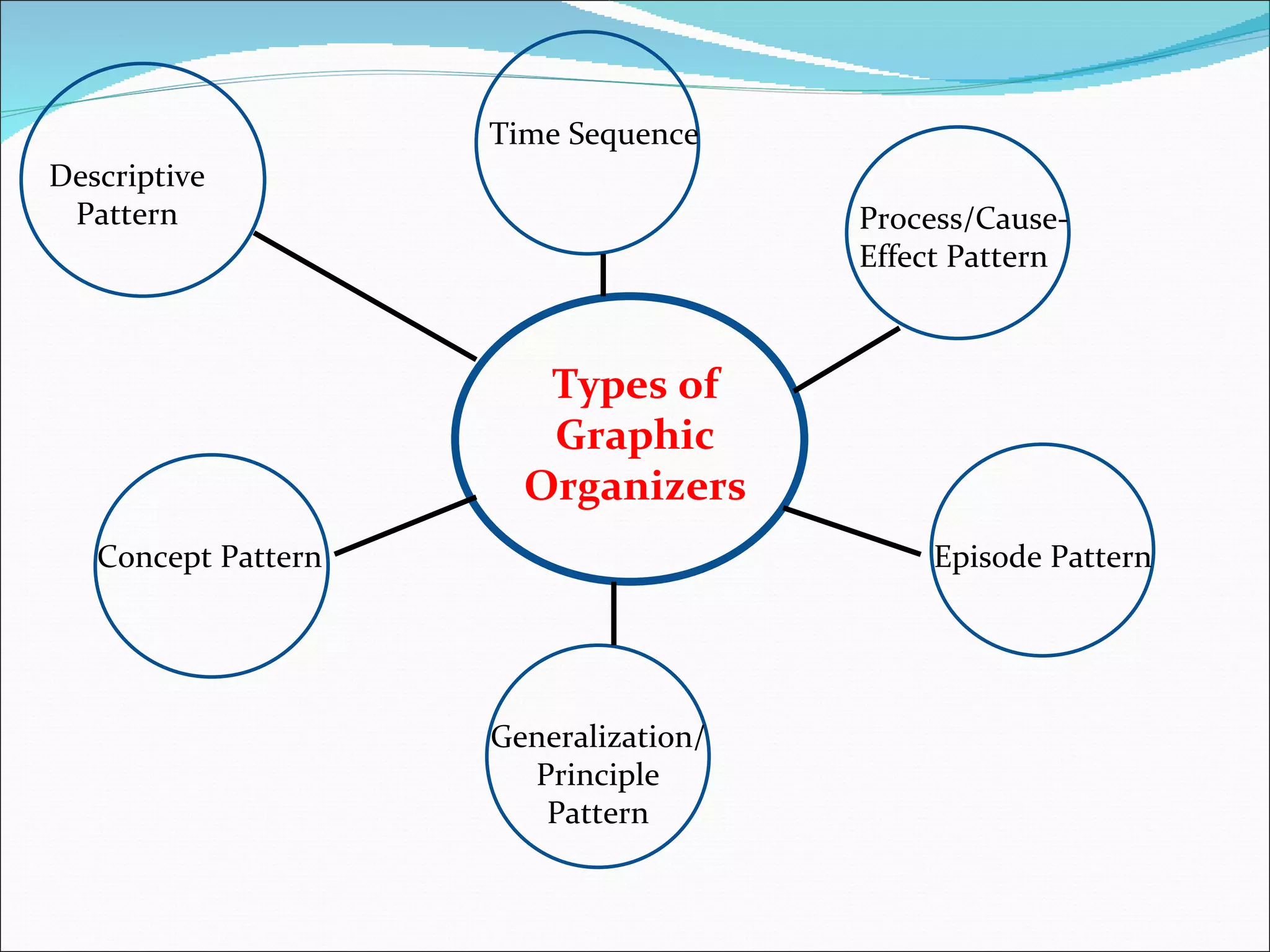
Types of Graphic Organizers Descriptive Pattern Time Sequence Process/Cause-Effect Pattern Episode Pattern Generalization/Principle Pattern Concept Pattern
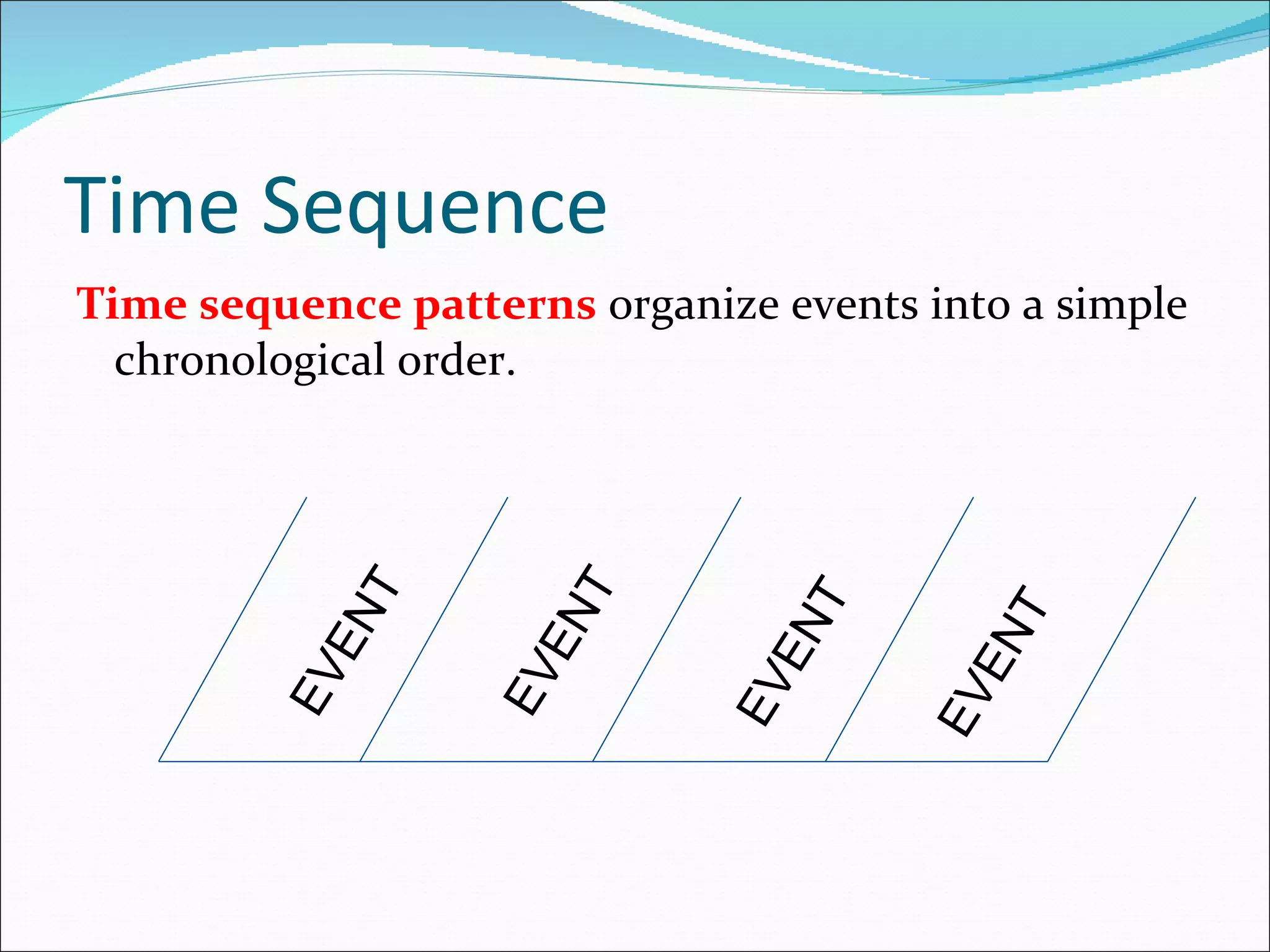
Time Sequence Time sequence patterns  organize events into a simple chronological order. EVENT EVENT EVENT EVENT
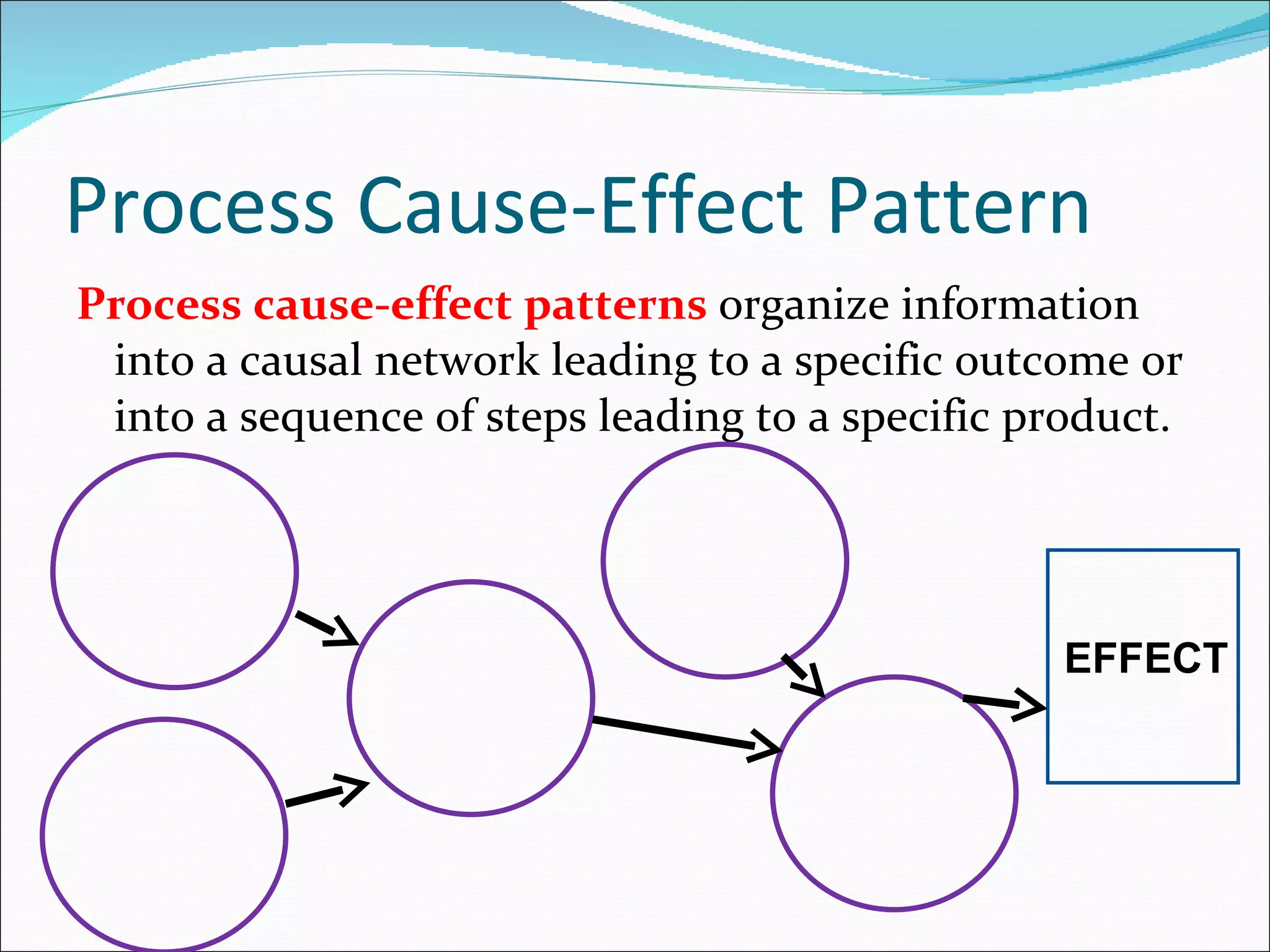
Process Cause-Effect Pattern Process cause-effect patterns  organize information into a causal network leading to a specific outcome or into a sequence of steps leading to a specific product. EFFECT
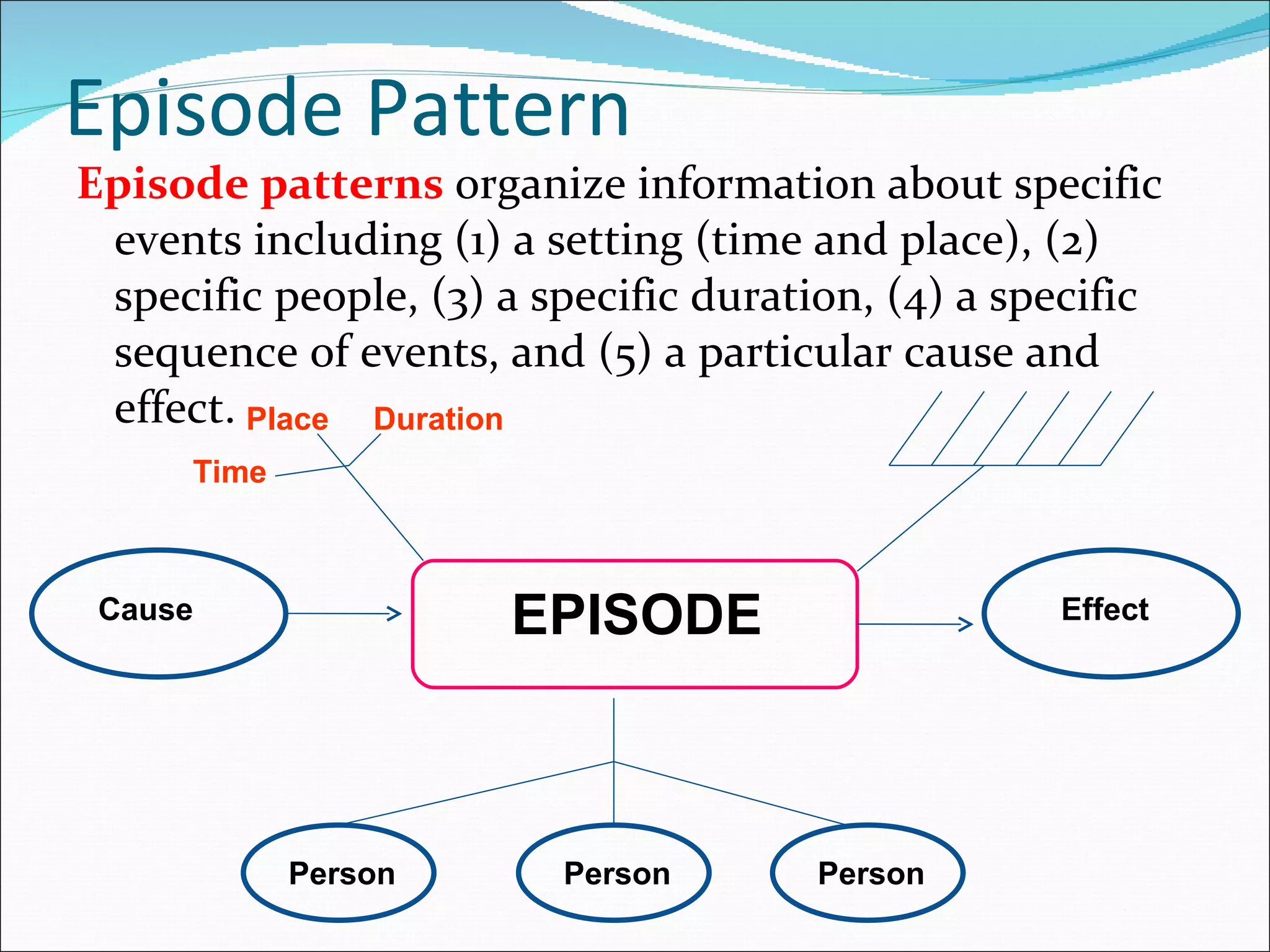
Episode Pattern Episode patterns  organize information about specific events including (1) a setting (time and place), (2) specific people, (3) a specific duration, (4) a specific sequence of events, and (5) a particular cause and effect. Duration Time Place Cause Effect Person Person Person EPISODE
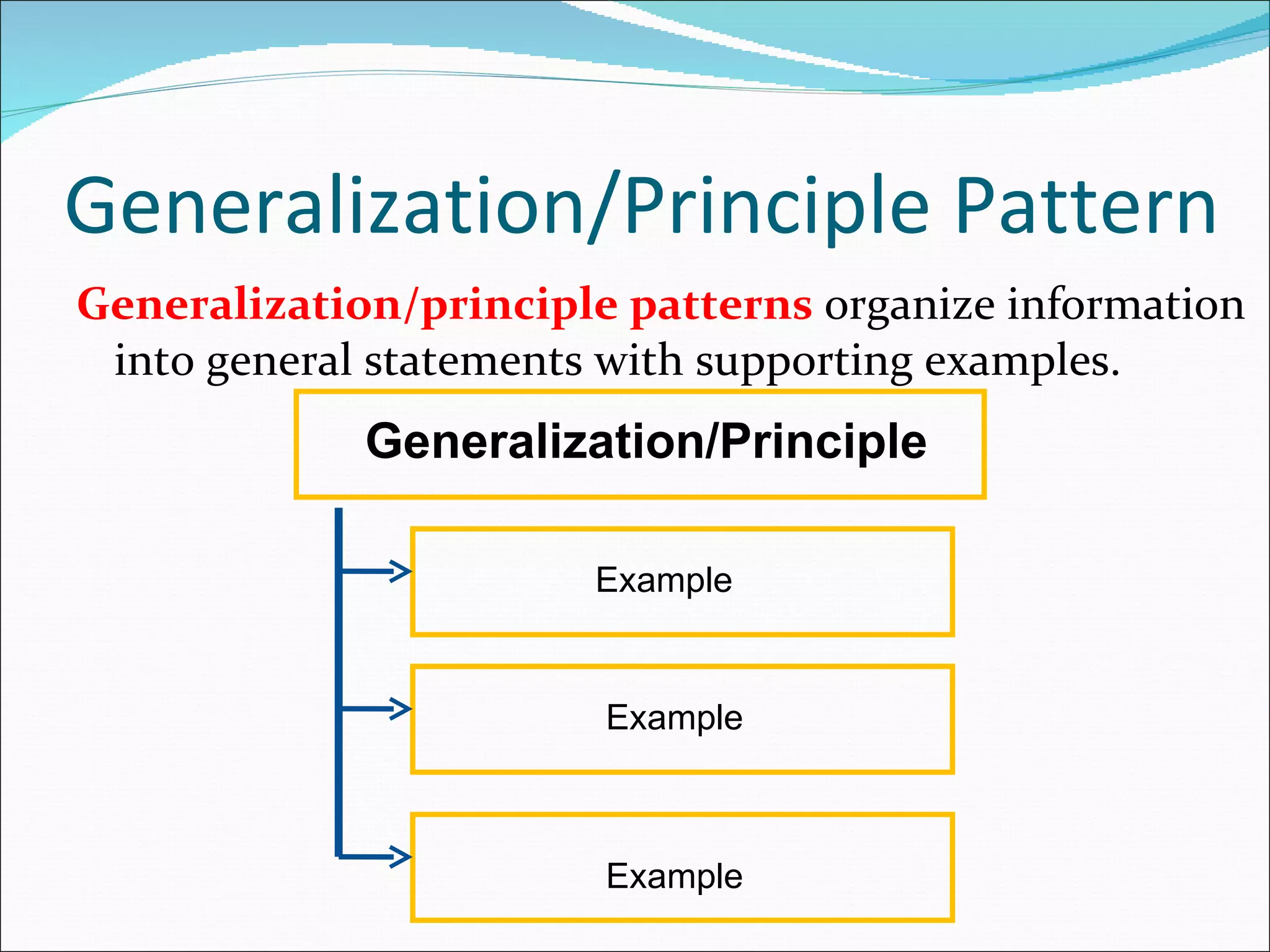
Generalization/Principle Pattern Generalization/principle patterns  organize information into general statements with supporting examples. Generalization/Principle Example Example Example
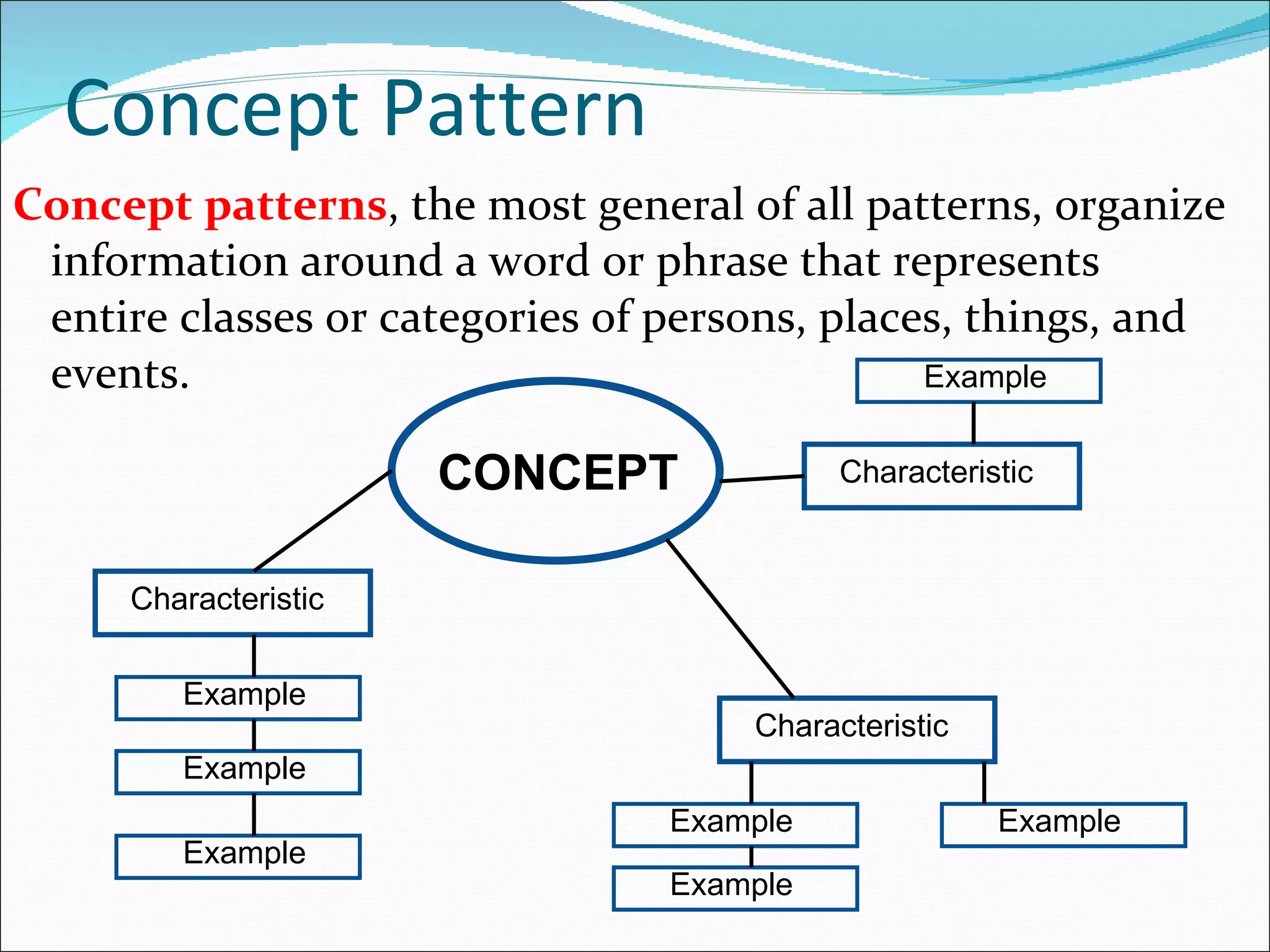
Concept Pattern Concept patterns , the most general of all patterns, organize information around a word or phrase that represents entire classes or categories of persons, places, things, and events. Characteristic Characteristic Characteristic Example Example Example Example Example Example Example CONCEPT
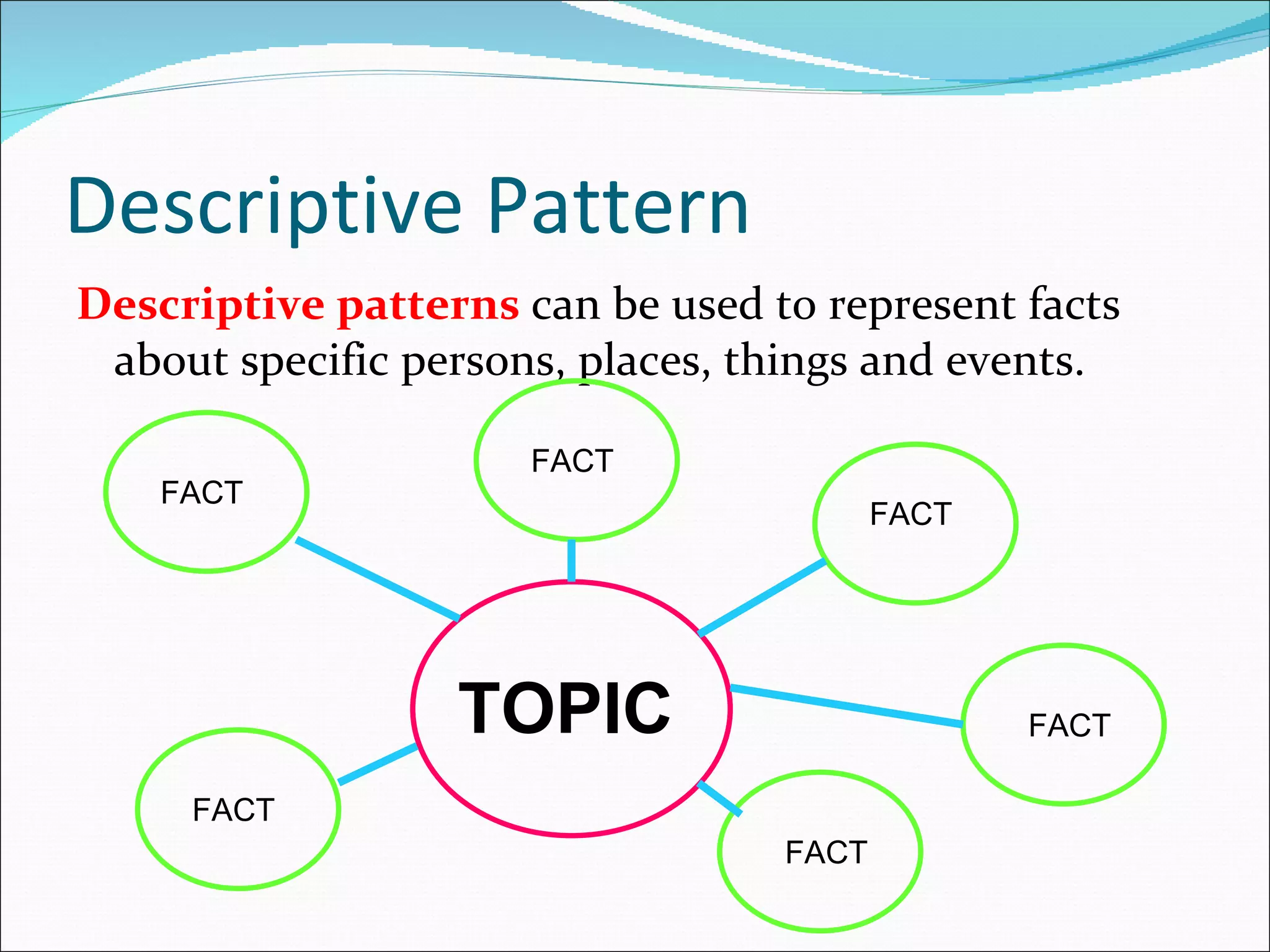
Descriptive Pattern Descriptive patterns  can be used to represent facts about specific persons, places, things and events. TOPIC FACT FACT FACT FACT FACT FACT
Citations Marzano, R., Pickering , D., & Pollock, J. (2001).  Classroom instruction that works . Alexandria, VA: McREL.
Additional Websites http://www.enchantedlearning.com/graphicorganizers/ http://www.vrml.k12.la.us/cc/vp_gle/2nd/more/graphic_organizers.htm http://www.eduplace.com/graphicorganizer/

Edu 513 Nonlinguistic Representations

  • 1.
    Using Graphic Organizersin the Classroom By Jennifer Behr
  • 2.
    Types of GraphicOrganizers Descriptive Pattern Time Sequence Process/Cause-Effect Pattern Episode Pattern Generalization/Principle Pattern Concept Pattern
  • 3.
    Time Sequence Timesequence patterns organize events into a simple chronological order. EVENT EVENT EVENT EVENT
  • 4.
    Process Cause-Effect PatternProcess cause-effect patterns organize information into a causal network leading to a specific outcome or into a sequence of steps leading to a specific product. EFFECT
  • 5.
    Episode Pattern Episodepatterns organize information about specific events including (1) a setting (time and place), (2) specific people, (3) a specific duration, (4) a specific sequence of events, and (5) a particular cause and effect. Duration Time Place Cause Effect Person Person Person EPISODE
  • 6.
    Generalization/Principle Pattern Generalization/principlepatterns organize information into general statements with supporting examples. Generalization/Principle Example Example Example
  • 7.
    Concept Pattern Conceptpatterns , the most general of all patterns, organize information around a word or phrase that represents entire classes or categories of persons, places, things, and events. Characteristic Characteristic Characteristic Example Example Example Example Example Example Example CONCEPT
  • 8.
    Descriptive Pattern Descriptivepatterns can be used to represent facts about specific persons, places, things and events. TOPIC FACT FACT FACT FACT FACT FACT
  • 9.
    Citations Marzano, R.,Pickering , D., & Pollock, J. (2001). Classroom instruction that works . Alexandria, VA: McREL.
  • 10.
    Additional Websites http://www.enchantedlearning.com/graphicorganizers/http://www.vrml.k12.la.us/cc/vp_gle/2nd/more/graphic_organizers.htm http://www.eduplace.com/graphicorganizer/