State Standards 7.7
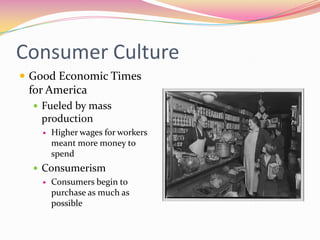
Consumer Culture
ď‚— Good Economic Times
 for America
  ď‚— Fueled by mass
    production
    ď‚—   Higher wages for workers
        meant more money to
        spend
  ď‚— Consumerism
    ď‚— Consumers begin to
      purchase as much as
      possible
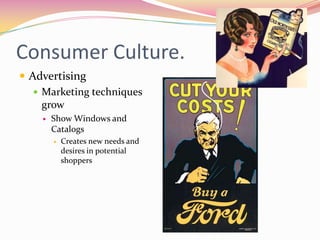
Consumer Culture.
ď‚— Advertising
   ď‚— Marketing techniques
     grow
    ď‚—   Show Windows and
        Catalogs
        ď‚—   Creates new needs and
            desires in potential
            shoppers
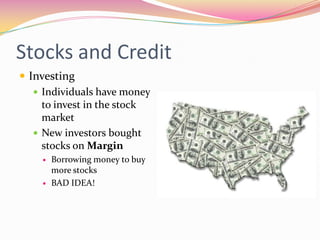
Stocks and Credit
ď‚— Investing
   ď‚— Individuals have money
     to invest in the stock
     market
   ď‚— New investors bought
     stocks on Margin
    ď‚—   Borrowing money to buy
        more stocks
    ď‚—   BAD IDEA!
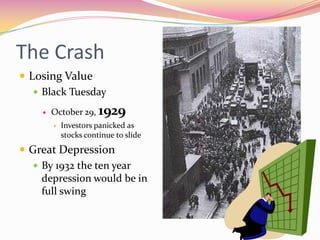
The Crash
ď‚— Losing Value
   ď‚— Black Tuesday

    ď‚—   October 29,    1929
        ď‚—   Investors panicked as
            stocks continue to slide
ď‚— Great Depression
   ď‚— By 1932 the ten year
     depression would be in
     full swing
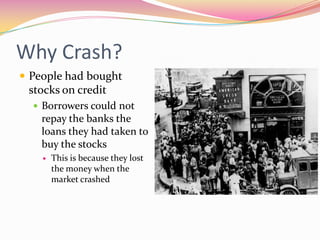
Why Crash?
ď‚— People had bought
 stocks on credit
  ď‚— Borrowers could not
    repay the banks the
    loans they had taken to
    buy the stocks
    ď‚—   This is because they lost
        the money when the
        market crashed
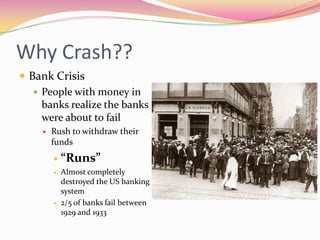
Why Crash??
ď‚— Bank Crisis
   ď‚— People with money in
     banks realize the banks
     were about to fail
     ď‚—   Rush to withdraw their
         funds
            “Runs”
         ď‚—   Almost completely
             destroyed the US banking
             system
         ď‚—   2/5 of banks fail between
             1929 and 1933
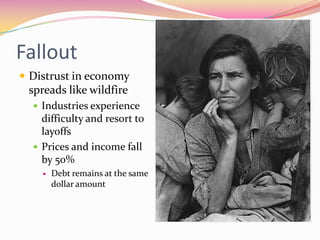
Fallout
ď‚— Distrust in economy
 spreads like wildfire
  ď‚— Industries experience
    difficulty and resort to
    layoffs
  ď‚— Prices and income fall
    by 50%
    ď‚—   Debt remains at the same
        dollar amount
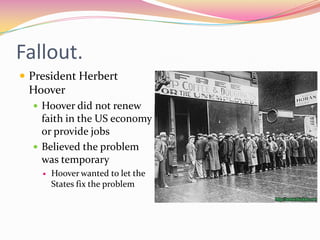
Fallout.
ď‚— President Herbert
 Hoover
  ď‚— Hoover did not renew
    faith in the US economy
    or provide jobs
  ď‚— Believed the problem
    was temporary
    ď‚—   Hoover wanted to let the
        States fix the problem
Fallout..
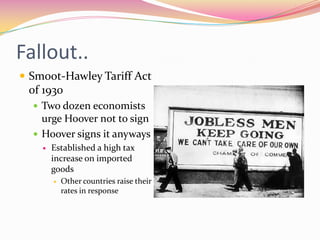
ď‚— Smoot-Hawley Tariff Act
 of 1930
  ď‚— Two dozen economists
    urge Hoover not to sign
  ď‚— Hoover signs it anyways
    ď‚—   Established a high tax
        increase on imported
        goods
        ď‚—   Other countries raise their
            rates in response
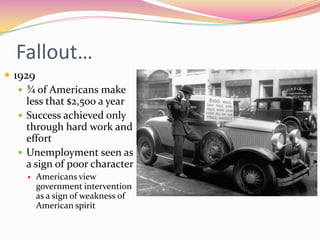
Fallout…
ď‚— 1929
   ď‚— Âľ of Americans make
     less that $2,500 a year
   ď‚— Success achieved only
     through hard work and
     effort
   ď‚— Unemployment seen as
     a sign of poor character
     ď‚—   Americans view
         government intervention
         as a sign of weakness of
         American spirit
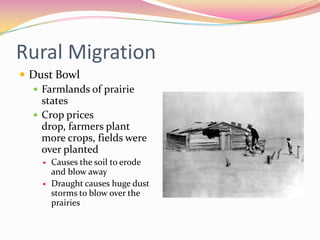
Rural Migration
ď‚— Dust Bowl
  ď‚— Farmlands of prairie
    states
  ď‚— Crop prices
    drop, farmers plant
    more crops, fields were
    over planted
    ď‚—   Causes the soil to erode
        and blow away
    ď‚—   Draught causes huge dust
        storms to blow over the
        prairies
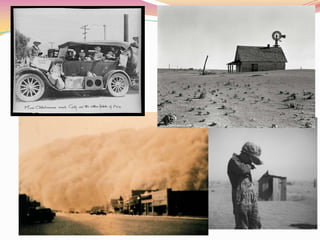
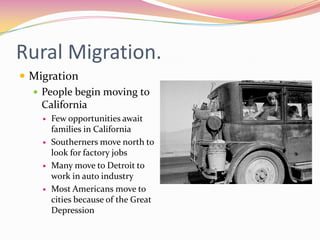
Rural Migration.
ď‚— Migration
  ď‚— People begin moving to
    California
    ď‚—   Few opportunities await
        families in California
    ď‚—   Southerners move north to
        look for factory jobs
    ď‚—   Many move to Detroit to
        work in auto industry
    ď‚—   Most Americans move to
        cities because of the Great
        Depression

Economic collapse

  • 1.
  • 2.
    Consumer Culture ď‚— GoodEconomic Times for America ď‚— Fueled by mass production ď‚— Higher wages for workers meant more money to spend ď‚— Consumerism ď‚— Consumers begin to purchase as much as possible
  • 3.
    Consumer Culture. ď‚— Advertising ď‚— Marketing techniques grow ď‚— Show Windows and Catalogs ď‚— Creates new needs and desires in potential shoppers
  • 4.
    Stocks and Credit ď‚—Investing ď‚— Individuals have money to invest in the stock market ď‚— New investors bought stocks on Margin ď‚— Borrowing money to buy more stocks ď‚— BAD IDEA!
  • 5.
    The Crash ď‚— LosingValue ď‚— Black Tuesday ď‚— October 29, 1929 ď‚— Investors panicked as stocks continue to slide ď‚— Great Depression ď‚— By 1932 the ten year depression would be in full swing
  • 6.
    Why Crash? ď‚— Peoplehad bought stocks on credit ď‚— Borrowers could not repay the banks the loans they had taken to buy the stocks ď‚— This is because they lost the money when the market crashed
  • 7.
    Why Crash??  BankCrisis  People with money in banks realize the banks were about to fail  Rush to withdraw their funds  “Runs”  Almost completely destroyed the US banking system  2/5 of banks fail between 1929 and 1933
  • 8.
    Fallout ď‚— Distrust ineconomy spreads like wildfire ď‚— Industries experience difficulty and resort to layoffs ď‚— Prices and income fall by 50% ď‚— Debt remains at the same dollar amount
  • 9.
    Fallout. ď‚— President Herbert Hoover ď‚— Hoover did not renew faith in the US economy or provide jobs ď‚— Believed the problem was temporary ď‚— Hoover wanted to let the States fix the problem
  • 10.
    Fallout.. ď‚— Smoot-Hawley TariffAct of 1930 ď‚— Two dozen economists urge Hoover not to sign ď‚— Hoover signs it anyways ď‚— Established a high tax increase on imported goods ď‚— Other countries raise their rates in response
  • 11.
    Fallout…  1929  ¾ of Americans make less that $2,500 a year  Success achieved only through hard work and effort  Unemployment seen as a sign of poor character  Americans view government intervention as a sign of weakness of American spirit
  • 12.
    Rural Migration ď‚— DustBowl ď‚— Farmlands of prairie states ď‚— Crop prices drop, farmers plant more crops, fields were over planted ď‚— Causes the soil to erode and blow away ď‚— Draught causes huge dust storms to blow over the prairies
  • 14.
    Rural Migration. ď‚— Migration ď‚— People begin moving to California ď‚— Few opportunities await families in California ď‚— Southerners move north to look for factory jobs ď‚— Many move to Detroit to work in auto industry ď‚— Most Americans move to cities because of the Great Depression