(eBook PDF) MInformation Systems 4th Edition
download
https://ebooksecure.com/product/ebook-pdf-m-information-
systems-4th-edition/
Download more ebook from https://ebooksecure.com
2.
We believe theseproducts will be a great fit for you. Click
the link to download now, or visit ebooksecure.com
to discover even more!
M. Information Systems 4th Edition - eBook PDF
https://ebooksecure.com/download/m-information-systems-ebook-pdf/
(Original PDF) M: Information Systems 4th Edition by
Paige Baltzan
http://ebooksecure.com/product/original-pdf-m-information-
systems-4th-edition-by-paige-baltzan/
(eBook PDF) M Information Systems 5th Edition
http://ebooksecure.com/product/ebook-pdf-m-information-
systems-5th-edition/
(eBook PDF) M: Information Systems 6th Edition
http://ebooksecure.com/product/ebook-pdf-m-information-
systems-6th-edition/
3.
Principles of informationsystems 14th Edition Ralph M.
Stair - eBook PDF
https://ebooksecure.com/download/principles-of-information-
systems-ebook-pdf-2/
(eBook PDF) Introduction to Information Systems, 4th
Edition
http://ebooksecure.com/product/ebook-pdf-introduction-to-
information-systems-4th-edition-2/
(eBook PDF) Business Driven Information Systems 4th
Canadian Edition
http://ebooksecure.com/product/ebook-pdf-business-driven-
information-systems-4th-canadian-edition/
(Original PDF) The Strategic Management of Information
Systems 4th
http://ebooksecure.com/product/original-pdf-the-strategic-
management-of-information-systems-4th/
(eBook PDF) Accounting Information Systems
Understanding Business Processes 4th
http://ebooksecure.com/product/ebook-pdf-accounting-information-
systems-understanding-business-processes-4th/
5.
Contents | vii
ManagerialBusiness Processes—Streamlining 55
Strategic Business Processes—Reengineering 57
MY NOT TO-DO LIST You Accidently Sent Your
Confidential Email to Your Significant Other to Your
Grandmother—Ouch! 59
SHOW ME THE MONEY Streamlining Your Email 59
CHAPTER 3
EBUSINESS: ELECTRONIC
BUSINESS VALUE 63
SECTION 3.1 Web 1.0: Ebusiness 64
DISRUPTIVE TECHNOLOGIES 64
Disruptive versus Sustaining Technology 64
The Internet and World Wide Web—The Ultimate Business
Disruptors 65
DUE DILIGENCE Unethical Disruption 65
WEB 1.0: THE CATALYST FOR EBUSINESS 65
Web 1.0: The Catalyst for Ebusiness 65
Expanding Global Reach 67
Opening New Markets 68
Reducing Costs 68
Improving Effectiveness 69
SHOW ME THE MONEY Nasty-Gal: 8 Years Old and
Worth $100 Million 70
THE FOUR EBUSINESS MODELS 70
Business-to-Business (B2B) 71
Business-to-Consumer (B2C) 71
Consumer-to-Business (C2B) 72
Consumer-to-Consumer (C2C) 72
Ebusiness Forms and Revenue-Generating Strategies 72
LIVING THE DREAM Crazy over Access 73
EBUSINESS TOOLS FOR CONNECTING AND
COMMUNICATING 74
Email 74
Instant Messaging 75
Podcasting 75
Videoconferencing 75
Web Conferencing 76
Content Management Systems 76
THE CHALLENGES OF EBUSINESS 76
Identifying Limited Market Segments 76
Managing Consumer Trust 76
BUSTED Virtual Abandonment 77
Ensuring Consumer Protection 77
Adhering to Taxation Rules 77
SECTION 3.2 Web 2.0: Business 2.0 77
WEB 2.0: ADVANTAGES OF BUSINESS 2.0 77
Content Sharing through Open Sourcing 78
User-Contributed Content 78
Collaboration inside the Organization 79
SHOW ME THE MONEY Analyzing Websites 79
Collaboration outside the Organization 80
NETWORKING COMMUNITIES WITH BUSINESS 2.0 80
MY NOT TO-DO LIST Social Not Working 81
Social Tagging 82
MY NOT TO-DO LIST Viral Foxes and Devil
Babies 83
DUE DILIGENCE Anti-Social Networking 83
BUSINESS 2.0 TOOLS FOR COLLABORATING 84
Blogs 84
Wikis 84
FYI Don’t You Just Love
Mötley Crüe? 85
Mashups 85
LIVING THE DREAM Kiva Collaboration` 86
THE CHALLENGES OF BUSINESS 2.0 86
Technology Dependence 86
Information Vandalism 86
FYI Using Hashtags 87
Violations of Copyright and Plagiarism 87
WEB 3.0: DEFINING THE NEXT GENERATION OF ONLINE
BUSINESS OPPORTUNITIES 87
BUSTED Connectivity Break-Down 87
Egovernment: The Government Moves Online 88
Mbusiness: Supporting Anywhere Business 89
CHAPTER 4 ETHICS + INFORMATION
SECURITY: MIS BUSINESS
CONCERNS 91
SECTION 4.1 Ethics 92
INFORMATION ETHICS 92
Information Does Not Have Ethics; People Do 93
BUSTED Information—Does It Have Ethics? 94
MY NOT TO-DO LIST Do You Really Want
to Risk It? 95
DEVELOPING INFORMATION MANAGEMENT POLICIES 95
Ethical Computer Use Policy 95
Information Privacy Policy 96
DUE DILIGENCE The Right to Be Forgotten 97
Acceptable Use Policy 97
SHOW ME THE MONEY 15 Million Identity Theft
Victims 97
Email Privacy Policy 98
FYI Monitoring Employees 99
Social Media Policy 99
Workplace Monitoring Policy 100
BUSTED I’m Being Fired for Smoking, but I Was at
Home and It Was Saturday 101
SECTION 4.2 Information Security 101
PROTECTING INTELLECTUAL ASSETS 101
Security Threats Caused by Hackers and Viruses 103
SHOW ME THE MONEY Beyond Passwords 104
THE FIRST LINE OF DEFENSE–PEOPLE 105
MY NOT TO-DO LIST Lifelock: Keeping Your Identity
Safe 106
THE SECOND LINE OF DEFENSE–TECHNOLOGY 106
People: Authentication and Authorization 106
6.
viii | Contents
DUEDILIGENCE Doodling Passwords 109
Data: Prevention and Resistance 109
SHOW ME THE MONEY Hackers Love Phish,
and I Don’t Mean the Band 110
Attack: Detection and Response 111
module two TECHNICAL
FOUNDATIONS OF MIS 113
CHAPTER 5 INFRASTRUCTURES:
SUSTAINABLE
TECHNOLOGIES 115
SECTION 5.1 MIS Infrastructures 116
THE BUSINESS BENEFITS OF A SOLID MIS
INFRASTRUCTURE 116
SUPPORTING OPERATIONS: INFORMATION MIS
INFRASTRUCTURE 117
Backup and Recovery Plan 118
DUE DILIGENCE I Don’t Have a Temperature, but I’m
Positive I Have a Virus 119
Disaster Recovery Plan 119
Business Continuity Plan 121
SHOW ME THE MONEY Recovering from
Disaster 122
DUE DILIGENCE Zombies Attack the University of
Florida 123
FYI Creating a BCP Plan 124
SUPPORTING CHANGE: AGILE MIS INFRASTRUCTURE 124
Accessibility 124
Availability 125
Maintainability 125
Portability 126
Reliability 126
SHOW ME THE MONEY Ranking the -ilities 126
Scalability 127
Usability 127
SECTION 5.2 Building Sustainable MIS
Infrastructures 127
MIS AND THE ENVIRONMENT 128
DUE DILIGENCE Laptop? Notebook? Netbook?
Tablet? 128
Increased Electronic Waste 128
LIVING THE DREAM Solving the Ewaste
Problem 129
FYI Ewaste and the Environment 129
LIVING THE DREAM Smart Cities 130
Increased Energy Consumption 130
Increased Carbon Emissions 131
SUPPORTING THE ENVIRONMENT: SUSTAINABLE MIS
INFRASTRUCTURE 131
Grid Computing 131
SHOW ME THE MONEY How Big Is Your Carbon
Footprint? 131
Virtualized Computing 132
Cloud Computing 137
FYI Virtualization for Your Cell Phone 137
BUSTED Hack Attack 141
Utility Computing 143
SHOW ME THE MONEY Upcycle Your Old PC 144
CHAPTER 6
DATA: BUSINESS
INTELLIGENCE 147
SECTION 6.1 Data, Information, and
Databases 148
THE BUSINESS BENEFITS OF HIGH-QUALITY
INFORMATION 148
Information Type: Transactional and Analytical 148
Information Timeliness 149
Information Quality 150
SHOW ME THE MONEY Determining Information
Quality Issues 151
Information Governance 152
STORING INFORMATION USING A RELATIONAL DATABASE
MANAGEMENT SYSTEM 153
Storing Data Elements in Entities and Attributes 154
Creating Relationships through Keys 155
DUE DILIGENCE That’s Not My Mother in the
Casket! 155
Coca Cola Relational Database Example 155
USING A RELATIONAL DATABASE FOR BUSINESS
ADVANTAGES 155
Increased Flexibility 157
MY NOT TO-DO LIST Yes, I Started the Internet 157
Increased Scalability and Performance 158
Reduced Information Redundancy 158
Increased Information Integrity (Quality) 158
SHOW ME THE MONEY Excel or Access? 158
Increased Information Security 159
DUE DILIGENCE Sorry, I Didn’t Mean to Post Your
Social Security Number on the Internet 159
DRIVING WEBSITES WITH DATA 160
SECTION 6.2 Business Intelligence 162
DATA WAREHOUSING 162
History of the Data Warehouse 162
Data Mart 163
FYI Butterfly Effects 164
Information Cleansing (or Scrubbing) 164
BUSINESS INTELLIGENCE 166
SHOW ME THE MONEY Clean My Data! 167
The Problem: Data Rich, Information Poor 168
The Solution: Business Intelligence 168
BUSTED Follow the Data 169
THE POWER OF BIG DATA 170
Virtualization 170
Analyzing Big Data 170
7.
Contents | ix
modulethree ENTERPRISE
MIS 209
CHAPTER 8 ENTERPRISE
APPLICATIONS: BUSINESS
COMMUNICATIONS 211
SECTION 8.1 Supply Chain Management 212
BUILDING A CONNECTED CORPORATION THROUGH
INTEGRATIONS 212
Integration Tools 213
SUPPLY CHAIN MANAGEMENT 214
Visibility into the Supply Chain 216
TECHNOLOGIES REINVENTING THE SUPPLY CHAIN 218
3D Printing Supports Procurement 219
RFID Supports Logistics 220
LIVING THE DREAM 3D Printing for Poverty 220
Drones Support Logistics 221
Robotics Supports Materials Management 221
DUE DILIGENCE 3D Printing Weapons 222
DUE DILIGENCE Robots Took My Job 223
MY NOT TO-DO LIST Fixing the Post Office 223
The Extended Supply Chain 223
SECTION 8.2 Customer Relationship Management
and Enterprise Resource Planning 224
CUSTOMER RELATIONSHIP MANAGEMENT 224
FYI Ruby Receptionists 225
The Power of the Customer 226
Operational and Analytical CRM 228
Marketing and Operational CRM 228
SHOW ME THE MONEY Nice Emotions 228
BUSTED I’m Stuck in London and I’ve Been
Robbed—Help Me! 230
Sales and Operational CRM 230
Customer Service and Operational CRM 231
DUE DILIGENCE Customer Power to the
Rescue 232
Analytical CRM 233
SHOW ME THE MONEY Straight Jacket Customer
Service 233
The Future of CRM 234
ENTERPRISE RESOURCE PLANNING 234
The Benefits of ERP 237
Core ERP Components 237
Extended ERP Components 239
SHOW ME THE MONEY Classic Cars 241
Measuring ERP Success 242
ORGANIZATIONAL INTEGRATION WITH ERP 243
On-Premise ERP 243
Cloud ERP 243
Hybrid ERP 245
FYI Bean Integration 247
LIVING THE DREAM 2 Trillion Rows of Data
Analyzed Daily—No Problem 172
DATA MINING 172
Data Mining Process Model 173
Data Mining Analysis Techniques 173
DUE DILIGENCE Unethical Data Mining 175
Data Mining Modeling Techniques for Predictions 176
DATA ANALYSIS 178
Advanced Data Analytics 178
Data Visualization 179
FYI News Dots 181
CHAPTER 7
NETWORKS: MOBILE
BUSINESS 183
SECTION 7.1 Connectivity: The Business Value of a
Networked World 184
THE CONNECTED WORLD 184
Network Categories 185
Network Providers 185
Network Access Technologies 186
Network Protocols 188
BUSTED Never Run with Your iPod 190
Network Convergence 190
SHOW ME THE MONEY Net Neutrality 192
BENEFITS AND CHALLENGES OF A CONNECTED WORLD 193
FYI Music in the Clouds 193
Security 194
My Not To-Do List Should Airlines Allow Cellphones on
Flights? 195
DUE DILIGENCE Teddy the Guardian 195
Social, Ethical, and Political Issues 196
SECTION 7.2 Mobility: The Business Value of a
Wireless World 196
WIRELESS NETWORKS 196
Personal Area Networks 197
Wireless LANs 197
Wireless MANs 198
SHOW ME THE MONEY Wireless Networks and
Streetlamps 198
Wireless WAN—Cellular Communication System 199
Wireless WAN—Satellite Communication System 201
LIVING THE DREAM Saving the World One Phone at
a Time 201
Protecting Wireless Connections 201
Managing Mobile Devices 202
FYI Sports Sensors 202
BUSINESS APPLICATIONS OF WIRELESS NETWORKS 203
Radio-Frequency Identification (RFID) 203
Global Positioning System (GPS) 204
Geographic Information Systems (GIS) 205
LIVING THE DREAM Wi-Fi for Fishes 205
BUSTED Snapping a Theftie 206
8.
x | Contents
DEVELOPINGA SERVICE-ORIENTED ARCHITECTURE 263
Service 263
Interoperability 264
Loose Coupling 265
SHOW ME THE MONEY Scratch 265
SECTION 9.2 Project Management 266
USING PROJECT MANAGEMENT TO DELIVER SUCCESSFUL
PROJECTS 266
Unclear or Missing Business Requirements 267
Skipped Phases 267
Changing Technology 268
The Cost of Finding Errors in the SDLC 268
Balance of the Triple Constraint 268
FYI Sharepoint 268
PRIMARY PROJECT PLANNING DIAGRAMS 269
LIVING THE DREAM CharityFocus.org 272
OUTSOURCING PROJECTS 272
MY NOT TO-DO LIST Honestly, It Cost $7,500 for a
Steak Dinner 272
Outsourcing Benefits 273
Outsourcing Challenges 274
DUE DILIGENCE DUI in a Golf Cart 274
SHOW ME THE MONEY Death March 275
GLOSSARY 277
INDEX 298
CHAPTER 9
SYSTEMS DEVELOPMENT
AND PROJECT
MANAGEMENT: CORPORATE
RESPONSIBILITY 249
SECTION 9.1 Developing Enterprise
Applications 250
THE SYSTEMS DEVELOPMENT LIFE CYCLE (SDLC) 250
Phase 1: Planning 250
FYI Have You Met Ted? If Not, You Need To! 252
Phase 2: Analysis 252
Phase 3: Design 253
Phase 4: Development 254
Phase 5: Testing 254
MY NOT TO-DO LIST Flawed Development 256
Phase 6: Implementation 256
FYI Reducing Ambiguity in Business
Requirements 257
Phase 7: Maintenance 258
SOFTWARE DEVELOPMENT METHODOLOGIES 259
SHOW ME THE MONEY Planning for the
Unexpected 260
Agile Software Development Methodologies 260
Rapid Application Development (RAD) Methodology 261
Extreme Programming Methodology 262
BUSTED Faking Your Own Death 262
Rational Unified Process (RUP) Methodology 263
Scrum Methodology 263
CHAPTER 1 |Management Information Systems: Business Driven MIS 3
coming
module one
BUSINESS
DRIVEN MIS
M
ost companies today rely heavily on the use of
management information systems (MIS) to run
various aspects of their businesses. Whether they
need to order and ship goods, interact with customers, or
conduct other business functions, management information
systems are often the underlying infrastructure performing the
activities. Management information systems allow companies
to remain competitive in today’s fast-paced world and especially
when conducting business on the Internet. Organizations must adapt
to technological advances and innovations to keep pace with today’s
rapidly changing environment. Their competitors certainly will!
No matter how exciting technology is, successful companies do
not use it simply for its own sake. Companies should have a solid
business reason for implementing technology. Using a technological
solution just because it is available is not a good business strategy.
The purpose of Module 1 is to raise your awareness of the vast
opportunities made possible by the tight correlation between busi-
ness and technology. Business strategies and processes should
always drive your technology choices. Although awareness of an
emerging technology can sometimes lead us in new strategic direc-
tions, the role of information systems, for the most part, is to support
existing business strategies and processes. ■
module one
BUSINESS DRIVEN MIS
chapter 1: Management Information Systems: Business Driven MIS
chapter 2: Decisions + Processes: Value Driven Business
chapter 3: Ebusiness: Electronic Business Value
chapter 4: Ethics + Information Security: MIS Business Concerns
module two
TECHNICAL FOUNDATIONS OF MIS
module three
ENTERPRISE MIS
CHAPTER 1 |Management Information Systems: Business Driven MIS 5
management
information systems:
business driven MIS
one
T
his chapter sets the stage for the
textbook. It starts from ground
zero by providing a clear descrip-
tion of what information is and how it
fits into business operations, strategies,
and systems. It provides an overview
of how companies operate in competi-
tive environments and why they must
continually define and redefine their
business strategies to create competi-
tive advantages. Doing so allows them
to survive and thrive. Information sys-
tems are key business enablers for
successful operations in competitive
environments.
You, as a business student, must
understand the tight correlation between
what’s
in
IT
for
me?
CHAPTER OUTLINE
SECTION 1.1
Business Driven MIS
■ Competing in the Information
Age
■ The Challenge: Departmental
Companies
■ The Solution: Systems Thinking
and the MIS Solution
SECTION 1.2
Business Strategy
■ Identifying Competitive
Advantages
■ The Five Forces Model—
Evaluating Industry
Attractiveness
■ The Three Generic Strategies—
Choosing a Business Focus
■ Value Chain Analysis—
Executing Business Strategies
continued on p. 6
14.
6 MODULE 1| Business Driven MIS
business and technology. You must first recognize informa-
tion’s role in daily business activities, and then understand
how
information supports and helps implement global busi-
ness
strategies and competitive advantages. After reading this
chapter, you should have a solid understanding of business
driven information systems and their role in managerial decision
making and
problem solving. ■
before the information age. Now, it’s not at all unusual to read
about a business student starting a multimillion-dollar com-
pany from his or her dorm room. Think of Mark Zuckerberg,
who started Facebook from his dorm, or Michael Dell (Dell
Computers) and Bill Gates (Microsoft), who both founded their
legendary companies as college students.
You may think only students well versed in advanced technol-
ogy can compete in the information age. This is simply not true.
Many business leaders have created exceptional opportunities
by coupling the power of the information age with traditional
business methods. Here are just a few examples:
∙ Amazon is not a technology company; its original business
focus was to sell books, and it now sells nearly everything.
∙ Netflix is not a technology company; its primary business
focus is to rent videos.
∙ Zappos is not a technology company; its primary business
focus is to sell shoes, bags, clothing, and accessories.
Amazon’s founder, Jeff Bezos, at first saw an opportunity to
change the way people purchase books. Using the power of the
information age to tailor offerings to each customer and speed
the payment process, he in effect opened millions of tiny virtual
bookstores, each with a vastly larger selection and far cheaper
product than traditional bookstores. The success of his origi-
nal business model led him to expand Amazon to carry many
other types of products. The founders of Netflix and Zappos
have done the same thing for videos and shoes. All these entre-
preneurs were business professionals, not technology experts.
However, they understood enough about the information age to
apply it to a particular business, creating innovative companies
that now lead entire industries.
Over 20 years ago a few professors at MIT began describing
the Internet of Things (IoT), a world where interconnected
Internet-enabled devices or “things” have the ability to collect
and share data without human intervention. Another term com-
monly associated with The Internet of Things is machine-to-
machine (M2M), which refers to devices that connect directly
to other devices. With advanced technologies devices are con-
necting in ways not previously thought possible and researchers
predict that over 50 billion IoT devices will be communicat-
ing by 2020. Kevin Ashton, cofounder and executive director
of the Auto-ID Center at MIT, first mentioned the Internet of
Things in a presentation he made to Procter Gamble. Here’s
Ashton explanation of the Internet of Things:
“Today computers—and, therefore, the Internet—are almost
wholly dependent on human beings for information. Nearly all
continued from p. 5
{SECTION 1.1}
Business Driven MIS
LEARNING OUTCOMES
LO1.1 Describe the information age and the differences
among data, information, business intelligence, and
knowledge.
LO1.2 Identify the different departments in a company and
why they must work together to achieve success.
LO1.3 Explain systems thinking and how management infor
mation systems enable business communications.
COMPETING IN THE
INFORMATION AGE LO1.1
Did you know that . . .
∙ The movie Avatar took more than four years to create and
cost $450 million.
∙ Lady Gaga’s real name is Stefani Joanne Angelina
Germanotta.
∙ Customers pay $2.6 million for a 30-second advertising time
slot during the Super Bowl.1
A fact is the confirmation or validation of an event or object.
In the past, people primarily learned facts from books. Today,
by simply pushing a button people can find out anything, from
anywhere, at any time. We live in the information age, when
infinite quantities of facts are widely available to anyone who
can use a computer. The impact of information technology on
the global business environment is equivalent to the printing
press’s impact on publishing and electricity’s impact on pro-
ductivity. College student startups were mostly unheard of
fact The confirmation or
validation of an event or object.
information age The
present time, during which infinite
quantities of facts are widely
available to anyone who can use a
computer.
Internet of Things A world
where interconnected, Internet-
enabled devices or “things” can
collect and share data without
human intervention.
machine to machine
(M2M) Devices that connect
directly to other devices.
15.
CHAPTER 1 |Management Information Systems: Business Driven MIS 7
of the roughly 50 petabytes (a petabyte is 1,024 terabytes) of
data available on the Internet were first captured and created
by human beings by typing, pressing a record button, taking a
digital picture or scanning a bar code.
The problem is, people have limited time, attention and
accuracy—all of which means they are not very good at captur-
ing data about things in the real world. If we had computers that
knew everything there was to know about things—using data
they gathered without any help from us—we would be able to
track and count everything and greatly reduce waste, loss and
cost. We would know when things needed replacing, repairing
or recalling and whether they were fresh or past their best.”2
IoT is transforming our world into a living information system
as we control our intelligent lighting from our smart phone to
a daily health check from our smart toilet. Of course with all
great technological advances come unexpected risks and you
have to be prepared to encounter various security issues with
IoT. Just imagine if your devices are hacked by someone who
now has the ability to shut off your water, take control of your
car, or unlock the doors of your home from thousands of miles
away. We are just beginning to understand the security issues
associated with IoT and M2M and you can be sure that sensi-
tive data leakage from your IoT device is something you will
most likely encounter in your life.
Students who understand business along with the power asso-
ciated with the information age and IoT will create their own
opportunities and perhaps even new industries. Realizing the
value of obtaining real-time data from connected “things” will
allow you to make more informed decisions, identify new
opportunities, and analyze customer patterns to predict new
behaviors. Our primary goal in this course is to arm you with
the knowledge you need to compete in the information age.
The core drivers of the information age include:
∙ Data
∙ Information
∙ Business intelligence
∙ Knowledge (see Figure 1.1)
LO1.1 Describe the information age and the differences among
data, information, business intelligence, and knowledge.
Data
Data are raw facts that describe the characteristics of an event
or object. Before the information age, managers manually col-
lected and analyzed data, a time-consuming and complicated
task without which they would have little insight into how to
run their business. Structured data has a defined length, type,
and format and includes numbers, dates, or strings such as Cus-
tomer Address. Structured data is typically stored in a tradi-
tional system such as a relational database or spreadsheet and
accounts for about 20 percent of the data that surrounds us. The
sources of structured data include:
∙ Machine-generated data is created by a machine with-
out human intervention. Machine-generated structured data
includes sensor data, point-of-sale data, and web log data.
∙ Human-generated data is data that humans, in interaction
with computers, generate. Human-generated structured data
includes input data, click-stream data, or gaming data.
Sensors and Bears—A Perfect
Match
Two London-based entrepreneurs are building
an Internet of huggable things for sick
children
to make any hospital visit more like a trip to
Disneyland. Teddy The Guardian captures heart
Living the rate, temperatures, and blood-oxygen
levels
when a child grabs it by the paw to give it a
cuddle. All measurements are sent wirelessly
to nurses and parents, mobile devices. The
new cute, cuddly teddy bear is packed full of
sensors designed to track children’s vital signs
and help quickly find out potential issues.
Teddy The Guardian takes from 5 to 7 seconds
to record measurements and is programmed
to run five times per hour. Future versions of
Teddy The Guardian will be interactive, using
machine learning to find out the child’s favorite
song or bedtime story and then play the related
content for a more soothing hospital visit. Big
pharmaceutical companies in the United States
have already placed over $500,000 in orders
and plan to donate the bears to hospitals
and clinics.
This is clearly a brilliant idea, and soon we
will see Teddy The Guardian in many local hos-
pitals and clinics. Can you identify any additional
markets where Teddy The Guardian should
focus? Can you think of any ethical issues
related to huggable things? Can you think of any
security issues related to huggable things?
data Raw facts that describe
the characteristics of an event or
object.
structured data Data that
has a defined length, type, and
format and includes numbers,
dates, or strings such as Customer
Address.
machine-generated data
Data created by a machine without
human intervention.
human-generated
data Data that humans, in
interaction with computers,
generate.
16.
unstructured
data Data thatis not
defined and does not
follow a specified format
and is typically free-form
text such as emails, Twitter
tweets, and text messages.
big data A collection
of large, complex data
sets, including structured
and unstructured data,
which cannot be analyzed
using traditional database
methods and tools.
snapshot A view of
data at a particular moment
in time.
8 MODULE 1 | Business Driven MIS
Unstructured data is not defined and does not follow a speci-
fied format and is typically free-form text such as emails, Twit-
ter tweets, and text messages. Unstructured data accounts for
about 80 percent of the data that surrounds us. The sources of
unstructured data include:
∙ Machine-generated unstructured data includes satellite
images, scientific atmosphere data, and radar data.
∙ Human-generated unstructured data includes text messages,
social media data, and emails.
Big data is a collection of large, complex data sets, including
structured and unstructured data, which cannot be analyzed using
traditional database methods and tools. Lacking data, managers
often found themselves making business decisions about how
many products to make, how much material to order, or how
many employees to hire based on intuition or gut feelings. In
the information age, successful managers compile, analyze, and
comprehend massive amounts of data daily,
which helps them make more successful busi-
ness decisions.
A snapshot is a view of data at a particular
moment in time. Figure 1.2 shows sales data
for Tony’s Wholesale Company, a fictitious
business that supplies snacks to stores. The
data highlight characteristics such as order
date, customer, sales representative, product,
quantity, and profit. The second line in Figure 1.2, for instance,
shows that Roberta Cross sold 90 boxes of Ruffles to Walmart
for $1,350, resulting in a profit of $450 (note that Profit = Sales
- Costs). These data are useful for understanding individual sales;
however, they do not provide us much insight into how Tony’s
business is performing as a whole. Tony needs to answer ques-
tions that will help him manage his day-to-day operations such as:
∙ Who are my best customers?
∙ Who are my least-profitable customers?
∙ What is my best-selling product?
∙ What is my slowest-selling product?
∙ Who is my strongest sales representative?
∙ Who is my weakest sales representative?
What Tony needs, in other words, is not data but information.
FI GURE 1 .1 The Differences among Data, Information, Business Intelligence, and Knowledge
Data Information Business
Intelligence
Knowledge
Data converted
into a meaningful
and useful
context
Information collected
from multiple sources
that analyzes patterns,
trends, and relationships
for strategic decision
making
The skills, experience,
and expertise, coupled
with information and
intelligence, that create
a person’s intellectual
resources
Choosing not to fire a
sales representative
who is underperforming
knowing that person is
experiencing family
problems
Listing products that are
about to expire first on
the menu or creating
them as a daily special
to move the product
Raw facts that
describe the
characteristics
of an event
or object
Order date
Amount sold
Customer
number
Quantity
ordered
Best-selling
product
Best customer
Worst-selling
product
Worst
customer
Lowest sales per week
compared with the
economic interest rates
Best-selling product by
month compared to
sports season and city
team wins and losses
10 MODULE 1| Business Driven MIS
as good as the people who use it.
People using the same informa-
tion can make different decisions
depending on how they interpret
or analyze the information. Thus
information has value only insofar
as the people using it do as well.
Tony can analyze his sales data
and turn them into information
to answer all the above questions
and understand how his business
is operating. Figures 1.3 and 1.4,
for instance, show us that Walmart
is Roberta Cross’s best customer,
and that Ruffles is Tony’s best
product measured in terms of total
sales. Armed with this information, Tony can identify and then
address such issues as weak products and under-performing sales
representatives.
A variable is a data characteristic that stands for a value that
changes or varies over time. For example, in Tony’s data, price
and quantity ordered can vary. Changing variables allows
managers to create hypothetical scenarios to study future
possibilities. Tony may find it valuable to anticipate how sales
or cost increases affect profitability. To estimate how a 20
percent increase in prices might improve profits, Tony simply
changes the price variable for all orders, which automatically
calculates the amount of new profits. To estimate how a 10 per-
cent increase in costs hurts profits, Tony changes the cost vari-
able for all orders, which automatically calculates the amount
of lost profits. Manipulating variables is an important tool for
any business.
Business Intelligence
Business intelligence (BI) is information collected from
multiple sources such as suppliers, customers, competitors,
partners, and industries that analyzes patterns, trends, and
relationships for strategic decision making. BI manipulates
Order Date Customer
Sales
Representative Product Quantity Unit Price Total Sales Unit Cost Total Cost Profit
26-Apr Walmart Roberta Cross Fritos 86 $19 $1,634 $17 $1,462 $172
29-Aug Walmart Roberta Cross Fritos 76 $19 $1,444 $17 $1,292 $152
7-Sep Walmart Roberta Cross Fritos 20 $19 $380 $17 $340 $40
22-Nov Walmart Roberta Cross Fritos 39 $19 $741 $17 $663 $78
30-Dec Walmart Roberta Cross Fritos 68 $19 $1,292 $17 $1,156 $136
7-Jul Walmart Roberta Cross Pringles 79 $18 $1,422 $8 $632 $790
6-Aug Walmart Roberta Cross Pringles 21 $12 $252 $6 $126 $126
2-Oct Walmart Roberta Cross Pringles 60 $18 $1,080 $8 $480 $600
15-Nov Walmart Roberta Cross Pringles 32 $12 $384 $6 $192 $192
21-Dec Walmart Roberta Cross Pringles 92 $12 $1,104 $6 $552 $552
28-Feb Walmart Roberta Cross Ruffles 67 $15 $1,005 $10 $670 $335
6-Mar Walmart Roberta Cross Ruffles 8 $15 $120 $10 $80 $40
16-Mar Walmart Roberta Cross Ruffles 68 $15 $1,020 $10 $680 $340
23-Apr Walmart Roberta Cross Ruffles 34 $15 $510 $10 $340 $170
4-Aug Walmart Roberta Cross Ruffles 40 $15 $600 $10 $400 $200
18-Aug Walmart Roberta Cross Ruffles 93 $15 $1,395 $10 $930 $465
5-Sep Walmart Roberta Cross Ruffles 41 $15 $615 $10 $410 $205
12-Sep Walmart Roberta Cross Ruffles 8 $15 $120 $10 $80 $40
28-Oct Walmart Roberta Cross Ruffles 50 $15 $750 $10 $500 $250
21-Nov Walmart Roberta Cross Ruffles 79 $15 $1,185 $10 $790 $395
29-Jan Walmart Roberta Cross Sun Chips 5 $22 $110 $18 $90 $20
12-Apr Walmart Roberta Cross Sun Chips 85 $22 $1,870 $18 $1,530 $340
16-Jun Walmart Roberta Cross Sun Chips 55 $22 $1,210 $18 $990 $220
1,206 $383 $20,243 $273 $14,385 $5,858
Sorting the data reveals the information that Roberta Cross’s total sales to Walmart were $20,243 resulting in a profit of $5,858.
(Profit $5,858 = Sales $20,243 - Costs $14,385)
FIGURE 1 .3 Tony’s Data Sorted by Customer “Walmart” and Sales Representative “Roberta Cross”
variable A data
characteristic that stands
for a value that changes
or varies over time.
business
intelligence (BI)
Information collected
from multiple sources
such as suppliers,
customers, competitors,
partners, and industries
that analyze patterns,
trends, and relationships
for strategic decision
making.
19.
CHAPTER 1 |Management Information Systems: Business Driven MIS 11
multiple variables and in some cases even hundreds of vari-
ables including such items as interest rates, weather conditions,
and even gas prices. Tony could use BI to analyze internal
data, such as company sales, along with external data about the
environment such as competitors, finances, weather, holidays,
and even sporting events. Both internal and external variables
affect snack sales, and analyzing these variables will help Tony
determine ordering levels and sales forecasts. For instance, BI
can predict inventory requirements for Tony’s business for the
week before the Super Bowl if, say, the home team is playing,
average temperature is above 80 degrees, and the stock mar-
ket is performing well. This is BI at its finest, incorporating all
types of internal and external variables to anticipate business
performance.
Analytics is the science of fact-based decision making. A big
part of business intelligence is called predictive analytics,
which extracts information from data and uses it to predict
future trends and identify behavioral patterns. Top managers
use predictive analytics to define the future of the business, ana-
lyzing markets, industries, and economies to determine the stra-
tegic direction the company must follow to remain profitable.
Behavioral analytics uses data
about people’s behaviors to under-
stand intent and predict future
actions. Tony will set the strategic
direction for his firm, which might
include introducing new flavors
of potato chips or sports drinks as
new product lines or schools and
hospitals as new market segments
based on both predictive and
behavioral analytics.
Knowledge
Knowledge includes the skills,
experience, and expertise, coupled
with information and intelligence,
that creates a person’s intel-
lectual resources. Knowledge
workers are individuals valued
for their ability to interpret and
analyze information. Today’s
workers are commonly referred
to as knowledge workers and they
use BI along with personal experience to make decisions based
on both information and intuition, a valuable resource for any
company.
Imagine that Tony analyzes his data and finds his weakest
sales representative for this period is Craig Schultz. If Tony
considered only this information, he might conclude that firing
Craig was a good business decision. However, because Tony
has knowledge about how the company operates, he knows
Craig has been out on medical leave for several weeks; hence,
his sales numbers are low. Without this additional knowledge,
Tony might have executed a bad business decision, delivered
a negative message to the other employees, and sent his best
sales representatives out to look for other jobs.
The key point in this scenario is that it is simply impossible to
collect all the information about every situation, and yet with-
out that, it can be easy to misunderstand the problem. Using
data, information, business intelligence, and knowledge to
make decisions and solve problems is the key to finding suc-
cess in business. These core drivers of the information age are
the building blocks of business systems. Figure 1.5 offers a few
different examples of data through knowledge.
FI GURE 1 . 4 Information Gained after Analyzing Tony’s Data
Tony’s Business Information Name Total Profit
Who is Tony’s best customer by total sales? Walmart $560,789
Who is Tony’s least-valuable customer by total sales? Walgreens $45,673
Who is Tony’s best customer by profit? 7-Eleven $324,550
Who is Tony’s least-valuable customer by profit? King Soopers $23,908
What is Tony’s best-selling product by total sales? Ruffles $232,500
What is Tony’s weakest-selling product by total sales? Pringles $54,890
What is Tony’s best-selling product by profit? Tostitos $13,050
What is Tony’s weakest-selling product by profit? Pringles $23,000
Who is Tony’s best sales representative by profit? R. Cross $1,230,980
Who is Tony’s weakest sales representative by profit? Craig Schultz $98,980
What is the best sales representative’s best-selling product by total
profit?
Ruffles $98,780
Who is the best sales representative’s best customer by total profit? Walmart $345,900
What is the best sales representative’s weakest-selling product by
total profit?
Sun Chips $45,600
Who is the best sales representative’s weakest customer by total profit? Krogers $56,050
analytics The science
of fact-based decision
making.
predictive
analytics Extracts
information from data
and uses it to predict
future trends and identify
behavioral patterns.
behavioral
analytics Uses data
about people’s behaviors
to understand intent and
predict future actions.
knowledge Skills,
experience, and expertise
coupled with information
and intelligence that
creates a person’s
intellectual resources.
knowledge
worker Individuals
valued for their ability
to interpret and analyze
information.
20.
12 MODULE 1| Business Driven MIS
FIGURE 1 .5
Transformation from Data to Knowledge
INFORMATION: The item I have is a product that has the most sales during the
month of December.
BUSINESS INTELLIGENCE: The month of December this year is going to see interest
rates rise by 10 percent and snow stores are expected to cause numerous problems
throughout the East coast.
KNOWLEDGE: Given the unexpected financial issues caused by the storms and the
interest rate hike we will offer a discount on purchase in November and December
to ensure sales levels increase by 10 percent.
DATA: I have one item.
THE CHALLENGE:
DEPARTMENTAL
COMPANIES LO1.2
Companies are typically organized by department or functional
area such as:
∙ Accounting: Records, measures, and reports monetary
transactions.
∙ Finance: Deals with strategic financial issues including
money, banking, credit, investments, and assets.
∙ Human resources: Maintains policies, plans, and procedures
for the effective management of employees.
∙ Marketing: Supports sales by planning, pricing, and promot-
ing goods or services.
∙ Operations management: Manages the process of converting
or transforming or resources into goods or services.
∙ Sales: Performs the function of selling goods or services (see
Figure 1.6).
Each department performs its own activities. Sales and mar-
keting focus on moving goods or services into the hands of
consumers; they maintain transactional data. Finance and
accounting focus on managing the company’s resources and
maintain monetary data. Operations management focuses on
manufacturing and maintains production data, while human
resources focuses on hiring and training people and main-
tains employee data. Although each department has its own
focus and data, none can work independently if the company
is to operate as a whole. It is easy to see how a business deci-
sion made by one department can affect other departments.
Marketing needs to analyze production and sales data to
come up with product promotions and advertising strategies.
Production needs to understand sales forecasts to determine
the company’s manufacturing needs. Sales needs to rely on
information from operations to understand inventory, place
orders, and forecast consumer demand. All departments
need to understand the accounting and finance departments’
information for budgeting. For the firm to be successful, all
departments must work together as a single unit sharing com-
mon information and not operate independently or in a silo
(see Figure 1.7).
LO1.2 Identify the different departments in a company and why
they must work together to achieve success.
21.
CHAPTER 1 |Management Information Systems: Business Driven MIS 13
SYSTEMS THINKING
AND MANAGEMENT
INFORMATION
SYSTEMS LO1.3
You probably recall the old story of three blind men attempting
to describe an elephant. The first man, feeling the elephant’s
girth, said the elephant seemed very much like a wall. The sec-
ond, feeling the elephant’s trunk, declared the elephant was
like a snake. The third man felt the elephant’s tusks and said
the elephant was like a tree or a cane. Companies that operate
departmentally are seeing only one part of the elephant, a criti-
cal mistake that hinders successful operation.
Successful companies operate cross-functionally, integrat-
ing the operations of all departments. Systems are the primary
enabler of cross-functional operations. A system is a collection
of parts that link to achieve a common purpose. A car is a good
example of a system, since removing a part, such as the steering
wheel or accelerator, causes the entire system to stop working.
Before jumping into how systems work, it is important to have
a solid understanding of the basic production process for goods
and services. Goods are material items or products that cus-
tomers will buy to satisfy a want or need. Clothing, groceries,
cell phones, and cars are all examples of goods that people buy
to fulfill their needs. Services are tasks performed by people
that customers will buy to satisfy a want or need. Waiting
tables, teaching, and cutting hair are all examples of services
that people pay for to fulfill their needs (see Figure 1.8).
Finance
Tracks strategic financial
issues including money,
banking, credit,
investments, and assets.
Human resources
Maintains policies, plans,
and procedures for the
effective management of
employees.
Sales
Performs the function of
selling goods or services.
Operations
management
Manages the process of
converting or transforming
resources into goods or
services.
Marketing
Supports sales by
planning, pricing, and
promoting goods or
services.
Accounting
Records, measures, and
reports monetary
transactions.
FI GURE 1 . 6
Departments Working Independently
system A collection of
parts that link to achieve a
common purpose.
goods Materialitems
orproductsthatcustomers
willbuytosatisfyawantor
need.Clothing,groceries,
cellphones,andcarsareall
examplesofgoodsthatpeople
buytofulfilltheirneeds.
service Tasks that
customers will buy to
satisfy a want or need.
22.
14 MODULE 1| Business Driven MIS
The Interent of Things Is Wide Open—for Everyone!
I
oT is transforming our world into a living
information system as we control our intel-
ligent lighting from our smart phone to a
daily health check from our smart toilet. Of
course, with all great technological advances
come unexpected risks, and you have to be pre-
pared to encounter various security issues with
IoT. Just imagine if your devices are hacked by
someone who now can shut off your water, take
control of your car, or unlock the doors of your
home from thousands of miles away. We are
just beginning to understand the security issues
associated with IoT and M2M, and you can be
sure that sensitive data leakage from your IoT
device is something you will most likely encoun-
ter in your life.5
In a group, identify a few IoT devices you are
using today. These can include fitness trackers
that report to your iPhone, sports equipment
that provides immediate feedback to an app,
or even smart vacuum cleaners. If you are not
using any IoT devices today, brainstorm a few
you might purchase in the future. How could a
criminal or hacker use your IoT to steal your sen-
sitive data? What potential problems or issues
could you experience from these types of illegal
data thefts? What might be some of the signs
that someone had accessed your IoT data ille-
gally? What could you do to protect the data in
your device?
Production is the process where
a business takes raw materials
and processes them or converts
them into a finished product for
its goods or services. Just think
about making a hamburger (see
Figure 1.9). First, you must gather
all of the inputs or raw materials
such as the bun, patty, lettuce,
tomato, and ketchup. Second, you
process the raw materials, so in
this example you would need to
cook the patty, wash and chop the lettuce and tomato, and
place all of the items in the bun. Finally, you would have your
output or finished product—your hamburger!
Productivity is
the rate at which goods and services are produced based upon
total output given total inputs. Given our previous example,
if a business could produce the same hamburger with less
expensive inputs or more hamburgers with the same inputs
it would see a rise in productivity and possibly an increase
in profits. Ensuring the input, process, and output of goods
and services work across all of the departments of a company
is where systems add tremendous value to overall business
productivity.
F I GURE 1 . 7
Departments Working Together
• Transactional data
• Purchasing data
• Payroll data
• Tax data
Accounting
Business Decisions
Finance
• Investment data
• Monetary data
• Reporting data
Human resources
• Employee data
• Promotion data
• Vacation data
Marketing
• Promotion data
• Sales data
• Advertising data
Operations management
• Manufacturing data
• Distribution data
• Production data
Sales
• Potential customer data
• Sales report data
• Commission data
• Customer support data
productivity The
rate at which goods and
services are produced
based upon total output
given total inputs.
production The
process where a
business takes raw
materials and processes
them or converts them
into a finished product
for its goods or services.
nerve, and setabout the business of removal with fine skill and
discipline.
Caring for the Wounded
What wounded could walk were gathered together and sent on to
the roads to make their way back as far as their strength would
carry them. The badly wounded were packed into all the available
ambulances and sent away. The equipment had sometimes to be put
on any train, regardless of its destination. It was gathered in
afterward from whatever place it went to.
A casualty clearing station of 1,000 beds needs 100 lorries to move
it, but nine lorries take a full kit for 200 beds, and always nine lorries
moved off first after the wounded to take up a new station further
back and carry on. The medical officers looked after the surgical
instruments and trundled them along the roads on wheeled
stretchers. One officer went twenty-five miles this way and another
seventeen miles. The sisters, after the wounded had left, were put
on any vehicle going back from the battleline.
During these days I saw them squeezed between drivers and men
on motor lorries, sitting among the Tommies in transport wagons,
one at least on a gun limber, and others perched on top of forage,
still merry and bright in spite of all the tragedy about them, because
that is their training and their faith.
In this retreat one poor sister was killed and another wounded.
Many of them, with the medical officers, lost their kits. At Achiet le
Grand, on March 21, a shell killed eight orderlies and blew out the
back of the operating theatre, and at another village on a second
night, three ambulances were smashed up by bombs. Two drivers,
with some of their patients, were killed, but all the wounded were
brought away from the outer ring of casualty clearing stations safely,
and then from the second ring through Roye and Marincourt,
Dernacourt, and Aveluy.
25.
At Roye therewas no time to spare, owing to the enemy's rapid
advance, and seventy patients remained with a medical officer and
twelve orderlies until they could be rescued, if there was any
possible chance. There seemed at first no chance, but on the way
back to Villers-Bretonneux the medical officer in command of the
first convoy met some motor ambulances and begged the drivers to
go into Roye and rescue those who had been left behind. They went
bravely and brought away all the wounded and the staff, and had no
time to spare, because the last ambulance came under the German
rifle fire.
It is a strange and wonderful thing that the patients do not seem to
be harmed in any way by this excitement and fatigue, and one of
the chiefs who made a tour of inspection of all his clearing stations
at this time tells us he found all the wounded in good condition and
apparently no worse for their experience.
Fall of Villers-Bretonneux
On April 24 the Germans attacked the important village of Villers-
Bretonneux, near Amiens; it is on a hill above the Somme, and was
used as a corps headquarters and administrative office by the
British. The attack was in great force, including tanks, the first time
they had been used by the Germans.
The initial assault was a success and the Germans took the village
and advanced nearly a mile beyond—but let Mr. Gibbs tell the rest:
During the night they were driven out by Australian troops, who, by
a most skillful and daring piece of generalship, were sent forward in
the darkness without preliminary artillery preparation, and, relying
absolutely on the weapons they carried to regain this important
portion, which gave the enemy full observation of the British
positions on both sides of the Somme Valley beyond Amiens.
26.
The splendid courageof the Australian troops, the cunning of their
machine gunners, and the fine leadership of their officers achieved
success, and, in conjunction with English battalions, they spent the
night clearing out the enemy from the village, where he made a
desperate resistance, and brought back altogether something like
700 or 800 prisoners.
It was a complete reversal of fortune for the enemy, and in this
twenty-four hours of fighting he has lost great numbers of men,
whose bodies lie in heaps between Villers-Bretonneux and Warfusee
and all about the ruins and fields in that neighborhood.
First German Tanks
The attack on Villers-Bretonneux was made by four divisions. They
were the 4th Guards, the 77th, quite new to this phase of the war,
the 228th, and the 243d. They were in the full strength of divisions,
twelve regiments in each, and a great weight of men on such a
narrow front against one British division, whose men had already
been under frightful fire and had been living in clouds of poison gas
with masks on.
An officer of the Middlesex was in a bit of a trench when the first
German tank attacked his men on the east side of the village, and it
went right over him as he lay crouched, and traveled on,
accompanied by bodies of troops.
The Middlesex and West Yorks put up a great fight but had to give
ground to superior numbers. The East Lancashires, who were the
garrison of Villers-Bretonneux, were also attacked with great odds,
and after a brave resistance fell back with the general line, which
took up a position toward the end of this first phase of the battle
west of Villers-Bretonneux and in the edge of Bois Abbé to the left of
it. Into this wood in the course of the day a German patrol of one
officer and forty men made their way and stayed there out of touch
with their own men, and were taken prisoners last night.
27.
The Night Battle
Theattack by the Australians was made after 10 o'clock at night. It
was difficult to attack suddenly like this. There was no artillery
preparation. There should have been a moon, but by bad luck it was
veiled in a thick, wet mist.
It was decided by the Australian General that his men should go
straight into the attack with bayonet and machine gun, not waiting
for artillery protection which would tell the enemy what was coming.
The plan of attack was to push forward in two bodies and to encircle
Villers-Bretonneux, while some Northamptons and others were in the
centre with the order to fight through the village from the north.
This manoeuvre was carried out owing to the magnificent courage of
each Australian soldier and the gallantry of the officers.
The Germans fought desperately when they found themselves in
danger of being trapped. They had nests of machine guns along the
railway embankment below the village, and these fired fiercely,
sweeping the attackers who tried to advance upon them.
Those who worked around north and east of the village also came
under a burst of machine-gun fire from weapons hidden among the
ruins and trenches, but they rounded up the enemy and fought him
from one bit of ruin to another in streets which used to be filled with
civilian life only a few weeks ago and crowded with staff officers and
staff cars, but now were littered with dead bodies and raked by
bullets.
The Australians captured two light field guns, which the enemy had
brought up in the morning, according to his present habit of
advancing guns behind his third wave of men, and several
minenwerfer and many machine guns.
Great Piles of Dead
28.
During the nightthey and the English troops seized over 500 men as
prisoners and sent them back, and several hundred seem to have
been routed out. Today, [the 25th,] judging from these I saw myself,
the living were not so many as the dead.
It was fierce fighting in Villers-Bretonneux and around it last night
and this morning the enemy fought until put out by bayonet, rifle
bullet, or machine gun. The Australian officers say that they have
never seen such piles of dead, not even outside of Bullecourt or
Lagnicourt last year, as those who lie about this village of frightful
strife.
The German tanks, which were first seen in this battle, though
heavier than the British, with bigger guns, have now beaten a
retreat, leaving one of their type in No Man's Land. The tank has a
high turret and thick armor plates, and is steered and worked on a
different system from the British. One of them was killed by a tank
of the old British class, and then the British put in some of the
newer, faster, and smaller types, which can steer almost as easily as
a motor car, as I know, because I have traveled in one at great pace
over rough ground.
These set out to attack bodies of German infantry of the 77th
Division forming up near Cachy. It was a terrible encounter, and
when they returned this morning their flanks were red with blood.
They slew Germans not by dozens nor by scores, but by platoons
and companies. They got right among the masses of men and swept
them with fire, and those they did not kill with their guns they
crushed beneath them, manoeuvring about and trampling them
down as they fell. It seems to have been as bloody a slaughter as
anything in this war.
Battle for Kemmel Hill
The furious battle for the possession of Kemmel Hill, an eminence of
strategic importance in the Ypres region, occurred April 25, 26, and
29.
27, and wasas sanguinary as any in Flanders. Although the Germans
won the hill, their victory involved such colossal sacrifices that this
deadly thrust ended their serious offensive for the time. Mr. Gibbs's
description of this battle in part follows:
After several attempts against Kemmel had been frustrated the
enemy all went out, April 25, to capture this position. Four divisions
at least, including the Alpine Corps, the 11th Bavarians, and the 5th,
6th, and 107th, were moved against Kemmel in the early morning
fog after a tremendous bombardment of the Franco-British positions.
It was a bombardment that begun before the first glimmer of dawn,
like one of those which the British used to arrange in the days of
their great Flanders battles last year. It came down swamping
Kemmel Hill so that it was like a volcano, and stretched away on to
the British lines on the left of the French by Maedelstede Farm and
Grand Bois down to Vierstraat.
Then the German infantry attacked in depth, battalion behind
battalion, division behind division, and their mountain troops of
Alpine Corps and Jägers and Bavarians came on first in the assault
of Kemmel Hill, which was not much more than a hillock, though it
looms large in Flanders, and in this war. The French had suffered a
terrible ordeal of fire, and the main thrust of the German strength
was against them.
Foe Strikes in Two Directions
The enemy struck in two directions to encircle the hill and village of
Kemmel, one arrowhead striking to Dranoutre and the other at the
point of junction between the French and British northward.
In each case they were favored by fog and the effect of their
gunfire. They were able to drive in a wedge which they pushed
forward until they had caused gaps. The French on Kemmel Hill
became isolated and there was a gulf between the British and the
French and between the French left and right.
30.
On the hillthe French garrison fought with splendid heroism. These
men, when quite surrounded, would not yield, but served their
machine guns and rifles for many hours, determined to hold their
positions at all costs, and to the death. Small parties of them on the
west of the hill held out until midday or beyond, according to the
reports of the airmen, who flew low over them, but by 9 o'clock this
morning, owing to the gaps made by the enemy, the French main
line was compelled to draw back from Kemmel.
They inflicted severe losses on the enemy as they fell back and
thwarted his efforts to break their line on the new defensive
positions. Meanwhile a body of Scottish troops were seriously
involved. Some of their officers whom I saw today tell me the fog
was so thick, as on March 21, that after a terrific bombardment the
first thing known at some points a little way behind the line was
when the Germans were all around them.
Germans Under Von Arnim
The German army of assault upon Kemmel and the surrounding
country was under command of General Sixt von Arnim, who was
the leading opponent of the Allies in the long struggle of the first
Somme battles, and whose clear and ruthless intelligence was
revealed in the famous document summing up the first phase of that
fighting, when he frankly confessed to many failures of organization
and supply, but with acute criticism which was not that of a weak or
indecisive man.
Under his command as corps commanders were Generals Seiger and
von Eberhardt, and they had picked troops, including the Alpine
Corps and strong Bavarian and Prussian divisions specially trained
for assault in such country as that of Kemmel. Their plan of attack to
strike at the points of junction between the French and British east
of Kemmel, and also at the French troops south of it, near
Dranoutre, proved for the time successful, and by driving in wedges
31.
they were ableto make the Allies fall back on the flanks and encircle
Kemmel Hill after furious and heroic fighting by the French and
British troops.
The British now were in weak numbers compared with the strength
brought against them. Their withdrawal to the new lines of defense
by Vierstraat and the furious attacks across the Ypres-Comines Canal
gave the enemy some ground in the region of St. Eloi and the bluff
and the spoil bank of the canal itself. It is villainous ground there,
foul with wreckage of the old fighting.
British troops and Canadian troops were put to the supreme test of
courage to take and hold these places. The glorious old 3d Division,
commanded in those days of 1915 and 1916 by General Haldane,
fought from St. Eloi to the bluff, month in and month out, and lost
many gallant officers and men there after acts of courage which
belong to history.
German storm troops made three violent attacks on Locre, which
were flung back by the French, with heavy casualties among the
enemy, and it was only at the fourth attempt with fresh reserves that
they were able to enter the ruins of the village, from which the
French then fell back in order to reorganize for a counterattack. This
they launched today at an early hour, and now Locre is in their
hands after close fighting, in which they slew numbers of the enemy.
After their success on April 25, when they captured Kemmel, the
Germans have made little progress, and, though there was fierce
fighting all day yesterday, they failed to gain their objectives, and
were raked by fire hour after hour, so that large numbers of their
dead lie on the field of battle. At 4 in the afternoon they engaged in
fresh assaults upon the positions near Ridge Wood, to which the line
had fallen back, but English and Scottish troops repulsed them and
scattered their waves. It was a bad day for them because of their
great losses. The British have broken the fighting quality of some of
the enemy's most renowned regiments.
32.
The Country Devastated
Allthe roads and camps around Ypres are under a heavy, harassing
fire once more, Ypres itself being savagely bombarded by high-
explosive and gas shells, so that after some months of respite those
poor ruins are again under that black spell which makes them the
most sinister place in the world. Suicide Corner has come into its
own again, and the old unhealthy plague spots up by the canal are
under fire.
The enemy's guns are reaching out to fields and villages hitherto
untouched by fire, and these harassing shots, intended, perhaps, to
catch traffic on the roads or soldiers' camps, often serve the enemy
no more than by the death of innocent women and children. A day
or two ago a monstrous shell fell just outside a little Flemish cottage
tucked away in an angle of a road which I often pass. It scooped out
a deep pit in the garden without even scarring the cottage walls, but
two children were playing in the garden and were laid dead beside a
flower bed.
Yesterday a small boy I know went grubbing about this plot of earth
and brought back a great chunk of shell bigger than his head. Those
are the games children play in this merry century of ours. They are
astoundingly indifferent to the perils about them, and sleep o' nights
to the thunder of gunfire not very far away, or slip their heads under
the bedclothes when bombs fall near.
But older folk find this gradual creeping up of the war a nervous
strain and a mental agony which keeps them on the rack. It is pitiful
to watch their doubts and perplexities and their clinging on to their
homes and property. Shells smash outlying cottages to dust with
their people inside them, but still the people in the village itself stay
on, hoping against hope that the Germans' guns have reached their
furthest range.
33.
I shall notgo till the first shell falls in the middle of the square,
said a girl.
Another woman said:
If I go I lose all I have in life, so I will risk another day.
They take extraordinary risks, and our officers and men find some of
them on the very battlefields and in farmyards where they unlimber
their guns.
Heavy German Losses
The enemy's losses in this continual fighting have been severe. We
have been able to get actual figures of some of their casualties,
which are typical of the more general effect of the British fire. Of one
company of the 7th German Division which fought at St. Eloi on
Friday only 40 men remained out of its full strength of 120.
The 4th Ersatz Division lost most heavily, and a prisoner of the 279th
Pioneer Company, which relieved the 360th Regiment of that
division, says the average company strength was fifteen men.
The entire regimental staff was killed by a direct hit of a British shell
on their headquarters dugout near Cantieux. The same thing
happened to the battalion headquarters of the 223d Regiment,
which is now in a state of low morale, having been fearfully cut up.
The 1st Guards Reserve Regiment of the 1st Guards Division, which
was much weakened in the fighting on the Somme and afterward
was sent to La Bassée, lost thirty-six officers, including a regimental
commander and one battalion commander. These losses are
affecting inevitably the outlook of the German troops on the
prospects of their continued offensive.
34.
Prisoners from divisionswhich suffered most confess they have no
further enthusiasm for fighting, and that their regiments can only be
made to attack by stern discipline and the knowledge that they must
fight on or be shot for desertion.
On the other hand, the best German troops, especially those now
attacking in Flanders, like the Alpine Corps and 11th Bavarian
Division, are elated and full of warlike spirit.
Even their prisoners profess to believe they are winning the war and
will have a German peace before the year is out.
Desperate Fighting for Ypres
The Germans vainly launched desperate attacks of unexampled fury
against the British and French lines in the Ypres region on April 29.
Mr. Gibbs in his cable dispatch of that date thus refers to these
assaults:
It becomes clearer every hour that the enemy suffered a disastrous
defeat today. Attack after attack was smashed up by the British
artillery and infantry, and he has not made a foot of ground on the
British front.
The Border Regiment this morning repulsed four heavy assaults on
the Kemmel-La Clytte road, where there was extremely hard
fighting, and destroyed the enemy each time.
One of the enemy's main thrusts was between Scherpenberg and
Mont Rouge, where they made a wedge for a time and captured the
crossroads, and it was here that a gallant French counterattack
swept them back.
The British had no more than a post or two in Voormezeele this
morning, and the enemy was there in greater strength, and sent his
35.
storm troops throughthis place, but was never able to advance
against the fire of the British battalions.
His losses began yesterday, when his troops were seen massing on
the road between Zillebeke and Ypres in a dense fog, through which
he attempted to make a surprise attack. This was observed by low-
flying planes, and his assembly was shattered by gunfire. After a
fierce shelling all night, so tremendous along the whole northern
front that the countryside was shaken by its tumult, German troops
again assembled in the early morning mist, but were caught once
more in the British bombardment.
At 3 o'clock a tremendous barrage was flung down by the German
gunners from Ypres to Bailleul, and later they began the battle by
launching first an attack between Zillebeke Lake and Meteren. South
of Ypres they crossed the Yser Canal by Lock 8, near Voormezeele,
which was their direction of attack against the British, while they
tried to drive up past Locre against the French on the three hills.
The successful defense has made the day most bloody for many
German regiments.
Enemy's Attacks Futile
In order to turn them if frontal attacks failed against the French,
German storm troops—they are now called grosskampf, or great
offensive troops—were to break the British lines on the French left
between Locre and Voormezeele and on the French right near Merris
and Meteren. That obviously was the intention of the German High
Command this morning, judging from their direction of assault.
So far they have failed utterly. They failed to break or bend the
British wings on the French centre, and they failed to capture the
hills, or any one of them, defended by the French divisions.
36.
They have attackedagain and again since this morning's dawn,
heavy forces of German infantry being sent forward after their first
waves against Scherpenberg and Voormezeele, which lies to the east
of Dickebusch Lake, but these men have been slaughtered by the
French and British fire and made no important progress at any point.
For a time the situation seemed critical at one or two points, and it
was reported that the Germans had been storming the slopes of
Mont Rouge and Mont Noir, but one of the British airmen flew over
these hills at 200 feet above their crests, and could see no German
infantry near them.
Round about Voormezeele, North Country and other English
battalions had to sustain determined and furious efforts of Alpine
and Bavarian troops to drive through them by weight of numbers,
after hours of intense bombardment, but the men held their ground
and inflicted severe punishment upon the enemy.
All through the day the German losses have been heavy under field-
gun and machine-gun fire, and the British batteries, alongside the
French seventy-fives, swept down the enemy's advancing waves and
his masses assembled in support at short range.
There is no doubt that the French guarding the three hills have
fought with extreme valor and skill. For a brief period the Germans
apparently were able to draw near and take some of the ground
near Locre, but an immediate counterattack was organized by the
French General, and the line of French troops swung forward and
swept the enemy back. Further attacks by the Germans north of
Ypres and on the Belgian front were repulsed easily, and again the
enemy lost many men.
French and British Valor
On April 30 Mr. Gibbs confirmed the details of the disastrous German
defeats on the two preceding days and gave these further
37.
particulars:
It was thevalor of Frenchmen as well as Englishmen which
yesterday inflicted defeat upon many German divisions, and the
Allies fought side by side, and their batteries fired from the same
fields and their wounded came back along the same roads, and the
khaki and blue lay out upon the same brown earth.
I have already given an outline of yesterday's battle, how, after a
colossal bombardment, the German attack early in the morning from
north of Ypres to south of Voormezeele, where English battalions
held the lines, and from La Clytte past the three hills of
Scherpenberg, Mont Rouge, and Mont Noir, which French troops held
to the north of Meteren, where the English joined them; again, how
the English Tommies held firm against desperate assaults until late in
the evening; how the enemy made a great thrust against the
French, driving in for a time between Scherpenberg and Mont Noir
until they were flung back by a French counterattack.
In the night the French, who had now regained all the ground that
had been temporarily in the enemy's hands, made a general
counterattack and succeeded in advancing their line to a depth of
about fifteen hundred yards beyond the line of the three hills, which
thereby was made more secure against future assaults.
Deadly Machine-Gun Work
Meanwhile throughout the day the English battalions had been
sustaining heavy assaults, breaking the enemy against their front.
The Leicesters, especially, had fierce fighting about Voormezeele,
where, as I told yesterday, the enemy was in the centre of the
village. German storm troops advanced against our men here and
along other parts of the line with fixed bayonets, but in most places,
except Voormezeele, where there was close fighting, they were
mowed down by Lewis-gun fire before they could get near. Line after
line of them came on, but lost heavily and fell back.
38.
Over the groundeast of Dickebusch Lake some Yorkshire troops saw
these groups of field gray men advancing upon them, and the glint
of their bayonets, wet in the morning mist, and swept them with
bullets from the Lewis guns and rifles until heaps of bodies were
lying out there on the mud flats in the old Ypres salient. The most
determined assaults were concentrated upon the 25th Division, but
it held firm and would not budge, though the men had been under
fearful fire in the night bombardment, and their machine gunners
kept their triggers pressed, and bullets played upon the advancing
Germans like a stream from a garden hose.
The troops in the whole division yielded no yard of ground and they
hold that they killed as many Germans as any battalion in this battle.
It was a black day for Germany. More than ten German divisions,
probably thirteen, seem to have been engaged in this attempt to
smash our lines and encircle the three hills. They included some of
the enemy's finest divisions, so they lost quality as well as quantity
in this futile sacrifice of man-power—man-power which seems to
mean nothing in flesh and blood and heart and soul to men like
Ludendorff, but is treated as a material force like guns and
ammunition and used as cannon fodder.
Brilliant French Fighters
Referring to the French troops in this battle, Mr. Gibbs wrote:
Today again I have been among the thousands of French soldiers. It
is splendid to see them because of their fine bearing. They are men
in the prime of life, not so young as some of the British and with a
graver look than one sees on British faces, when they have not yet
reached the zone of fire. They are men who have seen all that war
means during these years of agony and hope and boredom and
death. They have no illusions. They stare into the face of death
unflinchingly and shrug their shoulders at its worst menace and still
have faith in victory.
39.
So I readthem, if any man may read the thoughts that lie behind
those bronzed faces with the dark eyes and upturned mustaches
under the blue painted helmets or the black Tam o' Shanters.
They are not gay or boisterous in their humor, and they do not sing
like the British as they march, but they seem to have been born to
this war, and its life is their life, and they are professionals.
The Tricolor passes along the roads of France and Flanders, and
French trumpets ring out across the flat fields below Scherpenberg,
and all the spirit of the French fighting men, who have proved
themselves great soldiers in this war, as for thousands of years of
history, is mingled with our own battalions. Together yesterday they
gave the German Army a hard knock.
The British Guards
In his cable of May 1 Mr. Gibbs gave details of the extraordinary
heroism of the British Guards. He related incidents which had
occurred April 11 to 14, after the Germans had broken through the
Portuguese in their efforts to widen the gap between Armentières
and Merville by gaining the crossings of the Lys.
The Grenadier, Irish, and Coldstream Guards were sent forward
along the Hazebrouck-Estaires road when the situation was at its
worst, when the men of the 15th Division and other units had fought
themselves out in continual rearguard and holding actions, so that
some of those still in the line could hardly walk or stand, and when it
was utterly necessary to keep the Germans in check until a body of
Australian troops had time to arrive. The Guards were asked to hold
back the enemy until those Australians came and to fight at all costs
for forty-eight hours against the German tide of men and guns which
was attempting to flow around the other hard pressed men, and that
is what the Guards did, fighting in separate bodies with the enemy
pressing in on both flanks.
40.
Greatly outnumbered, theybeat back attack after attack, and gained
precious hours, vital hours, by the most noble self-sacrifice. A party
of Grenadiers were so closely surrounded that their officer sent back
a message saying:
My men are standing back to back and shooting on all sides.
The Germans swung around them, circling them with machine guns
and rifles and pouring a fire into them until only eighteen men were
left. Those eighteen, standing among their wounded and their dead,
did not surrender. The army wanted forty-eight hours. They fixed
bayonets and went out against the enemy and drove through him. A
wounded Corporal of Grenadiers, who afterward got back to the
British lines, lay in a ditch, and the last he saw of his comrades was
when fourteen men of them were still fighting in a swarm of
Germans.
Fought Back to Back
The Coldstream Guards were surrounded in the same way and
fought in the same way. The army had asked for forty-eight hours
until the Australians could come, and many of the Coldstreamers
eked out the time with their lives. The enemy filtered in on their
flanks, came crawling around them with machine guns, sniped them
from short range and raked them from ditches and upheaved earth.
The Coldstream Guards had to fall back, but they fought back in
small groups, facing all ways and making gaps in the enemy's ranks,
not firing wildly, but using every round of small-arms ammunition to
keep a German back and gain a little more time.
Forty-eight hours is a long time in a war like this. For two days and
nights the Irish Guards, who had come up to support the Grenadiers
and Coldstreamers, tried to make a defensive flank, but the enemy
worked past their right and attacked them on two sides. The Irish
Guards were gaining time. They knew that was all they could do,
41.
just drag outthe hours by buying each minute with their blood. One
man fell and then another; but minutes were gained, and quarters of
hours and hours.
Small parties of them lowered their bayonets and went out among
the gray wolves swarming around them, and killed a number of
them until they also fell. First one party and then another of these
Irish Guards made those bayonet charges against men with machine
guns and volleys of rifle fire. They bought time at a high price, but
they did not stint themselves nor stop their bidding because of its
costliness.
The brigade of Guards here and near Vieux Berquin held out for
those forty-eight hours, and some of them were fighting still when
the Australians arrived, according to the timetable.
Carnage Near Locre
Mr. Gibbs, in a dispatch dated May 3, gave these vivid descriptions of
the fighting in the Locre-Dranoutre-Kemmel region:
On April 24 the German bombardment was intensified and spread
over a deep area, destroying villages, tearing up roads, and making
a black vomit of the harrowed fields. Dranoutre, Locre, Westoutre,
and other small towns were violently bombarded. That night the
French discovered that the Germans were preparing an attack for
the next morning, to be preceded by a gas bombardment. The
officers warned all their men, and they stood on the alert with gas
masks when at 3:30 in the morning thousands of gas shells fell over
them, mixed with high explosives of all calibres up to the monster
twelve-inch, which burst like volcanic eruptions.
In the intensity of bombardment several officers who fought at
Fleury said: This is the most frightful thing we have seen. Verdun
was nothing to it.
42.
All the Frenchtroops jammed on gas masks, and on one day put
them on fifty times, only removing them when the wind, which was
fairly strong, blew away the poison fumes until other storms of shells
came. For nearly a week they wore them constantly, sleeping in
them, officers giving orders in them, and the men fighting and dying
in them and charging with the bayonet in them. It was worth the
trouble and suffering, for this French regiment between Locre and
Dranoutre had only twelve gas casualties.
That morning the German attack fell first on Kemmel Hill, which they
turned from the north, and two hours later, the bombardment
continuing all along the line, they developed a strong attack against
Dranoutre in the south in order to take Locre and turn the French
right. Until evening the troops on Kemmel Hill, with a small body of
British, still held out with great devotion in isolated positions, but by
8 o'clock that morning Kemmel Hill was entirely cut off.
Other British Units in Danger
This was a severe menace to their comrades at Locre and
southward, because both their flanks were threatened. They did
heroic things to safeguard their right and left, which again and again
the enemy tried to pass. I have already told in a previous message
how a gallant French officer and a small company of men made a
counterattack at Dranoutre and held the post there against all odds.
Up by Locre the commandant of the left battalion found machine-
gun fire sweeping his left flank, and his men had to face left to
defend their line. Small parties of Germans with machine guns kept
filtering down from the north and established themselves on the
railway in order to rake the French with an enfilade fire.
One French company, led by devoted officers, counterattacked there
five times with the bayonet into the sweep of those bullets, and by
this sacrifice saved their flank. Another company advanced to hold
the hospice. There was desperate fighting day after day, so that its
43.
ruins, if anybits of wall are left, will be as historic as the château at
Vermelles, or other famous houses of the battlefields.
French and Germans took it turn and turn about, and although the
enemy sent great numbers of men to garrison this place they never
were able to hold it long, because always some young French
Lieutenant and a handful of men stormed it again and routed the
enemy. When it was taken last on April 29, the day of the enemy's
severe defeat, the French captured 100 prisoners in the cellars
there, and they belonged to fourteen battalions of four regiments of
three divisions, showing the amazing way in which the enemy's
divisions have been flung into confusion by the French fire.
Under Constant Shellfire
On the morning of April 26 French companies made six attacks, and
in the afternoon two more, and though their losses were heavy, that
evening both the village and hospice of Locre stayed in their hands.
That night, their men being exhausted for a time after so many
hours under fire, they withdrew their line a little to the Locre-Bailleul
road by the Château of Locre and west of Dranoutre in order to
reorganize a stronger defense. The German bombardment slackened
on the morning of April 28 owing to fog, and those few hours on
that day and one other were the only respite these French troops
had from the incessant and infernal gunfire when, owing to open
warfare, en rase campagne, as the French call it, as in 1914,
without a complete system of trenches or dugouts or other artificial
cover, they were much exposed.
There were ten big shells a second, one of these officers told me,
and that lasted, with only two short pauses, for six days all through
the battle, and other shells were uncountable.
The enemy had brought up light artillery and trench mortars almost
to his front lines in Dranoutre Wood and other places and attempted
to take the French in an enfilade fire from Kemmel, but by this time
44.
many French gunswere in position, reinforcing the British artillery,
and on the 28th they opened up and killed great numbers of the
enemy.
Allied aviators saw long columns of Germans on the roads by Neuve
Eglise and in Dranoutre Wood, and signaled to the guns to range on
these human targets. The guns answered. Masses of Germans were
smashed by the fire and panicstricken groups were seen running out
of Dranoutre Wood.
Night of Horror for Germans
That night the Germans seemed to be relieving their troops, and
again the French and British guns flung shells into them, and for the
enemy it was a night of death and horror; but the next day, the
29th, the enemy made reply by a prolonged bombardment, more
intense even than before, and then attacked with new troops all
along the line. But the French also had many fresh troops in line—
not those I met yesterday—who at 2 o'clock in the morning went
forward into attack and took back the village. This defeated the
enemy's plan of turning the French left.
All through that day the enemy's desperate efforts to break through
were shattered, and that night the French held exactly the same
ground as before and had caused enormous losses to the German
divisions, at least 40 per cent. of their strength, as it is reckoned on
close evidence.
That night even the German guns stopped their drumfire, as though
Sixt von Arnim's army was in mourning for its dead. It was a night of
strange and uncanny silence after the stupendous tumult, but for
those French regiments who had been holding the line for nearly a
week it had been a day of supreme ordeal.
Preparing for Another Advance
45.
There were nogeneral engagements during the preceding five days
nor up to May 18, but incessant artillery fire was kept up and raids
were constantly made. On May 5 Mr. Gibbs described the difficulties
encountered by the Germans in preparing for a new advance:
The enemy has many divisions, both up in the Flemish fields and on
the Somme, divisions in line and divisions in reserve—divisions
crowded in reserve—and there are few roads for them down which
to march. There is not much elbow room for such masses to
assemble, and not much cover in trenches or dugouts from high
explosives or shrapnel. So we pound them to death, many of them
to death and many of them to stretcher cases, and relief comes up,
gets wildly mixed with the divisions coming down, and at night there
is mad confusion in the ranks of marching men and transport
columns, which gallop past dead horses and splintered wagons and
wrecks of transport columns, and among the regimental and
divisional staffs, trying to keep order in the German way when things
are being smashed into chaos, while the Red Cross convoys are
over-loaded with wounded and unable to cope with all the bodies
that lie about.
This is what is happening behind the German lines—I have not
overdrawn the picture, believe me—and it is upsetting somewhat the
plans of the high German officers who are arranging things from afar
through telephones, down which they shout their orders.
The Drums of Death
In his dispatch of May 9 the following was written to describe the
difficulties of the Germans in reorganizing their battered forces:
From many points the British have complete observation of the
enemy's positions there, as he has of theirs from the other side of
the way, and, needless to say, they are making use of this direct
view by flinging over storms of shells whenever his transport is seen
46.
crawling along thetracks of the old Somme battlefields or his troops
are seen massing among their shell craters.
The town of Albert itself, where once until recent history the golden
Virgin used to lean downward with her babe outstretched above the
ruins, is now a death trap for the German garrisons there and for
any German gunners who try to hide their batteries among the red
brick houses. By day and night their positions are pounded with high
explosives and soaked in asphyxiating gas.
I went within 2,000 yards of it yesterday, and saw the heaviest work
of the British upon it. It was a wonderful May day, as today is, and
the sun shone through a golden haze upon the town. As I looked
into Albert and saw the shells smashing through, and then away up
the Albert-Bapaume road, past the white rim of the great mine
crater of La Boiselle to the treeless slopes of Posières, and over all
that ground of hills and ditches to the high, wooded distant right,
with its few dead stumps of trees, it was hard to believe that all this
was in the area of the German Army, that the white, winding lines
freshly marked upon this bleak landscape were new German
trenches, and that the enemy's outposts were less than 2,000 yards
from where I stood.
Fritz Having a Thin Time
Some siege gunners were lying on their stomachs and observing the
enemy's lines for some monsters I had seen on my way up,
monsters that raised their snouts slowly, like elephants' trunks,
before bellowing out with an earthquake roar, annihilating all one's
senses for a second. Some of the men passed the remark to me that
Albert isn't the town it was and that Fritz must be having a thin
time there. They also expressed the opinion that the Albert-
Bapaume road was not a pleasant walk for Germans on a sunny
afternoon.
47.
I did notdispute these points with them, for they were beyond
argument. Big shells were smashing into Albert and its neighborhood
from many heavy batteries, raising volcanic explosions there, and
shrapnel was bursting over the tracks in white splashes.
In describing the artillery fire which broke up a threatened assault
on May 5, Mr. Gibbs wrote:
A new German division, the 52d Reserve, and the 56th German
Division prepared an assault on Ridge Wood. All these men were
crowded into narrow assembly grounds and did not have quiet hours
before the moment of attack. They had hours of carnage in the
darkness. British and French guns were answering back the German
bombardment with their heaviest fire. French howitzers, long-
muzzled fellows, which during recent weeks I had seen crawling
through Flanders with the cornflowers, as the French soldiers call
themselves, crowded about them on the gun limbers and transport
wagons and muddy horses, and which had traveled long kilometers,
were now in action from their emplacements between the ruined
villages of the Flemish war zone, and with their little brothers, the
soixante-quinzes, their blood-thirsty little brothers, were savage in
their destruction and harassing fire.
I have seen the soixante-quinze at work and have heard the rafale
des tambours de la mort—the ruffle of the drums of death—as the
sound of their fire is described by all soldier writers of France. It was
that fire, that slashing and sweeping fire, which helped to break up
any big plan of attack against the French troops yesterday morning,
and from those assembly places a great part of the German infantry
never moved all day, but spent their time, it seems, in carrying back
their wounded.
Tragic Desolation of Arras
Mr. Gibbs on May 11 described a visit to Arras, as follows:
48.
Since the beginningof these great battles in bleak, cold weather
Spring has come, and almost Summer, changing all the aspect of the
old battlefields and of the woods behind craterland and of the cities
under fire.
I went into one of those cities the other day, Arras, which to me and
to many of us out here is a queerly enchanted place because of its
beauty, which survives even three years of bombardment, and
because of the many great memories which it holds in its old houses
and streets and the sense of romance which lurks in its courtyards
and squares, reaching back to ancient history before its death. For
Arras is dead and but the beautiful corpse of the city that was once
very fair and noble.
During the recent weeks the enemy has flung many big explosive
shells into it, so that its ruins have become more ruined and many
houses hardly touched before have now been destroyed. It was sad
to see this change, the fresh mangling of stones that had already
been scarred, the heaps of masonry that lay piled about these
streets that were utterly deserted. I walked down many of them and
saw no living soul, only a few lean cats which prowled about,
slinking close to the walls and crouching when a German shell came
over with a rending noise.
Bright sunlight shone down these streets, putting a lazy glamour
upon their broken frontages and flinging back shadows from high
walls, except where shell holes let in the light. The cathedral and the
great Palace of the Bishops were unroofed, with tall pillars broken off
below the vaulting and an avalanche of white masonry about them.
They were clear-cut and dazzling under the blue sky, and one was
hushed by the tragic grandeur of these ruins.
One of the British airplanes flew low over the city, and its engine
sang loudly with a vibrant humming, and now and again the crash of
a gun or a shell loosened some stones or plaster below its wings.
49.
Other birds weresinging. Spring birds, who are not out for war but
sweethearting in the gardens of Arras.
50.
O
America's Sacrifice
By HaroldBegbie
[By arrangement with The London Chronicle.]
ne of the finest moral actions in this war has been done by
America. It is action on a gigantic scale, and yet of a directly
personal character. Insufficient publicity, I think, has been given to
this action.
Is it realized by the people of this country that America has already
saved us from capitulating to the enemy? Either we should have
been forced into this surrender (with our armies unbroken and our
munitions of war unexhausted) or we should at this moment be
struggling to live and work and fight on one-third of our present
rations.
America is sending to these islands almost two-thirds of our food
supplies. Sixty-five per cent. of the essential foodstuffs eaten by the
British citizen comes to him from the American Continent. This in
itself is something which calls for our lively gratitude. But there is a
quality in the action of America which should intensify our gratitude.
For these American supplies, essential to our health and safety,
represent in very large measure the personal and voluntary self-
sacrifice of the individual American citizen. They are not crumbs
from the table of Dives. They are not the commandeered supplies of
an autocratic Government. They represent, rather, the kindly,
difficult, and entirely willing self-sacrifice of a whole nation, the vast
majority of whom are working people.
There is only one altar for this act of sacrifice—it is the table of the
American working classes. And the rite is performed by men,
51.
women, and children,at every meal of the day, day after day, week
after week.
This act of self-sacrifice, let us remember, is made in the midst of
plenty. Well might the American housewife ask why she should
deprive her children of food, why she should institute wheatless and
meatless days, when all about her there is a visible superabundance
of these things. Questions such as this are natural enough on the
other side of the Atlantic, and on the other side of the American
continent, 5,000 miles away from the battlefields of France.
But the citizens of America do not ask such questions. With a
cheerfulness and a courage which are as vigorous as their industry,
and with a moral earnestness which is by far the greatest
demonstration America has yet given to the world of American
character, these people so far away from us on the other side of the
Atlantic have willingly and with no coercion by the State denied
themselves for the sake of the Entente. They are going short, they
are going hungry, for our sakes. They are practicing an intimate self-
sacrifice in order that we may hold our own till their sons come to
fight at our side. All over America the individual American citizen is
making this self-sacrifice, and making it without a murmur. He is
feeding, by his personal self-sacrifice, not only these islands, but
France, Italy, and many of the neutrals.
This great demonstration of character has had no other impetus
than the simple declaration of the facts by Herbert Hoover, the man
who fed Belgium. Hoover has told his countrymen how things stand.
That is all. The Winter of 1918, he declared to them, will prove to
mankind whether or not the American Nation is capable of
individual self-sacrifice to save the world. His propaganda has never
descended to unworthy levels. He has appealed always to the
conscience of his countrymen. He has spoken of a personal
obligation upon every one of us toward some individual abroad who
will suffer privation to the extent of our own individual negligence.
52.
America has answeredthis appeal in a manner which marks her out
as one of the greatest moral forces in the world. It should be known
out there, in the farmhouses and cottages of the American
Continent, that the people of this country are mindful of America's
self-sacrifice, and are grateful.
S
American Soldiers inBattle
How They Repelled an Attack at Seicheprey
and Fought in Picardy
[Month ended May 20, 1918]
eicheprey, in the Toul sector, was the scene on April 20, 1918, of
the most determined attack launched against the American
forces in France up to that time. A German regiment, reinforced by
storm troops, a total of 1,500, was hurled against the American
positions on a one-mile front west of Remières Forest, northwest of
Toul, after a severe bombardment of gas and high explosive shells.
The Germans succeeded in penetrating the front-line trenches and
taking the village of Seicheprey, but after furious hand-to-hand
fighting the American troops recaptured the village and most of the
ground lost in the early fighting.
Next morning, after a brief bombardment, the Americans attacked
and drove the enemy out of the old outposts, which they had
gained, and thus broke down an offensive which, it was believed,
was intended as the beginning of a German plan to separate the
Americans and the French. The French lines also were attacked, but
the Germans were repulsed and the lines re-established.
The losses were the heaviest sustained by Americans since they
began active warfare in France. In a dispatch to the War Department
General Pershing indicated that the losses among his men were
between 200 and 300. According to the German official statement
183 Americans were taken prisoner, so that the American casualties
apparently came mostly under the heading of captured. Official
59.
Welcome to OurBookstore - The Ultimate Destination for Book Lovers
Are you passionate about testbank and eager to explore new worlds of
knowledge? At our website, we offer a vast collection of books that
cater to every interest and age group. From classic literature to
specialized publications, self-help books, and children’s stories, we
have it all! Each book is a gateway to new adventures, helping you
expand your knowledge and nourish your soul
Experience Convenient and Enjoyable Book Shopping Our website is more
than just an online bookstore—it’s a bridge connecting readers to the
timeless values of culture and wisdom. With a sleek and user-friendly
interface and a smart search system, you can find your favorite books
quickly and easily. Enjoy special promotions, fast home delivery, and
a seamless shopping experience that saves you time and enhances your
love for reading.
Let us accompany you on the journey of exploring knowledge and
personal growth!
ebooksecure.com















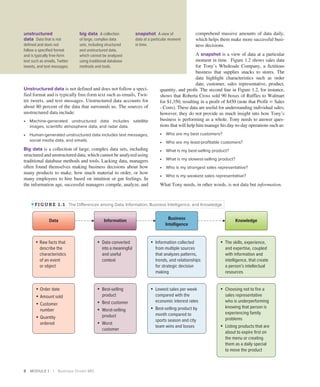



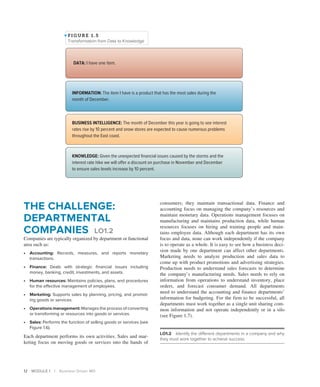
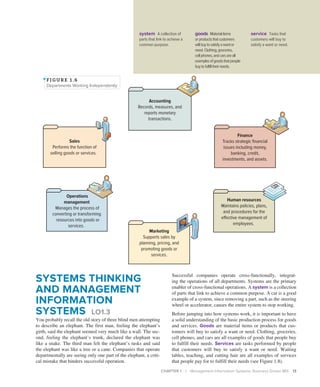
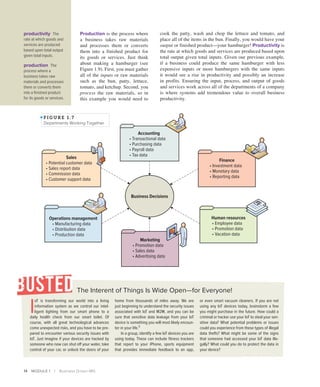

![During the night they and the English troops seized over 500 men as
prisoners and sent them back, and several hundred seem to have
been routed out. Today, [the 25th,] judging from these I saw myself,
the living were not so many as the dead.
It was fierce fighting in Villers-Bretonneux and around it last night
and this morning the enemy fought until put out by bayonet, rifle
bullet, or machine gun. The Australian officers say that they have
never seen such piles of dead, not even outside of Bullecourt or
Lagnicourt last year, as those who lie about this village of frightful
strife.
The German tanks, which were first seen in this battle, though
heavier than the British, with bigger guns, have now beaten a
retreat, leaving one of their type in No Man's Land. The tank has a
high turret and thick armor plates, and is steered and worked on a
different system from the British. One of them was killed by a tank
of the old British class, and then the British put in some of the
newer, faster, and smaller types, which can steer almost as easily as
a motor car, as I know, because I have traveled in one at great pace
over rough ground.
These set out to attack bodies of German infantry of the 77th
Division forming up near Cachy. It was a terrible encounter, and
when they returned this morning their flanks were red with blood.
They slew Germans not by dozens nor by scores, but by platoons
and companies. They got right among the masses of men and swept
them with fire, and those they did not kill with their guns they
crushed beneath them, manoeuvring about and trampling them
down as they fell. It seems to have been as bloody a slaughter as
anything in this war.
Battle for Kemmel Hill
The furious battle for the possession of Kemmel Hill, an eminence of
strategic importance in the Ypres region, occurred April 25, 26, and](https://image.slidesharecdn.com/1708-250330200116-13327fbd/85/eBook-PDF-M-Information-Systems-4th-Edition-28-320.jpg)



![O
America's Sacrifice
By Harold Begbie
[By arrangement with The London Chronicle.]
ne of the finest moral actions in this war has been done by
America. It is action on a gigantic scale, and yet of a directly
personal character. Insufficient publicity, I think, has been given to
this action.
Is it realized by the people of this country that America has already
saved us from capitulating to the enemy? Either we should have
been forced into this surrender (with our armies unbroken and our
munitions of war unexhausted) or we should at this moment be
struggling to live and work and fight on one-third of our present
rations.
America is sending to these islands almost two-thirds of our food
supplies. Sixty-five per cent. of the essential foodstuffs eaten by the
British citizen comes to him from the American Continent. This in
itself is something which calls for our lively gratitude. But there is a
quality in the action of America which should intensify our gratitude.
For these American supplies, essential to our health and safety,
represent in very large measure the personal and voluntary self-
sacrifice of the individual American citizen. They are not crumbs
from the table of Dives. They are not the commandeered supplies of
an autocratic Government. They represent, rather, the kindly,
difficult, and entirely willing self-sacrifice of a whole nation, the vast
majority of whom are working people.
There is only one altar for this act of sacrifice—it is the table of the
American working classes. And the rite is performed by men,](https://image.slidesharecdn.com/1708-250330200116-13327fbd/85/eBook-PDF-M-Information-Systems-4th-Edition-50-320.jpg)



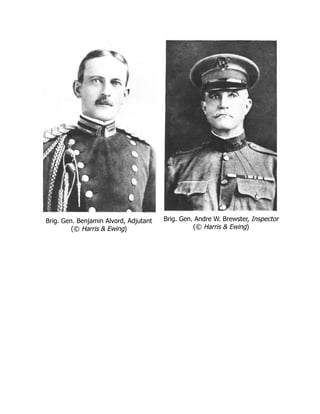
![S
American Soldiers in Battle
How They Repelled an Attack at Seicheprey
and Fought in Picardy
[Month ended May 20, 1918]
eicheprey, in the Toul sector, was the scene on April 20, 1918, of
the most determined attack launched against the American
forces in France up to that time. A German regiment, reinforced by
storm troops, a total of 1,500, was hurled against the American
positions on a one-mile front west of Remières Forest, northwest of
Toul, after a severe bombardment of gas and high explosive shells.
The Germans succeeded in penetrating the front-line trenches and
taking the village of Seicheprey, but after furious hand-to-hand
fighting the American troops recaptured the village and most of the
ground lost in the early fighting.
Next morning, after a brief bombardment, the Americans attacked
and drove the enemy out of the old outposts, which they had
gained, and thus broke down an offensive which, it was believed,
was intended as the beginning of a German plan to separate the
Americans and the French. The French lines also were attacked, but
the Germans were repulsed and the lines re-established.
The losses were the heaviest sustained by Americans since they
began active warfare in France. In a dispatch to the War Department
General Pershing indicated that the losses among his men were
between 200 and 300. According to the German official statement
183 Americans were taken prisoner, so that the American casualties
apparently came mostly under the heading of captured. Official](https://image.slidesharecdn.com/1708-250330200116-13327fbd/85/eBook-PDF-M-Information-Systems-4th-Edition-58-320.jpg)