(eBook PDF) Auditing: A Risk Based-Approach 11th Edition by Karla M Johnstone
(eBook PDF) Auditing: A Risk Based-Approach 11th Edition by Karla M Johnstone
(eBook PDF) Auditing: A Risk Based-Approach 11th Edition by Karla M Johnstone
(eBook PDF) Auditing: A Risk Based-Approach 11th Edition by Karla M Johnstone
(eBook PDF) Auditing: A Risk Based-Approach 11th Edition by Karla M Johnstone
1.
(eBook PDF) Auditing:A Risk Based-Approach 11th
Edition by Karla M Johnstone pdf download
https://ebooksecure.com/product/ebook-pdf-auditing-a-risk-based-
approach-11th-edition-by-karla-m-johnstone/
Download more ebook from https://ebooksecure.com
2.
We believe theseproducts will be a great fit for you. Click
the link to download now, or visit ebooksecure.com
to discover even more!
Auditing: A Risk Based-Approach 11th Edition Johnstone-
Zehms - eBook PDF
https://ebooksecure.com/download/auditing-a-risk-based-approach-
ebook-pdf/
(eBook PDF) Auditing & Assurance Services A Systematic
Approach 11th Edition
http://ebooksecure.com/product/ebook-pdf-auditing-assurance-
services-a-systematic-approach-11th-edition/
Financial Institutions Management, A Risk Management
Approach, 11e 11th Edition Anthony Saunders - eBook PDF
https://ebooksecure.com/download/financial-institutions-
management-a-risk-management-approach-11e-ebook-pdf/
(eBook PDF) Auditing: Assurance and Risk 4th Edition
http://ebooksecure.com/product/ebook-pdf-auditing-assurance-and-
risk-4th-edition/
3.
Present Knowledge inFood Safety : A Risk-Based
Approach Through the Food Chain 1st edition - eBook PDF
https://ebooksecure.com/download/present-knowledge-in-food-
safety-a-risk-based-approach-through-the-food-chain-ebook-pdf/
(eBook PDF) Auditing A Practical Approach, 3rd Edition
http://ebooksecure.com/product/ebook-pdf-auditing-a-practical-
approach-3rd-edition/
Financial Institutions Management A Risk Management
Approach 4th
http://ebooksecure.com/product/financial-institutions-management-
a-risk-management-approach-4th/
(Original PDF) Auditing: A Practical Approach, 2nd
Canadian Edition
http://ebooksecure.com/product/original-pdf-auditing-a-practical-
approach-2nd-canadian-edition/
(eBook PDF) Auditing A Practical Approach, Extended
Canadian Edition
http://ebooksecure.com/product/ebook-pdf-auditing-a-practical-
approach-extended-canadian-edition/
Contents vii
AICPA Guidance:Principles Governing an Audit 176
IAASB Guidance: Objectives of an Audit 176
OverviewoftheAuditOpinion
FormulationProcess 177
Audit Opinion Formulation Process: Accounting
Cycles 179
Audit Opinion Formulation Process: Financial
Statement Assertions 180
Existence or Occurrence Assertion 181
Completeness Assertion 181
Rights and Obligations Assertion 182
Valuation or Allocation Assertion 183
Presentation and Disclosure Assertion 184
Audit Opinion Formulation Process: Audit Evidence
and Audit Procedures 184
Evidence Example: Substantive Audit
Procedures to Obtain
Evidence About
Management’s Valuation Assertion 185
Audit Opinion Formulation Process: Audit
Documentation 186
Five Phases of the Audit Opinion
Formulation
Process 187
Phase I—Making Client Acceptance and Continuance
Decisions 187
Phase II—Performing Risk Assessment 189
Phase III—Obtaining Evidence About Internal Control 194
Phase IV—Obtaining Substantive Evidence About Accounts,
Disclosures, and Assertions 202
Phase V—Completing the Audit and Making Reporting
Decisions 205
Applying Decision-Making Frameworks 207
Significant Terms 208
Prompt for Critical Thinking 209
Review Questions and Short Cases 210
Fraud Focus: Contemporary and Historical Cases 217
Application Activities 219
Academic Research Cases 221
6Audit Evidence 222
Obtaining Sufficient Appropriate Audit
Evidence 224
Sufficiency of Audit Evidence 226
Appropriateness of Audit Evidence 228
Audit Procedures 234
Types of Audit Procedures 234
Timing of Procedures 240
Substantive Analytical Procedures 241
Performing Analytical Procedures 243
Brief Application of Substantive Analytical Procedures 246
Additional Evidence Considerations 247
Auditing Management Estimates 247
Auditing Related-Party Transactions 249
Using a Specialist/Expert to Assist with
Obtaining
Audit Evidence 251
Documenting Audit Evidence 253
Documenting Risk Assessment Procedures 253
Documenting Tests of Controls and Substantive
Procedures 254
Documenting Significant Findings and Their Resolution 255
Characteristics of Quality Audit Documentation 255
Audit Programs 257
Applying Decision-Making Frameworks 259
Significant Terms 260
Prompt for Critical Thinking 262
Review Questions and Short Cases 262
Fraud Focus: Contemporary and Historical Cases 268
Application Activities 272
Academic Research Cases 275
Data Analytics Using ACL 276
7Planning the Audit:
Identifying,
Assessing, and
Responding
to the Risk of Material
Misstatement 278
Materiality 280
Materiality Levels 281
Planning Materiality 282
Identifying and Assessing the Risk of Material
Misstatement 286
Client Business Risks 286
The Audit Risk Model 291
Responding to Identified Risk of Material
Misstatement 303
Determining Evidence Needed in the Audit 303
Audit Procedures to Respond to the Assessed Risk of Material
Misstatement 306
Applying Decision-Making Frameworks 309
Significant Terms 310
Prompt for Critical Thinking 311
Review Questions and Short Cases 314
Fraud Focus: Contemporary and Historical Cases 322
Application Activities 334
Academic Research Cases 337
19455_fm_hr_i-xxxi.indd 7 1/24/18 3:36 PM
6.
viii Contents
8Specialized AuditTools:
AttributesSampling, Monetary
Unit Sampling, and Data
AnalyticsTools 338
Using Sampling and Data Analytics Tools for
Gathering and Evaluating Audit Evidence 341
Objectives of Sampling and Risks Associated with
Sampling 343
Nonsampling and Sampling Risks 343
Nonstatistical and Statistical Sampling 346
Attributes Sampling for Tests of Controls 349
Steps in Attributes Sampling 349
Basic Steps in Sampling Account
Balances and
Assertions: A Nonstatisical Sampling Application 362
Basic Steps in Sampling Account Balances and Assertions 362
Nonstatistical Sampling for Substantive Tests of Account
Balances and Assertions 365
Statistical Sampling for Substantive Tests of Account
Balances and
Assertions: Monetary Unit Sampling
(MUS) 367
Summary of MUS Strengths and Weaknesses 367
Designing and Selecting a MUS Sample 368
Evaluating a MUS Sample 372
Using Data Analytics Tools to Obtain and Evaluate
Evidence 377
Defining Data Analytics and Associated Terms 377
Using Data Analytics Tools in the Audit 381
Business Intelligence Platforms 383
Applying Decision-Making Frameworks 385
Significant Terms 386
Prompt for Critical Thinking 390
Review Questions and Short Cases 391
Application Activities 398
Data Analytics: Spreadsheet Modelling
and Database Querying 399
Academic Research Cases 399
9Auditing the Revenue
Cycle 400
Significant Accounts, Disclosures, and Relevant
Assertions 402
Processing Revenue Transactions 404
An Overview of the Audit Opinion Formulation Process in the
Revenue Cycle 406
Identifying Inherent Risks 407
Inherent Risks: Revenue 407
Inherent Risks: Accounts Receivable 410
Identifying Fraud Risks 411
How do Fraudsters Perpetrate their Schemes? 411
Identifying Fraud Risk Factors 413
Identifying Control Risks 418
Controls Related to Existence/Occurrence 419
Controls Related to Completeness 421
Controls Related to Valuation 421
Documenting Controls 423
Performing Planning Analytical Procedures 425
Responding to Identified Risks of Material
Misstatement 428
Obtaining Evidence About Internal Control
Operating Effectiveness in the Revenue Cycle 430
Selecting Controls to Test and Performing Tests
of Controls 432
Considering the Results of Tests of Controls 434
Obtaining Substantive Evidence About Accounts,
Disclosures, and Assertions in the Revenue
Cycle 435
Revenue and Accounts Receivable: Performing Substantive
Analytical Procedures 437
Revenue: Substantive Tests of Details 438
Accounts Receivable: Substantive Procedures 439
Accounts Receivable: Substantive Tests
of Details—Confirmations 439
Accounts Receivable: Substantive Procedures for the
Allowance Account 447
Accounts Receivable: Other Substantive Procedures 448
Performing Substantive Fraud-Related Procedures 449
Documenting Substantive Procedures 452
Applying Decision-Making Frameworks 454
Significant Terms 454
Prompt for Critical Thinking 455
Review Questions and Short Cases 457
Fraud Focus: Contemporary and Historical Cases 470
Application Activities 480
Data Analytics Using Excel: A Case in the Context of
the Pharmaceutical Industry 485
Data Analytics Using ACL 487
Data Analytics Using Tableau 488
Academic Research Cases 489
10
Auditing Cash, Marketable
Securities, and Complex
Financial Instruments 490
Significant Accounts, Disclosures, and Relevant
Assertions 493
19455_fm_hr_i-xxxi.indd 8 1/24/18 3:36 PM
7.
Contents ix
Common CashAccounts: Checking, Cash
Management,
and Petty Cash Accounts 493
Relevant Financial Statement Assertions 494
An Overview of the Audit Opinion Formulation Process
for Cash Accounts 497
Identifying Inherent Risks 498
Identifying Fraud Risks 499
Identifying Control Risks 501
Typical Controls Over Cash 502
Implications of Ineffective Controls 505
Controls for Petty Cash 507
Controls for Cash Management Techniques 507
Documenting Controls 507
Performing Planning Analytical Procedures 510
Responding to Identified Risks of Material
Misstatement 512
Obtaining Evidence about Internal Control Operating
Effectiveness for Cash 514
Selecting Controls to Test and Performing Tests
of Controls 514
Considering the Results of Tests of Controls 515
Obtaining Substantive Evidence about Cash
Accounts, Disclosures, and Assertions 516
Cash Accounts: Performing Substantive
Analytical
Procedures 518
Cash Accounts: Performing Substantive Tests of Details 518
Performing Substantive Fraud-Related
Procedures for Cash
Accounts 524
Documenting Substantive Procedures 525
Auditing Marketable Securities 526
Significant Accounts, Disclosures, and Relevant
Assertions 526
An Overview of the Audit Opinion Formulation Process
for Marketable Securities 528
Identifying Inherent, Fraud, and Control Risks Relevant
to Marketable Securities 528
Performing Planning Analytical Procedures for Marketable
Securities 531
Responding to Identified Risks of Material
Misstatement 531
Obtaining Evidence about Internal
Control Operating
Effectiveness for Marketable Securities 532
Obtaining Substantive Evidence about Marketable
Securities 532
Auditing Complex Financial Instruments 536
Overview of Complex Financial Instruments 536
Audit Considerations for Complex Financial
Instruments 536
Applying Decision-Making Frameworks 540
Significant Terms 541
Prompts for Critical Thinking 542
Review Questions and Short Cases 545
Fraud Focus: Contemporary and Historical Cases 556
Application Activities 563
Data Analytics: Spreadsheet Modelling
and Database Querying 567
11
Auditing Inventory, Goods
and Services, and Accounts
Payable:The Acquisition
and Payment Cycle 568
Significant Accounts, Disclosures, and Relevant
Assertions 571
Processing Transactions in the Acquisition and Payment
Cycle 572
Assertions Relevant to Inventory 573
Assertions Relevant to Accounts Payable 574
An Overview of the Audit Opinion Formulation Process in the
Acquisition and Payment Cycle 575
Identifying Inherent Risks 575
Identifying Fraud Risks 577
Identifying Control Risks 578
Overview of Internal Controls in the
Acquisition
and
Payment Cycle 579
Documenting Controls 586
Performing Planning Analytical Procedures 588
Responding to Identified Risks of Material
Misstatement 592
Obtaining Evidence About Internal Control
Operating Effectiveness in the Acquisition
and
Payment Cycle 594
Selecting Controls to Test and Performing Tests
of Controls 594
Considering the Results of Tests of Controls 595
Obtaining Substantive Evidence About Accounts,
Disclosures, and Assertions in the Acquisition
and Payment Cycle 598
Substantive Tests of Inventory and Cost of Goods Sold 598
Substantive Tests of Accounts Payable and Related Expense
Accounts 611
Documenting Substantive Procedures 616
Applying Decision-Making Frameworks 618
Significant Terms 619
Prompt for Critical Thinking 620
Review Questions and Short Cases 621
Fraud Focus: Contemporary and Historical Cases 630
Application Activities 634
19455_fm_hr_i-xxxi.indd 9 1/24/18 3:36 PM
8.
x Contents
Data AnalyticsUsing Excel: A Case in the Context
of the Pharmaceutical Industry 637
Academic Research Cases 640
ACL 640
12 Auditing Long-Lived
Assets and Merger and
Acquisition Activity 642
Significant Accounts, Disclosures, and Relevant
Assertions 645
Activities in the Long-Lived Asset Acquisition and Payment
Cycle 645
Relevant Financial Statement Assertions 646
An Overview of the Audit Opinion Formulation Process in the
Revenue Cycle 646
Identifying Inherent Risks 647
Identifying Fraud Risks 649
Identifying Control Risks 650
Internal Controls for Long-lived Assets 652
Documenting Controls 653
Performing Planning Analytical Procedures 654
Responding to Identified Risks of Material
Misstatement 656
Obtaining Evidence About Internal Control
Operating Effectiveness for Long-Lived Asset
Accounts and Related Expenses 660
Selecting Controls to Test and Performing Tests of
Controls 660
Considering the Results of Tests of Controls 661
Obtaining Substantive Evidence About Accounts,
Disclosures, and Assertions for Long-Lived Asset
Accounts and Related Expenses 663
Performing Substantive Analytical Procedures 664
Substantive Tests of Details for Tangible Assets 666
Substantive Tests of Details for Natural Resources and the
Related Expense Accounts 668
Substantive Tests of Details for Intangible Assets and the
Related Expense Accounts 669
Substantive Procedures Related to Asset Impairment 669
Substantive Procedures Related to Leases 672
Performing Substantive Fraud-Related Procedures 673
Documenting Substantive Procedures 674
Auditing Merger and Acquisition Activities 674
Valuing the Assets and Liabilities of an Acquisition 675
Audit Considerations for Valuing Identifiable Assets
and Liabilities 676
Audit Considerations for Restructuring Charges Related
to an Acquisition 678
Audit Considerations for Valuing Goodwill 679
Applying Decision-Making Frameworks 681
Significant Terms 682
Prompt for Critical Thinking 683
Review Questions and Short Cases 684
Fraud Focus: Contemporary and Historical Cases 690
Academic Research Cases 699
13
Auditing Debt, Equity,
and Long-Term Liabilities
Requiring Management
Estimates 700
Significant Accounts, Disclosures, and Relevant
Assertions 702
Debt 702
Equity 703
An Overview of the Audit Opinion Formulation Process
for Debt and Equity 705
Identifying Inherent Risks 705
Inherent Risks—Debt 705
Inherent Risks—Equity 705
Identifying Fraud Risks 707
Identifying Control Risks 709
Controls—Debt 709
Controls—Equity 709
Documenting Controls 710
Performing Planning Analytical Procedures 710
Responding to Identified Risks of Material
Misstatement 711
Obtaining Evidence about Internal Control Operating
Effectiveness for Debt and Equity 712
Selecting Controls to Test and Performing Tests
of Controls 712
Obtaining Substantive Evidence About
Accounts, Disclosures, and Assertions for
Debt and Equity 713
Substantive Analytical Procedures—Debt 713
Substantive Tests of Details—Debt 715
Substantive Tests of Details—Equity 716
Performing Substantive Fraud-Related
Procedures
for Debt and Equity 717
Documenting Substantive Procedures 718
Long-Term Liabilities Requiring
Management
Estimates 719
Warranty Reserves 719
Pension Obligations and Other
Postemployment Benefits 721
Applying Decision-Making Frameworks 723
Significant Terms 724
19455_fm_hr_i-xxxi.indd 10 1/24/18 3:36 PM
9.
Contents xi
Prompt forCritical Thinking 724
Review Questions and Short Cases 725
Fraud Focus: Contemporary and Historical Cases 729
Application Activities 730
Data Analytics Using Excel: A Case in the
Context of the Pharmaceutical Industry 731
Academic Research Case 733
14
Completing a Quality
Audit 734
Obtain Remaining Audit Evidence 737
Detected Misstatements 737
Loss Contingencies 742
Adequacy of Disclosures 747
Noncompliance with Laws and Regulations 752
Review Analytical Procedures 755
The Going-Concern Assumption 757
Subsequent Events 763
Management Representation Letter versus
a
Management Letter 767
Management Representation Letter 767
Management Letter 769
Engagement Quality Review 771
Audit Committee Communications 773
Significant Terms 777
Prompt for Critical Thinking 778
Review Questions and Short Cases 780
Fraud Focus: Contemporary and Historical Cases 785
Application Activities 789
Using ACL to Perform Benford Analysis 792
Academic Research Cases 793
15
Audit Reports for Financial
Statement Audits 794
Audit Reporting Principles 796
Unqualified/Unmodified Audit Reports on Financial
Statements 798
Unqualified Audit Reports: U.S. Public Companies 799
Unmodified Audit Reports: U.S. Nonpublic Companies 801
Unmodified Audit Reports: Non-U.S. Companies 802
Unqualified/Unmodified Audit
Opinions with Report
Modifications 804
Emphasis-of-Matter 804
Information about Certain Audit Participants 805
Reference to Other Auditors 806
Inconsistent Application of GAAP 808
Justified Departure from GAAP 809
Substantial Doubt about the Client Being a Going
Concern 810
Client Correction of a Material Misstatement in Previously
Issued Financial Statements 814
Qualified Opinions, Adverse Opinions, and
Disclaimers
of Opinion 816
Qualified Opinions 816
Adverse Opinions 820
Disclaimers of Opinion 821
Critical Audit Matters and Key Audit Matters 824
Key Audit Matters (KAMs) 824
Critical Audit Matters (CAMs) 826
KAMs or CAMs? 829
Audit Reports on Internal Control Over Financial
Reporting for U.S.
Public Companies 830
Omitted Audit Procedures 834
Applying Decision-Making Frameworks 836
Significant Terms 837
Prompt for Critical Thinking 838
Review Questions and Short Cases 840
Fraud Focus: Contemporary and Historical Cases 847
Application Activities 850
Academic Research Cases 851
ACL APPENDIX 853
REFERENCES 869
CASE INDEX 871
INDEX 873
“WHY IT MATTERS”FEATURE CONTENT 886
AUDITING STANDARDS 889
ADDITIONAL RESOURCES 895
19455_fm_hr_i-xxxi.indd 11 1/24/18 3:36 PM
xiii
The auditing environmentcontinues to change in significant ways. University
graduates entering the auditing profession today should be prepared for a high
standard of responsibility, should be ready to serve the public interest, and
should recognize the emerging issues and continuing points of focus facing
auditors. Examples of today’s emerging issues and continuing points of focus
facing the profession include:
• New accounting guidance from the Financial Accounting Standards
Board on leases and revenue recognition.
• Increased need for critical thinking and professional skepticism.
• Increased and growing use of data analytics tools.
• Continued and increasing importance of ethical and professional deci-
sion making.
• Continued efforts toward international convergence of auditing stan-
dards of the American Institute of Certified Public Accountants (AICPA)
and the International Auditing and Assurance Standards Board (IAASB).
• Reorganization of the Public Company Accounting Oversight Board
(PCAOB) auditing standards to provide auditors and others with a logi-
cal framework and easy access to the standards governing the conduct
of audits of public companies.
• The IAASB’s issuance of new and revised auditor reporting standards,
which require auditors to provide more transparent and informative
reports on the companies they audit, including the disclosure of key
audit matters.
• The PCAOB’s adoption of a new auditing standard on the auditor’s
report, including the disclosure of critical audit matters.
The eleventh edition of Financial Statement Auditing: A Risk-Based
Approach represents the most up-to-date professional auditing guidance avail-
able and reflects the many emerging issues and continuing points of focus in
the profession. This text provides students with the tools they need to under-
stand the full range of issues associated with conducting a quality financial
statement audit in an evolving national and global context.
Revision Themes and New Enhancements in the Eleventh Edition
Coverage of Emerging Data Analytics Tools. Data analytics tools include qual-
itative and quantitative techniques and processes that auditors use to enhance
their productivity and effectiveness in terms of extracting, categorizing, iden-
tifying, and analyzing patterns in their client’s data. Emerging data analytics
tools facilitate testing 100% of a population, enabling the auditor to focus on
potentially erroneous transactions or risky areas of the audit. These emerging
tools also include sophisticated data visualization tools, for example, Tableau.
Data analytics tools also include familiar platforms such as Excel, ACL, and
IDEA; the landscape is changing dramatically and quickly in this space, so
instructors and students must be adaptive to fast-paced change. We introduce
Preface
19455_fm_hr_i-xxxi.indd 13 1/24/18 3:36 PM
12.
xiv Preface
key termsand explain data analytics tools in an expanded Chapter 8, with
an entirely new section, “Using Data Analytics Tools to Obtain and Evaluate
Evidence.” We also include end-of-chapter problems to reinforce opportuni-
ties to employ data analytics tools within Chapter 8 and the following cycle
chapters (e.g., data analytics in the revenue cycle in Chapter 9).
Auditing Standards Exhibit–PCAOB, AICPA, and IAASB–appears inside the
front cover of this textbook. This exhibit allows for easy access to relevant
standards, and provides a platform for relative comparisons across each of the
standards-setting bodies. End-of-chapter problems require students to review
and apply the material in the Auditing Standards Exhibit. These problems
provide students with practice completing task-based simulations similar to
what they will see on the CPA exam; we highlight these problems with an
identifying icon.
Three New Learning Engagement Features. Students today demand more than
case facts and standard lectures. They require opportunities to engage with the
instructor and classmates on important topics facing the profession.
• “Why It Matters” feature. This feature helps students see beyond the
factual insights provided in the chapters. Elements include for example,
extensions based on in-the-news examples that illustrate fundamen-
tal features and applications of text facts, professional standards in
foreign jurisdictions, and interesting points that may be tangential to
the text facts, but that should facilitate students’ deep engagement
with the
chapter. Certain of these features are noted as relating to an
International Focus.
• “Prompt for Critical Thinking—It’s Your Turn!” feature. This feature
encourages students to engage in critical thinking as they acquire knowl-
edge relevant to each chapter. This feature is intentionally creative in
form and substance, and varies widely in structure based upon the learn-
ing objective to which it is related. As an example of one such prompt,
students are asked to consider auditors’ responsibilities with respect to
internal controls around the Foreign Corrupt Practices Act.
• “What Do You Think?—For Classroom Discussion” feature. This fea-
ture provides an avenue by which instructors can facilitate preparation
for class, cognitive engagement, and critical thinking through discus-
sions with other students. Like the Prompt for Critical Thinking fea-
ture, What Do You Think? is creative in form and substance and varies
in unexpected ways to spark students’ interest in engagement with the
chapter topic. This feature is an ideal way for instructors to facilitate an
interesting class discussion using a flipped-classroom approach (either
involving the entire class or within small teams).
Below we provide examples of each of these three new learning engagement
features that appear in Chapter 14 (“Completing a Quality Audit”) with
respect to the learning objective “Obtaining Remaining Audit Evidence on
Noncompliance with Laws and Regulations.”
• The Why It Matters feature articulates the motivation for and provisions
of the Foreign Corrupt Practices Act (FCPA).
• The Prompt for Critical Thinking feature extends this discussion by
prompting students to think about corruption, how to measure it, and
its variation across different jurisdictions.
• The What Do You Think? feature encourages students to consider the
applicability of the FCPA in today’s business and auditing environment.
19455_fm_hr_i-xxxi.indd 14 1/24/18 3:36 PM
13.
Preface xv
Compliance withthe Foreign Corrupt Practices
Act (FCPA) of 1977
This feature highlights an important law that many companies have
failed to comply with.
The FCPA was written to respond to SEC investigations in the 1970s
revealing that over 400 companies had made questionable or ille-
gal payments of over $300 million to foreign officials, politicians,
and political parties.The payments involved bribery of foreign offi-
cials to facilitate business operations in their respective foreign
countries. The main provisions of the FCPA include:
• No U.S. person or company that has securities listed on U.S.
markets may make a payment to a foreign official for the
purpose of obtaining or retaining business. This provision is
commonly called the anti-bribery provision of the FCPA.
• Companies that have securities listed on U.S. markets must
make and keep financial records that accurately and fairly
reflect the transactions of the company and must design
and maintain an adequate system of internal accounting
controls.
• Certain payments to foreign officials are acceptable. These
include grease payments, which are payments made to an
official to expedite the performance of the duties that the
official would already be bound to perform.
Why It Matters
Before reading this text, had you heard of the Transparency Inter-
national corruption perception index?Think critically about what
you know about the political and economic structure of the fol-
lowing countries. In the spaces below, (1) rank the six countries
from most corrupt to least corrupt just from what you know, and
(2) guess what their ranking is on a scale from 02100 on the cor-
ruption perception index from 0 (highly corrupt) to 100 (very
clean):
Prompt for Critical Thinking
Country (in alphabetical
order)
Rank 5 5
(1 most to 6 least corrupt among this list) Estimated corruption perception
index 2
(0 100)
Belgium
Brazil
New Zealand
Somalia
South Korea
United States of America
After ranking the countries, visit Transparency International and compare your answers and estimates against theirs:
https://www.transparency.org/news/feature/corruption_perceptions_index_2016#table
What are your reactions to what you have learned? What rankings surprised you? How accurate were your rankings?
19455_fm_hr_i-xxxi.indd 15 1/24/18 3:36 PM
14.
xvi Preface
Updates to“Focus on Fraud” Feature. The authors continue their use of this
learning engagement feature, which provides compelling examples of recent
frauds, and the role of the auditor in preventing, detecting, or (sometimes) not
detecting those frauds. Below we provide an example of this learning feature
that appears in Chapter 14 (“Completing a Quality Audit”) with respect to the
learning objective “Obtaining Remaining Audit Evidence on Noncompliance
with Laws and Regulations.”
For Classroom Discussion
The FCPA of 1977 was enacted a LONG time ago!
1. Do you think it is still relevant today? Why or why not?
2. Review the following SEC website:
https://www.sec.gov/spotlight/fcpa/fcpa-cases.shtml What are
your impressions? What surprises you? What companies on this
list are well-known? Focus on one of the enforcement actions
(perhaps at the discretion of your instructor) and explain how the
company violated the FCPA.
What Do You Think?
Triton Energy and Noncompliance with Laws
and Regulations
Thisfeaturedescribesahistoricallyimportantcaseinvolvingnoncom-
pliance with the Foreign Corrupt Practices Act (FCPA) of 1977.
Triton Energy engages in the exploration and production of crude
oil and natural gas in many areas around the world. Triton has tra-
ditionally operated in relatively high-risk, politically unstable areas
where larger and better-known producers do not operate. Top
Triton Indonesia officials (President, CFO, Commercial Manager,
and Controller) were investigated by the SEC for violations of the
Foreign Corrupt Practices Act. These violations included:
• Improper payments were made to a middleman who used
the funds to reduce Triton Indonesia’s tax liability.
• Improper payments were made to a middleman who used
the funds to ensure a favorable governmental audit.
• Improper payments were made to a middleman who used
the funds to obtain corporate tax refunds from government
officials.
• The recording of false journal entries by Triton Indonesia’s
Commercial Manager and Controller were made to cover
up the improper payments.
These improper payments and false journal entries were
facilitated because Triton’s CEO, Bill Lee, was an aggressive top
manager who provided weak tone at the top in terms of his failure
to encourage compliance with applicable laws and regulations,
failure to discourage improper payments, and failure to imple-
ment internal controls to deter improper payments. Triton was
ultimately fined $300,000 related to the scandal.
For further details, see the SEC’s Securities Exchange Act of 1934
ReleaseNo.38343andAccountingandAuditingEnforcementRelease
No. 889, February 27, 1997.
Focus on Fraud
• To help students prepare for the CPA exam, MindTap for Auditing
includes two pre- and post-tests using author-selected multiple-choice
questions from Becker Professional Education, all tailored to this edi-
tion’s critical learning objectives.
• “Check Your Basic Knowledge” feature. To enhance and expand on the
Becker CPA Exam Questions feature, each chapter includes additional
true-false and multiple-choice questions within the chapter text itself.
19455_fm_hr_i-xxxi.indd 16 1/24/18 3:36 PM
15.
Preface xvii
Following thediscussion of each learning objective within the chapters,
we challenge students to answer four questions (two true-false and two
multiple-choice) to alert students to their effective learning, or alterna-
tively, to their lack of understanding (which should encourage students
to more carefully acquire the concepts relating to each particular learn-
ing objective). Taken collectively, the Becker CPA Exam Questions and
Check Your Basic Knowledge questions ensure that students have the
opportunity to challenge themselves during reading the chapter, thereby
tracking their learning, and after reading the chapter.
• Updated and Expanded Chapter Examples and End-of-Chapter prob-
lems, including “Review Questions and Short Cases,” “Application
Activities,” along with more extensive longer cases: “Fraud Focus:
Contemporary and Historical Cases.” To help instructors identify these
problems, the text includes the following icons that highlight overall
themes: Ethics, Fraud, Professional Skepticism, International Issues,
and Auditing Standards Application Activities. We also rely exten-
sively on using facts from SEC Accounting, Auditing, and Enforcement
Releases (AAERs) and PCAOB Enforcement Actions in the cases to illus-
trate the regulatory implications of auditors’ judgments and decisions.
For most chapters, we have updated the Academic Research Cases,
providing instructors with an opportunity to introduce students to the
relevance of academic research to the auditing profession.
Examples of Selected Cases by Chapter include:
Longtop Financial Technologies (Ch. 1), Bentley’s Brisbane Partnership (Ch. 1),
Wells Fargo (Ch. 2), Weatherford International (Ch. 2), Lime Energy (Ch. 2),
U.S. Department of Defense (Ch. 3), Diamond Foods (Ch. 3), Chesapeake
Petroleum and Supply (Ch. 3), Florida Department of Financial Services (Ch. 4),
Toshiba (Ch. 4), Boeing (Ch. 5), ContinuityXSolutions, Inc. (Ch. 7), Ag Feed
Industries (Ch. 9), China Media Express Holdings (Ch. 9), Monsanto Corpora-
tion (Ch. 9), Agricultural Bank of China (Ch. 10), MagnaChip (Ch. 11), Miller
Energy Resources (Ch. 12), Soyo Group (Ch. 13), Logitech (Ch. 13), 2GO
(Ch. 14), Chelsea Logistics Holding Corp. (Ch. 14), Suiss Finance (Ch. 14),
ImmunoGen, Inc. (Ch. 15), Rolls Royce (Ch. 15), and Westmoreland Coal
Company (Ch. 15).
Expanded View of “Users.” In prior versions, our user-emphasis was on
shareholders, bondholders, regulators, and standards-setters as primary
actors. While of course critical, we now incorporate discussion of the role
that analysts play (e.g., in incentivizing managers, and therefore affecting the
judgments and decisions of users), along with stock market reactions to both
financial accounting and auditing information disclosures. As an illustration of
one such view, we include the following discussion in Chapter 9 (the revenue
cycle), embedded in a Why It Matters feature.
19455_fm_hr_i-xxxi.indd 17 1/24/18 3:36 PM
16.
xviii Preface
The Incentivefor Managers to Commit Fraud in the Revenue Cycle:
The Role of Stock Analysts and Consensus Earnings Calculations
This feature provides insight into the role that stock analyst following
and consensus analyst earnings per share calculations play in affect-
ing managements’ incentives to commit fraud.
Stock analysts follow companies and issue earnings per share and
revenue forecasts they anticipate for the companies they follow.
To understand this concept better, see the analysts’forecast report
for Ford Motor Company as of June 2017, which we reproduce
below.
Why It Matters
This report shows that 16 analysts together, that is, by consensus
predict Q1 2017 earnings per share of $0.35 per share, and that the
actual results were better than that at $0.39 per share. It also shows
that the annual earnings per share for 2016 was $1.76; analysts
make predictions about both quarterly and annual earnings per
share. Managers do not want to“disappoint”the market by having
their earnings results come in “under forecast,” which creates the
incentive for earnings manipulation.
19455_fm_hr_i-xxxi.indd 18 1/24/18 3:36 PM
17.
Preface xix
Hallmark PedagogicalFeatures
Articulating an audit opinion formulation process to help organize students’
acquisition of the technical material in each chapter. A chapter-opening figure
helps students identify the major phases in the audit process and see how the
steps within that process relate to specific chapters. The textbook describes
how auditors go through a structured judgment process to issue an audit
opinion. We refer to this process as the Audit Opinion Formulation Process,
and it serves as the foundation for this textbook.
The process consists of five phases. Phase I concerns client acceptance and
continuance. Once a client is accepted (or the audit firm decides to continue
to provide services to a client), the auditor needs to perform risk assessment
procedures to thoroughly understand the client’s business (or update prior
knowledge in the case of a continuing client), its industry, its competition,
and its management and governance processes (including internal controls) to
determine the likelihood that financial accounts might be materially misstated
(Phase II). In some audits, the auditor also obtains evidence about internal con-
trol operating effectiveness through testing those controls (Phase III). Much of
what most people think of as auditing, obtaining substantive evidence about
accounts, disclosures, and assertions, occurs in Phase IV. The information gath-
ered in Phases I through III greatly influences the amount of testing auditors
perform in Phase IV. Finally, in Phase V, the auditor completes the audit and
makes a decision about what type of audit report to issue.
Also fundamental to students’ understanding is the framework’s inclusion
of the auditing profession, audit quality, quality judgments, ethical decisions,
and professional liability. Further fundamentals highlighted in the Audit Opin-
ion Formulation Process include discussion of a framework for obtaining audit
evidence, as depicted below.
Recognizing that professional judgment, sufficient appropriate evidence,
and quality decisions are critical to conducting a quality financial state-
ment audit. In addition to the focus on professional judgment throughout the
text, numerous exercises emphasize this key auditing skill, including examples
and end-of-chapter materials based on the business press, PCAOB enforce-
ment actions, SEC filings, and company proxy statements. Further, the end-
of-
chapter materials help ensure that students understand the link between
mandatory financial reporting and auditing, risk assessment, transaction
cycles, and analytical procedures.
This report shows that 15 analysts together, that is, by consen-
sus
predict Q1 2017 revenues at $34.59 billion, while the actual
revenue that Ford reported exceeded that estimate, coming in at
$36.48 billion. Managers do not want to “disappoint” the market
by having their revenue results come in “under forecast,” which
creates the incentive for fraudulently overstated revenue amounts.
What does the term “analyst consensus forecast” mean?
It means the average earnings per share or revenue based on all
the analysts that are following the company. If a company is at or
near its consensus forecast and the auditor proposes a material,
income decreasing audit adjustment, client management may
resist because they do not want to report a negative earnings
surprise.
Whatisanegativeearningssurpriseoranegativerevenue
surprise?
It is a negative departure from the consensus analyst earnings
forecast or the revenue forecast, for example, lower actual earn-
ings per share amount compared to the consensus or lower rev-
enue compared to the consensus expectation.
For further details, see
https://markets.ft.com/data/equities/tearsheet/forecasts?s=F:NYQ
19455_fm_hr_i-xxxi.indd 19 1/24/18 3:36 PM
18.
xx Preface
Emphasizing thatprofessional skepticism, which can be challenging
to maintain, is at the heart of auditor judgments. This emphasis provides
students with the tools to learn how to apply the concept of professional
skepticism. We include conceptual discussion of this topic in Chapter 1, with
substantial reinforcement through the remaining chapters in the text, as well
as in end-of-chapter materials (highlighted with an identifying icon for ease
of identification). This emphasis helps students see the practical application of
professional skepticism, as well as provides practical insights as to downside
risks when auditors fail to maintain appropriate levels of skepticism.
Using data analytics tools and analytical procedures to improve the effec-
tiveness and efficiency of the audit. The text contains a new focus on data
analytics around“big data”that will become an evolving hallmark pedagogical
feature over subsequent editions. The text covers planning, substantive, and
review-related analytical procedures, and provides ways in which auditors can
use data analytics tools to perform these procedures. Chapter 6 and Chapter 7
outline the theory of analytical procedures, and discuss appropriate processes
and best practices. Various end-of-chapter problems provide examples of using
analytical procedures. Chapters 9, 11, and 13 contain an extensive practice
case (set in the pharmaceutical industry, complete with data based on three real
companies) that would be ideal for a semester team project to enforce concepts
around analytical procedures.
Employing specific learning objectives, which we introduce at the outset
of each chapter in a “What You Will Learn” feature and summarize at the end
of each Chapter with a “Let’s Review” feature. We reinforce these objectives
throughout the chapter materials, along with linking the objectives to specific
end-of-chapter materials, including links to academic research cases to enhance
students’ appreciation for the theoretical underpinnings of the learning objec-
tives. These learning objectives help to shape students’ cognitive architecture
as they integrate their preliminary understanding of chapter topics with the
theory, examples, and accompanying discussion that follow.
Providing and applying professional decision-making and ethical
decision-making frameworks. Decision-making frameworks, introduced in
Chapter 1, require students to think about real-life professional and ethical
decisions associated in each chapter. End-of-chapter materials continue the use
of these professional and ethical decision-making frameworks to help students
Chapters 14
and 15
IV. Obtaining
Substantive
Evidence About
Accounts,
Disclosures, and
Assertions
Chapters 8–13
III. Obtaining
Evidence About
Internal Control
Operating
Effectiveness
Chapters 8–13
II. Performing Risk
Assessment
Chapters 2, 3, 7,
and 9–13
I. Making Client
Acceptance and
Continuance
Decisions
Chapter 1
Professional Liability
Chapter 4
The Audit Opinion Formulation Process and a Framework for Obtaining Audit Evidence
Chapters 5 and 6
V. Completing
the Audit and
Making Reporting
Decisions
Auditing Profession, Audit Quality and
the Need for Quality Judgments
and Ethical Decisions
Chapters 1
19455_fm_hr_i-xxxi.indd 20 1/24/18 3:36 PM
19.
Preface xxi
address contemporaryissues. Further, we identify these problems as part of the
last learning objective in each chapter.
Acquiring hands-on experience through a practice-oriented audit case.
On the CengageNOW website, you will find a tool that allows students to
engage in a practice-oriented audit case. Brony’s Bikes is an auditing case that
encompasses a complete auditing scenario spanning from Performing Risk
Assessment (Phase II of the Audit Opinion Formulation Process) to making
reporting decisions (Phase V of the Audit Opinion Formulation Process). The
case includes 13 modules that address specific activities included in the Audit
Opinion Formulation Process. The authors have structured these 13 mod-
ules so that each can be undertaken independently of the other modules. For
example, Module I, Assessment of Inherent Risk, takes the students through
the audit planning process based on AU-C 200 Overall Objectives of the Inde-
pendent Auditor and the Conduct of an Audit in Accordance with Generally
Accepted Auditing Standards, AU-C 300 Planning an Audit, and AU 315-C
Understanding the Entity and Its Environment and Assessing the Risks of
Material Misstatement. Module I can be assigned on a stand-alone basis or
along with any or all of the other modules at the instructor’s discretion.
Students gain experience with auditing documentation including many
working papers. Analytical procedures are performed in Excel worksheets
requiring conclusions and recommendations.
Other Resources
MindTap: EmpowerYour Students
MindTap is a platform that propels students from memorization to mastery.
It gives you complete control of your course, so you can provide engaging con-
tent, challenge every learner, and build student confidence. Customize interac-
tive syllabi to emphasize priority topics, then add your own material or notes
to the eBook as desired. This outcomes-driven application gives you the tools
needed to empower students and boost both understanding and performance.
Access EverythingYou Need in One Place
Cut down on prep with the preloaded and organized MindTap course materi-
als. Teach more efficiently with interactive multimedia, assignments, quizzes,
and more. Give your students the power to read, listen, and study on their
phones, so they can learn on their terms.
Empower Students to Reach their Potential
Twelve distinct metrics give you actionable insights into student engagement.
Identify topics troubling your entire class and instantly communicate with
those struggling. Students can track their scores to stay motivated toward their
goals. Together, you can be unstoppable.
ControlYour Course—andYour Content
Get the flexibility to reorder textbook chapters, add your own notes, and
embed a variety of content including Open Educational Resources (OER).
Personalize course content to your students’ needs. Students can even read
your notes, add their own notes, and highlight key text to aid their learning.
Get a DedicatedTeam, WheneverYou NeedThem
MindTap isn’t just a tool; it’s backed by a personalized team eager to support
you. We can help set up your course and tailor it to your specific objectives,
so you’ll be ready to make an impact from day one. Know we’ll be standing
by to help you and your students until the final day of the term.
19455_fm_hr_i-xxxi.indd 21 1/24/18 3:36 PM
20.
xxii Preface
Becker CPAExam Questions
To help students prepare for taking the CPA exam, for each chapter,
students
have access to four or five representative multiple-choice questions from the
Becker test bank, tailored to each chapter’s most critical learning objectives.
ACL analytics and audit software with updated cases.
This edition integrates ACL software into end-of-chapter materials. An ACL
Appendix and tutorial is located at the end of the text.The ACL Appendix con-
tains an overview of the basic functions of ACL followed by a brief, illustrated
tutorial to help students learn how to use the basic features of the ACL Analyt-
ics. Access to the software can be provided by Instructors who are enrolled in
the ACL Academic Network program.
ACL cases include the following:
1. Pell Grants, a fraud investigation case related to this student grant
program. (Chapter 6)
2. Husky Accounts Receivable, which includes exercises in which students
identify unpaid invoices and sales made over credit limits, perform
cutoff analyses, conduct aging analyses, and identify procedures to be
performed based upon their results. (Chapter 9)
3. FloorMart Sales and Inventory, which requires students to identify store
locations in which data appear to indicate potential inaccuracies, and to
identify procedures to gather additional evidence. (Chapter 9)
4. Husky Inventory, which includes exercises in which students identify
potentially obsolete inventory, calculate inventory turnover, consider
possible write-downs, and prepare a report based on their results.
(Chapter 11)
5. Benford’s Law Case, a fraud case dealing with employee expense
reimbursements and the application of Benford’s Law of numbers.
(Chapter 14)
Organization of the Eleventh Edition
The demand for quality auditing: Chapter 1.
Chapter 1 provides the foundation for students to understand the economic
context in which financial statement auditing exists. The chapter defines
the objective of financial statement auditing and describes its role in meet-
ing society’s demands for reliable financial and internal control informa-
tion. Chapter 1 introduces the Financial Reporting Council’s Audit Quality
Framework, and identifies professional conduct requirements that help
auditors achieve high quality. This chapter also provides frameworks for
professional and ethical decision making. Chapter 1 also describes the pro-
cess by which audit firms make client acceptance and continuance decisions,
and recognizes that this process is important to achieving audit quality.
Risk assessment with a focus on fraud and internal controls over
financial reporting: Chapters 2 and 3.
Chapter 2 defines fraud, describes the fraud triangle, and provides examples
of recent financial reporting frauds.The chapter discusses users’ expectations
of auditors’ fraud-related responsibilities, explains how various require-
ments of the Sarbanes-Oxley Act of 2002 help prevent fraud, and discusses
the importance of corporate governance in relation to quality auditing.
Chapter 3 articulates the importance of internal control over financial
reporting, defines internal control, identifies and describes the components
19455_fm_hr_i-xxxi.indd 22 1/24/18 3:36 PM
21.
Preface xxiii
and principlesof internal control, and describes management’s responsibil-
ity related to internal control. Chapter 3 also explains how to distinguish
between material weaknesses, significant deficiencies, and control deficien-
cies in internal control over financial reporting.
Important elements of the professional environment and the audit
opinion formulation process: Chapters 4, 5, and 6.
Chapter 4 discusses the liability environment in which auditors operate,
explores the effects of lawsuits on audit firms, identifies laws from which
auditor liability is derived, and describes possible remedies, sanctions, and
auditor defenses.
Chapter 5 identifies and compares auditing standards that provide audit
guidance on the audit opinion formulation process, and discusses the foun-
dational principles underlying these standards. The chapter lists the phases
and related activities in the audit opinion formulation process, explains the
concept of accounting cycles, describes the assertions that are inherent to
financial statements, defines audit evidence and the purpose and types of
audit procedures used to obtain audit evidence, and discusses the impor-
tance of audit documentation.
Chapter 6 discusses the importance of evidence sufficiency and appro-
priateness, illustrates professional judgments about the type and timing
of audit procedures, discusses the use and application of substantive
analytical procedures, identifies issues relating to audit evidence needed
for accounts involving management estimates, and discusses evidence
issues involving specialists and related party transactions. Chapter 6 also
describes the characteristics of quality audit documentation and explains
the nature, design, and purposes of audit programs.
Planning the audit and employing appropriate audit tools: Chap-
ters 7 and 8.
Chapter 7 defines the concept of material misstatement and discusses the
importance of materiality judgments in the audit context. The chapter also
identifies the risks of material misstatement and describes how they relate
to audit risk and detection risk. Chapter 7 illustrates how auditors respond
to assessed risks of material misstatement.
In planning how to respond to assessed risk of material misstatements,
auditors need to determine which of the available specialized tools they
will use. Chapter 8 describes how auditors can use sampling techniques
and data analytics tools to gather and evaluate sufficient appropriate
audit evidence. The chapter explains the objectives of sampling for testing
controls and account balances, compares and contrasts nonstatistical and
statistical sampling, describes attributes sampling, describes the sampling
process used to gather evidence about misstatements in account balances
and assertions, describes monetary unit sampling, and explains how to use
data analytics tools to obtain and evaluate audit evidence.
Performing Audits Using theTransaction Cycle Approach: Chapters 9,
10, 11, 12, and 13.
These five chapters focus on the application of concepts developed earlier
for assessing risk, identifying and testing controls designed to address those
risks, and using substantive approaches to testing account balances. Each
chapter:
• identifies significant accounts, disclosures, and relevant assertions
• explains the process of identifying and assessing inherent risks, fraud
risks, and control risks
19455_fm_hr_i-xxxi.indd 23 1/24/18 3:36 PM
22.
xxiv Preface
• describesplanning analytical procedures that the auditor can use to
identify potential material misstatement
• articulates appropriate responses to identified risks of material mis-
statement, including appropriate tests of controls and considering
results of tests of controls
• and identifies how to apply substantive audit procedures.
Completing a quality audit and issuing the audit report: Chapters 14
and 15.
Chapter 14 discusses the procedures that auditors conduct while com-
pleting the audit. These procedures include reviewing activities relating
to detected misstatements, loss contingencies, disclosure adequacy, non-
compliance with laws or regulations, review analytical procedures, going-
concern matters, and subsequent events. The chapter also distinguishes
between a management representation letter and a management letter,
identifies procedures that are part of an engagement quality review, and
identifies issues the auditor should communicate to the audit committee
and management.
Once these activities are completed, the auditor makes a reporting
decision, which is described in Chapter 15. This chapter identifies the
principles underlying audit reporting on financial statements, describes the
information that is included in an unqualified/unmodified audit report, and
describes financial statement audits resulting in an unqualified/unmodified
audit opinion with report modifications. The chapter describes financial
statement audits resulting in a qualified opinion, an adverse opinion, or
a disclaimer of opinion. Chapter 15 describes the emerging critical audit
matters (PCAOB) and key audit matters (IAASB) disclosures that audi-
tors will, or already are, including in the auditor’s report. The chapter
also describes the information that is included in a standard unqualified
audit report on internal control over financial reporting and identifies
the appropriate audit report modifications for situations requiring other
than an unqualified report on internal control over financial reporting.
Chapter 15 concludes with a discussion of how auditors should respond
to situations in which omitted procedures come to light after the audit
report has been issued.
Supplements
Companion Site: Instructors and students can find most of the textbook’s
support materials online at login.cengage.com., including the solutions
manual, PowerPoint slides,ACL data spreadsheet files, and other resources.
Solutions Manual: The solutions manual contains the solutions to all
end-of-chapter assignments. It is available on the instructor’s page at www
.cengagebrain.com.
PowerPoint Slides: Instructors can bring their lectures to life with engaging
PowerPoint slides that are interesting, visually stimulating, and paced for
student comprehension. These slides are ideal as lecture tools and provide
a clear guide for student study and note-taking. We have purposely pro-
vided more slides rather than less! We encourage instructors to tailor down
the slides to meet their own, individual instructional preferences.
Test Bank: Cengage Learning Testing Powered by Cognero is a flexible,
online system that allows you to:
19455_fm_hr_i-xxxi.indd 24 1/24/18 3:36 PM
hands, he beganto burrow an opening in the thatch. All the time he
whined like a beast.
He was glad the moon shone full upon him. When he had made a
big enough hole, he would see the evil thing out of the grave that
sat in his room, and would stone it to death.
Suddenly he became still. A cold sweat broke out upon him. The
thing, whether his own wraith, or the spirit of his dead foe, or Gloom
Achanna himself, had begun to play, low and slow, a wild air. No
piercing cold music like that of the feadan! Too well he knew it, and
those cool white notes that moved here and there in the darkness
like snowflakes. As for the air, though he slept till Judgment Day and
heard but a note of it amidst all the clamour of heaven and hell, sure
he would scream because of the Dàn-nan-Ròn!
The Dàn-nan-Ròn: the Roin! the Seals! Ah, what was he doing
there, on the bitter-weary land! Out there was the sea. Safe would
he be in the green waves.
With a leap he was on the ground. Seizing a huge stone he hurled
it through the window. Then, laughing and screaming, he fled
towards the Great Reef, along whose sides the ebb-tide gurgled and
sobbed, with glistering white foam.
He ceased screaming or laughing as he heard the Dàn-nan-Ròn
behind him, faint, but following; sure, following. Bending low, he
raced towards the rock-ledges from which ran the reef.
When at last he reached the extreme ledge, he stopped abruptly.
Out on the reef he saw from ten to twenty seals, some swimming to
and fro, others clinging to the reef, one or two making a curious
barking sound, with round heads lifted against the moon. In one
place there was a surge and lashing of water. Two bulls were fighting
to the death.
With swift stealthy movements Mànus unclothed himself. The
damp had clotted the leathern thongs of his boots, and he snarled
with curled lip as he tore at them. He shone white in the moonshine,
but was sheltered from the sea by the ledge behind which he
25.
crouched. “What didGloom Achanna mean by that,” he muttered
savagely, as he heard the nearing air change into the “Dance of the
Dead.” For a moment Mànus was a man again. He was nigh upon
turning to face his foe, corpse or wraith or living body, to spring at
this thing which followed him, and tear it with hands and teeth.
Then, once more, the hated Song of the Seal stole mockingly
through the night.
With a shiver he slipped into the dark water. Then, with quick,
powerful strokes, he was in the moon-flood, and swimming hard
against it out by the leeside of the reef.
So intent were the seals upon the fight of the two great bulls that
they did not see the swimmer, or, if they did, took him for one of
their own people. A savage snarling and barking and half-human
crying came from them. Mànus was almost within reach of the
nearest, when one of the combatants sank dead, with torn throat.
The victor clambered on to the reef, and leaned high, swaying its
great head and shoulders to and fro. In the moonlight its white
fangs were like red coral. Its blinded eyes ran with gore.
There was a rush, a rapid leaping and swirling, as Mànus surged
in among the seals, which were swimming round the place where
the slain bull had sunk.
The laughter of this long white seal terrified them.
When his knee struck against a rock, MacCodrum groped with his
arms and hauled himself out of the water.
From rock to rock and ledge to ledge he went, with a fantastic
dancing motion, his body gleaming foam-white in the moonshine.
As he pranced and trampled along the weedy ledges, he sang
snatches of an old rune—the lost rune of the MacCodrums of Uist.
The seals on the rocks crouched spell-bound: those slow-swimming
in the water stared with brown unwinking eyes, with their small ears
strained against the sound:—
26.
It is I,Mànus MacCodrum,
I am telling you that, you, Anndra of my blood,
And you, Neil my grandfather, and you, and you, and you!
Ay, ay, Mànus my name is, Mànus MacMànus!
It is I myself, and no other,
Your brother, O Seals of the Sea!
Give me blood of the red fish,
And a bite of the flying sgadan;
The green wave on my belly,
And the foam in my eyes!
I am your bull-brother, O Bulls of the Sea,
Bull-better than any of you, snarling bulls!
Come to me, mate, seal of the soft furry womb,
White am I still, though red shall I be,
Red with the streaming red blood if any dispute me!
Aoh, aoh, aoh, arò, arò, ho-rò!
A man was I, a seal am I,
My fangs churn the yellow foam from my lips:
Give way to me, give way to me, Seals of the Sea;
Give way, for I am fëy of the sea
And the sea-maiden I see there,
And my name, true, is Mànus MacCodrum,
The bull-seal that was a man, Arà! Arà!
By this time he was close upon the great black seal, which was
still monotonously swaying its gory head, with its sightless eyes
rolling this way and that. The sea-folk seemed fascinated. None
moved, even when the dancer in the moonshine trampled upon
them.
When he came within arm-reach he stopped.
“Are you the Ceann-Cinnidh?” he cried. “Are you the head of this
clan of the sea-folk?”
27.
The huge beastceased its swaying. Its curled lips moved from its
fangs.
“Speak, Seal, if there’s no curse upon you! Maybe, now, you’ll be
Anndra himself, the brother of my father! Speak! H’st—are you
hearing that music on the shore! ’Tis the Dàn-nan-Ròn! Death o’ my
soul, it’s the Dàn-nan-Ròn! Aha, ’tis Gloom Achanna out of the
Grave. Back, beast, and let me move on!”
With that, seeing the great bull did not move, he struck it full in
the face with clenched fist. There was a hoarse strangling roar, and
the seal champion was upon him with lacerating fangs.
Mànus swayed this way and that. All he could hear now was the
snarling and growling and choking cries of the maddened seals. As
he fell, they closed in upon him. His screams wheeled through the
night like mad birds. With desperate fury he struggled to free
himself. The great bull pinned him to the rock; a dozen others tore
at his white flesh, till his spouting blood made the rocks scarlet in
the white shine of the moon.
For a few seconds he still fought savagely, tearing with teeth and
hands. Once, only, a wild cry burst from his lips: when from the
shore end of the reef came loud and clear the lilt of the rune of his
fate.
The next moment he was dragged down and swept from the reef
into the sea. As the torn and mangled body disappeared from sight,
it was amid a seething crowd of leaping and struggling seals, their
eyes wild with affright and fury, their fangs red with human gore.
And Gloom Achanna, turning upon the reef, moved swiftly inland,
playing low on his feadan as he went.
28.
THE SIN-EATER
NOTE
It shouldbe explained that the sin-relinquishing superstition—a
superstition probably pre-Celtic, perhaps of the remotest antiquity—
hardly exists to-day, or, if at all, in its crudest guise. The last time I
heard of it, even in a modified form, was not in the west, but in a
remote part of the Aberdeenshire highlands. Then, it was salt, not
bread, that was put on the breast of the dead: and the salt was
thrown away, nor was any wayfarer called upon to perform this or
any other function.
THE SIN-EATER
29.
Sin.
Taste this bread,this substance: tell me
Is it bread or flesh?
[The Senses approach.]
The Smell.
Its smell
Is the smell of bread.
Sin.
Touch, come. Why tremble?
Say what’s this thou touchest?
The Touch.
Bread.
Sin.
Sight, declare what thou discernest
In this object.
The Sight.
Bread alone.
Calderon, Los Encantos de la Culpa.
A wet wind out of the south mazed and mooned through the sea-
mist that hung over the Ross. In all the bays and creeks was a
continuous weary lapping of water. There was no other sound
anywhere.
Thus was it at daybreak: it was thus at noon: thus was it now in
the darkening of the day. A confused thrusting and falling of sounds
through the silence betokened the hour of the setting. Curlews
wailed in the mist: on the seething limpet-covered rocks the skuas
and terns screamed, or uttered hoarse, rasping cries. Ever and again
30.
the prolonged noteof the oyster-catcher shrilled against the air, as
an echo flying blindly along a blank wall of cliff. Out of weedy places,
wherein the tide sobbed with long, gurgling moans, came at
intervals the barking of a seal.
Inland, by the hamlet of Contullich, there is a reedy tarn called the
Loch-a-chaoruinn.[5] By the shores of this mournful water a man
moved. It was a slow, weary walk that of the man Neil Ross. He had
come from Duninch, thirty miles to the eastward, and had not rested
foot, nor eaten, nor had word of man or woman, since his going
west an hour after dawn.
At the bend of the loch nearest the clachan he came upon an old
woman carrying peat. To his reiterated question as to where he was,
and if the tarn were Feur-Lochan above Fionnaphort that is on the
strait of Iona on the west side of the Ross of Mull, she did not at first
make any answer. The rain trickled down her withered brown face,
over which the thin grey locks hung limply. It was only in the deep-
set eyes that the flame of life still glimmered, though that dimly.
The man had used the English when first he spoke, but as though
mechanically. Supposing that he had not been understood, he
repeated his question in the Gaelic.
After a minute’s silence the old woman answered him in the native
tongue, but only to put a question in return.
“I am thinking it is a long time since you have been in Iona?”
The man stirred uneasily.
“And why is that, mother?” he asked, in a weak voice hoarse with
damp and fatigue; “how is it you will be knowing that I have been in
Iona at all?”
“Because I knew your kith and kin there, Neil Ross.”
“I have not been hearing that name, mother, for many a long year.
And as for the old face o’ you, it is unbeknown to me.”
31.
“I was atthe naming of you, for all that. Well do I remember the
day that Silis Macallum gave you birth; and I was at the house on
the croft of Ballyrona when Murtagh Ross—that was your father—
laughed. It was an ill laughing that.”
“I am knowing it. The curse of God on him!”
“’Tis not the first, nor the last, though the grass is on his head
three years agone now.”
“You that know who I am will be knowing that I have no kith or
kin now on Iona?”
“Ay; they are all under grey stone or running wave. Donald your
brother, and Murtagh your next brother, and little Silis, and your
mother Silis herself, and your two brothers of your father, Angus and
Ian Macallum, and your father Murtagh Ross, and his lawful childless
wife, Dionaid, and his sister Anna—one and all, they lie beneath the
green wave or in the brown mould. It is said there is a curse upon
all who live at Ballyrona. The owl builds now in the rafters, and it is
the big sea-rat that runs across the fireless hearth.”
“It is there I am going.”
“The foolishness is on you, Neil Ross.”
“Now it is that I am knowing who you are. It is old Sheen
Macarthur I am speaking to.”
“Tha mise … it is I.”
“And you will be alone now, too, I am thinking, Sheen?”
“I am alone. God took my three boys at the one fishing ten years
ago; and before there was moonrise in the blackness of my heart my
man went. It was after the drowning of Anndra that my croft was
taken from me. Then I crossed the Sound, and shared with my
widow sister Elsie McVurie: till she went: and then the two cows had
to go: and I had no rent: and was old.”
In the silence that followed, the rain dribbled from the sodden
bracken and dripping loneroid. Big tears rolled slowly down the deep
32.
lines on theface of Sheen. Once there was a sob in her throat, but
she put her shaking hand to it, and it was still.
Neil Ross shifted from foot to foot. The ooze in that marshy place
squelched with each restless movement he made. Beyond them a
plover wheeled, a blurred splatch in the mist, crying its mournful cry
over and over and over.
It was a pitiful thing to hear: ah, bitter loneliness, bitter patience
of poor old women. That he knew well. But he was too weary, and
his heart was nigh full of its own burthen. The words could not come
to his lips. But at last he spoke.
“Tha mo chridhe goirt,” he said, with tears in his voice, as he put
his hand on her bent shoulder; “my heart is sore.”
She put up her old face against his.
“’S tha e ruidhinn mo chridhe,” she whispered; “it is touching my
heart you are.”
After that they walked on slowly through the dripping mist, each
dumb and brooding deep.
“Where will you be staying this night?” asked Sheen suddenly,
when they had traversed a wide boggy stretch of land; adding, as by
an afterthought—“Ah, it is asking you were if the tarn there were
Feur-Lochan. No; it is Loch-a-chaoruinn, and the clachan that is near
is Contullich.”
“Which way?”
“Yonder: to the right.”
“And you are not going there?”
“No. I am going to the steading of Andrew Blair. Maybe you are
for knowing it? It is called the Baile-na-Chlais-nambuidheag.”[6]
“I do not remember. But it is remembering a Blair I am. He was
Adam, the son of Adam, the son of Robert. He and my father did
many an ill deed together.”
33.
“Ay, to thestones be it said. Sure, now, there was, even till this
weary day, no man or woman who had a good word for Adam Blair.”
“And why that … why till this day?”
“It is not yet the third hour since he went into the silence.”
Neil Ross uttered a sound like a stifled curse. For a time he
trudged wearily on.
“Then I am too late,” he said at last, but as though speaking to
himself. “I had hoped to see him face to face again, and curse him
between the eyes. It was he who made Murtagh Ross break his troth
to my mother, and marry that other woman, barren at that, God be
praised! And they say ill of him, do they?”
“Ay, it is evil that is upon him. This crime and that, God knows;
and the shadow of murder on his brow and in his eyes. Well, well,
’tis ill to be speaking of a man in corpse, and that near by. ’Tis
Himself only that knows, Neil Ross.”
“Maybe ay and maybe no. But where is it that I can be sleeping
this night, Sheen Macarthur?”
“They will not be taking a stranger at the farm this night of the
nights, I am thinking. There is no place else for seven miles yet,
when there is the clachan, before you will be coming to Fionnaphort.
There is the warm byre, Neil, my man; or, if you can bide by my
peats, you may rest, and welcome, though there is no bed for you,
and no food either save some of the porridge that is over.”
“And that will do well enough for me, Sheen; and Himself bless
you for it.”
And so it was.
After old Sheen Macarthur had given the wayfarer food—poor food
at that, but welcome to one nigh starved, and for the heartsome
34.
way it wasgiven, and because of the thanks to God that was upon it
before even spoon was lifted—she told him a lie. It was the good lie
of tender love.
“Sure now, after all, Neil, my man,” she said, “it is sleeping at the
farm I ought to be, for Maisie Macdonald, the wise woman, will be
sitting by the corpse, and there will be none to keep her company. It
is there I must be going; and if I am weary, there is a good bed for
me just beyond the dead-board, which I am not minding at all. So, if
it is tired you are sitting by the peats, lie down on my bed there, and
have the sleep; and God be with you.”
With that she went, and soundlessly, for Neil Ross was already
asleep, where he sat on an upturned claar, with his elbows on his
knees, and his flame-lit face in his hands.
The rain had ceased; but the mist still hung over the land, though
in thin veils now, and these slowly drifting seaward. Sheen stepped
wearily along the stony path that led from her bothy to the farm-
house. She stood still once, the fear upon her, for she saw three or
four blurred yellow gleams moving beyond her, eastward, along the
dyke. She knew what they were—the corpse-lights that on the night
of death go between the bier and the place of burial. More than
once she had seen them before the last hour, and by that token had
known the end to be near.
Good Catholic that she was, she crossed herself, and took heart.
Then, muttering
35.
Crois nan naoiaingeal leam
’O mhullach mo chinn
Gu craican mo bhonn
(The cross of the nine angels be about me,
From the top of my head
To the soles of my feet),
she went on her way fearlessly.
When she came to the White House, she entered by the milk-shed
that was between the byre and the kitchen. At the end of it was a
paved place, with washing-tubs. At one of these stood a girl that
served in the house,—an ignorant lass called Jessie McFall, out of
Oban. She was ignorant, indeed, not to know that to wash clothes
with a newly dead body near by was an ill thing to do. Was it not a
matter for the knowing that the corpse could hear, and might rise up
in the night and clothe itself in a clean white shroud?
She was still speaking to the lassie when Maisie Macdonald, the
deid-watcher, opened the door of the room behind the kitchen to see
who it was that was come. The two old women nodded silently. It
was not till Sheen was in the closed room, midway in which
something covered with a sheet lay on a board, that any word was
spoken.
“Duit sìth mòr, Beann Macdonald.”
“And deep peace to you, too, Sheen; and to him that is there.”
“Och, ochone, mise ’n diugh; ’tis a dark hour this.”
“Ay; it is bad. Will you have been hearing or seeing anything?”
“Well, as for that, I am thinking I saw lights moving betwixt here
and the green place over there.”
“The corpse-lights?”
36.
“Well, it iscalling them that they are.”
“I thought they would be out. And I have been hearing the noise
of the planks—the cracking of the boards, you know, that will be
used for the coffin to-morrow.”
A long silence followed. The old women had seated themselves by
the corpse, their cloaks over their heads. The room was fireless, and
was lit only by a tall wax death-candle, kept against the hour of the
going.
At last Sheen began swaying slowly to and fro, crooning low the
while. “I would not be for doing that, Sheen Macarthur,” said the
deid-watcher in a low voice, but meaningly; adding, after a
moment’s pause, “The mice have all left the house.”
Sheen sat upright, a look half of terror half of awe in her eyes.
“God save the sinful soul that is hiding,” she whispered.
Well she knew what Maisie meant. If the soul of the dead be a lost
soul it knows its doom. The house of death is the house of
sanctuary; but before the dawn that follows the death-night the soul
must go forth, whosoever or whatsoever wait for it in the homeless,
shelterless plains of air around and beyond. If it be well with the
soul, it need have no fear: if it be not ill with the soul, it may fare
forth with surety; but if it be ill with the soul, ill will the going be.
Thus is it that the spirit of an evil man cannot stay, and yet dare not
go; and so it strives to hide itself in secret places anywhere, in dark
channels and blind walls; and the wise creatures that live near man
smell the terror, and flee. Maisie repeated the saying of Sheen; then,
after a silence, added—
“Adam Blair will not lie in his grave for a year and a day because
of the sins that are upon him; and it is knowing that, they are, here.
He will be the Watcher of the Dead for a year and a day.”
“Ay, sure, there will be dark prints in the dawn-dew over yonder.”
Once more the old women relapsed into silence. Through the
night there was a sighing sound. It was not the sea, which was too
37.
far off tobe heard save in a day of storm. The wind it was, that was
dragging itself across the sodden moors like a wounded thing,
moaning and sighing.
Out of sheer weariness, Sheen twice rocked forward from her
stool, heavy with sleep. At last Maisie led her over to the niche-bed
opposite, and laid her down there, and waited till the deep furrows
in the face relaxed somewhat, and the thin breath laboured slow
across the fallen jaw.
“Poor old woman,” she muttered, heedless of her own grey hairs
and greyer years; “a bitter, bad thing it is to be old, old and weary.
’Tis the sorrow, that. God keep the pain of it!”
As for herself, she did not sleep at all that night, but sat between
the living and the dead, with her plaid shrouding her. Once, when
Sheen gave a low, terrified scream in her sleep, she rose, and in a
loud voice cried, “Sheeach-ad! Away with you!” And with that she
lifted the shroud from the dead man, and took the pennies off the
eyelids, and lifted each lid; then, staring into these filmed wells,
muttered an ancient incantation that would compel the soul of Adam
Blair to leave the spirit of Sheen alone, and return to the cold corpse
that was its coffin till the wood was ready.
The dawn came at last. Sheen slept, and Adam Blair slept a
deeper sleep, and Maisie stared out of her wan, weary eyes against
the red and stormy flares of light that came into the sky.
When, an hour after sunrise, Sheen Macarthur reached her bothy,
she found Neil Ross, heavy with slumber, upon her bed. The fire was
not out, though no flame or spark was visible; but she stooped and
blew at the heart of the peats till the redness came, and once it
came it grew. Having done this, she kneeled and said a rune of the
morning, and after that a prayer, and then a prayer for the poor man
Neil. She could pray no more because of the tears. She rose and put
the meal and water into the pot for the porridge to be ready against
his awaking. One of the hens that was there came and pecked at her
ragged skirt. “Poor beastie,” she said. “Sure, that will just be the way
38.
I am pullingat the white robe of the Mother o’ God. ’Tis a bit meal
for you, cluckie, and for me a healing hand upon my tears. O, och,
ochone, the tears, the tears!”
It was not till the third hour after sunrise of that bleak day in that
winter of the winters, that Neil Ross stirred and arose. He ate in
silence. Once he said that he smelt the snow coming out of the
north. Sheen said no word at all.
After the porridge, he took his pipe, but there was no tobacco. All
that Sheen had was the pipeful she kept against the gloom of the
Sabbath. It was her one solace in the long weary week. She gave
him this, and held a burning peat to his mouth, and hungered over
the thin, rank smoke that curled upward.
It was within half-an-hour of noon that, after an absence, she
returned.
“Not between you and me, Neil Ross,” she began abruptly, “but
just for the asking, and what is beyond. Is it any money you are
having upon you?”
“No.”
“Nothing?”
“Nothing.”
“Then how will you be getting across to Iona? It is seven long
miles to Fionnaphort, and bitter cold at that, and you will be needing
food, and then the ferry, the ferry across the Sound, you know.”
“Ay, I know.”
“What would you do for a silver piece, Neil, my man?”
“You have none to give me, Sheen Macarthur; and, if you had, it
would not be taking it I would.”
“Would you kiss a dead man for a crown-piece—a crown-piece of
five good shillings?”
Neil Ross stared. Then he sprang to his feet.
39.
“It is AdamBlair you are meaning, woman! God curse him in
death now that he is no longer in life!”
Then, shaking and trembling, he sat down again, and brooded
against the dull red glow of the peats.
But, when he rose, in the last quarter before noon, his face was
white.
“The dead are dead, Sheen Macarthur. They can know or do
nothing. I will do it. It is willed. Yes, I am going up to the house
there. And now I am going from here. God Himself has my thanks to
you, and my blessing too. They will come back to you. It is not
forgetting you I will be. Good-bye.”
“Good-bye, Neil, son of the woman that was my friend. A south
wind to you! Go up by the farm. In the front of the house you will
see what you will be seeing. Maisie Macdonald will be there. She will
tell you what’s for the telling. There is no harm in it, sure: sure, the
dead are dead. It is praying for you I will be, Neil Ross. Peace to
you!”
“And to you, Sheen.”
And with that the man went.
When Neil Ross reached the byres of the farm in the wide hollow,
he saw two figures standing as though awaiting him, but separate,
and unseen of the other. In front of the house was a man he knew
to be Andrew Blair; behind the milk-shed was a woman he guessed
to be Maisie Macdonald.
It was the woman he came upon first.
“Are you the friend of Sheen Macarthur?” she asked in a whisper,
as she beckoned him to the doorway.
“I am.”
40.
“I am knowingno names or anything. And no one here will know
you, I am thinking. So do the thing and begone.”
“There is no harm to it?”
“None.”
“It will be a thing often done, is it not?”
“Ay, sure.”
“And the evil does not abide?”
“No. The … the … person … the person takes them away, and …”
“Them?”
“For sure, man! Them … the sins of the corpse. He takes them
away; and are you for thinking God would let the innocent suffer for
the guilty? No … the person … the Sin-Eater, you know … takes them
away on himself, and one by one the air of heaven washes them
away till he, the Sin-Eater, is clean and whole as before.”
“But if it is a man you hate … if it is a corpse that is the corpse of
one who has been a curse and a foe … if …”
“Sst! Be still now with your foolishness. It is only an idle saying, I
am thinking. Do it, and take the money and go. It will be hell
enough for Adam Blair, miser as he was, if he is for knowing that five
good shillings of his money are to go to a passing tramp because of
an old, ancient silly tale.”
Neil Ross laughed low at that. It was for pleasure to him.
“Hush wi’ ye! Andrew Blair is waiting round there. Say that I have
sent you round, as I have neither bite nor bit to give.”
Turning on his heel, Neil walked slowly round to the front of the
house. A tall man was there, gaunt and brown, with hairless face
and lank brown hair, but with eyes cold and grey as the sea.
“Good day to you, an’ good faring. Will you be passing this way to
anywhere?”
41.
“Health to you.I am a stranger here. It is on my way to Iona I
am. But I have the hunger upon me. There is not a brown bit in my
pocket. I asked at the door there, near the byres. The woman told
me she could give me nothing—not a penny even, worse luck,—nor,
for that, a drink of warm milk. ’Tis a sore land this.”
“You have the Gaelic of the Isles. Is it from Iona you are?”
“It is from the Isles of the West I come.”
“From Tiree? … from Coll?”
“No.”
“From the Long Island … or from Uist … or maybe from
Benbecula?”
“No.”
“Oh well, sure it is no matter to me. But may I be asking your
name?”
“Macallum.”
“Do you know there is a death here, Macallum?”
“If I didn’t, I would know it now, because of what lies yonder.”
Mechanically Andrew Blair looked round. As he knew, a rough bier
was there, that was made of a dead-board laid upon three milking-
stools. Beside it was a claar, a small tub to hold potatoes. On the
bier was a corpse, covered with a canvas sheeting that looked like a
sail.
“He was a worthy man, my father,” began the son of the dead
man, slowly; “but he had his faults, like all of us. I might even be
saying that he had his sins, to the Stones be it said. You will be
knowing, Macallum, what is thought among the folk … that a
stranger, passing by, may take away the sins of the dead, and that,
too, without any hurt whatever … any hurt whatever.”
“Ay, sure.”
“And you will be knowing what is done?”
42.
“Ay.”
“With the bread… and the water…?”
“Ay.”
“It is a small thing to do. It is a Christian thing. I would be doing it
myself, and that gladly, but the … the … passer-by who …”
“It is talking of the Sin-Eater you are?”
“Yes, yes, for sure. The Sin-Eater as he is called—and a good
Christian act it is, for all that the ministers and the priests make a
frowning at it—the Sin-Eater must be a stranger. He must be a
stranger, and should know nothing of the dead man—above all, bear
him no grudge.”
At that Neil Ross’s eyes lightened for a moment.
“And why that?”
“Who knows? I have heard this, and I have heard that. If the Sin-
Eater was hating the dead man he could take the sins and fling them
into the sea, and they would be changed into demons of the air that
would harry the flying soul till Judgment-Day.”
“And how would that thing be done?”
The man spoke with flashing eyes and parted lips, the breath
coming swift. Andrew Blair looked at him suspiciously; and hesitated,
before, in a cold voice, he spoke again.
“That is all folly, I am thinking, Macallum. Maybe it is all folly, the
whole of it. But, see here, I have no time to be talking with you. If
you will take the bread and the water you shall have a good meal if
you want it, and … and … yes, look you, my man, I will be giving
you a shilling too, for luck.”
“I will have no meal in this house, Anndra-mhic-Adam; nor will I
do this thing unless you will be giving me two silver half-crowns.
That is the sum I must have, or no other.”
“Two half-crowns! Why, man, for one half-crown …”
43.
“Then be eatingthe sins o’ your father yourself, Andrew Blair! It is
going I am.”
“Stop, man! Stop, Macallum. See here: I will be giving you what
you ask.”
“So be it. Is the … Are you ready?”
“Ay, come this way.”
With that the two men turned and moved slowly towards the bier.
In the doorway of the house stood a man and two women; farther
in, a woman; and at the window to the left, the serving-wench,
Jessie McFall, and two men of the farm. Of those in the doorway, the
man was Peter, the half-witted youngest brother of Andrew Blair; the
taller and older woman was Catreen, the widow of Adam, the
second brother; and the thin, slight woman, with staring eyes and
drooping mouth, was Muireall, the wife of Andrew. The old woman
behind these was Maisie Macdonald.
Andrew Blair stooped and took a saucer out of the claar. This he
put upon the covered breast of the corpse. He stooped again, and
brought forth a thick square piece of new-made bread. That also he
placed upon the breast of the corpse. Then he stooped again, and
with that he emptied a spoonful of salt alongside the bread.
“I must see the corpse,” said Neil Ross simply.
“It is not needful, Macallum.”
“I must be seeing the corpse, I tell you—and for that, too, the
bread and the water should be on the naked breast.”
“No, no, man; it …”
But here a voice, that of Maisie the wise woman, came upon
them, saying that the man was right, and that the eating of the sins
should be done in that way and no other.
With an ill grace the son of the dead man drew back the sheeting.
Beneath it, the corpse was in a clean white shirt, a death-gown long
44.
ago prepared, thatcovered him from his neck to his feet, and left
only the dusky yellowish face exposed.
While Andrew Blair unfastened the shirt and placed the saucer and
the bread and the salt on the breast, the man beside him stood
staring fixedly on the frozen features of the corpse. The new laird
had to speak to him twice before he heard.
“I am ready. And you, now? What is it you are muttering over
against the lips of the dead?”
“It is giving him a message I am. There is no harm in that, sure?”
“Keep to your own folk, Macallum. You are from the West you say,
and we are from the North. There can be no messages between you
and a Blair of Strathmore, no messages for you to be giving.”
“He that lies here knows well the man to whom I am sending a
message”—and at this response Andrew Blair scowled darkly. He
would fain have sent the man about his business, but he feared he
might get no other.
“It is thinking I am that you are not a Macallum at all. I know all
of that name in Mull, Iona, Skye, and the near isles. What will the
name of your naming be, and of your father, and of his place?”
Whether he really wanted an answer, or whether he sought only
to divert the man from his procrastination, his question had a
satisfactory result.
“Well, now, it’s ready I am, Anndra-mhic-Adam.”
With that, Andrew Blair stooped once more and from the claar
brought a small jug of water. From this he filled the saucer.
“You know what to say and what to do, Macallum.”
There was not one there who did not have a shortened breath
because of the mystery that was now before them, and the
fearfulness of it. Neil Ross drew himself up, erect, stiff, with white,
drawn face. All who waited, save Andrew Blair, thought that the
moving of his lips was because of the prayer that was slipping upon
45.
them, like thelast lapsing of the ebb-tide. But Blair was watching
him closely, and knew that it was no prayer which stole out against
the blank air that was around the dead.
Slowly Neil Ross extended his right arm. He took a pinch of the
salt and put it in the saucer, then took another pinch and sprinkled it
upon the bread. His hand shook for a moment as he touched the
saucer. But there was no shaking as he raised it towards his lips, or
when he held it before him when he spoke.
“With this water that has salt in it, and has lain on thy corpse, O
Adam mhic Anndra mhic Adam Mòr, I drink away all the evil that is
upon thee …”
There was throbbing silence while he paused.
“… And may it be upon me and not upon thee, if with this water it
cannot flow away.”
Thereupon, he raised the saucer and passed it thrice round the
head of the corpse sun-ways; and, having done this, lifted it to his
lips and drank as much as his mouth would hold. Thereafter he
poured the remnant over his left hand, and let it trickle to the
ground. Then he took the piece of bread. Thrice, too, he passed it
round the head of the corpse sun-ways.
He turned and looked at the man by his side, then at the others,
who watched him with beating hearts.
With a loud clear voice he took the sins.
“Thoir dhomh do ciontachd, O Adam mhic Anndra mhic Adam Mòr!
Give me thy sins to take away from thee! Lo, now, as I stand here, I
break this bread that has lain on thee in corpse, and I am eating it, I
am, and in that eating I take upon me the sins of thee, O man that
was alive and is now white with the stillness!”
Thereupon Neil Ross broke the bread and ate of it, and took upon
himself the sins of Adam Blair that was dead. It was a bitter
swallowing, that. The remainder of the bread he crumbled in his
46.
hand, and threwit on the ground, and trod upon it. Andrew Blair
gave a sigh of relief. His cold eyes lightened with malice.
“Be off with you, now, Macallum. We are wanting no tramps at the
farm here, and perhaps you had better not be trying to get work this
side Iona; for it is known as the Sin-Eater you will be, and that won’t
be for the helping, I am thinking! There: there are the two half-
crowns for you … and may they bring you no harm, you that are
Scapegoat now!”
The Sin-Eater turned at that, and stared like a hill-bull. Scapegoat!
Ay, that’s what he was. Sin-Eater, Scapegoat! Was he not, too,
another Judas, to have sold for silver that which was not for the
selling? No, no, for sure Maisie Macdonald could tell him the rune
that would serve for the easing of this burden. He would soon be
quit of it.
Slowly he took the money, turned it over, and put it in his pocket.
“I am going, Andrew Blair,” he said quietly, “I am going now. I will
not say to him that is there in the silence, A chuid do Pharas da!—
nor will I say to you, Gu’n gleidheadh Dia thu,—nor will I say to this
dwelling that is the home of thee and thine, Gu’n beannaicheadh Dia
an tigh!”[7]
Here there was a pause. All listened. Andrew Blair shifted uneasily,
the furtive eyes of him going this way and that, like a ferret in the
grass.
“But, Andrew Blair, I will say this: when you fare abroad, Droch
caoidh ort! and when you go upon the water, Gaoth gun direadh ort!
Ay, ay, Anndra-mhic-Adam, Dia ad aghaidh ’s ad aodann … agus bas
dunach ort! Dhonas ’s dholas ort, agus leat-sa!”[8]
The bitterness of these words was like snow in June upon all
there. They stood amazed. None spoke. No one moved.
Neil Ross turned upon his heel, and, with a bright light in his eyes,
walked away from the dead and the living. He went by the byres,
whence he had come. Andrew Blair remained where he was, now
47.
glooming at thecorpse, now biting his nails and staring at the damp
sods at his feet.
When Neil reached the end of the milk-shed he saw Maisie
Macdonald there, waiting.
“These were ill sayings of yours, Neil Ross,” she said in a low
voice, so that she might not be overheard from the house.
“So, it is knowing me you are.”
“Sheen Macarthur told me.”
“I have good cause.”
“That is a true word. I know it.”
“Tell me this thing. What is the rune that is said for the throwing
into the sea of the sins of the dead? See here, Maisie Macdonald.
There is no money of that man that I would carry a mile with me.
Here it is. It is yours, if you will tell me that rune.”
Maisie took the money hesitatingly. Then, stooping, she said
slowly the few lines of the old, old rune.
“Will you be remembering that?”
“It is not forgetting it I will be, Maisie.”
“Wait a moment. There is some warm milk here.”
With that she went, and then, from within, beckoned to him to
enter.
“There is no one here, Neil Ross. Drink the milk.”
He drank; and while he did so she drew a leather pouch from
some hidden place in her dress.
“And now I have this to give you.”
She counted out ten pennies and two farthings.
“It is all the coppers I have. You are welcome to them. Take them,
friend of my friend. They will give you the food you need, and the
48.
ferry across theSound.”
“I will do that, Maisie Macdonald, and thanks to you. It is not
forgetting it I will be, nor you, good woman. And now, tell me, is it
safe that I am? He called me a ‘scapegoat’; he, Andrew Blair! Can
evil touch me between this and the sea?”
“You must go to the place where the evil was done to you and
yours—and that, I know, is on the west side of Iona. Go, and God
preserve you. But here, too, is a sian that will be for the safety.”
Thereupon, with swift mutterings she said this charm: an old,
familiar Sian against Sudden Harm:—
“Sian a chuir Moire air Mac ort,
Sian ro’ marbhadh, sian ro’ lot ort,
Sian eadar a’ chlioch ’s a’ ghlun,
Sian nan Tri ann an aon ort,
O mhullach do chinn gu bonn do chois ort:
Sian seachd eadar a h-aon ort,
Sian seachd eadar a dha ort,
Sian seachd eadar a tri ort,
Sian seachd eadar a ceithir ort,
Sian seachd eadar a coig ort,
Sian seachd eadar a sia ort,
Sian seachd paidir nan seach paidir dol deiseil ri diugh narach
ort, ga do ghleidheadh bho bheud ’s bho mhi-thapadh!”
Scarcely had she finished before she heard heavy steps
approaching.
“Away with you,” she whispered, repeating in a loud, angry tone,
“Away with you! Seachad! Seachad!”
And with that Neil Ross slipped from the milk-shed and crossed
the yard, and was behind the byres before Andrew Blair, with sullen
mien and swift, wild eyes, strode from the house.
49.
It was witha grim smile on his face that Neil tramped down the
wet heather till he reached the high road, and fared thence as
through a marsh because of the rains there had been.
For the first mile he thought of the angry mind of the dead man,
bitter at paying of the silver. For the second mile he thought of the
evil that had been wrought for him and his. For the third mile he
pondered over all that he had heard and done and taken upon him
that day.
Then he sat down upon a broken granite heap by the way, and
brooded deep till one hour went, and then another, and the third
was upon him.
A man driving two calves came towards him out of the west. He
did not hear or see. The man stopped: spoke again. Neil gave no
answer. The drover shrugged his shoulders, hesitated, and walked
slowly on, often looking back.
An hour later a shepherd came by the way he himself had
tramped. He was a tall, gaunt man with a squint. The small, pale-
blue eyes glittered out of a mass of red hair that almost covered his
face. He stood still, opposite Neil, and leaned on his cromak.
“Latha math leat,” he said at last: “I wish you good day.”
Neil glanced at him, but did not speak.
“What is your name, for I seem to know you?”
But Neil had already forgotten him. The shepherd took out his
snuff-mull, helped himself, and handed the mull to the lonely
wayfarer. Neil mechanically helped himself.
“Am bheil thu ’dol do Fhionphort?” tried the shepherd again: “Are
you going to Fionnaphort?”
“Tha mise ’dol a dh’ I-challum-chille,” Neil answered, in a low,
weary voice, and as a man adream: “I am on my way to Iona.”
“I am thinking I know now who you are. You are the man
Macallum.”
50.
Neil looked, butdid not speak. His eyes dreamed against what the
other could not see or know. The shepherd called angrily to his dogs
to keep the sheep from straying; then, with a resentful air, turned to
his victim.
“You are a silent man for sure, you are. I’m hoping it is not the
curse upon you already.”
“What curse?”
“Ah, that has brought the wind against the mist! I was thinking
so!”
“What curse?”
“You are the man that was the Sin-Eater over there?”
“Ay.”
“The man Macallum?”
“Ay.”
“Strange it is, but three days ago I saw you in Tobermory, and
heard you give your name as Neil Ross to an Iona man that was
there.”
“Well?”
“Oh, sure, it is nothing to me. But they say the Sin-Eater should
not be a man with a hidden lump in his pack.”[9]
“Why?”
“For the dead know, and are content. There is no shaking off any
sins, then—for that man.”
“It is a lie.”
“Maybe ay and maybe no.”
“Well, have you more to be saying to me? I am obliged to you for
your company, but it is not needing it I am, though no offence.”
51.
“Och, man, there’sno offence between you and me. Sure, there’s
Iona in me, too; for the father of my father married a woman that
was the granddaughter of Tomais Macdonald, who was a fisherman
there. No, no; it is rather warning you I would be.”
“And for what?”
“Well, well, just because of that laugh I heard about.”
“What laugh?”
“The laugh of Adam Blair that is dead.”
Neil Ross stared, his eyes large and wild. He leaned a little
forward. No word came from him. The look that was on his face was
the question.
“Yes: it was this way. Sure, the telling of it is just as I heard it.
After you ate the sins of Adam Blair, the people there brought out
the coffin. When they were putting him into it, he was as stiff as a
sheep dead in the snow—and just like that, too, with his eyes wide
open. Well, someone saw you trampling the heather down the slope
that is in front of the house, and said, ‘It is the Sin-Eater!’ With that,
Andrew Blair sneered, and said—‘Ay, ’tis the scapegoat he is!’ Then,
after a while, he went on: ‘The Sin-Eater they call him: ay, just so:
and a bitter good bargain it is, too, if all’s true that’s thought true!’
And with that he laughed, and then his wife that was behind him
laughed, and then …”
“Well, what then?”
“Well, ’tis Himself that hears and knows if it is true! But this is the
thing I was told:—After that laughing there was a stillness and a
dread. For all there saw that the corpse had turned its head and was
looking after you as you went down the heather. Then, Neil Ross, if
that be your true name, Adam Blair that was dead put up his white
face against the sky, and laughed.”
At this, Ross sprang to his feet with a gasping sob.
52.
“It is alie, that thing!” he cried, shaking his fist at the shepherd.
“It is a lie!”
“It is no lie. And by the same token, Andrew Blair shrank back
white and shaking, and his woman had the swoon upon her, and
who knows but the corpse might have come to life again had it not
been for Maisie Macdonald, the deid-watcher, who clapped a handful
of salt on his eyes, and tilted the coffin so that the bottom of it slid
forward, and so let the whole fall flat on the ground, with Adam Blair
in it sideways, and as likely as not cursing and groaning, as his wont
was, for the hurt both to his old bones and his old ancient dignity.”
Ross glared at the man as though the madness was upon him.
Fear and horror and fierce rage swung him now this way and now
that.
“What will the name of you be, shepherd?” he stuttered huskily.
“It is Eachainn Gilleasbuig I am to ourselves; and the English of
that for those who have no Gaelic is Hector Gillespie; and I am
Eachainn mac Ian mac Alasdair of Strathsheean that is where
Sutherland lies against Ross.”
“Then take this thing—and that is, the curse of the Sin-Eater! And
a bitter bad thing may it be upon you and yours.”
And with that Neil the Sin-Eater flung his hand up into the air, and
then leaped past the shepherd, and a minute later was running
through the frightened sheep, with his head low, and a white foam
on his lips, and his eyes red with blood as a seal’s that has the
death-wound on it.
On the third day of the seventh month from that day, Aulay
Macneill, coming into Balliemore of Iona from the west side of the
island, said to old Ronald MacCormick, that was the father of his
wife, that he had seen Neil Ross again, and that he was “absent”—
53.
for though hehad spoken to him, Neil would not answer, but only
gloomed at him from the wet weedy rock where he sat.
The going back of the man had loosed every tongue that was in
Iona. When, too, it was known that he was wrought in some terrible
way, if not actually mad, the islanders whispered that it was because
of the sins of Adam Blair. Seldom or never now did they speak of
him by his name, but simply as “The Sin-Eater.” The thing was not so
rare as to cause this strangeness, nor did many (and perhaps none
did) think that the sins of the dead ever might or could abide with
the living who had merely done a good Christian charitable thing.
But there was a reason.
Not long after Neil Ross had come again to Iona, and had settled
down in the ruined roofless house on the croft of Ballyrona, just like
a fox or a wild-cat, as the saying was, he was given fishing-work to
do by Aulay Macneill, who lived at Ard-an-teine, at the rocky north
end of the machar or plain that is on the west Atlantic coast of the
island.
One moonlit night, either the seventh or the ninth after the
earthing of Adam Blair at his own place in the Ross, Aulay Macneill
saw Neil Ross steal out of the shadow of Ballyrona and make for the
sea. Macneill was there by the rocks, mending a lobster-creel. He
had gone there because of the sadness. Well, when he saw the Sin-
Eater, he watched.
Neil crept from rock to rock till he reached the last fang that
churns the sea into yeast when the tide sucks the land just opposite.
Then he called out something that Aulay Macneill could not catch.
With that he springs up, and throws his arms above him.
“Then,” says Aulay when he tells the tale, “it was like a ghost he
was. The moonshine was on his face like the curl o’ a wave. White!
there is no whiteness like that of the human face. It was whiter than
the foam about the skerry it was; whiter than the moon shining;
whiter than … well, as white as the painted letters on the black
boards of the fishing-cobles. There he stood, for all that the sea was
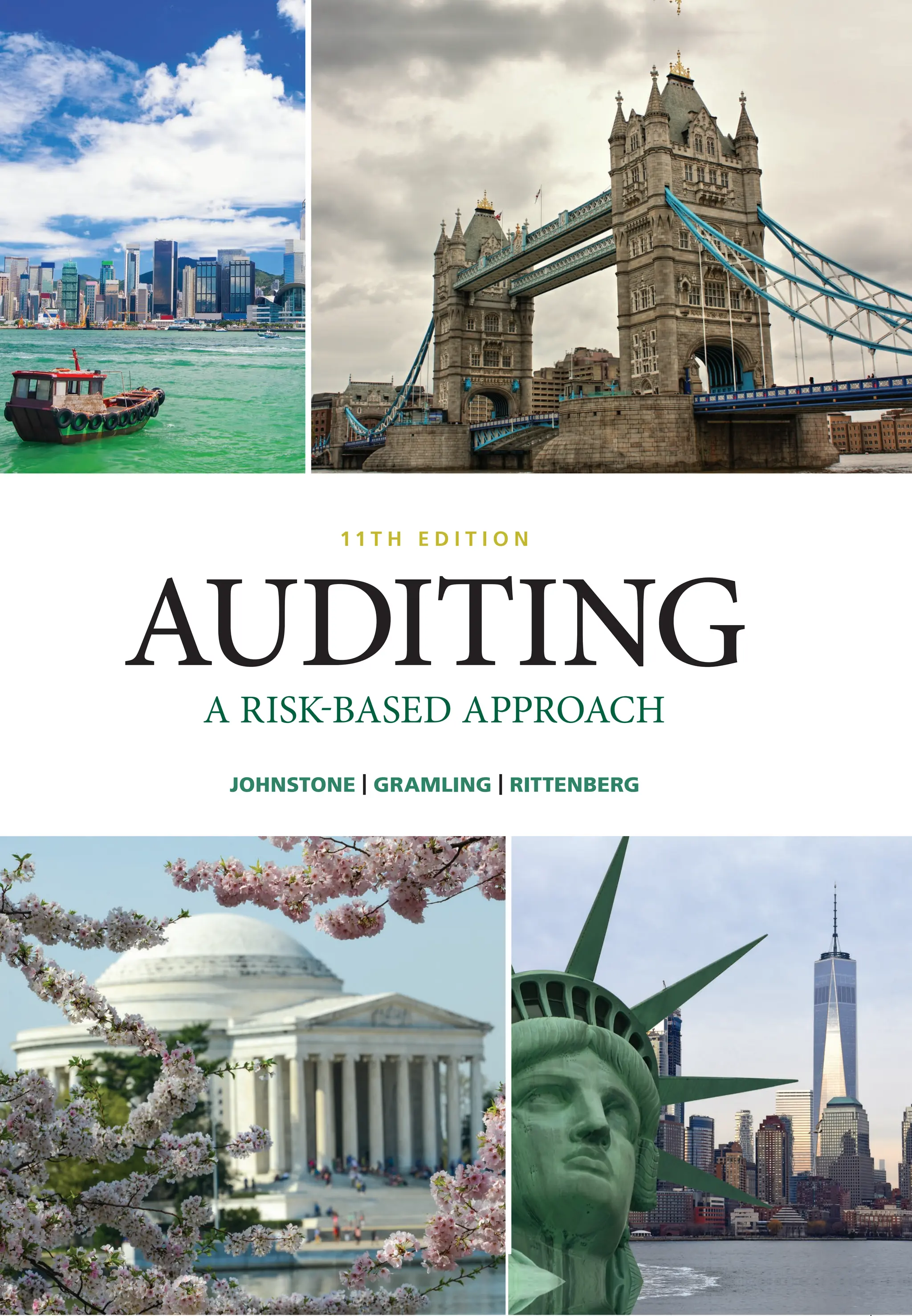
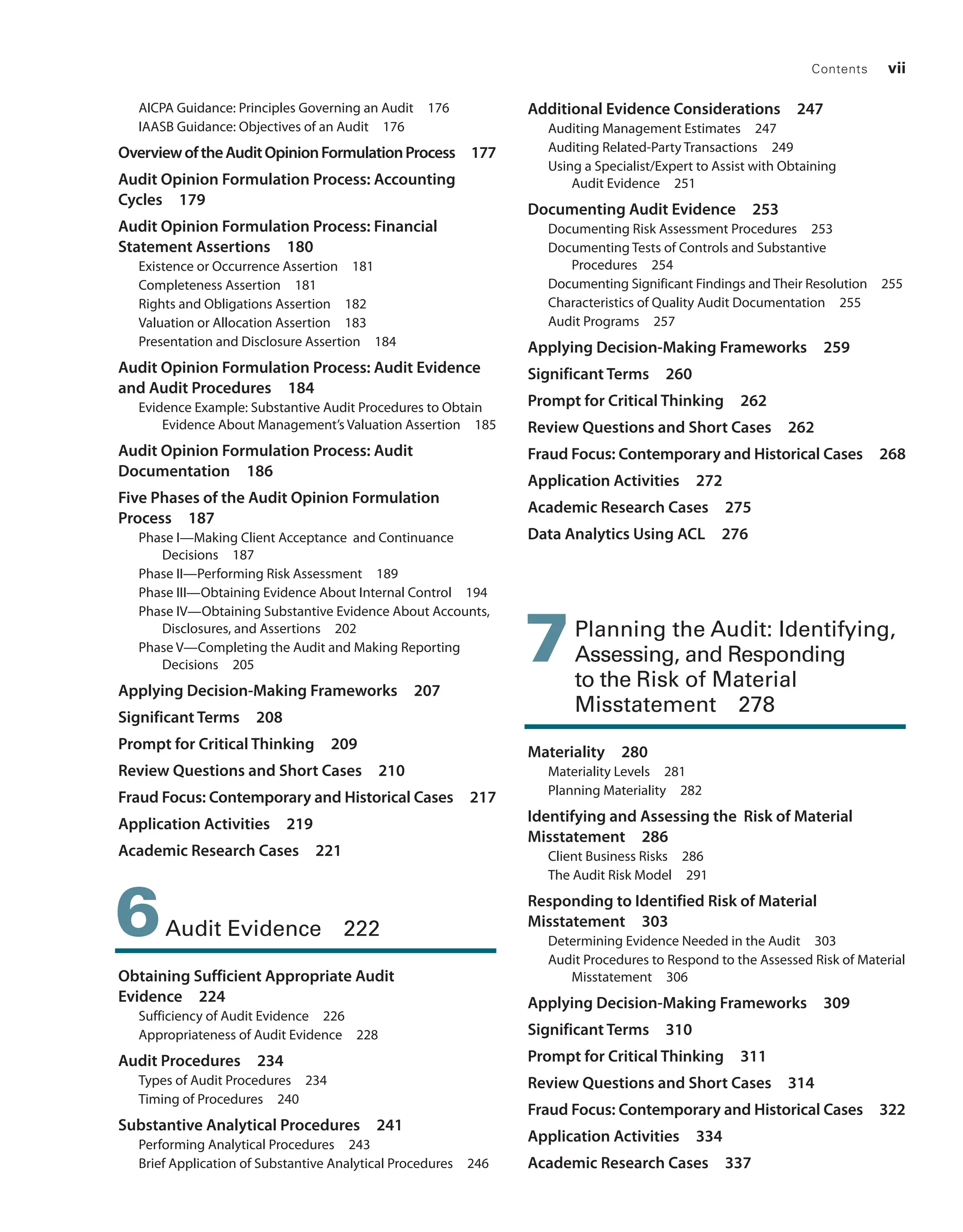
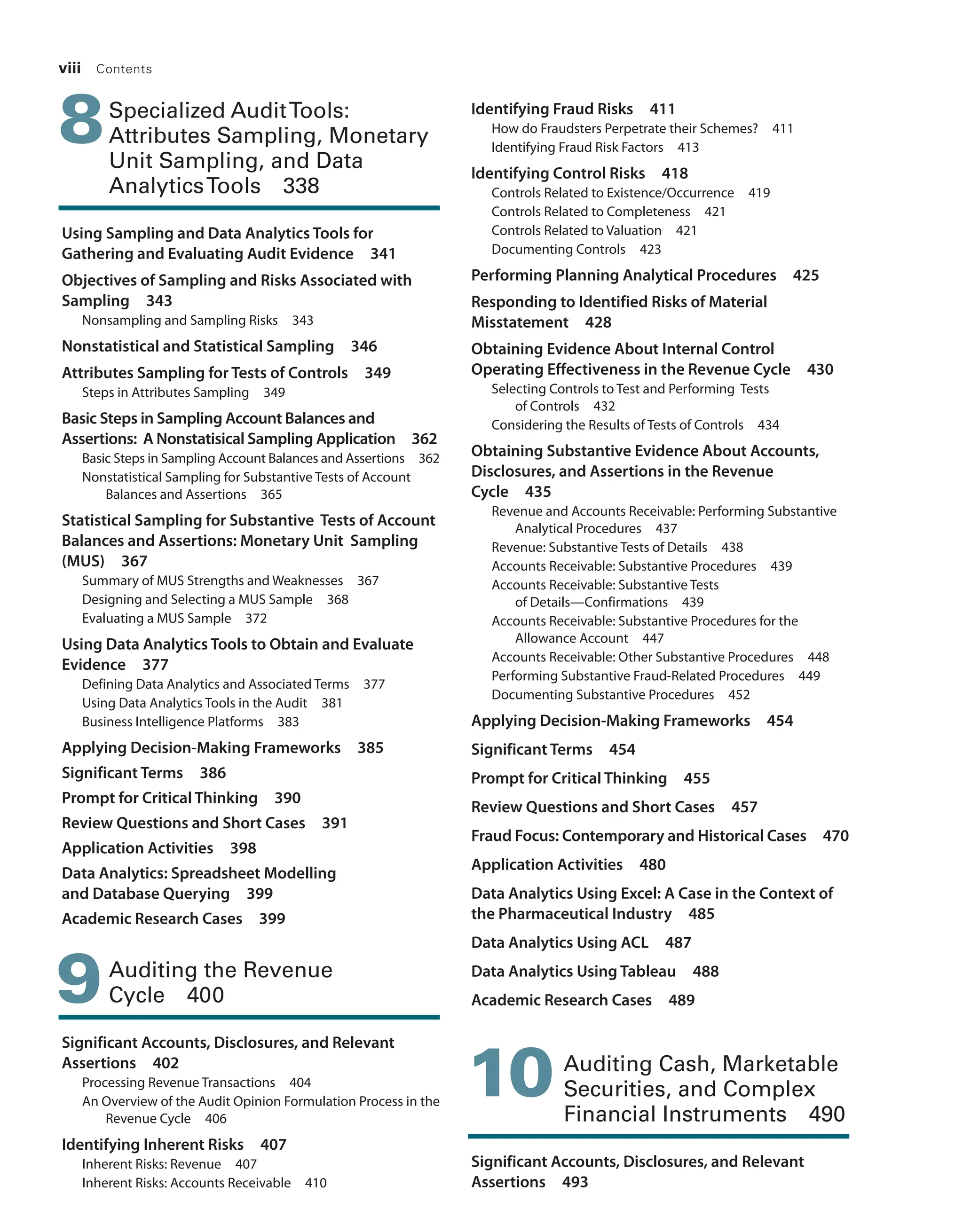
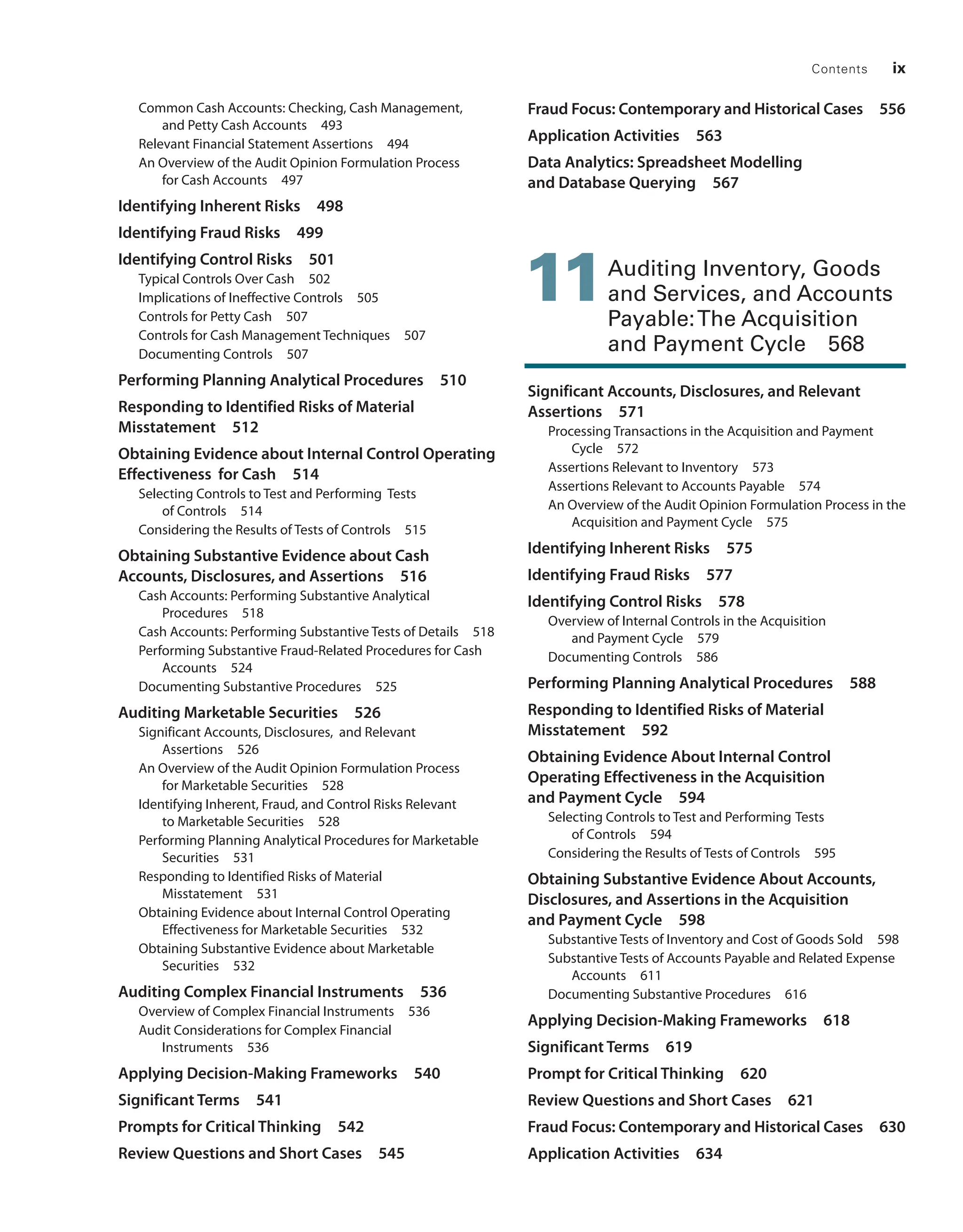
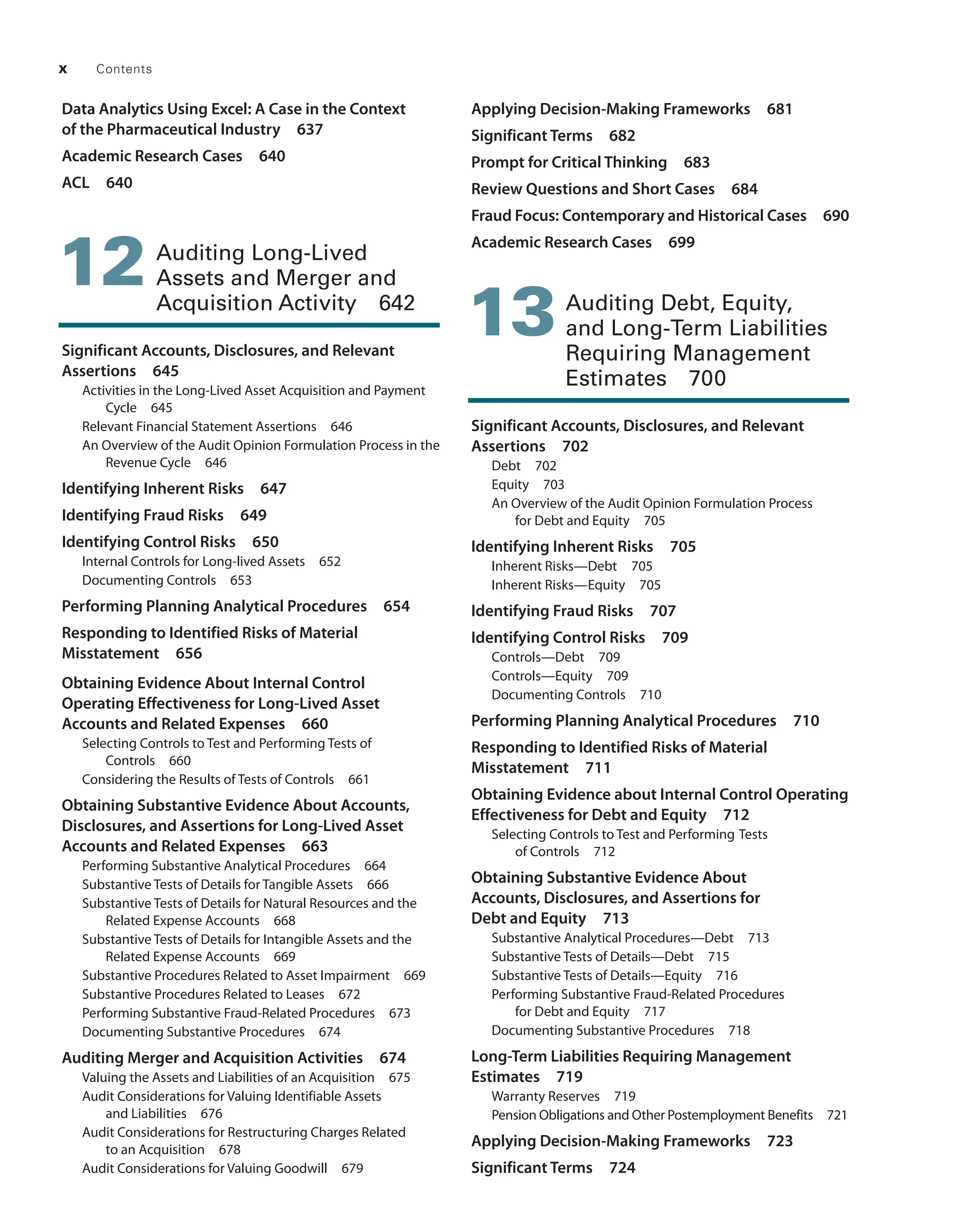
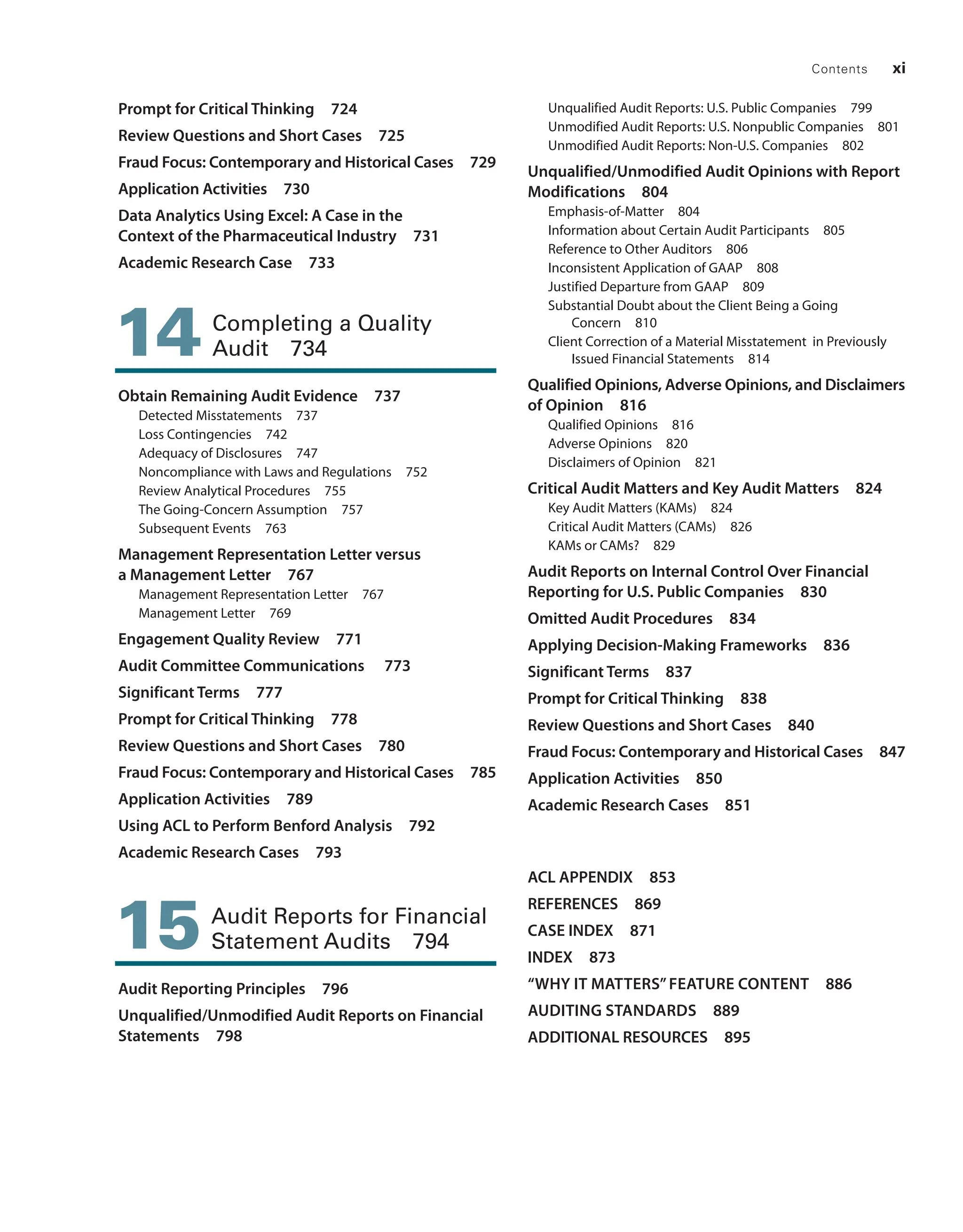

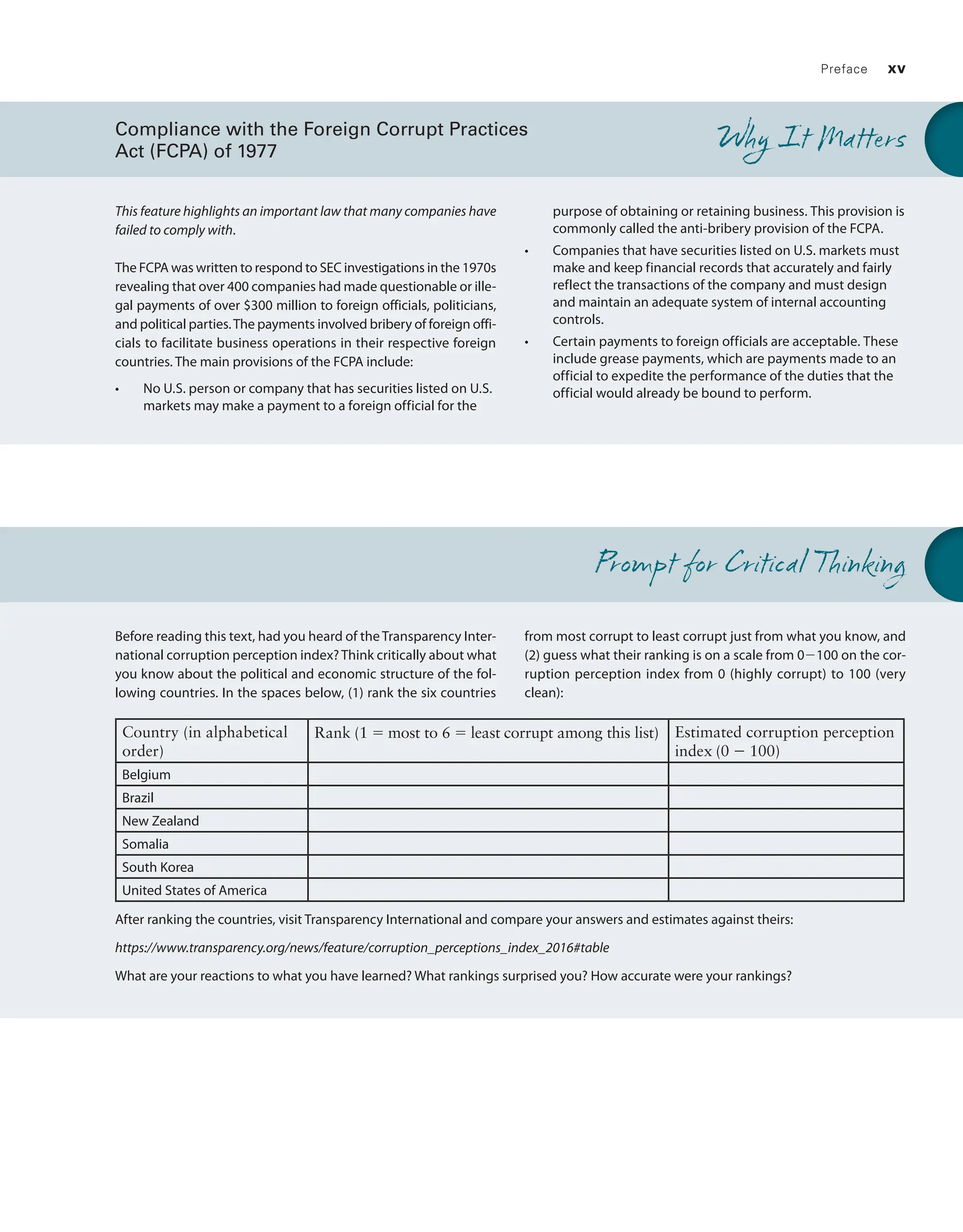
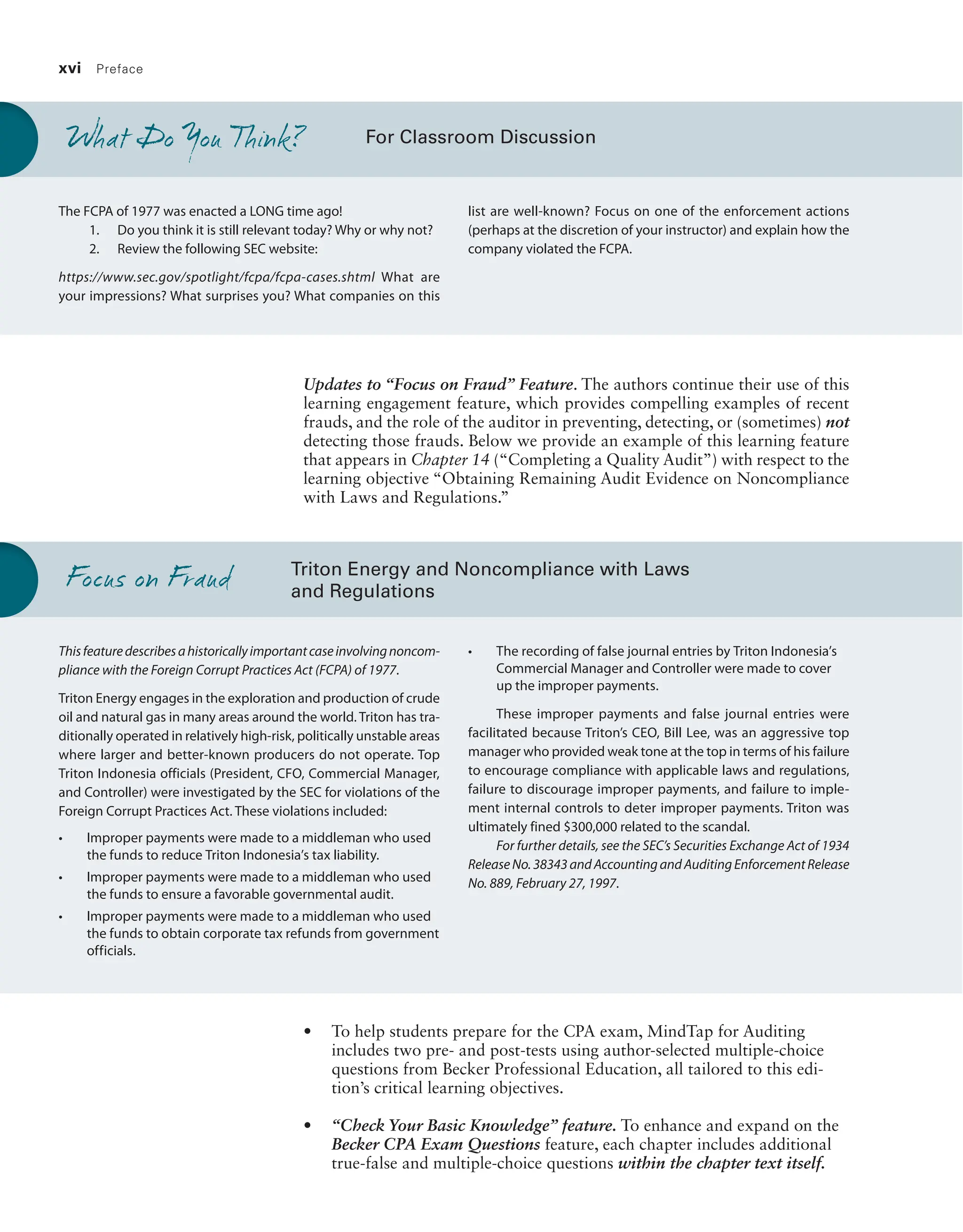
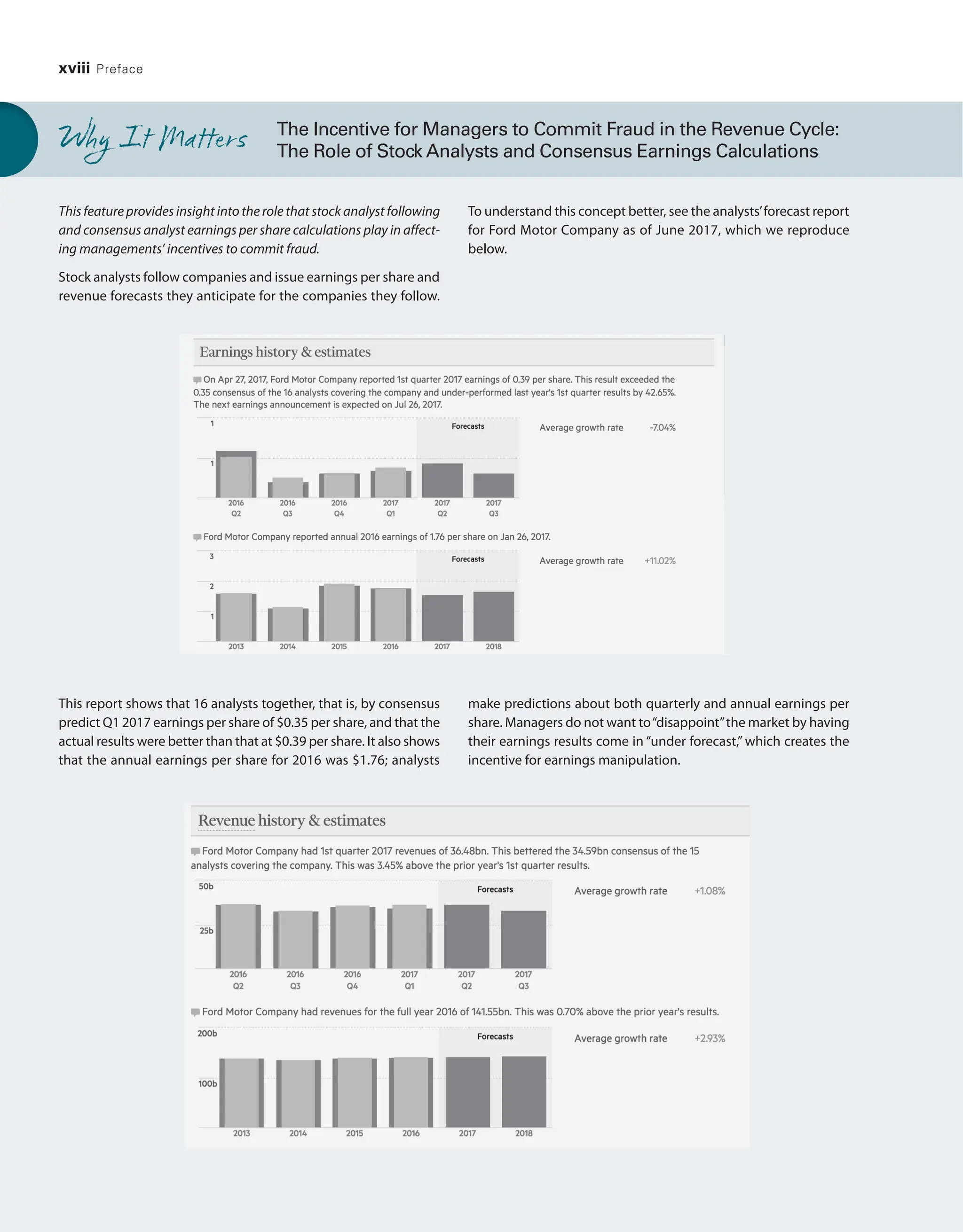
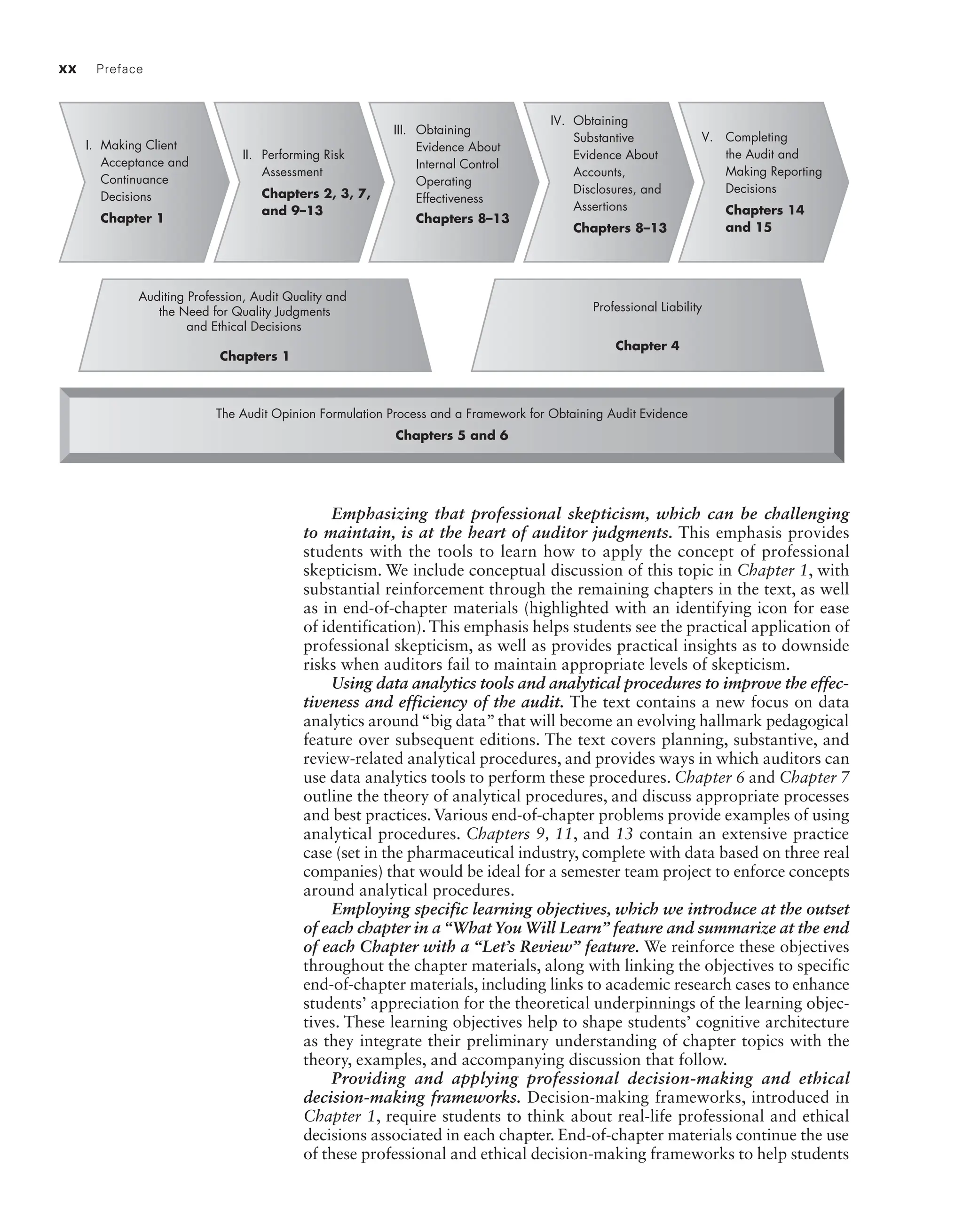

![Sin.
Taste this bread, this substance: tell me
Is it bread or flesh?
[The Senses approach.]
The Smell.
Its smell
Is the smell of bread.
Sin.
Touch, come. Why tremble?
Say what’s this thou touchest?
The Touch.
Bread.
Sin.
Sight, declare what thou discernest
In this object.
The Sight.
Bread alone.
Calderon, Los Encantos de la Culpa.
A wet wind out of the south mazed and mooned through the sea-
mist that hung over the Ross. In all the bays and creeks was a
continuous weary lapping of water. There was no other sound
anywhere.
Thus was it at daybreak: it was thus at noon: thus was it now in
the darkening of the day. A confused thrusting and falling of sounds
through the silence betokened the hour of the setting. Curlews
wailed in the mist: on the seething limpet-covered rocks the skuas
and terns screamed, or uttered hoarse, rasping cries. Ever and again](https://image.slidesharecdn.com/3928-250408151548-ea9536af/75/eBook-PDF-Auditing-A-Risk-Based-Approach-11th-Edition-by-Karla-M-Johnstone-29-2048.jpg)
![the prolonged note of the oyster-catcher shrilled against the air, as
an echo flying blindly along a blank wall of cliff. Out of weedy places,
wherein the tide sobbed with long, gurgling moans, came at
intervals the barking of a seal.
Inland, by the hamlet of Contullich, there is a reedy tarn called the
Loch-a-chaoruinn.[5] By the shores of this mournful water a man
moved. It was a slow, weary walk that of the man Neil Ross. He had
come from Duninch, thirty miles to the eastward, and had not rested
foot, nor eaten, nor had word of man or woman, since his going
west an hour after dawn.
At the bend of the loch nearest the clachan he came upon an old
woman carrying peat. To his reiterated question as to where he was,
and if the tarn were Feur-Lochan above Fionnaphort that is on the
strait of Iona on the west side of the Ross of Mull, she did not at first
make any answer. The rain trickled down her withered brown face,
over which the thin grey locks hung limply. It was only in the deep-
set eyes that the flame of life still glimmered, though that dimly.
The man had used the English when first he spoke, but as though
mechanically. Supposing that he had not been understood, he
repeated his question in the Gaelic.
After a minute’s silence the old woman answered him in the native
tongue, but only to put a question in return.
“I am thinking it is a long time since you have been in Iona?”
The man stirred uneasily.
“And why is that, mother?” he asked, in a weak voice hoarse with
damp and fatigue; “how is it you will be knowing that I have been in
Iona at all?”
“Because I knew your kith and kin there, Neil Ross.”
“I have not been hearing that name, mother, for many a long year.
And as for the old face o’ you, it is unbeknown to me.”](https://image.slidesharecdn.com/3928-250408151548-ea9536af/75/eBook-PDF-Auditing-A-Risk-Based-Approach-11th-Edition-by-Karla-M-Johnstone-30-2048.jpg)
![lines on the face of Sheen. Once there was a sob in her throat, but
she put her shaking hand to it, and it was still.
Neil Ross shifted from foot to foot. The ooze in that marshy place
squelched with each restless movement he made. Beyond them a
plover wheeled, a blurred splatch in the mist, crying its mournful cry
over and over and over.
It was a pitiful thing to hear: ah, bitter loneliness, bitter patience
of poor old women. That he knew well. But he was too weary, and
his heart was nigh full of its own burthen. The words could not come
to his lips. But at last he spoke.
“Tha mo chridhe goirt,” he said, with tears in his voice, as he put
his hand on her bent shoulder; “my heart is sore.”
She put up her old face against his.
“’S tha e ruidhinn mo chridhe,” she whispered; “it is touching my
heart you are.”
After that they walked on slowly through the dripping mist, each
dumb and brooding deep.
“Where will you be staying this night?” asked Sheen suddenly,
when they had traversed a wide boggy stretch of land; adding, as by
an afterthought—“Ah, it is asking you were if the tarn there were
Feur-Lochan. No; it is Loch-a-chaoruinn, and the clachan that is near
is Contullich.”
“Which way?”
“Yonder: to the right.”
“And you are not going there?”
“No. I am going to the steading of Andrew Blair. Maybe you are
for knowing it? It is called the Baile-na-Chlais-nambuidheag.”[6]
“I do not remember. But it is remembering a Blair I am. He was
Adam, the son of Adam, the son of Robert. He and my father did
many an ill deed together.”](https://image.slidesharecdn.com/3928-250408151548-ea9536af/75/eBook-PDF-Auditing-A-Risk-Based-Approach-11th-Edition-by-Karla-M-Johnstone-32-2048.jpg)

![hand, and threw it on the ground, and trod upon it. Andrew Blair
gave a sigh of relief. His cold eyes lightened with malice.
“Be off with you, now, Macallum. We are wanting no tramps at the
farm here, and perhaps you had better not be trying to get work this
side Iona; for it is known as the Sin-Eater you will be, and that won’t
be for the helping, I am thinking! There: there are the two half-
crowns for you … and may they bring you no harm, you that are
Scapegoat now!”
The Sin-Eater turned at that, and stared like a hill-bull. Scapegoat!
Ay, that’s what he was. Sin-Eater, Scapegoat! Was he not, too,
another Judas, to have sold for silver that which was not for the
selling? No, no, for sure Maisie Macdonald could tell him the rune
that would serve for the easing of this burden. He would soon be
quit of it.
Slowly he took the money, turned it over, and put it in his pocket.
“I am going, Andrew Blair,” he said quietly, “I am going now. I will
not say to him that is there in the silence, A chuid do Pharas da!—
nor will I say to you, Gu’n gleidheadh Dia thu,—nor will I say to this
dwelling that is the home of thee and thine, Gu’n beannaicheadh Dia
an tigh!”[7]
Here there was a pause. All listened. Andrew Blair shifted uneasily,
the furtive eyes of him going this way and that, like a ferret in the
grass.
“But, Andrew Blair, I will say this: when you fare abroad, Droch
caoidh ort! and when you go upon the water, Gaoth gun direadh ort!
Ay, ay, Anndra-mhic-Adam, Dia ad aghaidh ’s ad aodann … agus bas
dunach ort! Dhonas ’s dholas ort, agus leat-sa!”[8]
The bitterness of these words was like snow in June upon all
there. They stood amazed. None spoke. No one moved.
Neil Ross turned upon his heel, and, with a bright light in his eyes,
walked away from the dead and the living. He went by the byres,
whence he had come. Andrew Blair remained where he was, now](https://image.slidesharecdn.com/3928-250408151548-ea9536af/75/eBook-PDF-Auditing-A-Risk-Based-Approach-11th-Edition-by-Karla-M-Johnstone-46-2048.jpg)
![Neil looked, but did not speak. His eyes dreamed against what the
other could not see or know. The shepherd called angrily to his dogs
to keep the sheep from straying; then, with a resentful air, turned to
his victim.
“You are a silent man for sure, you are. I’m hoping it is not the
curse upon you already.”
“What curse?”
“Ah, that has brought the wind against the mist! I was thinking
so!”
“What curse?”
“You are the man that was the Sin-Eater over there?”
“Ay.”
“The man Macallum?”
“Ay.”
“Strange it is, but three days ago I saw you in Tobermory, and
heard you give your name as Neil Ross to an Iona man that was
there.”
“Well?”
“Oh, sure, it is nothing to me. But they say the Sin-Eater should
not be a man with a hidden lump in his pack.”[9]
“Why?”
“For the dead know, and are content. There is no shaking off any
sins, then—for that man.”
“It is a lie.”
“Maybe ay and maybe no.”
“Well, have you more to be saying to me? I am obliged to you for
your company, but it is not needing it I am, though no offence.”](https://image.slidesharecdn.com/3928-250408151548-ea9536af/75/eBook-PDF-Auditing-A-Risk-Based-Approach-11th-Edition-by-Karla-M-Johnstone-50-2048.jpg)