Dynamically Composing Collection
Operations through Collection
Promises
Juan Pablo Sandoval Alcocer, Marcus Denker,
Alexandre Bergel, Yasett Acurana
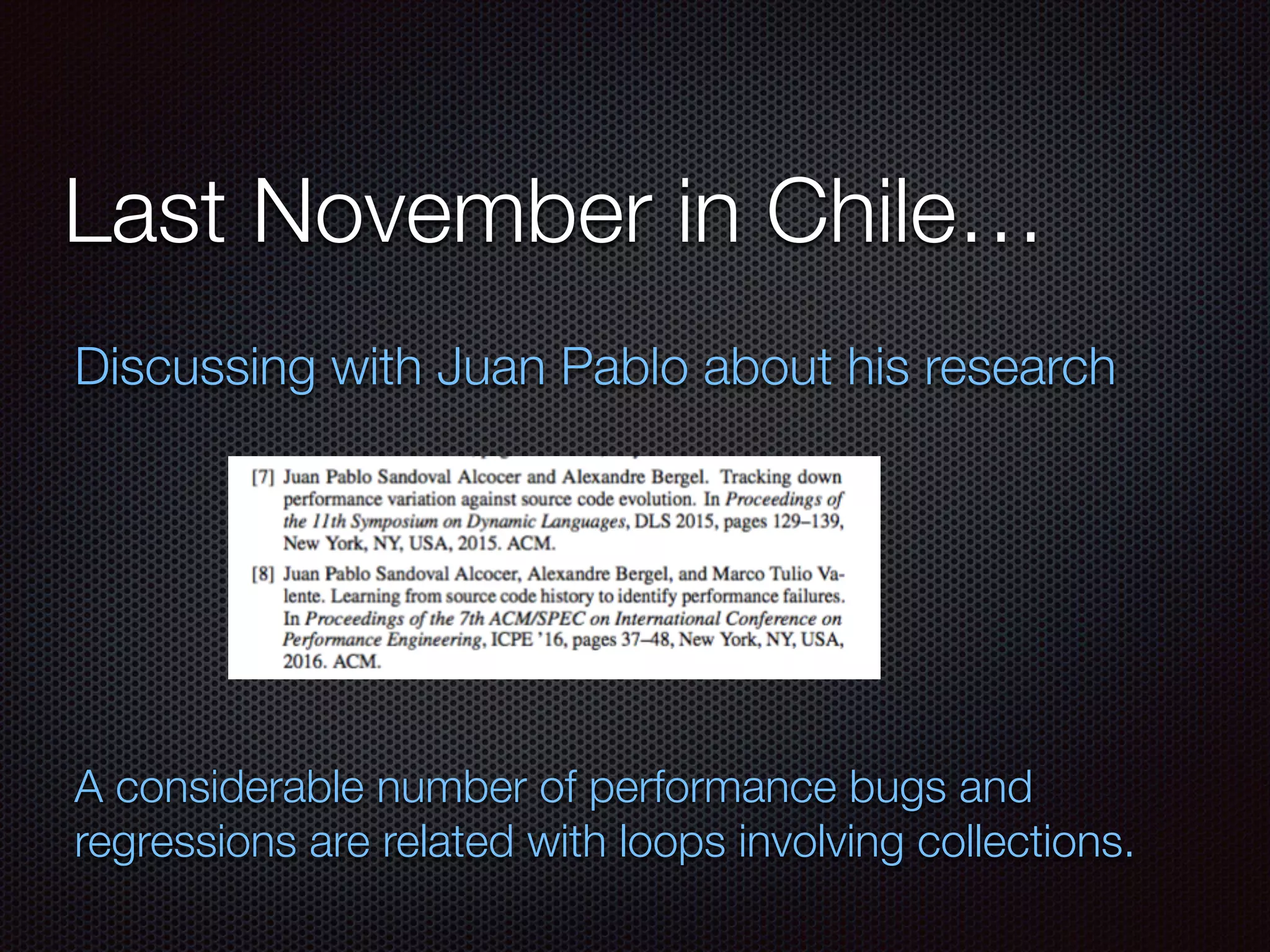
Last November in Chile…
Discussing with Juan Pablo about his research
A considerable number of performance bugs and
regressions are related with loops involving collections.
Problem
• Filtering, mapping, and iterating collections are
frequent operations in Smalltalk
• It create lots of intermediate collections
Example
ROAdjustSizeOfNesting class>>on: element
element elementsNotEdge do: [ :el | ...].
ROElement>>elementsNotEdge
ˆ elements reject: #isEdge
Properties
• Cross method boundaries
• Might even be stored in a variable for
readability
Current solutions (1)
reject: rejectBlock thenDo: aBlock	
	 | each |
	 1 to: self size do: [ :index |
	 	 (rejectBlock value: (each := self at: index))
	 	 	 ifFalse: [ aBlock value: each ]].
• Lots of these defined in Pharo
• Only possible inside one method
• Code needs to be rewritten
Current solutions (2)
• We could use a stream based iteration
protocol
• Code needs to be rewritten
• Not as easily composable
• Will be useful, but not for all cases
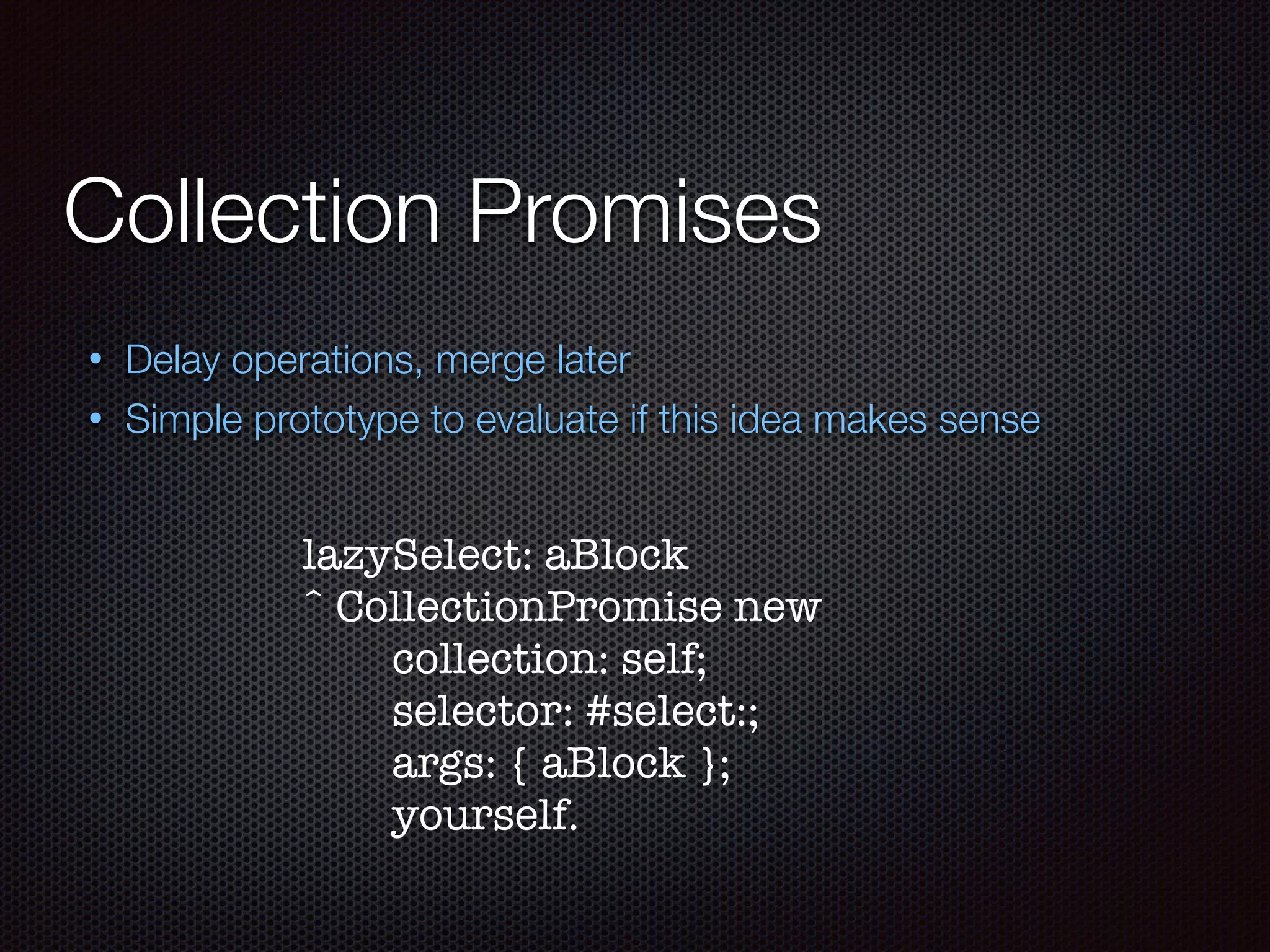
Collection Promises
• Delay operations, merge later
• Simple prototype to evaluate if this idea makes sense
lazySelect: aBlock
ˆ CollectionPromise new
collection: self;
selector: #select:;
args: { aBlock };
yourself.
CollectionPromise>>lazySelect: aBlock
”... composition rules …”
(self selector = #select:) ifTrue:[
|arg|
arg := self args first.

self args: {[ :ele | (arg value: ele) and: [aBlock value:ele]]}.
ˆ self.].
(self selector = #collect:) ifTrue:[
self selector: #collect:thenSelect:.
self args: {args first . aBlock}.

ˆ self].
”... if none of the rules could be applied ...”
self collection: self evaluate.

self selector: #select:.

self args: { aBlock }.
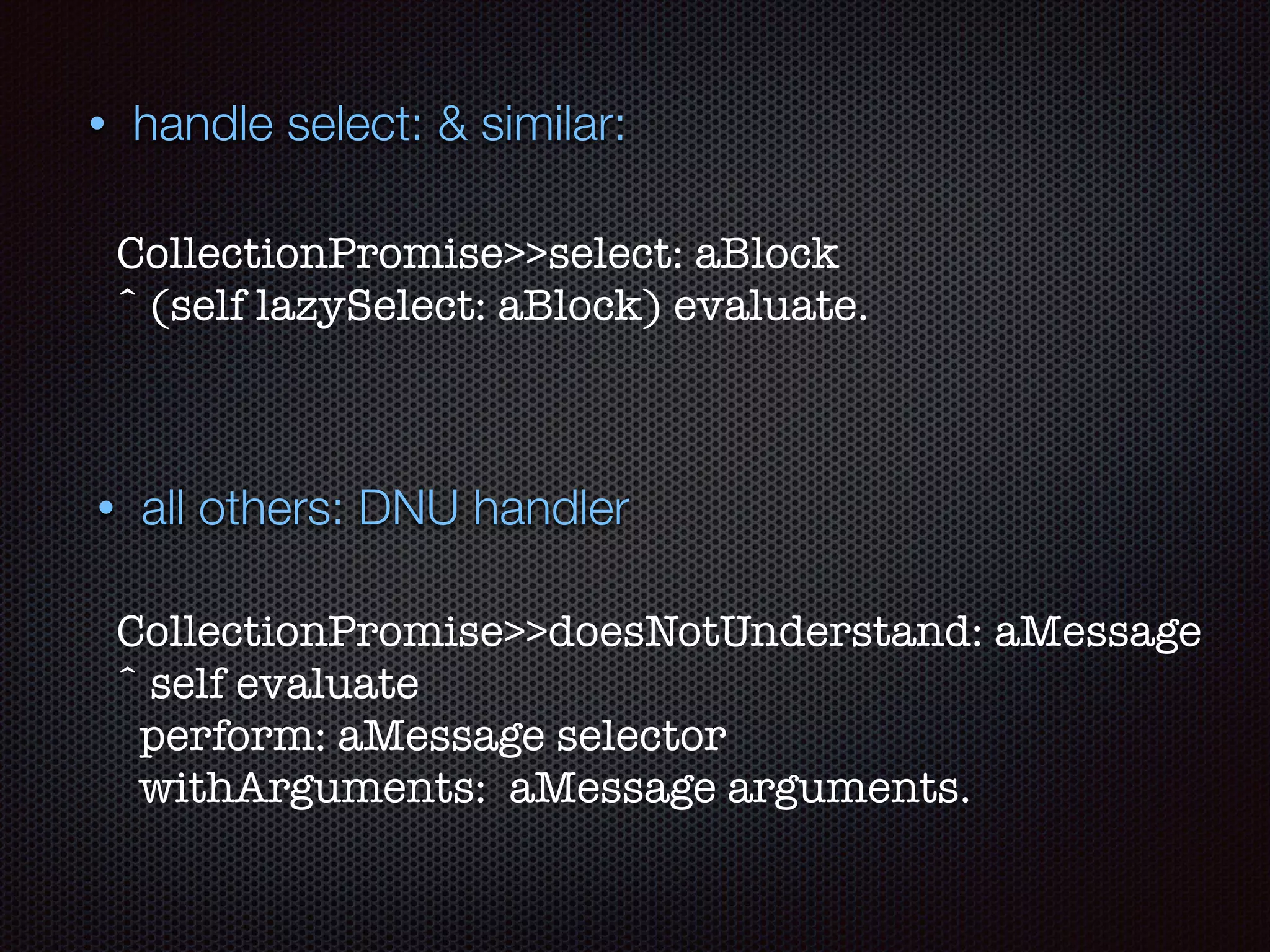
• all others: DNU handler
CollectionPromise>>doesNotUnderstand: aMessage

ˆ self evaluate
perform: aMessage selector
withArguments: aMessage arguments.
• handle select: & similar:
CollectionPromise>>select: aBlock

ˆ (self lazySelect: aBlock) evaluate.
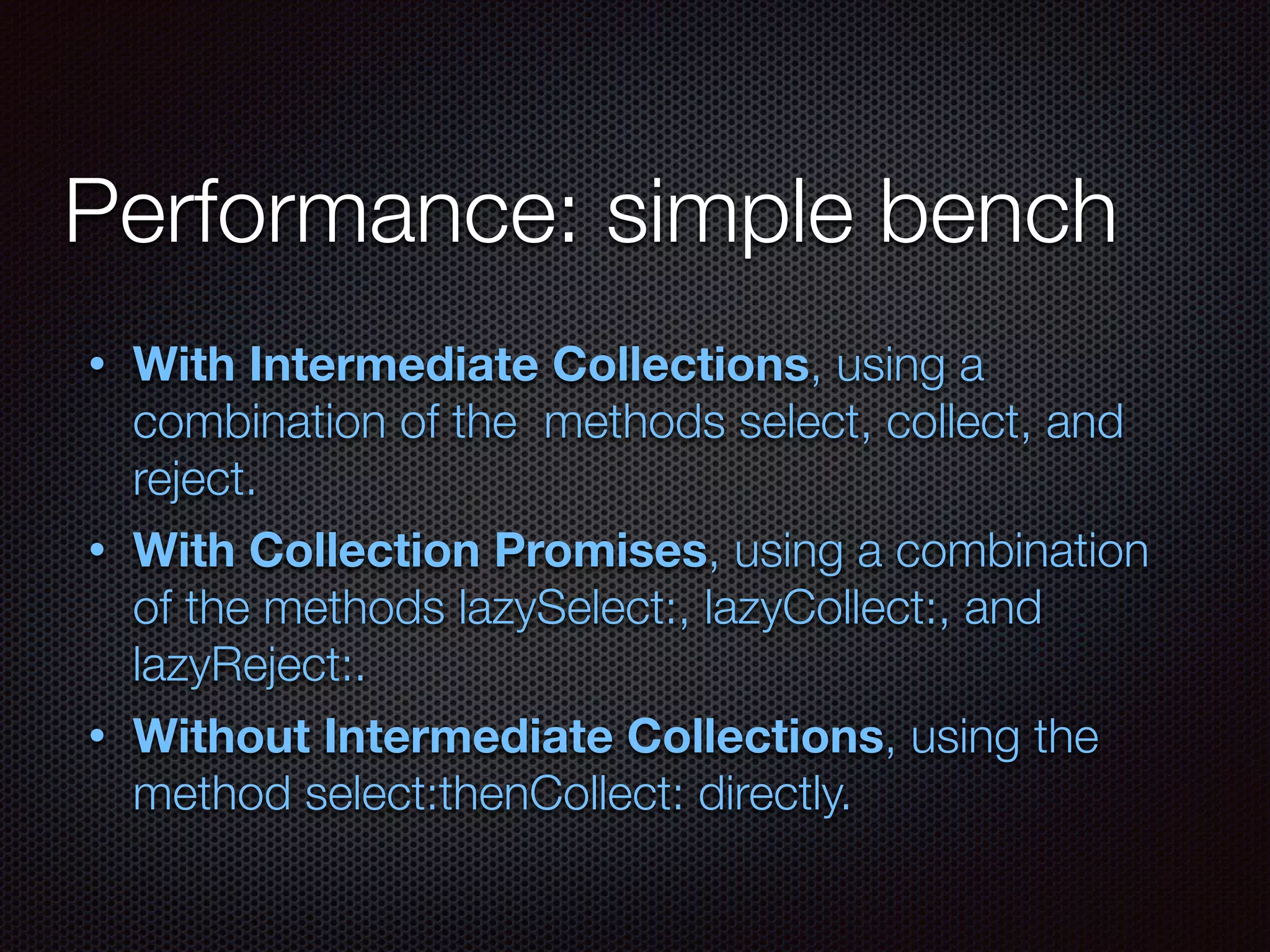
Performance: simple bench
• With Intermediate Collections, using a
combination of the methods select, collect, and
reject.
• With Collection Promises, using a combination
of the methods lazySelect:, lazyCollect:, and
lazyReject:.
• Without Intermediate Collections, using the
method select:thenCollect: directly.
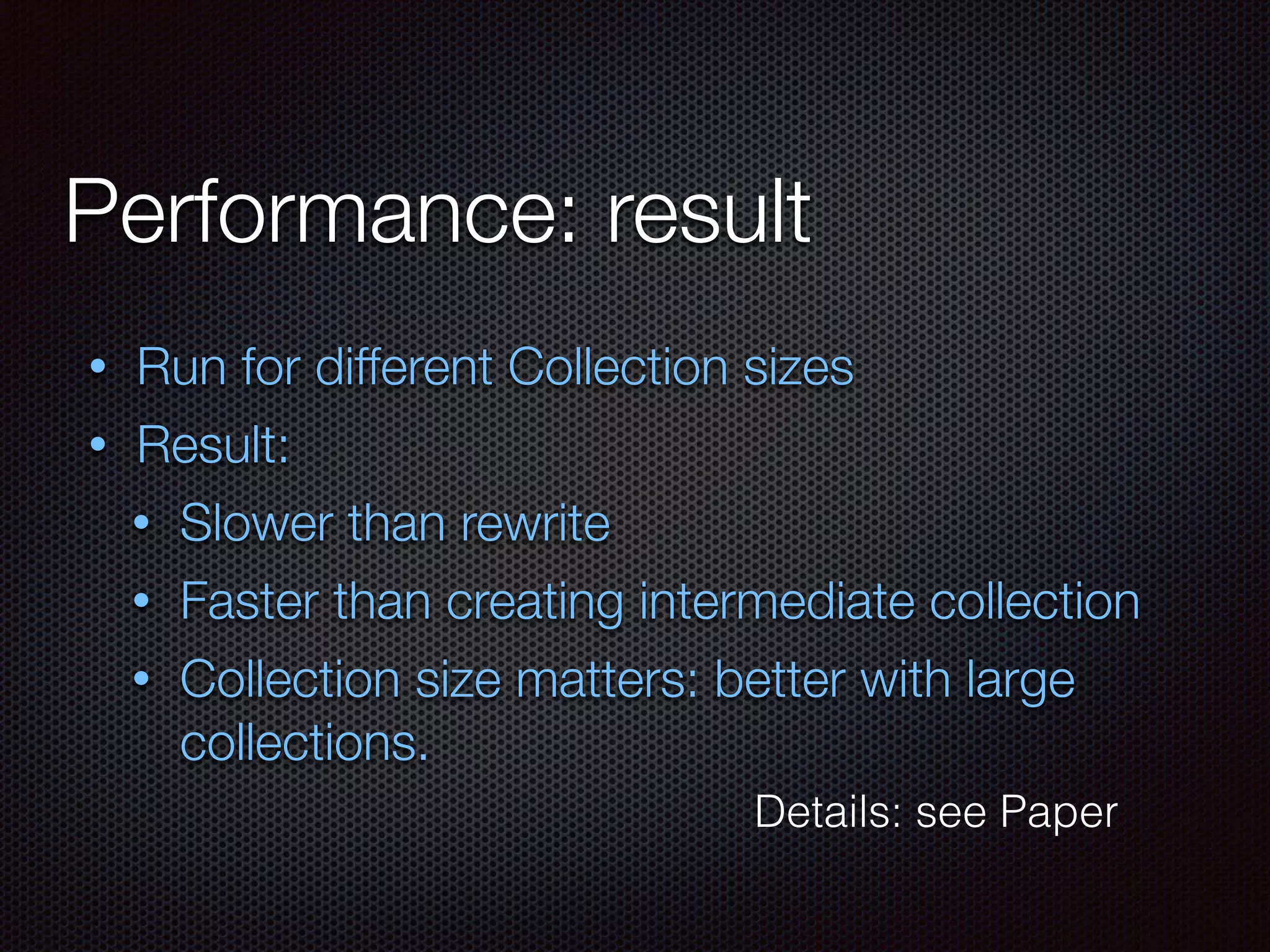
Performance: result
• Run for different Collection sizes
• Result:
• Slower than rewrite
• Faster than creating intermediate collection
• Collection size matters: better with large
collections.
Details: see Paper
Result (for us)
• We wanted to know: does it make sense?
• Very simple prototype shows that it is promising
• Even though very simple implementation
• Result: Yes, we should continue
Future Work
• Extend to cover more cases
• Can we automatically detect where intermediate
collections are created?
• Can we detect hotspots?
• Can we reflectively introduce promises?
• Try to see if we can get speed-up in practice
Questions ?

Dynamically Composing Collection Operations through Collection Promises

  • 1.
    Dynamically Composing Collection Operationsthrough Collection Promises Juan Pablo Sandoval Alcocer, Marcus Denker, Alexandre Bergel, Yasett Acurana
  • 2.
    Last November inChile… Discussing with Juan Pablo about his research A considerable number of performance bugs and regressions are related with loops involving collections.
  • 3.
    Problem • Filtering, mapping,and iterating collections are frequent operations in Smalltalk • It create lots of intermediate collections
  • 4.
    Example ROAdjustSizeOfNesting class>>on: element elementelementsNotEdge do: [ :el | ...]. ROElement>>elementsNotEdge ˆ elements reject: #isEdge
  • 5.
    Properties • Cross methodboundaries • Might even be stored in a variable for readability
  • 6.
    Current solutions (1) reject:rejectBlock thenDo: aBlock | each | 1 to: self size do: [ :index | (rejectBlock value: (each := self at: index)) ifFalse: [ aBlock value: each ]]. • Lots of these defined in Pharo • Only possible inside one method • Code needs to be rewritten
  • 7.
    Current solutions (2) •We could use a stream based iteration protocol • Code needs to be rewritten • Not as easily composable • Will be useful, but not for all cases
  • 8.
    Collection Promises • Delayoperations, merge later • Simple prototype to evaluate if this idea makes sense lazySelect: aBlock ˆ CollectionPromise new collection: self; selector: #select:; args: { aBlock }; yourself.
  • 9.
    CollectionPromise>>lazySelect: aBlock ”... compositionrules …” (self selector = #select:) ifTrue:[ |arg| arg := self args first.
 self args: {[ :ele | (arg value: ele) and: [aBlock value:ele]]}. ˆ self.]. (self selector = #collect:) ifTrue:[ self selector: #collect:thenSelect:. self args: {args first . aBlock}.
 ˆ self]. ”... if none of the rules could be applied ...” self collection: self evaluate.
 self selector: #select:.
 self args: { aBlock }.
  • 10.
    • all others:DNU handler CollectionPromise>>doesNotUnderstand: aMessage
 ˆ self evaluate perform: aMessage selector withArguments: aMessage arguments. • handle select: & similar: CollectionPromise>>select: aBlock
 ˆ (self lazySelect: aBlock) evaluate.
  • 11.
    Performance: simple bench •With Intermediate Collections, using a combination of the methods select, collect, and reject. • With Collection Promises, using a combination of the methods lazySelect:, lazyCollect:, and lazyReject:. • Without Intermediate Collections, using the method select:thenCollect: directly.
  • 12.
    Performance: result • Runfor different Collection sizes • Result: • Slower than rewrite • Faster than creating intermediate collection • Collection size matters: better with large collections. Details: see Paper
  • 13.
    Result (for us) •We wanted to know: does it make sense? • Very simple prototype shows that it is promising • Even though very simple implementation • Result: Yes, we should continue
  • 14.
    Future Work • Extendto cover more cases • Can we automatically detect where intermediate collections are created? • Can we detect hotspots? • Can we reflectively introduce promises? • Try to see if we can get speed-up in practice
  • 15.