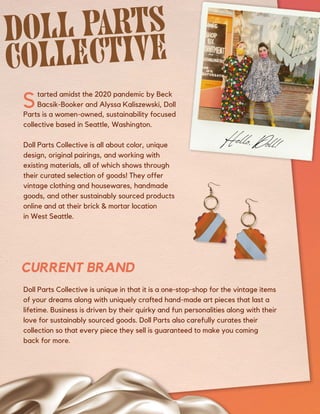
Hello, Doll!
Parts is a women-owned, sustainability focused
collective based in Seattle, Washington.
Doll Parts Collective is all about color, unique
design, original pairings, and working with
existing materials, all of which shows through
their curated selection of goods! They offer
vintage clothing and housewares, handmade
goods, and other sustainably sourced products
online and at their brick & mortar location
in West Seattle.
tarted amidst the 2020 pandemic by Beck
Bacsik-Booker and Alyssa Kaliszewski, Doll
S
CURRENT BRAND
Doll Parts Collective is unique in that it is a one-stop-shop for the vintage items
of your dreams along with uniquely crafted hand-made art pieces that last a
lifetime. Business is driven by their quirky and fun personalities along with their
love for sustainably sourced goods. Doll Parts also carefully curates their
collection so that every piece they sell is guaranteed to make you coming
back for more.
Be a Doll,
Shop mall!
VOICE OF DOLL
PARTS COLLECTIVE
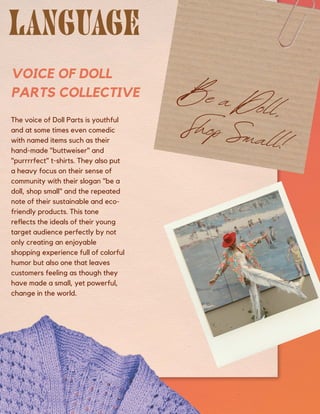
The voice of Doll Parts is youthful
and at some times even comedic
with named items such as their
hand-made "buttweiser" and
"purrrrfect" t-shirts. They also put
a heavy focus on their sense of
community with their slogan "be a
doll, shop small" and the repeated
note of their sustainable and eco-
friendly products. This tone
reflects the ideals of their young
target audience perfectly by not
only creating an enjoyable
shopping experience full of colorful
humor but also one that leaves
customers feeling as though they
have made a small, yet powerful,
change in the world.
S
IDENTITY
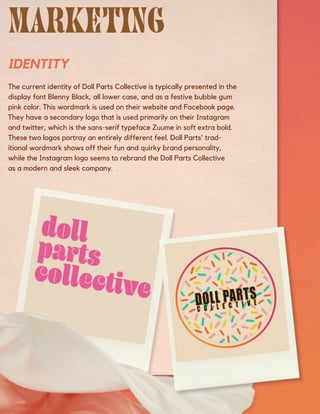
The current identity of Doll Parts Collective is typically presented in the
display font Blenny Black, all lower case, and as a festive bubble gum
pink color. This wordmark is used on their website and Facebook page.
They have a secondary logo that is used primarily on their Instagram
and twitter, which is the sans-serif typeface Zuume in soft extra bold.
These two logos portray an entirely different feel. Doll Parts' trad-
itional wordmark shows off their fun and quirky brand personality,
while the Instagram logo seems to rebrand the Doll Parts Collective
as a modern and sleek company.
WEB AND SOCIAL MEDIA
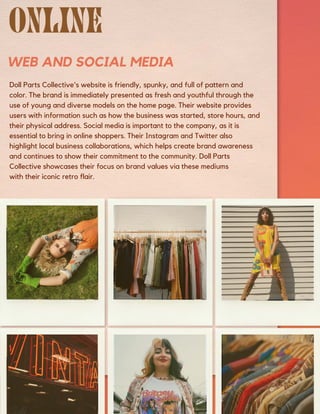
Doll Parts Collective's website is friendly, spunky, and full of pattern and
color. The brand is immediately presented as fresh and youthful through the
use of young and diverse models on the home page. Their website provides
users with information such as how the business was started, store hours, and
their physical address. Social media is important to the company, as it is
essential to bring in online shoppers. Their Instagram and Twitter also
highlight local business collaborations, which helps create brand awareness
and continues to show their commitment to the community. Doll Parts
Collective showcases their focus on brand values via these mediums
with their iconic retro flair.
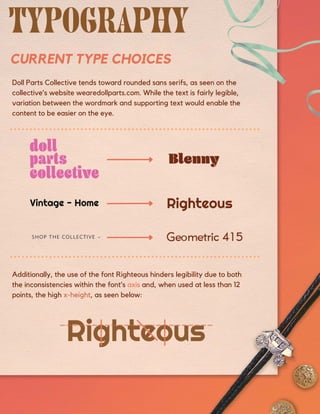
Doll Parts Collective tends toward rounded sans serifs, as seen on the
collective’s website wearedollparts.com. While the text is fairly legible,
variation between the wordmark and supporting text would enable the
content to be easier on the eye.
Additionally, the use of the font Righteous hinders legibility due to both
the inconsistencies within the font’s axis and, when used at less than 12
points, the high x-height, as seen below:
CURRENT TYPE CHOICES
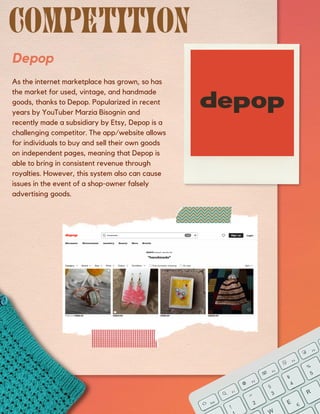
Depop
As the internet marketplace has grown, so has
the market for used, vintage, and handmade
goods, thanks to Depop. Popularized in recent
years by YouTuber Marzia Bisognin and
recently made a subsidiary by Etsy, Depop is a
challenging competitor. The app/website allows
for individuals to buy and sell their own goods
on independent pages, meaning that Depop is
able to bring in consistent revenue through
royalties. However, this system also can cause
issues in the event of a shop-owner falsely
advertising goods.
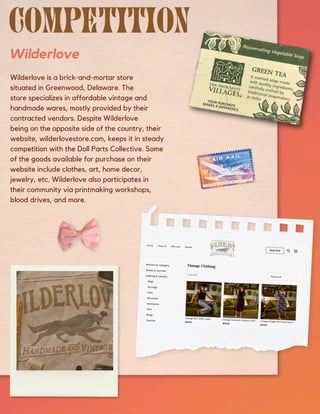
Wilderlove
Wilderlove is a brick-and-mortar store
situated in Greenwood, Delaware. The
store specializes in affordable vintage and
handmade wares, mostly provided by their
contracted vendors. Despite Wilderlove
being on the opposite side of the country, their
website, wilderlovestore.com, keeps it in steady
competition with the Doll Parts Collective. Some
of the goods available for purchase on their
website include clothes, art, home decor,
jewelry, etc. Wilderlove also participates in
their community via printmaking workshops,
blood drives, and more.
To be creative and unique with our collection while still focusing on
sustainability through existing materials.
Vintage and handmade clothing, accessories, home items, and other
sustainable goods!
We were able to interview the dynamic duo owners of Doll Parts
Collective, Becky Bacsik-Booker and Alyssa Kaliszewski. While we could
rave about the cute, eccentric aura of Doll Parts Collective, we'll let
Becky and Alyssa speak for themselves!
Unique thrifted and handmade clothing, jewelry, and home goods.
To be creative and unique with our collection while still focusing on
sustainability through existing materials.
What business are you in?
What is your mission, now and for the future?
Why was this company created?
What kinds of goodies does Doll Parts sell?
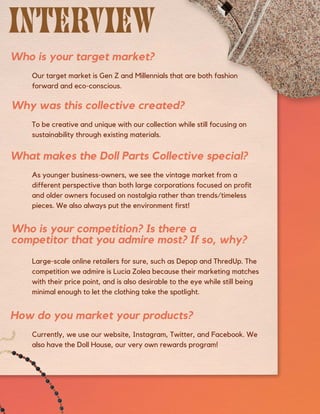
Our target market is Gen Z and Millennials that are both fashion
forward and eco-conscious.
Who is your target market?
As younger business-owners, we see the vintage market from a
different perspective than both large corporations focused on profit
and older owners focused on nostalgia rather than trends/timeless
pieces. We also always put the environment first!
Currently, we use our website, Instagram, Twitter, and Facebook. We
also have the Doll House, our very own rewards program!
To be creative and unique with our collection while still focusing on
sustainability through existing materials.
Large-scale online retailers for sure, such as Depop and ThredUp. The
competition we admire is Lucia Zolea because their marketing matches
with their price point, and is also desirable to the eye while still being
minimal enough to let the clothing take the spotlight.
What makes the Doll Parts Collective special?
How do you market your products?
Why was this collective created?
Who is your competition? Is there a
competitor that you admire most? If so, why?
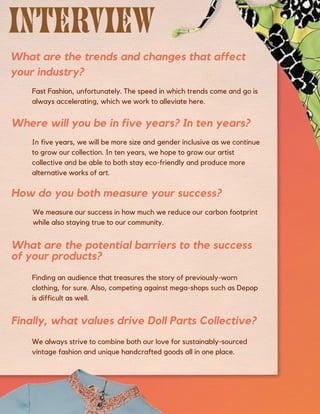
We always strive to combine both our love for sustainably-sourced
vintage fashion and unique handcrafted goods all in one place.
Finally, what values drive Doll Parts Collective?
Finding an audience that treasures the story of previously-worn
clothing, for sure. Also, competing against mega-shops such as Depop
is difficult as well.
Fast Fashion, unfortunately. The speed in which trends come and go is
always accelerating, which we work to alleviate here.
We measure our success in how much we reduce our carbon footprint
while also staying true to our community.
In five years, we will be more size and gender inclusive as we continue
to grow our collection. In ten years, we hope to grow our artist
collective and be able to both stay eco-friendly and produce more
alternative works of art.
What are the trends and changes that affect
your industry?
How do you both measure your success?
Where will you be in five years? In ten years?
What are the potential barriers to the success
of your products?
School Project

School Project

  • 1.
    Hello, Doll! Parts isa women-owned, sustainability focused collective based in Seattle, Washington. Doll Parts Collective is all about color, unique design, original pairings, and working with existing materials, all of which shows through their curated selection of goods! They offer vintage clothing and housewares, handmade goods, and other sustainably sourced products online and at their brick & mortar location in West Seattle. tarted amidst the 2020 pandemic by Beck Bacsik-Booker and Alyssa Kaliszewski, Doll S CURRENT BRAND Doll Parts Collective is unique in that it is a one-stop-shop for the vintage items of your dreams along with uniquely crafted hand-made art pieces that last a lifetime. Business is driven by their quirky and fun personalities along with their love for sustainably sourced goods. Doll Parts also carefully curates their collection so that every piece they sell is guaranteed to make you coming back for more.
  • 2.
    Be a Doll, Shopmall! VOICE OF DOLL PARTS COLLECTIVE The voice of Doll Parts is youthful and at some times even comedic with named items such as their hand-made "buttweiser" and "purrrrfect" t-shirts. They also put a heavy focus on their sense of community with their slogan "be a doll, shop small" and the repeated note of their sustainable and eco- friendly products. This tone reflects the ideals of their young target audience perfectly by not only creating an enjoyable shopping experience full of colorful humor but also one that leaves customers feeling as though they have made a small, yet powerful, change in the world. S
  • 3.
    IDENTITY The current identityof Doll Parts Collective is typically presented in the display font Blenny Black, all lower case, and as a festive bubble gum pink color. This wordmark is used on their website and Facebook page. They have a secondary logo that is used primarily on their Instagram and twitter, which is the sans-serif typeface Zuume in soft extra bold. These two logos portray an entirely different feel. Doll Parts' trad- itional wordmark shows off their fun and quirky brand personality, while the Instagram logo seems to rebrand the Doll Parts Collective as a modern and sleek company.
  • 4.
    WEB AND SOCIALMEDIA Doll Parts Collective's website is friendly, spunky, and full of pattern and color. The brand is immediately presented as fresh and youthful through the use of young and diverse models on the home page. Their website provides users with information such as how the business was started, store hours, and their physical address. Social media is important to the company, as it is essential to bring in online shoppers. Their Instagram and Twitter also highlight local business collaborations, which helps create brand awareness and continues to show their commitment to the community. Doll Parts Collective showcases their focus on brand values via these mediums with their iconic retro flair.
  • 5.
    Doll Parts Collectivetends toward rounded sans serifs, as seen on the collective’s website wearedollparts.com. While the text is fairly legible, variation between the wordmark and supporting text would enable the content to be easier on the eye. Additionally, the use of the font Righteous hinders legibility due to both the inconsistencies within the font’s axis and, when used at less than 12 points, the high x-height, as seen below: CURRENT TYPE CHOICES
  • 6.
    Depop As the internetmarketplace has grown, so has the market for used, vintage, and handmade goods, thanks to Depop. Popularized in recent years by YouTuber Marzia Bisognin and recently made a subsidiary by Etsy, Depop is a challenging competitor. The app/website allows for individuals to buy and sell their own goods on independent pages, meaning that Depop is able to bring in consistent revenue through royalties. However, this system also can cause issues in the event of a shop-owner falsely advertising goods.
  • 7.
    Wilderlove Wilderlove is abrick-and-mortar store situated in Greenwood, Delaware. The store specializes in affordable vintage and handmade wares, mostly provided by their contracted vendors. Despite Wilderlove being on the opposite side of the country, their website, wilderlovestore.com, keeps it in steady competition with the Doll Parts Collective. Some of the goods available for purchase on their website include clothes, art, home decor, jewelry, etc. Wilderlove also participates in their community via printmaking workshops, blood drives, and more.
  • 8.
    To be creativeand unique with our collection while still focusing on sustainability through existing materials. Vintage and handmade clothing, accessories, home items, and other sustainable goods! We were able to interview the dynamic duo owners of Doll Parts Collective, Becky Bacsik-Booker and Alyssa Kaliszewski. While we could rave about the cute, eccentric aura of Doll Parts Collective, we'll let Becky and Alyssa speak for themselves! Unique thrifted and handmade clothing, jewelry, and home goods. Unique thrifted and handmade clothing, jewelry, and home goods. To be creative and unique with our collection while still focusing on sustainability through existing materials. What business are you in? What is your mission, now and for the future? Why was this company created? Why was this company created? What kinds of goodies does Doll Parts sell?
  • 9.
    Our target marketis Gen Z and Millennials that are both fashion forward and eco-conscious. Who is your target market? As younger business-owners, we see the vintage market from a different perspective than both large corporations focused on profit and older owners focused on nostalgia rather than trends/timeless pieces. We also always put the environment first! Currently, we use our website, Instagram, Twitter, and Facebook. We also have the Doll House, our very own rewards program! To be creative and unique with our collection while still focusing on sustainability through existing materials. Large-scale online retailers for sure, such as Depop and ThredUp. The competition we admire is Lucia Zolea because their marketing matches with their price point, and is also desirable to the eye while still being minimal enough to let the clothing take the spotlight. What makes the Doll Parts Collective special? How do you market your products? Why was this collective created? Who is your competition? Is there a competitor that you admire most? If so, why?
  • 10.
    We always striveto combine both our love for sustainably-sourced vintage fashion and unique handcrafted goods all in one place. Finally, what values drive Doll Parts Collective? Finding an audience that treasures the story of previously-worn clothing, for sure. Also, competing against mega-shops such as Depop is difficult as well. Fast Fashion, unfortunately. The speed in which trends come and go is always accelerating, which we work to alleviate here. We measure our success in how much we reduce our carbon footprint while also staying true to our community. In five years, we will be more size and gender inclusive as we continue to grow our collection. In ten years, we hope to grow our artist collective and be able to both stay eco-friendly and produce more alternative works of art. What are the trends and changes that affect your industry? How do you both measure your success? Where will you be in five years? In ten years? What are the potential barriers to the success of your products?