Domain Driven Design 
Through Onion Architecture
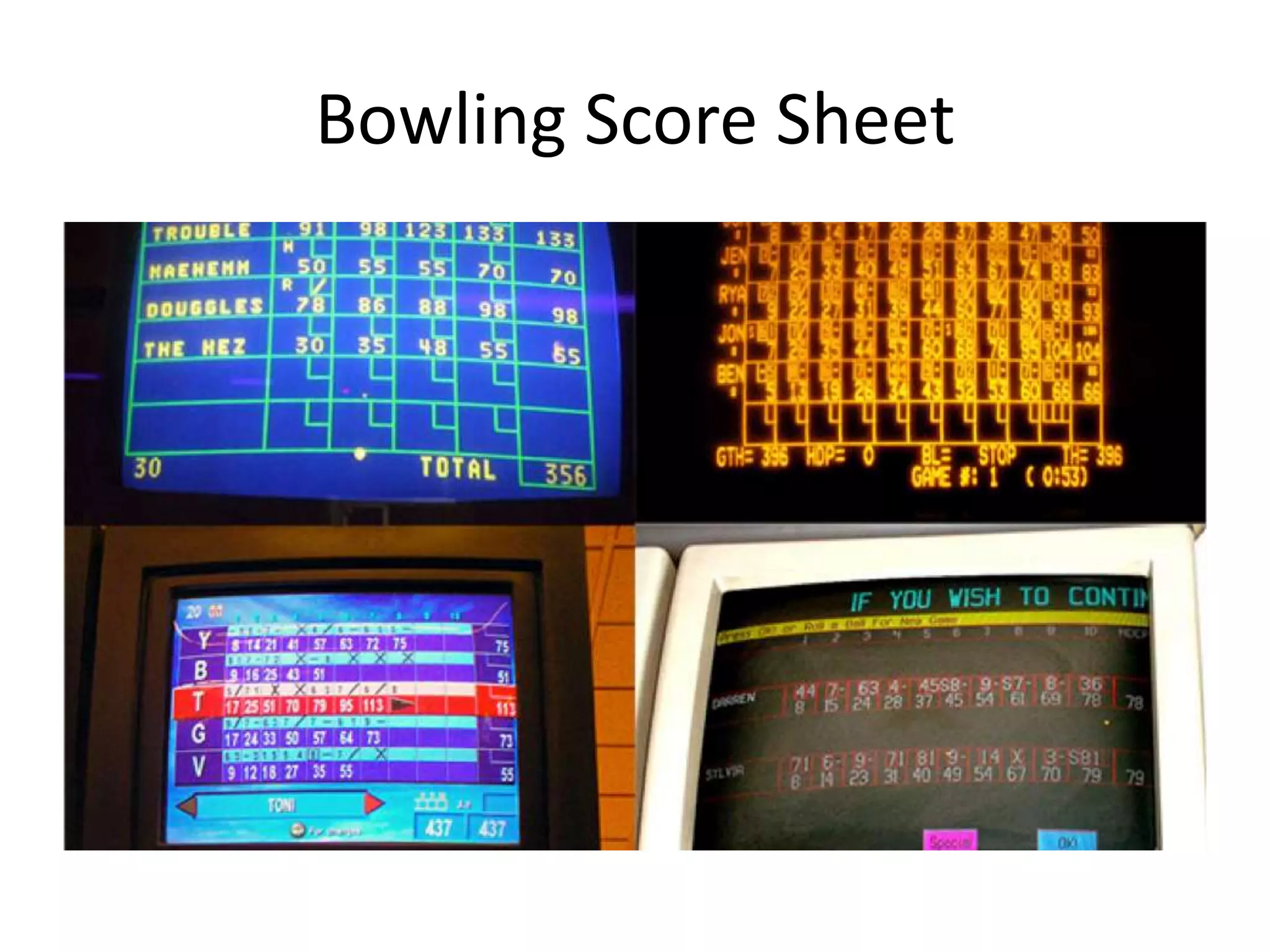
Bowling Score Sheet
What is Domain Driven Design 
• A technique for developing software that 
focuses on collaboration between technical 
experts and domain experts. 
• The ideas and terms of the domain should be 
directly reflected by the code through the 
Ubiquitous Language.
Bowling Domain 
• Who are the Domain Experts? 
• What is the Ubiquitous Language?
Bounded Contexts 
• Subdivide large domains into smaller contexts. 
• Each context can have it’s own ubiquitous 
language and it’s own model. 
• Bounded Contexts may share some domain 
aspects.
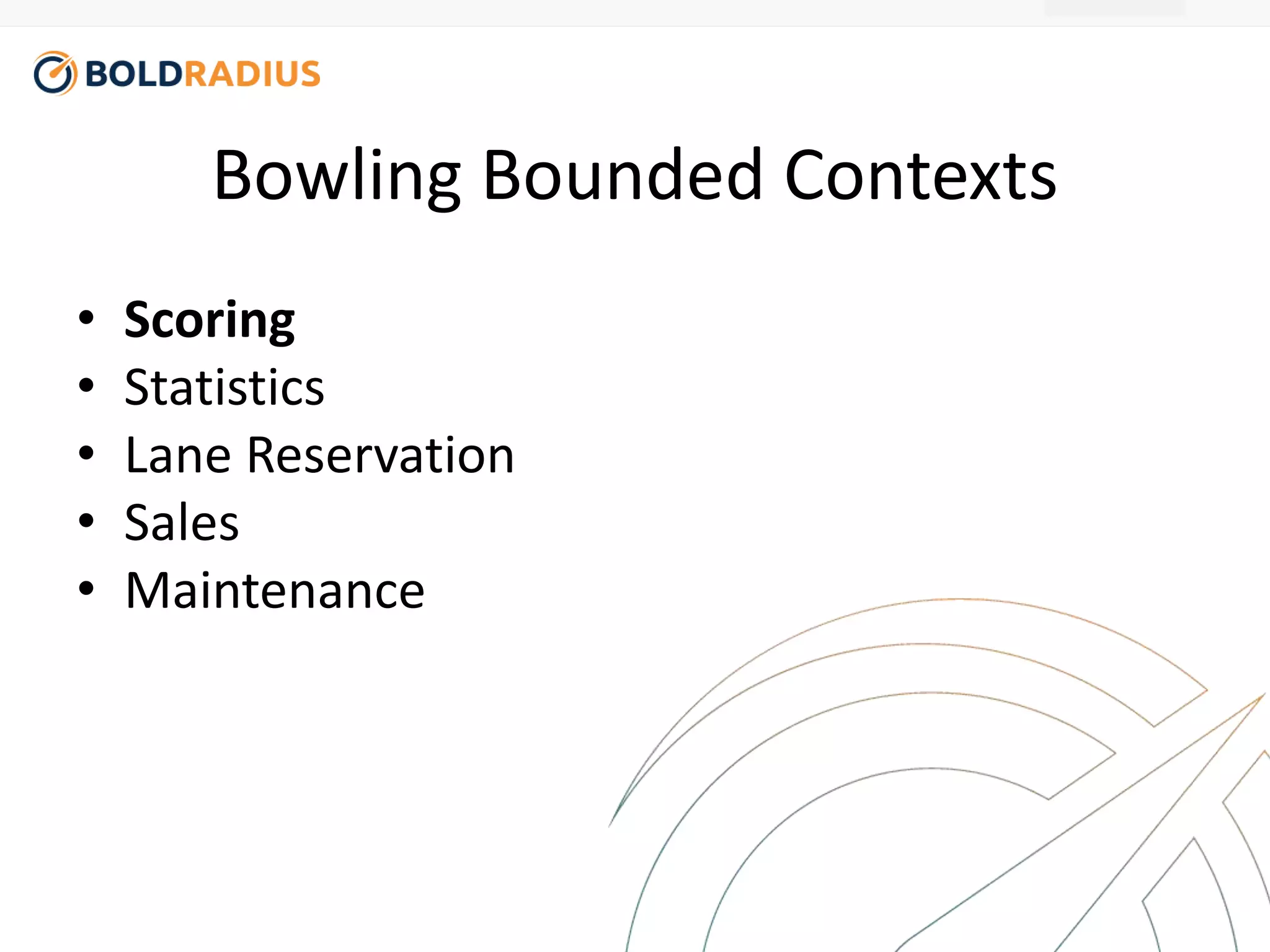
Bowling Bounded Contexts 
• Scoring 
• Statistics 
• Lane Reservation 
• Sales 
• Maintenance
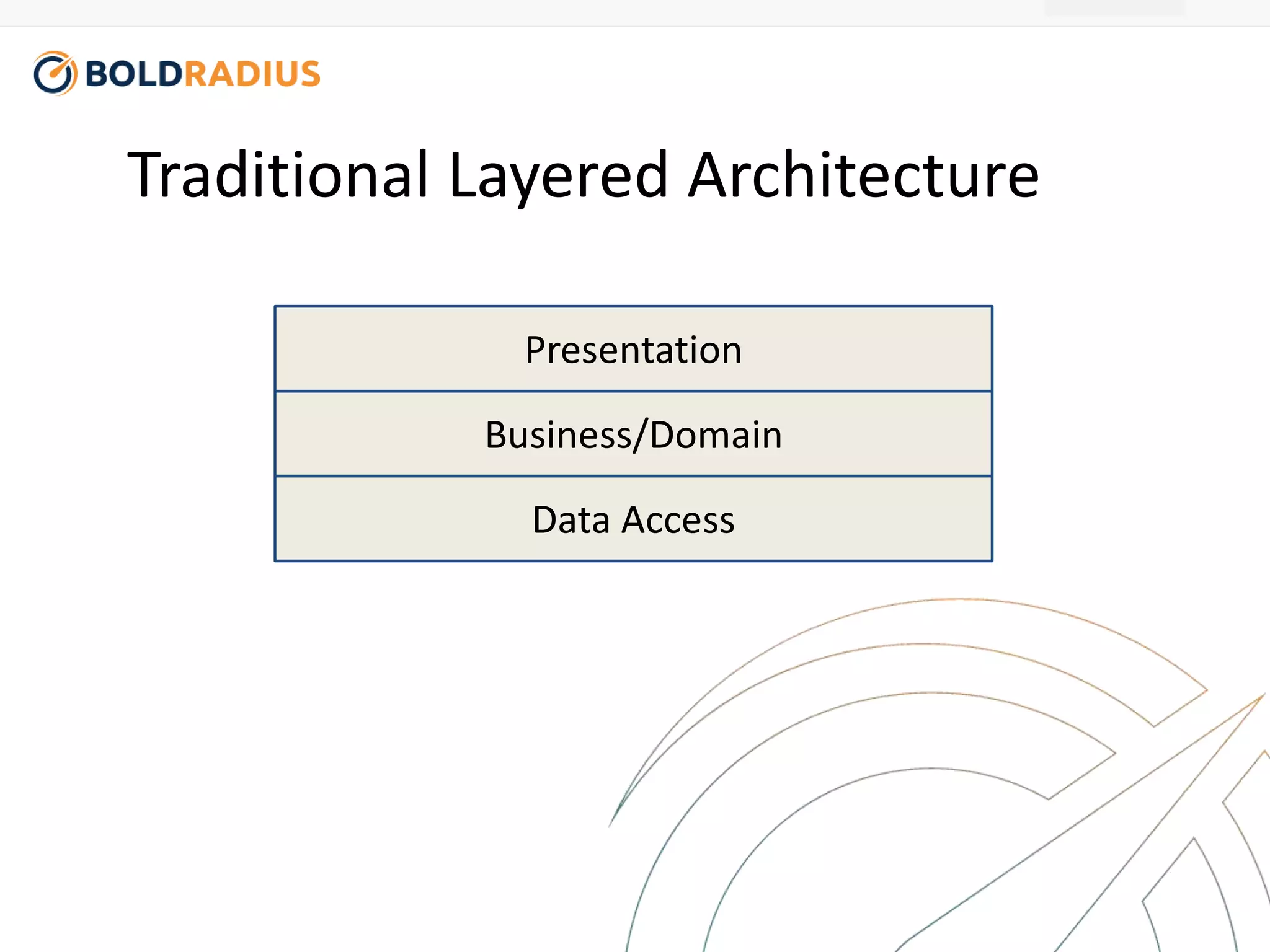
Traditional Layered Architecture 
Presentation 
Business/Domain 
Data Access
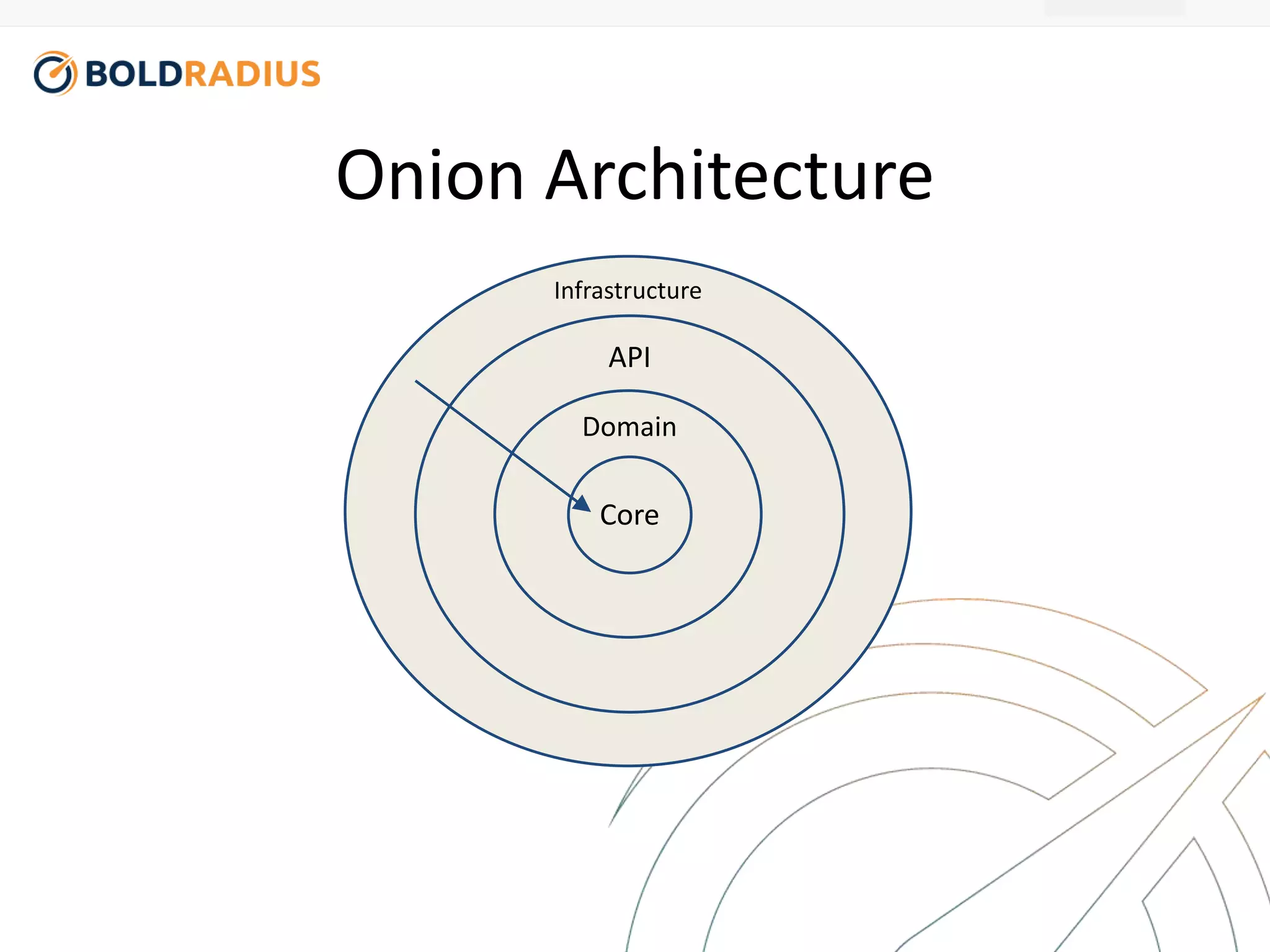
Onion Architecture 
Infrastructure 
API 
Domain 
Core
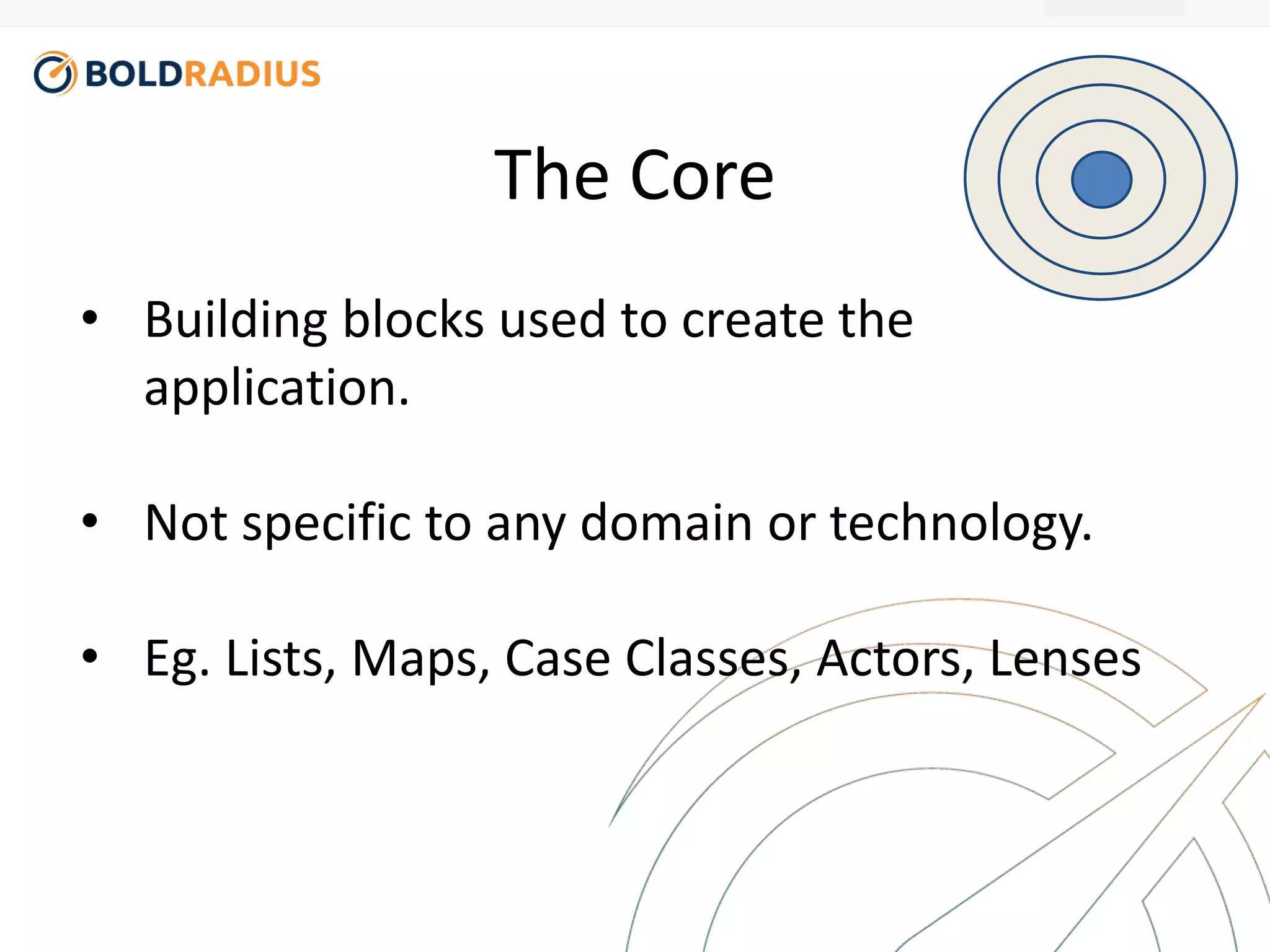
The Core 
• Building blocks used to create the 
application. 
• Not specific to any domain or technology. 
• Eg. Lists, Maps, Case Classes, Actors, Lenses
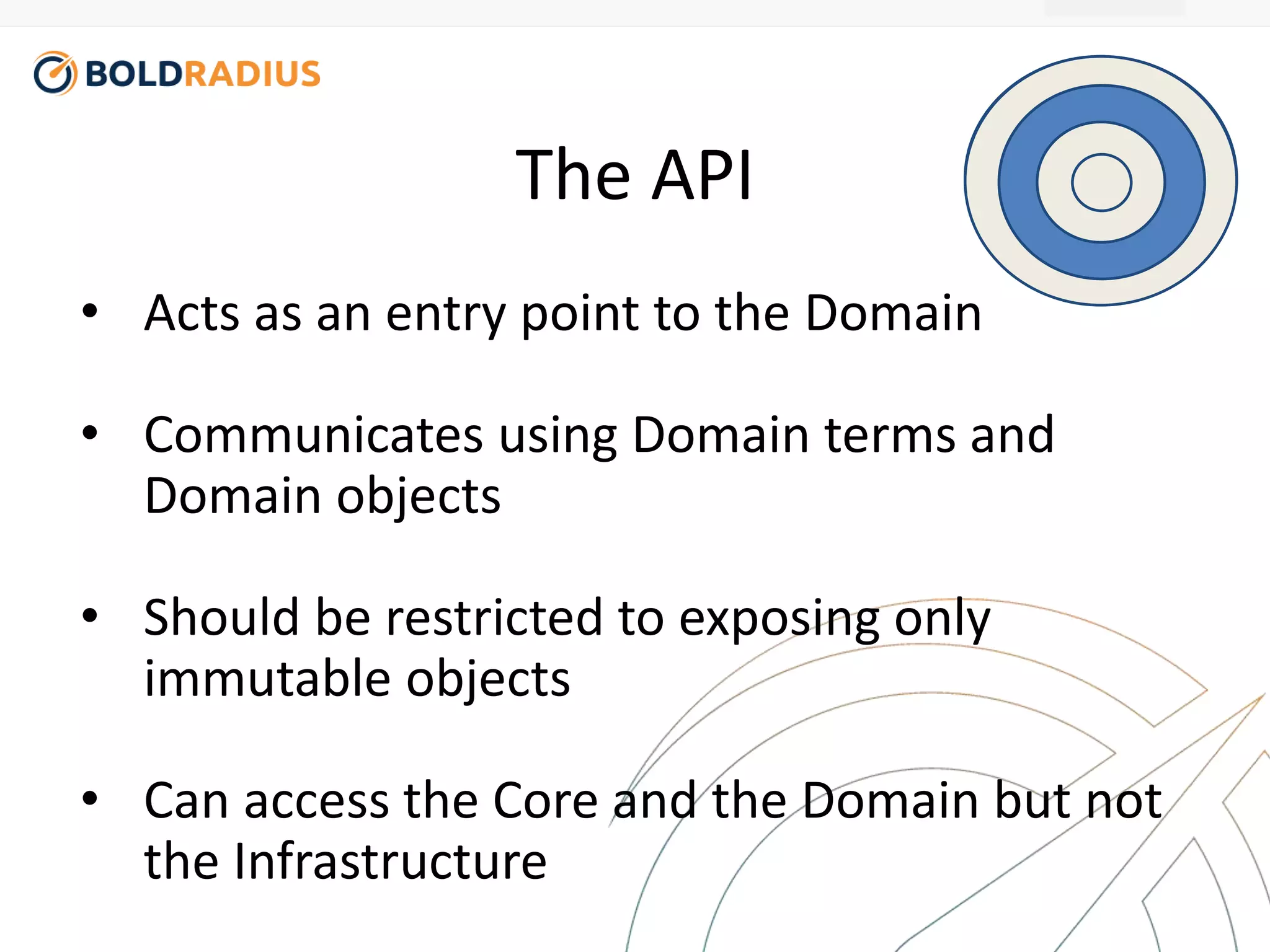
The API 
• Acts as an entry point to the Domain 
• Communicates using Domain terms and 
Domain objects 
• Should be restricted to exposing only 
immutable objects 
• Can access the Core and the Domain but not 
the Infrastructure
Bowling API 
• Could include methods like: 
• Create Game 
• Add/Remove Player 
• Get Players 
• Set Pin State 
• Skip Player 
• Set Lane
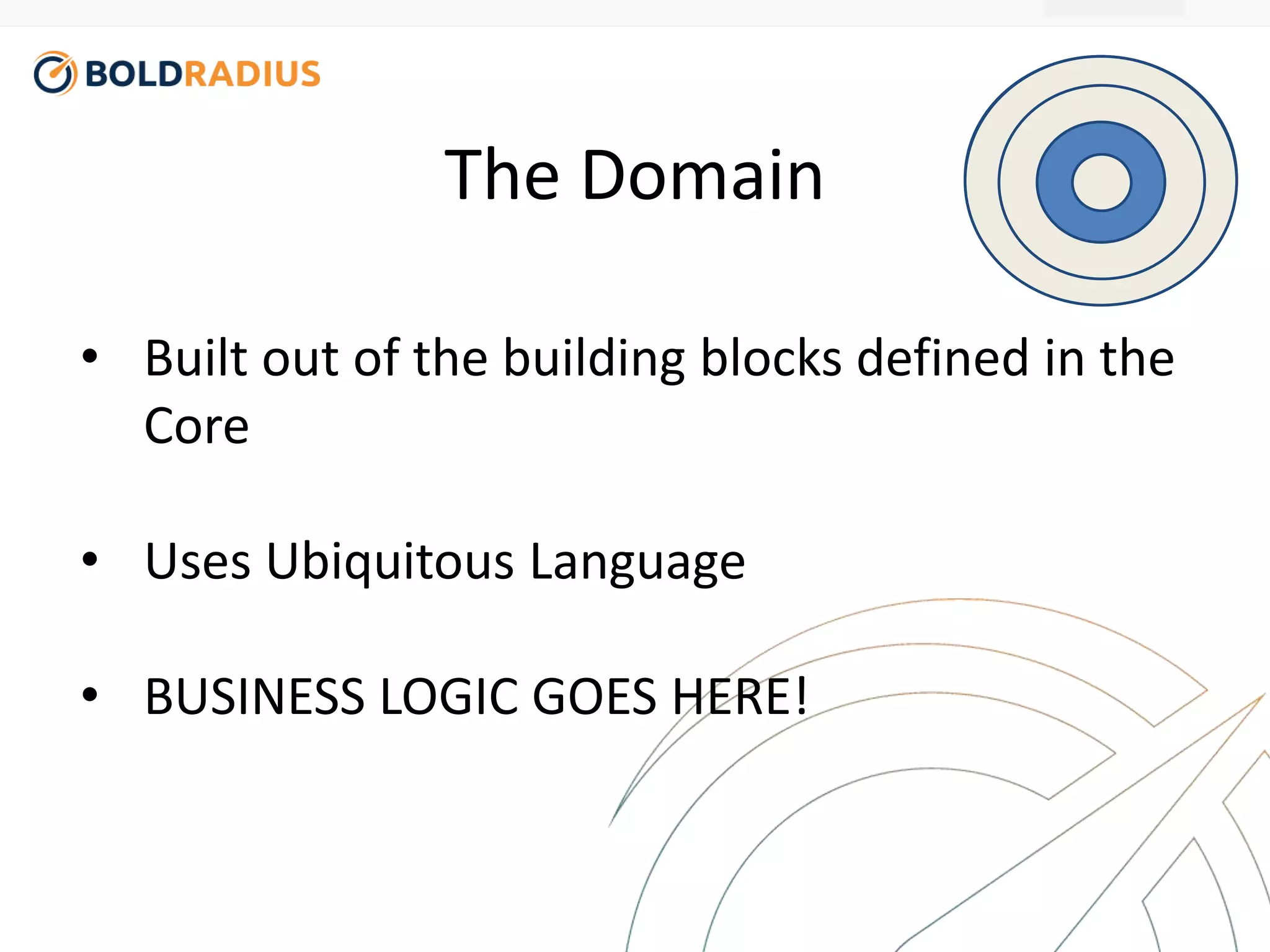
The Domain 
• Built out of the building blocks defined in the 
Core 
• Uses Ubiquitous Language 
• BUSINESS LOGIC GOES HERE!
Bowling Domain 
• Domain Terms: Game, Player, Pin, Frame, 
Strike, Spare 
• Out of Context: Pinsetter, Customer, Lane 
Reservation 
• Non Domain Terms: User Interface, Database
Domain Building Blocks 
• Value Objects 
• Entities 
• Aggregate Roots 
• Repositories 
• Factories 
• Services
Bowling Aggregate Root 
• Candidates: Player, Game 
• Which Entities are present in most or all API 
operations? 
• Which Entity if deleted would result in the 
deletion of some or all other Entities?
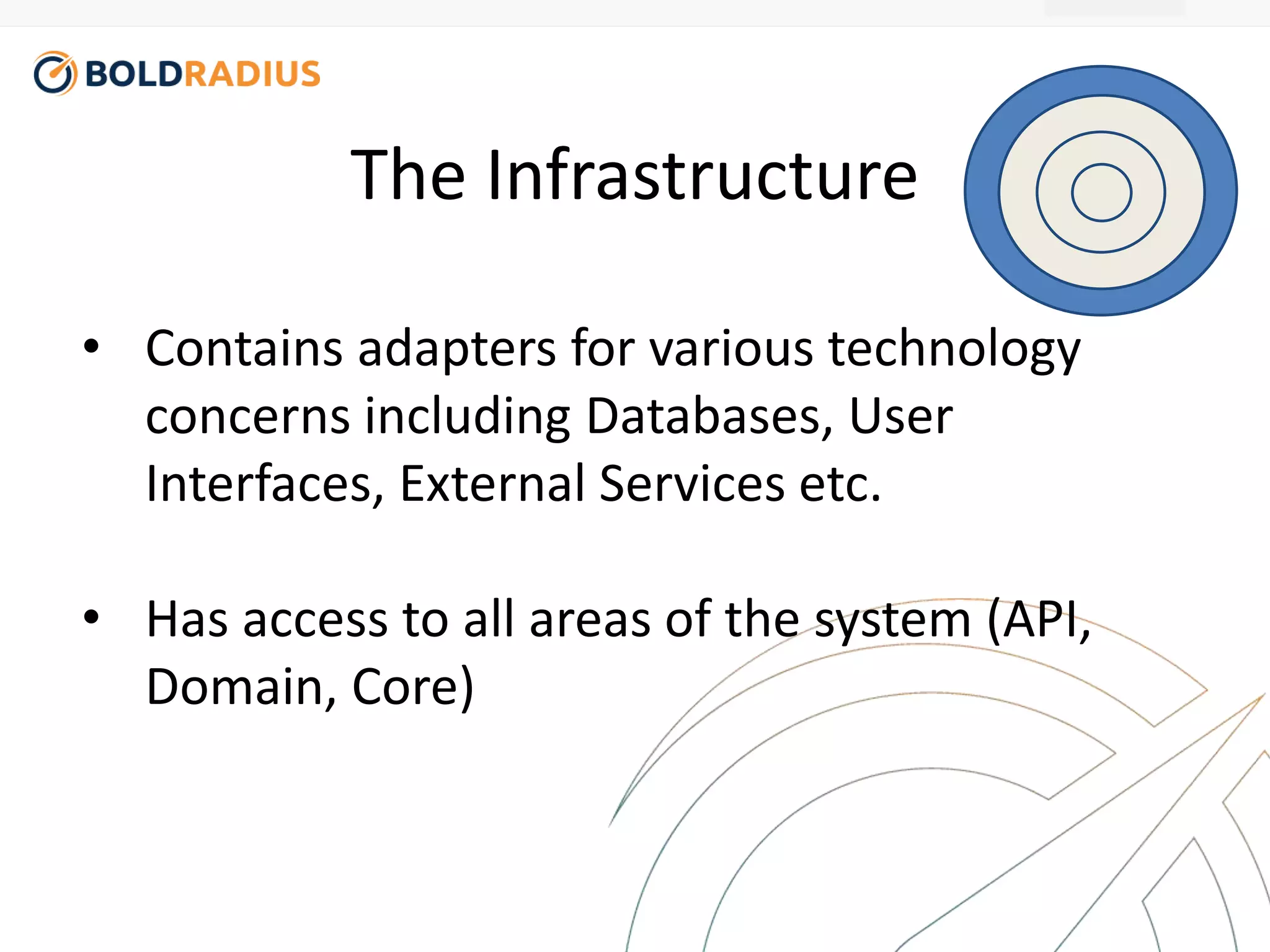
The Infrastructure 
• Contains adapters for various technology 
concerns including Databases, User 
Interfaces, External Services etc. 
• Has access to all areas of the system (API, 
Domain, Core)
Bowling Infrastructure 
• Pinsetter 
• UI for lane screens 
• UI for alley staff 
• Database
Wrap Up 
• How portable is the Bowling Score Keeper? 
• Can it be adapted to other uses with minimal 
effort? 
• Is it tied to the underlying technology?
Domain Driven Design Through Onion Architecture

Domain Driven Design Through Onion Architecture

  • 1.
    Domain Driven Design Through Onion Architecture
  • 2.
  • 3.
    What is DomainDriven Design • A technique for developing software that focuses on collaboration between technical experts and domain experts. • The ideas and terms of the domain should be directly reflected by the code through the Ubiquitous Language.
  • 4.
    Bowling Domain •Who are the Domain Experts? • What is the Ubiquitous Language?
  • 5.
    Bounded Contexts •Subdivide large domains into smaller contexts. • Each context can have it’s own ubiquitous language and it’s own model. • Bounded Contexts may share some domain aspects.
  • 6.
    Bowling Bounded Contexts • Scoring • Statistics • Lane Reservation • Sales • Maintenance
  • 7.
    Traditional Layered Architecture Presentation Business/Domain Data Access
  • 8.
  • 9.
    The Core •Building blocks used to create the application. • Not specific to any domain or technology. • Eg. Lists, Maps, Case Classes, Actors, Lenses
  • 10.
    The API •Acts as an entry point to the Domain • Communicates using Domain terms and Domain objects • Should be restricted to exposing only immutable objects • Can access the Core and the Domain but not the Infrastructure
  • 11.
    Bowling API •Could include methods like: • Create Game • Add/Remove Player • Get Players • Set Pin State • Skip Player • Set Lane
  • 12.
    The Domain •Built out of the building blocks defined in the Core • Uses Ubiquitous Language • BUSINESS LOGIC GOES HERE!
  • 13.
    Bowling Domain •Domain Terms: Game, Player, Pin, Frame, Strike, Spare • Out of Context: Pinsetter, Customer, Lane Reservation • Non Domain Terms: User Interface, Database
  • 14.
    Domain Building Blocks • Value Objects • Entities • Aggregate Roots • Repositories • Factories • Services
  • 15.
    Bowling Aggregate Root • Candidates: Player, Game • Which Entities are present in most or all API operations? • Which Entity if deleted would result in the deletion of some or all other Entities?
  • 16.
    The Infrastructure •Contains adapters for various technology concerns including Databases, User Interfaces, External Services etc. • Has access to all areas of the system (API, Domain, Core)
  • 17.
    Bowling Infrastructure •Pinsetter • UI for lane screens • UI for alley staff • Database
  • 18.
    Wrap Up •How portable is the Bowling Score Keeper? • Can it be adapted to other uses with minimal effort? • Is it tied to the underlying technology?