The Purchasing Decision The Purchasing Decision Unit (DMU) The Purchasing Decision Process (DMP)
Learning Objectives of this Session The Decision Making Unit (DMU) The Decision Making Process (DMP) Factors affecting the Purchasing Decision B2C and B2B Purchasing Decisions
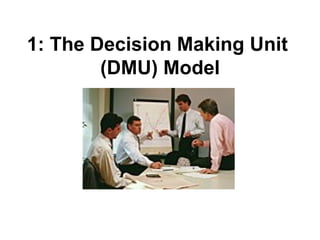
1: The Decision Making Unit  (DMU) Model
The elements of the DMU are: The Gatekeeper The Initiator The Decider The Buyer The User The Financier Other Influencers
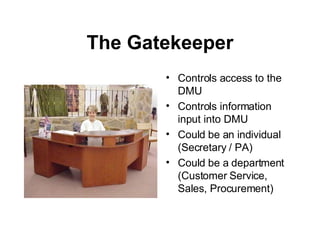
The Gatekeeper Controls access to the DMU Controls information input into DMU Could be an individual (Secretary / PA) Could be a department (Customer Service, Sales, Procurement)
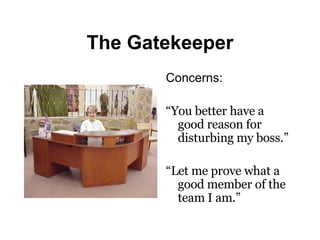
The Gatekeeper Concerns: “ You better have a good reason for disturbing my boss.” “ Let me prove what a good member of the team I am.”
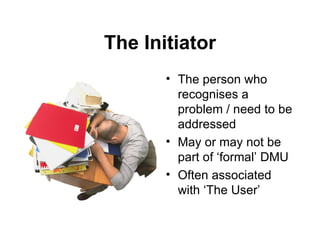
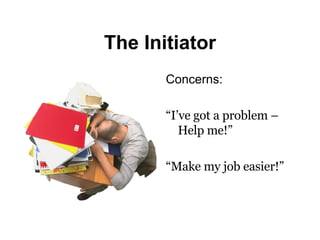
The Initiator The person who recognises a problem / need to be addressed May or may not be part of ‘formal’ DMU Often associated with ‘The User’
The Initiator Concerns: “ I’ve got a problem – Help me!” “ Make my job easier!”
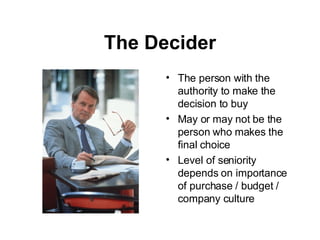
The Decider The person with the authority to make the decision to buy May or may not be the person who makes the final choice Level of seniority depends on importance of purchase / budget / company culture
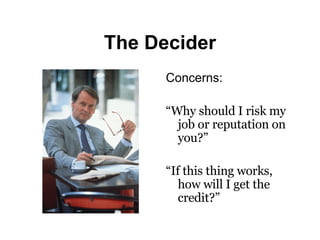
The Decider Concerns: “ Why should I risk my job or reputation on you?” “ If this thing works, how will I get the credit?”
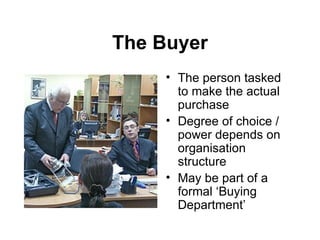
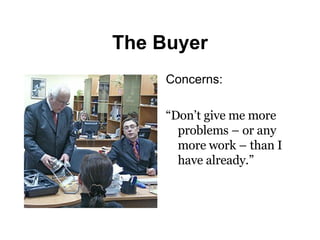
The Buyer The person tasked to make the actual purchase Degree of choice / power depends on organisation structure May be part of a formal ‘Buying Department’
The Buyer Concerns: “ Don’t give me more problems – or any more work – than I have already.”
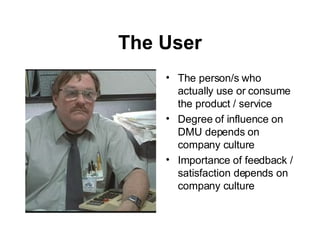
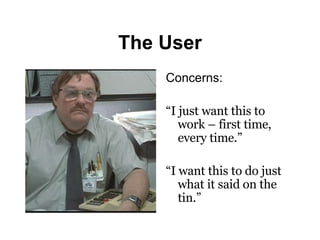
The User The person/s who actually use or consume the product / service Degree of influence on DMU depends on company culture Importance of feedback / satisfaction depends on company culture
The User Concerns: “ I just want this to work – first time, every time.” “ I want this to do just what it said on the tin.”
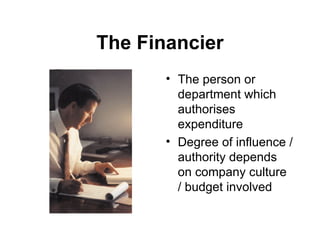
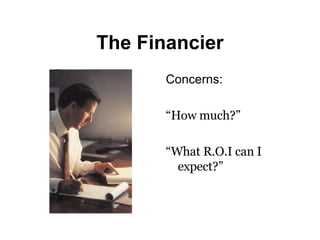
The Financier The person or department which authorises expenditure Degree of influence / authority depends on company culture / budget involved
The Financier Concerns: “ How much?” “ What R.O.I can I expect?”
Influencers Anyone outside of the DMU which has an influence on its members: Formal ‘consultants’ Informal personal contacts / WoM Recognised ‘experts’, role models, personalities and endorsees
Influencers Concerns: “ If I’m going to be your advocate, don’t make a liar out of me.”
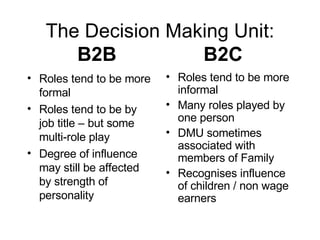
The Decision Making Unit: B2B  B2C Roles tend to be more formal Roles tend to be by job title – but some multi-role play Degree of influence may still be affected by strength of personality Roles tend to be more informal Many roles played by one person DMU sometimes associated with members of Family Recognises influence of children / non wage earners
2: The Decision Making Process  (DMP) Model
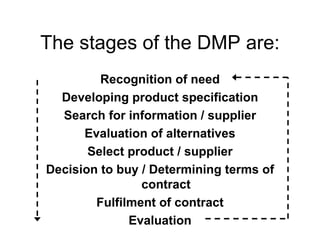
The stages of the DMP are: Recognition of need Developing product specification Search for information / supplier Evaluation of alternatives Select product / supplier Decision to buy / Determining terms of contract Fulfilment of contract Evaluation
1: Recognition of need Many purchases are made to meet a perceived problem Customers are interested in ‘benefits’ (solutions) rather than ‘features’ Problems may be ‘real’ or ‘imagined’ High priority vs. low priority problem solving New technology may create its own ‘need’ e.g. Walkman, GPS, iPhone
2: Product specification May be complex formal B2B process Also B2C – especially for major purchases Budget
3: Search for information Previous purchasing experience Intensity of search depends on: New Buy / Re-Buy / Modified Re-buy (Extended, Limited and Routine Problem Solving) Advertising and sales literature Internet Sales representatives Store visits Recommendation from friends and other users
4: Evaluating alternatives Factors compared: Performance (Capable of meeting need) Availability Price Value for money Brand?
5: Selection of product / supplier Shortlisting Request for tenders Prioritising choices
6: Decision to buy / Terms of contract To buy or not to buy Buy now or buy later (re-evaluation of priorities) Negotiating terms Price / Payment ‘ Added value’ benefits
7: Fulfilment of contract Delivery Fitting Schedules Specifications
8: Evaluation Has need been met? Problem areas: Was product / service misrepresented? Were specifications correctly determined? Were expectations raised unrealistically? (overselling) Customer ‘satisfaction’ or ‘delight’? Post-purchase dissonance? Repeat purchase?
Conclusions: Need to identify customers’ decision making processes Need to identify members of DMU and their relative influence on the DMP What are the customers’ buying criteria Need to understand buyer behaviour at each stage of the DMP Need to adapt customer communications for each of the above

Dmu & Dmp

  • 1.
    The Purchasing DecisionThe Purchasing Decision Unit (DMU) The Purchasing Decision Process (DMP)
  • 2.
    Learning Objectives ofthis Session The Decision Making Unit (DMU) The Decision Making Process (DMP) Factors affecting the Purchasing Decision B2C and B2B Purchasing Decisions
  • 3.
    1: The DecisionMaking Unit (DMU) Model
  • 4.
    The elements ofthe DMU are: The Gatekeeper The Initiator The Decider The Buyer The User The Financier Other Influencers
  • 5.
    The Gatekeeper Controlsaccess to the DMU Controls information input into DMU Could be an individual (Secretary / PA) Could be a department (Customer Service, Sales, Procurement)
  • 6.
    The Gatekeeper Concerns:“ You better have a good reason for disturbing my boss.” “ Let me prove what a good member of the team I am.”
  • 7.
    The Initiator Theperson who recognises a problem / need to be addressed May or may not be part of ‘formal’ DMU Often associated with ‘The User’
  • 8.
    The Initiator Concerns:“ I’ve got a problem – Help me!” “ Make my job easier!”
  • 9.
    The Decider Theperson with the authority to make the decision to buy May or may not be the person who makes the final choice Level of seniority depends on importance of purchase / budget / company culture
  • 10.
    The Decider Concerns:“ Why should I risk my job or reputation on you?” “ If this thing works, how will I get the credit?”
  • 11.
    The Buyer Theperson tasked to make the actual purchase Degree of choice / power depends on organisation structure May be part of a formal ‘Buying Department’
  • 12.
    The Buyer Concerns:“ Don’t give me more problems – or any more work – than I have already.”
  • 13.
    The User Theperson/s who actually use or consume the product / service Degree of influence on DMU depends on company culture Importance of feedback / satisfaction depends on company culture
  • 14.
    The User Concerns:“ I just want this to work – first time, every time.” “ I want this to do just what it said on the tin.”
  • 15.
    The Financier Theperson or department which authorises expenditure Degree of influence / authority depends on company culture / budget involved
  • 16.
    The Financier Concerns:“ How much?” “ What R.O.I can I expect?”
  • 17.
    Influencers Anyone outsideof the DMU which has an influence on its members: Formal ‘consultants’ Informal personal contacts / WoM Recognised ‘experts’, role models, personalities and endorsees
  • 18.
    Influencers Concerns: “If I’m going to be your advocate, don’t make a liar out of me.”
  • 19.
    The Decision MakingUnit: B2B B2C Roles tend to be more formal Roles tend to be by job title – but some multi-role play Degree of influence may still be affected by strength of personality Roles tend to be more informal Many roles played by one person DMU sometimes associated with members of Family Recognises influence of children / non wage earners
  • 20.
    2: The DecisionMaking Process (DMP) Model
  • 21.
    The stages ofthe DMP are: Recognition of need Developing product specification Search for information / supplier Evaluation of alternatives Select product / supplier Decision to buy / Determining terms of contract Fulfilment of contract Evaluation
  • 22.
    1: Recognition ofneed Many purchases are made to meet a perceived problem Customers are interested in ‘benefits’ (solutions) rather than ‘features’ Problems may be ‘real’ or ‘imagined’ High priority vs. low priority problem solving New technology may create its own ‘need’ e.g. Walkman, GPS, iPhone
  • 23.
    2: Product specificationMay be complex formal B2B process Also B2C – especially for major purchases Budget
  • 24.
    3: Search forinformation Previous purchasing experience Intensity of search depends on: New Buy / Re-Buy / Modified Re-buy (Extended, Limited and Routine Problem Solving) Advertising and sales literature Internet Sales representatives Store visits Recommendation from friends and other users
  • 25.
    4: Evaluating alternativesFactors compared: Performance (Capable of meeting need) Availability Price Value for money Brand?
  • 26.
    5: Selection ofproduct / supplier Shortlisting Request for tenders Prioritising choices
  • 27.
    6: Decision tobuy / Terms of contract To buy or not to buy Buy now or buy later (re-evaluation of priorities) Negotiating terms Price / Payment ‘ Added value’ benefits
  • 28.
    7: Fulfilment ofcontract Delivery Fitting Schedules Specifications
  • 29.
    8: Evaluation Hasneed been met? Problem areas: Was product / service misrepresented? Were specifications correctly determined? Were expectations raised unrealistically? (overselling) Customer ‘satisfaction’ or ‘delight’? Post-purchase dissonance? Repeat purchase?
  • 30.
    Conclusions: Need toidentify customers’ decision making processes Need to identify members of DMU and their relative influence on the DMP What are the customers’ buying criteria Need to understand buyer behaviour at each stage of the DMP Need to adapt customer communications for each of the above