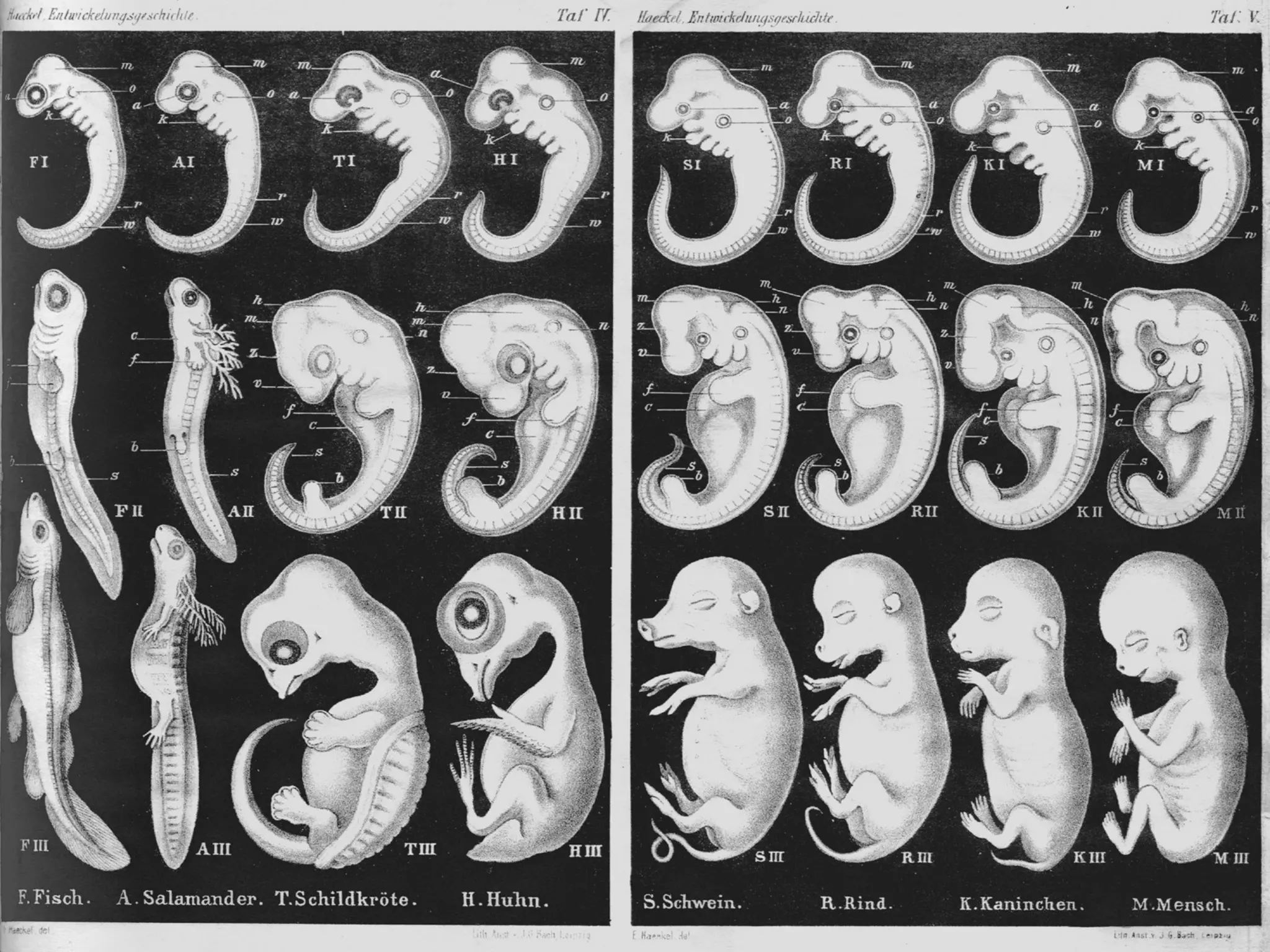
Diversity of Fish and Amphibians Jeremiah was a bullfrog…..Joy to the fishes in the deep blue sea……
Vertebrates Phylum Chordata-named for a structure that is found in all chordate embryos
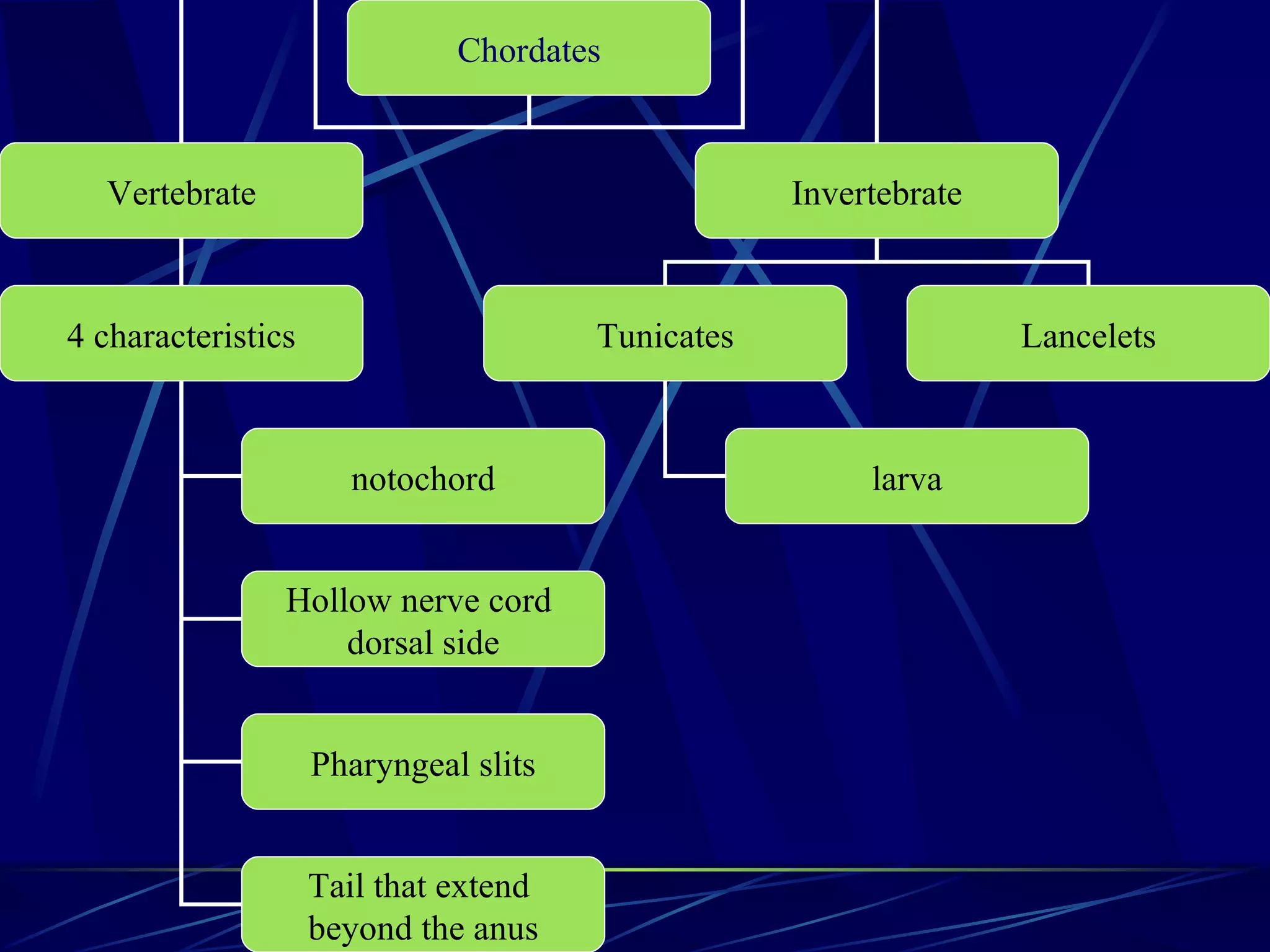
Characteristics of Vertebrates Notochord Hollow nerve cord along the dorsal (back) side Pharyngeal slits Tail that extends beyond the anus.
4 Characteristics of Vertebrates Notochord-flexible rod that extends through much of the length of the body Hollow nerve chord-develops into the brain and the spinal chord, non-chordates have either no nerve chord or a solid nerve cord along the ventral side (front)
Characteristics of Vertebrates Pharyngeal gill slits- some keep them and use them for gills and when they aren’t used, they develop into jaw support, hearing and other functions
Two Groups of Invertebrate Chordates Tunicates or sea squirts are marine animals that are sessile and filter seawater through their pharyngeal slits. Adults only have 1 of the 4 chordate features but the larva have all 4 features. Lancelets are blade-like chordates that resemble tunicate larva and have all four characteristics.
Tunicates
Lancelets
Vocab Vertebrae-enclosed nerve cord, composes the backbone Endoskeleton-skeleton inside the body, come are made of bone or cartilage, it has living cells that grow and get larger unlike arthropod skeletons that are molted.
Vertebrates Almost all vertebrates have a hinged jaw which enable the vertebrate to capture and eat prey. Hagfish and lampreys are most closely related to ancestral vertebrates because they are aquatic and lack hinged jaws and paired limbs. Hagfish are further primitive because they lack a vertebrae but are supported by an adult version of a notochord. Hinged jaws are believed to involved from skeletal supports of pharyngeal gill slits.
 
Class Agnatha (Jawless Fishes) Lamprey
Class Agnatha (Jawless Fishes) Hagfish
Tetrapods Tetrapods-4 footed, 2 sets of paired limbs for support, some tetrapods have no limbs but evolved from limbed ancestors
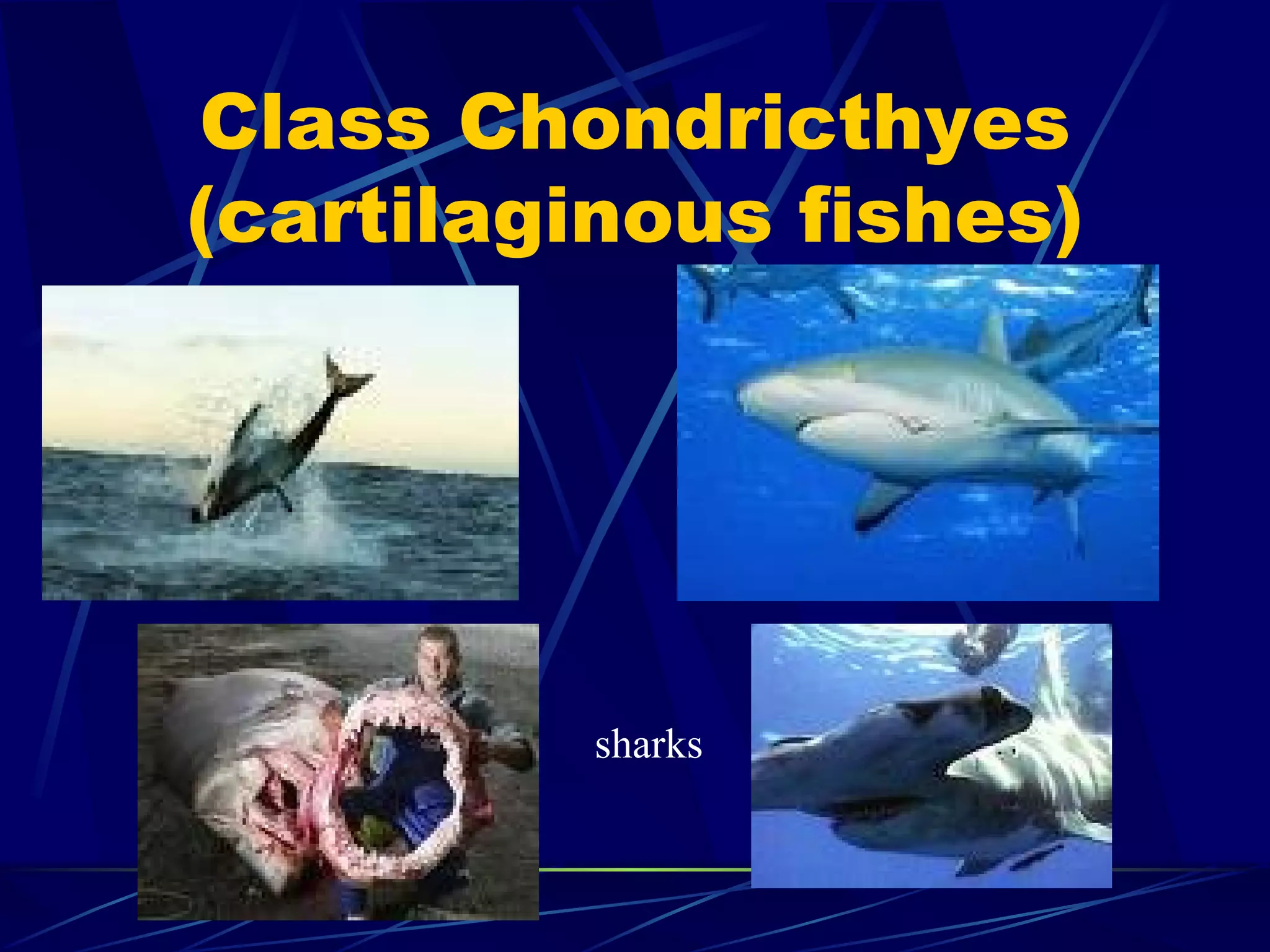
Class Chrondrichthyes Nearly all sharks live I marine habitats except the bull shark which can live in freshwater. Fins are not very movable so sharks aren’t very maneuverable. Continual swimming is necessary to keep from sinking but sometimes they rest on the sea floor and use their jaw muscles to pump water over their gills. Sharks also have a sensitive lateral line system which is a row of sensory organs running along the side of their body. Sharks can also detect electric fields and track prey this way. Sharks also have skin made of denticles which are like small teeth.
Class Chondricthyes (cartilaginous fishes) sharks
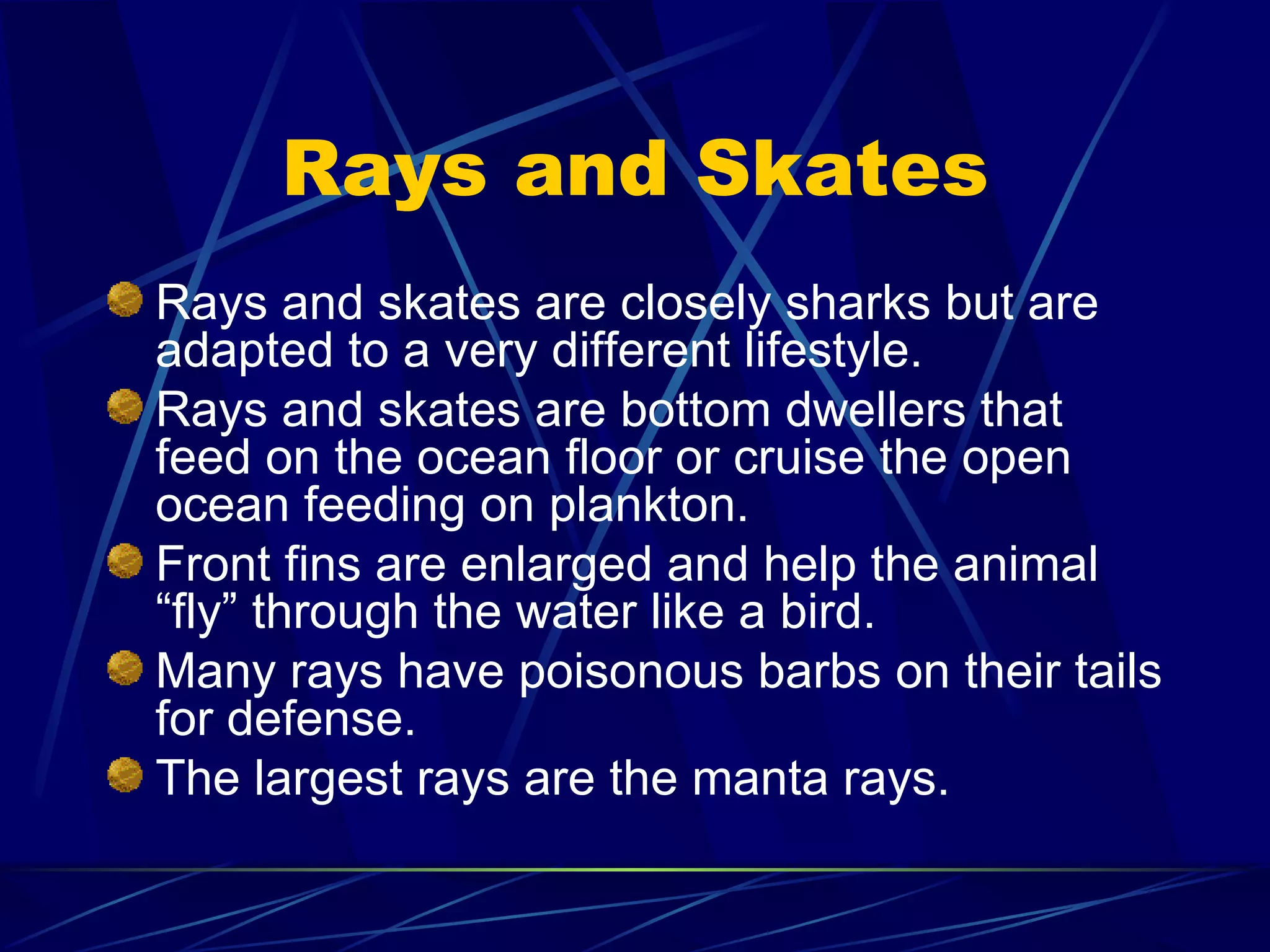
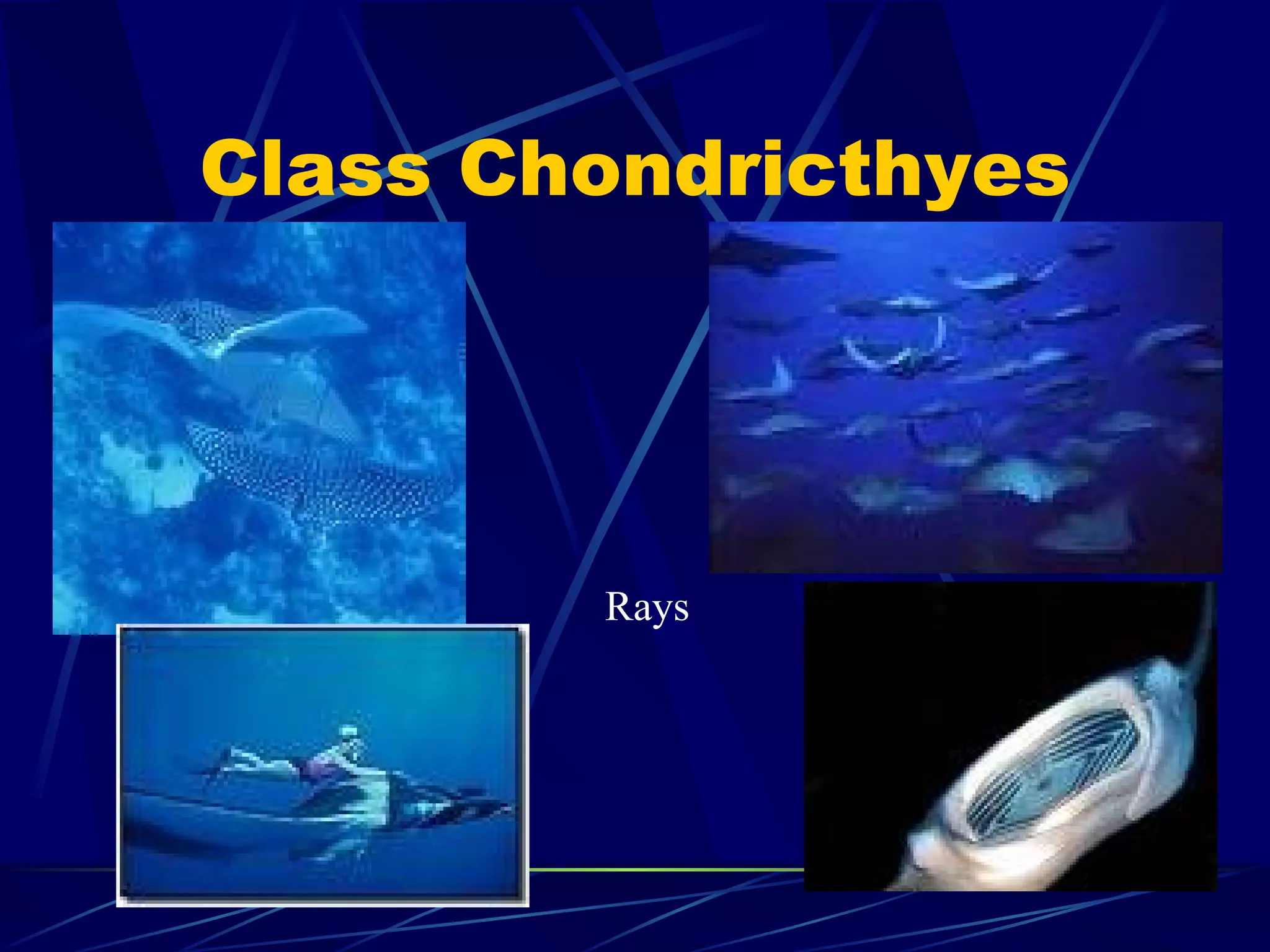
Rays and Skates Rays and skates are closely sharks but are adapted to a very different lifestyle. Rays and skates are bottom dwellers that feed on the ocean floor or cruise the open ocean feeding on plankton. Front fins are enlarged and help the animal “fly” through the water like a bird. Many rays have poisonous barbs on their tails for defense. The largest rays are the manta rays.
Class Chondricthyes Rays
Class Chondricthyes Skates
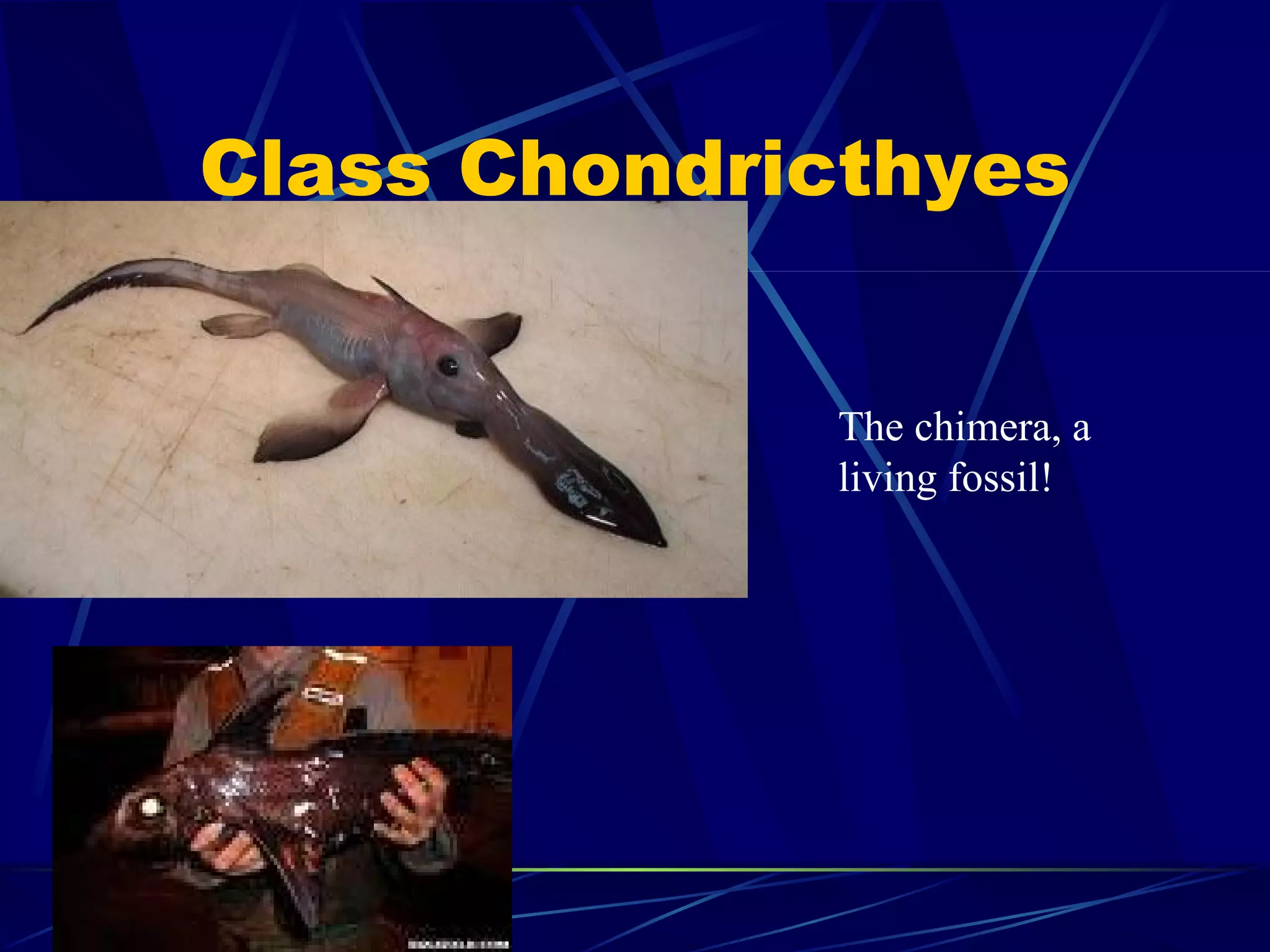
Class Chondricthyes The chimera, a living fossil!
Bony Fishes  Bony fish are divided into 3 classes. All bony fish have a relatively stiff skeleton reinforced by hard calcium compounds. On each side of the head of bony fish, a protective flap called the operculum covers a chamber housing the gills and allows water to pump even though the fish isn’t moving. Bony fish also have a lateral line system and flattened stiff scales to cover the skin and glands to secrete a slimy mucus to help fish glide easily through the water.
Bony fish There are two key features bony fish have. Bony fish have air sacs and a 2 chambered heart. A swim bladder is an air sac that functions in making the fish more buoyant and aids in hearing. The 2 chambered heart is not very efficient but works for fish because they have a slow metabolism. It is a single circuit pathway for blood flow that delivers oxygen to tissues very slowly.
Strange fish from the ray-finned fish family
Ray-finned fish There are more than 20,000 species of these fish. They are named for the thin flexible fins supported by bony rays or spines and these fish also have a swim bladder.
Lobe-finned fish: The coelacanth
Lobe-finned fishes Have muscular fins supported by stout bones and are not common today and are known mainly from the fossil record. The only surviving group is the coelacanths of Madagascar and Indonesia. (Once believed to be extinct.)
Lungfish
Lungfish Lungfishes are found on continents in the southern hemisphere. The air bladder functions as a lung so it can breathe out of water. Lungfish also have gills to take oxygen from water. Current research indicates the lungfish may be closely related to tetrapods.
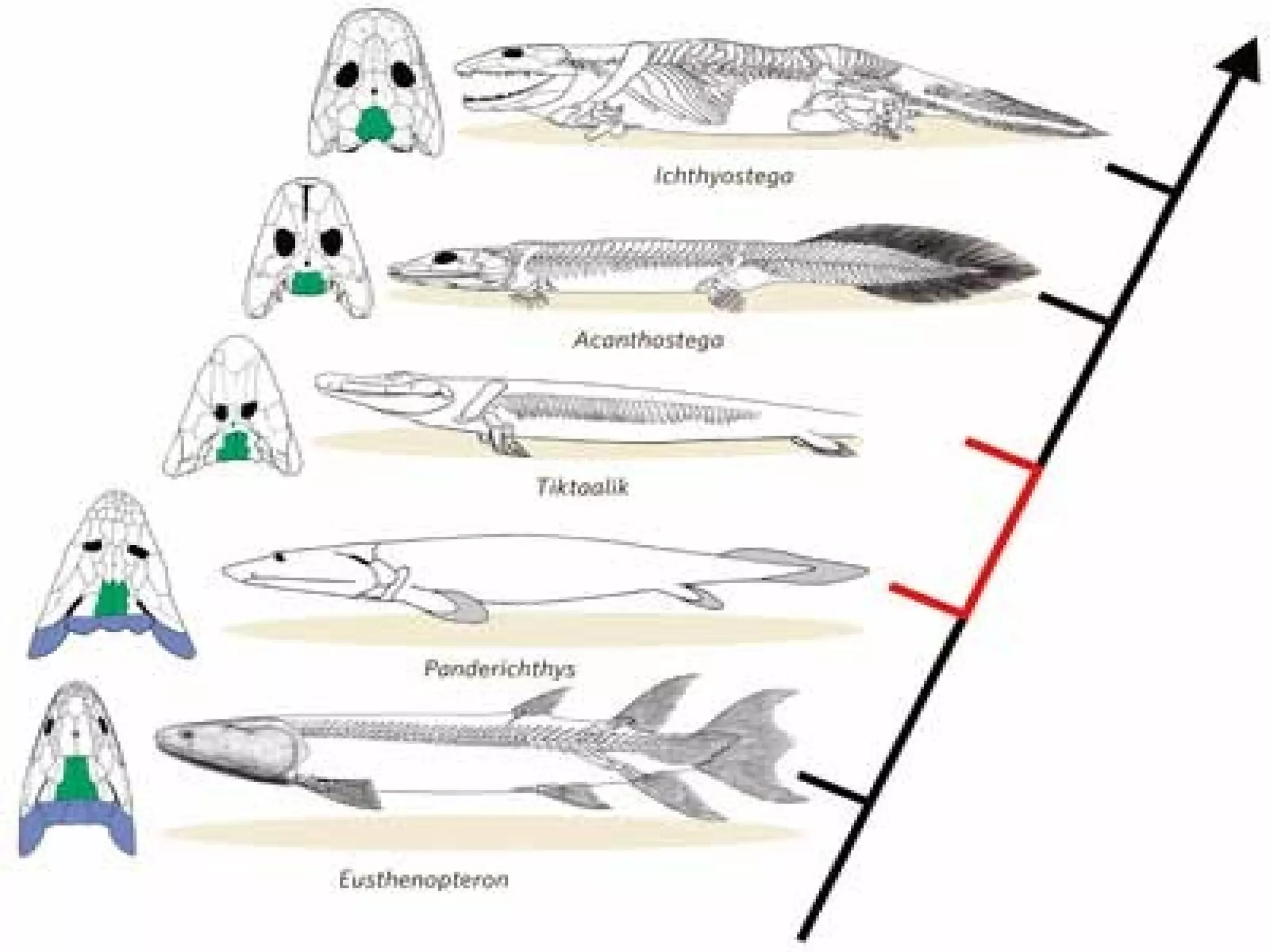
Origin of Tetrapods Amphibians are tetrapods and were the first vertebrates with adaptations for living on land. The earliest tetrapods lived in shallow, aquatic habitats about 400-350 million years ago during the Devonian period. Acanthostega was an early tetrapod that had limbs like those found in reptiles and mammals including humans.
 
The Origin of Tetrapods Amphibians live part of their life cycle in water and part on land. The larval stage is in water while the adult stage is terrestrial. Many adults have lungs, smooth moist skin and lack scales. Tadpoles are legless larva that have gills, a lateral line system and a long finned tail like fish. There is great diversity and some amphibians have poison glands that aid in defense. An amphibian heart has a 3 chambered which is more efficient than a 2 chambered heart of a fish.
 
Frogs and Toads (Order Anura) 4,200 known species Bulging eyes Pair of external eardrum called a typanum Webbed feet No tail Strong hind legs Smooth moist skin Loud mating calls Toad is a term generally used for frogs that have rough skin and live in terrestrial environments
Frogs and Toads
 
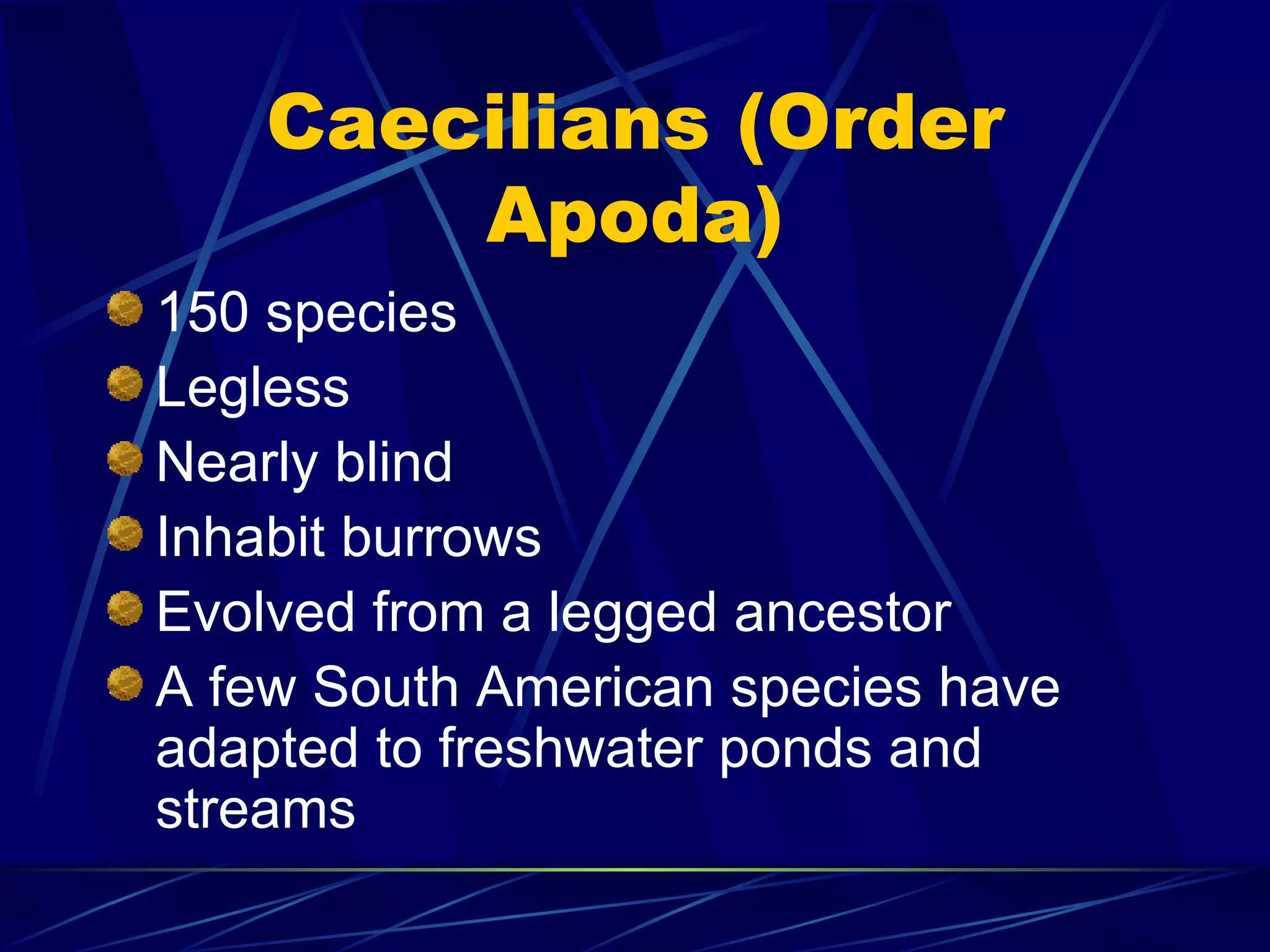
Salamanders and Newts (Order Urodela) 500 species Have a tail Closely related to each other Bodies are long and slender Resembled early tetrapods Some terrestrial species do not have lungs but exchange oxygen and carbon dioxide through their skin and mouth lining
Salamanders and Newts
Salamanders and Newts American Hellbender Japanese Giant Salamander
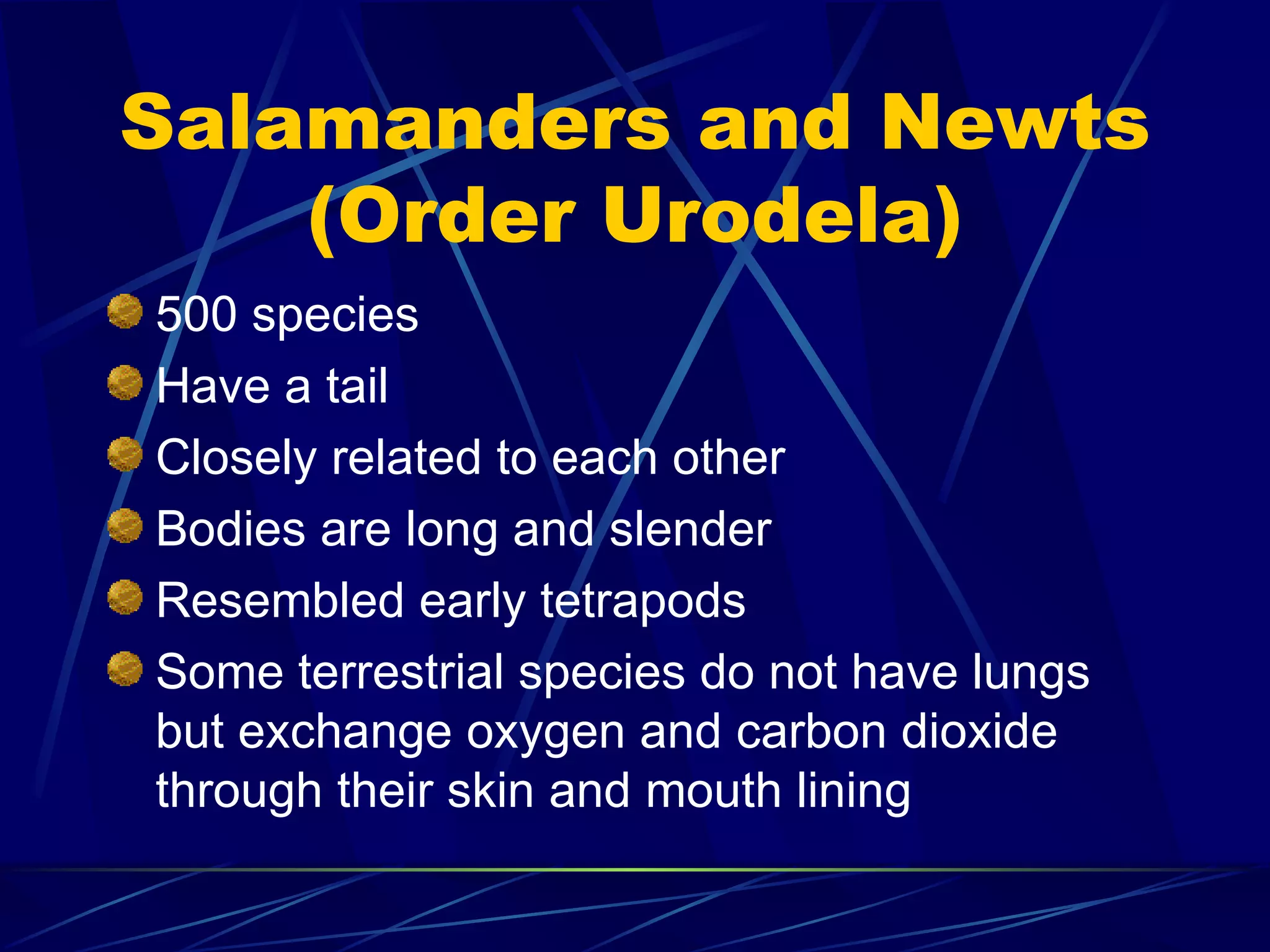
Caecilians (Order Apoda) 150 species Legless Nearly blind Inhabit burrows Evolved from a legged ancestor A few South American species have adapted to freshwater ponds and streams
Caecilians
Chordates Vertebrate Invertebrate 4 characteristics Tunicates Lancelets larva notochord Hollow nerve cord  dorsal side Pharyngeal slits Tail that extend  beyond the anus
Fish Class Chondrichthyes Bony fish Skeleton hardened With calcium
Class Chondrichthyes Sharks and rays Cartilaginous skeleton
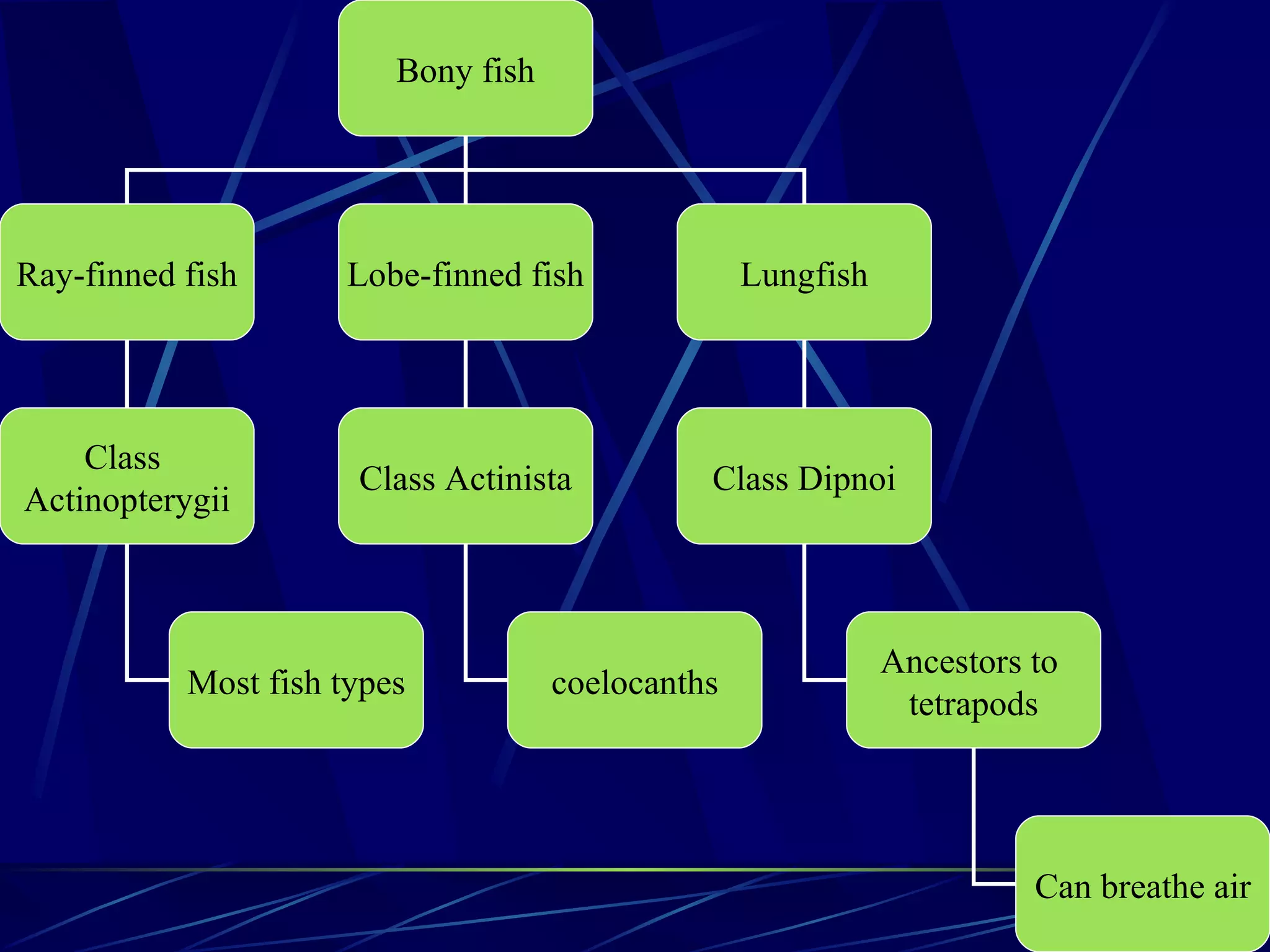
Bony fish Ray-finned fish Lobe-finned fish Lungfish Class  Actinopterygii Class Actinista Class Dipnoi Most fish types coelocanths Ancestors to  tetrapods Can breathe air
Amphibians Order Anura Order Urodela Order Apoda
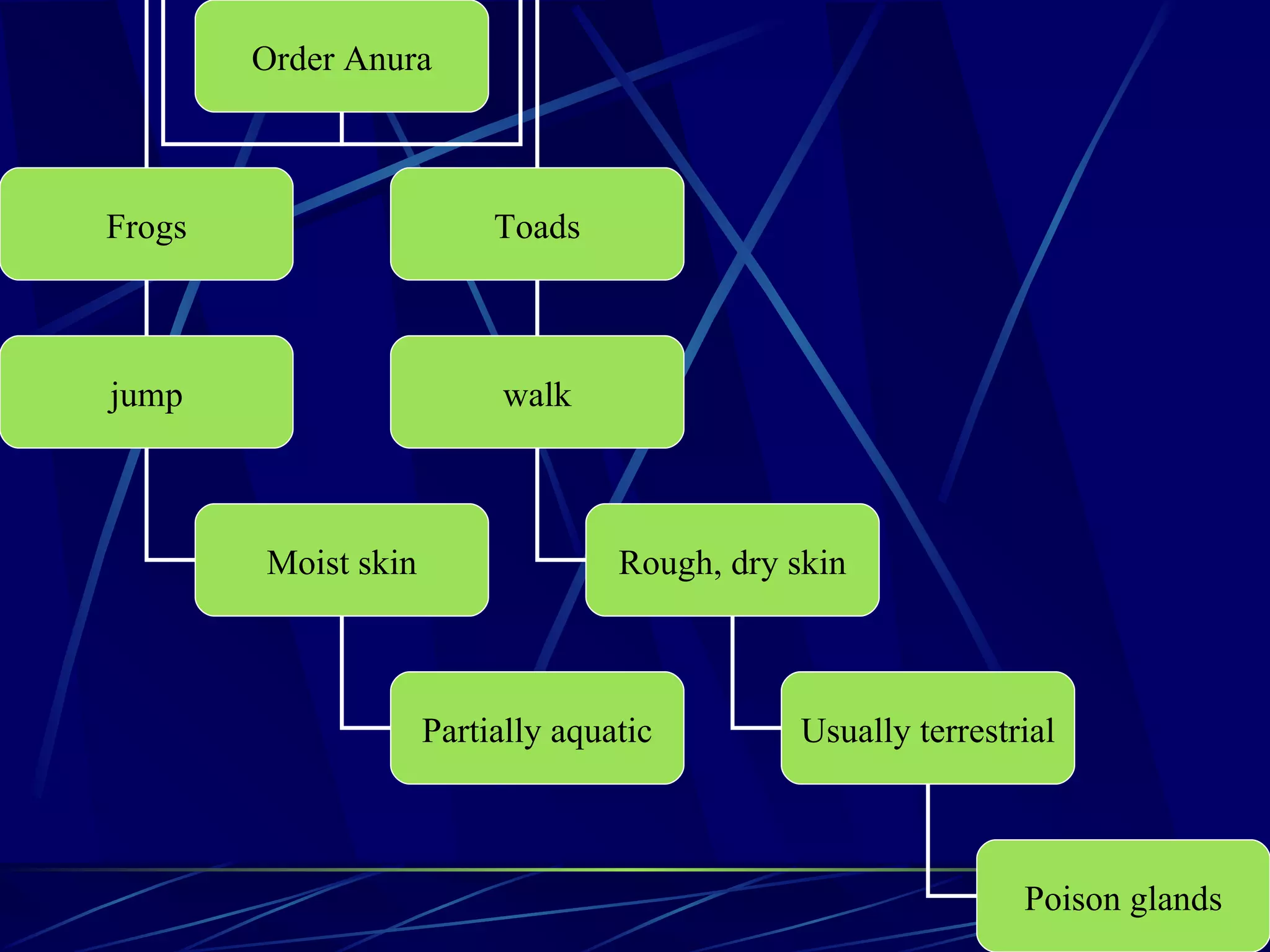
Order Anura Frogs Toads jump walk Moist skin Rough, dry skin Partially aquatic Usually terrestrial Poison glands
Order Urodela salamanders Newts terrestrial aquatic tail tail Sometimes have  External gills
Order Apoda caecilians legless tropical

Diversity Of Fish And Amphibians

  • 1.
    Diversity of Fishand Amphibians Jeremiah was a bullfrog…..Joy to the fishes in the deep blue sea……
  • 2.
    Vertebrates Phylum Chordata-namedfor a structure that is found in all chordate embryos
  • 3.
    Characteristics of VertebratesNotochord Hollow nerve cord along the dorsal (back) side Pharyngeal slits Tail that extends beyond the anus.
  • 4.
    4 Characteristics ofVertebrates Notochord-flexible rod that extends through much of the length of the body Hollow nerve chord-develops into the brain and the spinal chord, non-chordates have either no nerve chord or a solid nerve cord along the ventral side (front)
  • 5.
    Characteristics of VertebratesPharyngeal gill slits- some keep them and use them for gills and when they aren’t used, they develop into jaw support, hearing and other functions
  • 6.
    Two Groups ofInvertebrate Chordates Tunicates or sea squirts are marine animals that are sessile and filter seawater through their pharyngeal slits. Adults only have 1 of the 4 chordate features but the larva have all 4 features. Lancelets are blade-like chordates that resemble tunicate larva and have all four characteristics.
  • 7.
  • 8.
  • 9.
    Vocab Vertebrae-enclosed nervecord, composes the backbone Endoskeleton-skeleton inside the body, come are made of bone or cartilage, it has living cells that grow and get larger unlike arthropod skeletons that are molted.
  • 10.
    Vertebrates Almost allvertebrates have a hinged jaw which enable the vertebrate to capture and eat prey. Hagfish and lampreys are most closely related to ancestral vertebrates because they are aquatic and lack hinged jaws and paired limbs. Hagfish are further primitive because they lack a vertebrae but are supported by an adult version of a notochord. Hinged jaws are believed to involved from skeletal supports of pharyngeal gill slits.
  • 11.
  • 12.
    Class Agnatha (JawlessFishes) Lamprey
  • 13.
    Class Agnatha (JawlessFishes) Hagfish
  • 14.
    Tetrapods Tetrapods-4 footed,2 sets of paired limbs for support, some tetrapods have no limbs but evolved from limbed ancestors
  • 15.
    Class Chrondrichthyes Nearlyall sharks live I marine habitats except the bull shark which can live in freshwater. Fins are not very movable so sharks aren’t very maneuverable. Continual swimming is necessary to keep from sinking but sometimes they rest on the sea floor and use their jaw muscles to pump water over their gills. Sharks also have a sensitive lateral line system which is a row of sensory organs running along the side of their body. Sharks can also detect electric fields and track prey this way. Sharks also have skin made of denticles which are like small teeth.
  • 16.
  • 17.
    Rays and SkatesRays and skates are closely sharks but are adapted to a very different lifestyle. Rays and skates are bottom dwellers that feed on the ocean floor or cruise the open ocean feeding on plankton. Front fins are enlarged and help the animal “fly” through the water like a bird. Many rays have poisonous barbs on their tails for defense. The largest rays are the manta rays.
  • 18.
  • 19.
  • 20.
    Class Chondricthyes Thechimera, a living fossil!
  • 21.
    Bony Fishes Bony fish are divided into 3 classes. All bony fish have a relatively stiff skeleton reinforced by hard calcium compounds. On each side of the head of bony fish, a protective flap called the operculum covers a chamber housing the gills and allows water to pump even though the fish isn’t moving. Bony fish also have a lateral line system and flattened stiff scales to cover the skin and glands to secrete a slimy mucus to help fish glide easily through the water.
  • 22.
    Bony fish Thereare two key features bony fish have. Bony fish have air sacs and a 2 chambered heart. A swim bladder is an air sac that functions in making the fish more buoyant and aids in hearing. The 2 chambered heart is not very efficient but works for fish because they have a slow metabolism. It is a single circuit pathway for blood flow that delivers oxygen to tissues very slowly.
  • 23.
    Strange fish fromthe ray-finned fish family
  • 24.
    Ray-finned fish Thereare more than 20,000 species of these fish. They are named for the thin flexible fins supported by bony rays or spines and these fish also have a swim bladder.
  • 25.
  • 26.
    Lobe-finned fishes Havemuscular fins supported by stout bones and are not common today and are known mainly from the fossil record. The only surviving group is the coelacanths of Madagascar and Indonesia. (Once believed to be extinct.)
  • 27.
  • 28.
    Lungfish Lungfishes arefound on continents in the southern hemisphere. The air bladder functions as a lung so it can breathe out of water. Lungfish also have gills to take oxygen from water. Current research indicates the lungfish may be closely related to tetrapods.
  • 29.
    Origin of TetrapodsAmphibians are tetrapods and were the first vertebrates with adaptations for living on land. The earliest tetrapods lived in shallow, aquatic habitats about 400-350 million years ago during the Devonian period. Acanthostega was an early tetrapod that had limbs like those found in reptiles and mammals including humans.
  • 30.
  • 31.
    The Origin ofTetrapods Amphibians live part of their life cycle in water and part on land. The larval stage is in water while the adult stage is terrestrial. Many adults have lungs, smooth moist skin and lack scales. Tadpoles are legless larva that have gills, a lateral line system and a long finned tail like fish. There is great diversity and some amphibians have poison glands that aid in defense. An amphibian heart has a 3 chambered which is more efficient than a 2 chambered heart of a fish.
  • 32.
  • 33.
    Frogs and Toads(Order Anura) 4,200 known species Bulging eyes Pair of external eardrum called a typanum Webbed feet No tail Strong hind legs Smooth moist skin Loud mating calls Toad is a term generally used for frogs that have rough skin and live in terrestrial environments
  • 34.
  • 35.
  • 36.
    Salamanders and Newts(Order Urodela) 500 species Have a tail Closely related to each other Bodies are long and slender Resembled early tetrapods Some terrestrial species do not have lungs but exchange oxygen and carbon dioxide through their skin and mouth lining
  • 37.
  • 38.
    Salamanders and NewtsAmerican Hellbender Japanese Giant Salamander
  • 39.
    Caecilians (Order Apoda)150 species Legless Nearly blind Inhabit burrows Evolved from a legged ancestor A few South American species have adapted to freshwater ponds and streams
  • 40.
  • 41.
    Chordates Vertebrate Invertebrate4 characteristics Tunicates Lancelets larva notochord Hollow nerve cord dorsal side Pharyngeal slits Tail that extend beyond the anus
  • 42.
    Fish Class ChondrichthyesBony fish Skeleton hardened With calcium
  • 43.
    Class Chondrichthyes Sharksand rays Cartilaginous skeleton
  • 44.
    Bony fish Ray-finnedfish Lobe-finned fish Lungfish Class Actinopterygii Class Actinista Class Dipnoi Most fish types coelocanths Ancestors to tetrapods Can breathe air
  • 45.
    Amphibians Order AnuraOrder Urodela Order Apoda
  • 46.
    Order Anura FrogsToads jump walk Moist skin Rough, dry skin Partially aquatic Usually terrestrial Poison glands
  • 47.
    Order Urodela salamandersNewts terrestrial aquatic tail tail Sometimes have External gills
  • 48.
    Order Apoda caecilianslegless tropical