

..
Christian And Missionary Alliance Churches Of the Philippines
CAMACOP VISION STATEMENT:
 Transformed communities with
mission-driven Christian
congregations here and
abroad for the glory of God
CAMACOP MISSION STATEMENT:
 CAMACOP exists to transform
communities and to
aggressively disciple the
nations by engaging in holistic
development ministries; and
by planting churches that
proclaim Jesus Christ as
Savior, Sanctifier, Healer and
Coming King
“EMPOWERING THE
LOCAL CHURCH
TO TRANSFORM
COMMUNITIES”
OUR FLAGSHIP PROGRAM
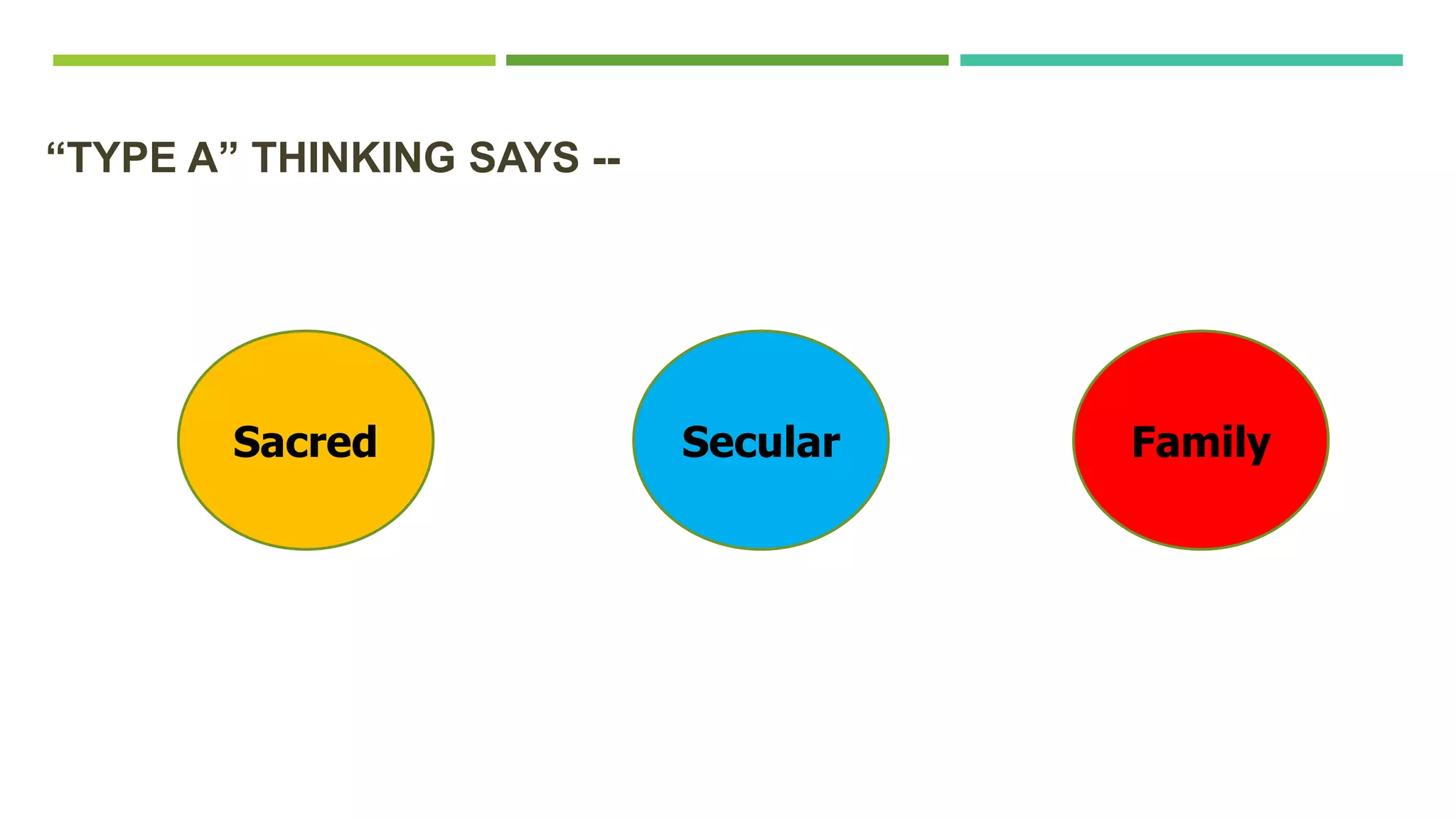
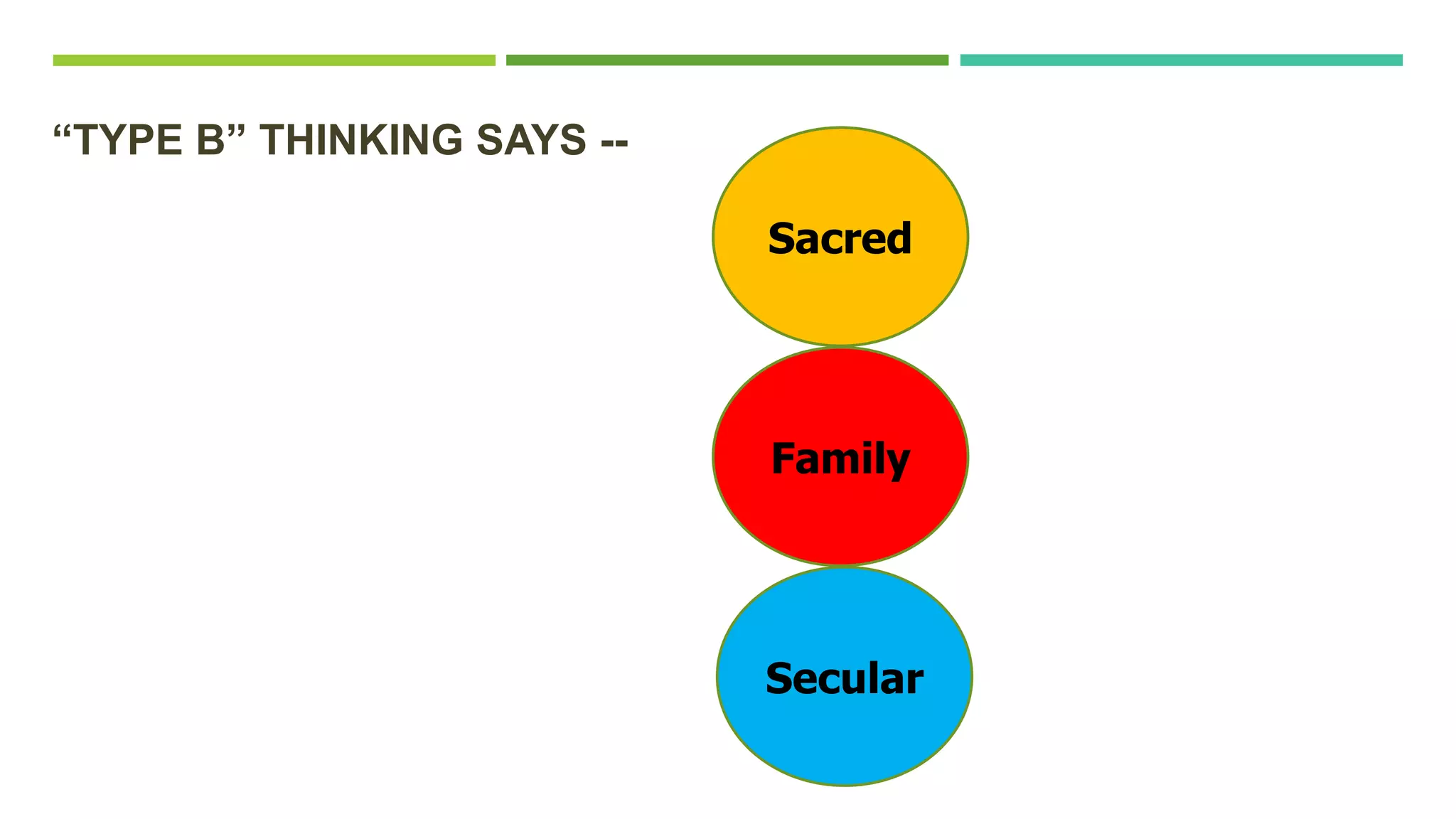
Sacred Secular Family
“TYPE A” THINKING SAYS --
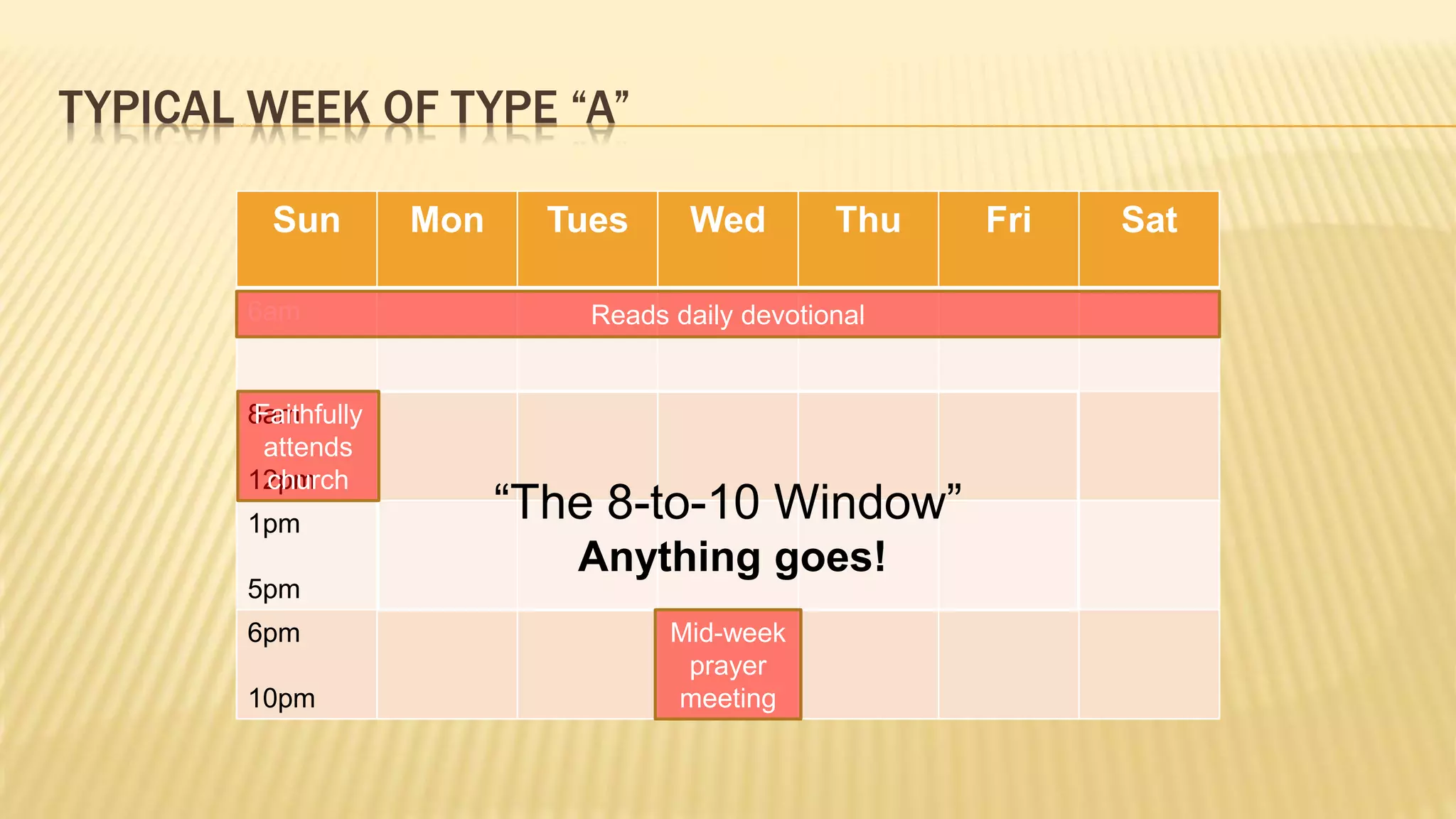
TYPICAL WEEK OF TYPE “A”
Sun Mon Tues Wed Thu Fri Sat
6am
8am
12pm
1pm
5pm
6pm
10pm
Reads daily devotional
“The 8-to-10 Window”
Faithfully
attends
church
Mid-week
prayer
meeting
Anything goes!
Sacred
Secular
Family
“TYPE B” THINKING SAYS --
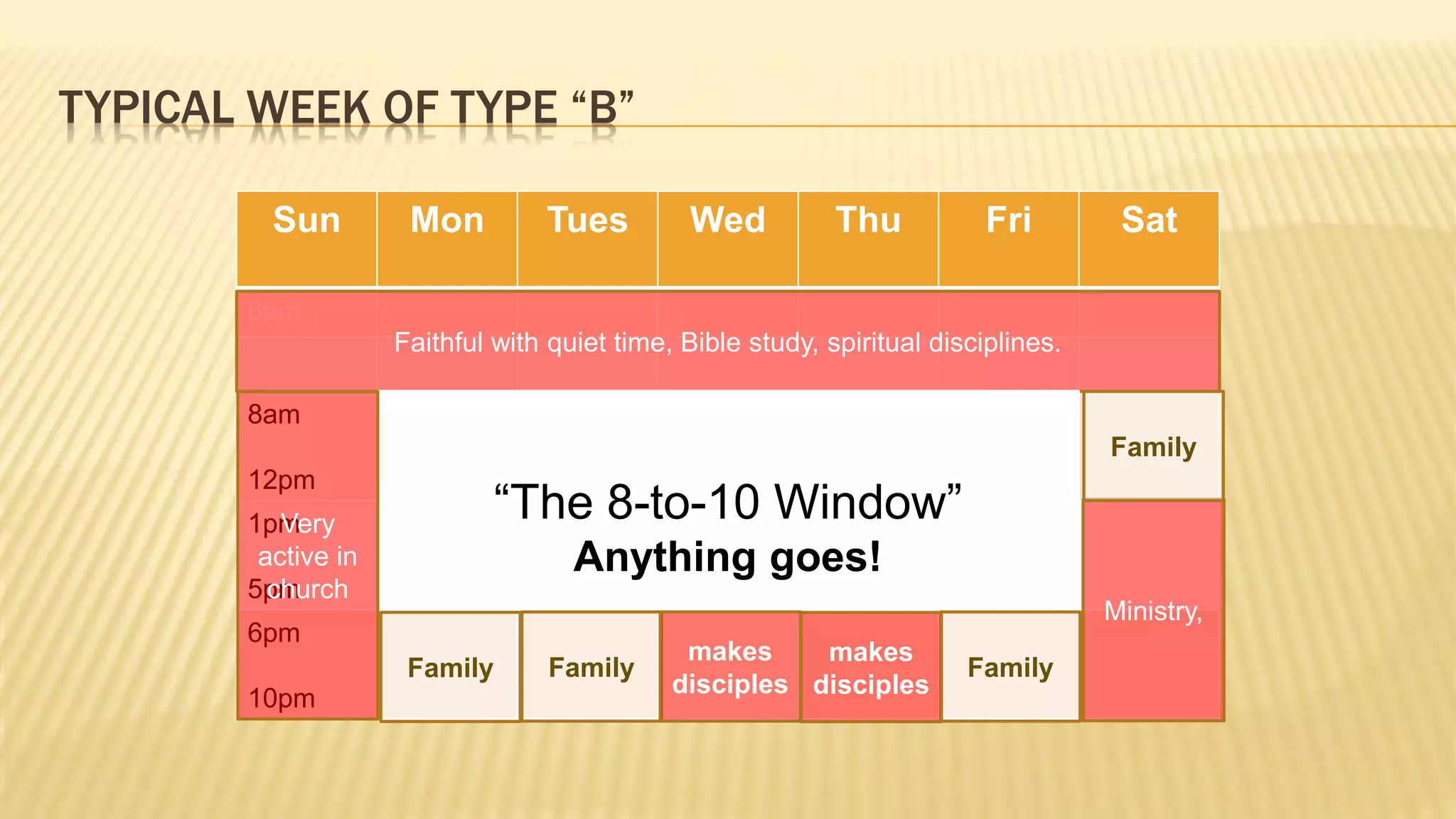
TYPICAL WEEK OF TYPE “B”
Sun Mon Tues Wed Thu Fri Sat
6am
8am
12pm
1pm
5pm
6pm
10pm
Faithful with quiet time, Bible study, spiritual disciplines.
“The 8-to-10 Window”Very
active in
church
Ministry,
Anything goes!
Family Family Family
makes
disciples
makes
disciples
Family
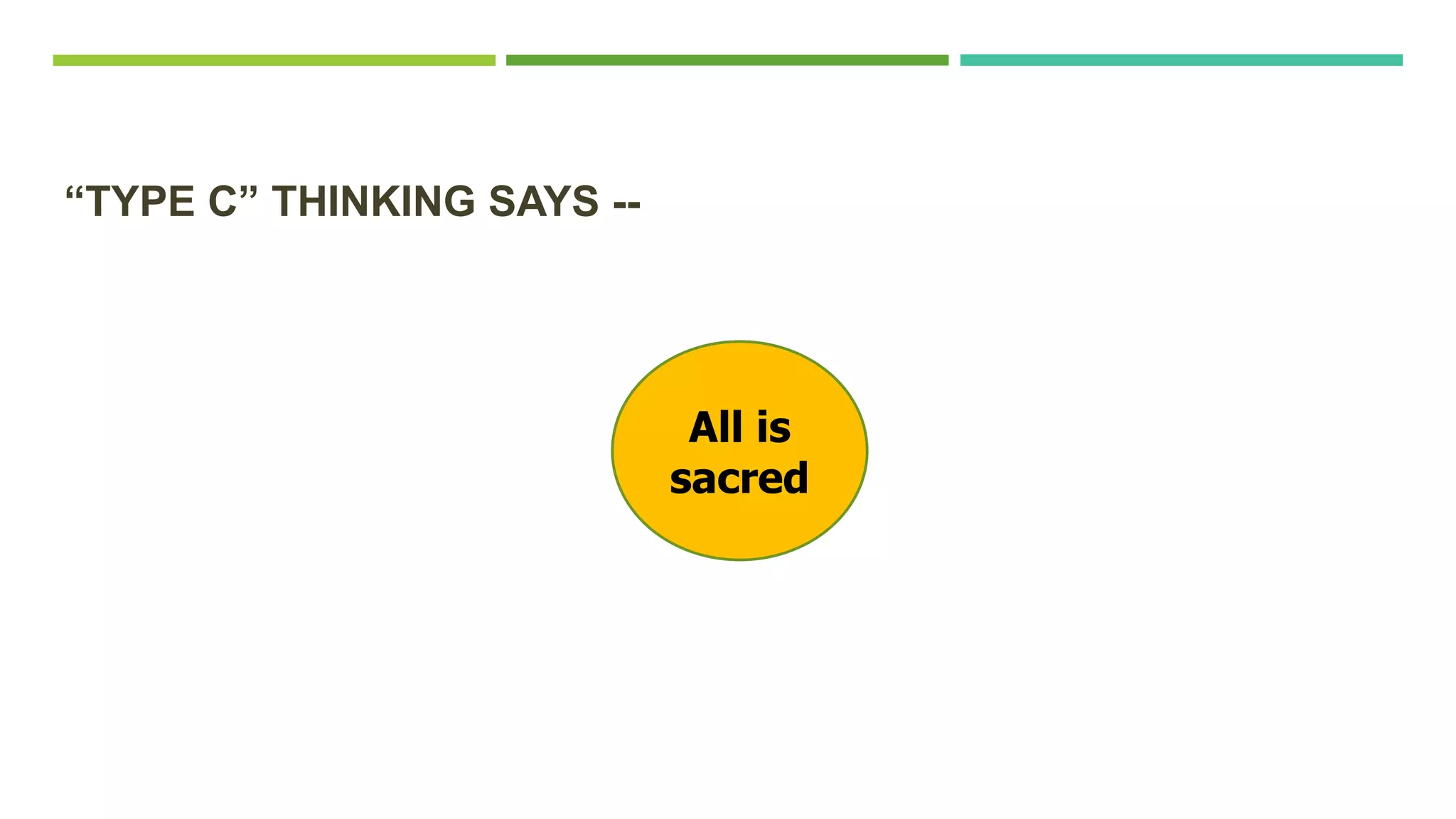
All is
sacred
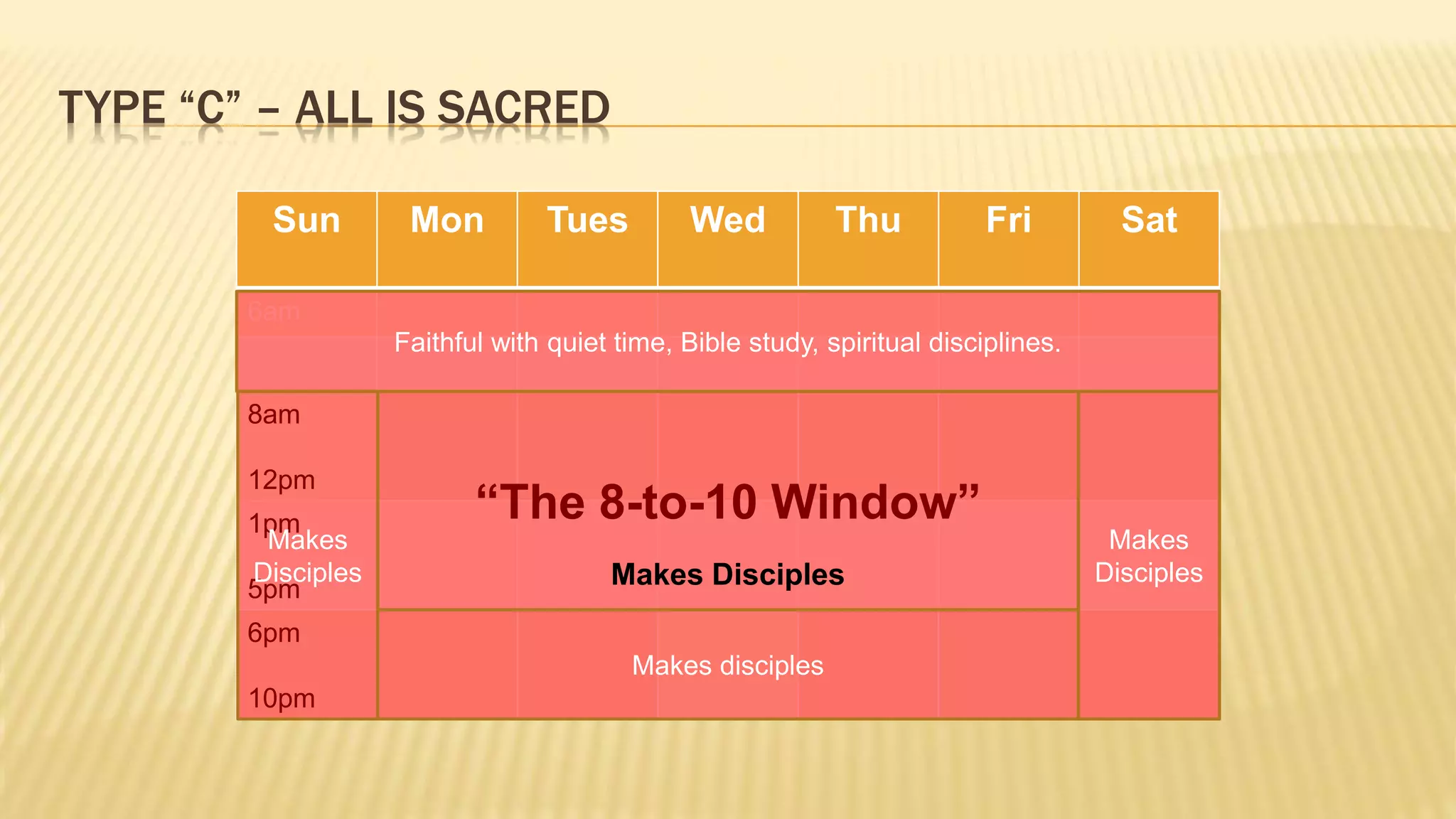
“TYPE C” THINKING SAYS --
TYPE “C” – ALL IS SACRED
Sun Mon Tues Wed Thu Fri Sat
6am
8am
12pm
1pm
5pm
6pm
10pm
Faithful with quiet time, Bible study, spiritual disciplines.
“The 8-to-10 Window”
Makes
Disciples
Makes disciples
Makes
DisciplesMakes Disciples
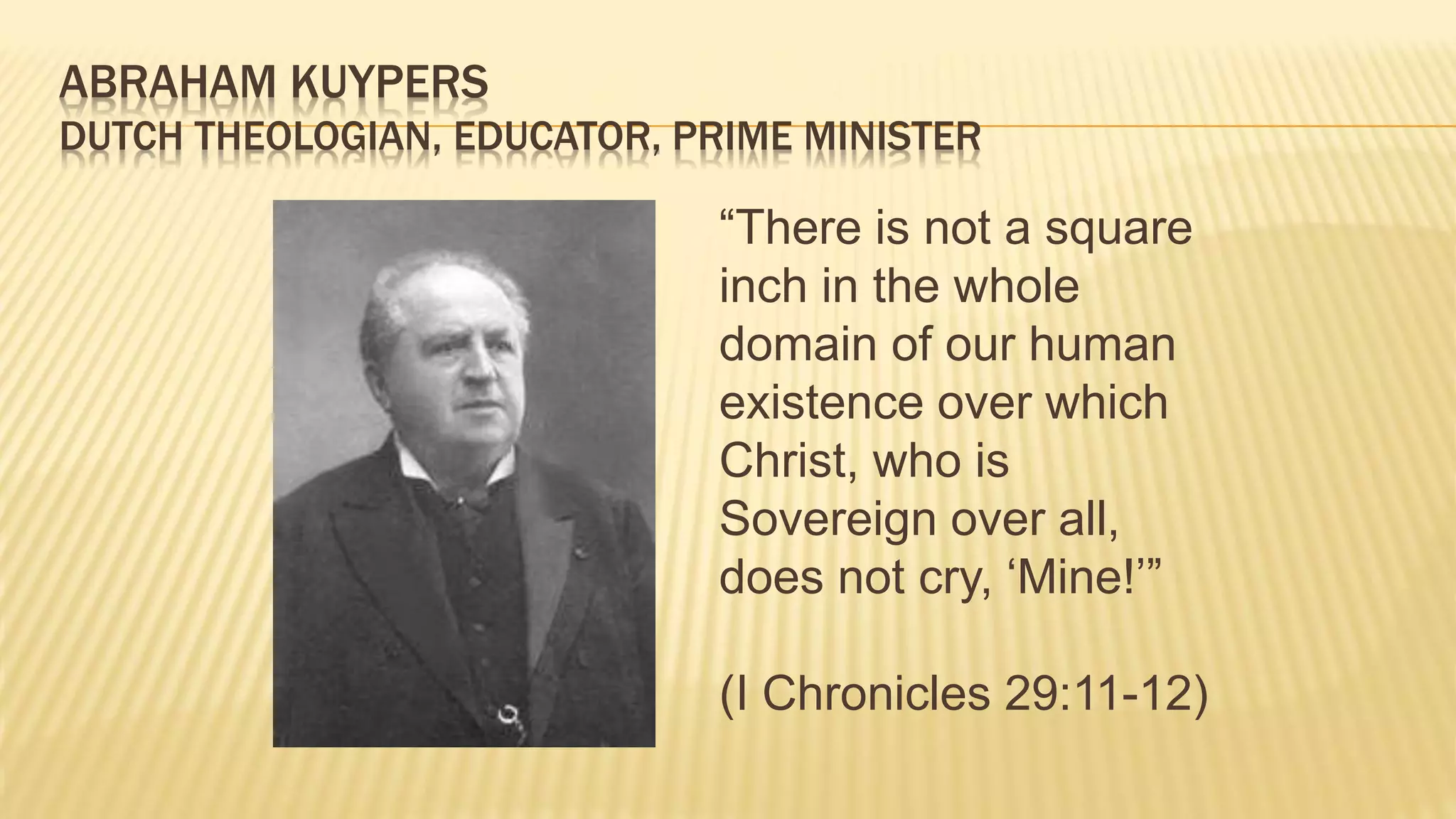
ABRAHAM KUYPERS
DUTCH THEOLOGIAN, EDUCATOR, PRIME MINISTER
“There is not a square
inch in the whole
domain of our human
existence over which
Christ, who is
Sovereign over all,
does not cry, ‘Mine!’”
(I Chronicles 29:11-12)
“EMPOWERING THE
LOCAL CHURCH
TO TRANSFORM
COMMUNITIES”
OUR FLAGSHIP PROGRAM
OUR SLOGAN
“EMPOWERED
CHURCHES,
TRANSFORMED
COMMUNITIES”
WHAT IS EMPOWERMENT
Empowerment is the
ministry of increasing the
local church ministry
potential to transform
communities.
WHAT IS EMPOWERMENT
Empowerment has the sense of
BEING or BECOMING COMPETENT .
WHY EMPOWER THE LOCAL CHURCH?
Biblical Reason: The local church exists as
God’s chosen agency in fulfilling the Great
Commission.
Organizational Reason: The local church is
the basic ministry unit of CAMACOP.
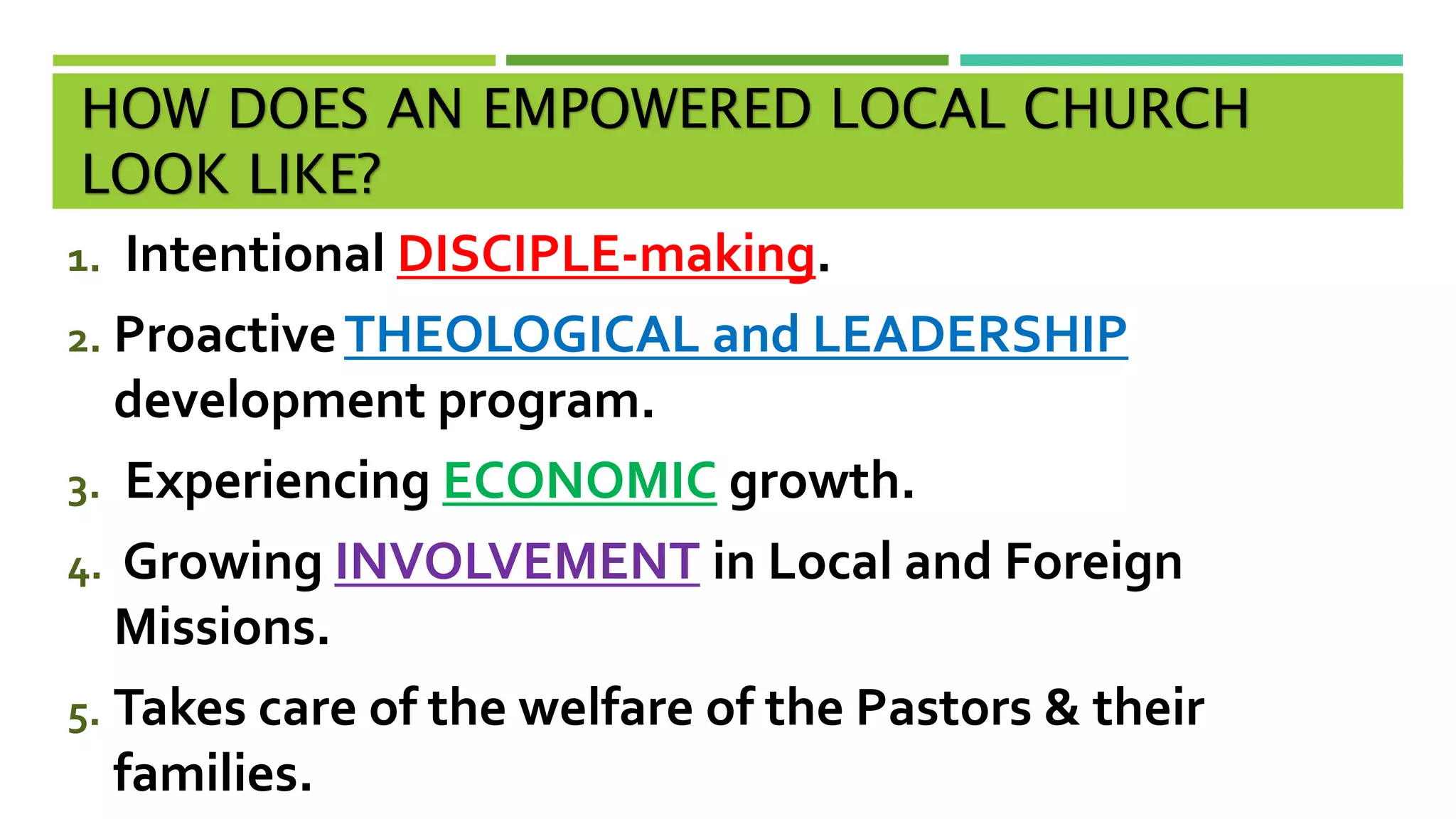
HOW DOES AN EMPOWERED LOCAL CHURCH
LOOK LIKE?
1. Intentional DISCIPLE-making.
2. ProactiveTHEOLOGICAL and LEADERSHIP
development program.
3. Experiencing ECONOMIC growth.
4. Growing INVOLVEMENT in Local and Foreign
Missions.
5. Takes care of the welfare of the Pastors & their
families.
In DISCIPLE-making,
an empowered church is a W.I.D.E.R
Church
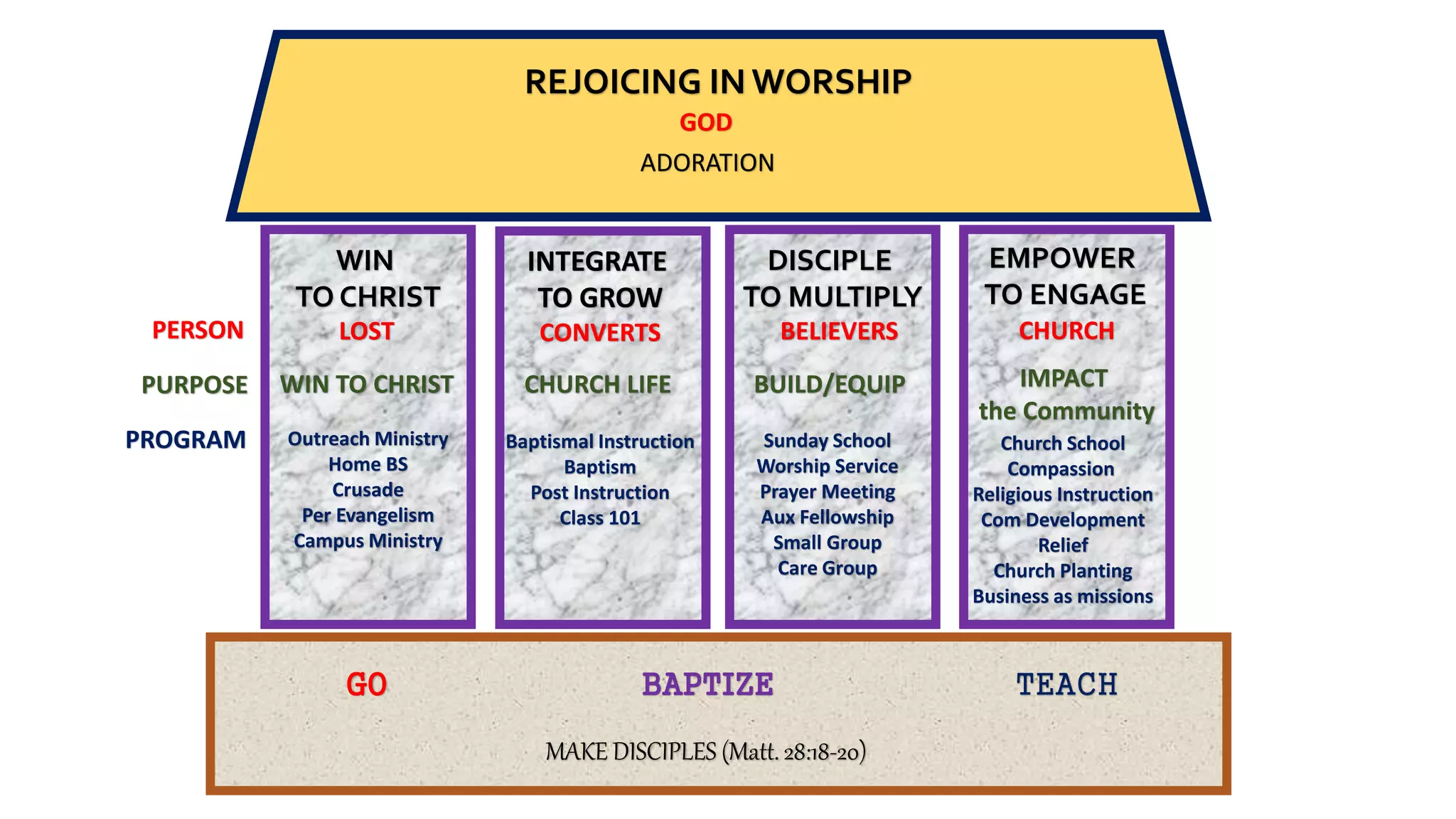
MAKE DISCIPLES (Matt. 28:18-20)
WIN
TO CHRIST
INTEGRATE
TO GROW
DISCIPLE
TO MULTIPLY
EMPOWER
TO ENGAGE
PERSON
PURPOSE
LOST CONVERTS BELIEVERS CHURCH
PROGRAM
IMPACT
the Community
BUILD/EQUIPCHURCH LIFEWIN TO CHRIST
REJOICING IN WORSHIP
GO BAPTIZE TEACH
Baptismal Instruction
Baptism
Post Instruction
Class 101
Sunday School
Worship Service
Prayer Meeting
Aux Fellowship
Small Group
Care Group
Outreach Ministry
Home BS
Crusade
Per Evangelism
Campus Ministry
Church School
Compassion
Religious Instruction
Com Development
Relief
Church Planting
Business as missions
GOD
ADORATION
BIBLICAL CONCEPTS
Of DISCIPLE-MAKING
I. Covenant-based DISCIPLE-MAKING
 Covenant with Abraham
 Covenant with Moses
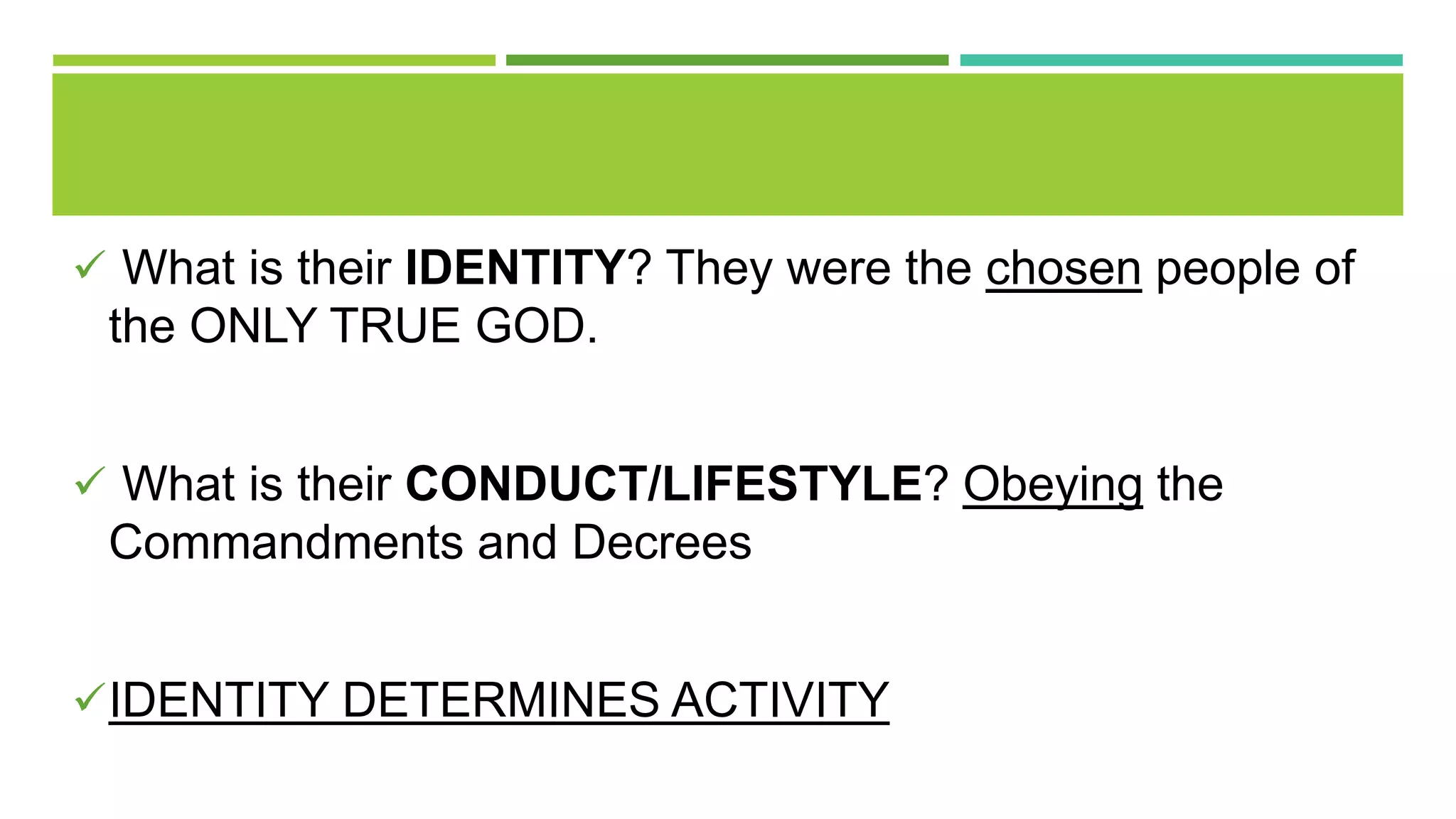
 What is their IDENTITY? They were the chosen people of
the ONLY TRUE GOD.
 What is their CONDUCT/LIFESTYLE? Obeying the
Commandments and Decrees
IDENTITY DETERMINES ACTIVITY
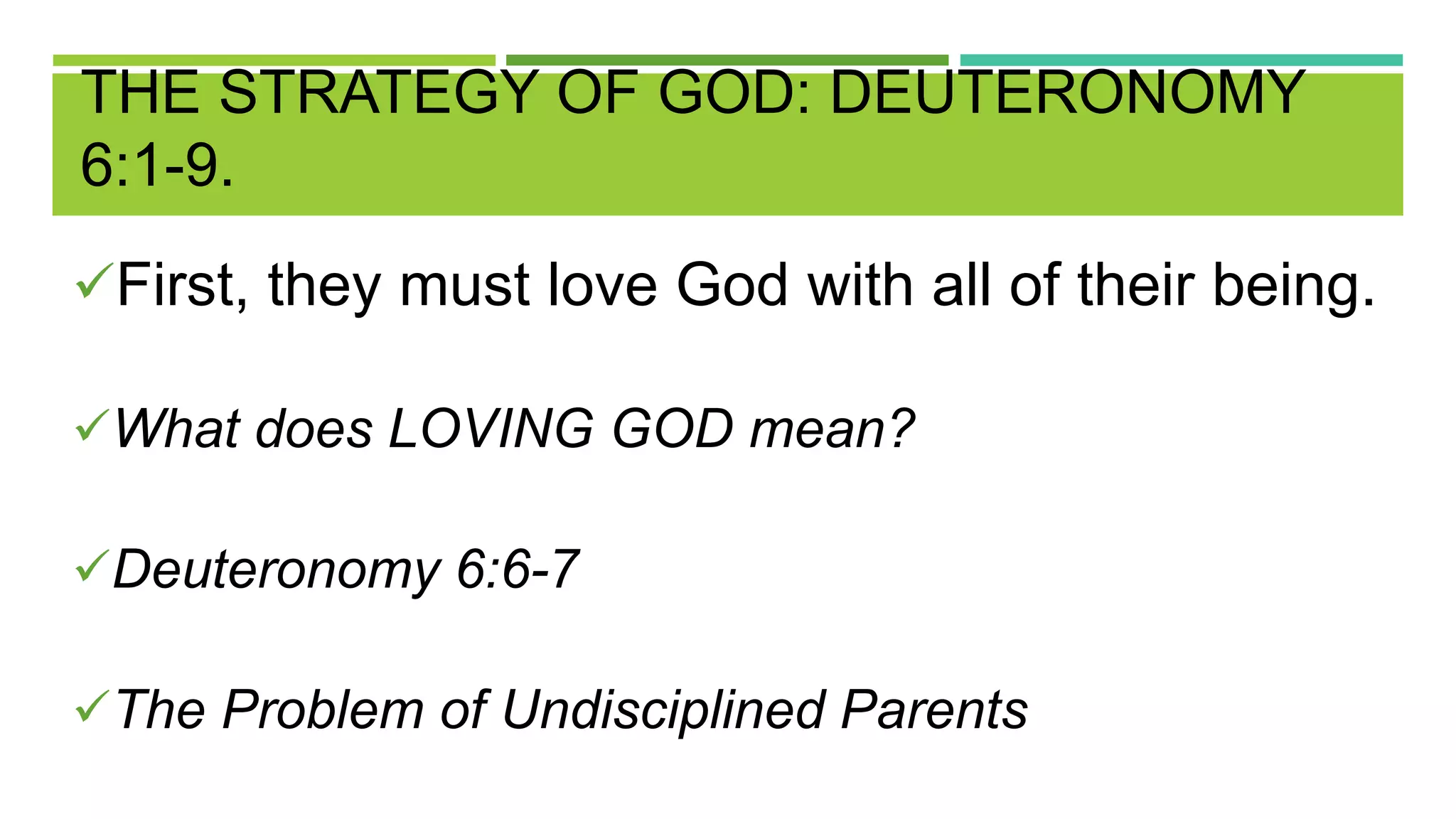
THE STRATEGY OF GOD: DEUTERONOMY
6:1-9.
First, they must love God with all of their being.
What does LOVING GOD mean?
Deuteronomy 6:6-7
The Problem of Undisciplined Parents
THE STRATEGY OF GOD: DEUTERONOMY
6:1-9.
Second, they must teach their children to love
God too.
II. Obedience-based DISCIPLE-MAKING
Then Jesus came to them and said, “All authority in
heaven and on earth has been given to me. Therefore
go and make disciples of all nations, baptizing them in
the name of the Father and of the Son and of the Holy
Spirit, and teaching them to obey everything I have
commanded you. And surely I am with you always, to
the very end of the age.” (Matthew 28:18-20)
THE GREAT COMMISSION
(MATTHEW 28:18-20)
Great Commission’s Main Command:
“MAKE DISCIPLES”
What is the difference between a
DISCIPLE and a CONVERT?
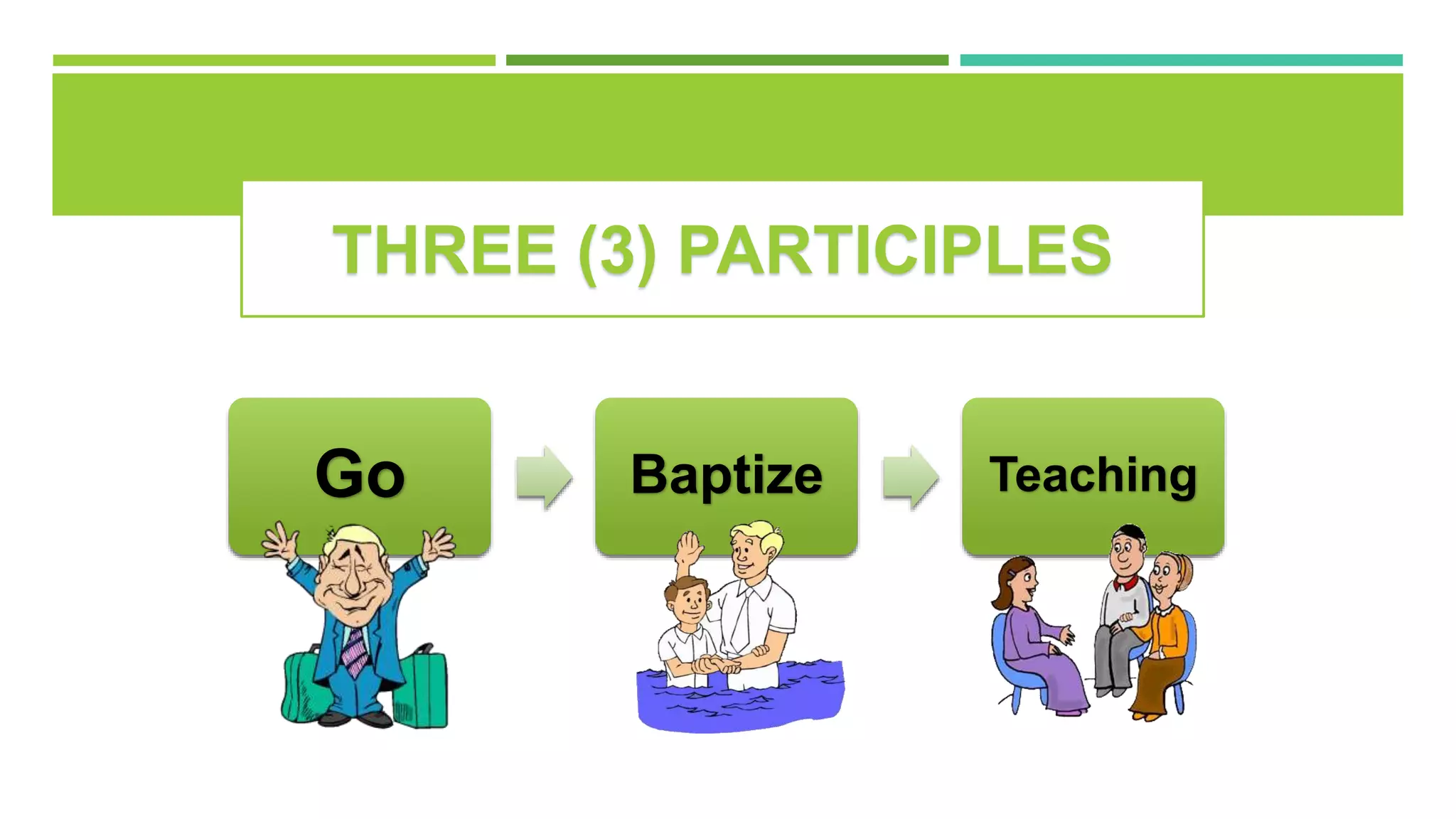
THREE (3) PARTICIPLES
Go Baptize Teaching
THE GREAT COMMISSION
(MATTHEW 28:18-20)
Three Participles:
1. Go(ing). Seeking the people to be discipled.
This brings the great commission the emphasis
of making disciples through the everyday life
activities.
►Intentional SEEKING and REACHING OUT to
people of all kinds in order to disciple them
Three Participles:
2. Baptize(ing). Baptism brings to the Great
commission the issue of leading people become
followers of Christ and building them so that they
grow deep roots of understanding their identity with
Christ in every area of life.
► Coming into relationship with Christ implies “being under the
Lordship of”
► Being under the Lordship introduces the concept of Teacher-
Learner Relationship
THE GREAT COMMISSION
(MATTHEW 28:18-20)
Three Participles:
3. Teach(ing) TO OBEY. Empowering
people with skills so they become fully
trained and obedient disciples.
►Note the phrase “TEACH THEM TO
OBEY”
THE GREAT COMMISSION
(MATTHEW 28:18-20)
►Not “content/material-focused”
►Not “seminar- focused”
►Not “program- focused”
►Not “fellowship-focused”
THE GREAT COMMISSION
(MATTHEW 28:18-20)
3. Teach(ing) TO OBEY. Empowering
people with skills so they become fully
trained and obedient disciples.
► OBEDIENCE-FOCUSED
► Our mandate is to make obedient
disciples
THE GREAT COMMISSION
(MATTHEW 28:18-20)
DISCIPLE-MAKING
DISCIPLE-making refers to healthy biblical
relationships in which a maturing Christian
spends quality time with younger believers
(not referring to age) equipping them to
Walk in obedience to Christ;
Develop Godly character;
Gain proficiency in ministry skills,
…in order to reproduce disciple-makers.
DIFFERENT ASPECTS TO THE FRAMEWORK
First, its focus on HEALTHY BIBLICAL
RELATIONSHIPS as the FOUNDATION of making
disciples.
o Making disciples is not just about completing a LESSON in a given
week.
o Making Disciples is not just also about having FELLOWSHIPS.
o Making Disciples is about CHRIST-CENTERED FRIENDSHIP that
serves as the venue by which believers are nurtured, mentored, and
monitored.
DIFFERENT ASPECTS TO THE FRAMEWORK
Second, a VISION FOR
MULTIPLICATION.
 Making Disciples is not just about growing but also
multiplying.
 The End-goal is not to GROW but to MULTIPLY.
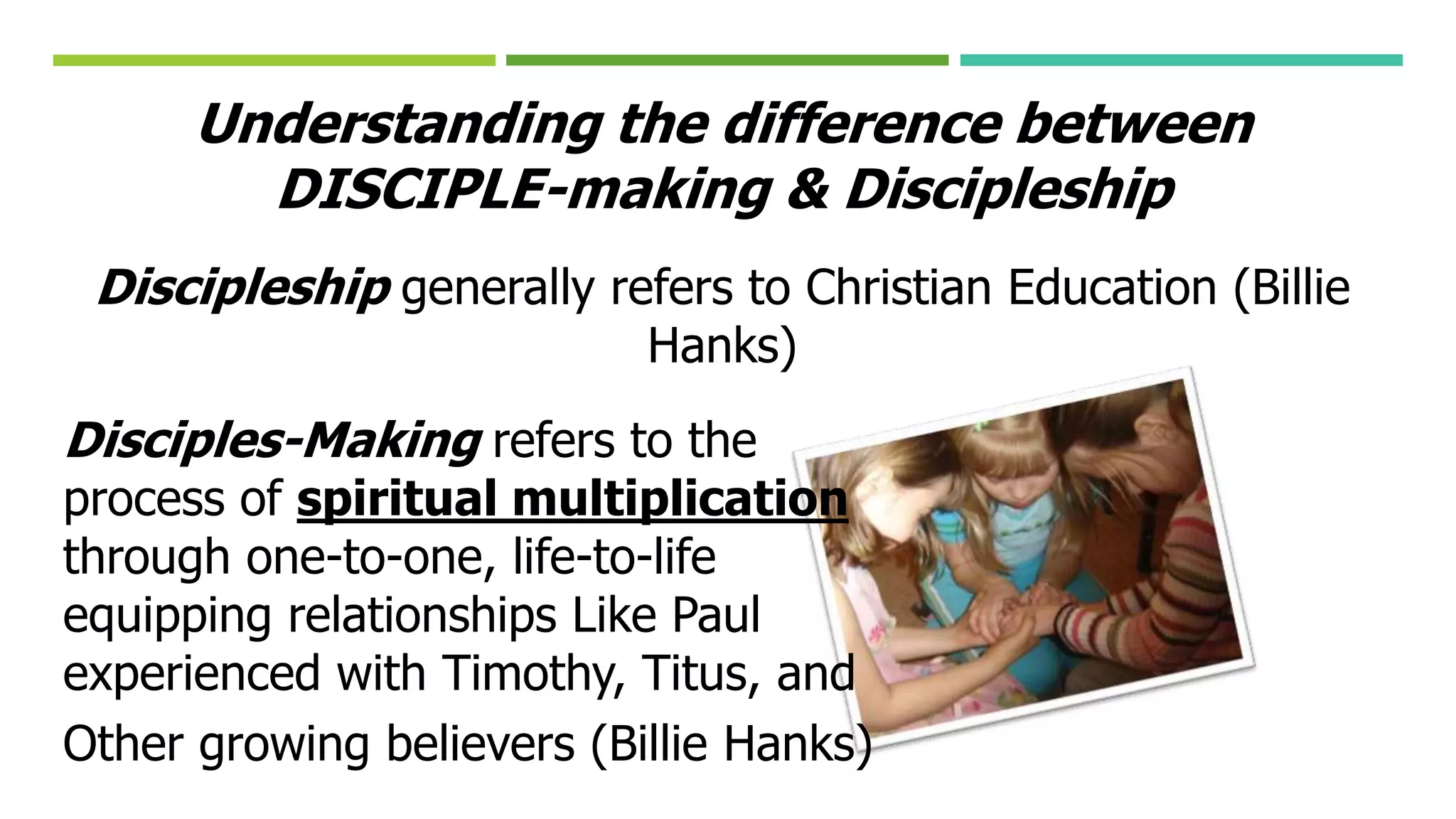
Understanding the difference between
DISCIPLE-making & Discipleship
Discipleship generally refers to Christian Education (Billie
Hanks)
Disciples-Making refers to the
process of spiritual multiplication
through one-to-one, life-to-life
equipping relationships Like Paul
experienced with Timothy, Titus, and
Other growing believers (Billie Hanks)
DIFFERENT ASPECTS TO THE FRAMEWORK
Third, balance emphasis on
both BEING (IDENTITY)
and DOING (ACTIVITY)
REALIGNING OUR HEART AND
PERSPECTIVE TOWARDS GOD’S
PURPOSE FOR THE CHURCH
(Adapted from CCF Material)
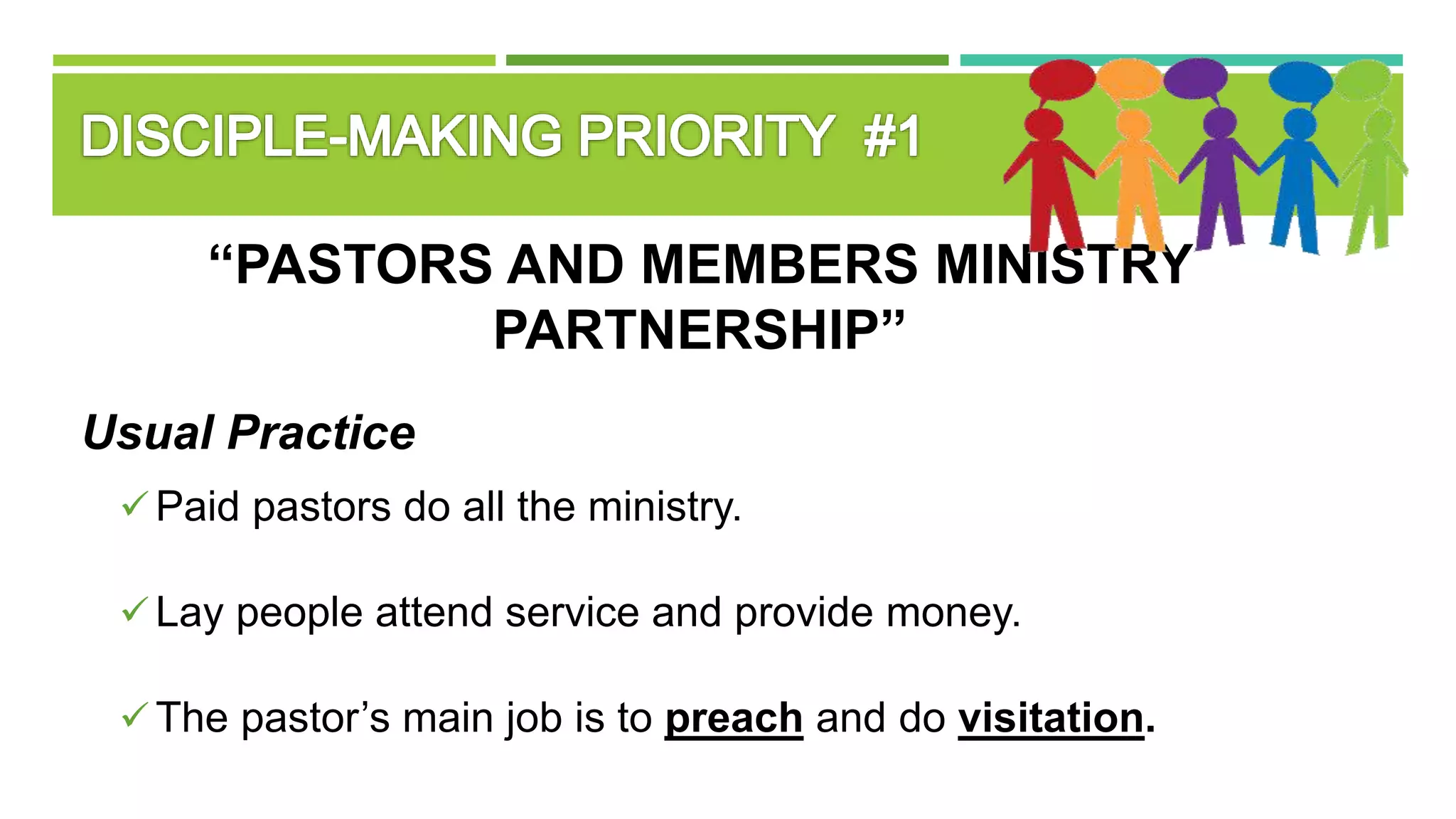
“PASTORS AND MEMBERS MINISTRY
PARTNERSHIP”
Usual Practice
Paid pastors do all the ministry.
Lay people attend service and provide money.
The pastor’s main job is to preach and do visitation.
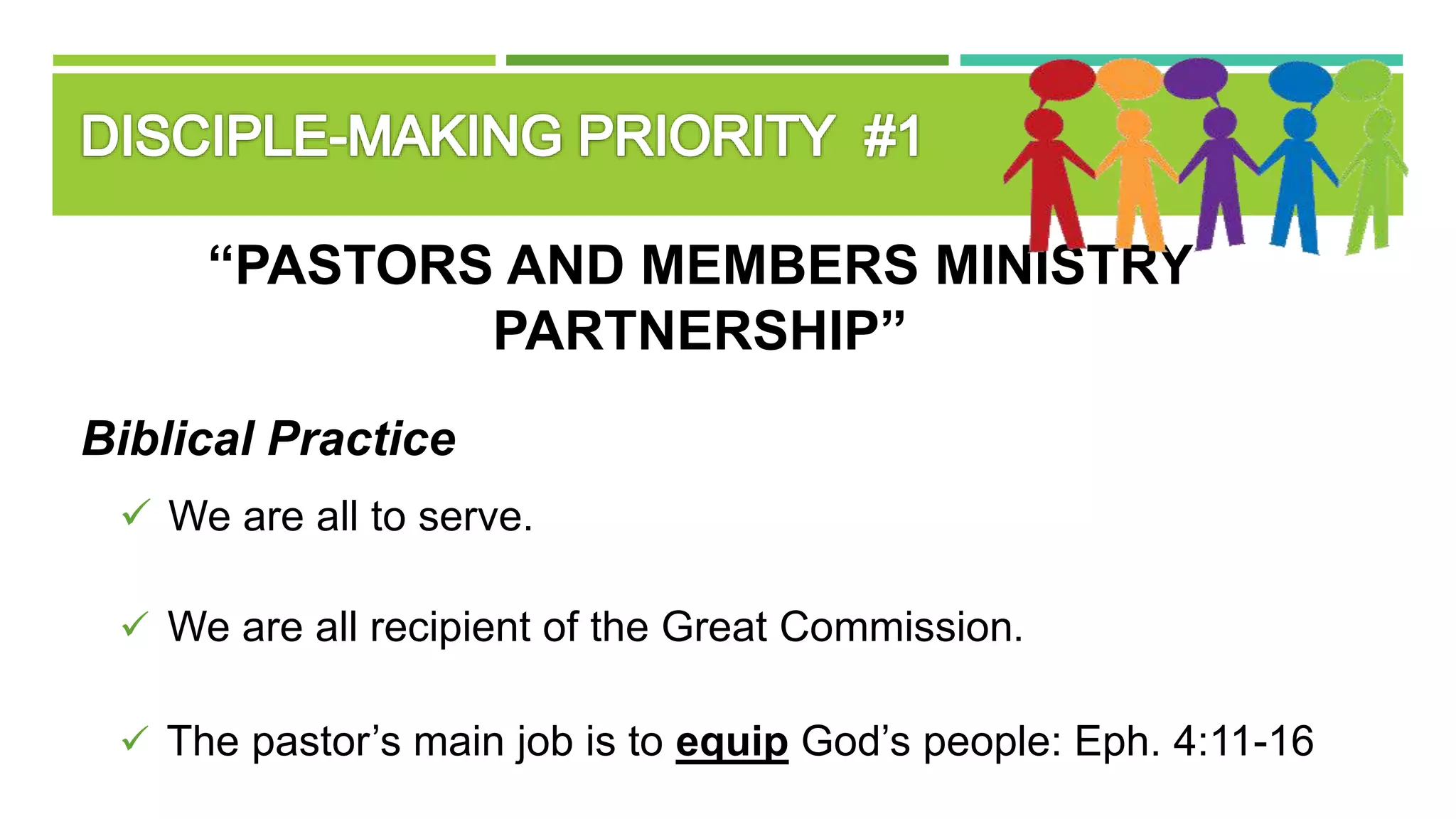
“PASTORS AND MEMBERS MINISTRY
PARTNERSHIP”
Biblical Practice
 We are all to serve.
 We are all recipient of the Great Commission.
 The pastor’s main job is to equip God’s people: Eph. 4:11-16
“LIFE-TO-LIFE MINISTRY”
Usual Practice
 Formal training (home or classroom)
 head knowledge (information overload)
 emphasis on MATERIALS
“LIFE-TO-LIFE MINISTRY”
Biblical Practice
 Modeling Obedience (Character transformation and Christlikeness)
 Mentoring
 Monitoring
“HEALTHY RELATIONSHIPS ”
Usual Practice
 Passive Relationships
 Competition
 Discord and Disunity
“HEALTHY RELATIONSHIPS ”
Biblical Practice
 Christ-centered Friendships
 Complementary Relationships
 Unity in the body of Christ: Eph. 4:1-6
“SPIRITUAL AUTHORITY”
Usual Practice
 Positional Authority
 Demands Respect
 Wanting to be served
“SPIRITUAL AUTHORITY”
Biblical Practice
 Spirit-filled Life
 Disciple-making Modeling
 Servant-hood
“DEPENDENCE ON GOD”
Usual Practice
 Priority is on activities and programs.
 Focus is on methods.
 Dependence on men.
“DEPENDENCE ON GOD”
Biblical Practice
 Priority is on relationship with God.
 Focus is on prayer.
 Dependence on God’s Spirit.
OBEDIENT LIFE Series
Disciple Making

Disciple Making

  • 1.
  • 2.
    Christian And MissionaryAlliance Churches Of the Philippines
  • 3.
    CAMACOP VISION STATEMENT: Transformed communities with mission-driven Christian congregations here and abroad for the glory of God CAMACOP MISSION STATEMENT:  CAMACOP exists to transform communities and to aggressively disciple the nations by engaging in holistic development ministries; and by planting churches that proclaim Jesus Christ as Savior, Sanctifier, Healer and Coming King
  • 4.
    “EMPOWERING THE LOCAL CHURCH TOTRANSFORM COMMUNITIES” OUR FLAGSHIP PROGRAM
  • 5.
    Sacred Secular Family “TYPEA” THINKING SAYS --
  • 6.
    TYPICAL WEEK OFTYPE “A” Sun Mon Tues Wed Thu Fri Sat 6am 8am 12pm 1pm 5pm 6pm 10pm Reads daily devotional “The 8-to-10 Window” Faithfully attends church Mid-week prayer meeting Anything goes!
  • 7.
  • 8.
    TYPICAL WEEK OFTYPE “B” Sun Mon Tues Wed Thu Fri Sat 6am 8am 12pm 1pm 5pm 6pm 10pm Faithful with quiet time, Bible study, spiritual disciplines. “The 8-to-10 Window”Very active in church Ministry, Anything goes! Family Family Family makes disciples makes disciples Family
  • 9.
  • 10.
    TYPE “C” –ALL IS SACRED Sun Mon Tues Wed Thu Fri Sat 6am 8am 12pm 1pm 5pm 6pm 10pm Faithful with quiet time, Bible study, spiritual disciplines. “The 8-to-10 Window” Makes Disciples Makes disciples Makes DisciplesMakes Disciples
  • 11.
    ABRAHAM KUYPERS DUTCH THEOLOGIAN,EDUCATOR, PRIME MINISTER “There is not a square inch in the whole domain of our human existence over which Christ, who is Sovereign over all, does not cry, ‘Mine!’” (I Chronicles 29:11-12)
  • 12.
    “EMPOWERING THE LOCAL CHURCH TOTRANSFORM COMMUNITIES” OUR FLAGSHIP PROGRAM
  • 13.
  • 14.
    WHAT IS EMPOWERMENT Empowermentis the ministry of increasing the local church ministry potential to transform communities.
  • 15.
    WHAT IS EMPOWERMENT Empowermenthas the sense of BEING or BECOMING COMPETENT .
  • 16.
    WHY EMPOWER THELOCAL CHURCH? Biblical Reason: The local church exists as God’s chosen agency in fulfilling the Great Commission. Organizational Reason: The local church is the basic ministry unit of CAMACOP.
  • 17.
    HOW DOES ANEMPOWERED LOCAL CHURCH LOOK LIKE? 1. Intentional DISCIPLE-making. 2. ProactiveTHEOLOGICAL and LEADERSHIP development program. 3. Experiencing ECONOMIC growth. 4. Growing INVOLVEMENT in Local and Foreign Missions. 5. Takes care of the welfare of the Pastors & their families.
  • 18.
    In DISCIPLE-making, an empoweredchurch is a W.I.D.E.R Church
  • 19.
    MAKE DISCIPLES (Matt.28:18-20) WIN TO CHRIST INTEGRATE TO GROW DISCIPLE TO MULTIPLY EMPOWER TO ENGAGE PERSON PURPOSE LOST CONVERTS BELIEVERS CHURCH PROGRAM IMPACT the Community BUILD/EQUIPCHURCH LIFEWIN TO CHRIST REJOICING IN WORSHIP GO BAPTIZE TEACH Baptismal Instruction Baptism Post Instruction Class 101 Sunday School Worship Service Prayer Meeting Aux Fellowship Small Group Care Group Outreach Ministry Home BS Crusade Per Evangelism Campus Ministry Church School Compassion Religious Instruction Com Development Relief Church Planting Business as missions GOD ADORATION
  • 20.
  • 21.
    I. Covenant-based DISCIPLE-MAKING Covenant with Abraham  Covenant with Moses
  • 22.
     What istheir IDENTITY? They were the chosen people of the ONLY TRUE GOD.  What is their CONDUCT/LIFESTYLE? Obeying the Commandments and Decrees IDENTITY DETERMINES ACTIVITY
  • 24.
    THE STRATEGY OFGOD: DEUTERONOMY 6:1-9. First, they must love God with all of their being. What does LOVING GOD mean? Deuteronomy 6:6-7 The Problem of Undisciplined Parents
  • 26.
    THE STRATEGY OFGOD: DEUTERONOMY 6:1-9. Second, they must teach their children to love God too.
  • 28.
    II. Obedience-based DISCIPLE-MAKING ThenJesus came to them and said, “All authority in heaven and on earth has been given to me. Therefore go and make disciples of all nations, baptizing them in the name of the Father and of the Son and of the Holy Spirit, and teaching them to obey everything I have commanded you. And surely I am with you always, to the very end of the age.” (Matthew 28:18-20)
  • 29.
    THE GREAT COMMISSION (MATTHEW28:18-20) Great Commission’s Main Command: “MAKE DISCIPLES” What is the difference between a DISCIPLE and a CONVERT?
  • 30.
    THREE (3) PARTICIPLES GoBaptize Teaching
  • 31.
    THE GREAT COMMISSION (MATTHEW28:18-20) Three Participles: 1. Go(ing). Seeking the people to be discipled. This brings the great commission the emphasis of making disciples through the everyday life activities. ►Intentional SEEKING and REACHING OUT to people of all kinds in order to disciple them
  • 32.
    Three Participles: 2. Baptize(ing).Baptism brings to the Great commission the issue of leading people become followers of Christ and building them so that they grow deep roots of understanding their identity with Christ in every area of life. ► Coming into relationship with Christ implies “being under the Lordship of” ► Being under the Lordship introduces the concept of Teacher- Learner Relationship THE GREAT COMMISSION (MATTHEW 28:18-20)
  • 33.
    Three Participles: 3. Teach(ing)TO OBEY. Empowering people with skills so they become fully trained and obedient disciples. ►Note the phrase “TEACH THEM TO OBEY” THE GREAT COMMISSION (MATTHEW 28:18-20)
  • 34.
    ►Not “content/material-focused” ►Not “seminar-focused” ►Not “program- focused” ►Not “fellowship-focused” THE GREAT COMMISSION (MATTHEW 28:18-20)
  • 35.
    3. Teach(ing) TOOBEY. Empowering people with skills so they become fully trained and obedient disciples. ► OBEDIENCE-FOCUSED ► Our mandate is to make obedient disciples THE GREAT COMMISSION (MATTHEW 28:18-20)
  • 36.
    DISCIPLE-MAKING DISCIPLE-making refers tohealthy biblical relationships in which a maturing Christian spends quality time with younger believers (not referring to age) equipping them to Walk in obedience to Christ; Develop Godly character; Gain proficiency in ministry skills, …in order to reproduce disciple-makers.
  • 37.
    DIFFERENT ASPECTS TOTHE FRAMEWORK First, its focus on HEALTHY BIBLICAL RELATIONSHIPS as the FOUNDATION of making disciples. o Making disciples is not just about completing a LESSON in a given week. o Making Disciples is not just also about having FELLOWSHIPS. o Making Disciples is about CHRIST-CENTERED FRIENDSHIP that serves as the venue by which believers are nurtured, mentored, and monitored.
  • 38.
    DIFFERENT ASPECTS TOTHE FRAMEWORK Second, a VISION FOR MULTIPLICATION.  Making Disciples is not just about growing but also multiplying.  The End-goal is not to GROW but to MULTIPLY.
  • 39.
    Understanding the differencebetween DISCIPLE-making & Discipleship Discipleship generally refers to Christian Education (Billie Hanks) Disciples-Making refers to the process of spiritual multiplication through one-to-one, life-to-life equipping relationships Like Paul experienced with Timothy, Titus, and Other growing believers (Billie Hanks)
  • 40.
    DIFFERENT ASPECTS TOTHE FRAMEWORK Third, balance emphasis on both BEING (IDENTITY) and DOING (ACTIVITY)
  • 43.
    REALIGNING OUR HEARTAND PERSPECTIVE TOWARDS GOD’S PURPOSE FOR THE CHURCH (Adapted from CCF Material)
  • 44.
    “PASTORS AND MEMBERSMINISTRY PARTNERSHIP” Usual Practice Paid pastors do all the ministry. Lay people attend service and provide money. The pastor’s main job is to preach and do visitation.
  • 45.
    “PASTORS AND MEMBERSMINISTRY PARTNERSHIP” Biblical Practice  We are all to serve.  We are all recipient of the Great Commission.  The pastor’s main job is to equip God’s people: Eph. 4:11-16
  • 46.
    “LIFE-TO-LIFE MINISTRY” Usual Practice Formal training (home or classroom)  head knowledge (information overload)  emphasis on MATERIALS
  • 47.
    “LIFE-TO-LIFE MINISTRY” Biblical Practice Modeling Obedience (Character transformation and Christlikeness)  Mentoring  Monitoring
  • 48.
    “HEALTHY RELATIONSHIPS ” UsualPractice  Passive Relationships  Competition  Discord and Disunity
  • 49.
    “HEALTHY RELATIONSHIPS ” BiblicalPractice  Christ-centered Friendships  Complementary Relationships  Unity in the body of Christ: Eph. 4:1-6
  • 50.
    “SPIRITUAL AUTHORITY” Usual Practice Positional Authority  Demands Respect  Wanting to be served
  • 51.
    “SPIRITUAL AUTHORITY” Biblical Practice Spirit-filled Life  Disciple-making Modeling  Servant-hood
  • 52.
    “DEPENDENCE ON GOD” UsualPractice  Priority is on activities and programs.  Focus is on methods.  Dependence on men.
  • 53.
    “DEPENDENCE ON GOD” BiblicalPractice  Priority is on relationship with God.  Focus is on prayer.  Dependence on God’s Spirit.
  • 54.

Editor's Notes

  • #7 Classical sacred-secular divide. Slide is a simplified snapshot of what the typical week of a Type A might look like. Type A attends church faithfully, does some spiritual disciplines, and may even be involved in some ministry enough to keep many pastors happy. Often a generous supporter of the church and missions. But workplace, business objectives and business practices are not impacted by the Gospel. The impact of his business on his employees, customers, society, and the environment is no different than that of a secular company. In order to maximize profit, Type A may take shortcuts, engage in questionable business deals, cheat on taxes, etc. The Type A Christian is “conformed” to the pattern of the world (Rom 12:2).
  • #9 “Deceptive” sacred-secular divide. Type B is very active in church and ministry – many a pastor’s model church member. He may even begin to multiply spiritually, but only in the context of the church and Christian circles. The 8-5 window -- his workplace, business, professional practice -- is not impacted by the Gospel. The Type B Christian tries to live the Christian life but ambition and greed force him to compromise Biblical values.
  • #11 No sacred-secular divide. All is sacred. Type C is active in church and missions and supports both generously. But his 8-5 window is consecrated to God. This is not just about leading Bible study in the office – which is very good and should be encouraged. It is about letting God’s agenda permeate ALL business decisions, practices, policies, strategy so that employees, customers, suppliers, society, and the environment are impacted by the Gospel. The Type C Christian is “transformed by the renewing of his mind” (Rom 12:2).