How do we research what we can’t see?
Dr Jonathon Hutchinson
University of Sydney
Jonathon.Hutchinson@Sydney.edu.au
@dhutchman
Steve Jones, 2014
The University of Sydney Page 3
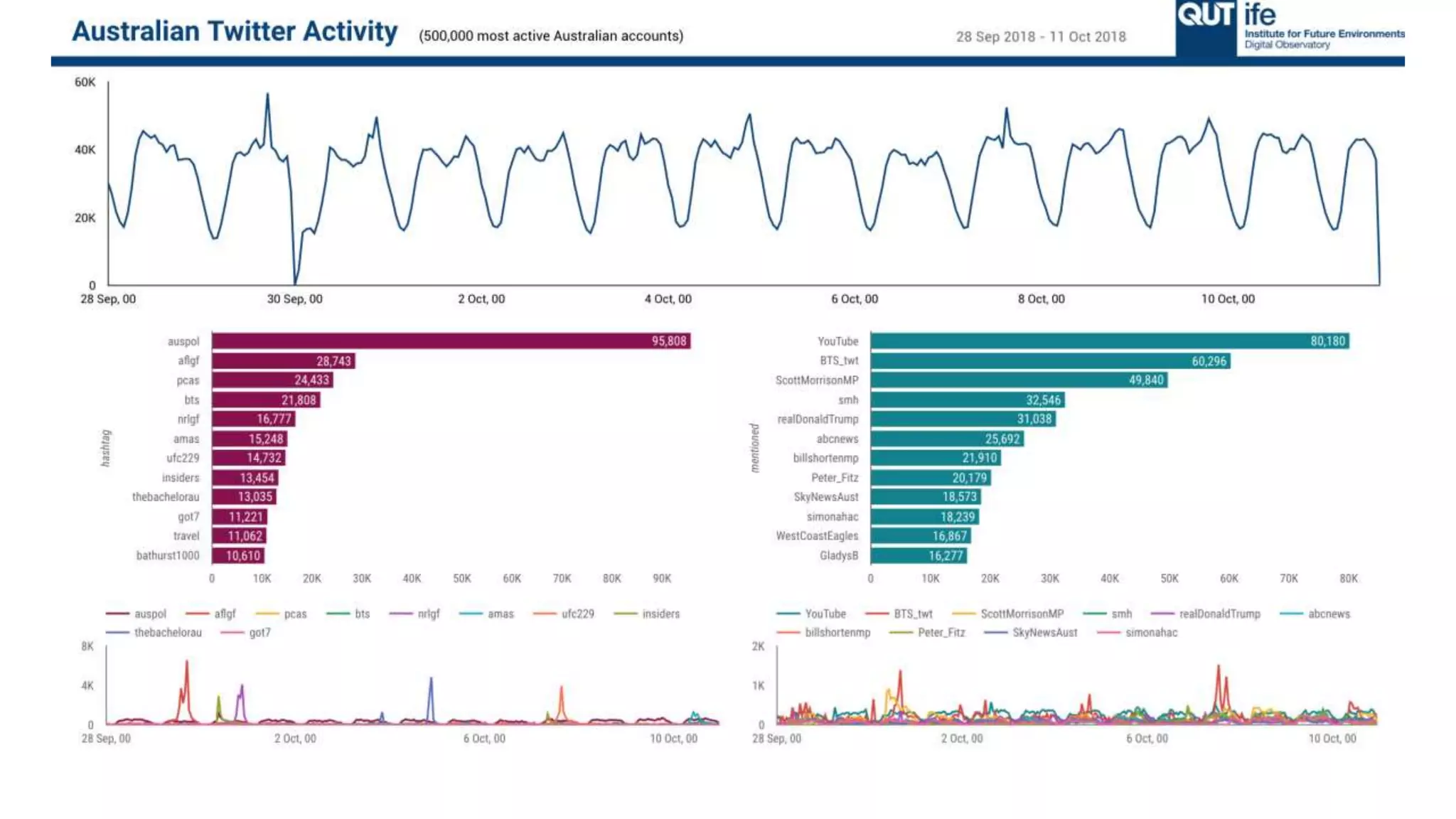
The University of Sydney Page 4
The University of Sydney Page 5
It is a 21st century digital
intermediation problem: the
potential benefits of platform
comparable user-data is useful
for the concerned stakeholders,
while simultaneously intruding on
their personal information
potentially increasing
surveillance, personal security
breaches, and the capitalization
of our digital selves.
The University of Sydney Page 6
Digital Intermediation
Cultural
Intermediation
Expertise
Languages
Social
Capital
Tacit
Knowledge
Digital
Intermediation
Cultural
Intermediation
Data
Influencers
Platforms
The University of Sydney Page 7
Relational; Contextual; Temporal
The University of Sydney Page 9
The University of Sydney Page 10
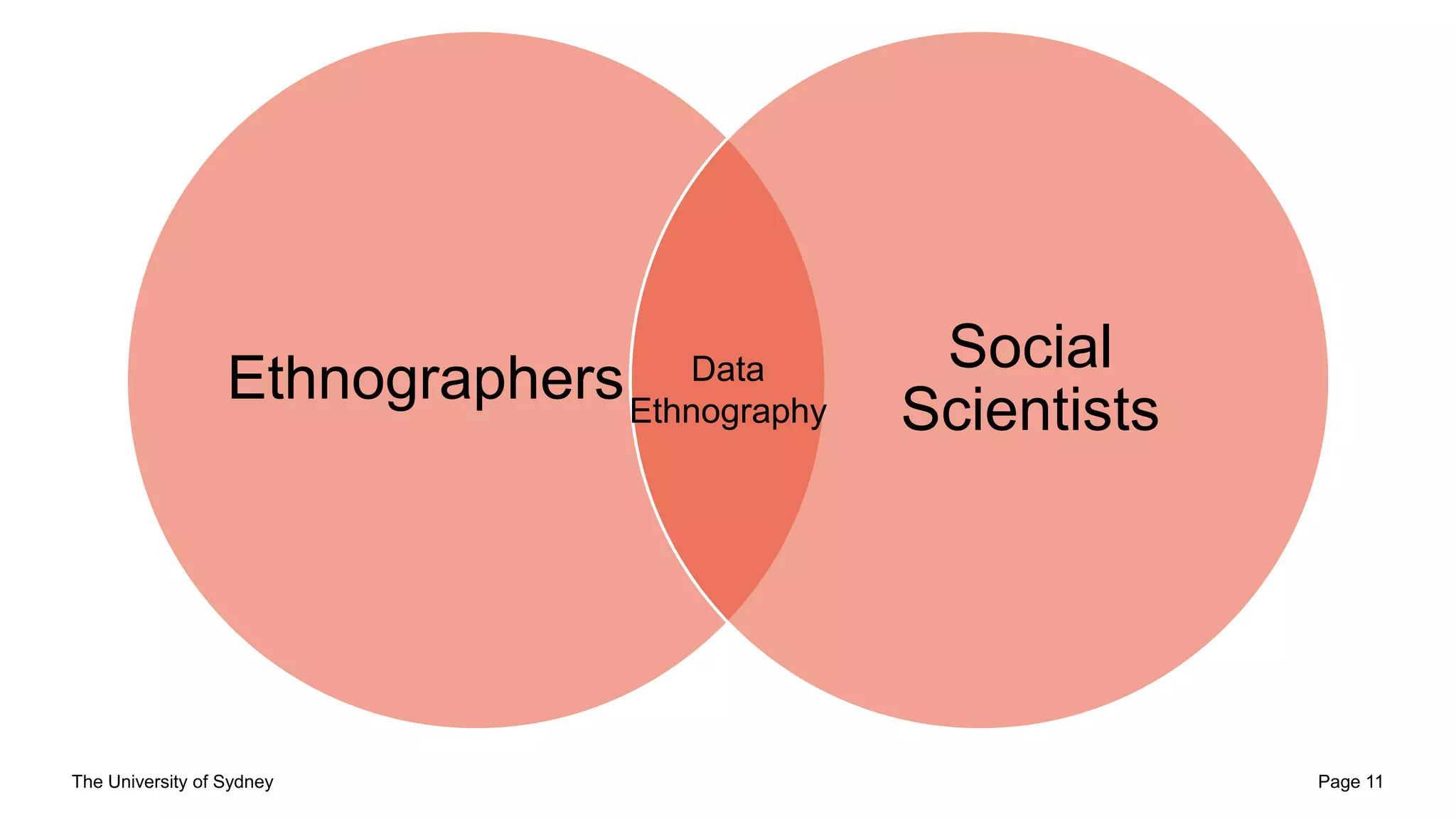
The University of Sydney Page 11
Ethnographers
Social
Scientists
Data
Ethnography
The University of Sydney Page 12
Towards Data Ethnography – Rapid
Ethnography
Fieldwork (re)Design Programming Implementation
The University of Sydney Page 13
Data Ethnography
The University of Sydney Page 14
The University of Sydney Page 15
Discussion
– Interoperability is increasing across all sectors of society
– Some aspects are positive; unfortunately there are a
number of negative life issues for some misrepresented
members
– The enmeshed state/government stewardship of
interoperability complicates matters for public interest
researchers
– We need to be actively designing new methodologies in
these areas to continue our work.
How do we research what we can’t see?
Dr Jonathon Hutchinson
University of Sydney
Jonathon.Hutchinson@Sydney.edu.au
@dhutchman

Digital Methods for the Interoperability Mandate

  • 1.
    How do weresearch what we can’t see? Dr Jonathon Hutchinson University of Sydney Jonathon.Hutchinson@Sydney.edu.au @dhutchman
  • 2.
  • 3.
    The University ofSydney Page 3
  • 4.
    The University ofSydney Page 4
  • 5.
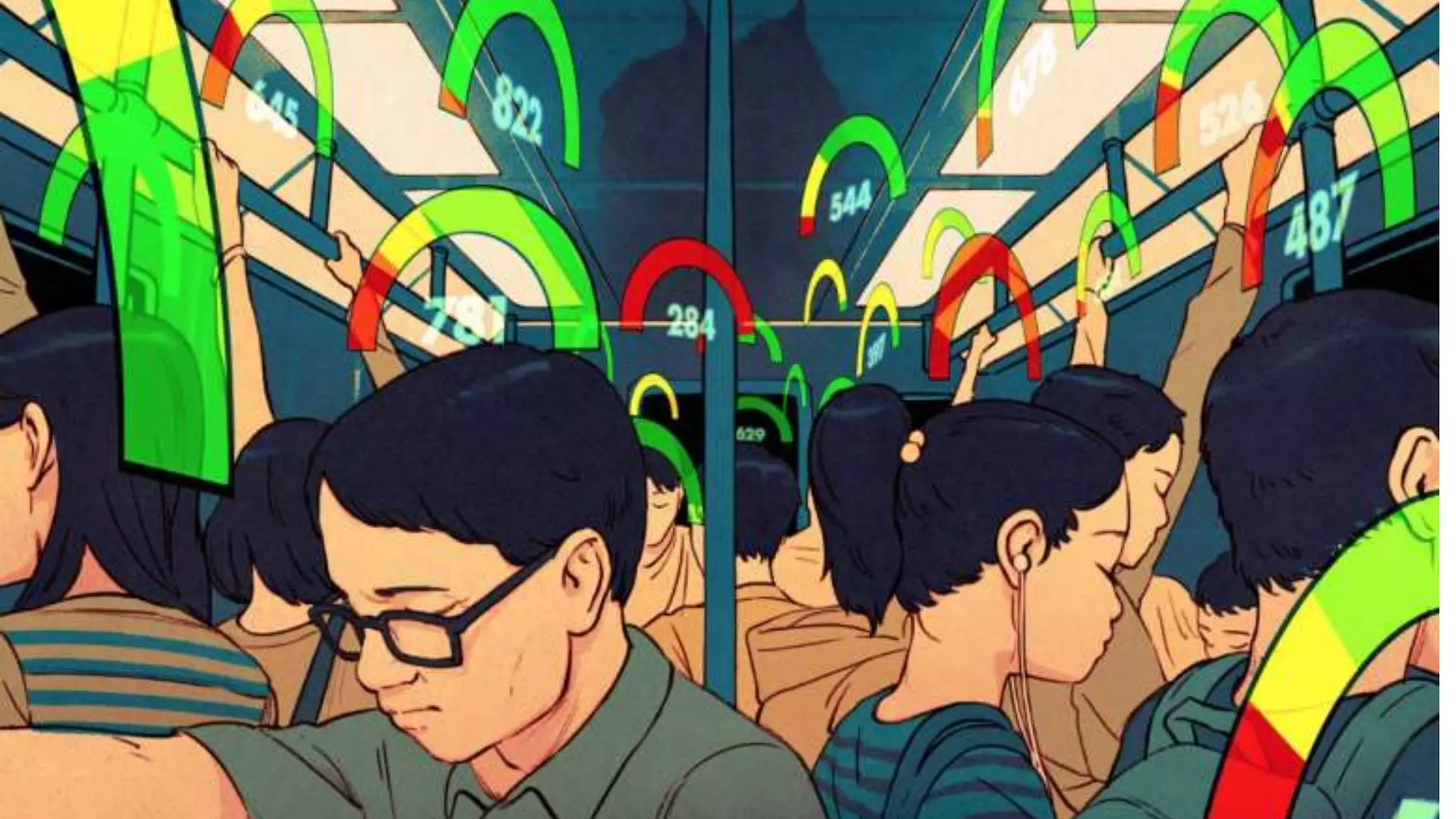
    The University ofSydney Page 5 It is a 21st century digital intermediation problem: the potential benefits of platform comparable user-data is useful for the concerned stakeholders, while simultaneously intruding on their personal information potentially increasing surveillance, personal security breaches, and the capitalization of our digital selves.
  • 6.
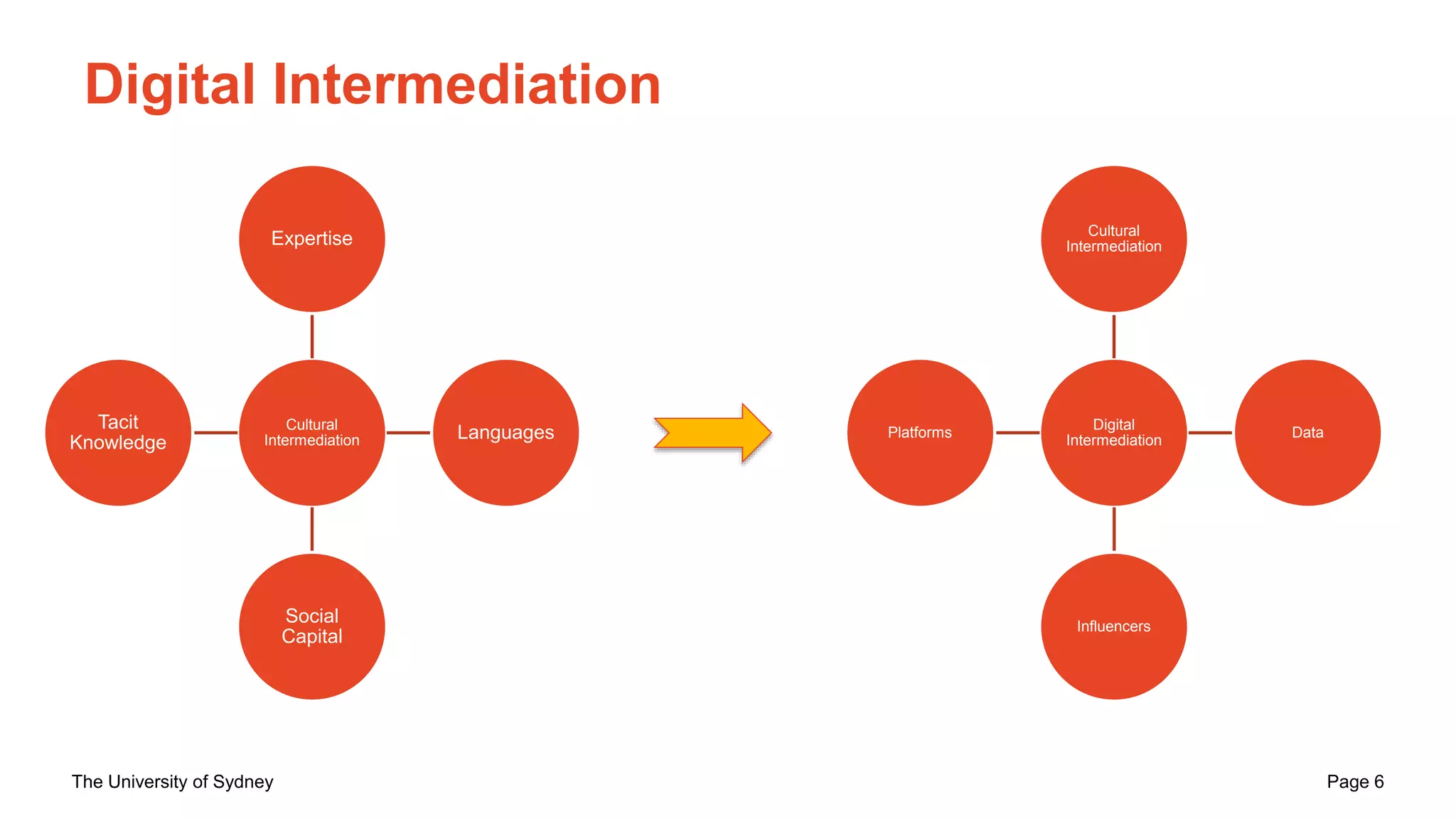
    The University ofSydney Page 6 Digital Intermediation Cultural Intermediation Expertise Languages Social Capital Tacit Knowledge Digital Intermediation Cultural Intermediation Data Influencers Platforms
  • 7.
    The University ofSydney Page 7
  • 8.
  • 9.
    The University ofSydney Page 9
  • 10.
    The University ofSydney Page 10
  • 11.
    The University ofSydney Page 11 Ethnographers Social Scientists Data Ethnography
  • 12.
    The University ofSydney Page 12 Towards Data Ethnography – Rapid Ethnography Fieldwork (re)Design Programming Implementation
  • 13.
    The University ofSydney Page 13 Data Ethnography
  • 14.
    The University ofSydney Page 14
  • 15.
    The University ofSydney Page 15 Discussion – Interoperability is increasing across all sectors of society – Some aspects are positive; unfortunately there are a number of negative life issues for some misrepresented members – The enmeshed state/government stewardship of interoperability complicates matters for public interest researchers – We need to be actively designing new methodologies in these areas to continue our work.
  • 16.
    How do weresearch what we can’t see? Dr Jonathon Hutchinson University of Sydney Jonathon.Hutchinson@Sydney.edu.au @dhutchman