Digital
Marketing
by fidhaabbas.com
Overview
Introduction 01
Key components 02
Benefits 03
Strategy 04
KPI 05
Introduction
Digital marketing encompasses a wide array of strategies designed to
connect with consumers through digital channels like websites, social
media, search engines, and email. Unlike traditional marketing, which
often relies on broad, one-way communication, digital marketing
leverages technology to engage with audiences in personalized, data-
driven, and measurable ways.
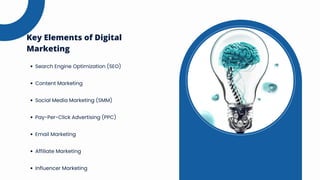
Key Elements of Digital
Marketing
Search Engine Optimization (SEO)
Content Marketing
Social Media Marketing (SMM)
Pay-Per-Click Advertising (PPC)
Email Marketing
Affiliate Marketing
Influencer Marketing
Benefits of Digital Marketing
Targeted Reach: Campaigns can be tailored to specific
demographics, interests, and behaviors, leading to more
effective communication.
Cost-Effectiveness: Digital marketing campaigns can be
scaled to fit various budgets, often with a higher ROI than
traditional methods.
Measurability: Digital marketing provides metrics and
analytics, allowing marketers to track and adjust strategies
in real-time.
Engagement: Digital channels enable direct interaction with
audiences, which can improve customer loyalty and
satisfaction.
Personalization: Through data, digital marketing allows for
highly personalized experiences, such as recommendations,
tailored emails, and retargeting.
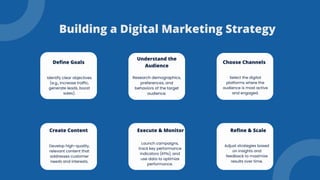
Building a Digital Marketing Strategy
Define Goals
Identify clear objectives
(e.g., increase traffic,
generate leads, boost
sales).
Research demographics,
preferences, and
behaviors of the target
audience.
Understand the
Audience
Choose Channels
Select the digital
platforms where the
audience is most active
and engaged.
Create Content
Develop high-quality,
relevant content that
addresses customer
needs and interests.
Execute & Monitor
Launch campaigns,
track key performance
indicators (KPIs), and
use data to optimize
performance.
Refine & Scale
Adjust strategies based
on insights and
feedback to maximize
results over time.
Traffic Metrics Engagement Metrics Conversion Metrics
Key Performance Indicators
(KPIs) in Digital Marketing
Unique visitors, page
views, bounce rate.
Likes, comments, shares,
and time spent on site
Conversion rate, cost
per acquisition (CPA),
and click-through rate
(CTR).
Revenue Metrics
Return on Ad Spend
(ROAS), customer lifetime
value (CLV)
Digital marketing is dynamic and continually evolving, with new tools and
technologies emerging regularly. Businesses that leverage these techniques
strategically can increase brand awareness, attract and retain customers, and
achieve long-term growth. This flexibility, along with the ability to measure and
adjust efforts in real-time, makes digital marketing an invaluable approach for any
organization aiming to thrive in today’s digital landscape.
THANK YOU!
fidhaabbas.com

Digital Marketing: A Comprehensive Guide

  • 1.
  • 2.
    Overview Introduction 01 Key components02 Benefits 03 Strategy 04 KPI 05
  • 3.
    Introduction Digital marketing encompassesa wide array of strategies designed to connect with consumers through digital channels like websites, social media, search engines, and email. Unlike traditional marketing, which often relies on broad, one-way communication, digital marketing leverages technology to engage with audiences in personalized, data- driven, and measurable ways.
  • 4.
    Key Elements ofDigital Marketing Search Engine Optimization (SEO) Content Marketing Social Media Marketing (SMM) Pay-Per-Click Advertising (PPC) Email Marketing Affiliate Marketing Influencer Marketing
  • 5.
    Benefits of DigitalMarketing Targeted Reach: Campaigns can be tailored to specific demographics, interests, and behaviors, leading to more effective communication. Cost-Effectiveness: Digital marketing campaigns can be scaled to fit various budgets, often with a higher ROI than traditional methods. Measurability: Digital marketing provides metrics and analytics, allowing marketers to track and adjust strategies in real-time. Engagement: Digital channels enable direct interaction with audiences, which can improve customer loyalty and satisfaction. Personalization: Through data, digital marketing allows for highly personalized experiences, such as recommendations, tailored emails, and retargeting.
  • 6.
    Building a DigitalMarketing Strategy Define Goals Identify clear objectives (e.g., increase traffic, generate leads, boost sales). Research demographics, preferences, and behaviors of the target audience. Understand the Audience Choose Channels Select the digital platforms where the audience is most active and engaged. Create Content Develop high-quality, relevant content that addresses customer needs and interests. Execute & Monitor Launch campaigns, track key performance indicators (KPIs), and use data to optimize performance. Refine & Scale Adjust strategies based on insights and feedback to maximize results over time.
  • 7.
    Traffic Metrics EngagementMetrics Conversion Metrics Key Performance Indicators (KPIs) in Digital Marketing Unique visitors, page views, bounce rate. Likes, comments, shares, and time spent on site Conversion rate, cost per acquisition (CPA), and click-through rate (CTR). Revenue Metrics Return on Ad Spend (ROAS), customer lifetime value (CLV)
  • 8.
    Digital marketing isdynamic and continually evolving, with new tools and technologies emerging regularly. Businesses that leverage these techniques strategically can increase brand awareness, attract and retain customers, and achieve long-term growth. This flexibility, along with the ability to measure and adjust efforts in real-time, makes digital marketing an invaluable approach for any organization aiming to thrive in today’s digital landscape.
  • 9.