DIGITAL LEARNING
ENVIRONMENTS
HOW TOOLS SUCH AS A BOOK RAP CAN CREATE COLLABORATIVE ONLINE
LEARNING ENVIRONMENTS
Image credit
www.news4desi.com
CHANGES IN EDUCATION
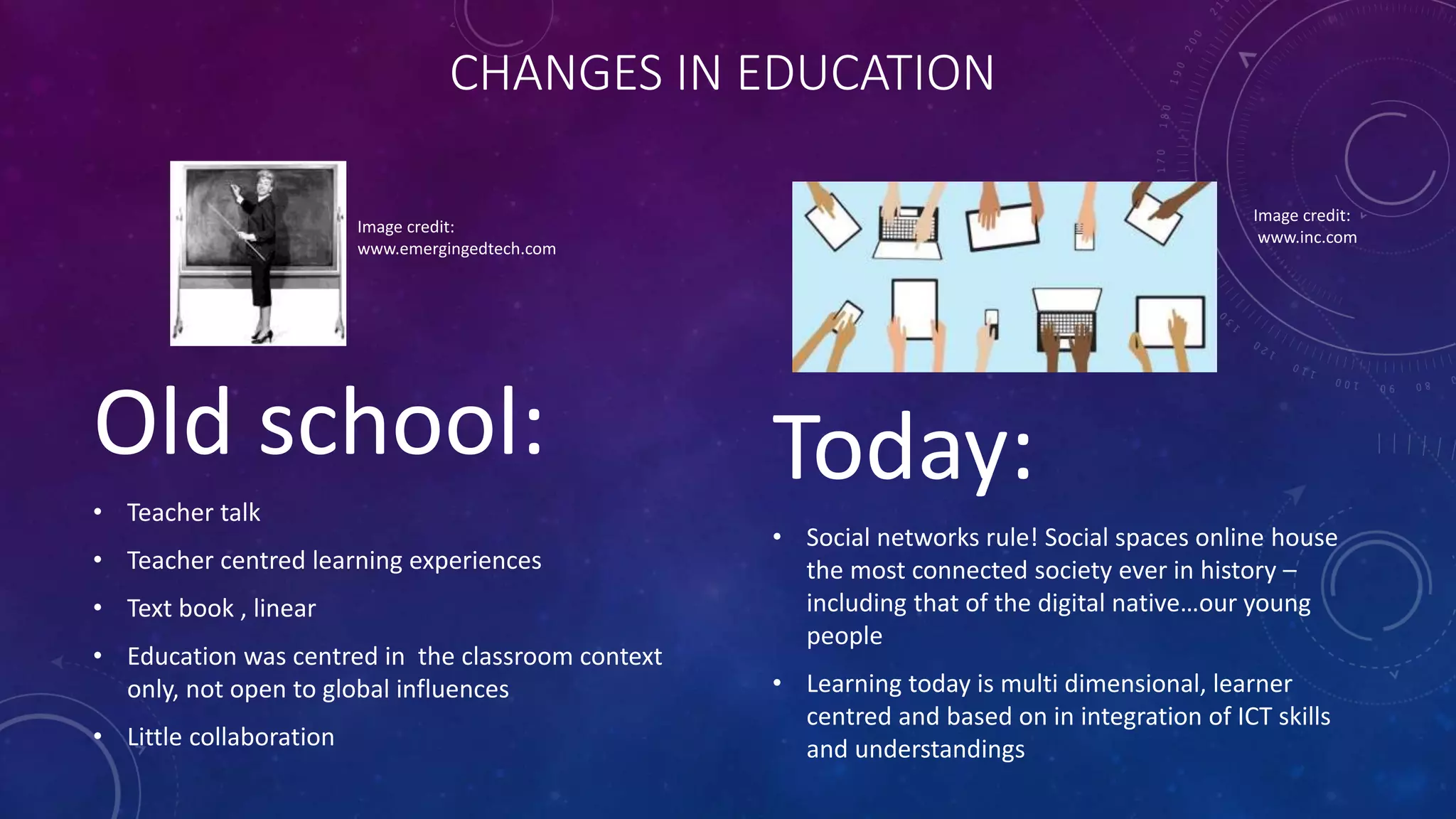
Old school:
• Teacher talk
• Teacher centred learning experiences
• Text book , linear
• Education was centred in the classroom context
only, not open to global influences
• Little collaboration
Today:
• Social networks rule! Social spaces online house
the most connected society ever in history –
including that of the digital native…our young
people
• Learning today is multi dimensional, learner
centred and based on in integration of ICT skills
and understandings
Image credit:
www.inc.com
Image credit:
www.emergingedtech.com
WELCOME TO THE INFORMATION OVERLOAD
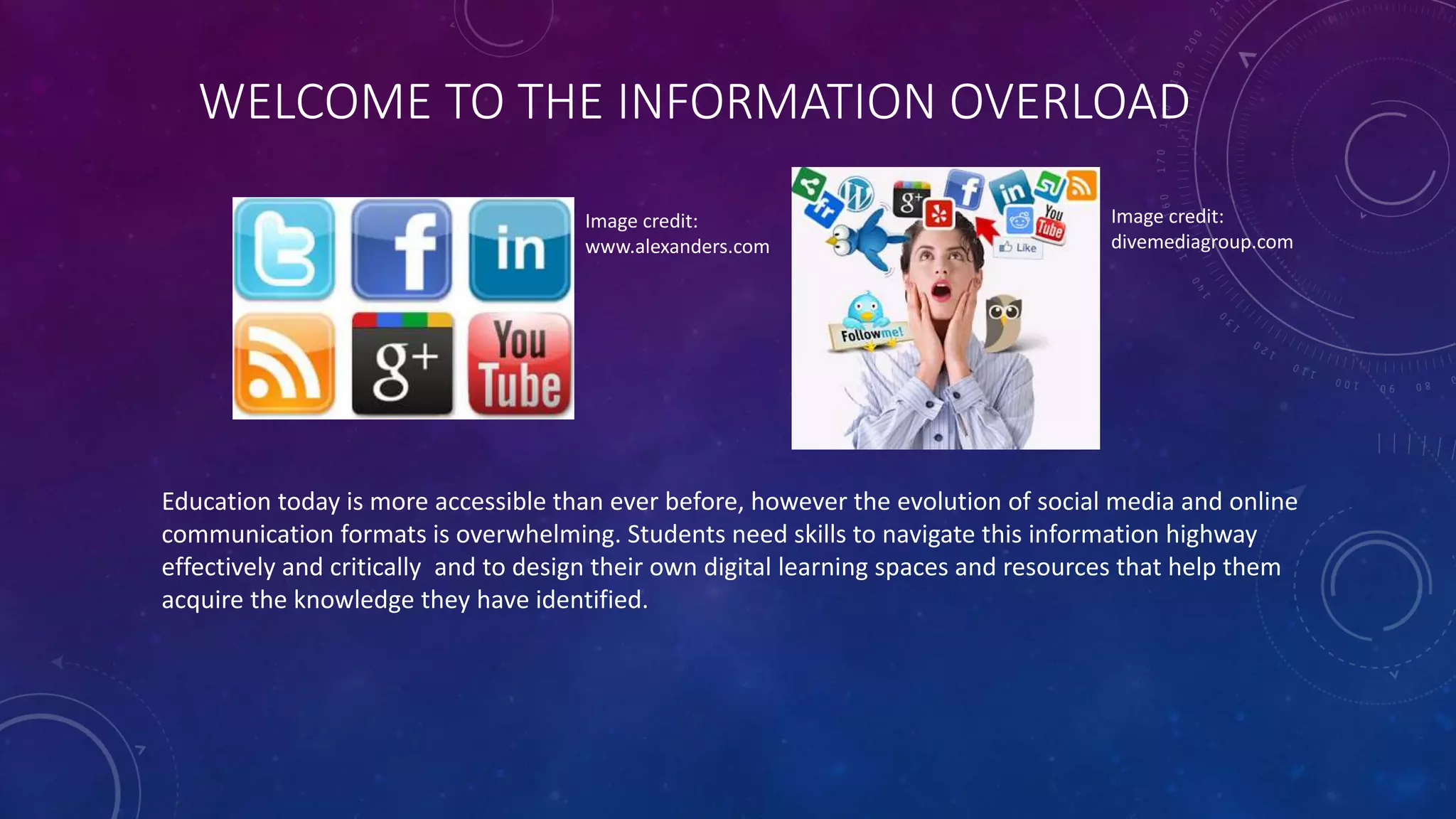
Education today is more accessible than ever before, however the evolution of social media and online
communication formats is overwhelming. Students need skills to navigate this information highway
effectively and critically and to design their own digital learning spaces and resources that help them
acquire the knowledge they have identified.
Image credit:
www.alexanders.com
Image credit:
divemediagroup.com
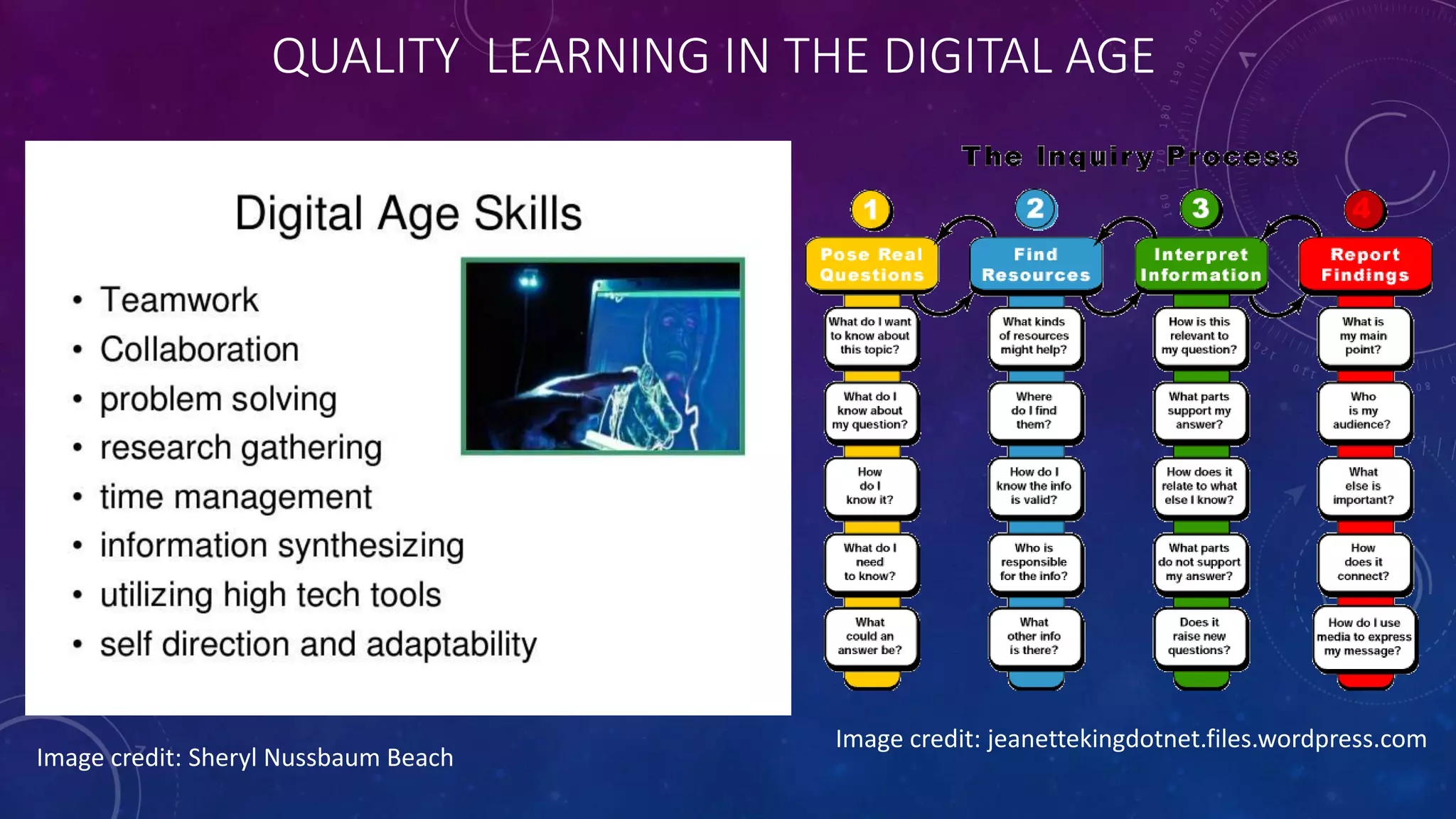
QUALITY LEARNING IN THE DIGITAL AGE
Image credit: Sheryl Nussbaum Beach
Image credit: jeanettekingdotnet.files.wordpress.com
DIGITAL INQUIRY, LITERACIES ETHICS AND VALUES
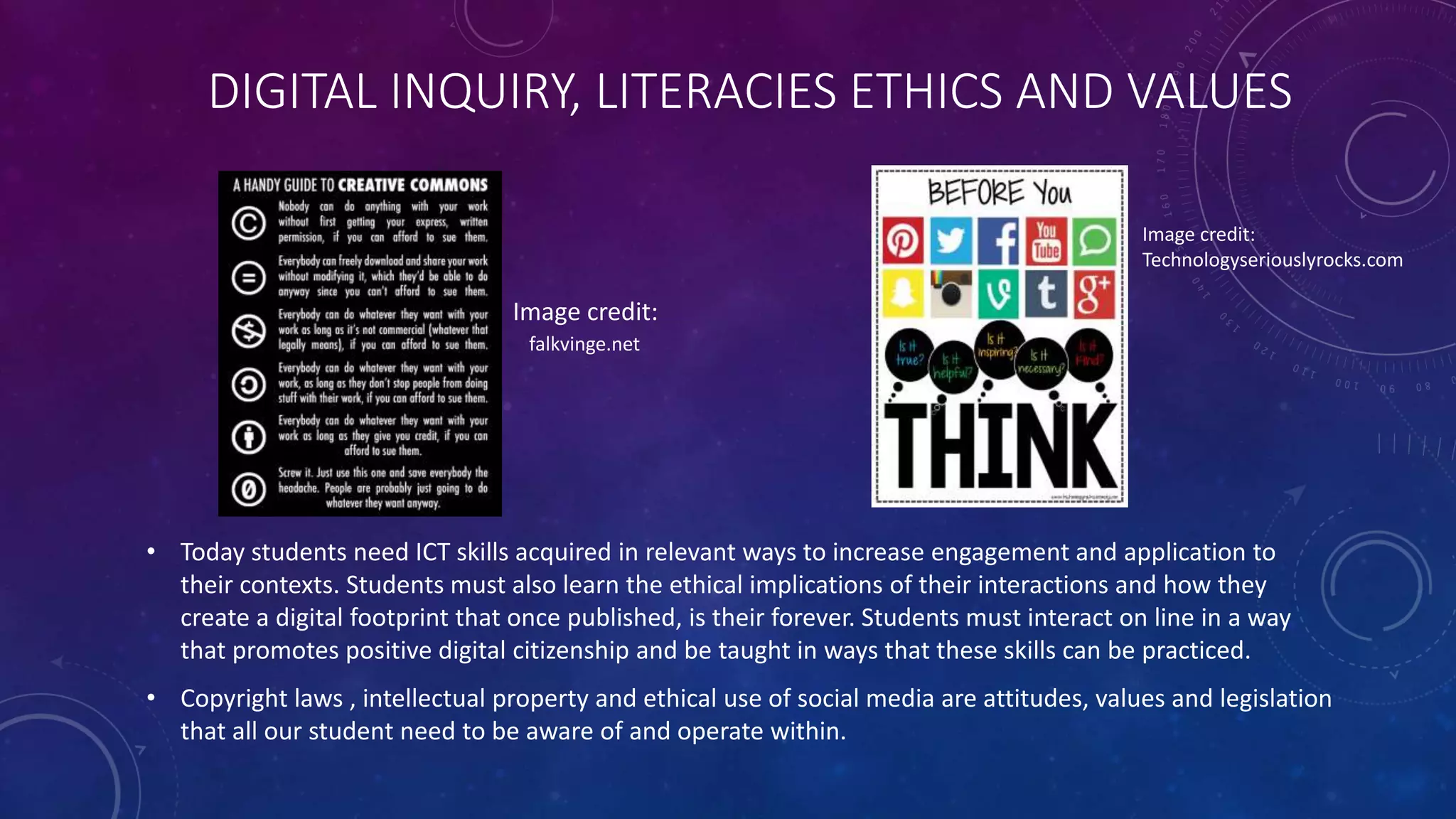
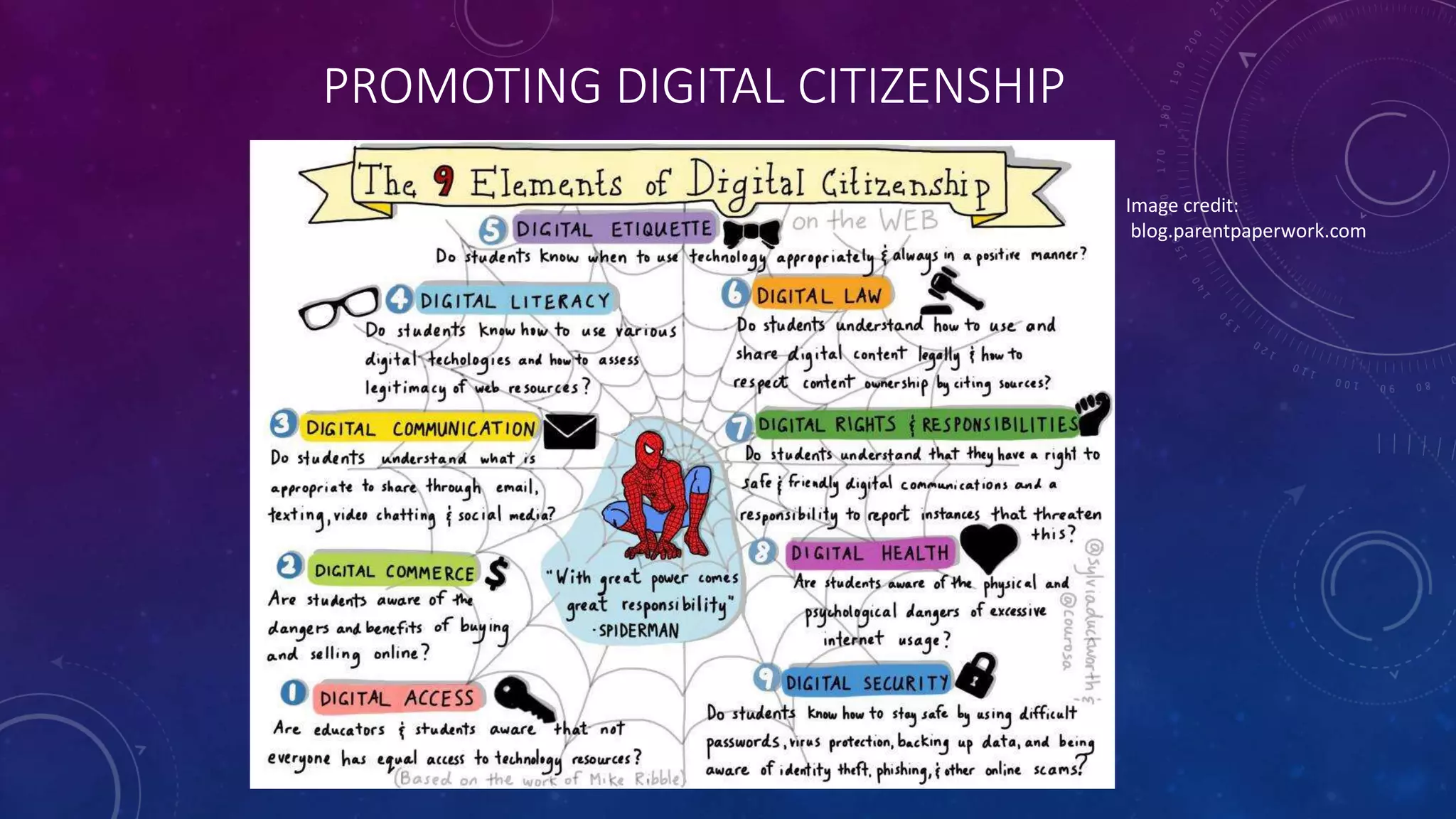
• Today students need ICT skills acquired in relevant ways to increase engagement and application to
their contexts. Students must also learn the ethical implications of their interactions and how they
create a digital footprint that once published, is their forever. Students must interact on line in a way
that promotes positive digital citizenship and be taught in ways that these skills can be practiced.
• Copyright laws , intellectual property and ethical use of social media are attitudes, values and legislation
that all our student need to be aware of and operate within.
Image credit:
falkvinge.net
Image credit:
Technologyseriouslyrocks.com
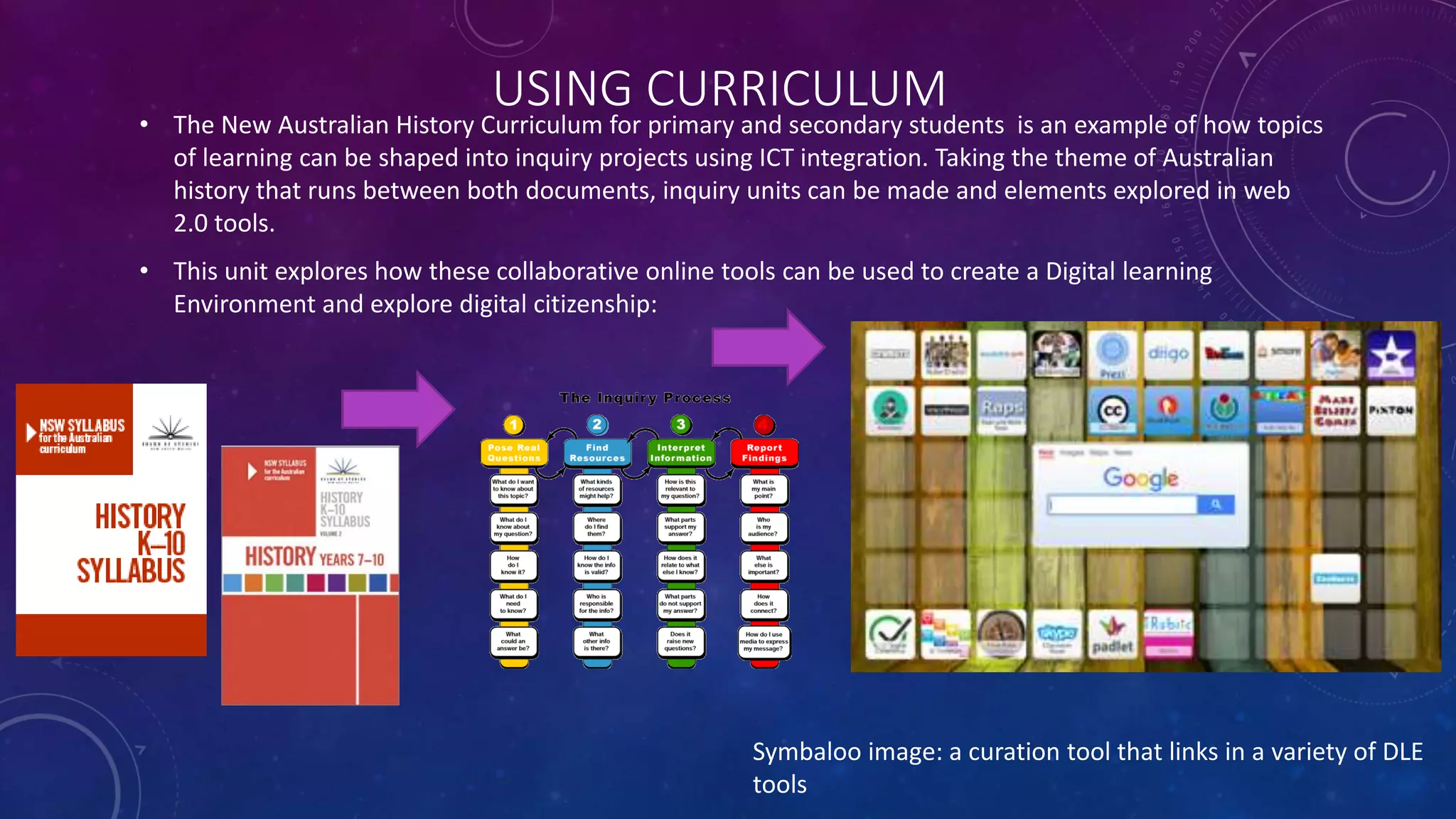
PROMOTING DIGITAL CITIZENSHIP
Image credit:
blog.parentpaperwork.com
USING CURRICULUM
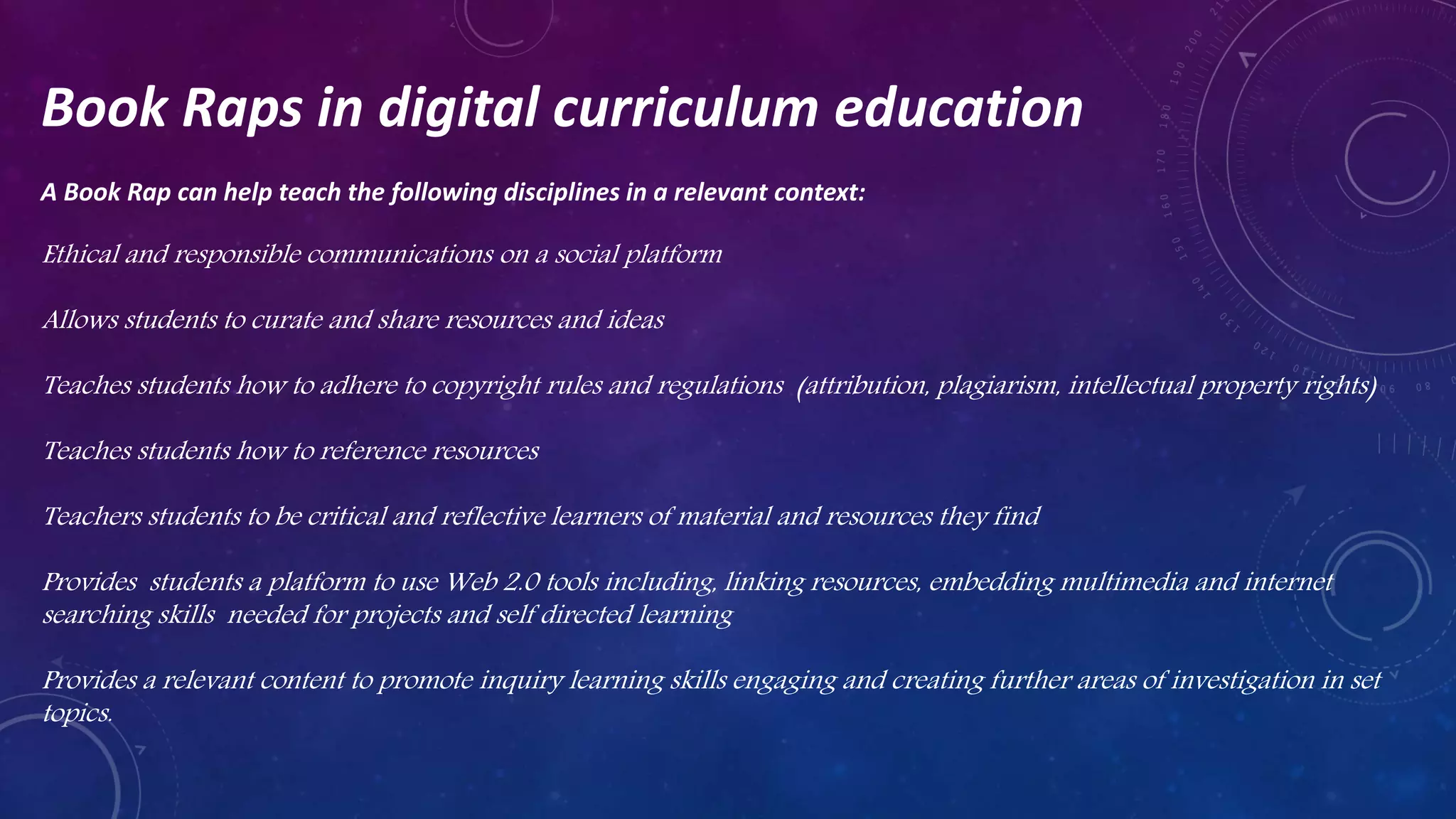
• The New Australian History Curriculum for primary and secondary students is an example of how topics
of learning can be shaped into inquiry projects using ICT integration. Taking the theme of Australian
history that runs between both documents, inquiry units can be made and elements explored in web
2.0 tools.
• This unit explores how these collaborative online tools can be used to create a Digital learning
Environment and explore digital citizenship:
Symbaloo image: a curation tool that links in a variety of DLE
tools
Book Raps in digital curriculum education
A Book Rap can help teach the following disciplines in a relevant context:
Ethical and responsible communications on a social platform
Allows students to curate and share resources and ideas
Teaches students how to adhere to copyright rules and regulations (attribution, plagiarism, intellectual property rights)
Teaches students how to reference resources
Teachers students to be critical and reflective learners of material and resources they find
Provides students a platform to use Web 2.0 tools including, linking resources, embedding multimedia and internet
searching skills needed for projects and self directed learning
Provides a relevant content to promote inquiry learning skills engaging and creating further areas of investigation in set
topics.
REFERENCES AND IMAGE CREDITS
IMAGE CREDITS
Falkvinge (n.d) Best creative commons infographic ever. Retrieved 12 April, 2016 from http://falkvinge.net/files/2013/04/CCGuide.png
Blogparentpaperwork.com (n.d) Spiderman web of digital citizenship poster: based on the work of Mike Ribble. Retrieved 12 April, 2016 from
http://blog.parentpaperwork.com/how-to-be-a-good-digital-citizen-a-guide-for-teachers-and-students/
Emergingtech.com (n.d) Old school chalk board and teacher. Retrieved 12 April, 2016 from http://www.emergingedtech.com/wp/wp-
content/uploads/2014/05/OldSchoolTeacher.jpg
Alexanders.com (n.d) Social media montage. Retrieved 12 April, 2016, from http://www.alexanders.com/wp-content/uploads/2012/09/social-media-icons-
300x195.png
Divemediagroup.com (n.d) Boy overwhelmed by social media. Retrieved 12 April, 2016, from http://www.divemediagroup.com/2013/07/11/be-careful-with-
your-social-personality/.
Jenettekingdotnet. (n.d) Inquiry learning process poster. Retrieved 12 April 2016 from https://jeanettekingdotnet.files.wordpress.com/2012/08/the-inquiry-process3.gif
Sheryl Nussbaum Beach-Nussbaum, S (n.d) Digital age skills. Retrieved 12 April, 2016 from http://www.slideshare.net/lanihall/sheryl-nussbaum-beach-overview-
inquiry-learning
Technologyrocksseriously.com (n.d) T.H.I.N.K before you poster. Retrieved 12 April. 2016 from
http://www.technologyrocksseriously.com/search?q=think&x=0&y=0#.VxgYufl95D_
Inc.com (n.d) Hands over technology devices image: credit to shuttershock (original creators) Retrieved 12 April, 2016 from
http://www.inc.com/laura-montini/infographic/the-how-to-guide-to-responsive-email-design.html
Newsfordessi.com (n.d) Man holding world. Retrieved 12 April, 2016 from http://image.slidesharecdn.com/abbreviatedoverviewinquiryplanning-
111210104803-phpapp02/95/sheryl-nussbaum-beach-overview-inquiry-learning-5-728.jpg?cb=1323514947
References
Common sense Media (2016) Scope & Sequence: Common Sense K-12 Digital Citizenship Curriculum . Retrieved on 9 April 2016 from
https://www.commonsensemedia.org/educators/scope-and-sequence
Galileo Education Network (2014). Inquiry and digital technologies. Retrieved 10 April, 2016 from http://galileo.org/teachers/designing-learning/resources/inquiry-
and-digital-technologies/
NSW Department of education and communities. (n.d) Digital Citizenship. Retrieved 9 April from http://www.digitalcitizenship.nsw.edu.au/Prim_Splash/index.htm

Digital learning environments powerpoint

  • 1.
    DIGITAL LEARNING ENVIRONMENTS HOW TOOLSSUCH AS A BOOK RAP CAN CREATE COLLABORATIVE ONLINE LEARNING ENVIRONMENTS Image credit www.news4desi.com
  • 2.
    CHANGES IN EDUCATION Oldschool: • Teacher talk • Teacher centred learning experiences • Text book , linear • Education was centred in the classroom context only, not open to global influences • Little collaboration Today: • Social networks rule! Social spaces online house the most connected society ever in history – including that of the digital native…our young people • Learning today is multi dimensional, learner centred and based on in integration of ICT skills and understandings Image credit: www.inc.com Image credit: www.emergingedtech.com
  • 3.
    WELCOME TO THEINFORMATION OVERLOAD Education today is more accessible than ever before, however the evolution of social media and online communication formats is overwhelming. Students need skills to navigate this information highway effectively and critically and to design their own digital learning spaces and resources that help them acquire the knowledge they have identified. Image credit: www.alexanders.com Image credit: divemediagroup.com
  • 4.
    QUALITY LEARNING INTHE DIGITAL AGE Image credit: Sheryl Nussbaum Beach Image credit: jeanettekingdotnet.files.wordpress.com
  • 5.
    DIGITAL INQUIRY, LITERACIESETHICS AND VALUES • Today students need ICT skills acquired in relevant ways to increase engagement and application to their contexts. Students must also learn the ethical implications of their interactions and how they create a digital footprint that once published, is their forever. Students must interact on line in a way that promotes positive digital citizenship and be taught in ways that these skills can be practiced. • Copyright laws , intellectual property and ethical use of social media are attitudes, values and legislation that all our student need to be aware of and operate within. Image credit: falkvinge.net Image credit: Technologyseriouslyrocks.com
  • 6.
    PROMOTING DIGITAL CITIZENSHIP Imagecredit: blog.parentpaperwork.com
  • 7.
    USING CURRICULUM • TheNew Australian History Curriculum for primary and secondary students is an example of how topics of learning can be shaped into inquiry projects using ICT integration. Taking the theme of Australian history that runs between both documents, inquiry units can be made and elements explored in web 2.0 tools. • This unit explores how these collaborative online tools can be used to create a Digital learning Environment and explore digital citizenship: Symbaloo image: a curation tool that links in a variety of DLE tools
  • 8.
    Book Raps indigital curriculum education A Book Rap can help teach the following disciplines in a relevant context: Ethical and responsible communications on a social platform Allows students to curate and share resources and ideas Teaches students how to adhere to copyright rules and regulations (attribution, plagiarism, intellectual property rights) Teaches students how to reference resources Teachers students to be critical and reflective learners of material and resources they find Provides students a platform to use Web 2.0 tools including, linking resources, embedding multimedia and internet searching skills needed for projects and self directed learning Provides a relevant content to promote inquiry learning skills engaging and creating further areas of investigation in set topics.
  • 9.
    REFERENCES AND IMAGECREDITS IMAGE CREDITS Falkvinge (n.d) Best creative commons infographic ever. Retrieved 12 April, 2016 from http://falkvinge.net/files/2013/04/CCGuide.png Blogparentpaperwork.com (n.d) Spiderman web of digital citizenship poster: based on the work of Mike Ribble. Retrieved 12 April, 2016 from http://blog.parentpaperwork.com/how-to-be-a-good-digital-citizen-a-guide-for-teachers-and-students/ Emergingtech.com (n.d) Old school chalk board and teacher. Retrieved 12 April, 2016 from http://www.emergingedtech.com/wp/wp- content/uploads/2014/05/OldSchoolTeacher.jpg Alexanders.com (n.d) Social media montage. Retrieved 12 April, 2016, from http://www.alexanders.com/wp-content/uploads/2012/09/social-media-icons- 300x195.png Divemediagroup.com (n.d) Boy overwhelmed by social media. Retrieved 12 April, 2016, from http://www.divemediagroup.com/2013/07/11/be-careful-with- your-social-personality/.
  • 10.
    Jenettekingdotnet. (n.d) Inquirylearning process poster. Retrieved 12 April 2016 from https://jeanettekingdotnet.files.wordpress.com/2012/08/the-inquiry-process3.gif Sheryl Nussbaum Beach-Nussbaum, S (n.d) Digital age skills. Retrieved 12 April, 2016 from http://www.slideshare.net/lanihall/sheryl-nussbaum-beach-overview- inquiry-learning Technologyrocksseriously.com (n.d) T.H.I.N.K before you poster. Retrieved 12 April. 2016 from http://www.technologyrocksseriously.com/search?q=think&x=0&y=0#.VxgYufl95D_ Inc.com (n.d) Hands over technology devices image: credit to shuttershock (original creators) Retrieved 12 April, 2016 from http://www.inc.com/laura-montini/infographic/the-how-to-guide-to-responsive-email-design.html Newsfordessi.com (n.d) Man holding world. Retrieved 12 April, 2016 from http://image.slidesharecdn.com/abbreviatedoverviewinquiryplanning- 111210104803-phpapp02/95/sheryl-nussbaum-beach-overview-inquiry-learning-5-728.jpg?cb=1323514947 References Common sense Media (2016) Scope & Sequence: Common Sense K-12 Digital Citizenship Curriculum . Retrieved on 9 April 2016 from https://www.commonsensemedia.org/educators/scope-and-sequence Galileo Education Network (2014). Inquiry and digital technologies. Retrieved 10 April, 2016 from http://galileo.org/teachers/designing-learning/resources/inquiry- and-digital-technologies/ NSW Department of education and communities. (n.d) Digital Citizenship. Retrieved 9 April from http://www.digitalcitizenship.nsw.edu.au/Prim_Splash/index.htm