DIGITAL DIVIDE.pdf, knowledge society, digital divide
1.
DIGITAL DIVIDE
Concept ofDigital Divide.
The digital divide is the gap between demographics and regions that have access to modern
information and communications technology (ICT) and those with no or restricted access. This
technology can include the telephone, television, PCs and internet connectivity.
This concept encompasses disparities in access, usage, and quality of digital resources. It has
far-reaching implications for economic growth, social development, and global equity.
2.
Digital Divide….
• ConceptExplanation
• The digital divide highlights inequalities in access to essential
technologies such as computers, high-speed internet, and mobile
devices. Beyond physical access, it also includes disparities in digital
literacy—the ability to use these technologies effectively—and the
availability of relevant digital content in local languages and contexts.
3.
Digital divide cont.…
•Historical Context
The term "digital divide" originated in the 1990s during the early stages of internet
adoption. Initially, it described differences between industrialized and developing
nations. Over time, the concept has evolved to include gaps within nations, such as
disparities between urban and rural areas, income groups, and generations. For
example, during the early 2000s, less than 1% of the population in sub-Saharan
Africa had internet access, compared to over 50% in North America.
4.
Categories of DigitalDivide
• Access Divide: The difference in access to technology
-This involves unequal access to physical ICT infrastructure, such as internet connectivity, computers, and
smartphones. For example, rural areas often lack broadband services, leaving residents dependent on slow or
unreliable connections.
• Usage Divide: The difference in how people use technology
-Even with access to technology, individuals may lack the skills or knowledge to effectively use digital tools and
resources. For instance, older adults often face challenges in navigating online platforms, which can limit their
ability to access essential services like telemedicine or online banking.
• Quality Divide: The quality in accessing internet connectivity.
-The quality of access varies significantly, with differences in connection speed, reliability, and technical support.
For example, while urban areas may enjoy high-speed fiber-optic internet, many rural communities rely on
outdated and slower DSL connections.
5.
Categories of DigitalDivide….
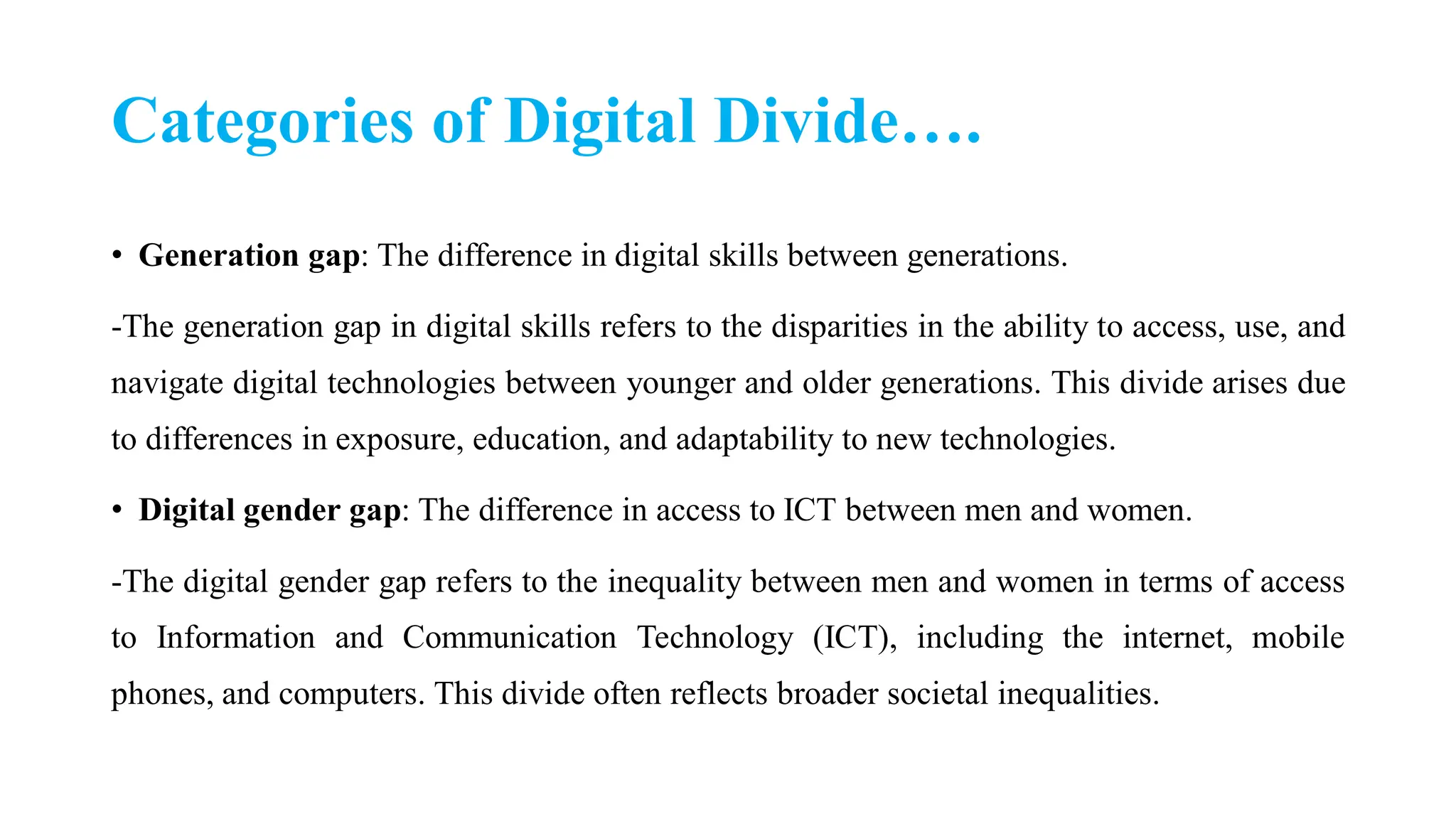
• Generation gap: The difference in digital skills between generations.
-The generation gap in digital skills refers to the disparities in the ability to access, use, and
navigate digital technologies between younger and older generations. This divide arises due
to differences in exposure, education, and adaptability to new technologies.
• Digital gender gap: The difference in access to ICT between men and women.
-The digital gender gap refers to the inequality between men and women in terms of access
to Information and Communication Technology (ICT), including the internet, mobile
phones, and computers. This divide often reflects broader societal inequalities.
6.
Factors Contributing tothe Digital Divide
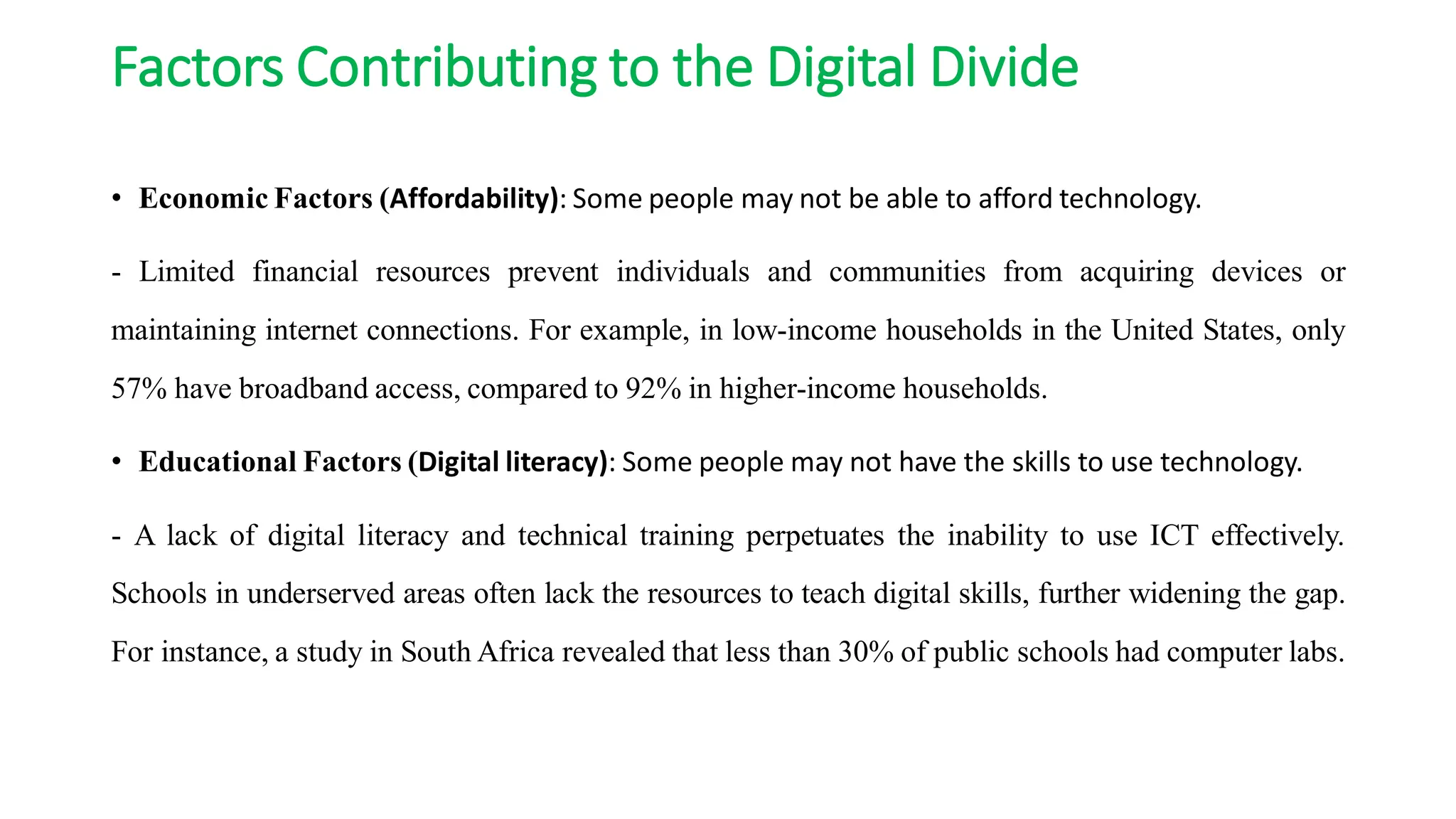
• Economic Factors (Affordability): Some people may not be able to afford technology.
- Limited financial resources prevent individuals and communities from acquiring devices or
maintaining internet connections. For example, in low-income households in the United States, only
57% have broadband access, compared to 92% in higher-income households.
• Educational Factors (Digital literacy): Some people may not have the skills to use technology.
- A lack of digital literacy and technical training perpetuates the inability to use ICT effectively.
Schools in underserved areas often lack the resources to teach digital skills, further widening the gap.
For instance, a study in South Africa revealed that less than 30% of public schools had computer labs.
7.
Factors Contributing tothe Digital Divide….
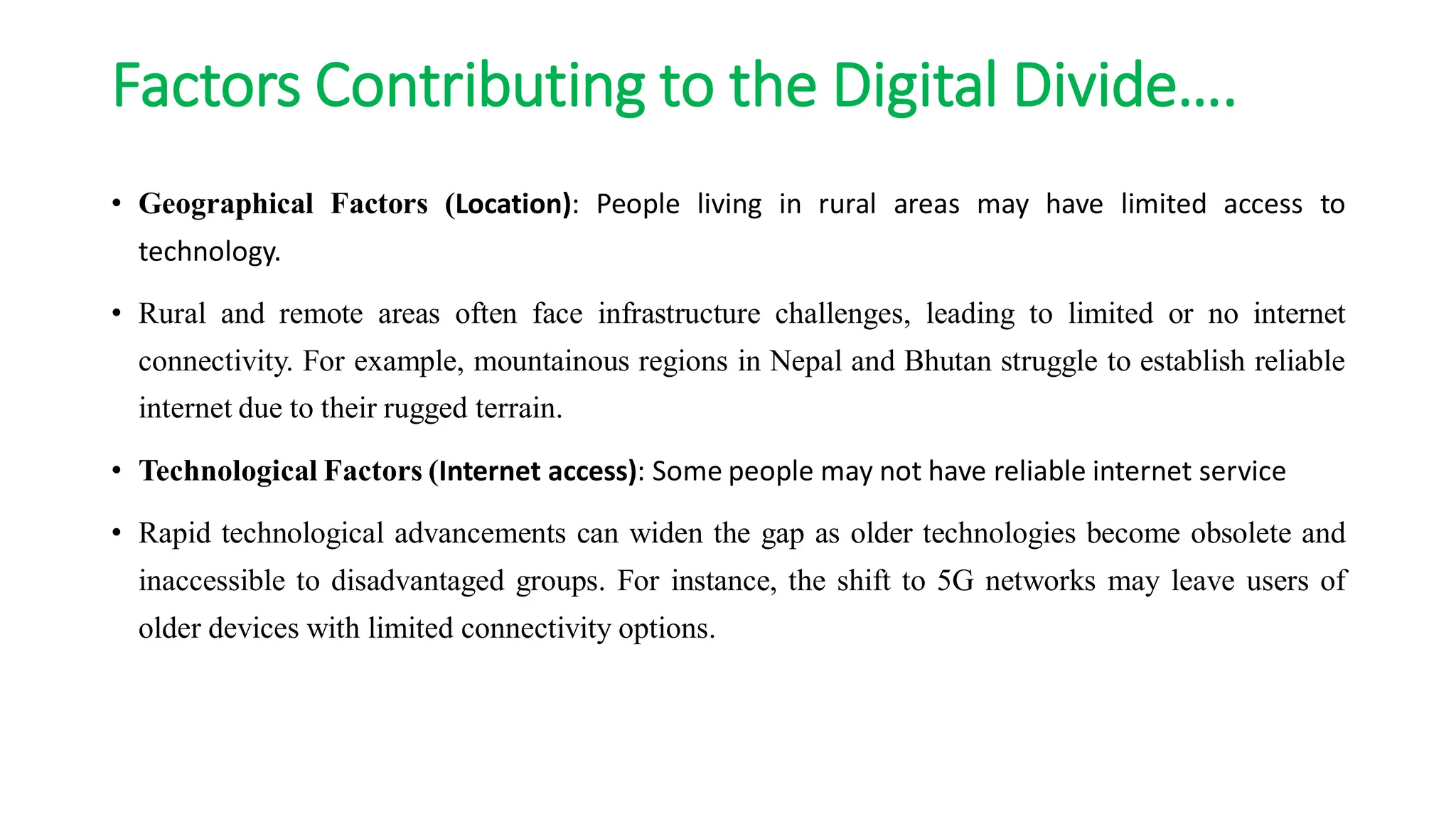
• Geographical Factors (Location): People living in rural areas may have limited access to
technology.
• Rural and remote areas often face infrastructure challenges, leading to limited or no internet
connectivity. For example, mountainous regions in Nepal and Bhutan struggle to establish reliable
internet due to their rugged terrain.
• Technological Factors (Internet access): Some people may not have reliable internet service
• Rapid technological advancements can widen the gap as older technologies become obsolete and
inaccessible to disadvantaged groups. For instance, the shift to 5G networks may leave users of
older devices with limited connectivity options.
8.
Strategies for Overcomingthe Digital Divide
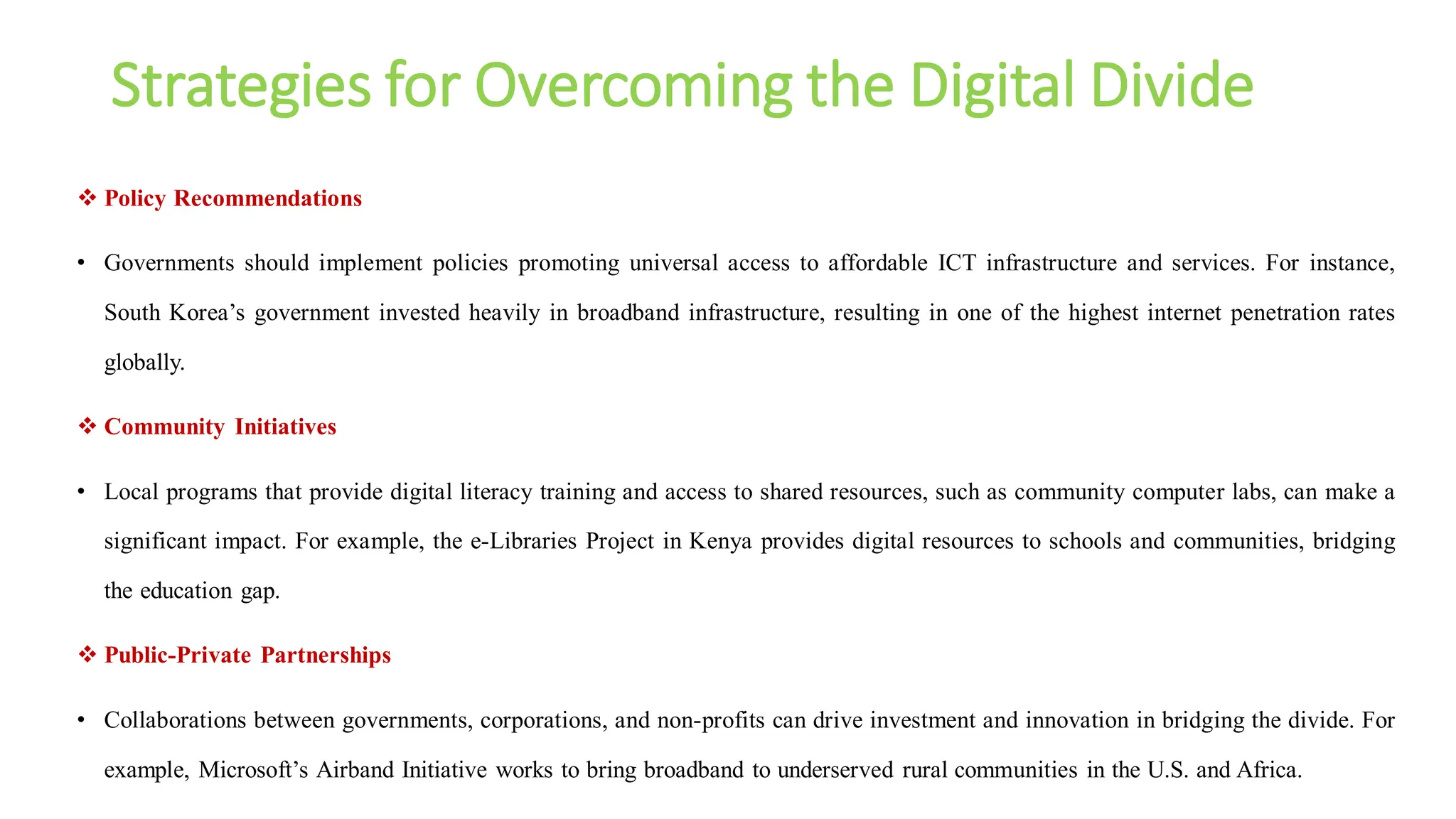
Policy Recommendations
• Governments should implement policies promoting universal access to affordable ICT infrastructure and services. For instance,
South Korea’s government invested heavily in broadband infrastructure, resulting in one of the highest internet penetration rates
globally.
Community Initiatives
• Local programs that provide digital literacy training and access to shared resources, such as community computer labs, can make a
significant impact. For example, the e-Libraries Project in Kenya provides digital resources to schools and communities, bridging
the education gap.
Public-Private Partnerships
• Collaborations between governments, corporations, and non-profits can drive investment and innovation in bridging the divide. For
example, Microsoft’s Airband Initiative works to bring broadband to underserved rural communities in the U.S. and Africa.
9.
Strategies for Overcomingthe Digital Divide….
Prioritizing Technology Infrastructure:
Investing in and developing robust technology infrastructure, such as internet connectivity, mobile networks, and access to
affordable digital devices, is foundational to bridging the digital divide. Without this infrastructure, digital inclusion is unattainable.
Key Components of Technology Infrastructure Development:
• Expanding Internet Access:
Building high-speed broadband networks in rural and underserved areas where connectivity is limited or nonexistent.
• Example: Fiber optic cables, satellite internet, or 5G networks.
• Mobile Network Coverage:
Ensuring that mobile network services reach remote and economically disadvantaged regions. Mobile phones are often the first
point of digital access for people in such areas.
• Affordable Devices:
Providing affordable or subsidized digital devices (smartphones, tablets, laptops) to individuals and households with limited
10.
Strategies for Overcomingthe Digital Divide….
Promoting Digital Literacy:
Digital literacy is the ability to use digital tools and navigate the internet effectively. Promoting digital literacy ensures that people not only
have access to technology but also possess the skills to benefit from it.
-Key Elements of Digital Literacy Promotion:
• Early Education Programs:
Introducing digital literacy in schools ensures that children learn essential skills from an early age, such as how to use computers, navigate
the internet safely, and understand basic coding.
• Example: Incorporating digital skills training into the primary school curriculum.
• Community Training Programs:
Providing free or low-cost workshops for adults and seniors in community centers, libraries, and other public spaces to teach basic
computer and internet skills.
• Workplace Digital Training:
Employers can offer training programs to up skill employees in digital tools and software, ensuring that they remain competitive in the
modern job market.
11.
Role of Technologyin Bridging the Divide
• Innovative Solutions
Emerging technologies, such as satellite internet from SpaceX’s Starlink, offer new pathways to bridge gaps in
remote areas.
• Emerging Technologies
The rise of 5G, AI, and IoT provides opportunities to enhance connectivity and digital inclusivity. For instance,
IoT applications in agriculture can help farmers in developing countries optimize crop yields.
• Digital Literacy Programs
Promoting digital education ensures that individuals can effectively utilize available technologies. For example,
the "Code.org" initiative teaches coding to students in underserved communities worldwide