Mukesh Kumar
2nd May 2017
Difficult Conversations and
Delivering Bad News
Success Services
Express empathy
Practice, just not too much
Show up in person
Plan B?
Get to the exit
1
2
3
4
5
Key Takeaways
Why is this a very important topic?
Survey Question
Have you been involved in customer escalations?
What are Difficult Conversations?
Underlying every difficult conversation is actually three deeper
conversations:
​ The "what happened?" conversation usually involves
disagreement over what happened, what should happen, and
who is to blame.
​ The “Feelings” conversation is about the parties' emotions, and
their validity.
​ The “Identity” conversation is an internal conversation that
each party has with themselves, over what the situation tells
them about who they are.
What Happened?
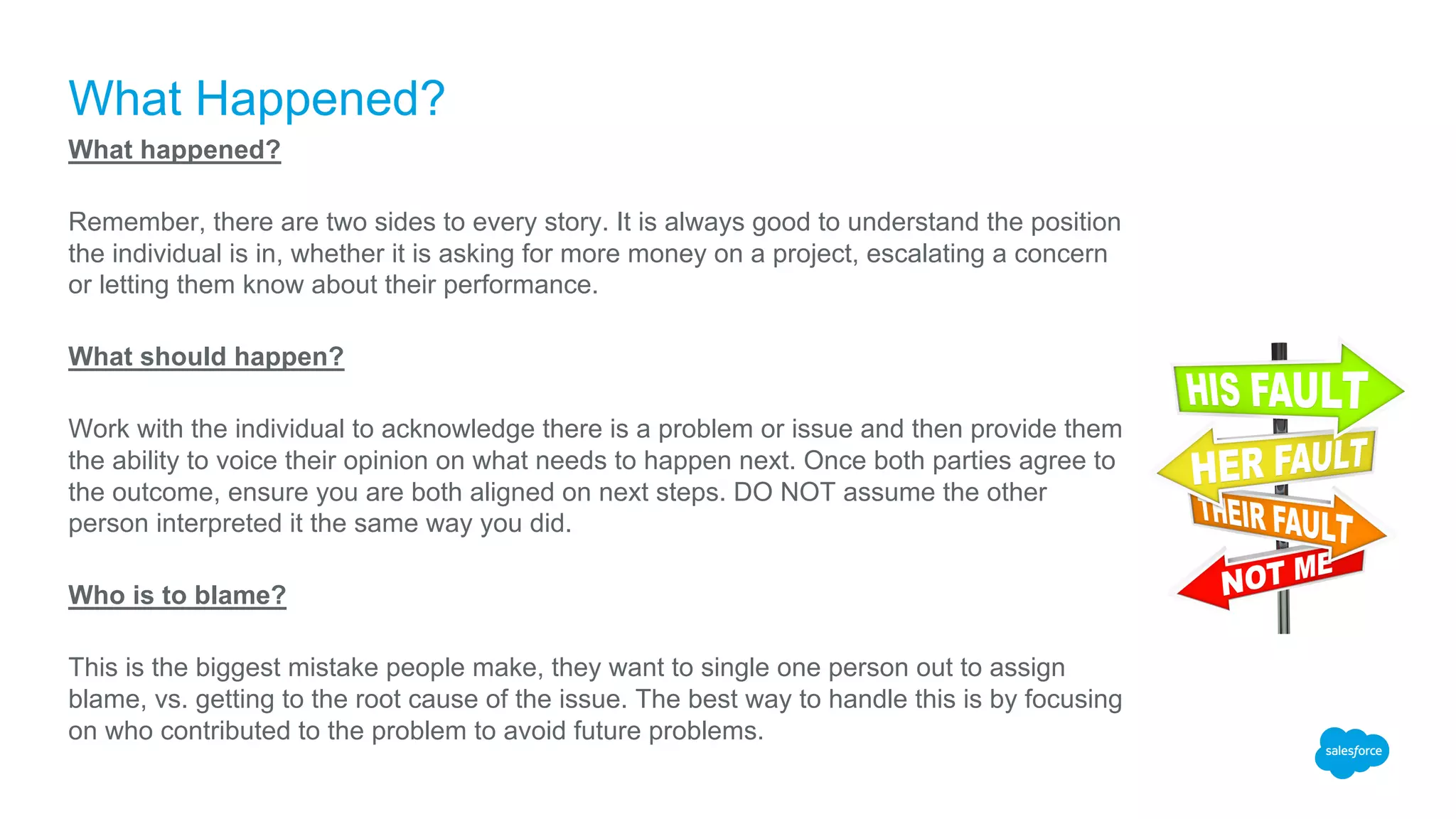
What happened?
Remember, there are two sides to every story. It is always good to understand the position
the individual is in, whether it is asking for more money on a project, escalating a concern
or letting them know about their performance.
What should happen?
Work with the individual to acknowledge there is a problem or issue and then provide them
the ability to voice their opinion on what needs to happen next. Once both parties agree to
the outcome, ensure you are both aligned on next steps. DO NOT assume the other
person interpreted it the same way you did.
Who is to blame?
This is the biggest mistake people make, they want to single one person out to assign
blame, vs. getting to the root cause of the issue. The best way to handle this is by focusing
on who contributed to the problem to avoid future problems.
Express Empathy
Emotions
It is very hard to know what one is feeling. Do not assume standard
emotional cues as they can mask a complex group of feelings that have
nothing to do with the situation at hand.
Delivery
As the one delivering bad news, it is important that you show your own
emotion and express verbally how you feel about the situation. Everyone
handles situations in different ways, it is important to be empathetic to the
other individual and the situation they are in.
Acknowledge, Convey and Share
Acknowledge your own emotions and the individual or party to the situation.
Convey the complexity of the situation and share both of your emotions to
the situation.
Identity
Identity Crisis
​ Some conversations are difficult because they threaten or challenge a
person's sense of who they are: their identity.
​ Difficult conversations may call into question a person's competency, their
goodness, or whether they are worthy of being liked. All-or-nothing thinking
can make people more vulnerable to identity crises--as either likeable or
worthless, good or evil.
​ Managing the internal identity conversation requires learning which issues
are most important to one's identity, and learning how to adapt one's
identity in healthy ways.
​ My personal example
Practice, just not too much
​ Practice your core message, practice it
again...then stop
​ It is important to practice and make sure you
know your message, it is also as important to
not practice too much where you are coming
across scripted or robotic
Show up in Person
Be Present
It’s important to make sure that the other party understands your message
and doesn’t walk away with the wrong impression, this is easiest if you are
face to face. Avoid the ease of sending an email or doing this over the phone.
​ A couple of examples: “We have to let you go because we’re bringing
on someone with a different skill set.” “We’re switching vendors because
we need different service schedules.” “I think we should stop seeing
each other because we’re both miserable.”
As in these examples, strive to state your core message and explanation—the
reason behind the message—in one sentence. You can repeat variants of
your message and explanation if you want to say more, but don’t add new
information or you may encourage a drift away from your core message, do
this all while respecting the other person by looking at them eye-to-eye, put
the phone and laptop away.
Plan B?
Have you ever been talked out of your decision by the other person (“But
we’ve worked together for fifteen years—you’re not really letting me go, are
you?”) or even changed your mind before delivering the bad news (She’s
going to be so upset—I just can’t go through with it.)?
​ You don’t do yourself or the other person any favors by putting off a
hard conversation. Remember, when giving bad news, you’re not
negotiating, fact finding, or gathering input. Resist the temptation to get
pushed, cajoled, or charmed off your message. Keep your end goal in
mind and deliver your less-than-pleasant message here and now. Bad
news is like taking off a Band-Aid—it’s best done quickly.
Get to the exit
If you’ve communicated your core message, and the other person
understands, it’s probably acceptable to start thinking about an exit.
Naturally, you should address any obvious questions (e.g. “Do I keep
working this week?” “When’s my last day?” “Who keeps the cat?”), but
be wary of answering too many speculative or probing questions.
In this type of conversation, your core message pretty much
speaks for itself, and a great deal of unnecessary damage is often
done when you overstay a difficult conversation. You might end up
giving up ground you hadn’t intended to, talking about topics that are
better left unaddressed, or escalating the conversation to the point of
hostility. Focus on driving the resolution together.
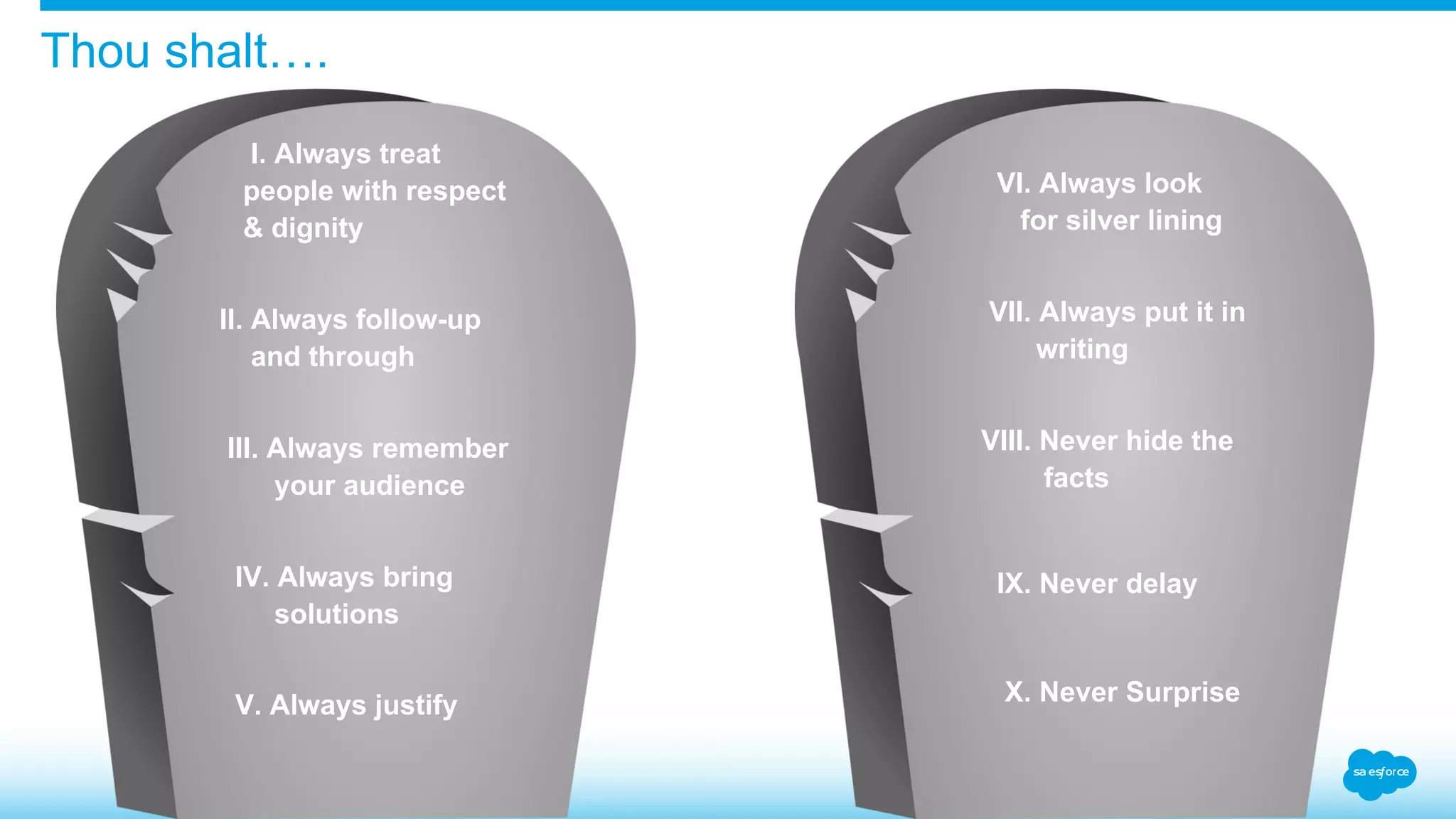
I. Always treat
people with respect
& dignity
II. Always follow-up
and through
III. Always remember
your audience
IV. Always bring
solutions
V. Always justify
Thou shalt….
VI. Always look
for silver lining
VII. Always put it in
writing
VIII. Never hide the
facts
IX. Never delay
X. Never Surprise
​ Final tip – demonstrate in your accounts
​ Remember – it’s all about
​ Customer Success!
Survey Question
​ Was this webinar on Managing Difficult Conversations
valuable?

Difficult Conversations and Delivering Bad News

  • 1.
    Mukesh Kumar 2nd May2017 Difficult Conversations and Delivering Bad News Success Services
  • 2.
    Express empathy Practice, justnot too much Show up in person Plan B? Get to the exit 1 2 3 4 5 Key Takeaways
  • 3.
    Why is thisa very important topic?
  • 4.
    Survey Question Have youbeen involved in customer escalations?
  • 5.
    What are DifficultConversations? Underlying every difficult conversation is actually three deeper conversations: ​ The "what happened?" conversation usually involves disagreement over what happened, what should happen, and who is to blame. ​ The “Feelings” conversation is about the parties' emotions, and their validity. ​ The “Identity” conversation is an internal conversation that each party has with themselves, over what the situation tells them about who they are.
  • 6.
    What Happened? What happened? Remember,there are two sides to every story. It is always good to understand the position the individual is in, whether it is asking for more money on a project, escalating a concern or letting them know about their performance. What should happen? Work with the individual to acknowledge there is a problem or issue and then provide them the ability to voice their opinion on what needs to happen next. Once both parties agree to the outcome, ensure you are both aligned on next steps. DO NOT assume the other person interpreted it the same way you did. Who is to blame? This is the biggest mistake people make, they want to single one person out to assign blame, vs. getting to the root cause of the issue. The best way to handle this is by focusing on who contributed to the problem to avoid future problems.
  • 7.
    Express Empathy Emotions It isvery hard to know what one is feeling. Do not assume standard emotional cues as they can mask a complex group of feelings that have nothing to do with the situation at hand. Delivery As the one delivering bad news, it is important that you show your own emotion and express verbally how you feel about the situation. Everyone handles situations in different ways, it is important to be empathetic to the other individual and the situation they are in. Acknowledge, Convey and Share Acknowledge your own emotions and the individual or party to the situation. Convey the complexity of the situation and share both of your emotions to the situation.
  • 8.
    Identity Identity Crisis ​ Someconversations are difficult because they threaten or challenge a person's sense of who they are: their identity. ​ Difficult conversations may call into question a person's competency, their goodness, or whether they are worthy of being liked. All-or-nothing thinking can make people more vulnerable to identity crises--as either likeable or worthless, good or evil. ​ Managing the internal identity conversation requires learning which issues are most important to one's identity, and learning how to adapt one's identity in healthy ways.
  • 9.
  • 10.
    Practice, just nottoo much ​ Practice your core message, practice it again...then stop ​ It is important to practice and make sure you know your message, it is also as important to not practice too much where you are coming across scripted or robotic
  • 11.
    Show up inPerson Be Present It’s important to make sure that the other party understands your message and doesn’t walk away with the wrong impression, this is easiest if you are face to face. Avoid the ease of sending an email or doing this over the phone. ​ A couple of examples: “We have to let you go because we’re bringing on someone with a different skill set.” “We’re switching vendors because we need different service schedules.” “I think we should stop seeing each other because we’re both miserable.” As in these examples, strive to state your core message and explanation—the reason behind the message—in one sentence. You can repeat variants of your message and explanation if you want to say more, but don’t add new information or you may encourage a drift away from your core message, do this all while respecting the other person by looking at them eye-to-eye, put the phone and laptop away.
  • 12.
    Plan B? Have youever been talked out of your decision by the other person (“But we’ve worked together for fifteen years—you’re not really letting me go, are you?”) or even changed your mind before delivering the bad news (She’s going to be so upset—I just can’t go through with it.)? ​ You don’t do yourself or the other person any favors by putting off a hard conversation. Remember, when giving bad news, you’re not negotiating, fact finding, or gathering input. Resist the temptation to get pushed, cajoled, or charmed off your message. Keep your end goal in mind and deliver your less-than-pleasant message here and now. Bad news is like taking off a Band-Aid—it’s best done quickly.
  • 13.
    Get to theexit If you’ve communicated your core message, and the other person understands, it’s probably acceptable to start thinking about an exit. Naturally, you should address any obvious questions (e.g. “Do I keep working this week?” “When’s my last day?” “Who keeps the cat?”), but be wary of answering too many speculative or probing questions. In this type of conversation, your core message pretty much speaks for itself, and a great deal of unnecessary damage is often done when you overstay a difficult conversation. You might end up giving up ground you hadn’t intended to, talking about topics that are better left unaddressed, or escalating the conversation to the point of hostility. Focus on driving the resolution together.
  • 14.
    I. Always treat peoplewith respect & dignity II. Always follow-up and through III. Always remember your audience IV. Always bring solutions V. Always justify Thou shalt…. VI. Always look for silver lining VII. Always put it in writing VIII. Never hide the facts IX. Never delay X. Never Surprise
  • 15.
    ​ Final tip– demonstrate in your accounts ​ Remember – it’s all about ​ Customer Success!
  • 16.
    Survey Question ​ Wasthis webinar on Managing Difficult Conversations valuable?