Download to read offline
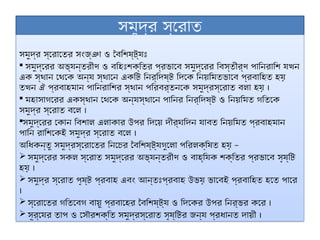
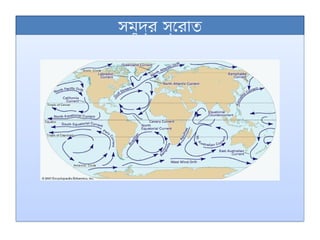
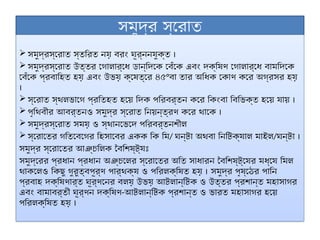
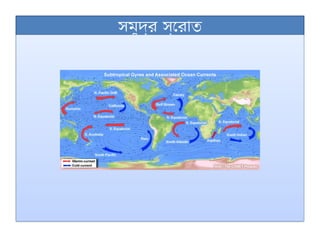
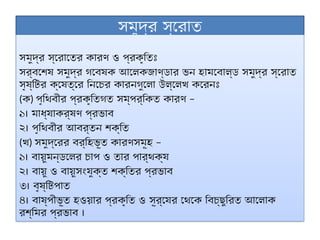
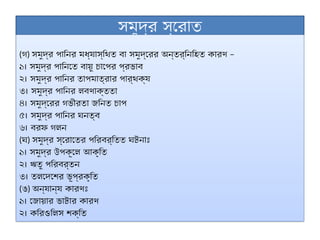
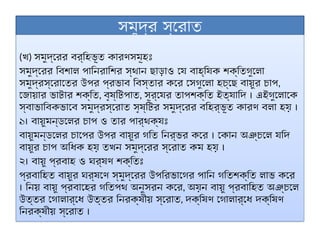
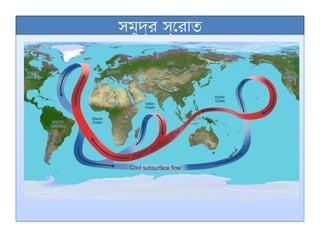
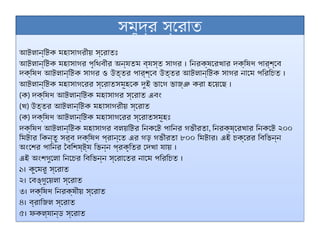
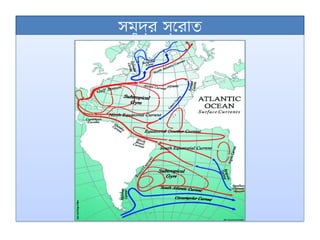
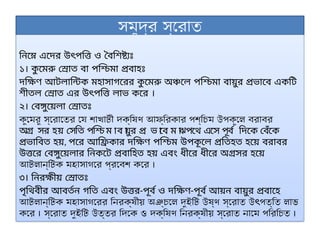
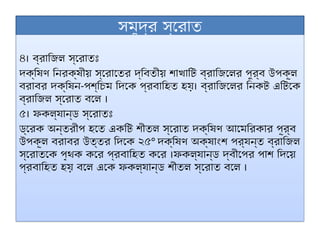
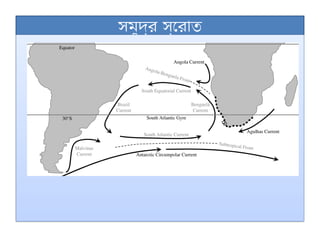
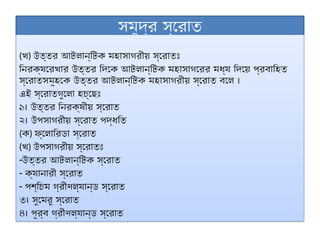
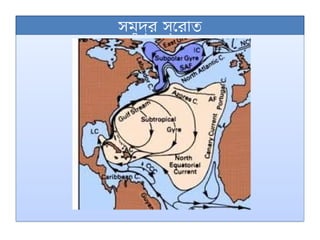
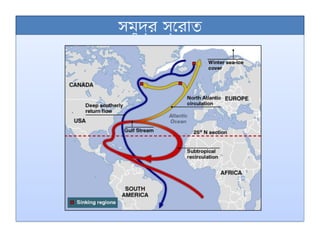
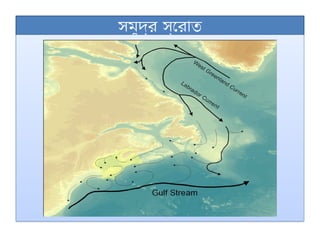
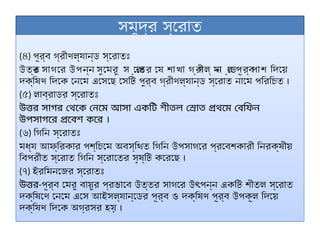
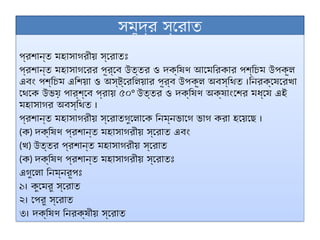
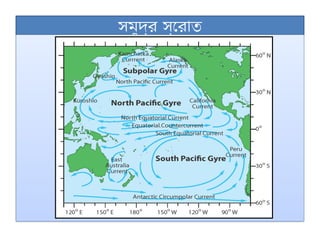
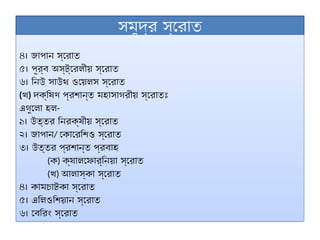
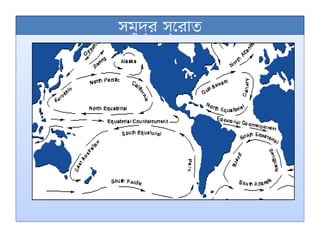
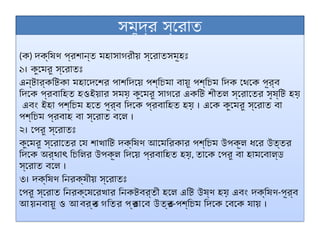
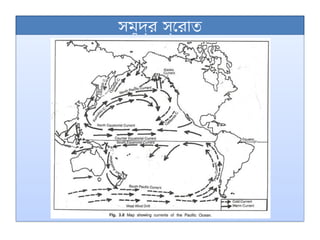
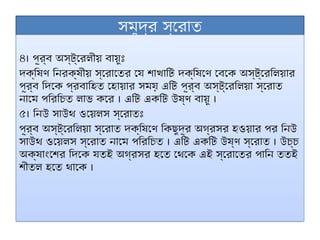
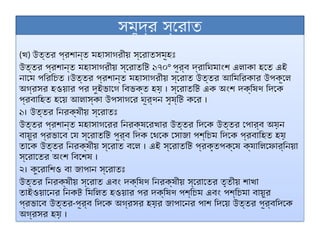
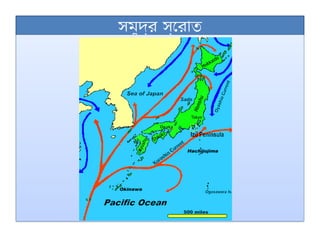
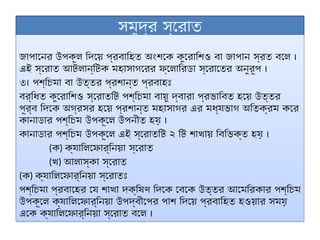
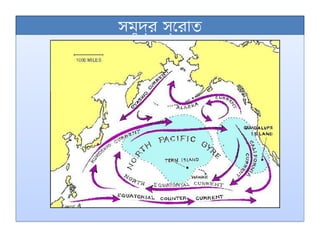
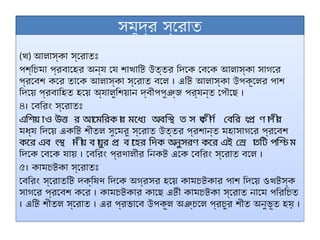
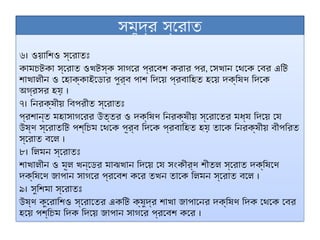
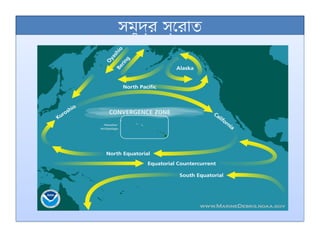


Ocean currents are broadly classified into two main types: surface currents and deep ocean currents. Surface currents are driven by wind and account for about 10% of the ocean's water, while deep ocean currents are driven by differences in water density (temperature and salinity) and make up the remaining 90%. Surface Currents: Wind-driven: Surface currents are primarily influenced by global wind patterns. Shallow: They generally occur in the upper 400 meters of the ocean. Examples: The Gulf Stream, California Current, Kuroshio Current, and North Pacific Current are examples of surface currents. Deep Ocean Currents: Density-driven (Thermohaline Circulation): Deep currents are caused by differences in water density, primarily due to variations in temperature and salinity. Deep and Slow: They move throughout the ocean basins and are much slower than surface currents. Examples: The Antarctic Circumpolar Current and deep water currents driven by density differences are examples of deep ocean currents. Ocean Currents: Types of Ocean Currents - UPSC - UPSC Notes ... In addition to these two main types, ocean currents can also be classified by temperature as warm currents and cold currents. Warm currents typically originate near the equator and flow towards the poles, while cold currents flow from higher latitudes towards the equator.


