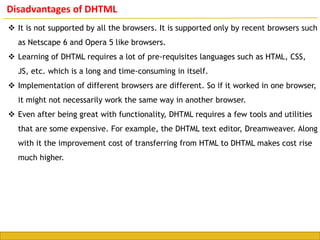
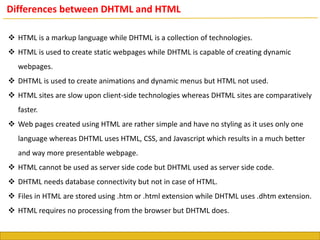
This document provides information about Dynamic HTML (DHTML) and how it compares to standard HTML. It defines DHTML as using properties of HTML, JavaScript, CSS, and DOM to create dynamic and interactive web pages. Key benefits of DHTML include making pages dynamic after loading without reloading, compact file sizes that download quickly, and advanced functionality like animations. However, DHTML also has disadvantages like lack of support across all browsers and a steeper learning curve than HTML. The document contrasts DHTML and HTML, noting DHTML allows dynamic content while HTML creates static pages.