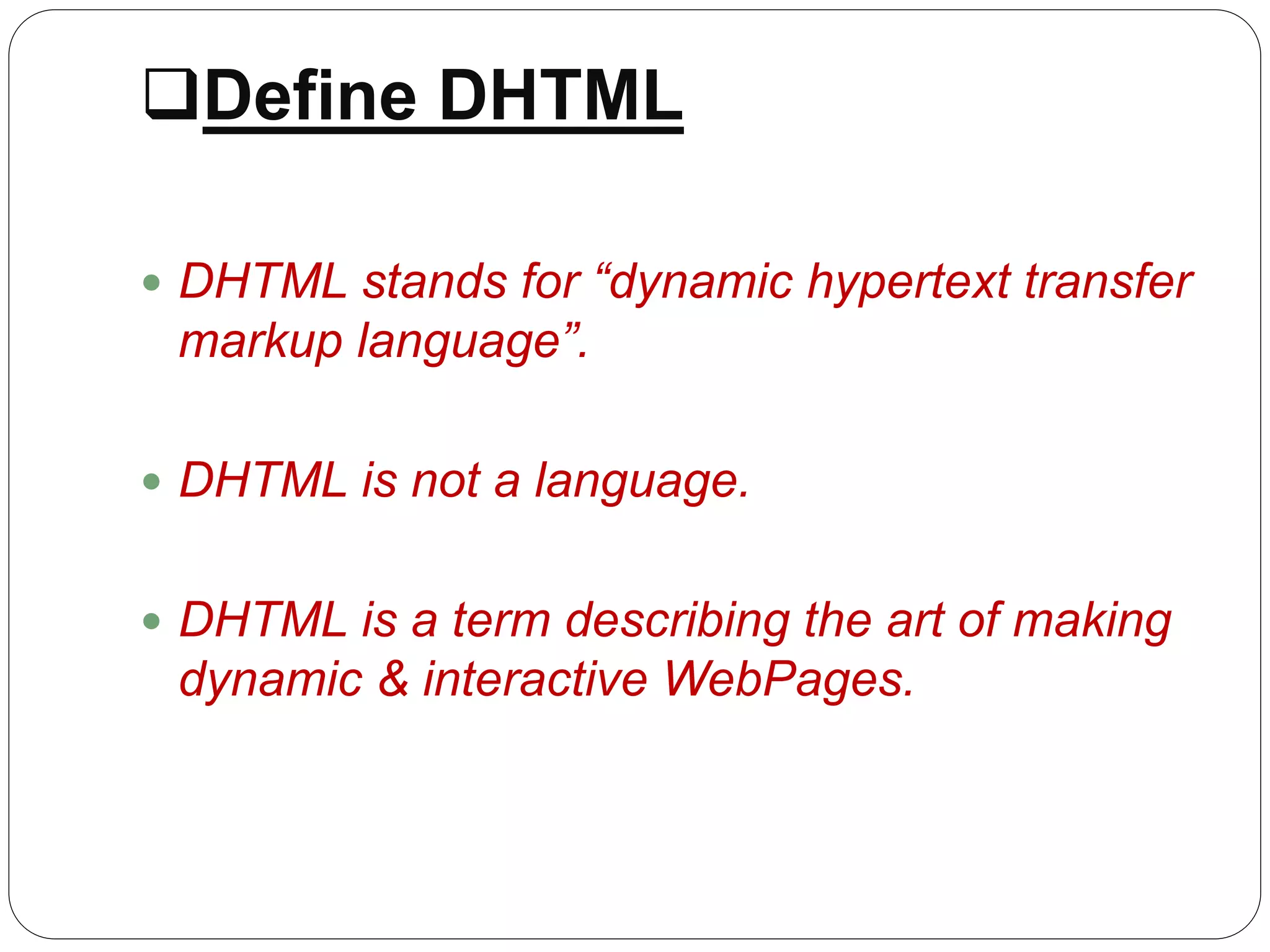
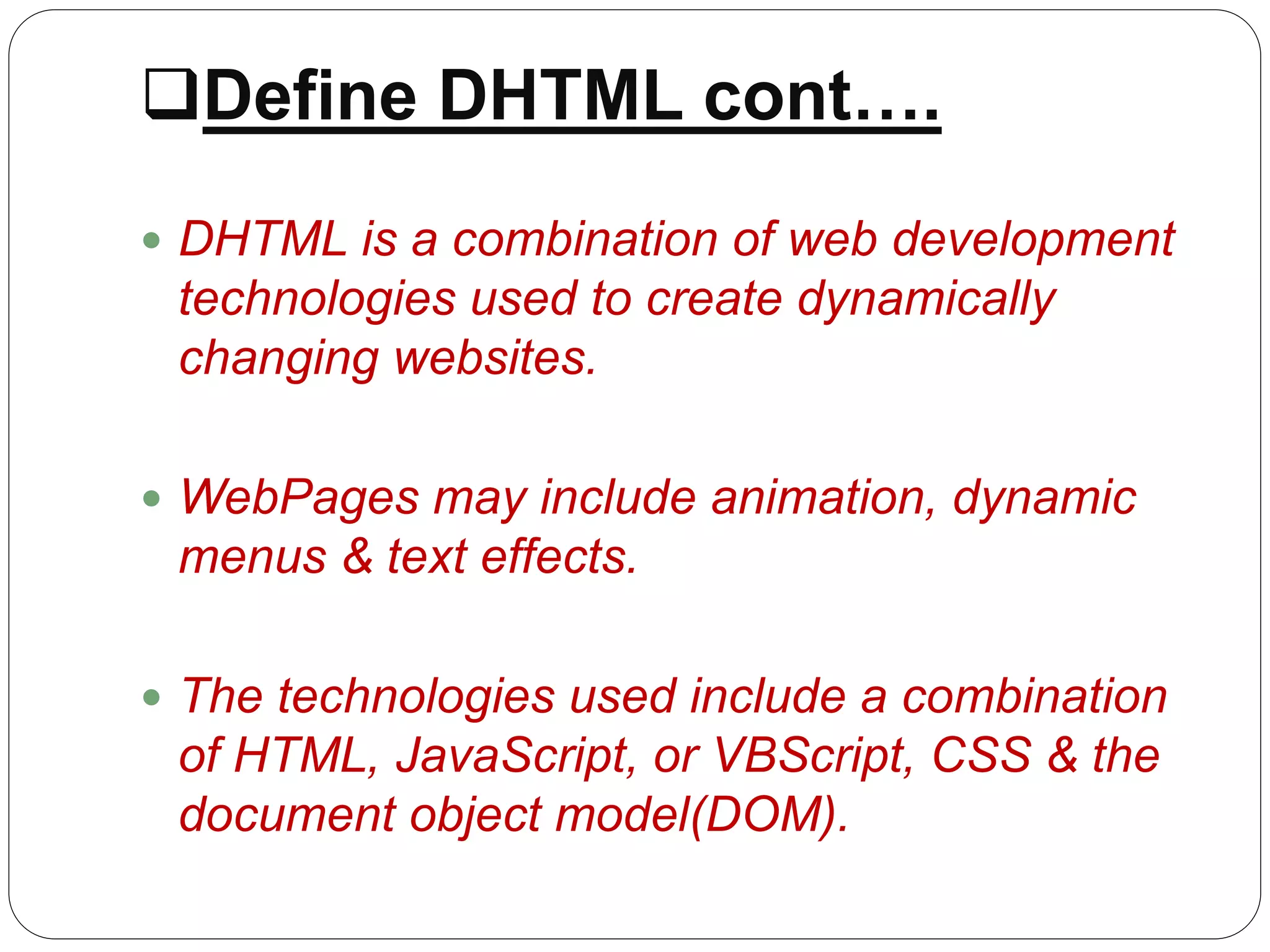
The document defines DHTML as a combination of technologies including HTML, JavaScript, CSS, and DOM that allows for dynamic and interactive webpages. It discusses how DHTML provides advantages like small file sizes, support in major browsers without plugins, and future standardization. However, it also notes disadvantages such as costly editing tools, only being supported by newer browsers, requiring long and complex coding, potential browser support problems, and unprotected source codes.