Developing
Platforms
Chapel Digital – Social Media Training 201
Hands-on Workshop – 26th June 2015
Developing your activity
Making plans
Construct a rough content plan
Don’t overthink content
Think: What are we trying to achieve?
Reflect business activity
Flexibility for real time
Developing your activity
Managing your presence
Schedule time to check / update platforms
every day
Free management software – i.e. Hootsuite
Understand platforms
Use content plans
Real-time marketing / posting
Developing your activity
Post scheduling
Useful if limited resource / man hours
Tools (i.e. Future Tweets / Twittimer /
Facebook Scheduler, etc)
Remember things change
Weekend activity
Maintains presence
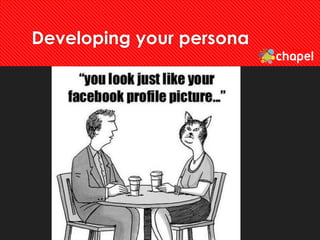
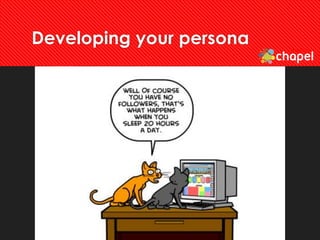
Developing your persona
Useful tips:
1. Use eye-catching visuals
2. Brand consistency – Logo / header /
higher resolution
3. Fully set up profiles – i.e. all relevant
information and all available areas (such
as reviews, bio, website links, etc)
4. Identify your audiences
Developing your persona
Useful tips:
5. Post regularly
6. Review past content / posts
7. Use advertising where applicable
8. Be human – highlight your staff / people
in your organisation
9. Use analytics
10.Integrate humour where appropriate
Developing your persona
Think:
Will this appeal to our existing followers?
Does this reflect well on my business /
organisation?
Would I like this if I was following?
Is this quirky / engaging?
Could this be improved?
Have I checked details?
Identifying potential audiences
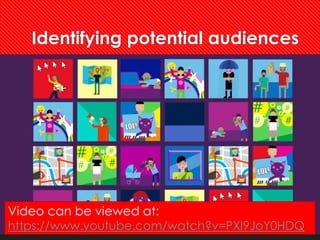
Video can be viewed at:
https://www.youtube.com/watch?v=PXI9JoY0HDQ
Identifying potential audiences
Who is your business/ organisation for?
Type of business?
Who are your existing customers?
What are you known for?
What are your products / services?
Who do you want to reach?
Local / regional appeal?
Identifying potential audiences
Psychographic study:
“Demographic information includes gender,
age, income, marital status – the dry facts.
Psychographic information might be their
habits, hobbies, spending habits and values.”
“You can only effectively reach your target
audience when you understand both their
demographics and psychographics.” (Alisa
Meredith, Hubspot)
Identifying potential audiences
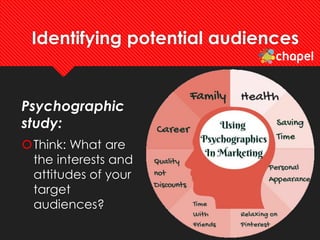
Psychographic
study:
Think: What are
the interests and
attitudes of your
target
audiences?
Identifying potential audiences
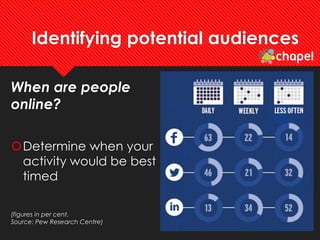
When are people
online?
Determine when your
activity would be best
timed
(figures in per cent,
Source: Pew Research Centre)
Identifying potential audiences
Audiences on Social Media:
Identify demographics
Recognise platform differences
Find relevant communities (i.e. Google+ /
Twitter lists, etc)
Monitor brand related key words
Find local people
Use your existing followers
Identifying potential audiences
Targeted advertising:
Facebook & Twitter
Set a budget, and stick to it – no budget is
too small – as little as £1 a day can help you
reach new audiences
Reach people based on numerous variables
– i.e. Location / interests / marital status /
offspring / age / work status, etc
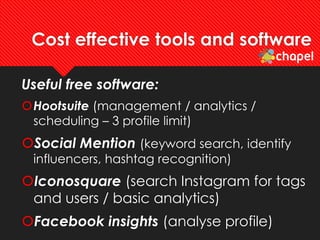
Cost effective tools and software
Useful free software:
Hootsuite (management / analytics /
scheduling – 3 profile limit)
Social Mention (keyword search, identify
influencers, hashtag recognition)
Iconosquare (search Instagram for tags
and users / basic analytics)
Facebook insights (analyse profile)
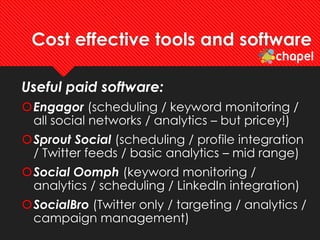
Cost effective tools and software
Useful paid software:
Engagor (scheduling / keyword monitoring /
all social networks / analytics – but pricey!)
Sprout Social (scheduling / profile integration
/ Twitter feeds / basic analytics – mid range)
Social Oomph (keyword monitoring /
analytics / scheduling / LinkedIn integration)
SocialBro (Twitter only / targeting / analytics /
campaign management)

Developing Platforms - AP example

  • 1.
    Developing Platforms Chapel Digital –Social Media Training 201 Hands-on Workshop – 26th June 2015
  • 2.
    Developing your activity Makingplans Construct a rough content plan Don’t overthink content Think: What are we trying to achieve? Reflect business activity Flexibility for real time
  • 3.
    Developing your activity Managingyour presence Schedule time to check / update platforms every day Free management software – i.e. Hootsuite Understand platforms Use content plans Real-time marketing / posting
  • 4.
    Developing your activity Postscheduling Useful if limited resource / man hours Tools (i.e. Future Tweets / Twittimer / Facebook Scheduler, etc) Remember things change Weekend activity Maintains presence
  • 5.
  • 6.
  • 7.
  • 8.
    Developing your persona Usefultips: 1. Use eye-catching visuals 2. Brand consistency – Logo / header / higher resolution 3. Fully set up profiles – i.e. all relevant information and all available areas (such as reviews, bio, website links, etc) 4. Identify your audiences
  • 9.
    Developing your persona Usefultips: 5. Post regularly 6. Review past content / posts 7. Use advertising where applicable 8. Be human – highlight your staff / people in your organisation 9. Use analytics 10.Integrate humour where appropriate
  • 10.
    Developing your persona Think: Willthis appeal to our existing followers? Does this reflect well on my business / organisation? Would I like this if I was following? Is this quirky / engaging? Could this be improved? Have I checked details?
  • 11.
    Identifying potential audiences Videocan be viewed at: https://www.youtube.com/watch?v=PXI9JoY0HDQ
  • 12.
    Identifying potential audiences Whois your business/ organisation for? Type of business? Who are your existing customers? What are you known for? What are your products / services? Who do you want to reach? Local / regional appeal?
  • 13.
    Identifying potential audiences Psychographicstudy: “Demographic information includes gender, age, income, marital status – the dry facts. Psychographic information might be their habits, hobbies, spending habits and values.” “You can only effectively reach your target audience when you understand both their demographics and psychographics.” (Alisa Meredith, Hubspot)
  • 14.
    Identifying potential audiences Psychographic study: Think:What are the interests and attitudes of your target audiences?
  • 15.
    Identifying potential audiences Whenare people online? Determine when your activity would be best timed (figures in per cent, Source: Pew Research Centre)
  • 16.
    Identifying potential audiences Audienceson Social Media: Identify demographics Recognise platform differences Find relevant communities (i.e. Google+ / Twitter lists, etc) Monitor brand related key words Find local people Use your existing followers
  • 17.
    Identifying potential audiences Targetedadvertising: Facebook & Twitter Set a budget, and stick to it – no budget is too small – as little as £1 a day can help you reach new audiences Reach people based on numerous variables – i.e. Location / interests / marital status / offspring / age / work status, etc
  • 18.
    Cost effective toolsand software Useful free software: Hootsuite (management / analytics / scheduling – 3 profile limit) Social Mention (keyword search, identify influencers, hashtag recognition) Iconosquare (search Instagram for tags and users / basic analytics) Facebook insights (analyse profile)
  • 19.
    Cost effective toolsand software Useful paid software: Engagor (scheduling / keyword monitoring / all social networks / analytics – but pricey!) Sprout Social (scheduling / profile integration / Twitter feeds / basic analytics – mid range) Social Oomph (keyword monitoring / analytics / scheduling / LinkedIn integration) SocialBro (Twitter only / targeting / analytics / campaign management)