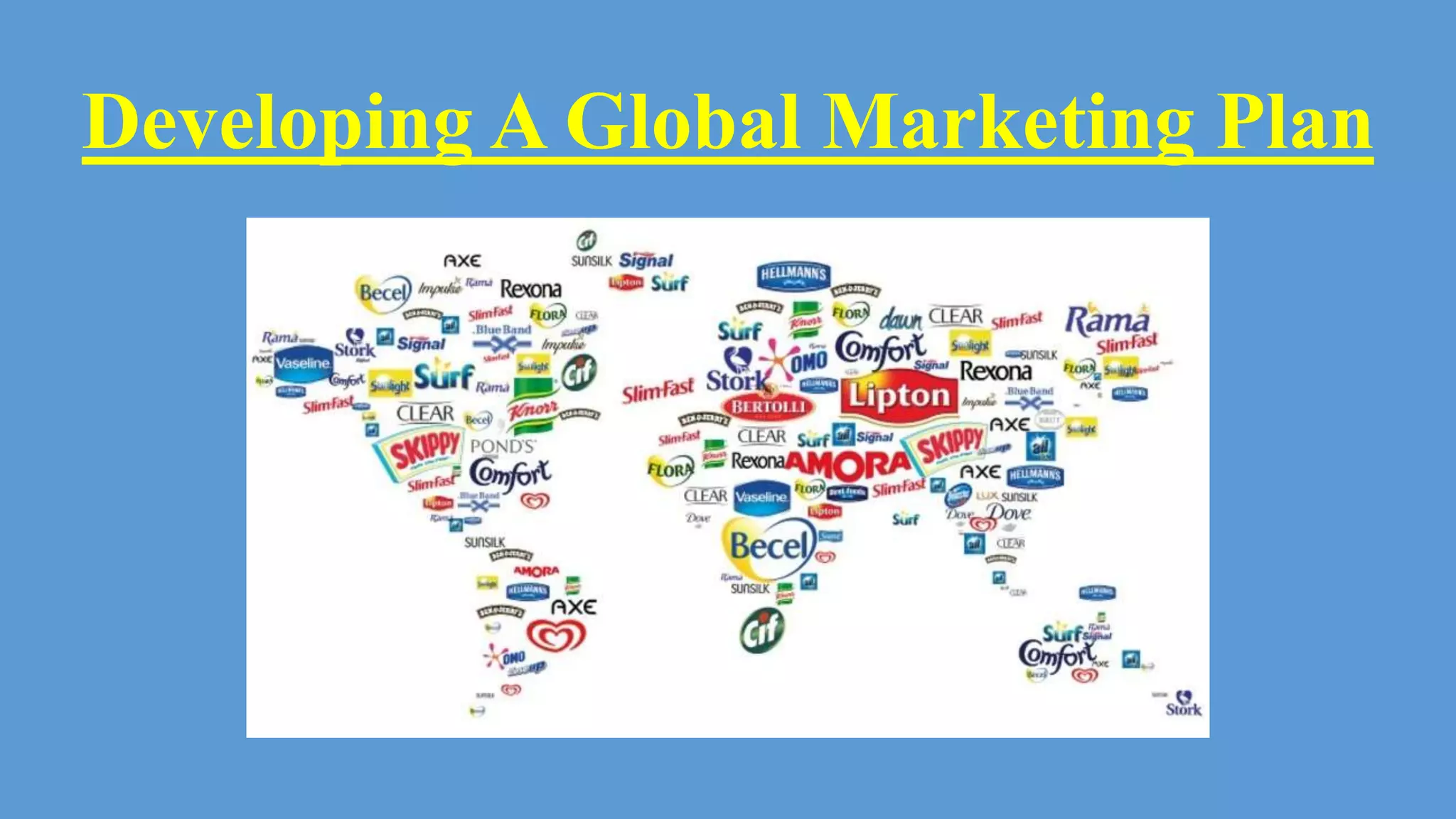
Developing A Global Marketing Plan
Three Phases
•Planning Phase
-Define business mission and objectives
-Conduct a situation analysis
•Implementation Phase
- Identify and evaluate opportunities
- Implement marketing mix
•Control Phase
- Evaluate performance using metrics
Planning Phase
Mission Statement:2 Main Questions to Answer
1. What type of business are
we?
2. What do we need to
accomplish our goals and
objectives?
Planning Phase
Conduct a situation analysis: SWOT
Strengths
Weaknesses
Opportunities
Threats
Implementation Phase
Identify and Evaluate Opportunities: STP
Segmentation- dividing the marketplace into subgroups or segments
Targeting- determining which segments should be pursued or targeted
Positioning- giving the target customers a clear, distinctive, desirable
understanding of what the product does or represents
Implementation Phase
Implement Marketing Mix: Four P’s
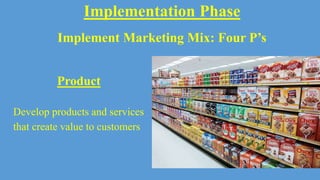
Product
Develop products and services
that create value to customers
Implementation Phase
Implement Marketing Mix: Four P’s
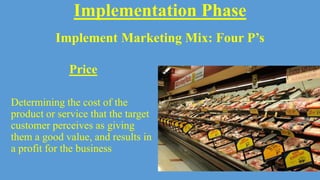
Price
Determining the cost of the
product or service that the target
customer perceives as giving
them a good value, and results in
a profit for the business
Implementation Phase
Implement Marketing Mix: Four P’s
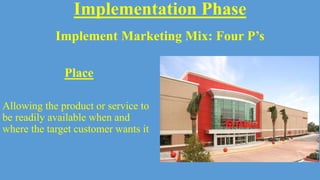
Place
Allowing the product or service to
be readily available when and
where the target customer wants it
Implementation Phase
Implement Marketing Mix: Four P’s
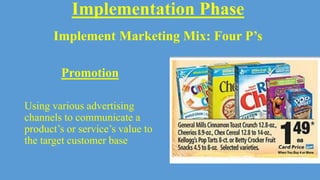
Promotion
Using various advertising
channels to communicate a
product’s or service’s value to
the target customer base
Control Phase
Evaluating performance using metrics
• Used to compare results against different variables such as
time periods, regions, and product lines
• Helps determine why goals were or were not met
• Can help predict future trends or characteristics of the
economy
Control Phase
Evaluating performance using metrics
Financial Performance Metrics
Sales vs Profit
Portfolio Analysis
Which products are the most
profitable?
Benefits of an effective marketing plan
• Clearly states company’s goals
and objectives to its employees,
vendors, and customers
• Determines who, what, and where
to target within a given market
• Allows companies to adjust their
marketing strategies towards their
most profitable products and
customer bases

Developing a global marketing plan

  • 1.
    Developing A GlobalMarketing Plan
  • 2.
    Three Phases •Planning Phase -Definebusiness mission and objectives -Conduct a situation analysis •Implementation Phase - Identify and evaluate opportunities - Implement marketing mix •Control Phase - Evaluate performance using metrics
  • 3.
    Planning Phase Mission Statement:2Main Questions to Answer 1. What type of business are we? 2. What do we need to accomplish our goals and objectives?
  • 4.
    Planning Phase Conduct asituation analysis: SWOT Strengths Weaknesses Opportunities Threats
  • 5.
    Implementation Phase Identify andEvaluate Opportunities: STP Segmentation- dividing the marketplace into subgroups or segments Targeting- determining which segments should be pursued or targeted Positioning- giving the target customers a clear, distinctive, desirable understanding of what the product does or represents
  • 6.
    Implementation Phase Implement MarketingMix: Four P’s Product Develop products and services that create value to customers
  • 7.
    Implementation Phase Implement MarketingMix: Four P’s Price Determining the cost of the product or service that the target customer perceives as giving them a good value, and results in a profit for the business
  • 8.
    Implementation Phase Implement MarketingMix: Four P’s Place Allowing the product or service to be readily available when and where the target customer wants it
  • 9.
    Implementation Phase Implement MarketingMix: Four P’s Promotion Using various advertising channels to communicate a product’s or service’s value to the target customer base
  • 10.
    Control Phase Evaluating performanceusing metrics • Used to compare results against different variables such as time periods, regions, and product lines • Helps determine why goals were or were not met • Can help predict future trends or characteristics of the economy
  • 11.
    Control Phase Evaluating performanceusing metrics Financial Performance Metrics Sales vs Profit Portfolio Analysis Which products are the most profitable?
  • 12.
    Benefits of aneffective marketing plan • Clearly states company’s goals and objectives to its employees, vendors, and customers • Determines who, what, and where to target within a given market • Allows companies to adjust their marketing strategies towards their most profitable products and customer bases