Demand
Estimation and Forecast
Demand Estimation
It is the process that involves coming up with an
estimate of the amount of demand for a product
or a service. It is confined to a particular period
of time.
Methods
Market
Experimentation
Actual Market
Market
Stimulation
Survey of
Consumers’
Intentions
Census
Sample
Regression
Analysis
Identifying
Demand Function
Collecting
Historical Data
Select an
Appropriate
Function
Estimation of
Selected Function
Analyzing the
Estimated
Demand Function
Actual Stimulation
 Shops are opened in different
localities and then consumer
behavior is observed.
 Reaction to the price changes
can be observed from
consumer’s income, cast,
religion, gender, taste etc.
 Disadvantages- expensive,
small scale, non controllable
variables.
 It provides token money to a
set of consumers.
 Reaction to price changes can
be observed from prices of
various goods, packaging,
quality etc.
 Disadvantages- consciousness
of the consumer.
Demand Estimation Market Experiment
Census Method Survey Method
 All the consumers are
contacted.
 Disadvantages – costly,
hesitant to disclose the plan
because of
personal/commercial privacy.
 A few consumers out of the
whole population are
contacted.
 Disadvantages – costly to carry
the test marketing, selection of
test area, rival action.
Demand Estimation Survey of Consumers’ Intention
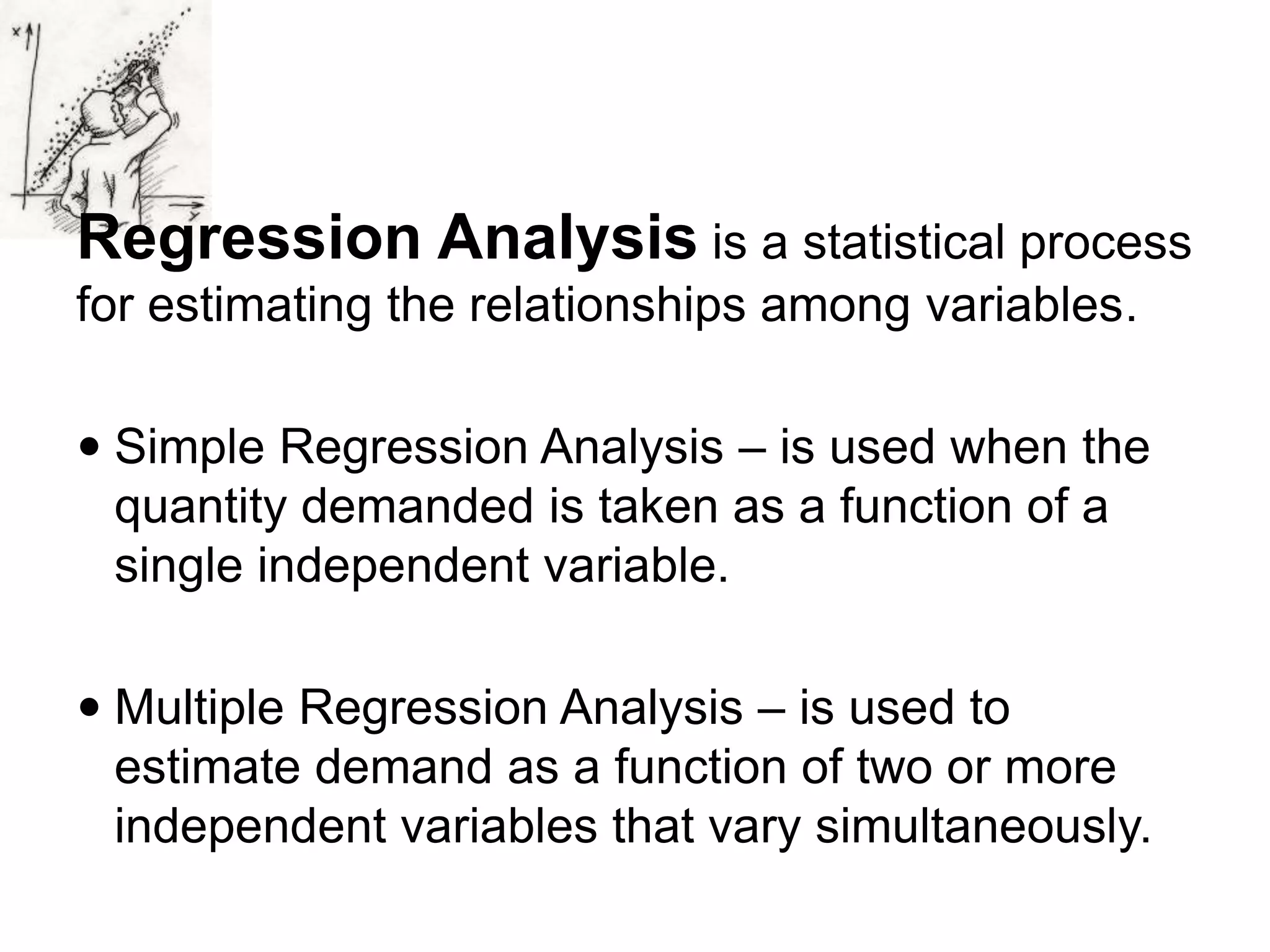
Regression Analysis is a statistical process
for estimating the relationships among variables.
 Simple Regression Analysis – is used when the
quantity demanded is taken as a function of a
single independent variable.
 Multiple Regression Analysis – is used to
estimate demand as a function of two or more
independent variables that vary simultaneously.
Specification
of Variable
Data
Collection
Demand
Estimation
Choice of a
Functional
Form
Interpretation
Steps for
Regression
Analysis
Demand Forecast
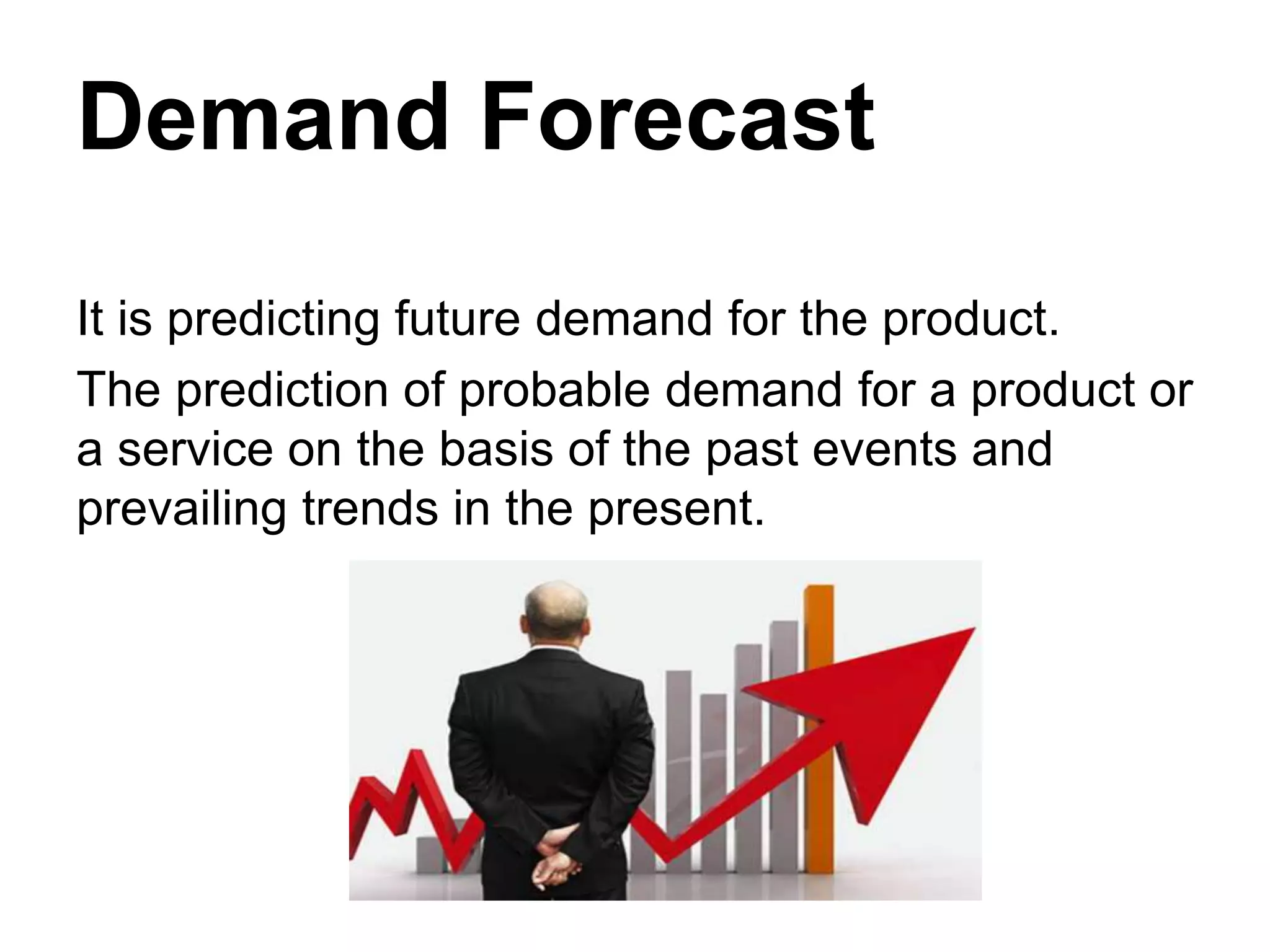
It is predicting future demand for the product.
The prediction of probable demand for a product or
a service on the basis of the past events and
prevailing trends in the present.
Forecast are broadly classified into two categories-
 Passive forecast - prediction about future is
based on the assumption that the firm does not
change the course of its action.
 Active forecast - prediction is done under the
condition of likely future changes in the actions,
by the firms.
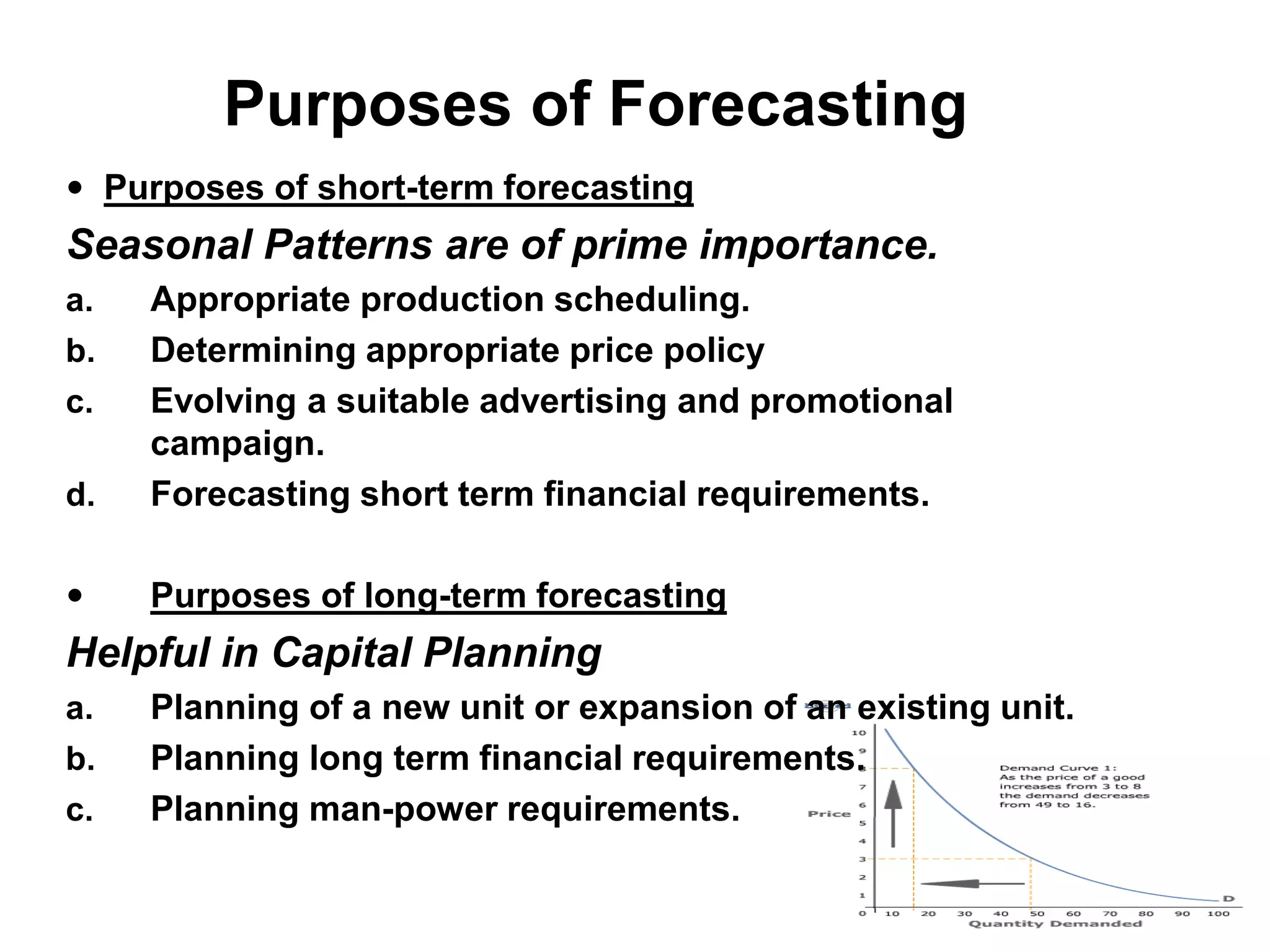
Purposes of Forecasting
 Purposes of short-term forecasting
Seasonal Patterns are of prime importance.
a. Appropriate production scheduling.
b. Determining appropriate price policy
c. Evolving a suitable advertising and promotional
campaign.
d. Forecasting short term financial requirements.
 Purposes of long-term forecasting
Helpful in Capital Planning
a. Planning of a new unit or expansion of an existing unit.
b. Planning long term financial requirements.
c. Planning man-power requirements.
Identify the
objective.
Determine
the nature of
goods.
Select a
proper
method.
Interpret the
result.
Steps in
Forecasting
Scope of Forecasting
 Period of forecast.
 Levels of forecast.
 General Purpose or specific purpose forecast.
 Forecast of established or new products.
 Type of commodity for which forecast is to be
undertaken.
 Miscellaneous factors to be included or not.
Short term
forecasts refers
to a period up to
3 months.
• Seasonal
factors are the
ingredients of
short run
forecasts.
Medium term
forecasts refers
to a period of 3
months to one
year.
• It is forecasted
by trends.
Long term
forecasts refers
to a period
above one year.
• Statistical
techniques
are used to
judge the long
run forecasts.
Period of Forecasts
i. Macro Economic Forecasts – concerned with
the business conditions all over the world.
ii. Industry Demand Forecasts – gives indication
to a firm regarding direction in which the whole
industry will be moving.
iii. Firm Demand Forecasting – a big firm will do
forecasting of its own products independent of
the rest of the firms.
iv. Product Line Forecasting – to decide which
product should have the priority.
Levels of Forecasts
General/Specific Purpose – general forecast is
broken into specific forecasts.
Forecasts of Established/New Product – for
established, past sale trends and competitive
conditions are used.
Type of Commodity – capital goods, consumer
durable and non-durable goods.
Miscellaneous Factors – inclusion of sociological
and psychological factors.
Determinants for Demand
Forecasts
 Replacement VS New
Demand
 Change in size and
characteristic of
population.
 Saturation limit of
market.
 Existing stock of good.
 Income level of
consumers.
 Consumer credit
outstanding.
 Taste and preference
of consumers.
Consumer Durable Goods
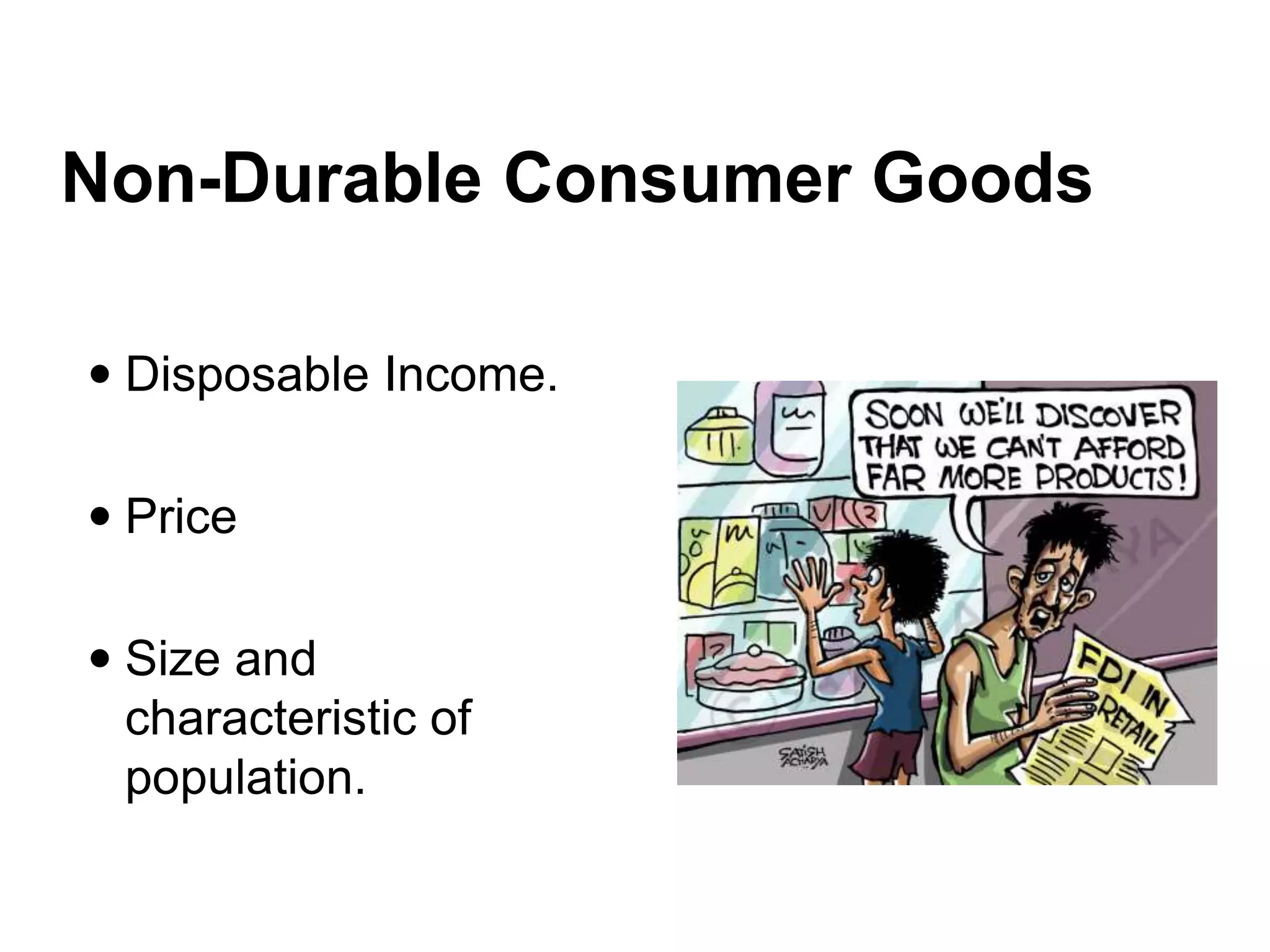
 Disposable Income.
 Price
 Size and
characteristic of
population.
Non-Durable Consumer Goods
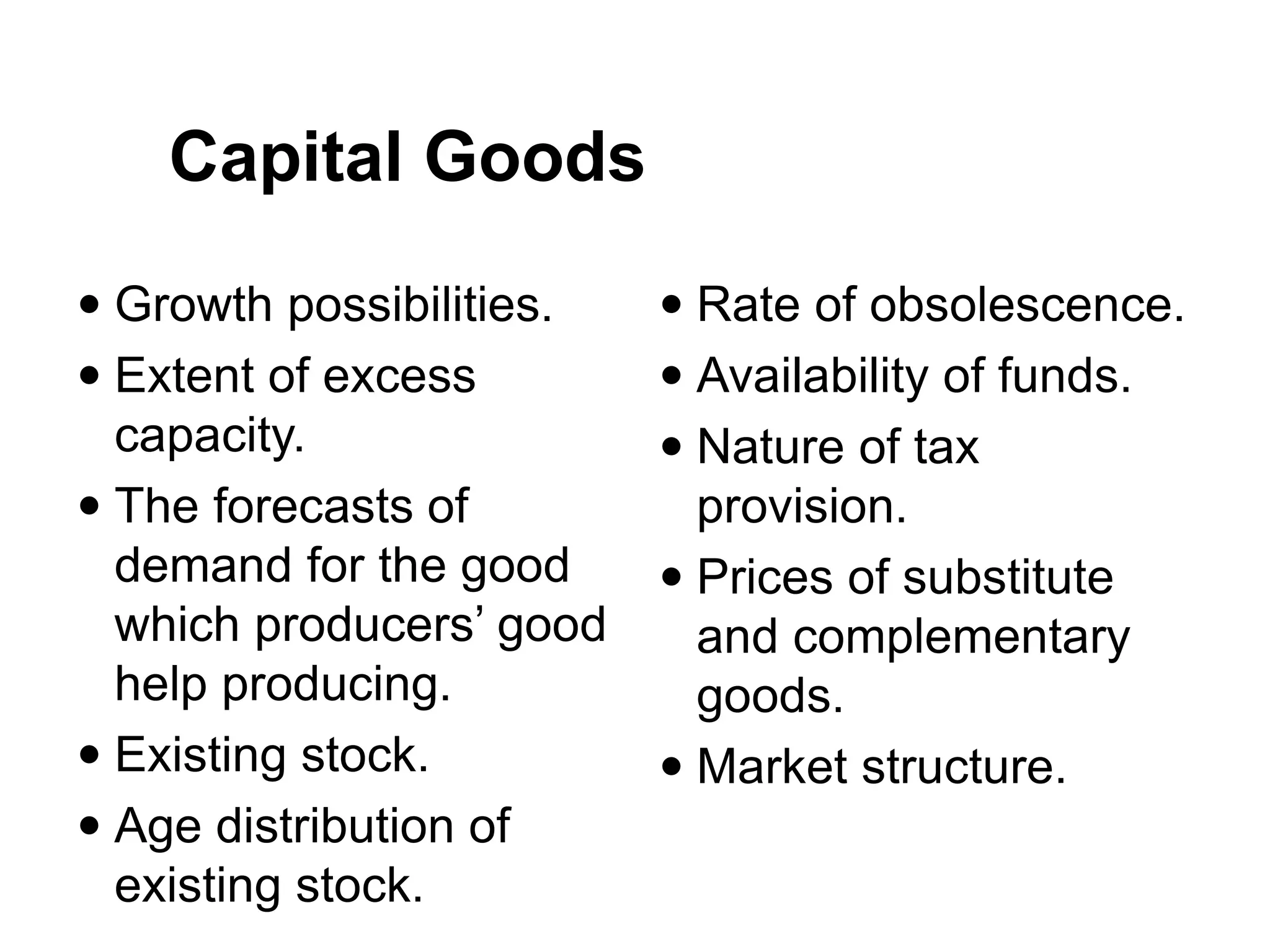
 Growth possibilities.
 Extent of excess
capacity.
 The forecasts of
demand for the good
which producers’ good
help producing.
 Existing stock.
 Age distribution of
existing stock.
 Rate of obsolescence.
 Availability of funds.
 Nature of tax
provision.
 Prices of substitute
and complementary
goods.
 Market structure.
Capital Goods
Demand Estimation and Forecast

Demand Estimation and Forecast

  • 1.
  • 2.
    Demand Estimation It isthe process that involves coming up with an estimate of the amount of demand for a product or a service. It is confined to a particular period of time.
  • 3.
    Methods Market Experimentation Actual Market Market Stimulation Survey of Consumers’ Intentions Census Sample Regression Analysis Identifying DemandFunction Collecting Historical Data Select an Appropriate Function Estimation of Selected Function Analyzing the Estimated Demand Function
  • 4.
    Actual Stimulation  Shopsare opened in different localities and then consumer behavior is observed.  Reaction to the price changes can be observed from consumer’s income, cast, religion, gender, taste etc.  Disadvantages- expensive, small scale, non controllable variables.  It provides token money to a set of consumers.  Reaction to price changes can be observed from prices of various goods, packaging, quality etc.  Disadvantages- consciousness of the consumer. Demand Estimation Market Experiment
  • 5.
    Census Method SurveyMethod  All the consumers are contacted.  Disadvantages – costly, hesitant to disclose the plan because of personal/commercial privacy.  A few consumers out of the whole population are contacted.  Disadvantages – costly to carry the test marketing, selection of test area, rival action. Demand Estimation Survey of Consumers’ Intention
  • 6.
    Regression Analysis isa statistical process for estimating the relationships among variables.  Simple Regression Analysis – is used when the quantity demanded is taken as a function of a single independent variable.  Multiple Regression Analysis – is used to estimate demand as a function of two or more independent variables that vary simultaneously.
  • 7.
    Specification of Variable Data Collection Demand Estimation Choice ofa Functional Form Interpretation Steps for Regression Analysis
  • 8.
    Demand Forecast It ispredicting future demand for the product. The prediction of probable demand for a product or a service on the basis of the past events and prevailing trends in the present.
  • 9.
    Forecast are broadlyclassified into two categories-  Passive forecast - prediction about future is based on the assumption that the firm does not change the course of its action.  Active forecast - prediction is done under the condition of likely future changes in the actions, by the firms.
  • 10.
    Purposes of Forecasting Purposes of short-term forecasting Seasonal Patterns are of prime importance. a. Appropriate production scheduling. b. Determining appropriate price policy c. Evolving a suitable advertising and promotional campaign. d. Forecasting short term financial requirements.  Purposes of long-term forecasting Helpful in Capital Planning a. Planning of a new unit or expansion of an existing unit. b. Planning long term financial requirements. c. Planning man-power requirements.
  • 11.
    Identify the objective. Determine the natureof goods. Select a proper method. Interpret the result. Steps in Forecasting
  • 12.
    Scope of Forecasting Period of forecast.  Levels of forecast.  General Purpose or specific purpose forecast.  Forecast of established or new products.  Type of commodity for which forecast is to be undertaken.  Miscellaneous factors to be included or not.
  • 13.
    Short term forecasts refers toa period up to 3 months. • Seasonal factors are the ingredients of short run forecasts. Medium term forecasts refers to a period of 3 months to one year. • It is forecasted by trends. Long term forecasts refers to a period above one year. • Statistical techniques are used to judge the long run forecasts. Period of Forecasts
  • 14.
    i. Macro EconomicForecasts – concerned with the business conditions all over the world. ii. Industry Demand Forecasts – gives indication to a firm regarding direction in which the whole industry will be moving. iii. Firm Demand Forecasting – a big firm will do forecasting of its own products independent of the rest of the firms. iv. Product Line Forecasting – to decide which product should have the priority. Levels of Forecasts
  • 15.
    General/Specific Purpose –general forecast is broken into specific forecasts. Forecasts of Established/New Product – for established, past sale trends and competitive conditions are used. Type of Commodity – capital goods, consumer durable and non-durable goods. Miscellaneous Factors – inclusion of sociological and psychological factors.
  • 16.
    Determinants for Demand Forecasts Replacement VS New Demand  Change in size and characteristic of population.  Saturation limit of market.  Existing stock of good.  Income level of consumers.  Consumer credit outstanding.  Taste and preference of consumers. Consumer Durable Goods
  • 17.
     Disposable Income. Price  Size and characteristic of population. Non-Durable Consumer Goods
  • 18.
     Growth possibilities. Extent of excess capacity.  The forecasts of demand for the good which producers’ good help producing.  Existing stock.  Age distribution of existing stock.  Rate of obsolescence.  Availability of funds.  Nature of tax provision.  Prices of substitute and complementary goods.  Market structure. Capital Goods