“Decoding O-Level Education:1 A
Comprehensive Guide”
shaheenweb.com
​
1. O-Level Education:
Happy African American high school student walking through hallway with her friends
and looking at camera.
Definition of O-level Education O-level education refers to a secondary school
qualification program usually offered to students aged 14 to 16 years. The “O” in O-Level
stands for Ordinary Level, indicating a standard of education that is intermediate
between the General Certificate of Secondary Education (GCSE) and Advanced Level
(A-Level).
Historical Background and Development: O-Levels were introduced in the UK in the
1950s as part of education reforms. They were initially designed to cater to a wide range
of academic abilities and provide comprehensive secondary education to students. Over
time, O Levels gained international recognition and were adopted by various education
systems worldwide.
2. Key Characteristics and Features:
O-level education emphasizes a broad and balanced curriculum, including mathematics,
science, humanities, and languages.
The curriculum is structured to provide students with a strong foundation in core
academic areas and to develop critical thinking, problem-solving skills, and subject
knowledge.
Level examinations are usually assessed externally, often through standardized testing
administered by examination boards or education authorities.
3. Importance of Understanding O-Level Education:
Gateway to Further Education:
O-level education serves as an important milestone for students as it provides a
foundation for further academic pursuits. Success in O-Level exams opens doors to
higher education such as A Levels, International Baccalaureate (IB), or vocational
training programs. Therefore, understanding the nature and requirements of O-level
studies is essential for students to plan their educational path.
Global recognition and credibility:
O-level qualifications are widely recognized and respected globally. They provide
students with a qualification that is valued by universities, employers, and educational
institutions around the world. Understanding O-level education helps students and
parents appreciate the international recognition associated with this qualification, which
increases higher education and employment prospects.
Skill and Competency Development:
O-level education focuses not only on academic knowledge but also on the development
of essential skills and competencies. By understanding the objectives and structure of
O-level education, students can better appreciate the emphasis on critical thinking,
problem-solving, communication, and independent learning. These skills are invaluable
for success in higher education and a variety of professional settings.
In summary, understanding O-level education is important for students, parents, and
teachers alike. It provides insight into the nature of the program, its historical context,
and its importance in shaping students’ educational journeys and future opportunities. By
understanding the fundamentals of O-level education, individuals can make informed
decisions and reap the maximum benefits of this educational path.
4. Overview of the curriculum:
O-level education generally offers a comprehensive curriculum designed to provide
students with a broad and balanced education. Here’s an overview of what a curriculum
might include:
Core Subjects:
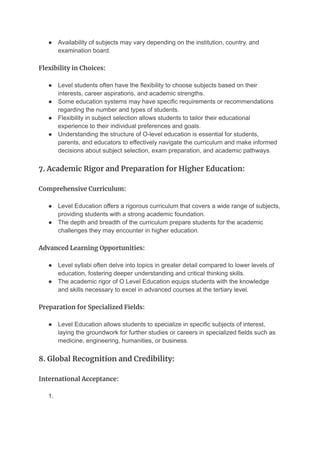
● Sciences: Biology, Chemistry, Physics, etc.
● Languages: English, French, Spanish, etc.
● Humanities: History, Geography, Economics, etc.
● Mathematics: Algebra, Geometry, Calculus etc.
Elective Subjects:
● Depending on the institution and country, students may have the option to choose
electives based on their interests and career goals.
● Elective subjects can vary widely and may include additional languages, social
studies, arts, computer science, etc.
Practical Components:
● Some O-Level subjects may include practical components, such as laboratory
experiments in science or coursework in subjects such as art or design and
technology.
● Practical assessments are often an integral part of the curriculum, allowing
students to apply theoretical knowledge in real-world contexts.
Cross-Curricular Skills:
● O-level education emphasizes the development of essential skills such as critical
thinking, problem-solving, communication, and collaboration.
● Curriculum frameworks can include opportunities for students to develop these
skills across different subject areas.
“Breaking the Myth: 1 Why a Physically Active Job Isn’t Always Enough for
Fitness?”
“Unlocking Innovation: 1 The Vital Role of Technology Transfer Offices in
Collaborative Research ”
5. Examination System and Grading:
External Assessment:
● Level examinations are usually externally assessed, meaning they are
administered and graded by external examination boards or education
authorities.
● External reviews ensure consistency and fairness in grading standards across
schools and regions.
Standardized Testing:
● Level exams often involve standardized testing formats, including multiple-choice
questions, structured questions, and essay-style responses.
● Test papers are designed to assess students’ understanding of the subject
material, application of knowledge, and analytical skills
Grading System:
● Level exams are graded on a standard scale, usually from A* (highest) to G
(lowest).
● The grading scale may vary slightly depending on the exam board or country, but
the basic principle of recognizing different levels of achievement remains
constant.
6. Subjects Offered and Flexibility in Choices:
Subject Offerings:
● O-level education typically offers a wide range of subjects covering different
subjects in academia.
● General subject categories include mathematics, science, languages, humanities,
and vocational subjects.
● Availability of subjects may vary depending on the institution, country, and
examination board.
Flexibility in Choices:
● Level students often have the flexibility to choose subjects based on their
interests, career aspirations, and academic strengths.
● Some education systems may have specific requirements or recommendations
regarding the number and types of students.
● Flexibility in subject selection allows students to tailor their educational
experience to their individual preferences and goals.
● Understanding the structure of O-level education is essential for students,
parents, and educators to effectively navigate the curriculum and make informed
decisions about subject selection, exam preparation, and academic pathways.
7. Academic Rigor and Preparation for Higher Education:
Comprehensive Curriculum:
● Level Education offers a rigorous curriculum that covers a wide range of subjects,
providing students with a strong academic foundation.
● The depth and breadth of the curriculum prepare students for the academic
challenges they may encounter in higher education.
Advanced Learning Opportunities:
● Level syllabi often delve into topics in greater detail compared to lower levels of
education, fostering deeper understanding and critical thinking skills.
● The academic rigor of O Level Education equips students with the knowledge
and skills necessary to excel in advanced courses at the tertiary level.
Preparation for Specialized Fields:
● Level Education allows students to specialize in specific subjects of interest,
laying the groundwork for further studies or careers in specialized fields such as
medicine, engineering, humanities, or business.
8. Global Recognition and Credibility:
International Acceptance:
1.
● Level qualifications are recognized and respected by universities, colleges, and
employers worldwide.
● The standardized nature of O-Level examinations ensures consistency and
comparability of academic achievements across different regions and educational
systems.
Facilitates Mobility:
● Level Education provides students with the flexibility to pursue higher education
opportunities both domestically and internationally.
● Students with O-Level qualifications have the advantage of being eligible for
admission to universities and colleges in various countries, facilitating global
mobility and career prospects.
Enhanced Career Opportunities:
● Level qualifications enhance students’ employability by demonstrating their
academic competence and readiness for professional roles.
● Employers value the credibility of O-Level qualifications as indicators of
candidates’ knowledge, skills, and commitment to excellence.
9. Development of Critical Thinking and Analytical Skills:
Problem-Solving Abilities:
● Level Education emphasizes the development of critical thinking and
problem-solving skills through challenging coursework and assessments.
● Students are encouraged to analyze complex problems, evaluate evidence, and
develop logical solutions, enhancing their ability to tackle real-world challenges.
Analytical Reasoning:
● Level syllabi often require students to engage in analytical reasoning and
interpret information across various subject areas.
● Through critical analysis of texts, data, and phenomena, students develop the
ability to think analytically and make informed judgments.
Independent Learning:
● Level Education promotes independent learning by encouraging students to
explore topics beyond the classroom, conduct research, and formulate their
conclusions.
● The emphasis on critical thinking and analytical skills equips students with the
tools necessary for lifelong learning and intellectual growth.
● Overall, the benefits of O-Level Education extend beyond academic
achievement, encompassing global recognition, career opportunities, and the
development of essential skills that are invaluable for success in higher education
and the workforce.
10. Contrasting O-Level with Other Educational Systems (e.g., A
Levels, IB):
Level vs. A Levels:
● Structure: O-Levels typically represent the culmination of secondary education,
whereas A Levels are the subsequent advanced level qualifications.
● Depth vs. Breadth: O-levels often provide a broader curriculum covering various
subjects, while A-levels allow for more in-depth study in fewer subjects.
● Assessment: O-level assessments are typically based on coursework and exams,
while A Levels rely heavily on final examinations.
Level vs. International Baccalaureate (IB):
● Curriculum: O Levels offer a standardized curriculum, whereas IB programs
provide a more holistic and interdisciplinary approach.
● Assessment: O-Level assessments are conducted externally and are subject to
national or international standards, while IB assessments include both internal
and external components.
● Recognition: O Levels are recognized by universities globally, while IB programs
are often valued for their emphasis on international-mindedness and holistic
development.
11. Advantages and Disadvantages of O-Level Education:
Advantages:
Global Recognition: O-Level qualifications are widely recognized and respected by
universities and employers worldwide, enhancing opportunities for further education and
employment.
Flexible Subject Choices: O-level education allows students to choose from a diverse
range of subjects based on their interests and career aspirations, enabling personalized
learning pathways.
Preparation for Higher Education: The academic rigor of O Level Education prepares
students for the demands of tertiary education, fostering critical thinking,
problem-solving, and independent learning skills.
Disadvantages:
Limited Specialization: O-level education offers a broad curriculum, which may limit
opportunities for in-depth study in specific subjects compared to specialized educational
pathways.
Standardized Assessment: O-level assessments rely heavily on standardized testing
formats, which may not adequately capture students’ individual strengths, creativity, or
practical skills.
Pressure and Stress: The competitive nature of O-Level examinations can lead to high
levels of stress and anxiety among students, impacting their well-being and mental
health.
Overall, O Level Education has its strengths in providing a well-rounded education and
facilitating global mobility, but it also has limitations, particularly in terms of specialization
and assessment methods. Understanding these factors can help students, parents, and
educators make informed decisions about educational pathways and strategies for
academic success.
12. Effective Study Strategies and Time Management Techniques:
Setting Goals and Priorities:
● Establish clear academic goals and prioritize tasks based on their importance
and deadlines.
● Break down long-term goals into smaller, manageable steps to track progress
effectively.
Creating a Study Schedule:
● Allocate dedicated time slots for studying each subject based on its difficulty level
and your learning preferences.
● Maintain a consistent study schedule to develop a routine and avoid last-minute
cramming.
Active Learning Techniques:
● Engage in active learning strategies such as summarizing key concepts, creating
flashcards, or teaching concepts to others.
● Practice retrieval techniques like self-quizzing to reinforce learning and improve
retention.
Utilizing Resources Effectively:
● Make use of textbooks, study guides, online resources, and educational apps to
supplement your learning.
● Seek clarification from teachers, tutors, or peers whenever you encounter
challenging topics.
Effective Time Management:
● Prioritize projects using methods such as the Eisenhower Matrix based on their
relevance and urgency.
● Break tasks into smaller, manageable chunks and set realistic deadlines to stay
on track.
13. Resources and Support Available for O-Level Students:
School Resources:
● Take advantage of school libraries, laboratories, and study spaces for quiet and
focused study sessions.
● Attend teacher-led revision sessions, review classes, or extra help sessions to
clarify doubts and reinforce learning.
Online Resources:
● Explore educational websites, online forums, and virtual study groups for
additional learning resources and peer support.
● Access digital libraries, video tutorials, and interactive quizzes to supplement
classroom learning.
Peer Support Networks:
● Form study groups with classmates to review material, discuss concepts, and
quiz each other.
● Collaborate on projects, share study notes, and provide mutual encouragement
and motivation.
Professional Support:
● Seek guidance from school counselors or educational advisors for academic
advice, career planning, and stress management.
● Consider enrolling in tutoring programs or seeking private tuition for personalized
academic support and exam preparation.
14. Tips for Exam Preparation and Managing Stress:
Effective Revision Strategies:
● Create a comprehensive revision plan outlining the topics to be covered and the
study resources to be used.
● Review past exam papers, practice questions, and mock tests to familiarize
yourself with the exam format and assess your readiness.
Stress Management Techniques:
● Practice relaxation techniques such as deep breathing, meditation, or
mindfulness to alleviate exam-related stress and anxiety.
● Maintain a healthy lifestyle with regular exercise, balanced nutrition, and sufficient
sleep to support cognitive function and emotional well-being.
Time Management during Exams:
● Read exam questions carefully and allocate time for each section based on its
weighting and difficulty.
● Pace yourself during the exam, and if you get stuck on a question, move on and
return to it later if time permits.
Positive Mindset and Confidence Building:
● Cultivate a positive attitude towards exams by focusing on your strengths,
achievements, and previous successes.
● Visualize success, affirm your abilities, and adopt a growth mindset that
embraces challenges as opportunities for growth.
● By implementing these strategies and utilizing available resources and support
networks, O Level students can enhance their study skills, academic
performance, and overall well-being throughout their educational journey.
15. Conclusion:
Recap of Key Points Discussed:
Throughout this comprehensive guide, we’ve explored the intricacies of O Level
Education, shedding light on its structure, benefits, challenges, and strategies for
success. We’ve clarified common queries and debunked misconceptions, providing you
with a thorough understanding of what O Level Education entails. From its rigorous
curriculum to its global recognition, O Level Education serves as a cornerstone in
shaping academic pathways and unlocking future opportunities.
Encouragement to Explore O-Level Education Further:
As you embark on your O-Level journey, I encourage you to delve deeper into this
enriching educational experience. Take advantage of the diverse range of subjects
offered, seize opportunities for personal growth and intellectual development, and
embrace the challenges with confidence and determination. Explore extracurricular
activities, engage in collaborative learning experiences, and foster a passion for lifelong
learning that extends beyond the classroom walls.
Closing Remarks and Invitation for Feedback or Questions from Readers:
In closing, I extend my sincerest gratitude for accompanying us on this exploration of O
Level Education. Your curiosity and engagement are the driving force behind our
commitment to providing valuable insights and resources. Should you have any further
questions, feedback, or suggestions for future topics, please don’t hesitate to reach out.
Your input is invaluable in shaping the content we deliver and ensuring it remains
relevant and impactful for our readers.
Thank you once again for your time and participation. Wishing you all the best in your
academic endeavors and beyond.

Decoding O Level eduction a comprehensive guide.pdf

  • 1.
    “Decoding O-Level Education:1A Comprehensive Guide” shaheenweb.com ​ 1. O-Level Education:
  • 2.
    Happy African Americanhigh school student walking through hallway with her friends and looking at camera. Definition of O-level Education O-level education refers to a secondary school qualification program usually offered to students aged 14 to 16 years. The “O” in O-Level stands for Ordinary Level, indicating a standard of education that is intermediate between the General Certificate of Secondary Education (GCSE) and Advanced Level (A-Level). Historical Background and Development: O-Levels were introduced in the UK in the 1950s as part of education reforms. They were initially designed to cater to a wide range of academic abilities and provide comprehensive secondary education to students. Over time, O Levels gained international recognition and were adopted by various education systems worldwide. 2. Key Characteristics and Features: O-level education emphasizes a broad and balanced curriculum, including mathematics, science, humanities, and languages. The curriculum is structured to provide students with a strong foundation in core academic areas and to develop critical thinking, problem-solving skills, and subject knowledge.
  • 3.
    Level examinations areusually assessed externally, often through standardized testing administered by examination boards or education authorities. 3. Importance of Understanding O-Level Education: Gateway to Further Education: O-level education serves as an important milestone for students as it provides a foundation for further academic pursuits. Success in O-Level exams opens doors to higher education such as A Levels, International Baccalaureate (IB), or vocational training programs. Therefore, understanding the nature and requirements of O-level studies is essential for students to plan their educational path. Global recognition and credibility: O-level qualifications are widely recognized and respected globally. They provide students with a qualification that is valued by universities, employers, and educational institutions around the world. Understanding O-level education helps students and parents appreciate the international recognition associated with this qualification, which increases higher education and employment prospects. Skill and Competency Development: O-level education focuses not only on academic knowledge but also on the development of essential skills and competencies. By understanding the objectives and structure of O-level education, students can better appreciate the emphasis on critical thinking, problem-solving, communication, and independent learning. These skills are invaluable for success in higher education and a variety of professional settings. In summary, understanding O-level education is important for students, parents, and teachers alike. It provides insight into the nature of the program, its historical context, and its importance in shaping students’ educational journeys and future opportunities. By understanding the fundamentals of O-level education, individuals can make informed decisions and reap the maximum benefits of this educational path. 4. Overview of the curriculum: O-level education generally offers a comprehensive curriculum designed to provide students with a broad and balanced education. Here’s an overview of what a curriculum might include: Core Subjects:
  • 4.
    ● Sciences: Biology,Chemistry, Physics, etc. ● Languages: English, French, Spanish, etc. ● Humanities: History, Geography, Economics, etc. ● Mathematics: Algebra, Geometry, Calculus etc. Elective Subjects: ● Depending on the institution and country, students may have the option to choose electives based on their interests and career goals. ● Elective subjects can vary widely and may include additional languages, social studies, arts, computer science, etc. Practical Components: ● Some O-Level subjects may include practical components, such as laboratory experiments in science or coursework in subjects such as art or design and technology. ● Practical assessments are often an integral part of the curriculum, allowing students to apply theoretical knowledge in real-world contexts. Cross-Curricular Skills: ● O-level education emphasizes the development of essential skills such as critical thinking, problem-solving, communication, and collaboration.
  • 5.
    ● Curriculum frameworkscan include opportunities for students to develop these skills across different subject areas. “Breaking the Myth: 1 Why a Physically Active Job Isn’t Always Enough for Fitness?” “Unlocking Innovation: 1 The Vital Role of Technology Transfer Offices in Collaborative Research ” 5. Examination System and Grading: External Assessment: ● Level examinations are usually externally assessed, meaning they are administered and graded by external examination boards or education authorities. ● External reviews ensure consistency and fairness in grading standards across schools and regions. Standardized Testing: ● Level exams often involve standardized testing formats, including multiple-choice questions, structured questions, and essay-style responses. ● Test papers are designed to assess students’ understanding of the subject material, application of knowledge, and analytical skills Grading System: ● Level exams are graded on a standard scale, usually from A* (highest) to G (lowest). ● The grading scale may vary slightly depending on the exam board or country, but the basic principle of recognizing different levels of achievement remains constant. 6. Subjects Offered and Flexibility in Choices: Subject Offerings: ● O-level education typically offers a wide range of subjects covering different subjects in academia. ● General subject categories include mathematics, science, languages, humanities, and vocational subjects.
  • 6.
    ● Availability ofsubjects may vary depending on the institution, country, and examination board. Flexibility in Choices: ● Level students often have the flexibility to choose subjects based on their interests, career aspirations, and academic strengths. ● Some education systems may have specific requirements or recommendations regarding the number and types of students. ● Flexibility in subject selection allows students to tailor their educational experience to their individual preferences and goals. ● Understanding the structure of O-level education is essential for students, parents, and educators to effectively navigate the curriculum and make informed decisions about subject selection, exam preparation, and academic pathways. 7. Academic Rigor and Preparation for Higher Education: Comprehensive Curriculum: ● Level Education offers a rigorous curriculum that covers a wide range of subjects, providing students with a strong academic foundation. ● The depth and breadth of the curriculum prepare students for the academic challenges they may encounter in higher education. Advanced Learning Opportunities: ● Level syllabi often delve into topics in greater detail compared to lower levels of education, fostering deeper understanding and critical thinking skills. ● The academic rigor of O Level Education equips students with the knowledge and skills necessary to excel in advanced courses at the tertiary level. Preparation for Specialized Fields: ● Level Education allows students to specialize in specific subjects of interest, laying the groundwork for further studies or careers in specialized fields such as medicine, engineering, humanities, or business. 8. Global Recognition and Credibility: International Acceptance: 1.
  • 7.
    ● Level qualificationsare recognized and respected by universities, colleges, and employers worldwide. ● The standardized nature of O-Level examinations ensures consistency and comparability of academic achievements across different regions and educational systems. Facilitates Mobility: ● Level Education provides students with the flexibility to pursue higher education opportunities both domestically and internationally. ● Students with O-Level qualifications have the advantage of being eligible for admission to universities and colleges in various countries, facilitating global mobility and career prospects. Enhanced Career Opportunities: ● Level qualifications enhance students’ employability by demonstrating their academic competence and readiness for professional roles. ● Employers value the credibility of O-Level qualifications as indicators of candidates’ knowledge, skills, and commitment to excellence. 9. Development of Critical Thinking and Analytical Skills: Problem-Solving Abilities: ● Level Education emphasizes the development of critical thinking and problem-solving skills through challenging coursework and assessments. ● Students are encouraged to analyze complex problems, evaluate evidence, and develop logical solutions, enhancing their ability to tackle real-world challenges. Analytical Reasoning: ● Level syllabi often require students to engage in analytical reasoning and interpret information across various subject areas. ● Through critical analysis of texts, data, and phenomena, students develop the ability to think analytically and make informed judgments. Independent Learning: ● Level Education promotes independent learning by encouraging students to explore topics beyond the classroom, conduct research, and formulate their conclusions. ● The emphasis on critical thinking and analytical skills equips students with the tools necessary for lifelong learning and intellectual growth.
  • 8.
    ● Overall, thebenefits of O-Level Education extend beyond academic achievement, encompassing global recognition, career opportunities, and the development of essential skills that are invaluable for success in higher education and the workforce. 10. Contrasting O-Level with Other Educational Systems (e.g., A Levels, IB): Level vs. A Levels: ● Structure: O-Levels typically represent the culmination of secondary education, whereas A Levels are the subsequent advanced level qualifications. ● Depth vs. Breadth: O-levels often provide a broader curriculum covering various subjects, while A-levels allow for more in-depth study in fewer subjects. ● Assessment: O-level assessments are typically based on coursework and exams, while A Levels rely heavily on final examinations. Level vs. International Baccalaureate (IB): ● Curriculum: O Levels offer a standardized curriculum, whereas IB programs provide a more holistic and interdisciplinary approach. ● Assessment: O-Level assessments are conducted externally and are subject to national or international standards, while IB assessments include both internal and external components. ● Recognition: O Levels are recognized by universities globally, while IB programs are often valued for their emphasis on international-mindedness and holistic development. 11. Advantages and Disadvantages of O-Level Education: Advantages: Global Recognition: O-Level qualifications are widely recognized and respected by universities and employers worldwide, enhancing opportunities for further education and employment. Flexible Subject Choices: O-level education allows students to choose from a diverse range of subjects based on their interests and career aspirations, enabling personalized learning pathways. Preparation for Higher Education: The academic rigor of O Level Education prepares students for the demands of tertiary education, fostering critical thinking, problem-solving, and independent learning skills.
  • 9.
    Disadvantages: Limited Specialization: O-leveleducation offers a broad curriculum, which may limit opportunities for in-depth study in specific subjects compared to specialized educational pathways. Standardized Assessment: O-level assessments rely heavily on standardized testing formats, which may not adequately capture students’ individual strengths, creativity, or practical skills. Pressure and Stress: The competitive nature of O-Level examinations can lead to high levels of stress and anxiety among students, impacting their well-being and mental health. Overall, O Level Education has its strengths in providing a well-rounded education and facilitating global mobility, but it also has limitations, particularly in terms of specialization and assessment methods. Understanding these factors can help students, parents, and educators make informed decisions about educational pathways and strategies for academic success. 12. Effective Study Strategies and Time Management Techniques: Setting Goals and Priorities: ● Establish clear academic goals and prioritize tasks based on their importance and deadlines. ● Break down long-term goals into smaller, manageable steps to track progress effectively. Creating a Study Schedule: ● Allocate dedicated time slots for studying each subject based on its difficulty level and your learning preferences. ● Maintain a consistent study schedule to develop a routine and avoid last-minute cramming. Active Learning Techniques: ● Engage in active learning strategies such as summarizing key concepts, creating flashcards, or teaching concepts to others. ● Practice retrieval techniques like self-quizzing to reinforce learning and improve retention.
  • 10.
    Utilizing Resources Effectively: ●Make use of textbooks, study guides, online resources, and educational apps to supplement your learning. ● Seek clarification from teachers, tutors, or peers whenever you encounter challenging topics. Effective Time Management: ● Prioritize projects using methods such as the Eisenhower Matrix based on their relevance and urgency. ● Break tasks into smaller, manageable chunks and set realistic deadlines to stay on track. 13. Resources and Support Available for O-Level Students: School Resources: ● Take advantage of school libraries, laboratories, and study spaces for quiet and focused study sessions. ● Attend teacher-led revision sessions, review classes, or extra help sessions to clarify doubts and reinforce learning. Online Resources: ● Explore educational websites, online forums, and virtual study groups for additional learning resources and peer support. ● Access digital libraries, video tutorials, and interactive quizzes to supplement classroom learning. Peer Support Networks: ● Form study groups with classmates to review material, discuss concepts, and quiz each other. ● Collaborate on projects, share study notes, and provide mutual encouragement and motivation. Professional Support: ● Seek guidance from school counselors or educational advisors for academic advice, career planning, and stress management. ● Consider enrolling in tutoring programs or seeking private tuition for personalized academic support and exam preparation.
  • 11.
    14. Tips forExam Preparation and Managing Stress: Effective Revision Strategies: ● Create a comprehensive revision plan outlining the topics to be covered and the study resources to be used. ● Review past exam papers, practice questions, and mock tests to familiarize yourself with the exam format and assess your readiness. Stress Management Techniques: ● Practice relaxation techniques such as deep breathing, meditation, or mindfulness to alleviate exam-related stress and anxiety. ● Maintain a healthy lifestyle with regular exercise, balanced nutrition, and sufficient sleep to support cognitive function and emotional well-being. Time Management during Exams: ● Read exam questions carefully and allocate time for each section based on its weighting and difficulty. ● Pace yourself during the exam, and if you get stuck on a question, move on and return to it later if time permits. Positive Mindset and Confidence Building: ● Cultivate a positive attitude towards exams by focusing on your strengths, achievements, and previous successes. ● Visualize success, affirm your abilities, and adopt a growth mindset that embraces challenges as opportunities for growth. ● By implementing these strategies and utilizing available resources and support networks, O Level students can enhance their study skills, academic performance, and overall well-being throughout their educational journey. 15. Conclusion: Recap of Key Points Discussed: Throughout this comprehensive guide, we’ve explored the intricacies of O Level Education, shedding light on its structure, benefits, challenges, and strategies for success. We’ve clarified common queries and debunked misconceptions, providing you with a thorough understanding of what O Level Education entails. From its rigorous curriculum to its global recognition, O Level Education serves as a cornerstone in shaping academic pathways and unlocking future opportunities.
  • 12.
    Encouragement to ExploreO-Level Education Further: As you embark on your O-Level journey, I encourage you to delve deeper into this enriching educational experience. Take advantage of the diverse range of subjects offered, seize opportunities for personal growth and intellectual development, and embrace the challenges with confidence and determination. Explore extracurricular activities, engage in collaborative learning experiences, and foster a passion for lifelong learning that extends beyond the classroom walls. Closing Remarks and Invitation for Feedback or Questions from Readers: In closing, I extend my sincerest gratitude for accompanying us on this exploration of O Level Education. Your curiosity and engagement are the driving force behind our commitment to providing valuable insights and resources. Should you have any further questions, feedback, or suggestions for future topics, please don’t hesitate to reach out. Your input is invaluable in shaping the content we deliver and ensuring it remains relevant and impactful for our readers. Thank you once again for your time and participation. Wishing you all the best in your academic endeavors and beyond.