DANIEL 2 
THE FOUNDATION 
OF PROPHECY
A REVIVAL OF TRUE GODLINESS 
AMONG US IS THE GREATEST 
AND MOST URGENT OF ALL OUR 
NEEDS. TO SEEK THIS SHOULD 
BE OUR FIRST WORK.--Review 
and Herald, March 22, 1887. {ChS 
41.4}
1Ch 12:32 Of the children of 
Issachar, men who had 
understanding of the times, 
to know what Israel ought to 
do, the heads of them were 
two hundred; and all their 
brothers were at their 
commandment.
THE FOUNDATION 
OF PROPHECY 
DANIEL 2
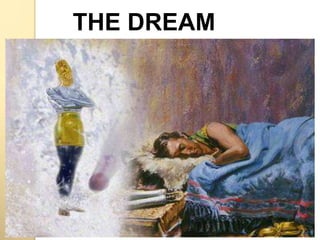
THE DREAM
OVERVIEW 
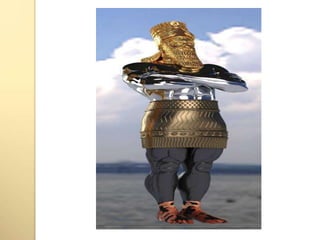
Using a great image with four 
metal sections God foretold the 
rise and fall of the four great 
consecutive kingdoms which have 
especially affected His people - 
Babylon, Medo-Persia, Greece & 
Rome. Romeʼs division into the 
nations of Europe is represented 
by the feet & toes of iron and clay. 
The last superpower will be 
Christʼs Everlasting Kingdom.
CONSISTENCY IS THE KEY TO UNLOCKING ANY BIBLE 
TRUTH 
There are four prophetic outlines given in Daniel-chapters 2, 
7, 8 to 9 and 10 to 12. William Miller and James White took 
pains to emphasize that the four lines of prophecy cover the 
same ground and enforce the same truth. They were right! 
The prophecies of Daniel are a unit. Not only are the four 
lines of prophecy parallel, but they have one great theme. 
Ellen G. White wrote: "Consider the circumstances of the 
Jewish nation when the prophecies of Daniel were given:" 
TM, p. 113. The armies of Nebuchadnezzar had descended 
upon the kingdom of Judah. Kingdom, King, Sanctuary and 
People were swept away by the Babylonians. Daniel was 
among those forlorn captives who hung up their harps beside 
the river of Babylon and refused to sing the songs of Zion. 
Along with every true-blooded Hebrew, he longed for the 
restoration.
Daniel's four lines of prophecy (chapters 2, 7, 8, 11) all 
commenced in Daniel's time. Palestine was then the home of 
God's people, and the great nations of prophecy surrounded 
"the glorious land." The two great centers of world civilization 
were along the rivers in Mesopotamia and along the river Nile in 
Egypt. Palestine lay between these two great powers as a sort 
of buffer state. For centuries Israel witnessed repeated 
struggles between the power of the North and the power of the 
South. As each line of prophecy comes down to the Christian 
dispensation, it swings away from the geographical setting of 
Palestine and assumes a world-wide scope. Instead of the 
Jews in Palestine being threatened by powers along the 
borders of their national homeland, the prophecies describe the 
conflict of the true Church with the great anti-Christ. This side of 
the cross, national Israel has ceased to be the object of God's 
supreme regard. The Middle East is not the locale of the final 
conflict. Yet it is not surprising that the prophecy of the Church's 
final conflict is couched in the Palestinian terminology of the Old 
Testament.
All the prophecies of the Old Testament are clothed in the 
language of Palestine. It is impossible to interpret Old 
Testament prophecies without the clear light of the book of 
Revelation. The Revelation is a mosaic of the Old Testament. 
It cites the prophecies of the Old Testament and shows how 
to understand their peculiar expressions. For example, 
Babylon now symbolizes the apostate religious world; 
Egypt, the atheistic world; and Israel, the believers in the 
three angels' messages. (See Revelation 17; 11:8; 7; 14). 
Since the Revelation unseals the book of Daniel (Revelation 
10; Testimonies to Ministers, pp. 112-115), one must expect 
that important features of Daniel 11:40-45 are covered and 
clarified in the book of Revelation. Scripture, rather than the 
newspaper, must be used to interpret prophecy.
KNOW THE FUTURE BEFORE IT HAPPENS 
This prophecy is so incredible that some claim that it must have been 
written long after most of the events described had happened by 
someone who pretended to live before the events happened. However 
several facts show that this idea is incorrect. Daniel was written about 
600BC. 
1. The historian Josephus (c. AD100), records that Danielʼs book was 
shown to Alexander the Great. This means that Danielʼs book must have 
been written before 323BC when Alexander died. 
“And when the book of Daniel was showed him [Alexander], wherein 
Daniel declared that one of the Greeks should destroy the empire of the 
Persians, he supposed that himself was the person intended; and he was 
then glad...” Josephus, Jewish Antiquities, XI, 333-338, Loeb Classical 
Library, page 447. 
2. The prophet Ezekiel, who even the critics admit lived about 600BC*, 
speaks of Daniel as living at the same time. (Eze 14:14, 20). *Encʼ 
Britannica, Vol. 4, 15th edition, 1988, p643
verses 1-11 - God in the flesh 
God gave the king of Babylon (an image worshipper) a dream of a metal 
image. When he awoke he could not remember the dream but knew that 
it was very significant. Upon asking his astrologers etc. to tell him what he 
had dreamed and what it meant they said that only the gods could do so, 
and that the gods did not dwell in the flesh. 
verse 11 - God with us 
Heathen gods are far removed from humanity, but not the God of the 
Bible. He became one of us, “made flesh and dwelt among us.” John 
1:14. “Forasmuch then as the children are partakers of flesh and blood, 
he also himself likewise took part of the same...” Heb 2:14. 
By becoming one of us Christ showed us that through faith in Godʼs 
promises we too may have victory over sin. He Who is fully God became 
fully man. He connects us with Heaven. He understands our weaknesses 
and Godʼs holiness and so became the perfect Mediator. We have all 
sinned and deserve to die but Christ died in our place and offers us His 
grace and power that we might be made free from sin. This is the 
essence of the Gospel. 
verses 12-13 - Imposters exposed 
The king was furious as the magicians astrologers and sorcerers, who 
claimed to know dreams etc., were exposed as liars.
verses 1-11 - God in the flesh 
God gave the king of Babylon (an image worshipper) a dream of a metal 
image. When he awoke he could not remember the dream but knew that 
it was very significant. Upon asking his astrologers etc. to tell him what he 
had dreamed and what it meant they said that only the gods could do so, 
and that the gods did not dwell in the flesh. 
verse 11 - God with us 
Heathen gods are far removed from humanity, but not the God of the 
Bible. He became one of us, “made flesh and dwelt among us.” John 
1:14. “Forasmuch then as the children are partakers of flesh and blood, 
he also himself likewise took part of the same...” Heb 2:14. 
By becoming one of us Christ showed us that through faith in Godʼs 
promises we too may have victory over sin. He Who is fully God became 
fully man. He connects us with Heaven. He understands our weaknesses 
and Godʼs holiness and so became the perfect Mediator. We have all 
sinned and deserve to die but Christ died in our place and offers us His 
grace and power that we might be made free from sin. This is the 
essence of the Gospel.
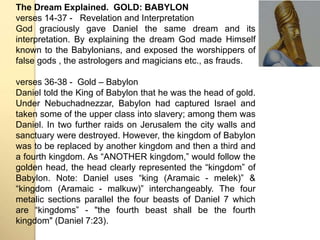
The Dream Explained. GOLD: BABYLON 
verses 14-37 - Revelation and Interpretation 
God graciously gave Daniel the same dream and its 
interpretation. By explaining the dream God made Himself 
known to the Babylonians, and exposed the worshippers of 
false gods , the astrologers and magicians etc., as frauds. 
verses 36-38 - Gold – Babylon 
Daniel told the King of Babylon that he was the head of gold. 
Under Nebuchadnezzar, Babylon had captured Israel and 
taken some of the upper class into slavery; among them was 
Daniel. In two further raids on Jerusalem the city walls and 
sanctuary were destroyed. However, the kingdom of Babylon 
was to be replaced by another kingdom and then a third and 
a fourth kingdom. As “ANOTHER kingdom,” would follow the 
golden head, the head clearly represented the “kingdom” of 
Babylon. Note: Daniel uses “king (Aramaic - melek)” & 
“kingdom (Aramaic - malkuw)” interchangeably. The four 
metalic sections parallel the four beasts of Daniel 7 which 
are “kingdoms” - "the fourth beast shall be the fourth 
kingdom" (Daniel 7:23).
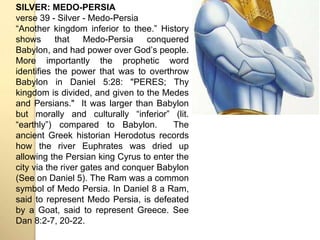
SILVER: MEDO-PERSIA 
verse 39 - Silver - Medo-Persia 
“Another kingdom inferior to thee.” History 
shows that Medo-Persia conquered 
Babylon, and had power over Godʼs people. 
More importantly the prophetic word 
identifies the power that was to overthrow 
Babylon in Daniel 5:28: "PERES; Thy 
kingdom is divided, and given to the Medes 
and Persians." It was larger than Babylon 
but morally and culturally “inferior” (lit. 
“earthly”) compared to Babylon. The 
ancient Greek historian Herodotus records 
how the river Euphrates was dried up 
allowing the Persian king Cyrus to enter the 
city via the river gates and conquer Babylon 
(See on Daniel 5). The Ram was a common 
symbol of Medo Persia. In Daniel 8 a Ram, 
said to represent Medo Persia, is defeated 
by a Goat, said to represent Greece. See 
Dan 8:2-7, 20-22.
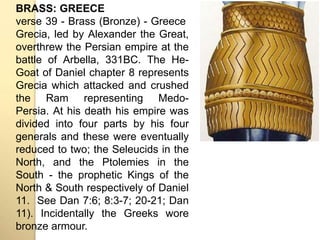
BRASS: GREECE 
verse 39 - Brass (Bronze) - Greece 
Grecia, led by Alexander the Great, 
overthrew the Persian empire at the 
battle of Arbella, 331BC. The He- 
Goat of Daniel chapter 8 represents 
Grecia which attacked and crushed 
the Ram representing Medo- 
Persia. At his death his empire was 
divided into four parts by his four 
generals and these were eventually 
reduced to two; the Seleucids in the 
North, and the Ptolemies in the 
South - the prophetic Kings of the 
North & South respectively of Daniel 
11. See Dan 7:6; 8:3-7; 20-21; Dan 
11). Incidentally the Greeks wore 
bronze armour.
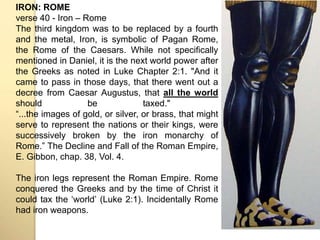
IRON: ROME 
verse 40 - Iron – Rome 
The third kingdom was to be replaced by a fourth 
and the metal, Iron, is symbolic of Pagan Rome, 
the Rome of the Caesars. While not specifically 
mentioned in Daniel, it is the next world power after 
the Greeks as noted in Luke Chapter 2:1. "And it 
came to pass in those days, that there went out a 
decree from Caesar Augustus, that all the world 
should be taxed." 
“...the images of gold, or silver, or brass, that might 
serve to represent the nations or their kings, were 
successively broken by the iron monarchy of 
Rome.” The Decline and Fall of the Roman Empire, 
E. Gibbon, chap. 38, Vol. 4. 
The iron legs represent the Roman Empire. Rome 
conquered the Greeks and by the time of Christ it 
could tax the ʻworldʼ (Luke 2:1). Incidentally Rome 
had iron weapons.
In Daniel three of the four kingdoms are specifically named: 
1. Babylon (Dan 2:36-38) 
2. Medo-Persia (Dan 8:20) 
3. Greece (Dan 8:21) 
4. Rome is not specifically named in Daniel but its identity is clear. Rome 
is very prominent in the New Testament. The iron legs reached from the 
Greek kingdom to the end of the world. Only Rome fits this specification. 
Rome dominated world affairs in Christʼs time, was divided into various 
European kingdoms, however, continues today in the form of Papal 
Rome. Jesus foretold that Jerusalem would be destroyed by the 
“abomination of desolation, spoken of by Daniel” (Matt 24:2, 15). All 
accept that this power was Rome. 
The Roman historian Polybius wrote: 
“The Romans...possess an empire which is not only immeasurably 
greater than any which preceded it, but need not fear rivalry in the future.” 
Polybius the Histories, transl. by W. R. Patton, Loeb Classical Library, Vol 
1, p7.
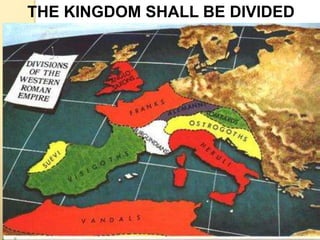
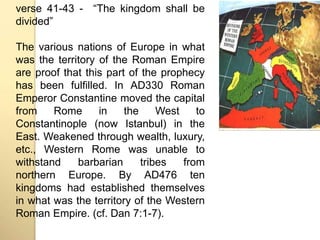
THE KINGDOM SHALL BE DIVIDED
verse 41-43 - “The kingdom shall be 
divided” 
The various nations of Europe in what 
was the territory of the Roman Empire 
are proof that this part of the prophecy 
has been fulfilled. In AD330 Roman 
Emperor Constantine moved the capital 
from Rome in the West to 
Constantinople (now Istanbul) in the 
East. Weakened through wealth, luxury, 
etc., Western Rome was unable to 
withstand barbarian tribes from 
northern Europe. By AD476 ten 
kingdoms had established themselves 
in what was the territory of the Western 
Roman Empire. (cf. Dan 7:1-7).
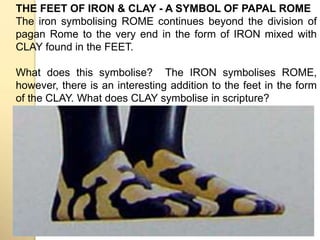
THE FEET OF IRON & CLAY - A SYMBOL OF PAPAL ROME 
The iron symbolising ROME continues beyond the division of 
pagan Rome to the very end in the form of IRON mixed with 
CLAY found in the FEET. 
What does this symbolise? The IRON symbolises ROME, 
however, there is an interesting addition to the feet in the form 
of the CLAY. What does CLAY symbolise in scripture?
Isaiah 64:8 But now, O LORD, thou [art] our father; we [are] the 
clay, and thou our potter; and we all [are] the work of thy hand. 
Jeremiah18:4-6 And the vessel that he made of clay was 
marred in the hand of the potter: so he made it again another 
vessel, as seemed good to the potter to make [it]. Then the 
word of the LORD came to me, saying, O house of Israel, 
cannot I do with you as this potter? saith the LORD. Behold, as 
the clay [is] in the potter's hand, so [are] ye in mine hand, O 
house of Israel. 
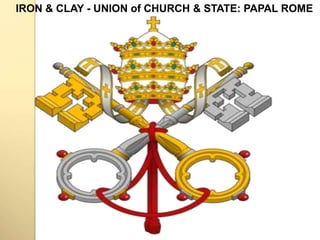
CLAY in scripture symbolises religion. IRON represents the 
state power of ROME. The CLAY mixing with it represents the 
union of religion, the CHURCH, with the STATE. Remember 
the IRON of legs extends into the feet and is still ROME, 
symbolising the STATE. The CLAY is something that is added to 
the anatomy of the image. Whenever religion, whatever that 
might be, combines with the STATE, that religion can then be 
seen as fulfilling the symbol IRON & CLAY and is a fitting 
representation of the ROMAN PAPACY, a religio-political power, 
a union of CHURCH & STATE according to the prophecy.
The iron and clay are much more than just the 
divided kingdoms. Whilst looking back through this 
prophecy, all the metals have been representative of 
kingdoms/nations/states. But what does the Bible 
represent clay as? 
In Jeremiah 18:6 and Isaiah 64:8 we find that God’s 
people, which are His church, (Acts 7:38) are likened 
unto clay. But this is miry or dirty clay, which means a 
dirty or apostate church. Daniel 2 shows to us that 
there is to be a uniting of church and state during the 
time frame after the Roman Empire. But God also 
shows to us that church and state should not be 
united together for the very fact of that, iron does not 
mix with clay, it is not God’s system to mix the two 
together they are to remain separate.
IRON & CLAY - UNION of CHURCH & STATE: PAPAL ROME
verse 43 - Not cleave to one another 
Mingle themselves with the seed of men - Even though the kingdoms were 
divided, the monarchies of different countries tried to unite them through marriage 
and thus gain the supremacy this way. The only thing it resulted in was family feuds 
between countries. Many have tried to rule the world through military conquest, 
Charlemagne, Napoleon, and Hitler to name a few. But all efforts have come to 
naught for the Bible is in opposition to them all, as it is written “they shall not cleave 
one to another”, for clay does not cleave to iron vis-à-vis 
“They shall not cleave (stick) one to another...” Throughout fifteen centuries many 
powerful men have attempted to reunite Europe but all have failed: Charlemagne; 
Napoleon; Kaiser Wilhelm; Adolf Hitler. 
A partial unity was formed during the Middle Ages with the great ʻMotherʼ Church of 
Christendom. This political Church- State system was called the Holy Roman 
Empire. With the rise of the Protestant Reformation in the 16th century the nations 
of Western Europe began to withdraw their support from the church of Rome. In 
1798 the French entered Rome, captured the Pope and abolished the Papal state. 
At that time not one nation came to help the Roman Church. However, Romeʼs 
deadly wound is healing. As the other prophecies show, the nations are soon to 
attempt a final union over which the church of Rome will preside. They shall not, 
however, cleave (stick) one to another and the support of the coming confederacy 
will dry up just prior to Christʼs return.
THE ECONOMIC COLLAPSE 
REVELATION 6:6 
A measure of wheat for a penny] The chaenix here mentioned 
was a measure of dry things; and although the capacity is not 
exactly known, yet it is generally agreed that it contained as 
much as one man could consume in a day; and a penny, the 
Roman denarius, was the ordinary pay of a labourer. So it 
appears that in this scarcity each might be able to obtain a bare 
subsistence by his daily labour; but a man could not, in such 
cases, provide for a family.
verse 44 - Christʼs Kingdom set up 
In the days of these divided nations, in the days of the kings of the 
earth uniting with the church, the God of heaven is going to set up 
His kingdom which will never be destroyed but will stand forever. 
Revelation 17:1 shows the uniting of the kings/leaders of the earth 
with the church in the end of time; and we can already see this 
happening around us today, we are living in the days of when Christ 
is going to come very soon. 
This kingdom, that God is going to set up, is the everlasting 
kingdom that the saints will posses at the end of time when Jesus 
comes (Daniel 7:14, 27) for it is not left to other people but will be 
possessed by them throughout the ceaseless ages of eternity. And 
just as the stone cut out without hands breaks the image into pieces 
and consumes it and fills the whole world, so too does God destroy 
the wicked from off the face of the earth, and His kingdom shall 
encompass the whole world. For the wicked shall be as chaff to be 
taken away by the wind for the burning. (Psalms 1:4, Matthew 3:12) 
The divided nations are from 476 A.D. to the second coming of 
Christ [the stone cut out without hands, Matthew 21:42, 44; 
Ephesians 2:20].
In the days of he divided feet God will set up His 
everlasting Kingdom. Before His Kingdom is set up 
all earthly kingdoms will be blown away. Papal Rome 
(Iron & Clay), Pagan Rome (iron), Greece (brass), 
Medo-Persia (silver), and Babylon (gold) are all 
described as existing together at the time the stone 
hits the feet and destroys everything. Though each 
has already passed away they live on in a sense in 
the succeeding nation. (cf. Dan 7:12). 
verse 45-49 - Without hands 
Christʼs kingdom is not to be established by human 
hands or works. It will be established by God Himself 
when He comes.
The coming of the Lord has been in all ages the hope of His 
true followers. The Saviour's parting promise upon Olivet, that 
He would come again, lighted up the future for His disciples, 
filling their hearts with joy and hope that sorrow could not 
quench nor trials dim. Amid suffering and persecution, the 
"appearing of the great God and our Saviour Jesus Christ" 
was the "blessed hope." When the Thessalonian Christians 
were filled with grief as they buried their loved ones, who had 
hoped to live to witness the coming of the Lord, Paul, their 
teacher, pointed them to the resurrection, to take place at the 
Saviour's advent. Then the dead in Christ should rise, and 
together with the living be caught up to meet the Lord in the 
air. "And so," he said, "shall we ever be with the Lord. 
Wherefore comfort one another with these words." 1 
Thessalonians 4:16-18. {GC 302.2}
Daniel 2

Daniel 2

  • 1.
    DANIEL 2 THEFOUNDATION OF PROPHECY
  • 2.
    A REVIVAL OFTRUE GODLINESS AMONG US IS THE GREATEST AND MOST URGENT OF ALL OUR NEEDS. TO SEEK THIS SHOULD BE OUR FIRST WORK.--Review and Herald, March 22, 1887. {ChS 41.4}
  • 3.
    1Ch 12:32 Ofthe children of Issachar, men who had understanding of the times, to know what Israel ought to do, the heads of them were two hundred; and all their brothers were at their commandment.
  • 4.
    THE FOUNDATION OFPROPHECY DANIEL 2
  • 6.
  • 7.
    OVERVIEW Using agreat image with four metal sections God foretold the rise and fall of the four great consecutive kingdoms which have especially affected His people - Babylon, Medo-Persia, Greece & Rome. Romeʼs division into the nations of Europe is represented by the feet & toes of iron and clay. The last superpower will be Christʼs Everlasting Kingdom.
  • 8.
    CONSISTENCY IS THEKEY TO UNLOCKING ANY BIBLE TRUTH There are four prophetic outlines given in Daniel-chapters 2, 7, 8 to 9 and 10 to 12. William Miller and James White took pains to emphasize that the four lines of prophecy cover the same ground and enforce the same truth. They were right! The prophecies of Daniel are a unit. Not only are the four lines of prophecy parallel, but they have one great theme. Ellen G. White wrote: "Consider the circumstances of the Jewish nation when the prophecies of Daniel were given:" TM, p. 113. The armies of Nebuchadnezzar had descended upon the kingdom of Judah. Kingdom, King, Sanctuary and People were swept away by the Babylonians. Daniel was among those forlorn captives who hung up their harps beside the river of Babylon and refused to sing the songs of Zion. Along with every true-blooded Hebrew, he longed for the restoration.
  • 9.
    Daniel's four linesof prophecy (chapters 2, 7, 8, 11) all commenced in Daniel's time. Palestine was then the home of God's people, and the great nations of prophecy surrounded "the glorious land." The two great centers of world civilization were along the rivers in Mesopotamia and along the river Nile in Egypt. Palestine lay between these two great powers as a sort of buffer state. For centuries Israel witnessed repeated struggles between the power of the North and the power of the South. As each line of prophecy comes down to the Christian dispensation, it swings away from the geographical setting of Palestine and assumes a world-wide scope. Instead of the Jews in Palestine being threatened by powers along the borders of their national homeland, the prophecies describe the conflict of the true Church with the great anti-Christ. This side of the cross, national Israel has ceased to be the object of God's supreme regard. The Middle East is not the locale of the final conflict. Yet it is not surprising that the prophecy of the Church's final conflict is couched in the Palestinian terminology of the Old Testament.
  • 10.
    All the propheciesof the Old Testament are clothed in the language of Palestine. It is impossible to interpret Old Testament prophecies without the clear light of the book of Revelation. The Revelation is a mosaic of the Old Testament. It cites the prophecies of the Old Testament and shows how to understand their peculiar expressions. For example, Babylon now symbolizes the apostate religious world; Egypt, the atheistic world; and Israel, the believers in the three angels' messages. (See Revelation 17; 11:8; 7; 14). Since the Revelation unseals the book of Daniel (Revelation 10; Testimonies to Ministers, pp. 112-115), one must expect that important features of Daniel 11:40-45 are covered and clarified in the book of Revelation. Scripture, rather than the newspaper, must be used to interpret prophecy.
  • 11.
    KNOW THE FUTUREBEFORE IT HAPPENS This prophecy is so incredible that some claim that it must have been written long after most of the events described had happened by someone who pretended to live before the events happened. However several facts show that this idea is incorrect. Daniel was written about 600BC. 1. The historian Josephus (c. AD100), records that Danielʼs book was shown to Alexander the Great. This means that Danielʼs book must have been written before 323BC when Alexander died. “And when the book of Daniel was showed him [Alexander], wherein Daniel declared that one of the Greeks should destroy the empire of the Persians, he supposed that himself was the person intended; and he was then glad...” Josephus, Jewish Antiquities, XI, 333-338, Loeb Classical Library, page 447. 2. The prophet Ezekiel, who even the critics admit lived about 600BC*, speaks of Daniel as living at the same time. (Eze 14:14, 20). *Encʼ Britannica, Vol. 4, 15th edition, 1988, p643
  • 12.
    verses 1-11 -God in the flesh God gave the king of Babylon (an image worshipper) a dream of a metal image. When he awoke he could not remember the dream but knew that it was very significant. Upon asking his astrologers etc. to tell him what he had dreamed and what it meant they said that only the gods could do so, and that the gods did not dwell in the flesh. verse 11 - God with us Heathen gods are far removed from humanity, but not the God of the Bible. He became one of us, “made flesh and dwelt among us.” John 1:14. “Forasmuch then as the children are partakers of flesh and blood, he also himself likewise took part of the same...” Heb 2:14. By becoming one of us Christ showed us that through faith in Godʼs promises we too may have victory over sin. He Who is fully God became fully man. He connects us with Heaven. He understands our weaknesses and Godʼs holiness and so became the perfect Mediator. We have all sinned and deserve to die but Christ died in our place and offers us His grace and power that we might be made free from sin. This is the essence of the Gospel. verses 12-13 - Imposters exposed The king was furious as the magicians astrologers and sorcerers, who claimed to know dreams etc., were exposed as liars.
  • 13.
    verses 1-11 -God in the flesh God gave the king of Babylon (an image worshipper) a dream of a metal image. When he awoke he could not remember the dream but knew that it was very significant. Upon asking his astrologers etc. to tell him what he had dreamed and what it meant they said that only the gods could do so, and that the gods did not dwell in the flesh. verse 11 - God with us Heathen gods are far removed from humanity, but not the God of the Bible. He became one of us, “made flesh and dwelt among us.” John 1:14. “Forasmuch then as the children are partakers of flesh and blood, he also himself likewise took part of the same...” Heb 2:14. By becoming one of us Christ showed us that through faith in Godʼs promises we too may have victory over sin. He Who is fully God became fully man. He connects us with Heaven. He understands our weaknesses and Godʼs holiness and so became the perfect Mediator. We have all sinned and deserve to die but Christ died in our place and offers us His grace and power that we might be made free from sin. This is the essence of the Gospel.
  • 14.
    The Dream Explained.GOLD: BABYLON verses 14-37 - Revelation and Interpretation God graciously gave Daniel the same dream and its interpretation. By explaining the dream God made Himself known to the Babylonians, and exposed the worshippers of false gods , the astrologers and magicians etc., as frauds. verses 36-38 - Gold – Babylon Daniel told the King of Babylon that he was the head of gold. Under Nebuchadnezzar, Babylon had captured Israel and taken some of the upper class into slavery; among them was Daniel. In two further raids on Jerusalem the city walls and sanctuary were destroyed. However, the kingdom of Babylon was to be replaced by another kingdom and then a third and a fourth kingdom. As “ANOTHER kingdom,” would follow the golden head, the head clearly represented the “kingdom” of Babylon. Note: Daniel uses “king (Aramaic - melek)” & “kingdom (Aramaic - malkuw)” interchangeably. The four metalic sections parallel the four beasts of Daniel 7 which are “kingdoms” - "the fourth beast shall be the fourth kingdom" (Daniel 7:23).
  • 15.
    SILVER: MEDO-PERSIA verse39 - Silver - Medo-Persia “Another kingdom inferior to thee.” History shows that Medo-Persia conquered Babylon, and had power over Godʼs people. More importantly the prophetic word identifies the power that was to overthrow Babylon in Daniel 5:28: "PERES; Thy kingdom is divided, and given to the Medes and Persians." It was larger than Babylon but morally and culturally “inferior” (lit. “earthly”) compared to Babylon. The ancient Greek historian Herodotus records how the river Euphrates was dried up allowing the Persian king Cyrus to enter the city via the river gates and conquer Babylon (See on Daniel 5). The Ram was a common symbol of Medo Persia. In Daniel 8 a Ram, said to represent Medo Persia, is defeated by a Goat, said to represent Greece. See Dan 8:2-7, 20-22.
  • 16.
    BRASS: GREECE verse39 - Brass (Bronze) - Greece Grecia, led by Alexander the Great, overthrew the Persian empire at the battle of Arbella, 331BC. The He- Goat of Daniel chapter 8 represents Grecia which attacked and crushed the Ram representing Medo- Persia. At his death his empire was divided into four parts by his four generals and these were eventually reduced to two; the Seleucids in the North, and the Ptolemies in the South - the prophetic Kings of the North & South respectively of Daniel 11. See Dan 7:6; 8:3-7; 20-21; Dan 11). Incidentally the Greeks wore bronze armour.
  • 17.
    IRON: ROME verse40 - Iron – Rome The third kingdom was to be replaced by a fourth and the metal, Iron, is symbolic of Pagan Rome, the Rome of the Caesars. While not specifically mentioned in Daniel, it is the next world power after the Greeks as noted in Luke Chapter 2:1. "And it came to pass in those days, that there went out a decree from Caesar Augustus, that all the world should be taxed." “...the images of gold, or silver, or brass, that might serve to represent the nations or their kings, were successively broken by the iron monarchy of Rome.” The Decline and Fall of the Roman Empire, E. Gibbon, chap. 38, Vol. 4. The iron legs represent the Roman Empire. Rome conquered the Greeks and by the time of Christ it could tax the ʻworldʼ (Luke 2:1). Incidentally Rome had iron weapons.
  • 18.
    In Daniel threeof the four kingdoms are specifically named: 1. Babylon (Dan 2:36-38) 2. Medo-Persia (Dan 8:20) 3. Greece (Dan 8:21) 4. Rome is not specifically named in Daniel but its identity is clear. Rome is very prominent in the New Testament. The iron legs reached from the Greek kingdom to the end of the world. Only Rome fits this specification. Rome dominated world affairs in Christʼs time, was divided into various European kingdoms, however, continues today in the form of Papal Rome. Jesus foretold that Jerusalem would be destroyed by the “abomination of desolation, spoken of by Daniel” (Matt 24:2, 15). All accept that this power was Rome. The Roman historian Polybius wrote: “The Romans...possess an empire which is not only immeasurably greater than any which preceded it, but need not fear rivalry in the future.” Polybius the Histories, transl. by W. R. Patton, Loeb Classical Library, Vol 1, p7.
  • 19.
  • 20.
    verse 41-43 -“The kingdom shall be divided” The various nations of Europe in what was the territory of the Roman Empire are proof that this part of the prophecy has been fulfilled. In AD330 Roman Emperor Constantine moved the capital from Rome in the West to Constantinople (now Istanbul) in the East. Weakened through wealth, luxury, etc., Western Rome was unable to withstand barbarian tribes from northern Europe. By AD476 ten kingdoms had established themselves in what was the territory of the Western Roman Empire. (cf. Dan 7:1-7).
  • 21.
    THE FEET OFIRON & CLAY - A SYMBOL OF PAPAL ROME The iron symbolising ROME continues beyond the division of pagan Rome to the very end in the form of IRON mixed with CLAY found in the FEET. What does this symbolise? The IRON symbolises ROME, however, there is an interesting addition to the feet in the form of the CLAY. What does CLAY symbolise in scripture?
  • 22.
    Isaiah 64:8 Butnow, O LORD, thou [art] our father; we [are] the clay, and thou our potter; and we all [are] the work of thy hand. Jeremiah18:4-6 And the vessel that he made of clay was marred in the hand of the potter: so he made it again another vessel, as seemed good to the potter to make [it]. Then the word of the LORD came to me, saying, O house of Israel, cannot I do with you as this potter? saith the LORD. Behold, as the clay [is] in the potter's hand, so [are] ye in mine hand, O house of Israel. CLAY in scripture symbolises religion. IRON represents the state power of ROME. The CLAY mixing with it represents the union of religion, the CHURCH, with the STATE. Remember the IRON of legs extends into the feet and is still ROME, symbolising the STATE. The CLAY is something that is added to the anatomy of the image. Whenever religion, whatever that might be, combines with the STATE, that religion can then be seen as fulfilling the symbol IRON & CLAY and is a fitting representation of the ROMAN PAPACY, a religio-political power, a union of CHURCH & STATE according to the prophecy.
  • 23.
    The iron andclay are much more than just the divided kingdoms. Whilst looking back through this prophecy, all the metals have been representative of kingdoms/nations/states. But what does the Bible represent clay as? In Jeremiah 18:6 and Isaiah 64:8 we find that God’s people, which are His church, (Acts 7:38) are likened unto clay. But this is miry or dirty clay, which means a dirty or apostate church. Daniel 2 shows to us that there is to be a uniting of church and state during the time frame after the Roman Empire. But God also shows to us that church and state should not be united together for the very fact of that, iron does not mix with clay, it is not God’s system to mix the two together they are to remain separate.
  • 24.
    IRON & CLAY- UNION of CHURCH & STATE: PAPAL ROME
  • 25.
    verse 43 -Not cleave to one another Mingle themselves with the seed of men - Even though the kingdoms were divided, the monarchies of different countries tried to unite them through marriage and thus gain the supremacy this way. The only thing it resulted in was family feuds between countries. Many have tried to rule the world through military conquest, Charlemagne, Napoleon, and Hitler to name a few. But all efforts have come to naught for the Bible is in opposition to them all, as it is written “they shall not cleave one to another”, for clay does not cleave to iron vis-à-vis “They shall not cleave (stick) one to another...” Throughout fifteen centuries many powerful men have attempted to reunite Europe but all have failed: Charlemagne; Napoleon; Kaiser Wilhelm; Adolf Hitler. A partial unity was formed during the Middle Ages with the great ʻMotherʼ Church of Christendom. This political Church- State system was called the Holy Roman Empire. With the rise of the Protestant Reformation in the 16th century the nations of Western Europe began to withdraw their support from the church of Rome. In 1798 the French entered Rome, captured the Pope and abolished the Papal state. At that time not one nation came to help the Roman Church. However, Romeʼs deadly wound is healing. As the other prophecies show, the nations are soon to attempt a final union over which the church of Rome will preside. They shall not, however, cleave (stick) one to another and the support of the coming confederacy will dry up just prior to Christʼs return.
  • 26.
    THE ECONOMIC COLLAPSE REVELATION 6:6 A measure of wheat for a penny] The chaenix here mentioned was a measure of dry things; and although the capacity is not exactly known, yet it is generally agreed that it contained as much as one man could consume in a day; and a penny, the Roman denarius, was the ordinary pay of a labourer. So it appears that in this scarcity each might be able to obtain a bare subsistence by his daily labour; but a man could not, in such cases, provide for a family.
  • 27.
    verse 44 -Christʼs Kingdom set up In the days of these divided nations, in the days of the kings of the earth uniting with the church, the God of heaven is going to set up His kingdom which will never be destroyed but will stand forever. Revelation 17:1 shows the uniting of the kings/leaders of the earth with the church in the end of time; and we can already see this happening around us today, we are living in the days of when Christ is going to come very soon. This kingdom, that God is going to set up, is the everlasting kingdom that the saints will posses at the end of time when Jesus comes (Daniel 7:14, 27) for it is not left to other people but will be possessed by them throughout the ceaseless ages of eternity. And just as the stone cut out without hands breaks the image into pieces and consumes it and fills the whole world, so too does God destroy the wicked from off the face of the earth, and His kingdom shall encompass the whole world. For the wicked shall be as chaff to be taken away by the wind for the burning. (Psalms 1:4, Matthew 3:12) The divided nations are from 476 A.D. to the second coming of Christ [the stone cut out without hands, Matthew 21:42, 44; Ephesians 2:20].
  • 28.
    In the daysof he divided feet God will set up His everlasting Kingdom. Before His Kingdom is set up all earthly kingdoms will be blown away. Papal Rome (Iron & Clay), Pagan Rome (iron), Greece (brass), Medo-Persia (silver), and Babylon (gold) are all described as existing together at the time the stone hits the feet and destroys everything. Though each has already passed away they live on in a sense in the succeeding nation. (cf. Dan 7:12). verse 45-49 - Without hands Christʼs kingdom is not to be established by human hands or works. It will be established by God Himself when He comes.
  • 29.
    The coming ofthe Lord has been in all ages the hope of His true followers. The Saviour's parting promise upon Olivet, that He would come again, lighted up the future for His disciples, filling their hearts with joy and hope that sorrow could not quench nor trials dim. Amid suffering and persecution, the "appearing of the great God and our Saviour Jesus Christ" was the "blessed hope." When the Thessalonian Christians were filled with grief as they buried their loved ones, who had hoped to live to witness the coming of the Lord, Paul, their teacher, pointed them to the resurrection, to take place at the Saviour's advent. Then the dead in Christ should rise, and together with the living be caught up to meet the Lord in the air. "And so," he said, "shall we ever be with the Lord. Wherefore comfort one another with these words." 1 Thessalonians 4:16-18. {GC 302.2}