Hadeel S. Obaid
 Cyber Security Definition
 Scope of Cyber Security
 Cyber Attack
 Attacker Motivation
 Typical Cyber Attacks
 Latest Significant Cyber Incidents
 Consequences
 Top Eight Cyber-safety Actions
 A very wide-ranging term with no standard
definition.
 It covers all aspects of ensuring the protection
of citizens, businesses and critical
infrastructures from threats that arise from
their use of computers and the Internet.
 Computer security
 Security engineering
 Encryption
 Computer crime
 Computer forensics
 A socio-technical systems problem.
 Security problems almost always stem from a
mix of technical, human and organizational
causes.
 Techniques of threat and attack analysis and
mitigation.
 Protection and recovery technologies,
processes and procedures for individuals,
business and government.
 Policies, laws and regulation relevant to the
use of computers and the Internet.
 A malicious attempt, using digital technologies,
to cause personal or property loss or damage,
and/or steal or alter confidential personal or
organizational data.
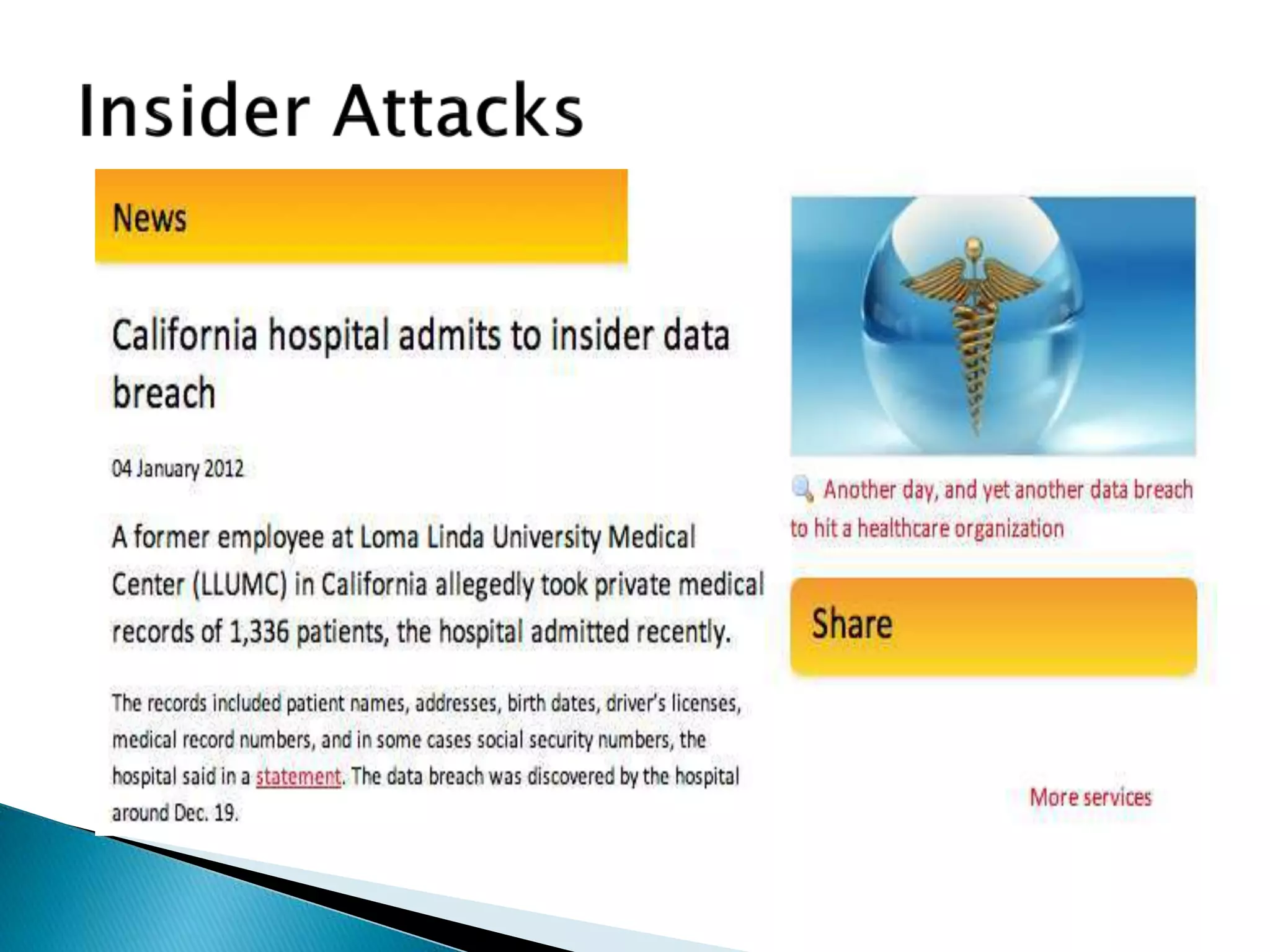
 Attacks to an organization carried out by
someone who is inside that organization.
 Difficult to counter using technical methods
as the insider may have valid credentials to
access the system.
 Attacks to an organization carried out by an
external agent.
 Requires either valid credentials or the
exploitation of some vulnerability to gain
access to the systems.
 Money
 Revenge
 Fun
 Recognition
 Anonymity
 Cyber spy
 Criminals see lower risks and high rewards from
cyber crime than through ‘physical’ crime.
 Stealing confidential and national secrets by
intelligence agencies and others now involves
illegally accessing digitized information.
 Nation states have the potential to disrupt an
enemy’s economy and perhaps reach their
strategic objectives without risk to their armed
forces.
 There are fewer online barriers to antisocial
behavior on the net than in face to face
interaction.
 Man in the Middle.
 802.11 Injection attacks.
 Jamming.
 Denial of Service (DoS).
 Phishing.
 Malware.
 IP Spoofing.
 Ransomware.
 February 2019. European aerospace company Airbus, reveals it was
targeted by Chinese hackers who stole the personal and IT identification
information of some of its European employees.
 January 2019. Hackers associated with the Russian intelligence services
were found to have targeted the Center for Strategic and International
Studies.
 January 2019. The U.S. Department of Justice announced an operation
to disrupt a North Korean botnet that had been used to target
companies in the media, aerospace, financial, and critical infrastructure
sectors.
 December 2018. North Korean hackers stole the personal information of
almost 1,000 North Korean defectors living in South Korea.
 September 2018. Researchers report that 36 different governments
deployed Pegasus spyware against targets in at least 45 countries,
including the U.S., France, Canada, and the UK.
 August 2018. Microsoft announces that Russian hackers had targeted
U.S. Senators and conservative think tanks critical of Russia.
Job Hindrances
• Loss of access to campus computing network
• Inability to access files and do work
Data Loss
• Loss of confidentiality and integrity
• Loss of valuable university info or research
• Compromised personal data
Disciplinary
Actions
• Lawsuits
• Loss of public trust
• Loss of grant opportunities
• Prosecution
• Internal disciplinary action
• Termination of employment
Protect Passwords
Prevent Identity Theft
Beware of Phishing
Avoid Malware
Run Antivirus Software
Install Updates
Back Up Important Files
Turn On Firewalls
1. Obaid, H.S.: ‘Denial of Service Attacks: Tools and
Categories’, International Journal of Engineering Research &
Technology.
2. Obaid, H.S., and Abeed, E.H.: ‘DoS and DDoS Attacks at OSI
Layers’, International Journal of Multidisciplinary Research
and Publications.

Cyber security threats and trends

  • 1.
  • 2.
     Cyber SecurityDefinition  Scope of Cyber Security  Cyber Attack  Attacker Motivation  Typical Cyber Attacks  Latest Significant Cyber Incidents  Consequences  Top Eight Cyber-safety Actions
  • 3.
     A verywide-ranging term with no standard definition.  It covers all aspects of ensuring the protection of citizens, businesses and critical infrastructures from threats that arise from their use of computers and the Internet.
  • 4.
     Computer security Security engineering  Encryption  Computer crime  Computer forensics
  • 5.
     A socio-technicalsystems problem.  Security problems almost always stem from a mix of technical, human and organizational causes.
  • 6.
     Techniques ofthreat and attack analysis and mitigation.  Protection and recovery technologies, processes and procedures for individuals, business and government.  Policies, laws and regulation relevant to the use of computers and the Internet.
  • 7.
     A maliciousattempt, using digital technologies, to cause personal or property loss or damage, and/or steal or alter confidential personal or organizational data.
  • 8.
     Attacks toan organization carried out by someone who is inside that organization.  Difficult to counter using technical methods as the insider may have valid credentials to access the system.
  • 10.
     Attacks toan organization carried out by an external agent.  Requires either valid credentials or the exploitation of some vulnerability to gain access to the systems.
  • 11.
     Money  Revenge Fun  Recognition  Anonymity  Cyber spy
  • 12.
     Criminals seelower risks and high rewards from cyber crime than through ‘physical’ crime.  Stealing confidential and national secrets by intelligence agencies and others now involves illegally accessing digitized information.  Nation states have the potential to disrupt an enemy’s economy and perhaps reach their strategic objectives without risk to their armed forces.  There are fewer online barriers to antisocial behavior on the net than in face to face interaction.
  • 13.
     Man inthe Middle.  802.11 Injection attacks.  Jamming.  Denial of Service (DoS).  Phishing.  Malware.  IP Spoofing.  Ransomware.
  • 14.
     February 2019.European aerospace company Airbus, reveals it was targeted by Chinese hackers who stole the personal and IT identification information of some of its European employees.  January 2019. Hackers associated with the Russian intelligence services were found to have targeted the Center for Strategic and International Studies.  January 2019. The U.S. Department of Justice announced an operation to disrupt a North Korean botnet that had been used to target companies in the media, aerospace, financial, and critical infrastructure sectors.  December 2018. North Korean hackers stole the personal information of almost 1,000 North Korean defectors living in South Korea.  September 2018. Researchers report that 36 different governments deployed Pegasus spyware against targets in at least 45 countries, including the U.S., France, Canada, and the UK.  August 2018. Microsoft announces that Russian hackers had targeted U.S. Senators and conservative think tanks critical of Russia.
  • 15.
    Job Hindrances • Lossof access to campus computing network • Inability to access files and do work Data Loss • Loss of confidentiality and integrity • Loss of valuable university info or research • Compromised personal data Disciplinary Actions • Lawsuits • Loss of public trust • Loss of grant opportunities • Prosecution • Internal disciplinary action • Termination of employment
  • 16.
    Protect Passwords Prevent IdentityTheft Beware of Phishing Avoid Malware Run Antivirus Software Install Updates Back Up Important Files Turn On Firewalls
  • 17.
    1. Obaid, H.S.:‘Denial of Service Attacks: Tools and Categories’, International Journal of Engineering Research & Technology. 2. Obaid, H.S., and Abeed, E.H.: ‘DoS and DDoS Attacks at OSI Layers’, International Journal of Multidisciplinary Research and Publications.