Custom App Development
Explore the various services and methodologies for creating custom applications.
Introduction
This presentation will delve into the services provided for
custom app development, focusing on software solutions, mobile
applications, and the methodologies employed in the development
process.
Services Overview
01
Custom Software Solutions
Custom software solutions are tailored applications designed to meet
specific business needs. These solutions enhance operational efficiency,
improve workflows, and support unique functionalities that off-the-shelf
software cannot provide. The development process includes
understanding client requirements, designing user interfaces, coding,
and deployment.
Mobile App Development
Mobile app development involves creating software applications for
mobile devices like smartphones and tablets. This process encompasses
ideation, design, coding, testing, and maintenance of the app. Key
aspects include compatibility with various platforms (iOS, Android),
incorporating user feedback, and ensuring a seamless user experience.
Web Application
Development
Web application development refers to the creation
of software applications that are accessed via web
browsers. These applications can provide rich user
experiences through the use of interactive elements
and dynamic content. The development process
includes aspects like front-end development, which
focuses on user interface and experience, and back-
end development, which handles server-side logic
and database interactions.
Development
Process
02
Project Requirements Analysis
Project requirements analysis is the initial phase of the development
process where stakeholders collaborate to identify and document
specific needs and expectations. This includes defining goals,
understanding user needs, and establishing project scope. Through
various techniques such as interviews, surveys, and workshops,
developers gather crucial information that guides the entire
development cycle.
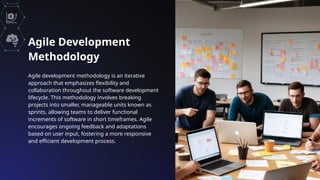
Agile Development
Methodology
Agile development methodology is an iterative
approach that emphasizes flexibility and
collaboration throughout the software development
lifecycle. This methodology involves breaking
projects into smaller, manageable units known as
sprints, allowing teams to deliver functional
increments of software in short timeframes. Agile
encourages ongoing feedback and adaptations
based on user input, fostering a more responsive
and efficient development process.
Quality Assurance and Testing
Quality assurance and testing are critical components of the
development process aimed at ensuring that the application meets
required standards and functions as intended. This phase involves
various testing techniques, including unit testing, integration testing,
system testing, and user acceptance testing. The goal is to identify and
rectify defects before the application is deployed, ensuring a high-quality
product for users.
Conclusions
In summary, custom app development encompasses a variety of services
focused on creating tailored software solutions. Through careful project
requirements analysis, agile methodologies, and thorough quality
assurance practices, businesses can develop applications that meet their
unique needs and provide significant value.
Thank You !
www.globalkeyinfosolution.com
+91-6393682742
info@globalkeyinfosolution.com

Custom Application Development: Services & Methodologies

  • 1.
    Custom App Development Explorethe various services and methodologies for creating custom applications.
  • 2.
    Introduction This presentation willdelve into the services provided for custom app development, focusing on software solutions, mobile applications, and the methodologies employed in the development process.
  • 3.
  • 4.
    Custom Software Solutions Customsoftware solutions are tailored applications designed to meet specific business needs. These solutions enhance operational efficiency, improve workflows, and support unique functionalities that off-the-shelf software cannot provide. The development process includes understanding client requirements, designing user interfaces, coding, and deployment.
  • 5.
    Mobile App Development Mobileapp development involves creating software applications for mobile devices like smartphones and tablets. This process encompasses ideation, design, coding, testing, and maintenance of the app. Key aspects include compatibility with various platforms (iOS, Android), incorporating user feedback, and ensuring a seamless user experience.
  • 6.
    Web Application Development Web applicationdevelopment refers to the creation of software applications that are accessed via web browsers. These applications can provide rich user experiences through the use of interactive elements and dynamic content. The development process includes aspects like front-end development, which focuses on user interface and experience, and back- end development, which handles server-side logic and database interactions.
  • 7.
  • 8.
    Project Requirements Analysis Projectrequirements analysis is the initial phase of the development process where stakeholders collaborate to identify and document specific needs and expectations. This includes defining goals, understanding user needs, and establishing project scope. Through various techniques such as interviews, surveys, and workshops, developers gather crucial information that guides the entire development cycle.
  • 9.
    Agile Development Methodology Agile developmentmethodology is an iterative approach that emphasizes flexibility and collaboration throughout the software development lifecycle. This methodology involves breaking projects into smaller, manageable units known as sprints, allowing teams to deliver functional increments of software in short timeframes. Agile encourages ongoing feedback and adaptations based on user input, fostering a more responsive and efficient development process.
  • 10.
    Quality Assurance andTesting Quality assurance and testing are critical components of the development process aimed at ensuring that the application meets required standards and functions as intended. This phase involves various testing techniques, including unit testing, integration testing, system testing, and user acceptance testing. The goal is to identify and rectify defects before the application is deployed, ensuring a high-quality product for users.
  • 11.
    Conclusions In summary, customapp development encompasses a variety of services focused on creating tailored software solutions. Through careful project requirements analysis, agile methodologies, and thorough quality assurance practices, businesses can develop applications that meet their unique needs and provide significant value.
  • 12.