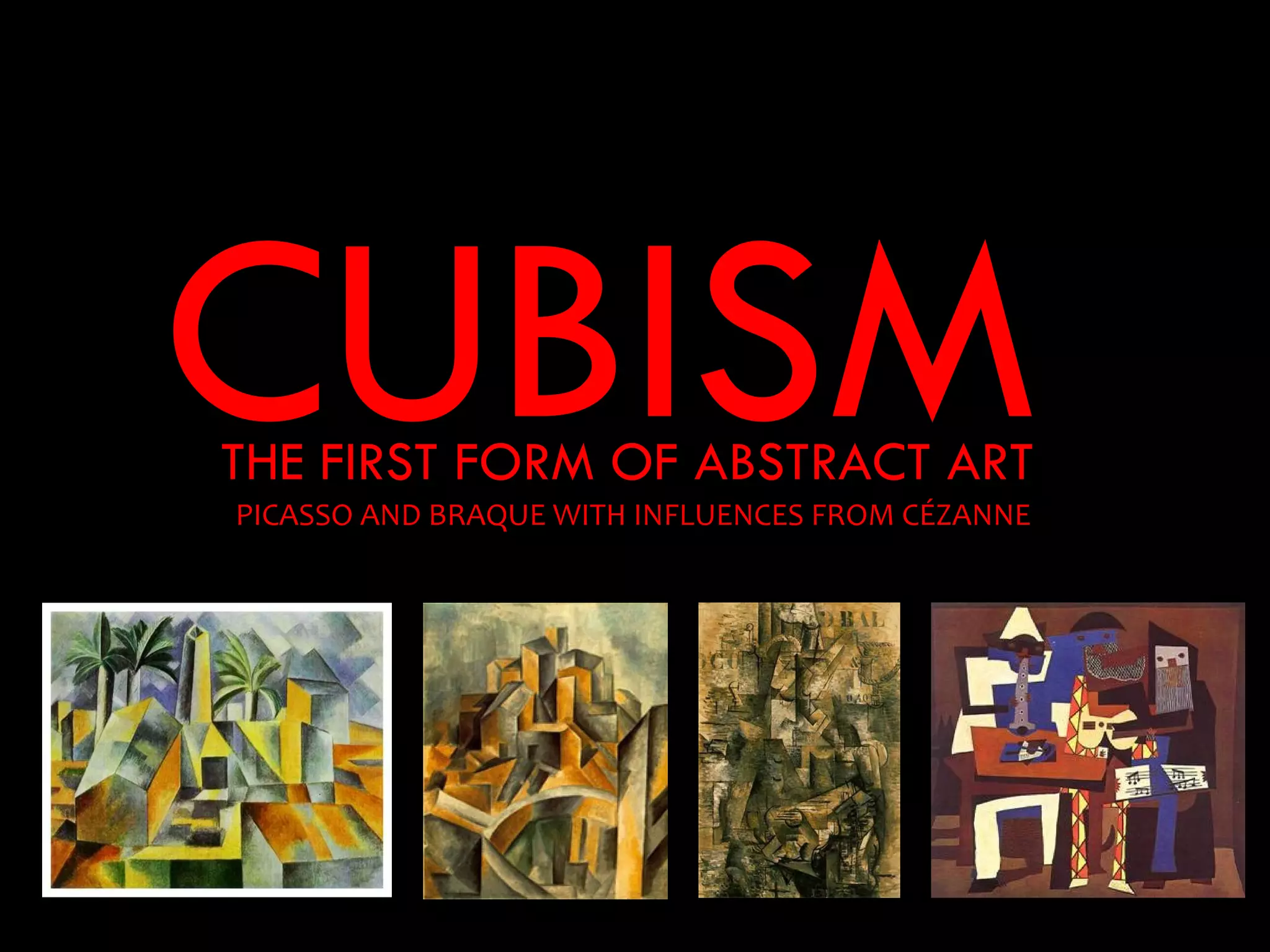
CUBISM
THE FIRST FORM OF ABSTRACT ART
PICASSO AND BRAQUE WITH INFLUENCES FROM CÉZANNE
INFLUENCES ON CUBISM
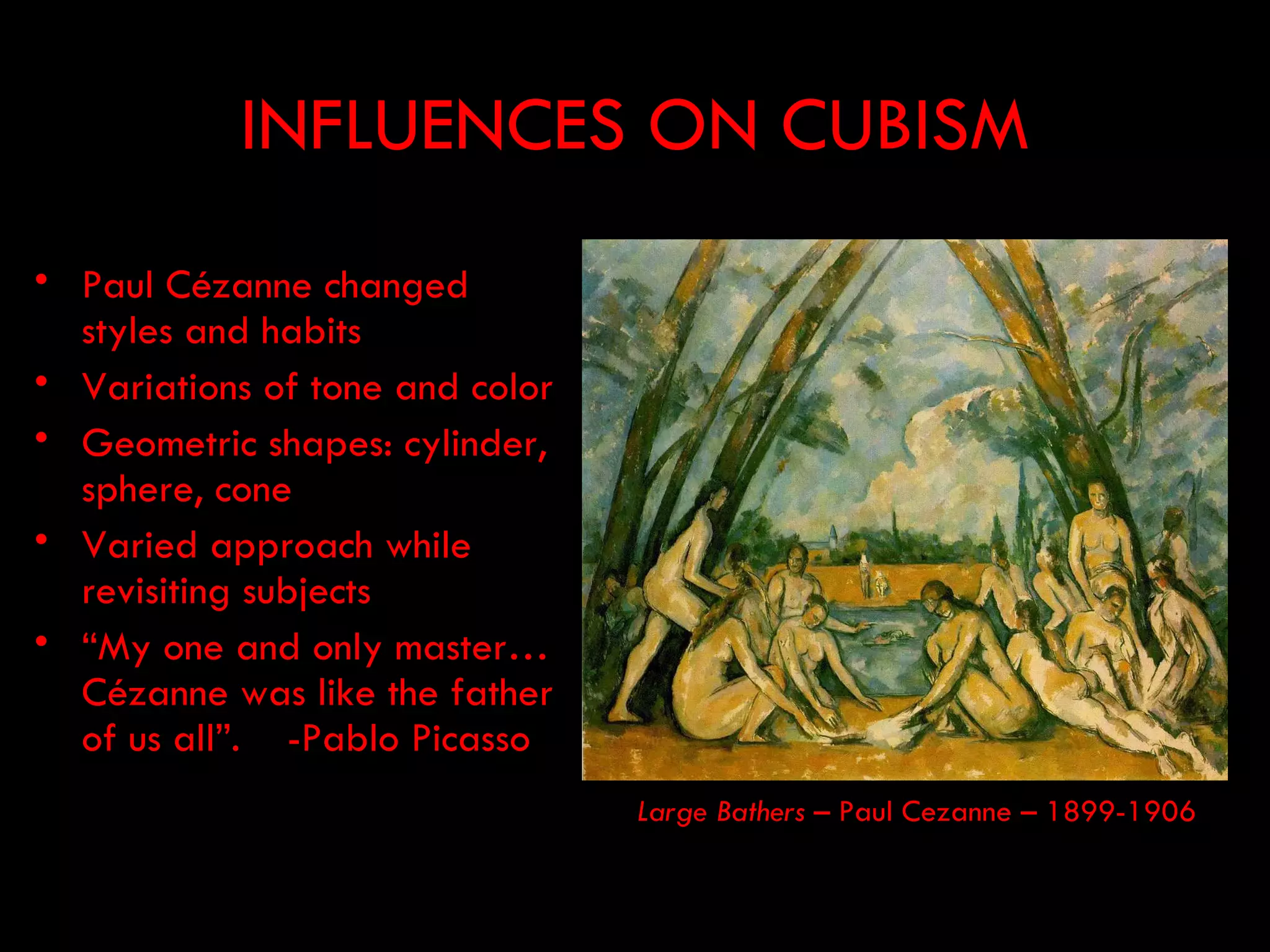
• Paul Cézanne changed
  styles and habits
• Variations of tone and color
• Geometric shapes: cylinder,
  sphere, cone
• Varied approach while
  revisiting subjects
• “My one and only master…
  Cézanne was like the father
  of us all”. -Pablo Picasso
                                 Large Bathers – Paul Cezanne – 1899-1906
INFLUENCES ON CUBISM
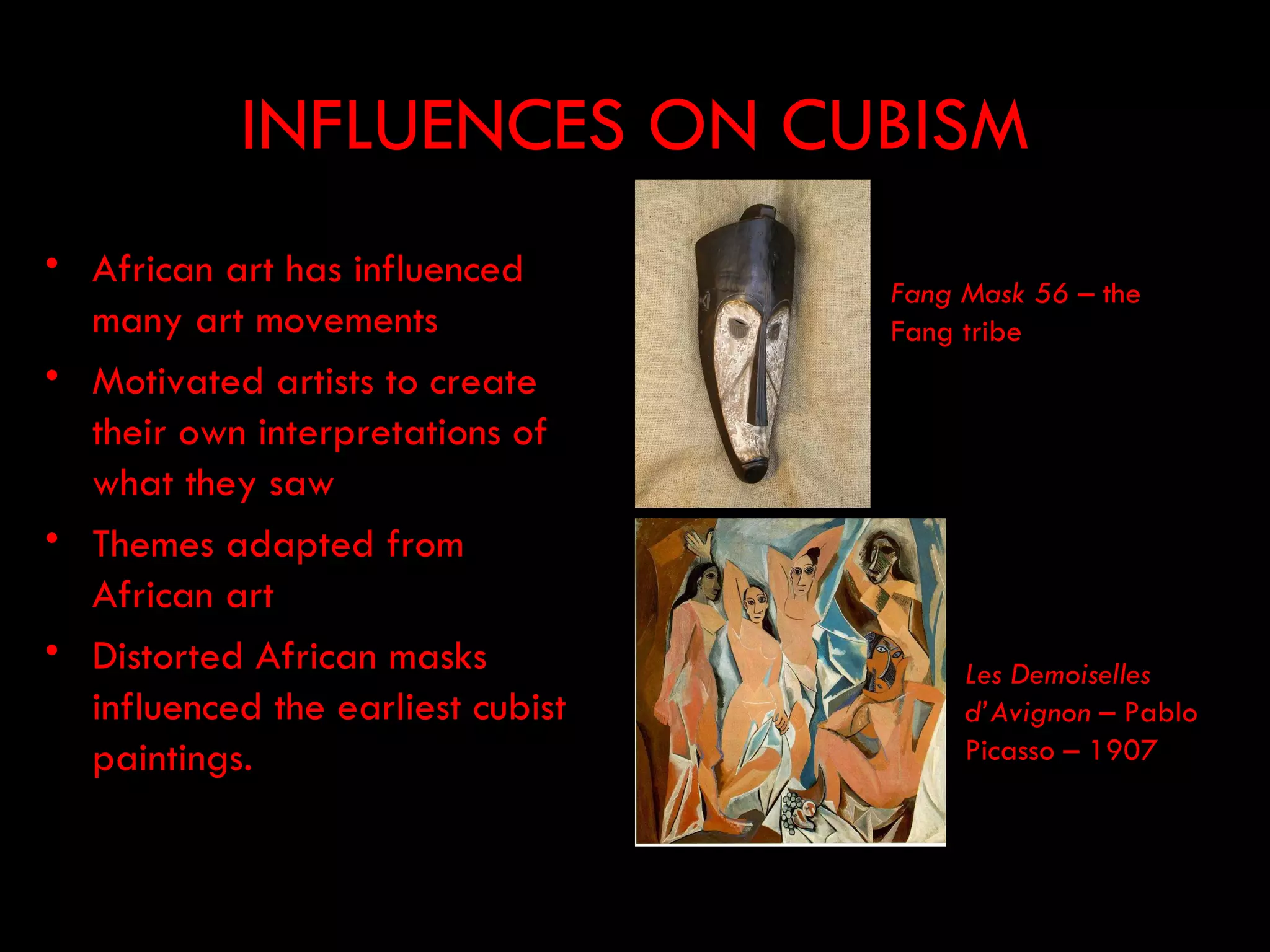
• African art has influenced
                                   Fang Mask 56 – the
  many art movements               Fang tribe
• Motivated artists to create
  their own interpretations of
  what they saw
• Themes adapted from
  African art
• Distorted African masks               Les Demoiselles
  influenced the earliest cubist        d’Avignon – Pablo
  paintings.                            Picasso – 1907
INTRODUCTION TO CUBISM
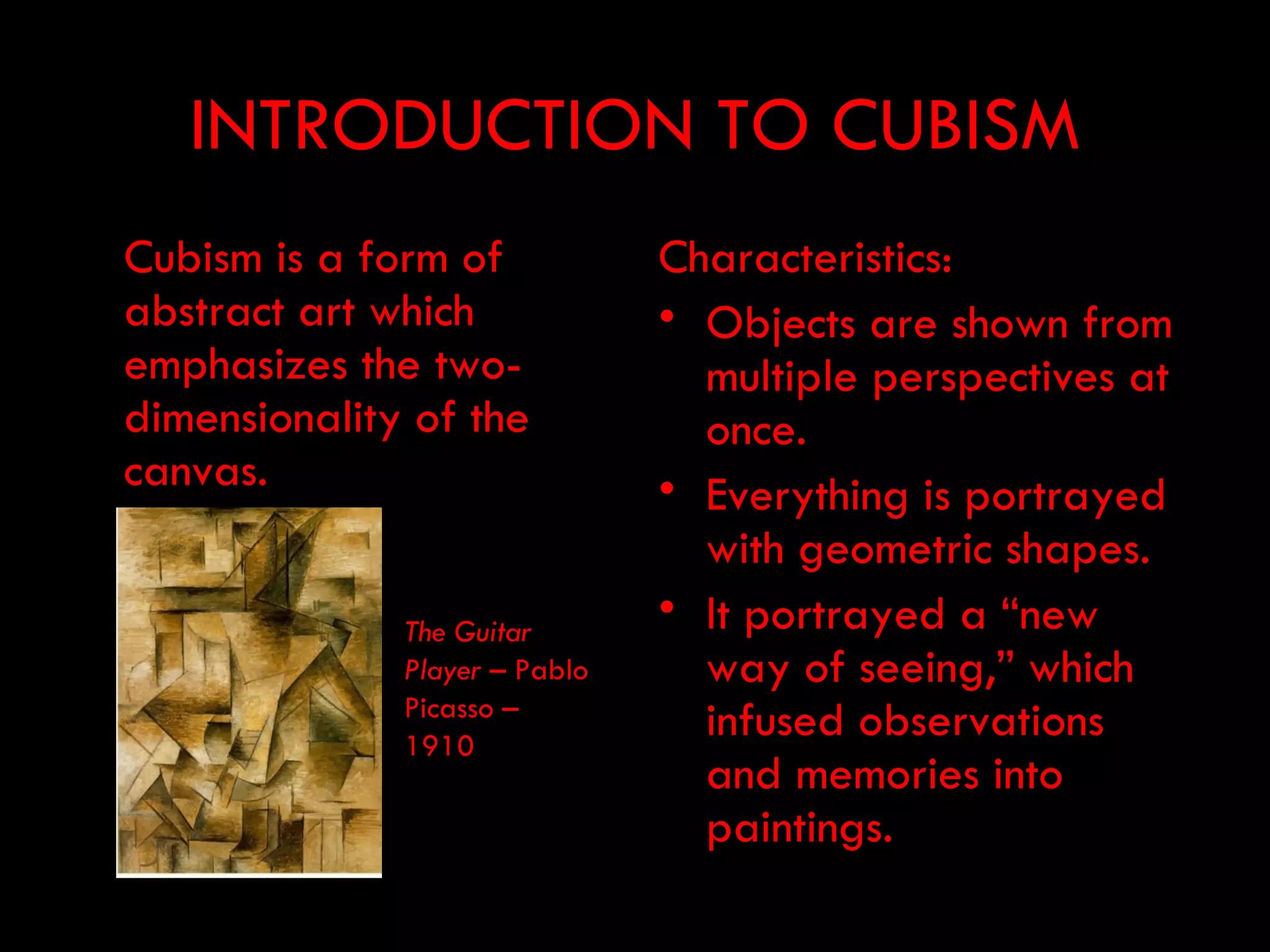
Cubism is a form of            Characteristics:
abstract art which             • Objects are shown from
emphasizes the two-              multiple perspectives at
dimensionality of the            once.
canvas.                        • Everything is portrayed
                                 with geometric shapes.
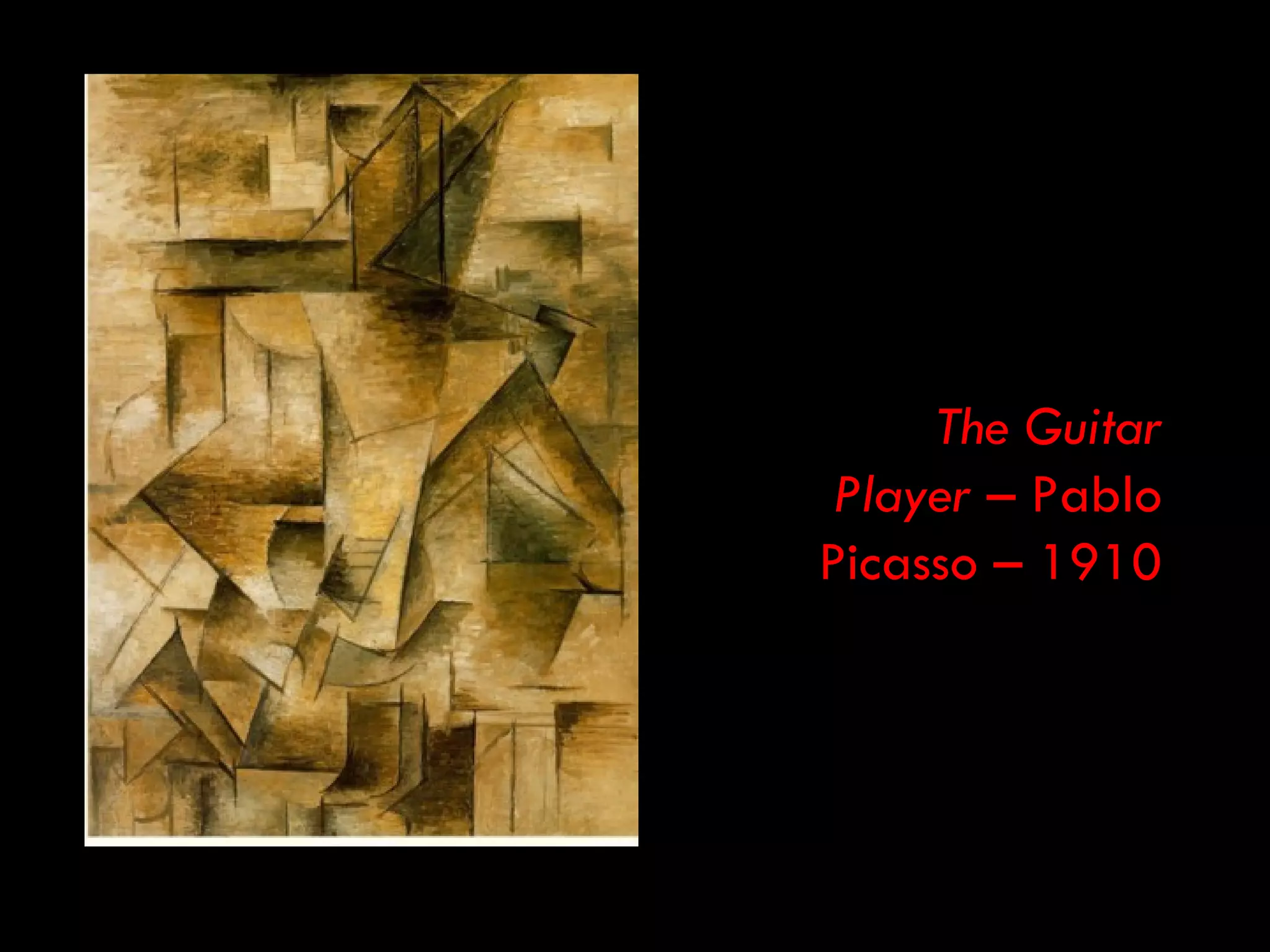
              The Guitar
                               • It portrayed a “new
              Player – Pablo     way of seeing,” which
              Picasso –
              1910
                                 infused observations
                                 and memories into
                                 paintings.
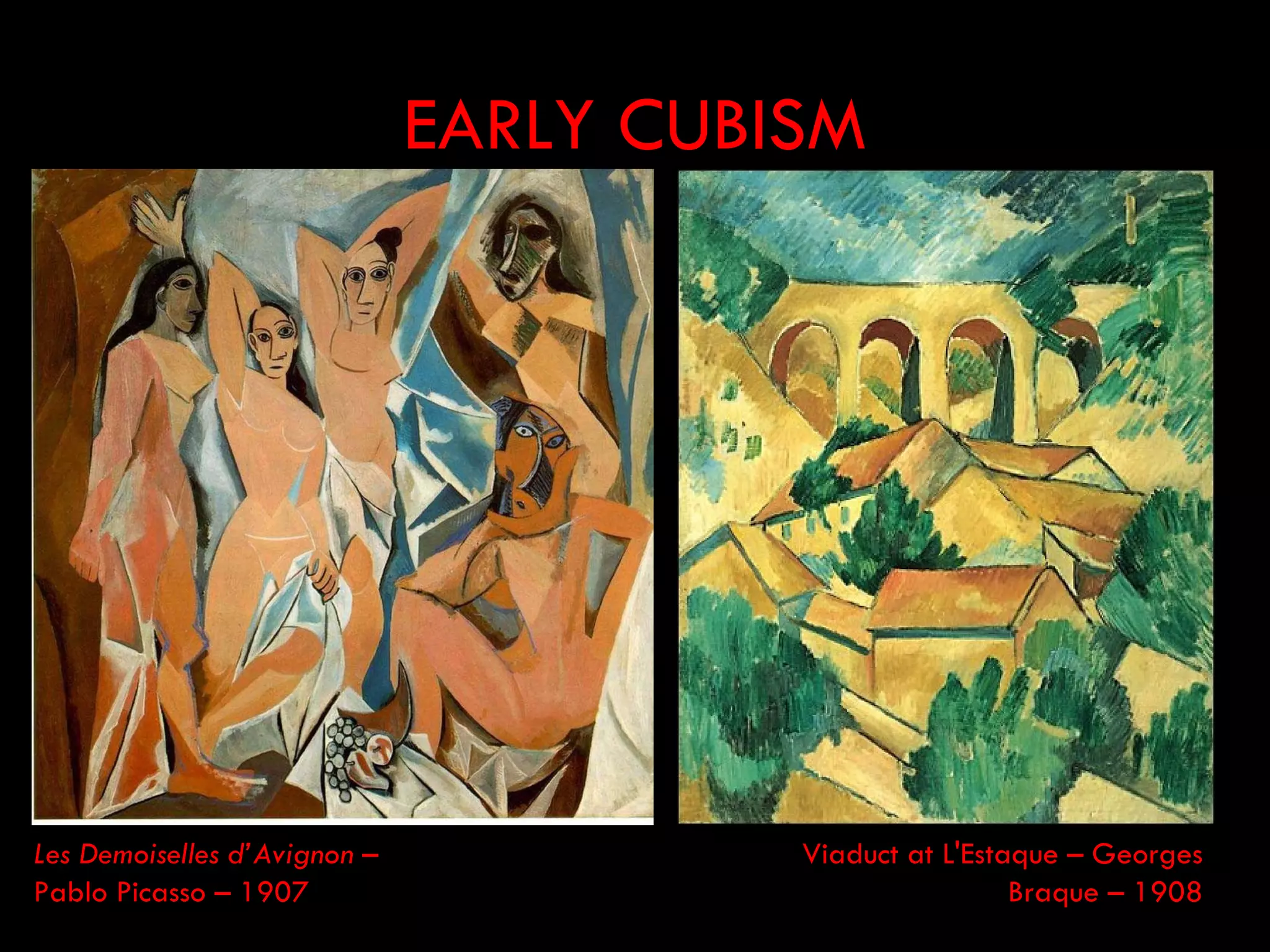
EARLY CUBISM


Les Demoiselles d’Avignon –             Viaduct at L'Estaque – Georges
Pablo Picasso – 1907                                     Braque – 1908
ANALYTICAL CUBISM
 (Or, that period of cubism where it’s really hard to tell
 what anything is, and who the artist is.)


Characteristics of Analytical Cubism:
•Objects are “analyzed” from many perspectives.
•Artist incorporates many (if not all) of these
perspectives in the painting itself.
•The painting, instead of directly showing the
subject, “evokes a sense of the subject.”
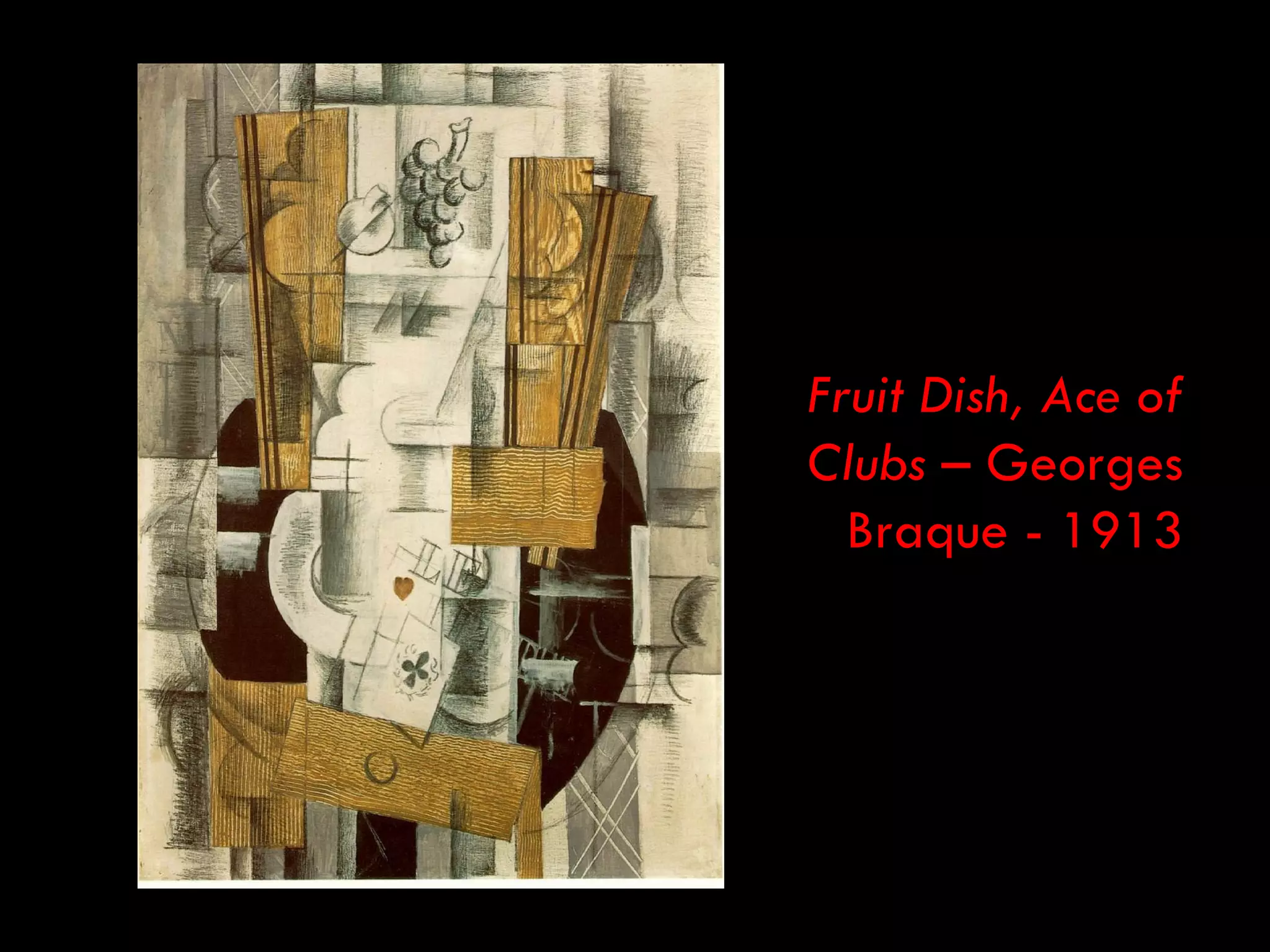
Fruit Dish, Ace of
Clubs – Georges
  Braque - 1913
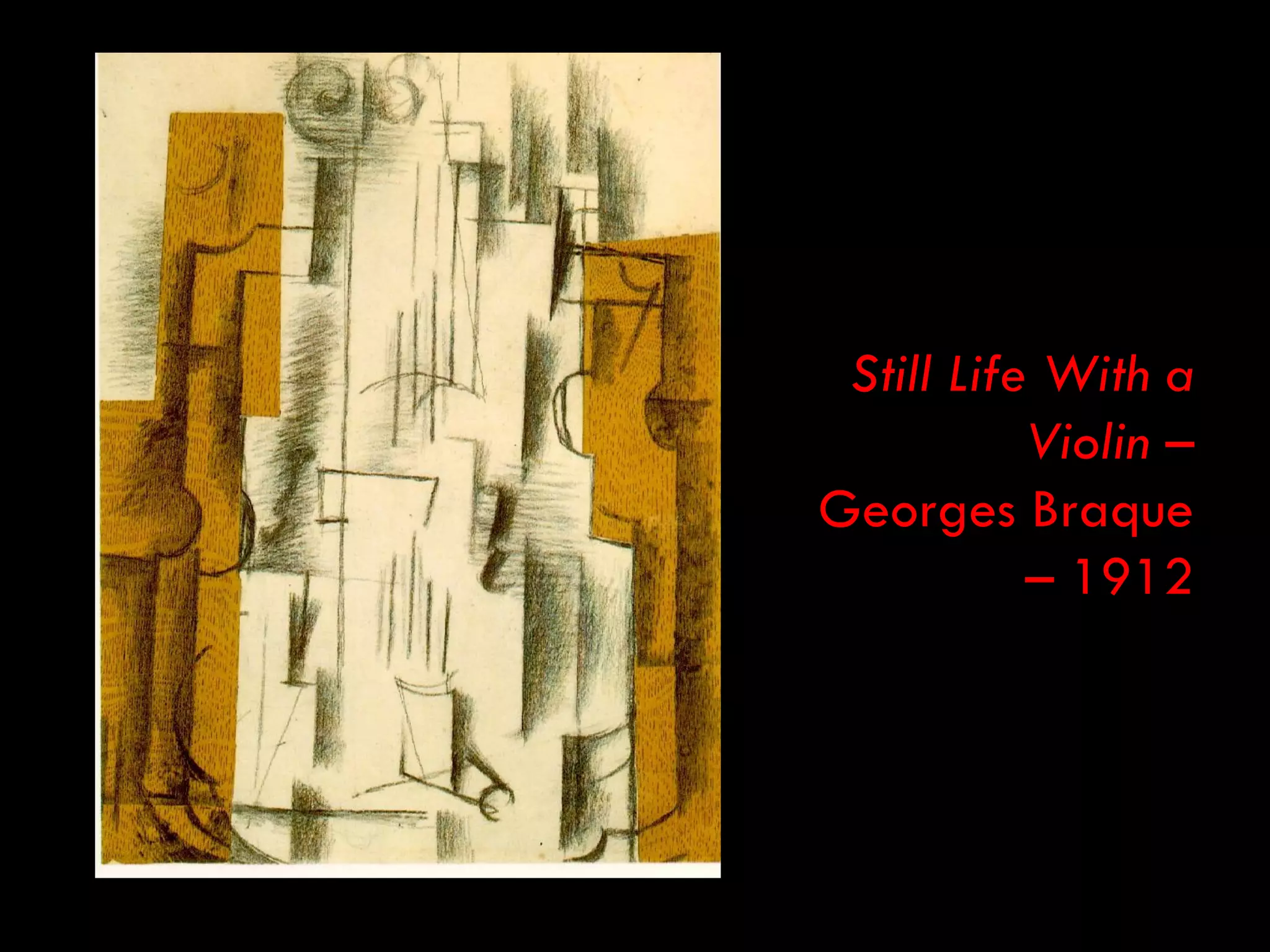
Still Life With a
           Violin –
Georges Braque
           – 1912
The Guitar
 Player – Pablo
Picasso – 1910
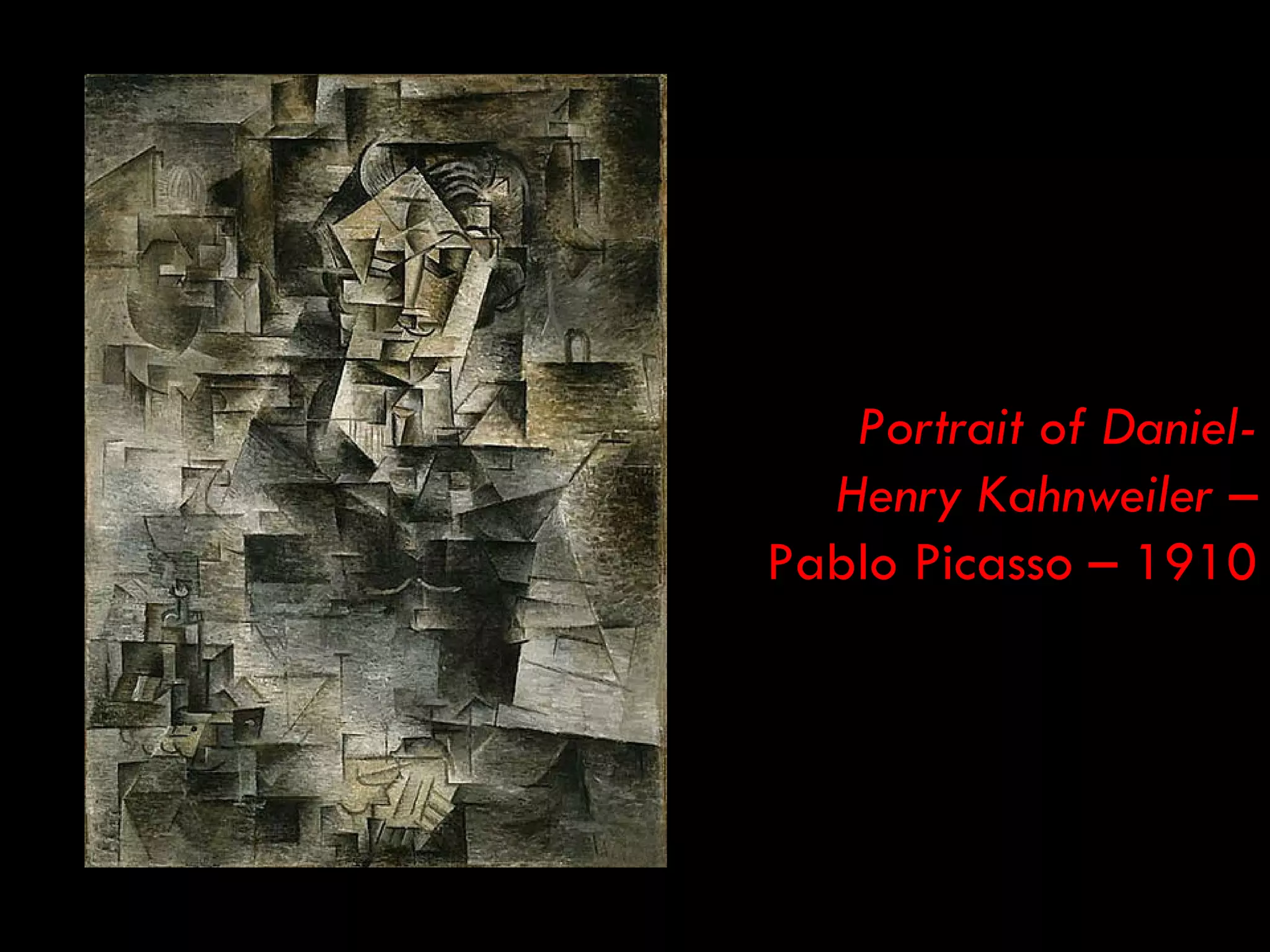
Portrait of Daniel-
  Henry Kahnweiler –
Pablo Picasso – 1910
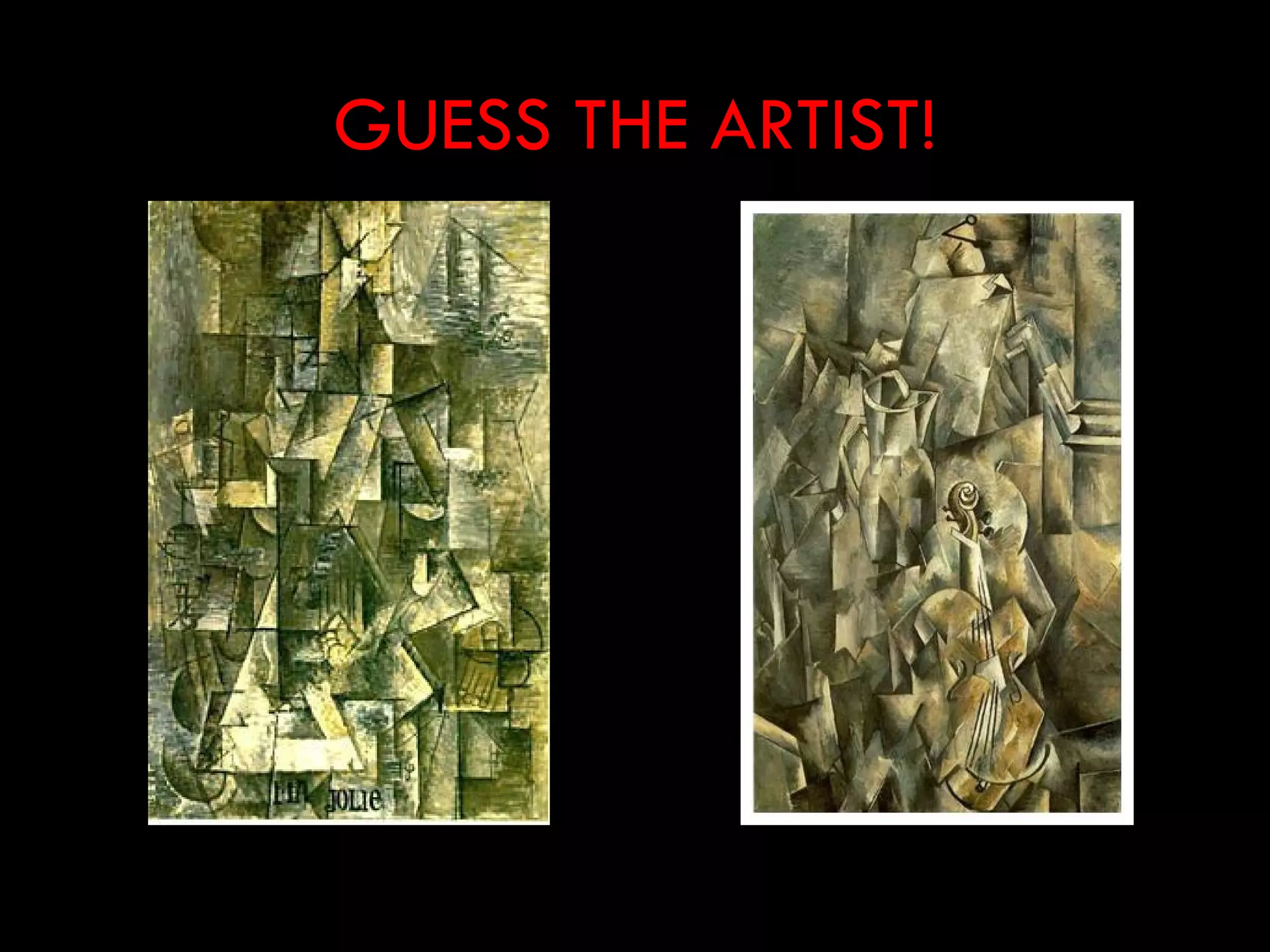
GUESS THE ARTIST!
GUESS THE ARTIST!


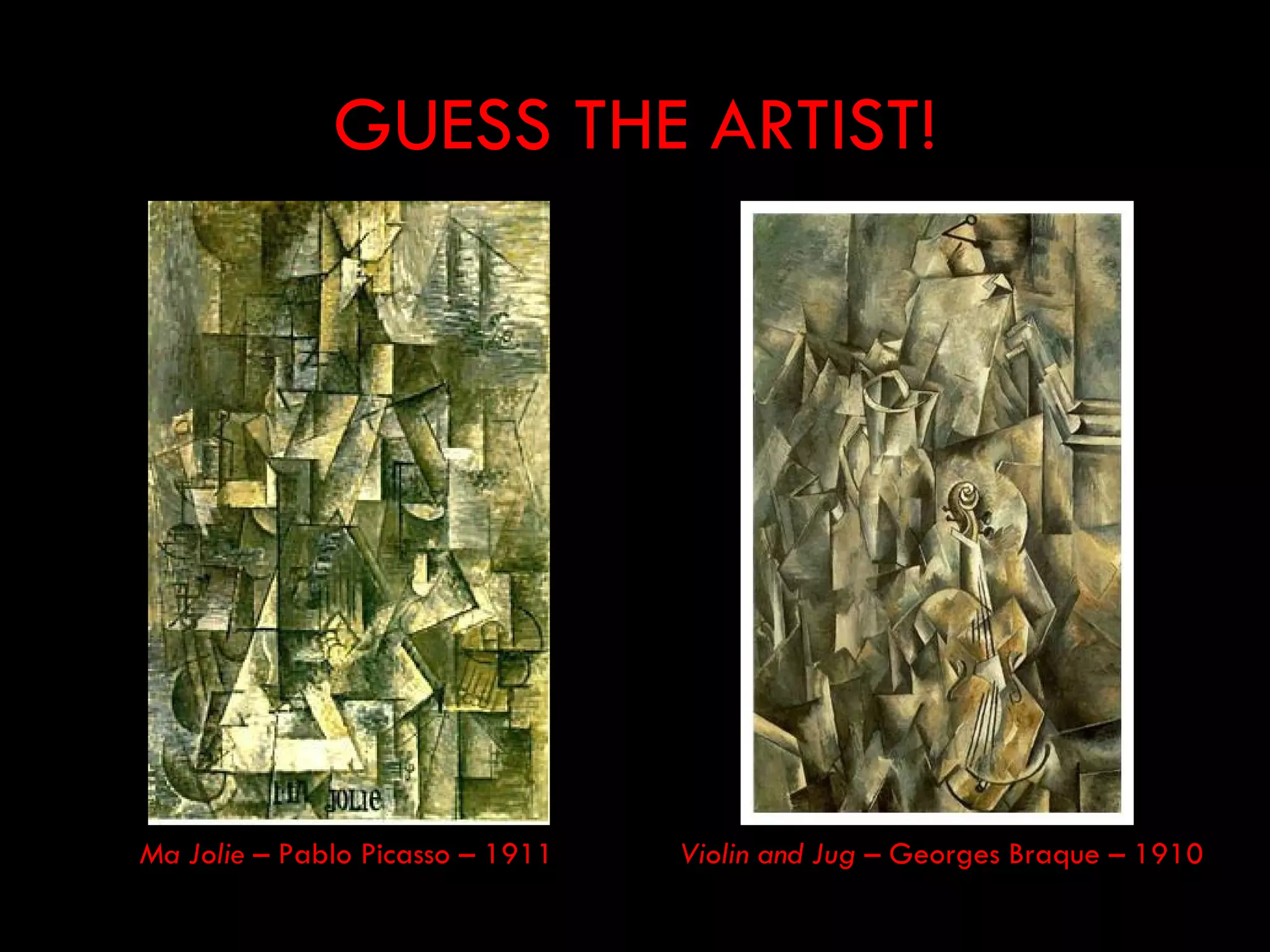
Ma Jolie – Pablo Picasso – 1911   Violin and Jug – Georges Braque – 1910
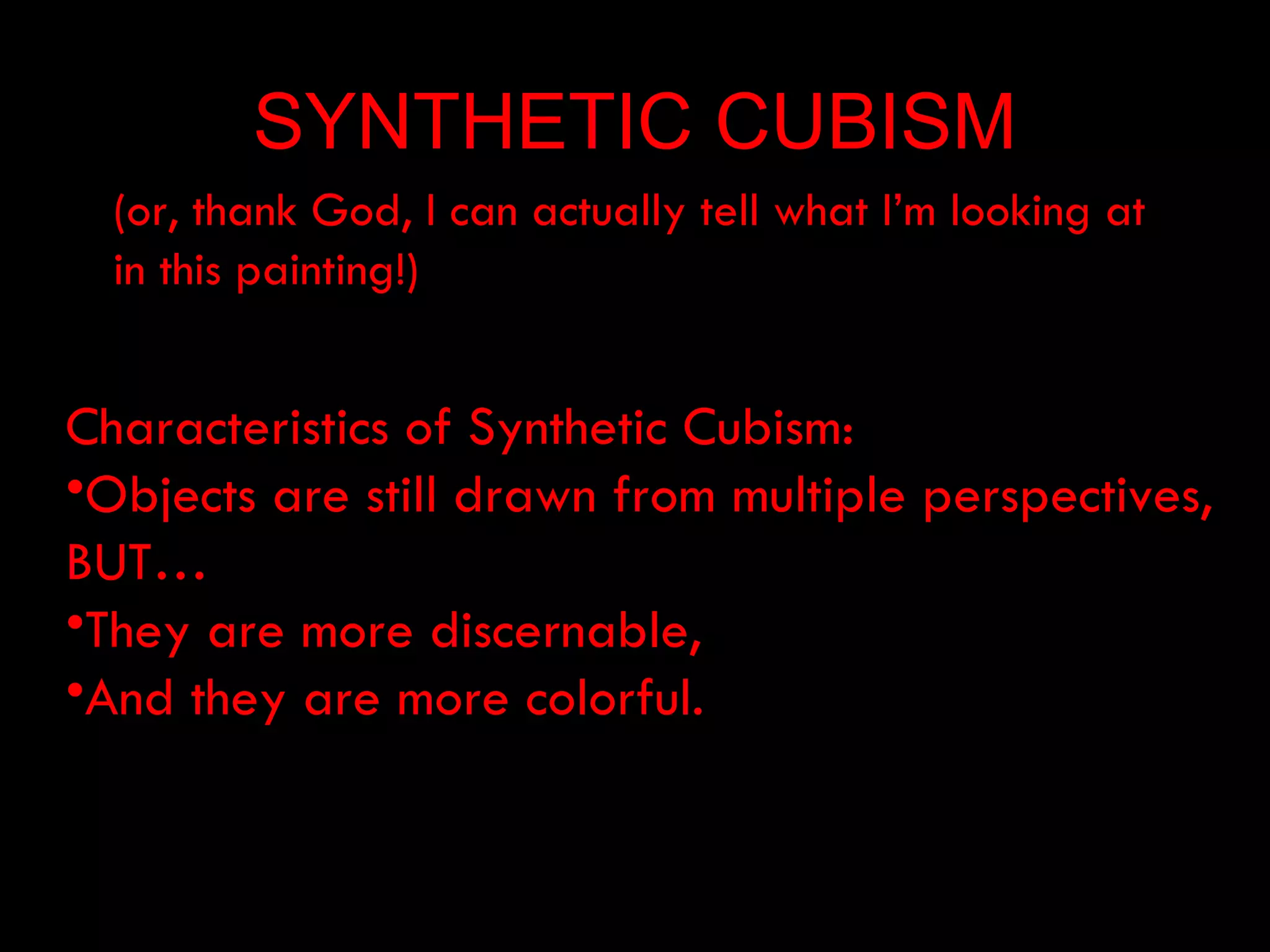
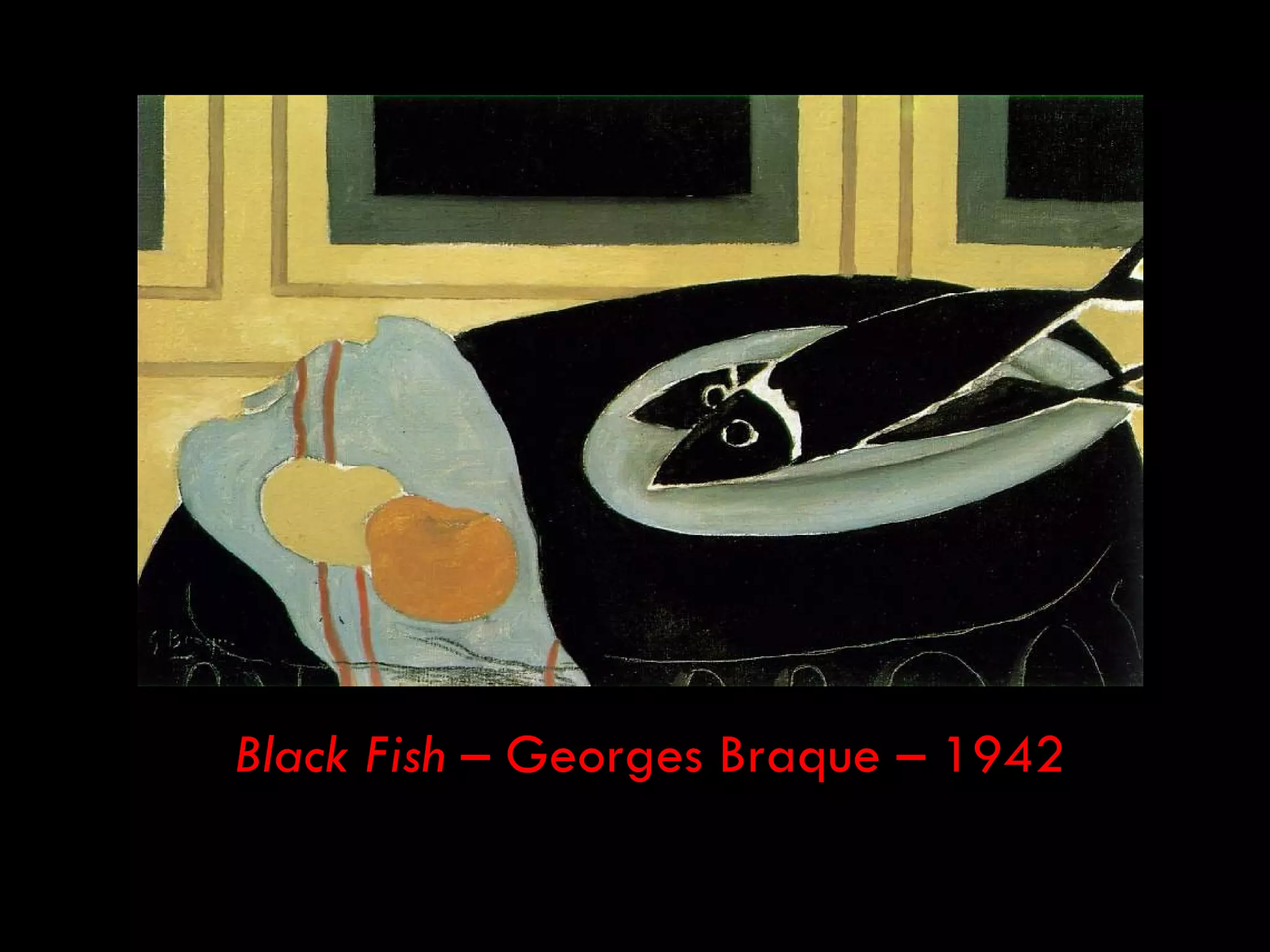
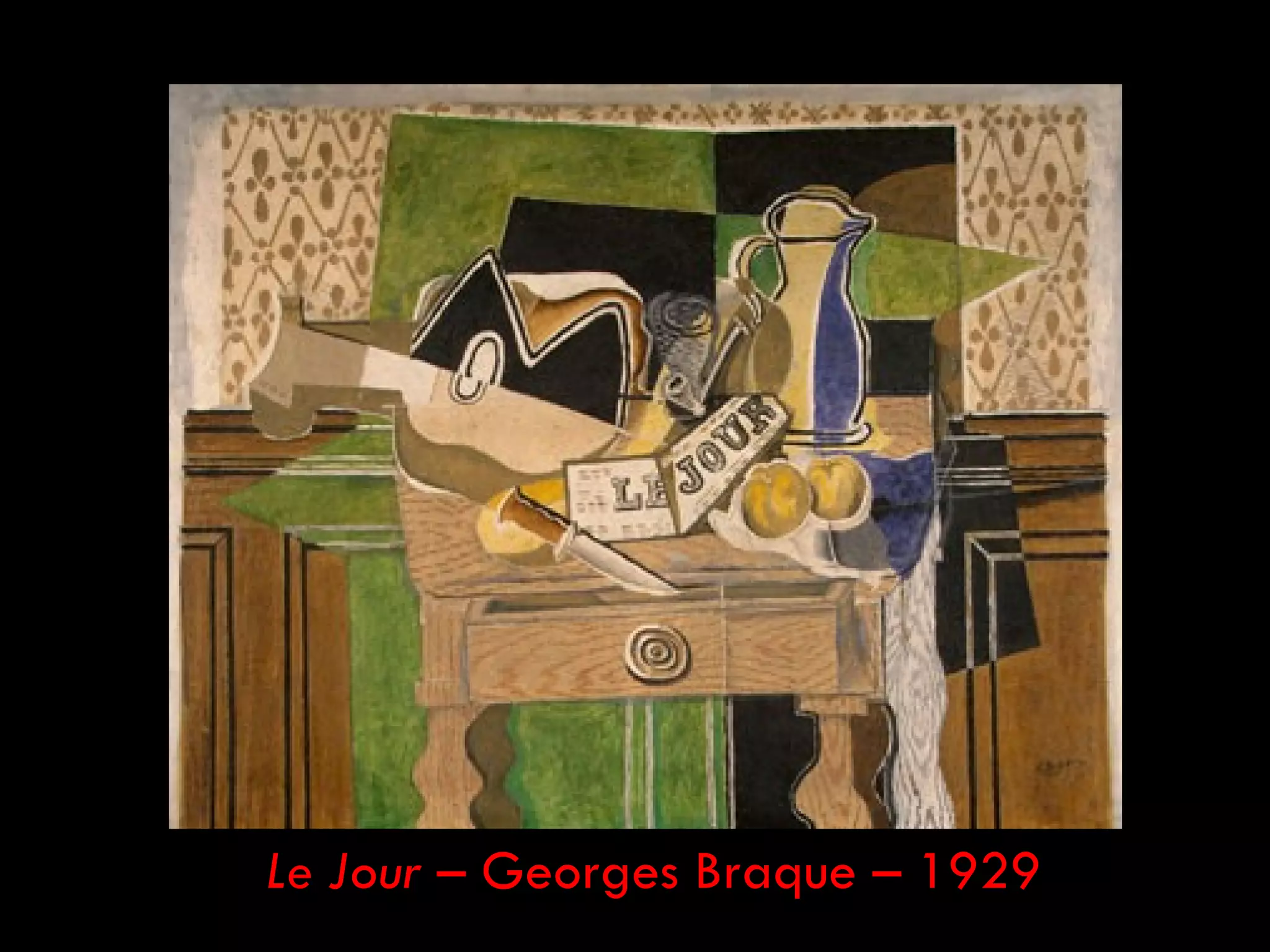
SYNTHETIC CUBISM
  (or, thank God, I can actually tell what I’m looking at
  in this painting!)


Characteristics of Synthetic Cubism:
•Objects are still drawn from multiple perspectives,
BUT…
•They are more discernable,
•And they are more colorful.
Black Fish – Georges Braque – 1942
Le Jour – Georges Braque – 1929
Three Musicians – Pablo Picasso – 1921
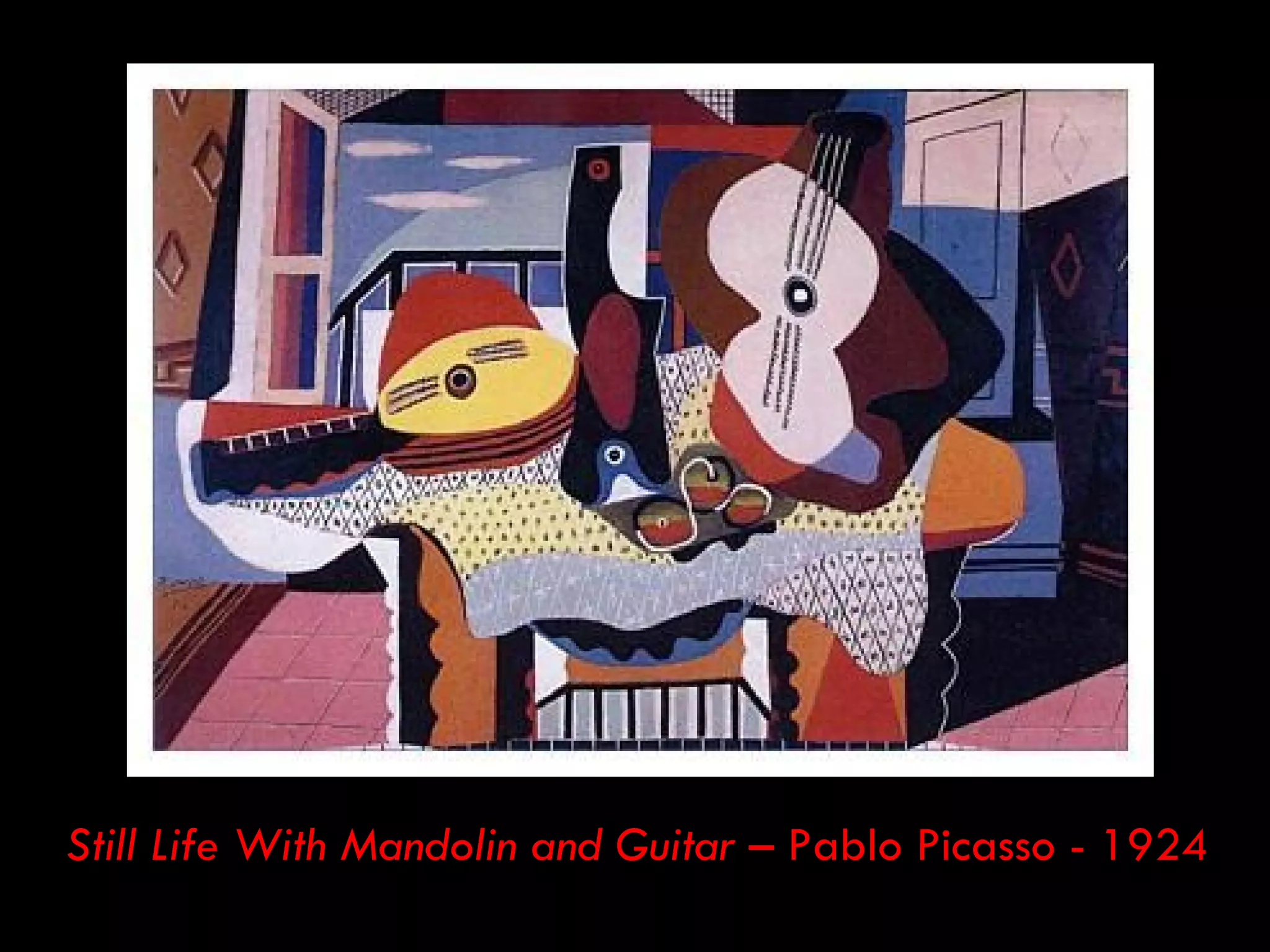
Still Life With Mandolin and Guitar – Pablo Picasso - 1924
OTHER NOTABLES
• Juan Gris is considered the “Third Musketeer” of
  Cubism
• Fernand Léger painted World War II inspired
  Cubist paintings, which created social
  commentary of the time he lived in
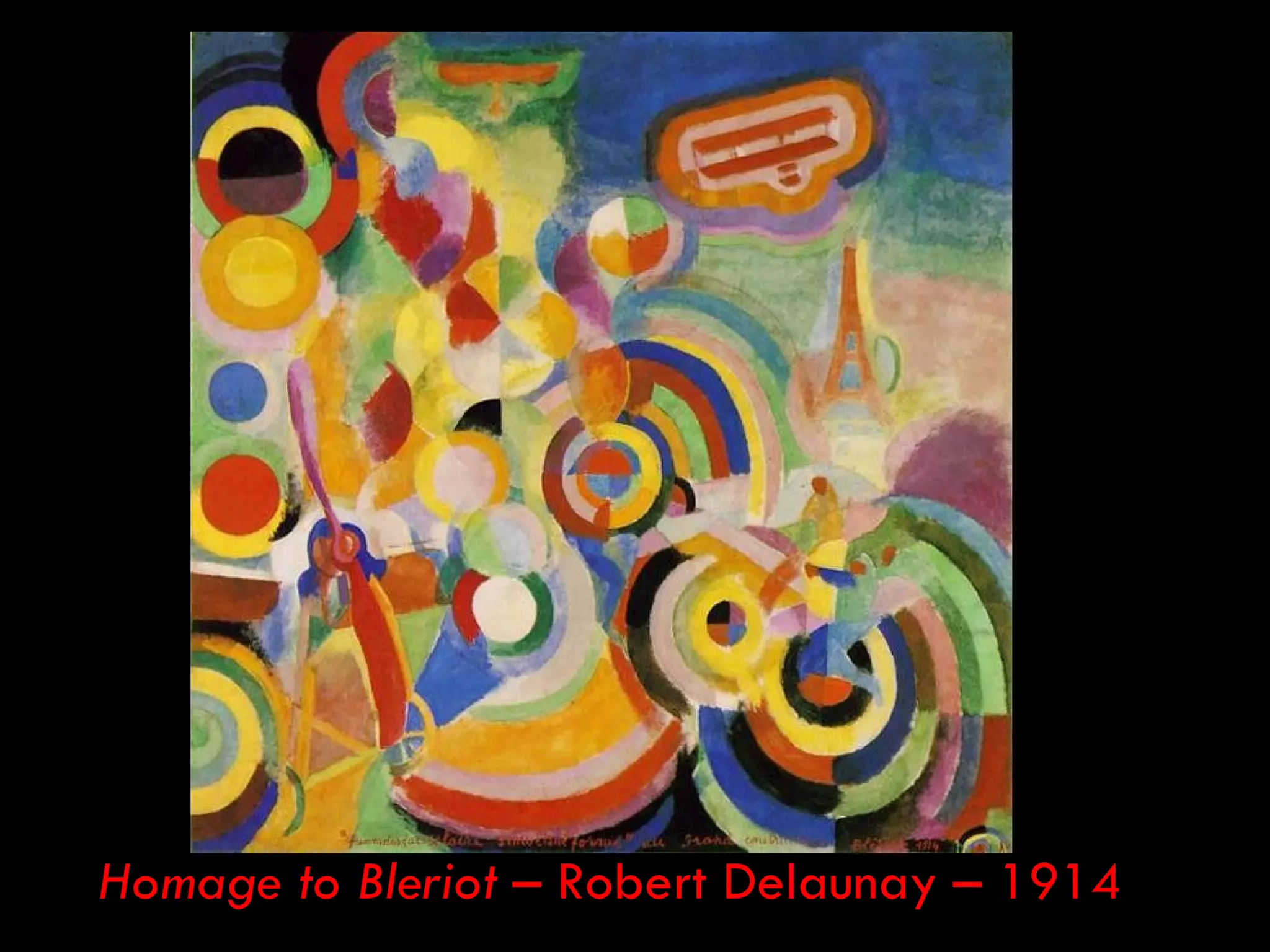
• Robert Delaunay spun off of Cubism with
  “orphism,” which is just cubism with more circles
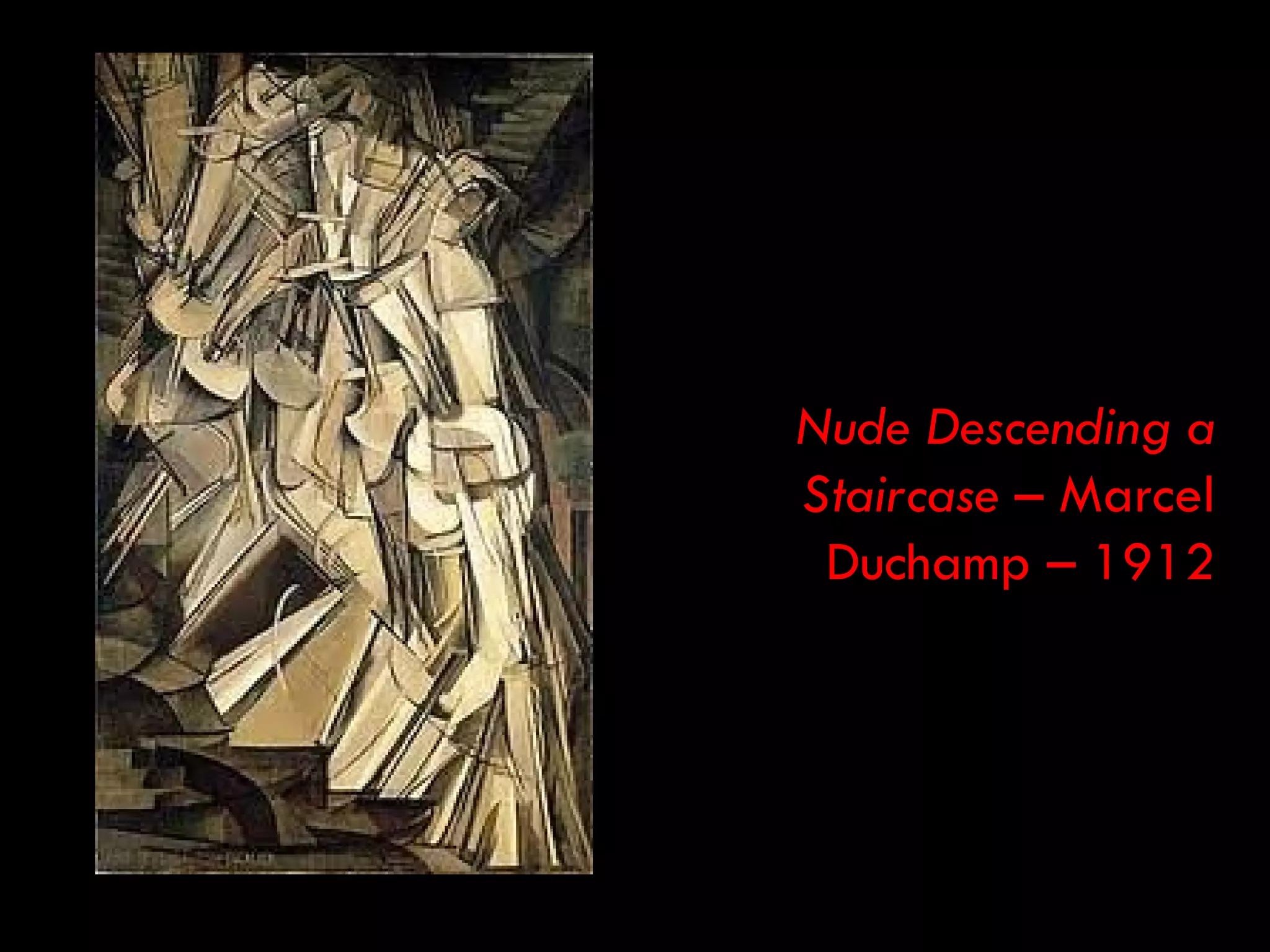
• Marcel Duchamp didn’t always paint, but when
  he did, he painted cubism.
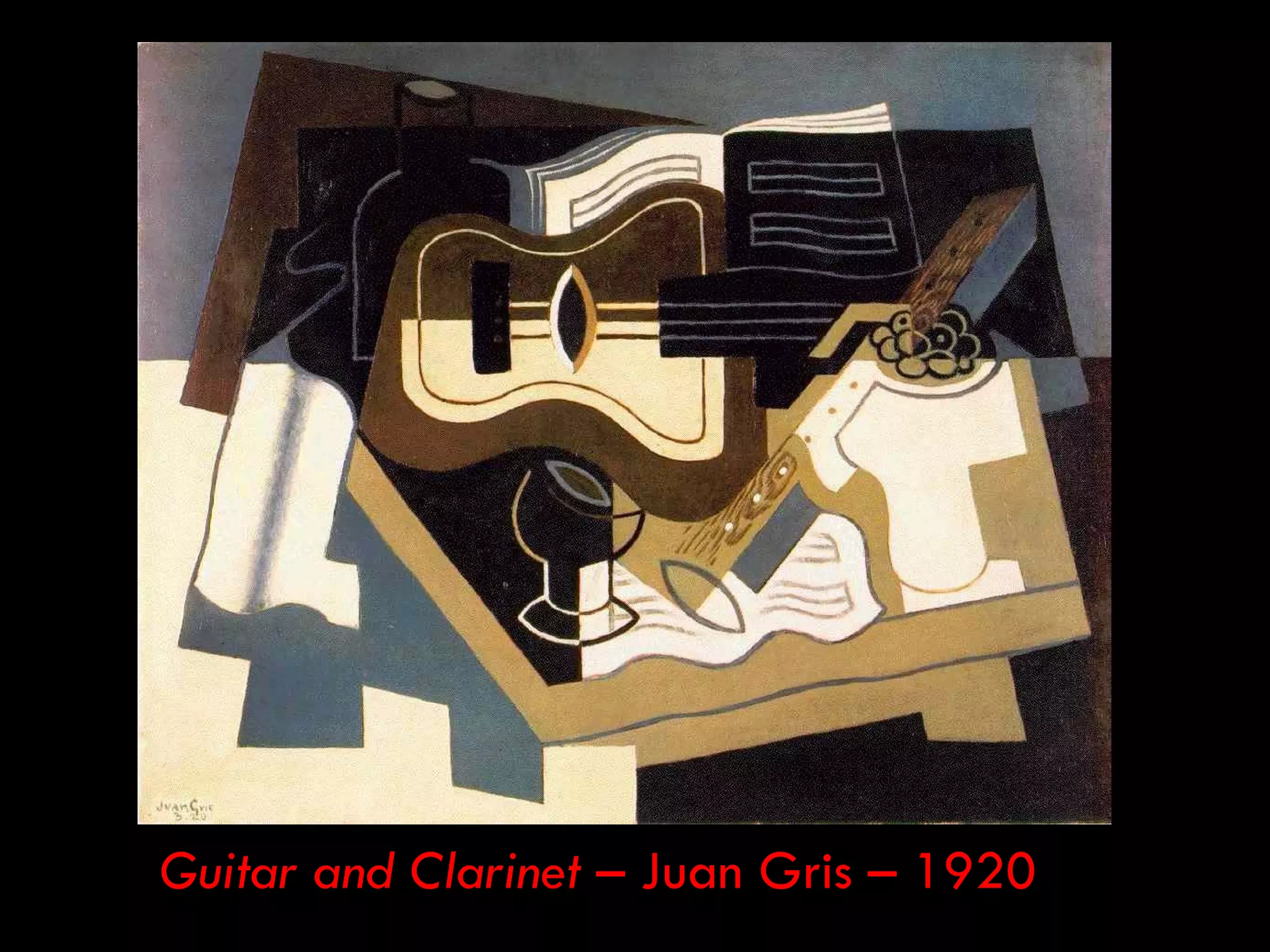
Guitar and Clarinet – Juan Gris – 1920
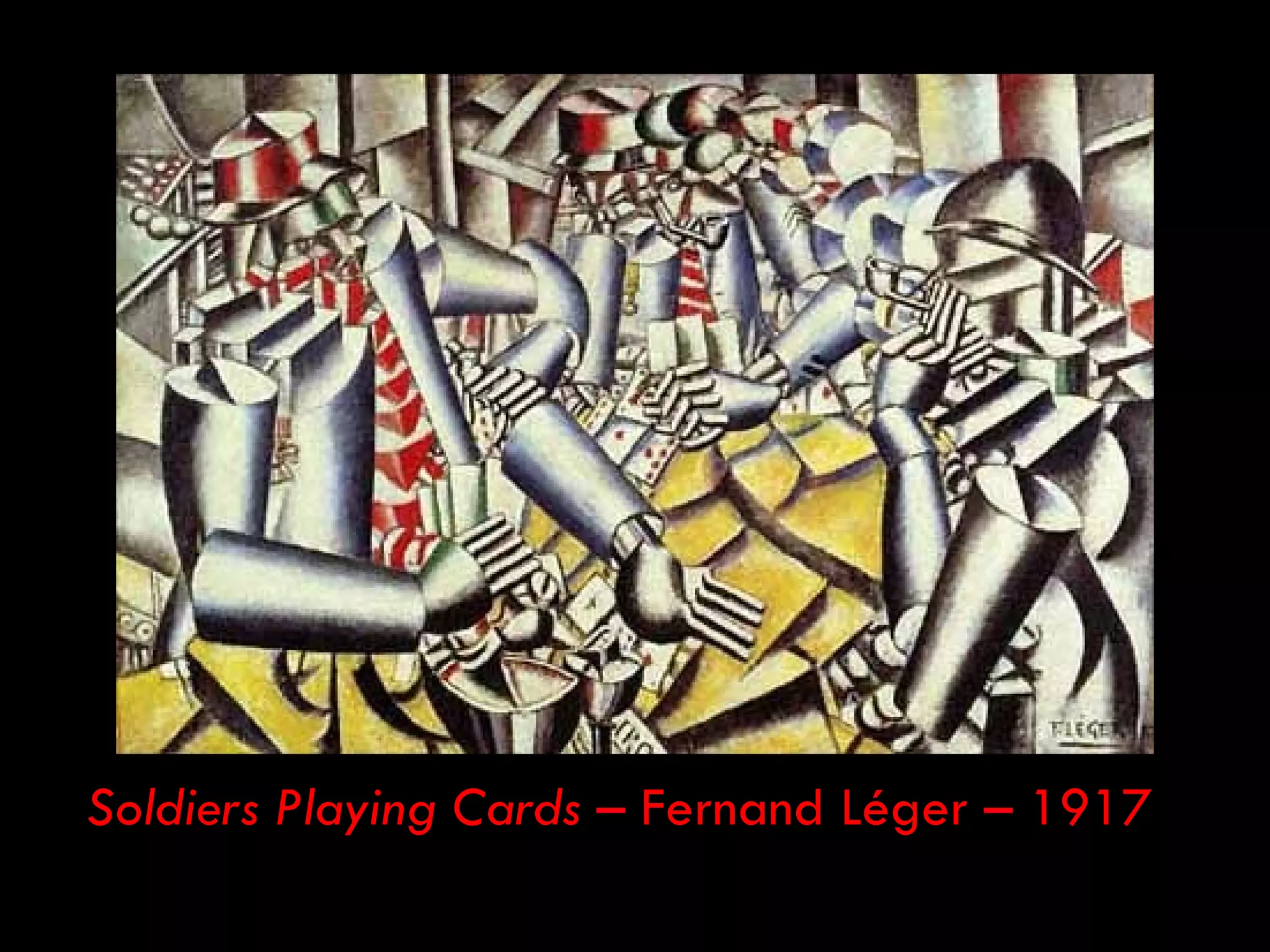
Soldiers Playing Cards – Fernand Léger – 1917
Homage to Bleriot – Robert Delaunay – 1914
Nude Descending a
Staircase – Marcel
 Duchamp – 1912

Cubism Presentation (for real this time)

  • 1.
    CUBISM THE FIRST FORMOF ABSTRACT ART PICASSO AND BRAQUE WITH INFLUENCES FROM CÉZANNE
  • 2.
    INFLUENCES ON CUBISM •Paul Cézanne changed styles and habits • Variations of tone and color • Geometric shapes: cylinder, sphere, cone • Varied approach while revisiting subjects • “My one and only master… Cézanne was like the father of us all”. -Pablo Picasso Large Bathers – Paul Cezanne – 1899-1906
  • 3.
    INFLUENCES ON CUBISM •African art has influenced Fang Mask 56 – the many art movements Fang tribe • Motivated artists to create their own interpretations of what they saw • Themes adapted from African art • Distorted African masks Les Demoiselles influenced the earliest cubist d’Avignon – Pablo paintings. Picasso – 1907
  • 4.
    INTRODUCTION TO CUBISM Cubismis a form of Characteristics: abstract art which • Objects are shown from emphasizes the two- multiple perspectives at dimensionality of the once. canvas. • Everything is portrayed with geometric shapes. The Guitar • It portrayed a “new Player – Pablo way of seeing,” which Picasso – 1910 infused observations and memories into paintings.
  • 5.
    EARLY CUBISM Les Demoisellesd’Avignon – Viaduct at L'Estaque – Georges Pablo Picasso – 1907 Braque – 1908
  • 6.
    ANALYTICAL CUBISM (Or,that period of cubism where it’s really hard to tell what anything is, and who the artist is.) Characteristics of Analytical Cubism: •Objects are “analyzed” from many perspectives. •Artist incorporates many (if not all) of these perspectives in the painting itself. •The painting, instead of directly showing the subject, “evokes a sense of the subject.”
  • 7.
    Fruit Dish, Aceof Clubs – Georges Braque - 1913
  • 8.
    Still Life Witha Violin – Georges Braque – 1912
  • 9.
    The Guitar Player– Pablo Picasso – 1910
  • 10.
    Portrait of Daniel- Henry Kahnweiler – Pablo Picasso – 1910
  • 11.
  • 12.
    GUESS THE ARTIST! MaJolie – Pablo Picasso – 1911 Violin and Jug – Georges Braque – 1910
  • 13.
    SYNTHETIC CUBISM (or, thank God, I can actually tell what I’m looking at in this painting!) Characteristics of Synthetic Cubism: •Objects are still drawn from multiple perspectives, BUT… •They are more discernable, •And they are more colorful.
  • 14.
    Black Fish –Georges Braque – 1942
  • 15.
    Le Jour –Georges Braque – 1929
  • 16.
    Three Musicians –Pablo Picasso – 1921
  • 17.
    Still Life WithMandolin and Guitar – Pablo Picasso - 1924
  • 18.
    OTHER NOTABLES • JuanGris is considered the “Third Musketeer” of Cubism • Fernand Léger painted World War II inspired Cubist paintings, which created social commentary of the time he lived in • Robert Delaunay spun off of Cubism with “orphism,” which is just cubism with more circles • Marcel Duchamp didn’t always paint, but when he did, he painted cubism.
  • 19.
    Guitar and Clarinet– Juan Gris – 1920
  • 20.
    Soldiers Playing Cards– Fernand Léger – 1917
  • 21.
    Homage to Bleriot– Robert Delaunay – 1914
  • 22.
    Nude Descending a Staircase– Marcel Duchamp – 1912

Editor's Notes

  • #22 Homage to Bleriot – Robert Delaunay – 1914
  • #23 Nude Descending a Staircase – Marcel Duchamp – 1912