Introduction To Logic Gates
For CSEC Physics
www.cxctutor.org
What Are Logic Gates
A logic gate is an elementary building block of a digital
circuit.
Most logic gates have two inputs and one output. At any
given moment, every terminal is in one of two Binary
Conditions: Low (0) or High (1), represented by different
voltage levels.
The logic state of a terminal can, and generally does,
change often, as the circuit processes data. In most logic
gates, the low state is approximately zero volts (0 V), while
the high state is approximately five volts positive (+5 V).
There are seven basic Logic
Gates:
NOT, AND, OR, NAND, NOR, XOR and XNOR
We will look at each of them individually.
The ‘NOT’ Gate
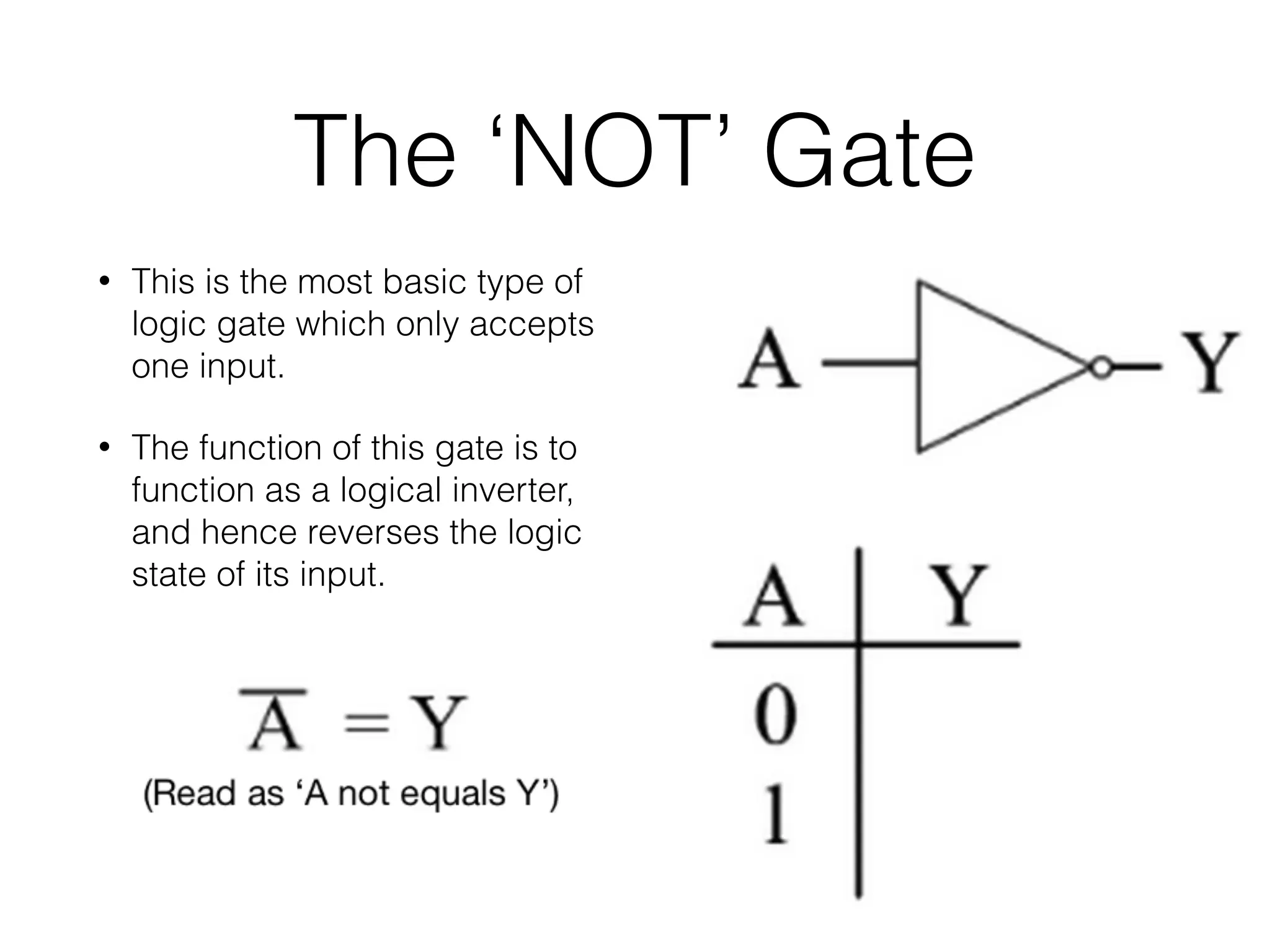
• This is the most basic type of
logic gate which only accepts
one input.
• The function of this gate is to
function as a logical inverter,
and hence reverses the logic
state of its input.
The ‘AND’ Gate
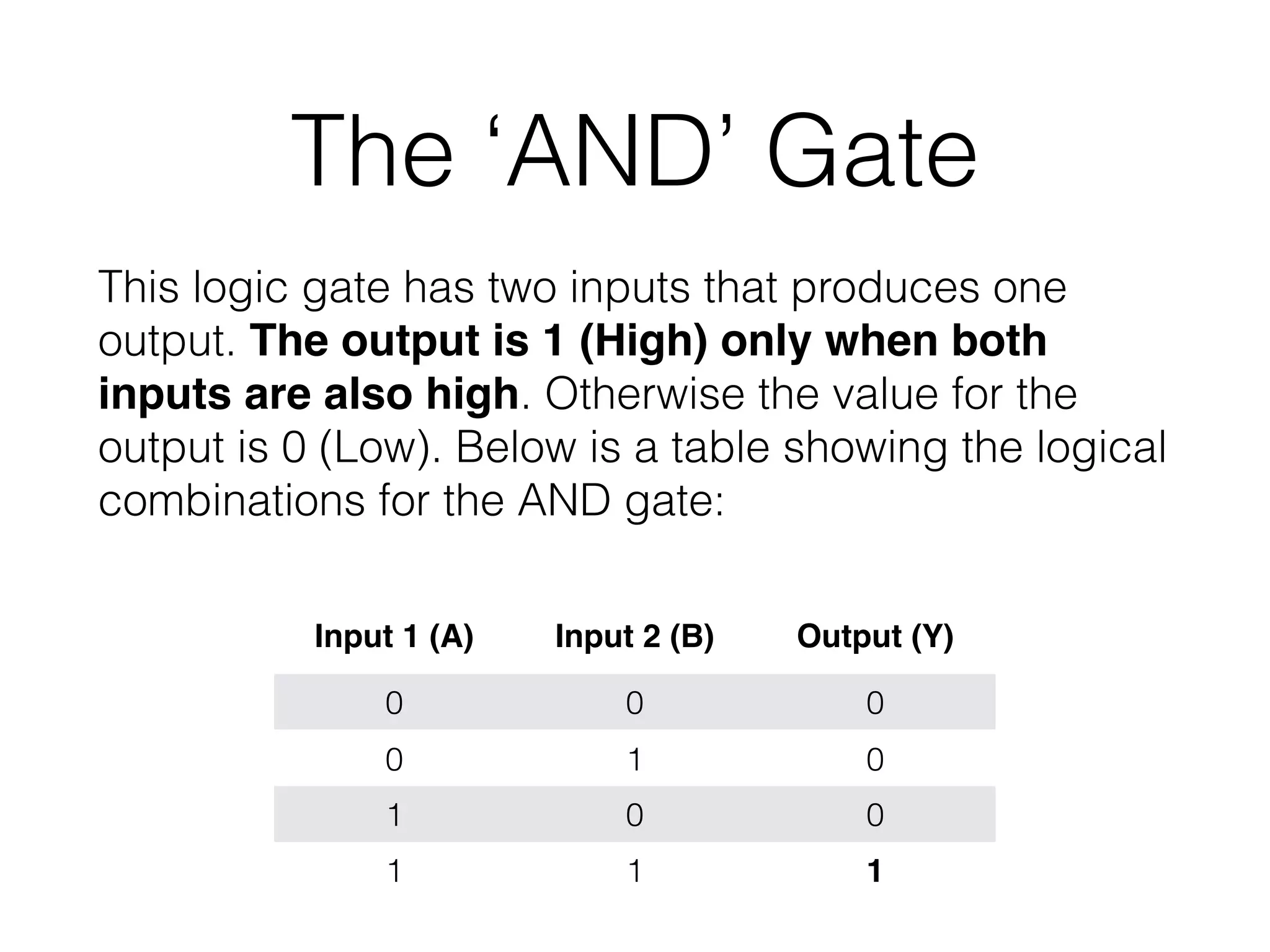
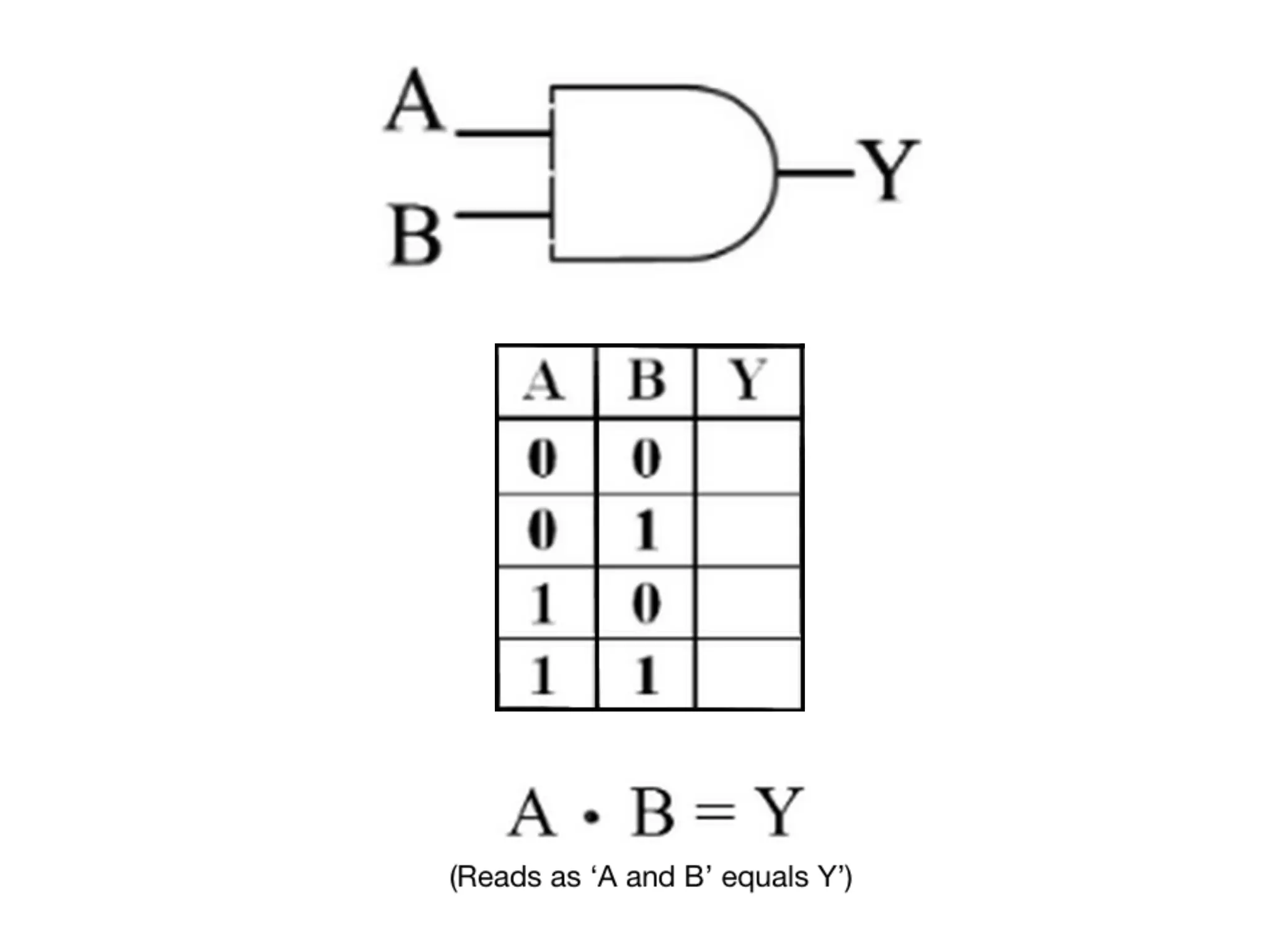
This logic gate has two inputs that produces one
output. The output is 1 (High) only when both
inputs are also high. Otherwise the value for the
output is 0 (Low). Below is a table showing the logical
combinations for the AND gate:
Input 1 (A) Input 2 (B) Output (Y)
0 0 0
0 1 0
1 0 0
1 1 1
The ‘OR’ Gate
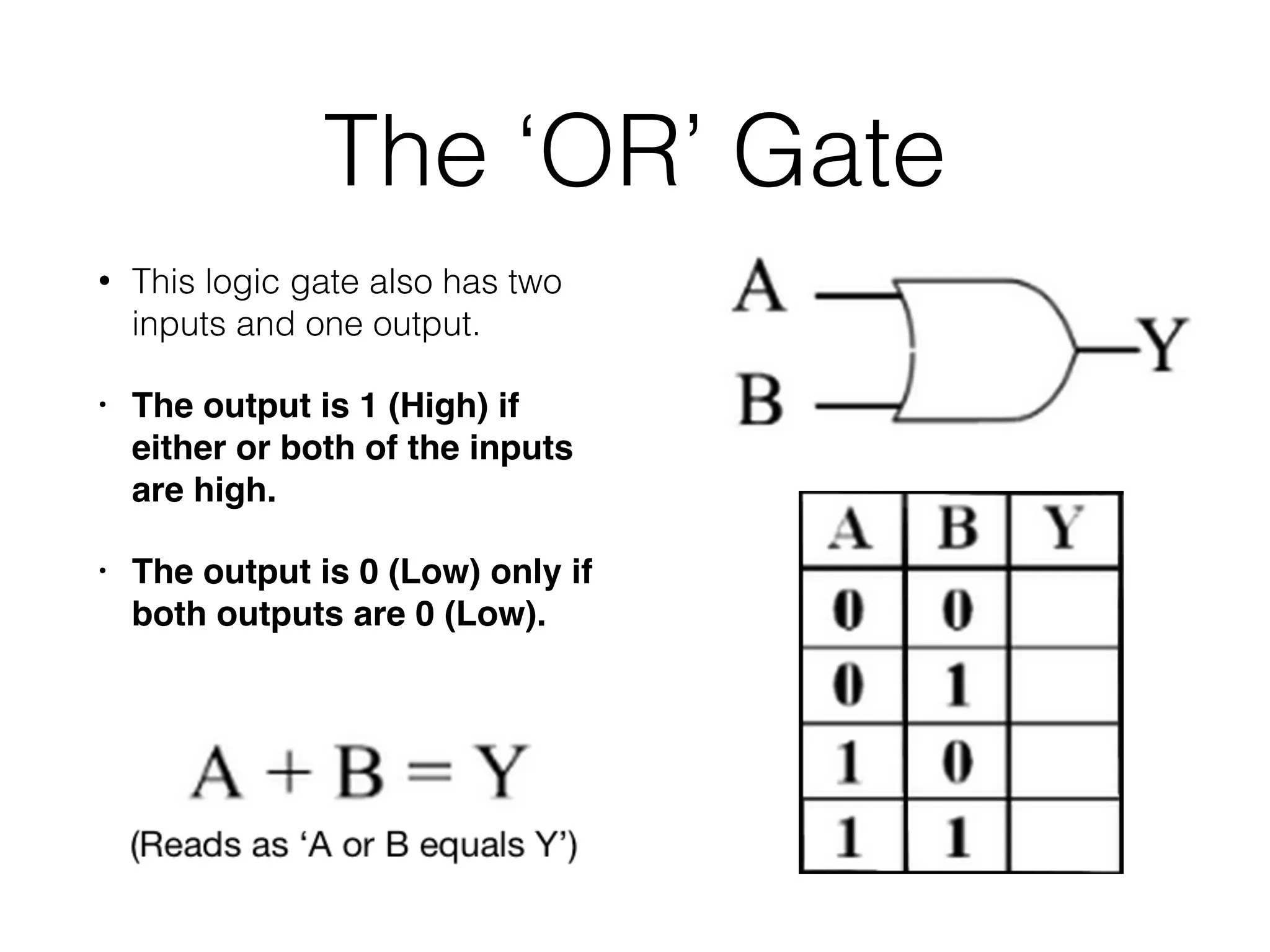
• This logic gate also has two
inputs and one output.
• The output is 1 (High) if
either or both of the inputs
are high.
• The output is 0 (Low) only if
both outputs are 0 (Low).
The ‘NAND’ Gate
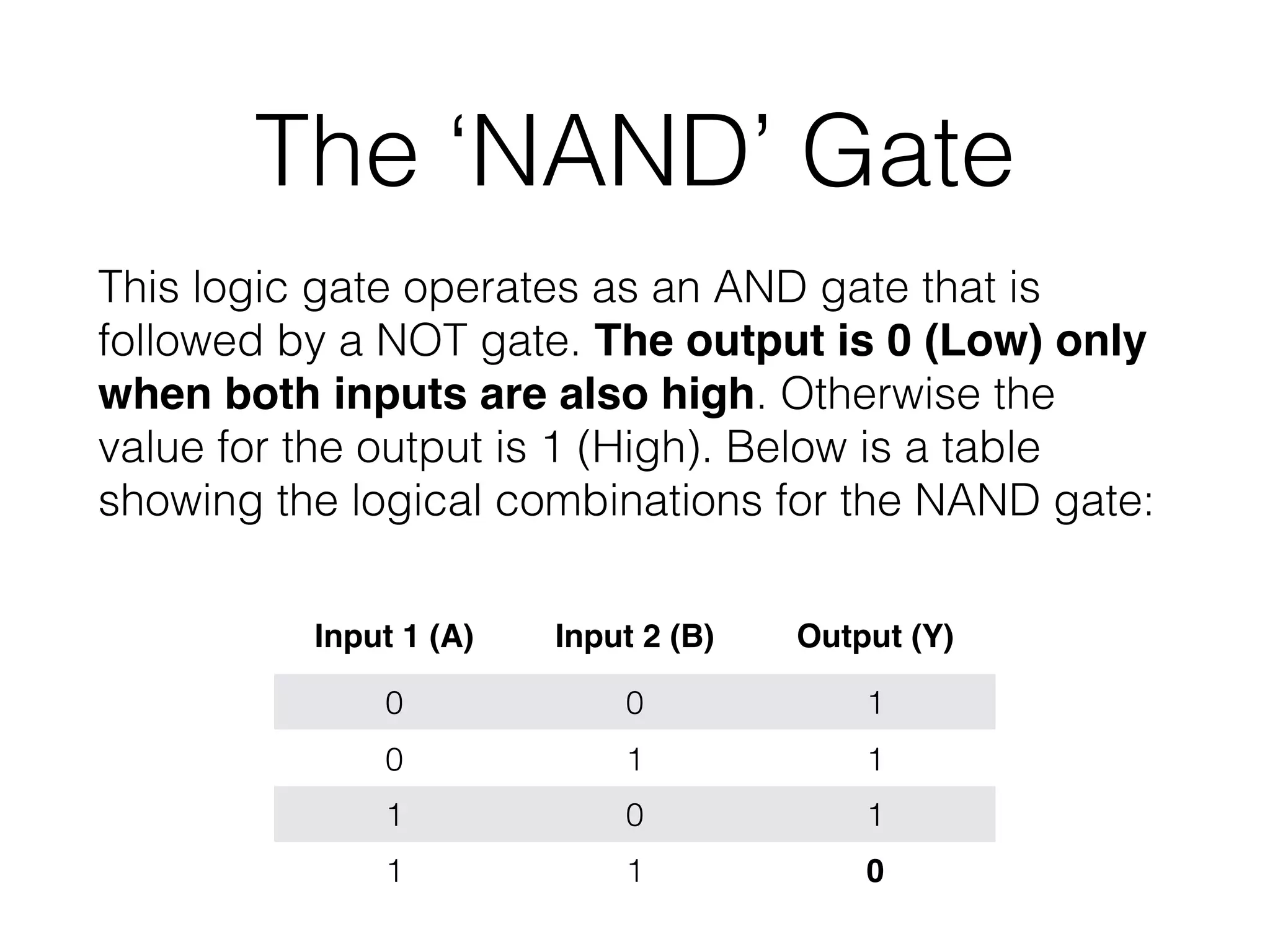
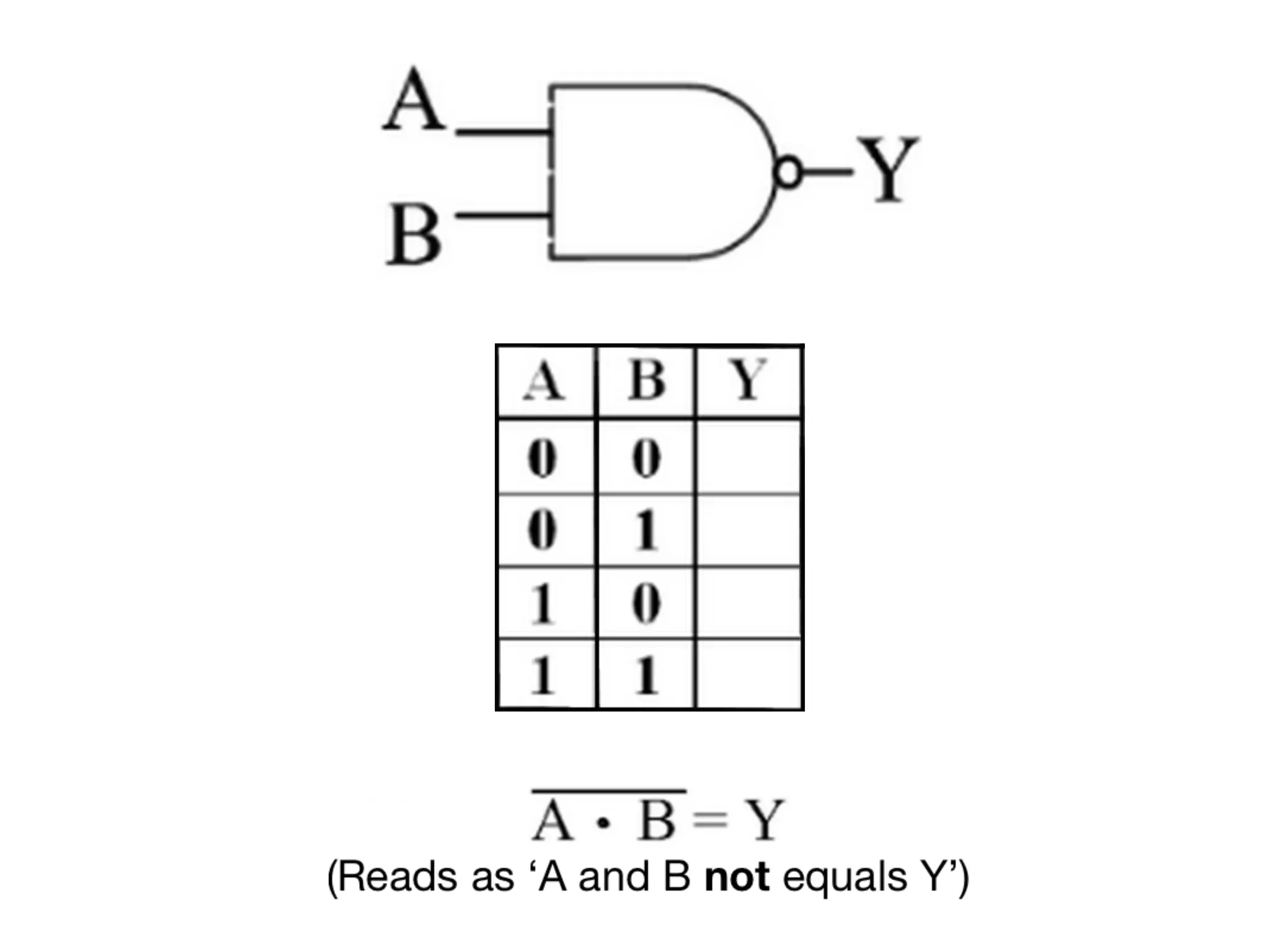
This logic gate operates as an AND gate that is
followed by a NOT gate. The output is 0 (Low) only
when both inputs are also high. Otherwise the
value for the output is 1 (High). Below is a table
showing the logical combinations for the NAND gate:
Input 1 (A) Input 2 (B) Output (Y)
0 0 1
0 1 1
1 0 1
1 1 0
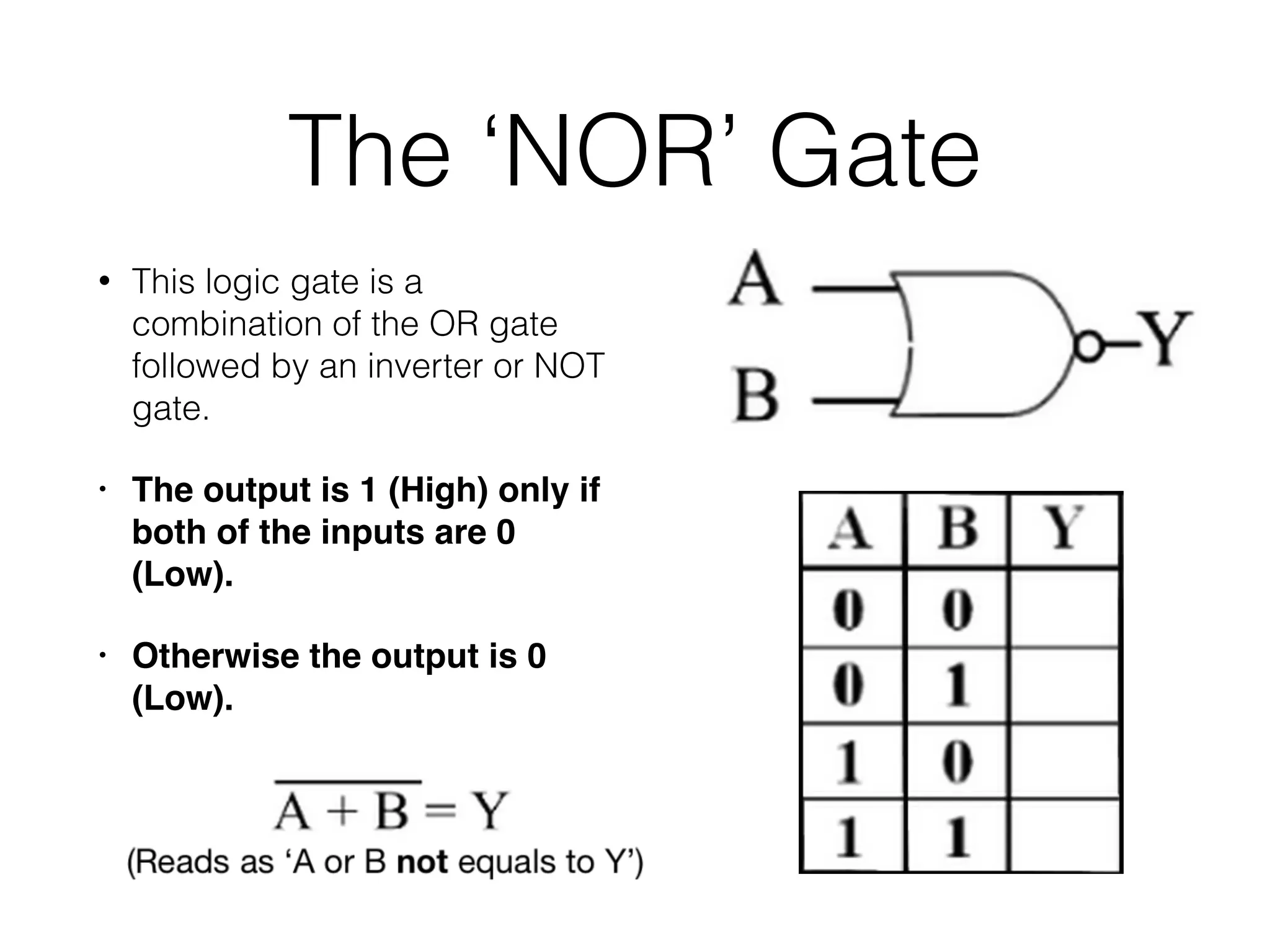
The ‘NOR’ Gate
• This logic gate is a
combination of the OR gate
followed by an inverter or NOT
gate.
• The output is 1 (High) only if
both of the inputs are 0
(Low).
• Otherwise the output is 0
(Low).
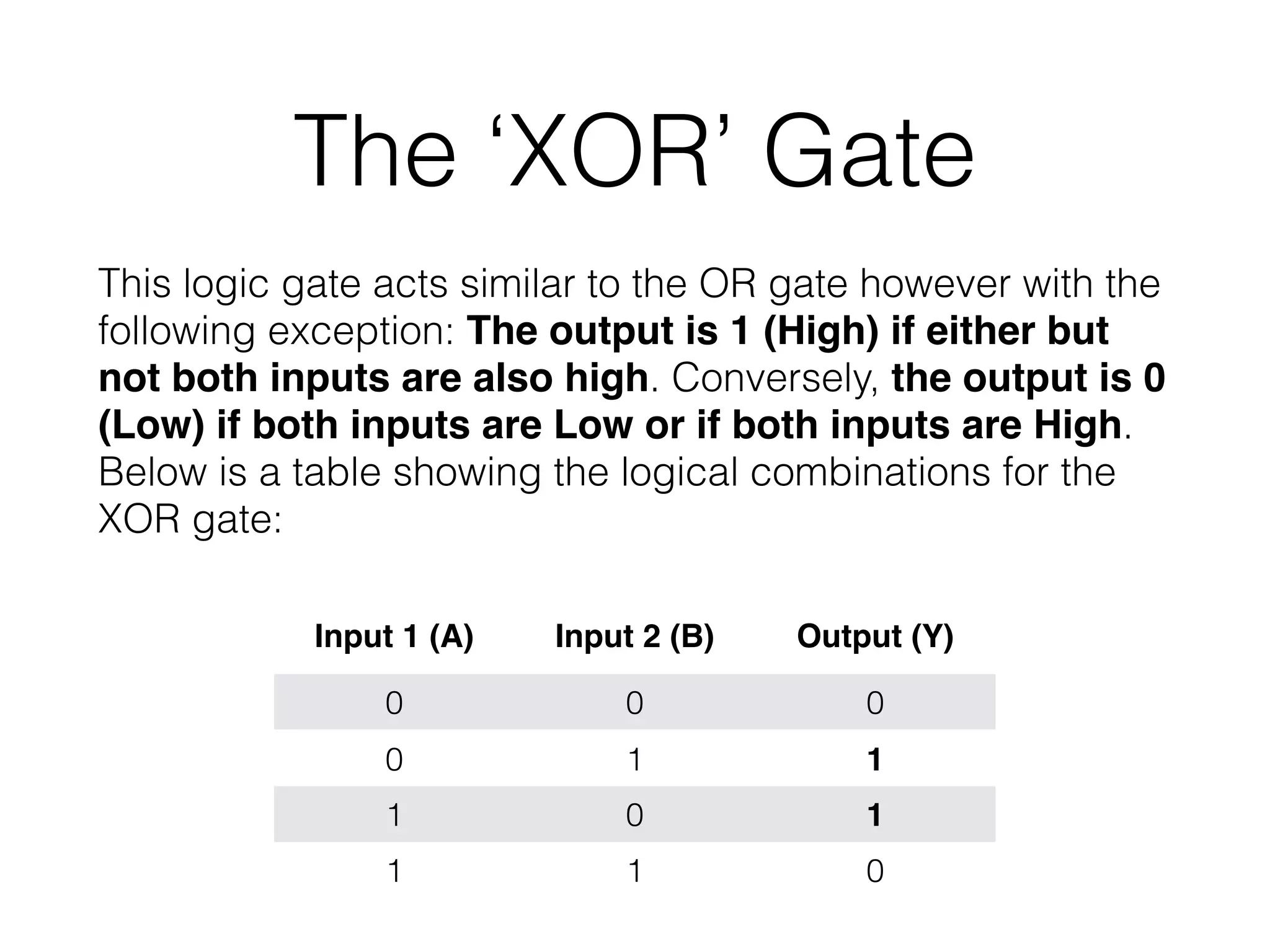
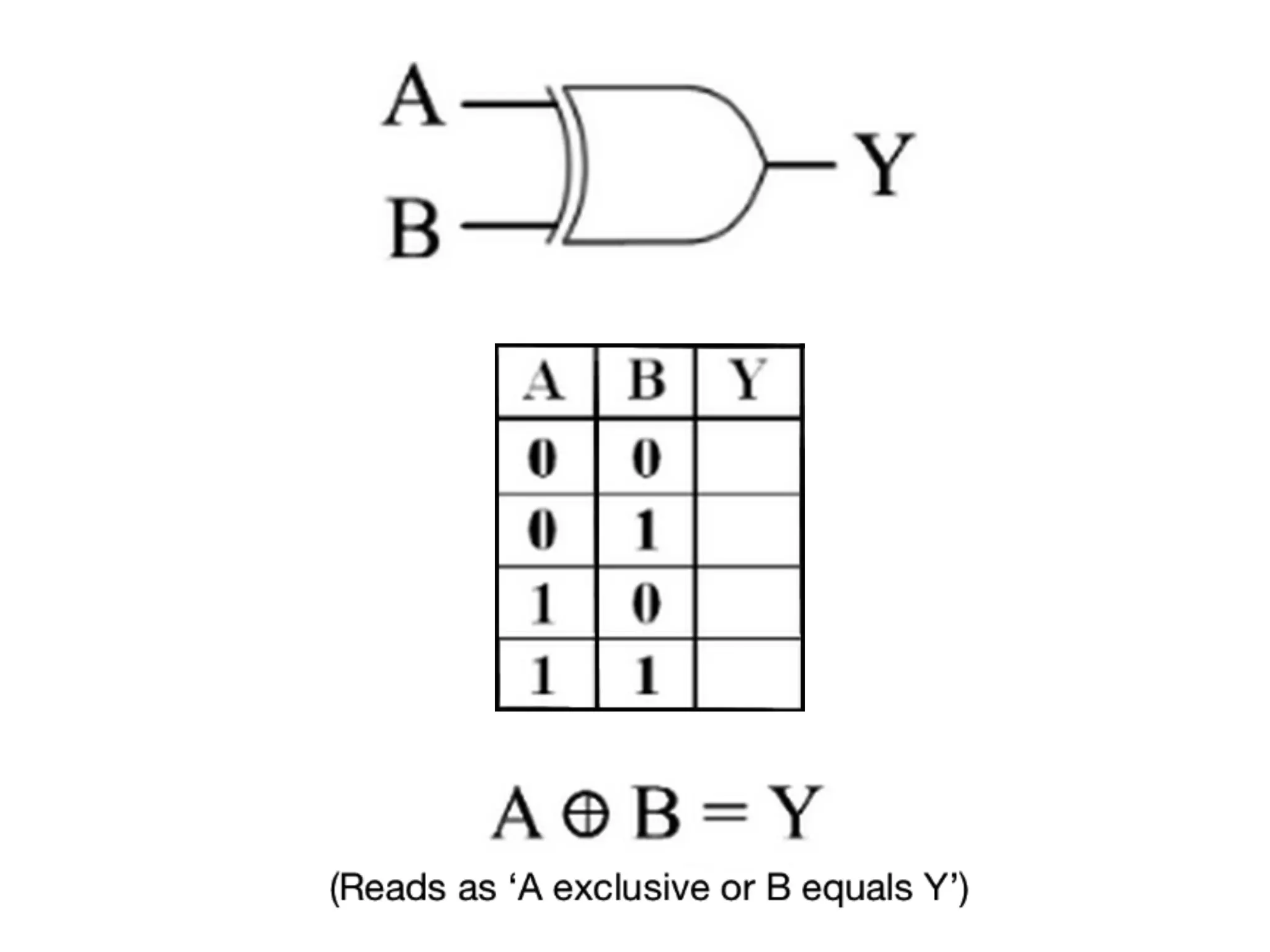
The ‘XOR’ Gate
This logic gate acts similar to the OR gate however with the
following exception: The output is 1 (High) if either but
not both inputs are also high. Conversely, the output is 0
(Low) if both inputs are Low or if both inputs are High.
Below is a table showing the logical combinations for the
XOR gate:
Input 1 (A) Input 2 (B) Output (Y)
0 0 0
0 1 1
1 0 1
1 1 0
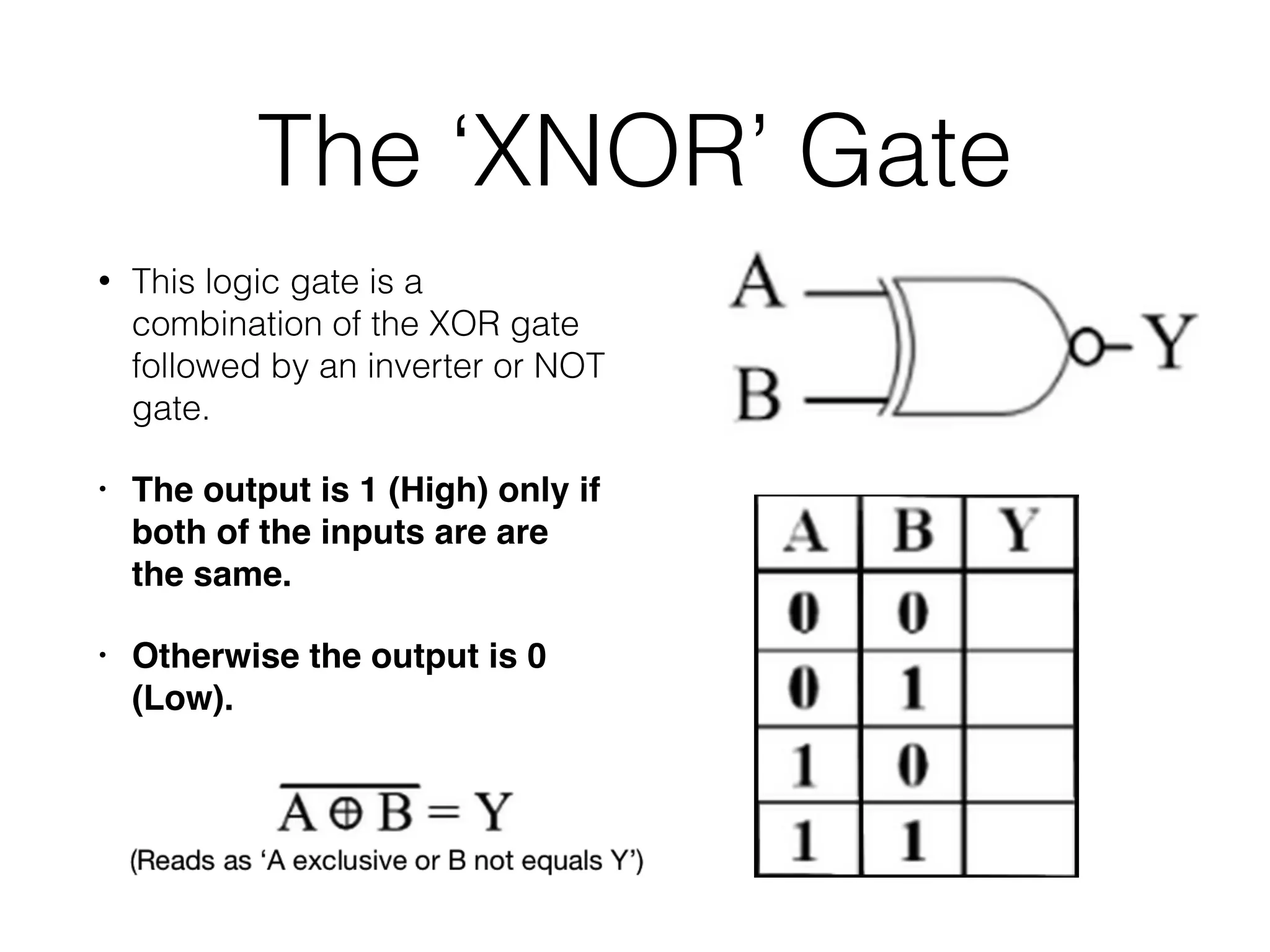
The ‘XNOR’ Gate
• This logic gate is a
combination of the XOR gate
followed by an inverter or NOT
gate.
• The output is 1 (High) only if
both of the inputs are are
the same.
• Otherwise the output is 0
(Low).
Closing Remark
It is by using combinations of logic gates, that complex
operations can be performed.
In theory, there is no limit to the number of gates than can be
arranged together in a single device, but in practice, there is
always a limit to how many components that can be packed
into a given physical space.
Arrays of logic gates are found in many digital integrated
circuits. As technology advances, the required physical volume
for each individual logic gate decrease and overall digital
devices become smaller and capable of even more
complicated operations at an increased speed.

CSEC Physics Review - Introduction To Logic Gates

  • 1.
    Introduction To LogicGates For CSEC Physics www.cxctutor.org
  • 2.
    What Are LogicGates A logic gate is an elementary building block of a digital circuit. Most logic gates have two inputs and one output. At any given moment, every terminal is in one of two Binary Conditions: Low (0) or High (1), represented by different voltage levels. The logic state of a terminal can, and generally does, change often, as the circuit processes data. In most logic gates, the low state is approximately zero volts (0 V), while the high state is approximately five volts positive (+5 V).
  • 3.
    There are sevenbasic Logic Gates: NOT, AND, OR, NAND, NOR, XOR and XNOR We will look at each of them individually.
  • 4.
    The ‘NOT’ Gate •This is the most basic type of logic gate which only accepts one input. • The function of this gate is to function as a logical inverter, and hence reverses the logic state of its input.
  • 5.
    The ‘AND’ Gate Thislogic gate has two inputs that produces one output. The output is 1 (High) only when both inputs are also high. Otherwise the value for the output is 0 (Low). Below is a table showing the logical combinations for the AND gate: Input 1 (A) Input 2 (B) Output (Y) 0 0 0 0 1 0 1 0 0 1 1 1
  • 7.
    The ‘OR’ Gate •This logic gate also has two inputs and one output. • The output is 1 (High) if either or both of the inputs are high. • The output is 0 (Low) only if both outputs are 0 (Low).
  • 8.
    The ‘NAND’ Gate Thislogic gate operates as an AND gate that is followed by a NOT gate. The output is 0 (Low) only when both inputs are also high. Otherwise the value for the output is 1 (High). Below is a table showing the logical combinations for the NAND gate: Input 1 (A) Input 2 (B) Output (Y) 0 0 1 0 1 1 1 0 1 1 1 0
  • 10.
    The ‘NOR’ Gate •This logic gate is a combination of the OR gate followed by an inverter or NOT gate. • The output is 1 (High) only if both of the inputs are 0 (Low). • Otherwise the output is 0 (Low).
  • 11.
    The ‘XOR’ Gate Thislogic gate acts similar to the OR gate however with the following exception: The output is 1 (High) if either but not both inputs are also high. Conversely, the output is 0 (Low) if both inputs are Low or if both inputs are High. Below is a table showing the logical combinations for the XOR gate: Input 1 (A) Input 2 (B) Output (Y) 0 0 0 0 1 1 1 0 1 1 1 0
  • 13.
    The ‘XNOR’ Gate •This logic gate is a combination of the XOR gate followed by an inverter or NOT gate. • The output is 1 (High) only if both of the inputs are are the same. • Otherwise the output is 0 (Low).
  • 14.
    Closing Remark It isby using combinations of logic gates, that complex operations can be performed. In theory, there is no limit to the number of gates than can be arranged together in a single device, but in practice, there is always a limit to how many components that can be packed into a given physical space. Arrays of logic gates are found in many digital integrated circuits. As technology advances, the required physical volume for each individual logic gate decrease and overall digital devices become smaller and capable of even more complicated operations at an increased speed.