CRYPTOCURRENCY MINING:
HOW IT WORKS AND ITS
ENVIRONMENTAL IMPACT
UNLOCKING THE SECRETS BEHIND BLOCKCHAIN
POWERHOUSES AND THEIR EFFECT ON OUR PLANET
Statistic: Bitcoin mining consumes about 121 TWh of
electricity annually—equivalent to the energy use of
Argentina (Source: Cambridge Bitcoin Electricity
Consumption Index).
INTRODUCTION
Cryptocurrency mining is the backbone of
decentralized networks. But what is it, and why does it
have such a significant environmental footprint?
WHAT IS
CRYPTOCURRENCY
MINING?
Cryptocurrency mining is the process of
validating and adding transactions to a
blockchain ledger by solving complex
mathematical puzzles. Miners are rewarded
with cryptocurrency for their efforts.
HOW DOES MINING WORK?
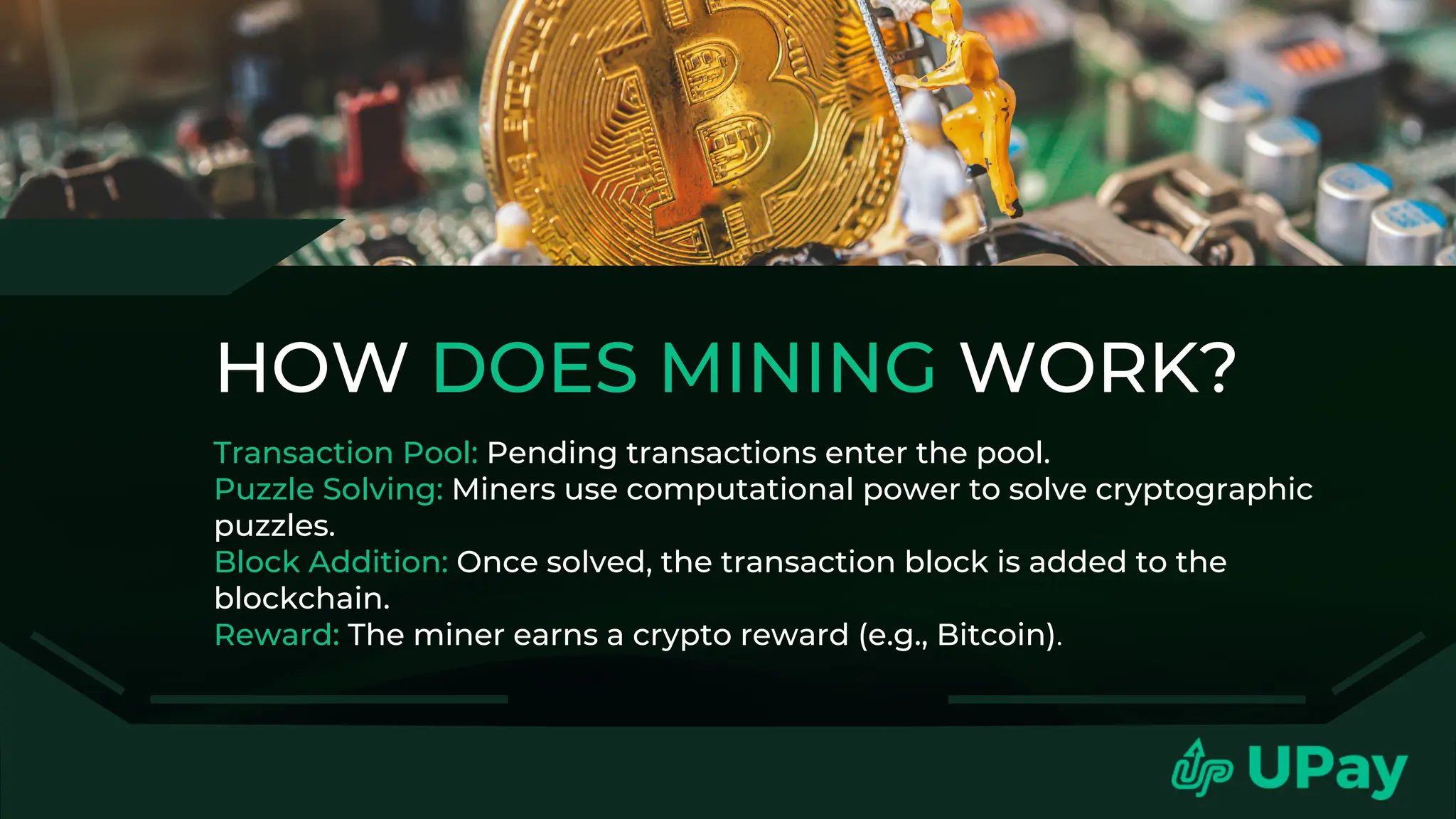
Transaction Pool: Pending transactions enter the pool.
Puzzle Solving: Miners use computational power to solve cryptographic
puzzles.
Block Addition: Once solved, the transaction block is added to the
blockchain.
Reward: The miner earns a crypto reward (e.g., Bitcoin).
PROOF OF WORK
(POW) MECHANISM
Most crypto mining uses Proof of Work (PoW),
which requires significant computational power to
validate blocks. It ensures security but consumes
immense energy
ENERGY CONSUMPTION IN
MINING
Crypto mining is energy-intensive due to its reliance on powerful
hardware. Bitcoin alone accounts for 0.6% of the world’s electricity
consumption (Source: CBECI).
Statistic: One Bitcoin transaction uses more energy than 100,000 VISA
transactions.
WHY IS MINING SO
ENERGY-INTENSIVE?
Specialized hardware (e.g., ASICs) requires
significant electricity.
Constant operation to solve puzzles quickly.
Miners compete globally, increasing power usage to
stay competitive.
ENVIRONMENTAL
IMPACT
Most crypto mining uses Proof of Work
(PoW), which requires significant
computational power to validate
blocks. It ensures security but
consumes immense energy
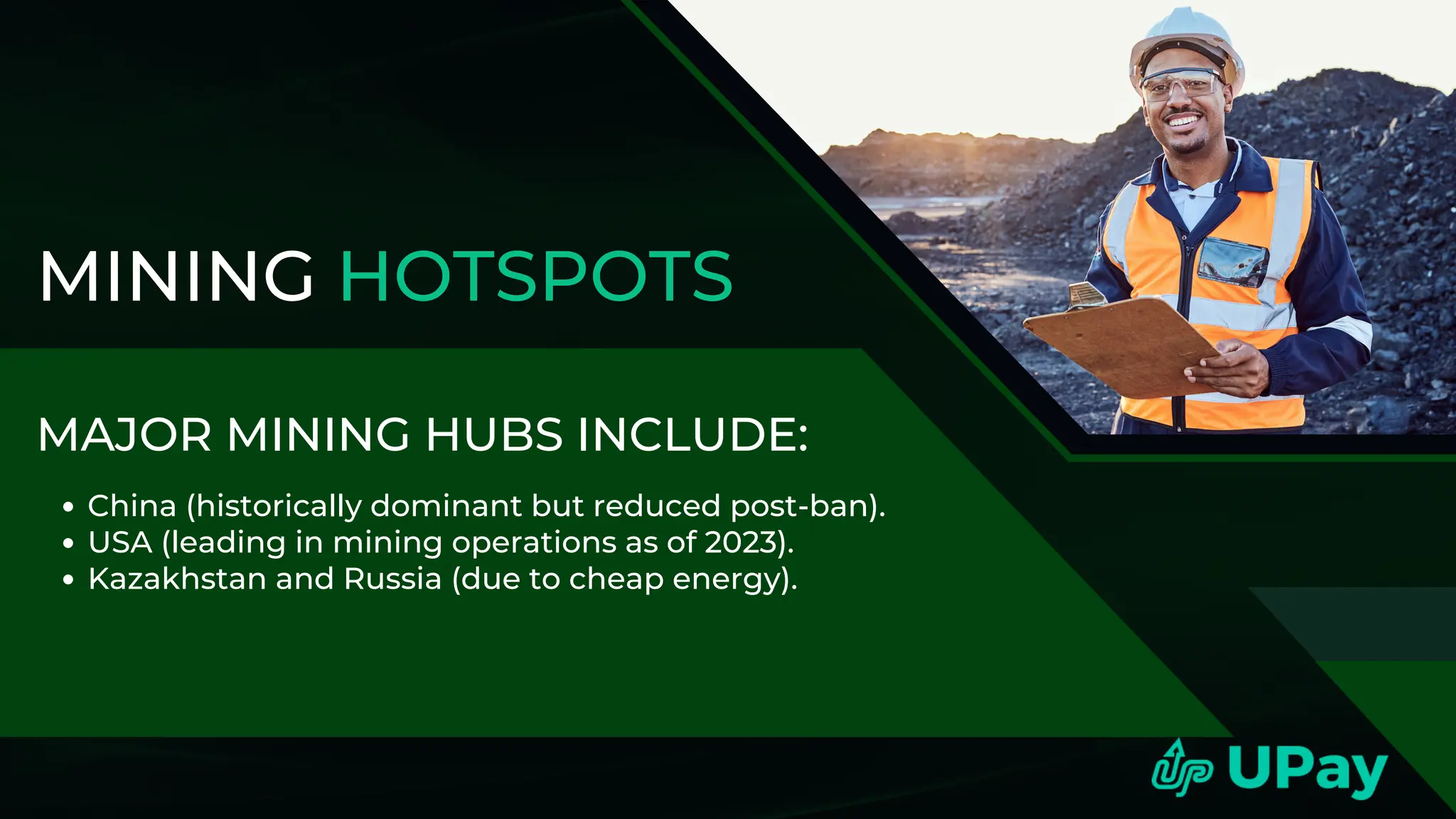
MINING HOTSPOTS
China (historically dominant but reduced post-ban).
USA (leading in mining operations as of 2023).
Kazakhstan and Russia (due to cheap energy).
MAJOR MINING HUBS INCLUDE:
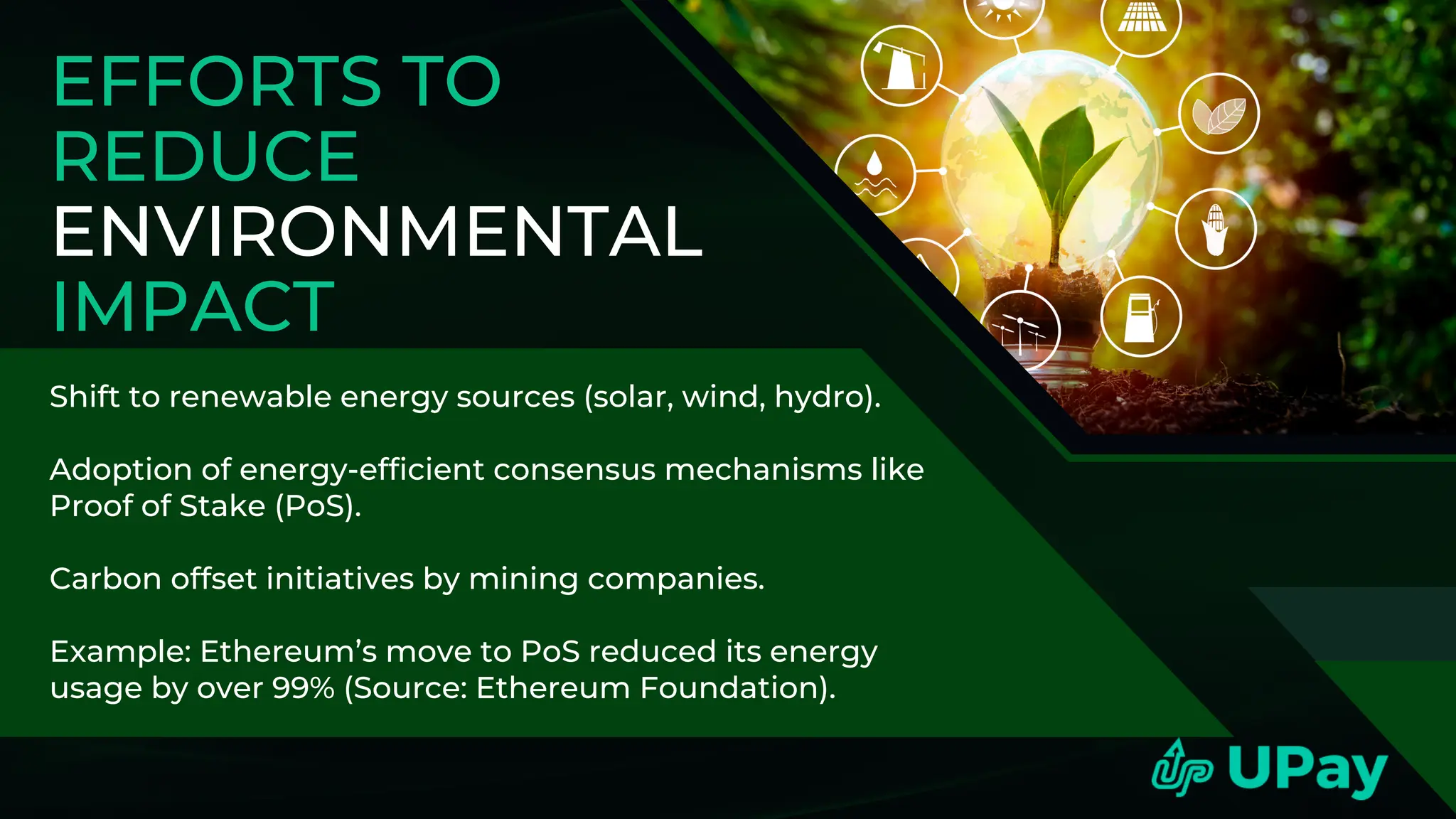
EFFORTS TO
REDUCE
ENVIRONMENTAL
IMPACT
Shift to renewable energy sources (solar, wind, hydro).
Adoption of energy-efficient consensus mechanisms like
Proof of Stake (PoS).
Carbon offset initiatives by mining companies.
Example: Ethereum’s move to PoS reduced its energy
usage by over 99% (Source: Ethereum Foundation).
CRYPTOCURRENCY MINING:HOW IT WORKS AND ITS ENVIRONMENTAL IMPACT

CRYPTOCURRENCY MINING:HOW IT WORKS AND ITS ENVIRONMENTAL IMPACT

  • 1.
    CRYPTOCURRENCY MINING: HOW ITWORKS AND ITS ENVIRONMENTAL IMPACT UNLOCKING THE SECRETS BEHIND BLOCKCHAIN POWERHOUSES AND THEIR EFFECT ON OUR PLANET
  • 2.
    Statistic: Bitcoin miningconsumes about 121 TWh of electricity annually—equivalent to the energy use of Argentina (Source: Cambridge Bitcoin Electricity Consumption Index). INTRODUCTION Cryptocurrency mining is the backbone of decentralized networks. But what is it, and why does it have such a significant environmental footprint?
  • 3.
    WHAT IS CRYPTOCURRENCY MINING? Cryptocurrency miningis the process of validating and adding transactions to a blockchain ledger by solving complex mathematical puzzles. Miners are rewarded with cryptocurrency for their efforts.
  • 5.
    HOW DOES MININGWORK? Transaction Pool: Pending transactions enter the pool. Puzzle Solving: Miners use computational power to solve cryptographic puzzles. Block Addition: Once solved, the transaction block is added to the blockchain. Reward: The miner earns a crypto reward (e.g., Bitcoin).
  • 6.
    PROOF OF WORK (POW)MECHANISM Most crypto mining uses Proof of Work (PoW), which requires significant computational power to validate blocks. It ensures security but consumes immense energy
  • 7.
    ENERGY CONSUMPTION IN MINING Cryptomining is energy-intensive due to its reliance on powerful hardware. Bitcoin alone accounts for 0.6% of the world’s electricity consumption (Source: CBECI). Statistic: One Bitcoin transaction uses more energy than 100,000 VISA transactions.
  • 9.
    WHY IS MININGSO ENERGY-INTENSIVE? Specialized hardware (e.g., ASICs) requires significant electricity. Constant operation to solve puzzles quickly. Miners compete globally, increasing power usage to stay competitive.
  • 10.
    ENVIRONMENTAL IMPACT Most crypto mininguses Proof of Work (PoW), which requires significant computational power to validate blocks. It ensures security but consumes immense energy
  • 11.
    MINING HOTSPOTS China (historicallydominant but reduced post-ban). USA (leading in mining operations as of 2023). Kazakhstan and Russia (due to cheap energy). MAJOR MINING HUBS INCLUDE:
  • 12.
    EFFORTS TO REDUCE ENVIRONMENTAL IMPACT Shift torenewable energy sources (solar, wind, hydro). Adoption of energy-efficient consensus mechanisms like Proof of Stake (PoS). Carbon offset initiatives by mining companies. Example: Ethereum’s move to PoS reduced its energy usage by over 99% (Source: Ethereum Foundation).