Download as PDF, PPTX


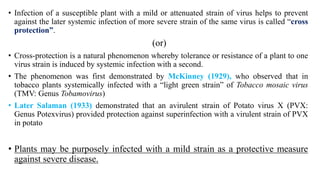
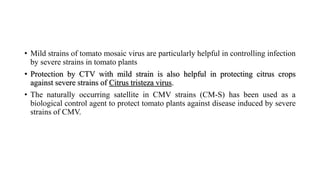
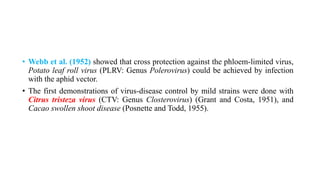
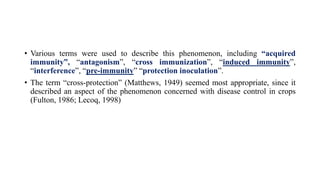
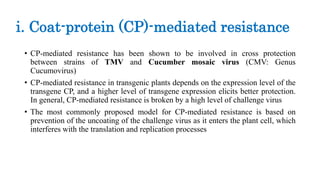
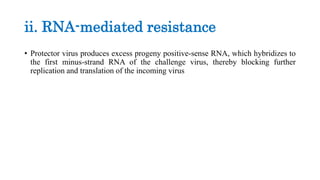
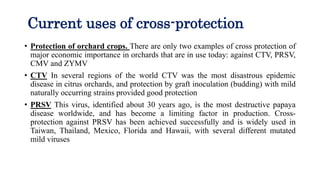
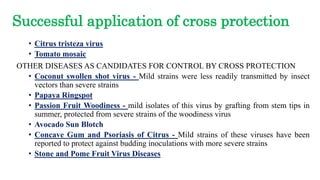
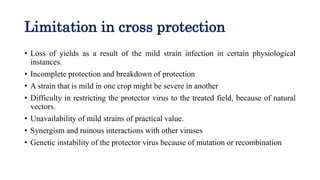
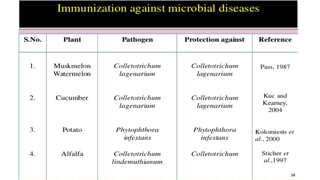
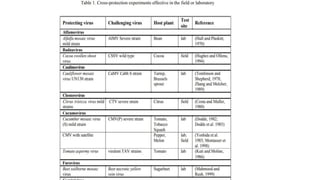


Cross protection occurs when infection of a plant with a mild or attenuated virus strain protects the plant from later infection by a more severe strain of the same virus. This was first demonstrated in 1929 with tobacco mosaic virus. It has since been used successfully to control diseases caused by citrus tristeza virus and papaya ringspot virus. There are two main mechanisms of cross protection - coat protein-mediated resistance, which involves blocking virus uncoating or replication, and RNA-mediated resistance, where excess mild strain RNA hybridizes to block replication of the challenge virus. While cross protection has proven effective for some diseases, there are also limitations such as yield loss, incomplete protection, and genetic instability of the protector virus.


![Polymer [ बहुलक ] Chemistry Notes PDF - Irfanullah Mehar - JJ Sir Chemistry.pdf](https://cdn.slidesharecdn.com/ss_thumbnails/polymerchemistrynotespdf-irfanullahmehar-jjsirchemistry-260210172118-3f9b37f7-thumbnail.jpg?width=640&height=640&fit=bounds)

