
Marissa Halim
zuki sudiana
What Do We Mean by Personal
Relationships?
?
The concept of relationship is very broad
and complex.
Personal relationships refer to close
connections between people, formed by
emotional bonds and interactions.
These bonds often grow from and are
strengthened by mutual experiences.
Relationships are not static ; they
are continually evolving, and to
fully enjoy and benefit from them
we need skills, information,
inspiration, practice, and social
support.
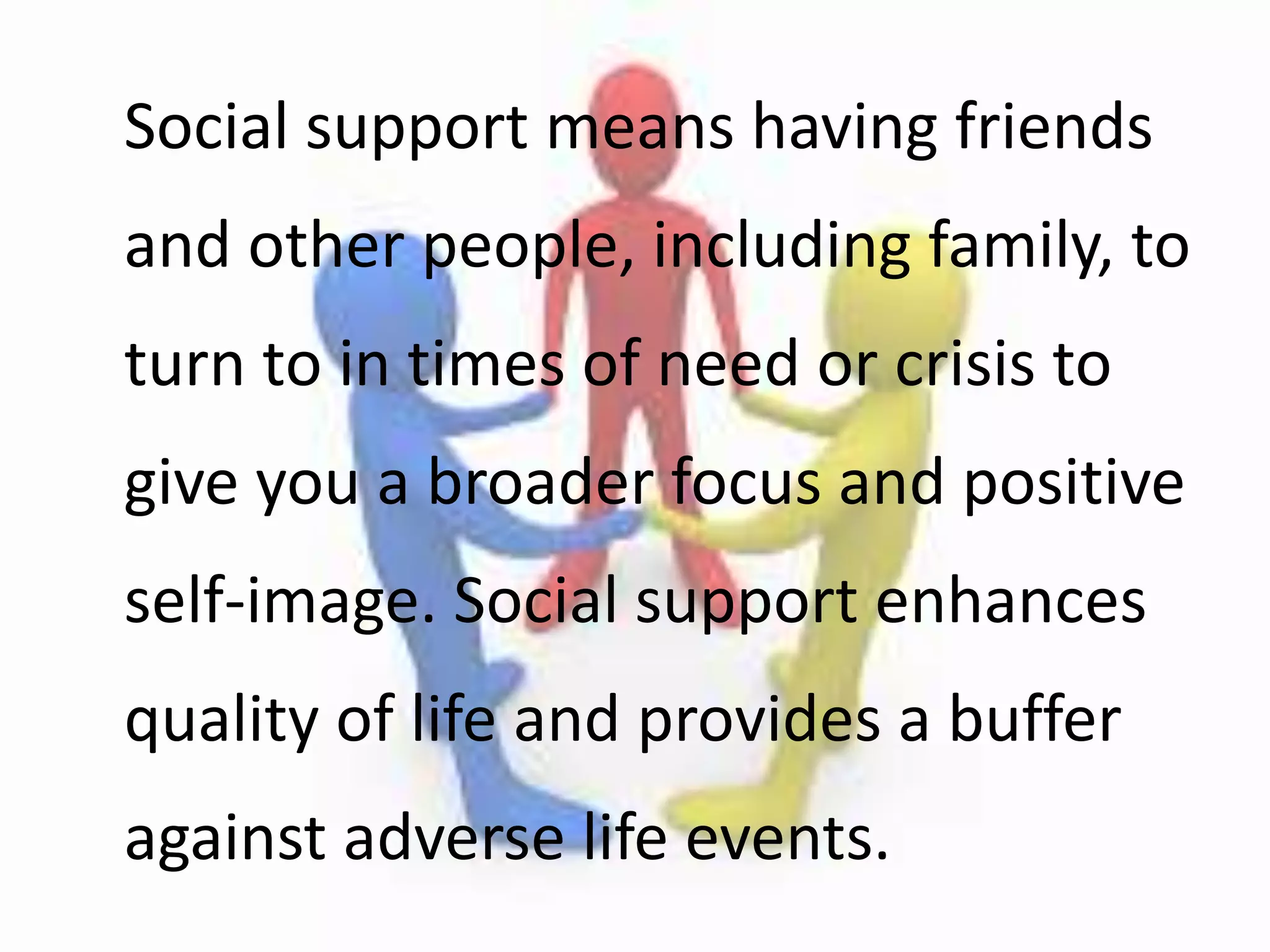
Social support means having friends
and other people, including family, to
turn to in times of need or crisis to
give you a broader focus and positive
self-image. Social support enhances
quality of life and provides a buffer
against adverse life events.
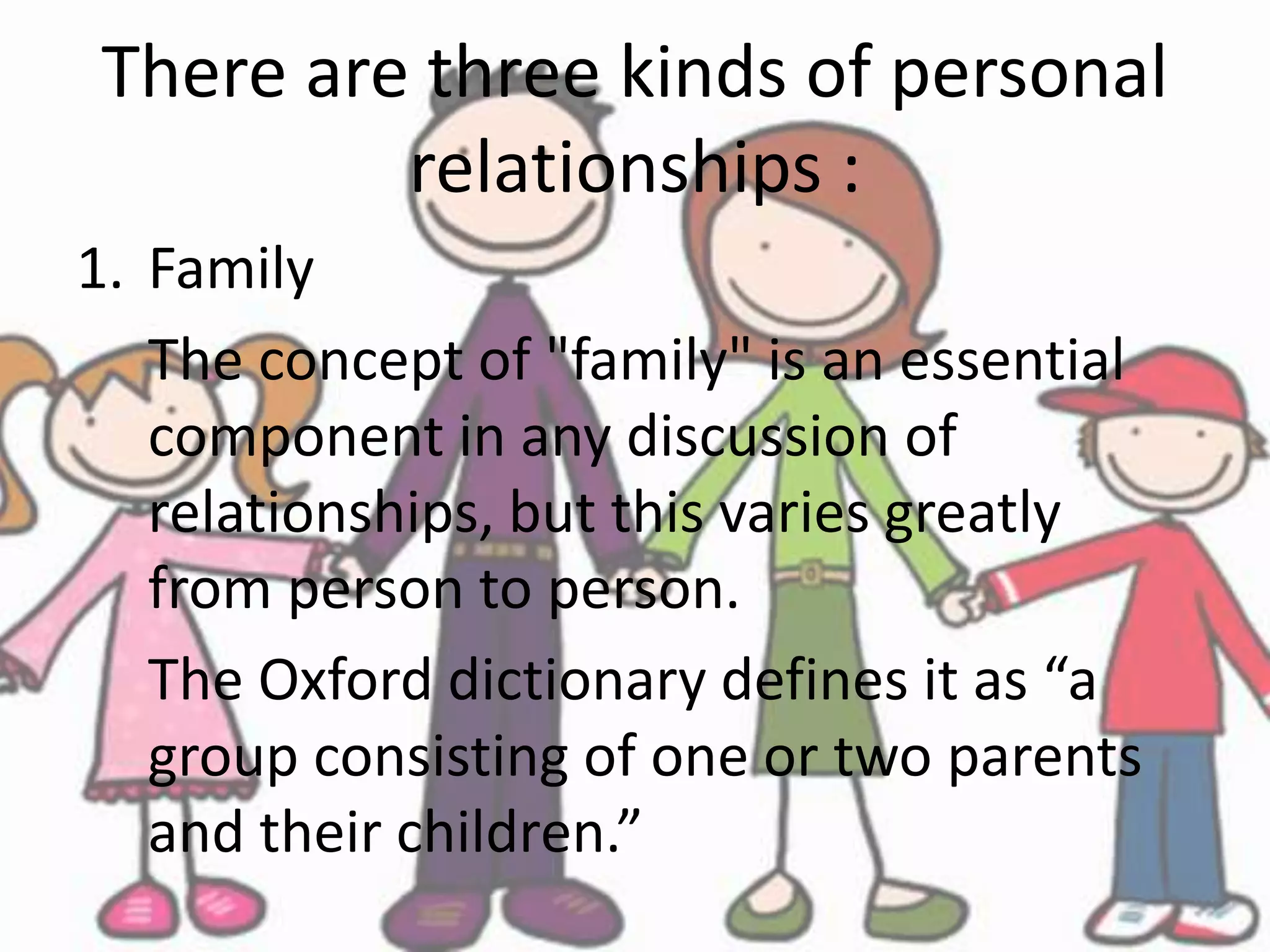
There are three kinds of personal
relationships :
1. Family
The concept of "family" is an essential
component in any discussion of
relationships, but this varies greatly
from person to person.
The Oxford dictionary defines it as “a
group consisting of one or two parents
and their children.”
2. Friends
The dictionary defines it as “one attached
to another by affection or esteem.”
Ancient philosophers and contemporary
scientists agree that one of the keys to
happiness is strong relationship with other
people.
We need to have intimate, enduring
bonds; we need to be able to confide; we
need to feel that we belong; we need to
be able to get support, and just as
important for happiness, to give support.
We need many kinds of relationships; for
one thing, we need friends.
Friends are able to turn to each other in
times of need. Friends may have known
each other since childhood or they have
recently met. A friendship can be
thought of as a close tie between two
people that is often built upon mutual
experiences, shared interests, proximity,
and emotional bonding.
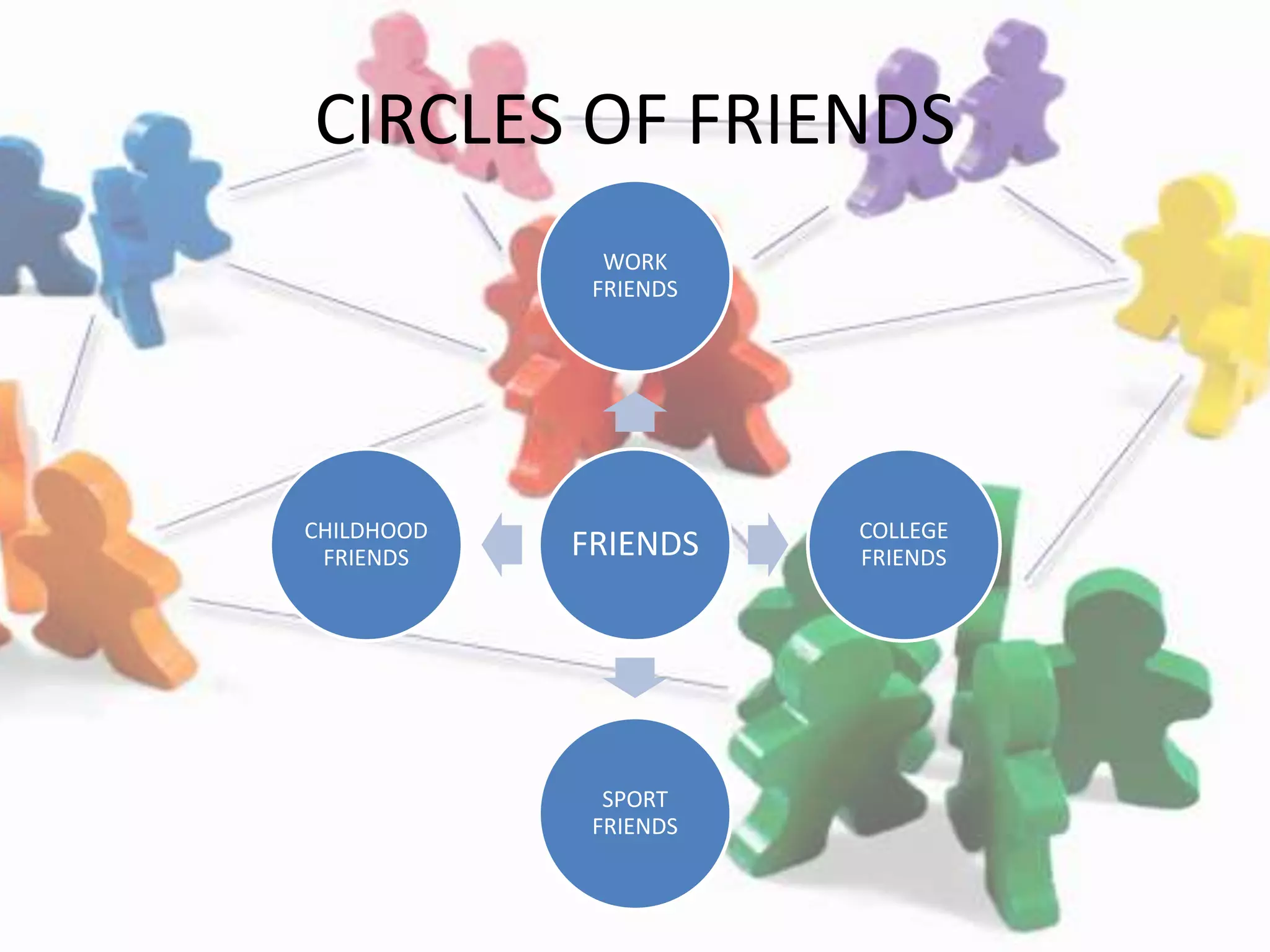
CIRCLES OF FRIENDS
FRIENDS
WORK
FRIENDS
COLLEGE
FRIENDS
SPORT
FRIENDS
CHILDHOOD
FRIENDS
3. Partnership
Romantic partnerships, including
marriage, are close relationships formed
between two people that are built upon
affection, trust, intimacy, and romantic
love. We usually experience this kind of
relationship with only one person at a
time.
Instant Friendship
• Many people frequently smile or say, “ Have a
nice day” or “See ya later.” or even extend an
invitation as part of cultural pattern of
politeness.
• In the United States men and women socialize
relatively freely and develop a variety of
relationship. Single people of opposite sexes
may be close friends and share person.
Instant Friendship
• Friendship and friendliness are not
synonymous. Friendliness characterizes much
of American daily interaction but is not always
an indication of friendship.
• Strangers may share life histories without any
intention of pursuing a relationship.
• Characterizing instant friendships is the
appearance of two people becoming close
but, in reality, there is no strong bond
between them.
Instant Friendship
• Men and women interact in varying degrees of
intensity. Dating may be serious or casual. A
couple may terminate a relationship after three
dates or may date steadily and exclusively for a
long period of time.
• Married men and women sometimes consider
each other best friends as well as spouses. They
also socialize with members of the opposite sex
either as couples or independently.
Instant Friendship
• This does not mean that there are no
constrains on the married man or
women, the limitations of these
relationships are not always visible but
they do exist. Most, but not all, married
American couple practice monogamous
relationships.
Intercultural Friendship
• There is very little scholarly research regarding
the dynamics of friendship. This is partially due to
the fact that friendship means different things to
different people, making it a very diverse
concept. In some cultures, it is regulated or
limited to family members. Other cultures might
consider acquaintances to be friends, perhaps
even members of their community they don't
even know well. The relationships also vary in
terms of length and intensity. Forging friendships
across differing cultures adds complex dynamics,
resulting in enriching experiences.
CROSS CULTURE UNDERSTANDING-PERSONAL RELATIONSHIP

CROSS CULTURE UNDERSTANDING-PERSONAL RELATIONSHIP

  • 1.
  • 2.
    What Do WeMean by Personal Relationships? ?
  • 3.
    The concept ofrelationship is very broad and complex. Personal relationships refer to close connections between people, formed by emotional bonds and interactions. These bonds often grow from and are strengthened by mutual experiences.
  • 4.
    Relationships are notstatic ; they are continually evolving, and to fully enjoy and benefit from them we need skills, information, inspiration, practice, and social support.
  • 5.
    Social support meanshaving friends and other people, including family, to turn to in times of need or crisis to give you a broader focus and positive self-image. Social support enhances quality of life and provides a buffer against adverse life events.
  • 6.
    There are threekinds of personal relationships : 1. Family The concept of "family" is an essential component in any discussion of relationships, but this varies greatly from person to person. The Oxford dictionary defines it as “a group consisting of one or two parents and their children.”
  • 7.
    2. Friends The dictionarydefines it as “one attached to another by affection or esteem.” Ancient philosophers and contemporary scientists agree that one of the keys to happiness is strong relationship with other people.
  • 8.
    We need tohave intimate, enduring bonds; we need to be able to confide; we need to feel that we belong; we need to be able to get support, and just as important for happiness, to give support. We need many kinds of relationships; for one thing, we need friends.
  • 9.
    Friends are ableto turn to each other in times of need. Friends may have known each other since childhood or they have recently met. A friendship can be thought of as a close tie between two people that is often built upon mutual experiences, shared interests, proximity, and emotional bonding.
  • 10.
  • 11.
    3. Partnership Romantic partnerships,including marriage, are close relationships formed between two people that are built upon affection, trust, intimacy, and romantic love. We usually experience this kind of relationship with only one person at a time.
  • 12.
    Instant Friendship • Manypeople frequently smile or say, “ Have a nice day” or “See ya later.” or even extend an invitation as part of cultural pattern of politeness. • In the United States men and women socialize relatively freely and develop a variety of relationship. Single people of opposite sexes may be close friends and share person.
  • 13.
    Instant Friendship • Friendshipand friendliness are not synonymous. Friendliness characterizes much of American daily interaction but is not always an indication of friendship. • Strangers may share life histories without any intention of pursuing a relationship. • Characterizing instant friendships is the appearance of two people becoming close but, in reality, there is no strong bond between them.
  • 14.
    Instant Friendship • Menand women interact in varying degrees of intensity. Dating may be serious or casual. A couple may terminate a relationship after three dates or may date steadily and exclusively for a long period of time. • Married men and women sometimes consider each other best friends as well as spouses. They also socialize with members of the opposite sex either as couples or independently.
  • 15.
    Instant Friendship • Thisdoes not mean that there are no constrains on the married man or women, the limitations of these relationships are not always visible but they do exist. Most, but not all, married American couple practice monogamous relationships.
  • 16.
    Intercultural Friendship • Thereis very little scholarly research regarding the dynamics of friendship. This is partially due to the fact that friendship means different things to different people, making it a very diverse concept. In some cultures, it is regulated or limited to family members. Other cultures might consider acquaintances to be friends, perhaps even members of their community they don't even know well. The relationships also vary in terms of length and intensity. Forging friendships across differing cultures adds complex dynamics, resulting in enriching experiences.