Crime Prevention Through
Environmental Design - CPTED
An Urban Linear Park Example
Chris Tomlinson
Arup Resilience, Security and Risk
My Agenda
 Background to CPTED
-

Design and how it affects crime and fear-of-crime
Is it risk appropriate
Arup’s view of CPTED treatment
CPTED’s ethos

 An Example – a liner public park
- New York’s High Line and comparing it with the proposed
Garden Bridge over the Thames

 Some Final Thoughts.
Design Influencing Crime and Nuisance
“The first thing to understand is that the public peace – the
sidewalk and the street peace – of cities is not kept primarily
by the police, necessary as police are. It is kept primarily by
an intricate, almost unconscious , network of voluntary
controls and standards among the people themselves, and
enforced by the people themselves”.
Jane Jacobs 1961

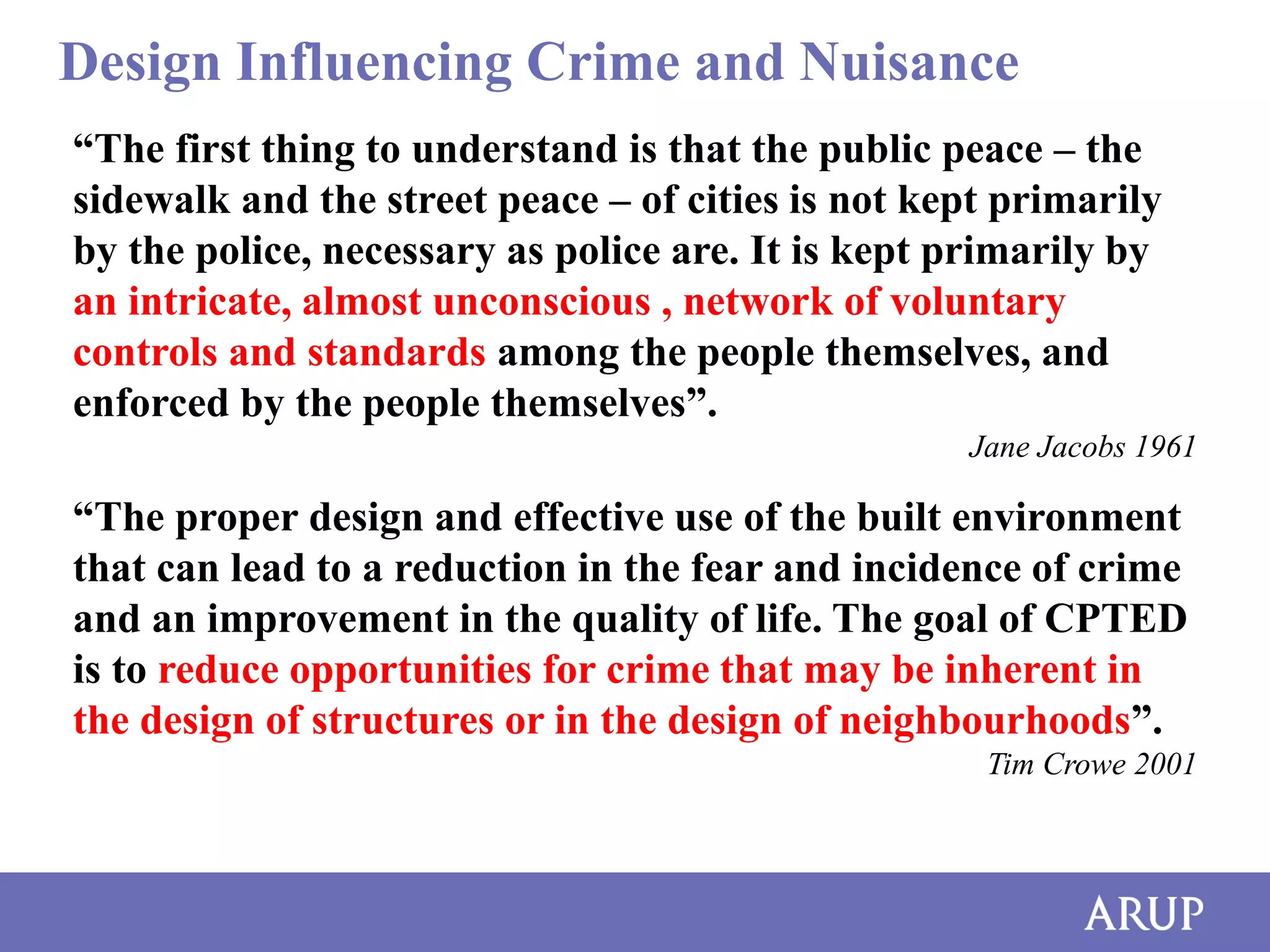
“The proper design and effective use of the built environment
that can lead to a reduction in the fear and incidence of crime
and an improvement in the quality of life. The goal of CPTED
is to reduce opportunities for crime that may be inherent in
the design of structures or in the design of neighbourhoods”.
Tim Crowe 2001
CPTED’s Ethos
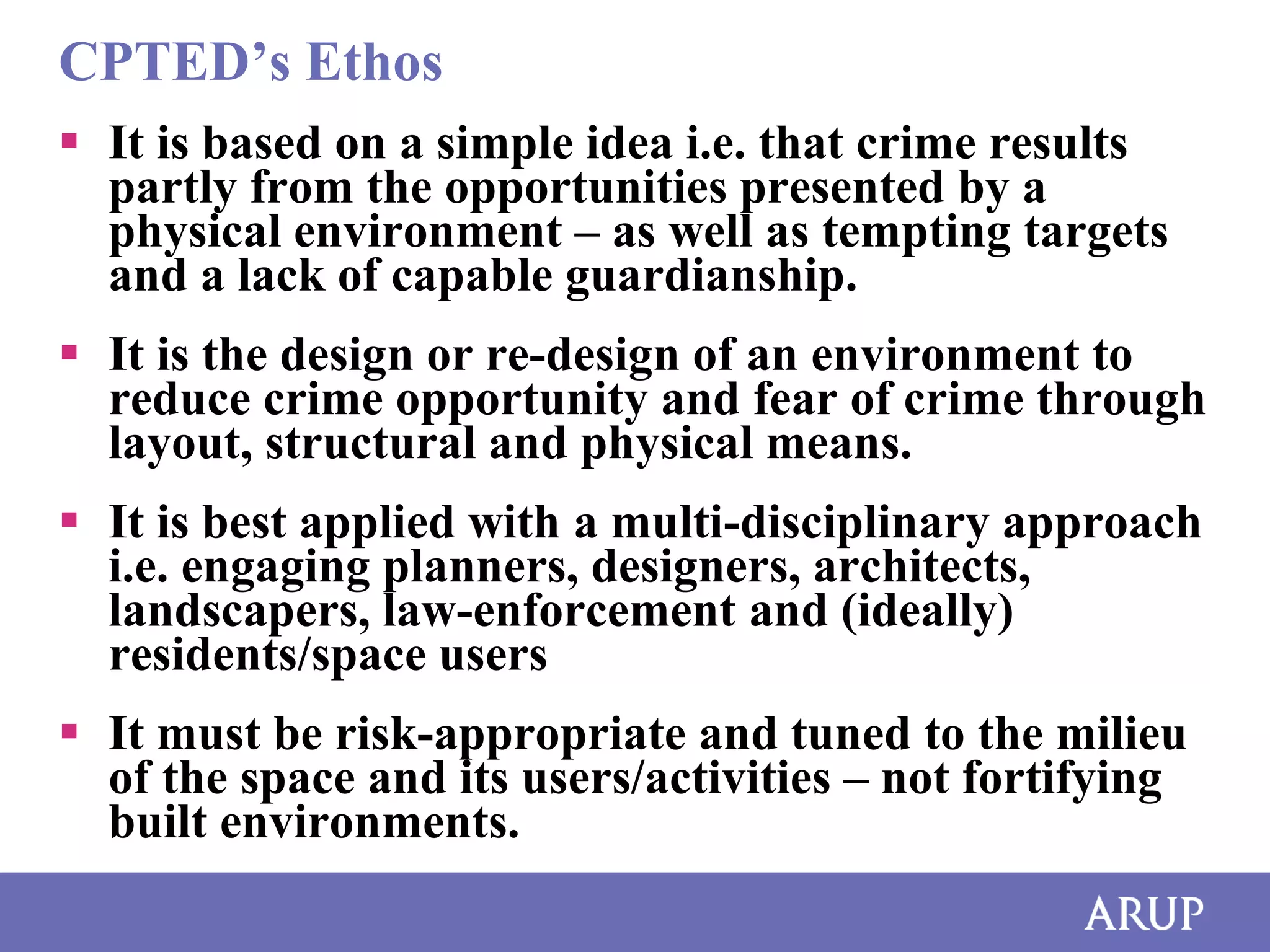
 It is based on a simple idea i.e. that crime results
partly from the opportunities presented by a
physical environment – as well as tempting targets
and a lack of capable guardianship.
 It is the design or re-design of an environment to
reduce crime opportunity and fear of crime through
layout, structural and physical means.
 It is best applied with a multi-disciplinary approach
i.e. engaging planners, designers, architects,
landscapers, law-enforcement and (ideally)
residents/space users

 It must be risk-appropriate and tuned to the milieu
of the space and its users/activities – not fortifying
built environments.
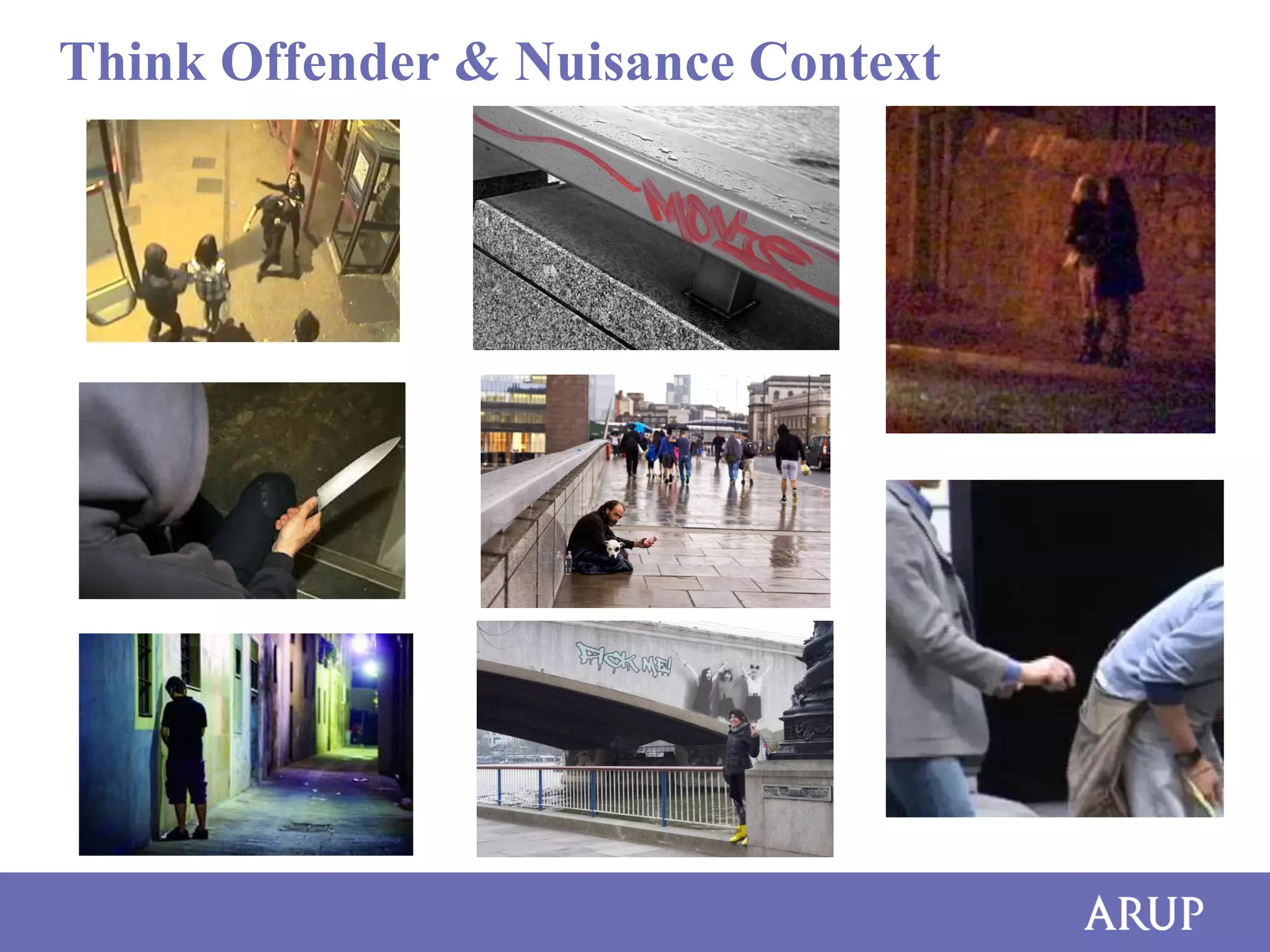
Think Offender & Nuisance Context
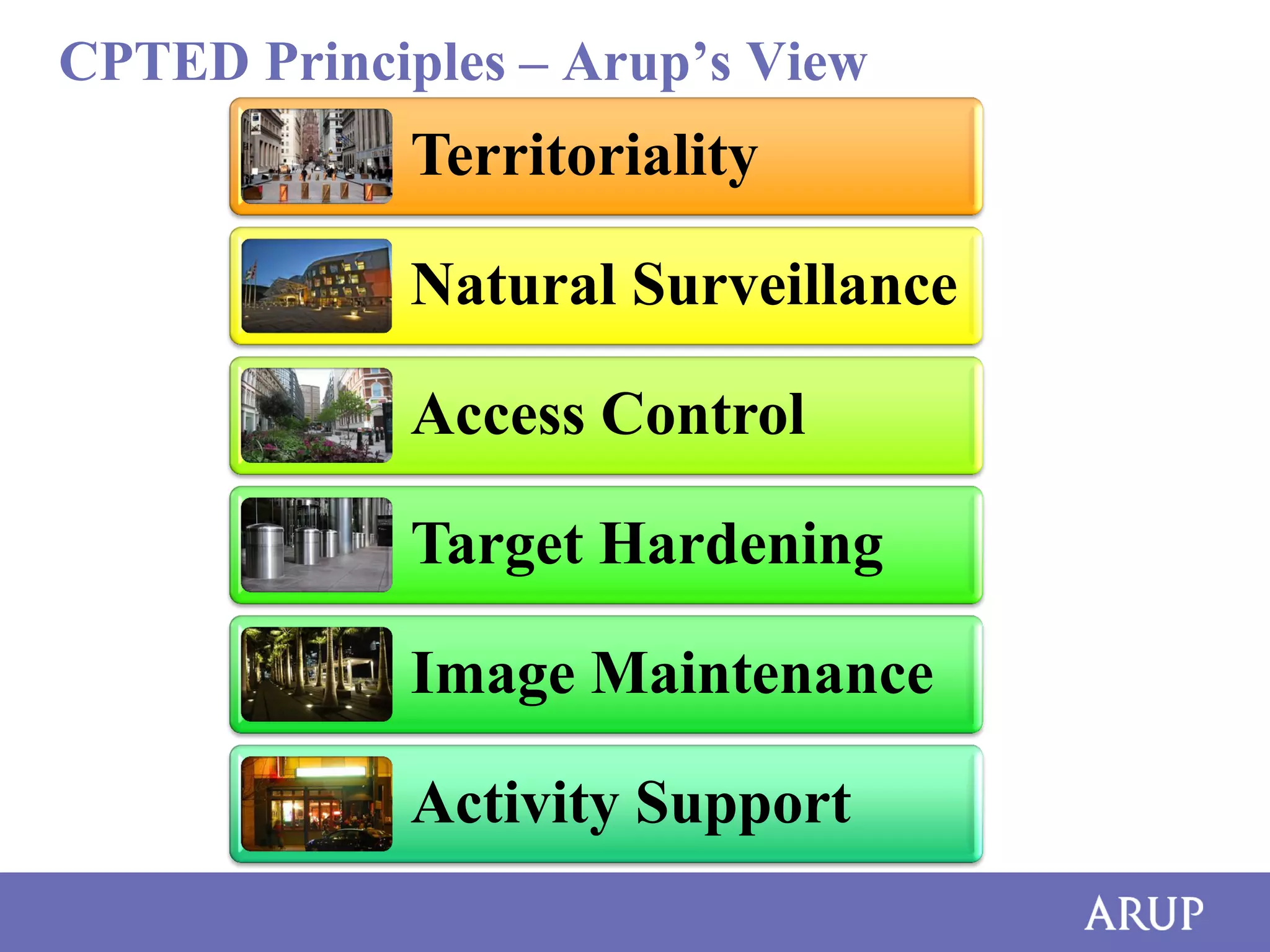
CPTED Principles – Arup’s View

Territoriality
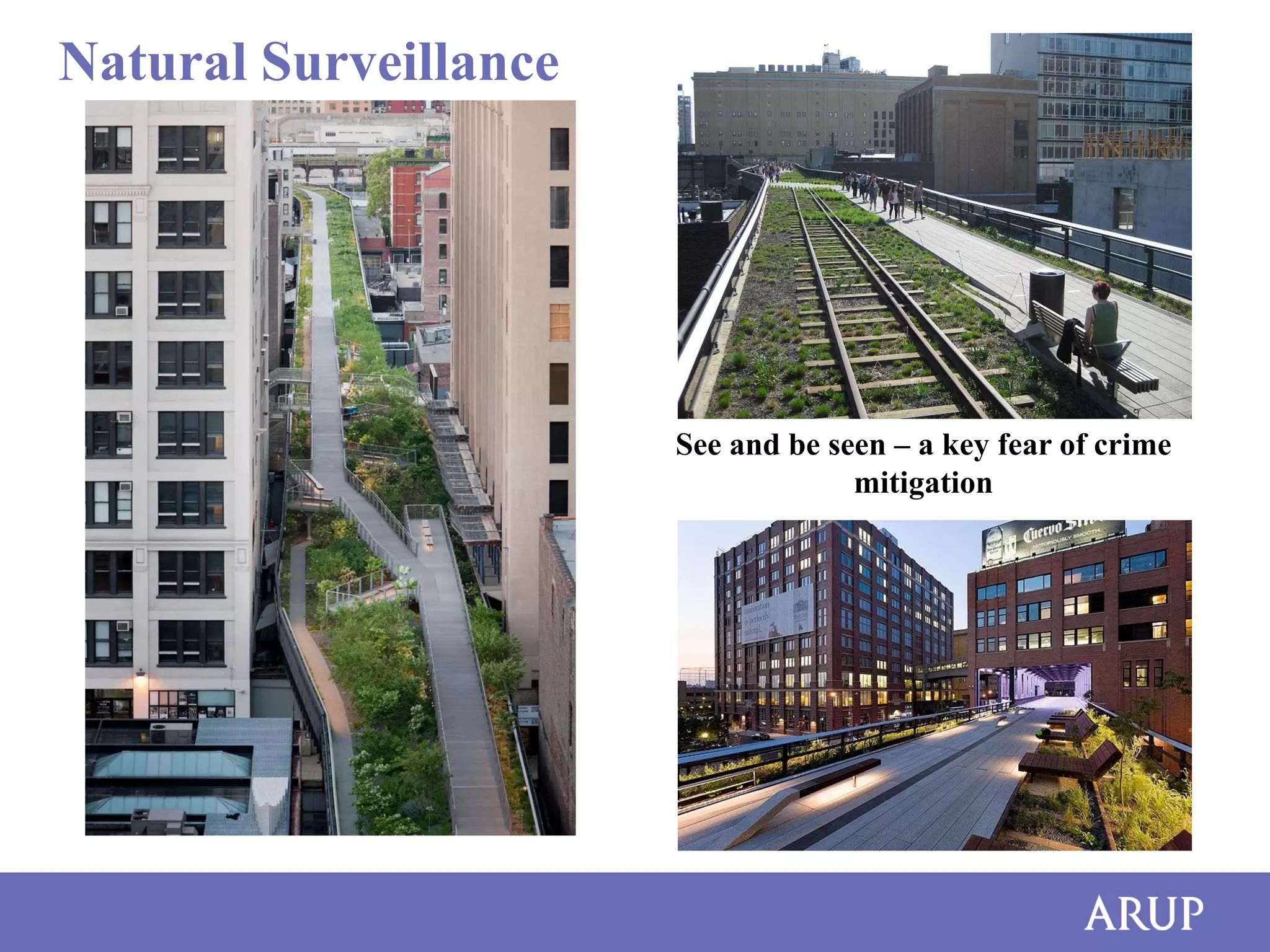
Natural Surveillance
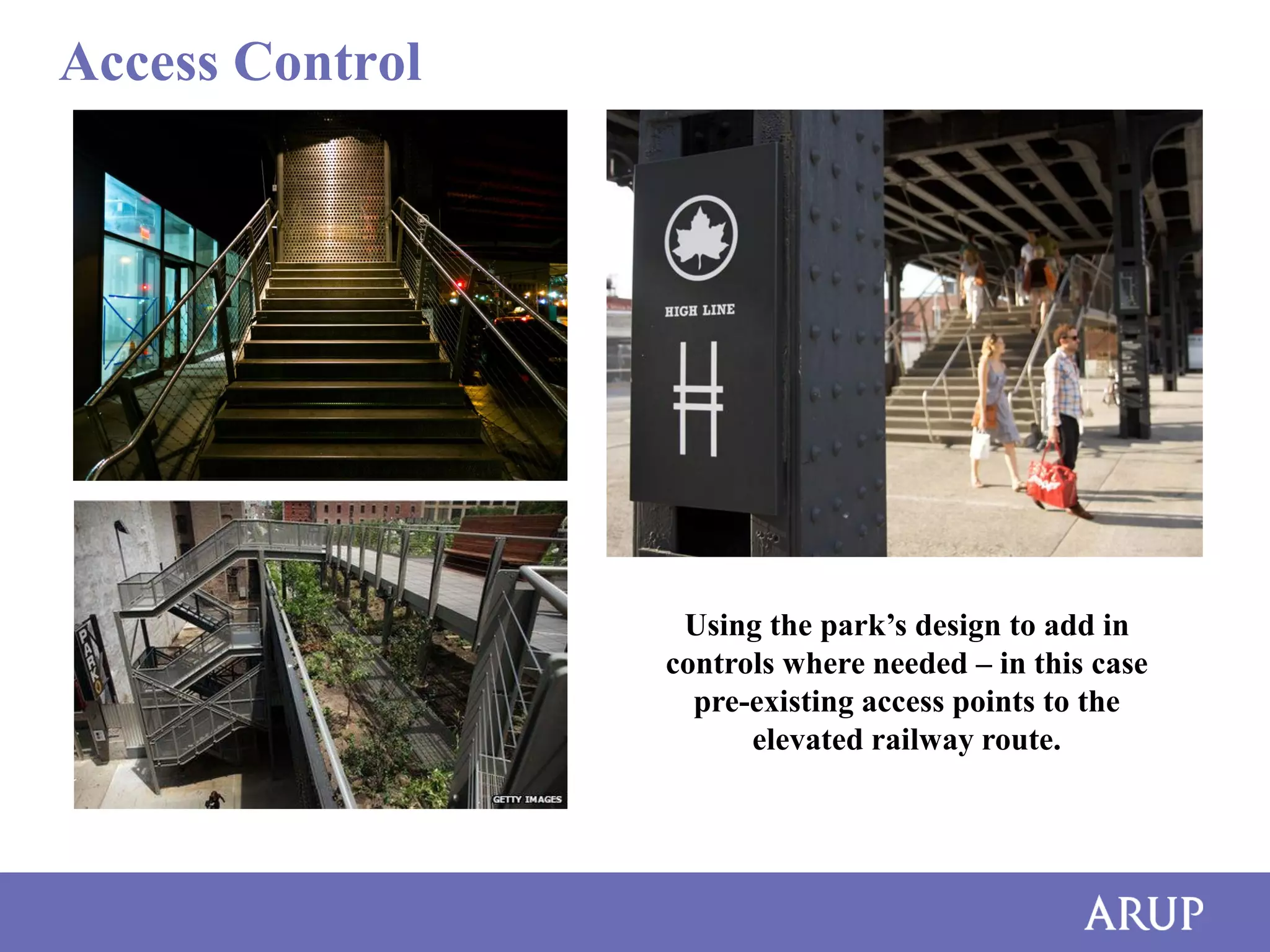
Access Control
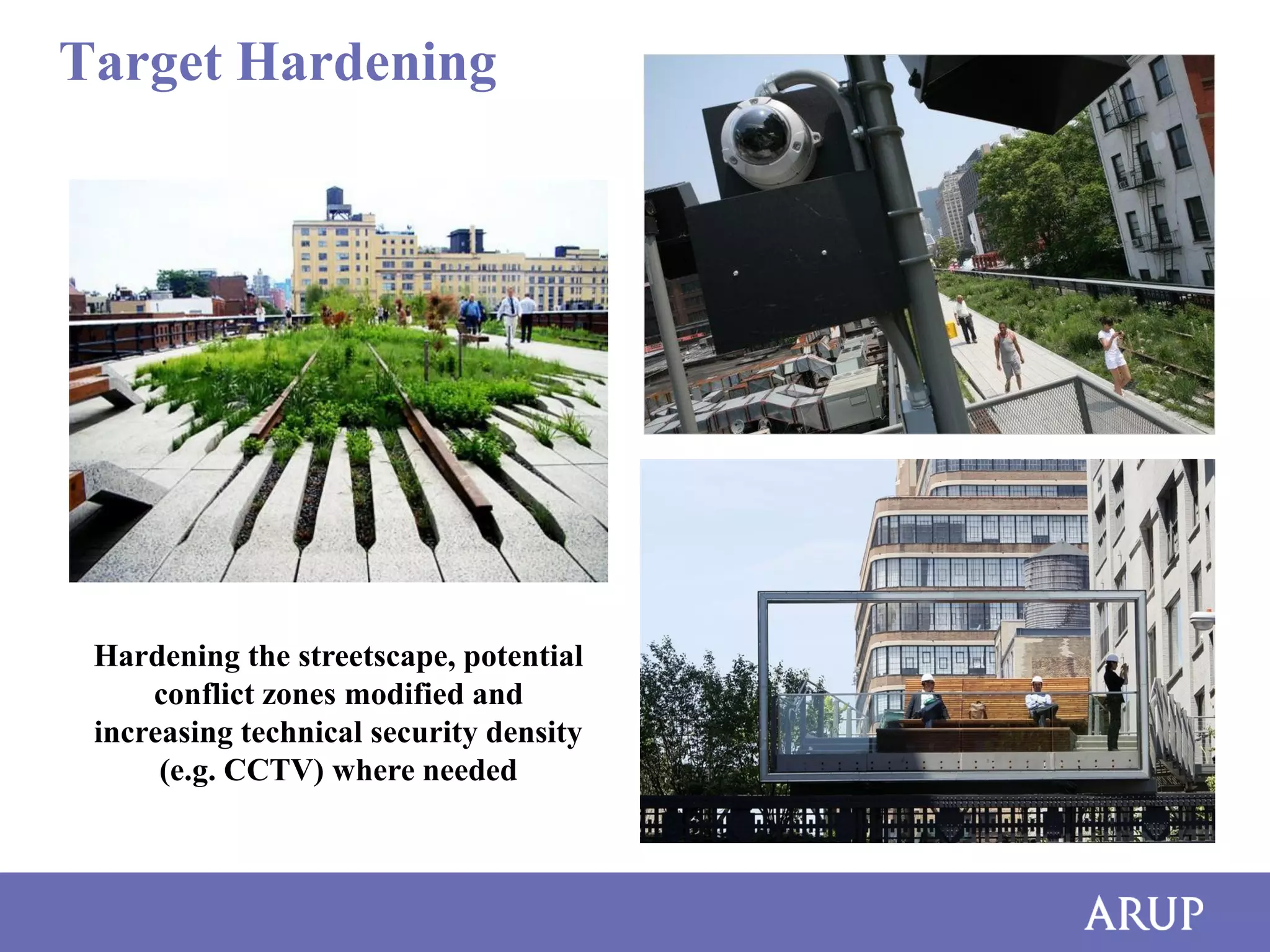
Target Hardening

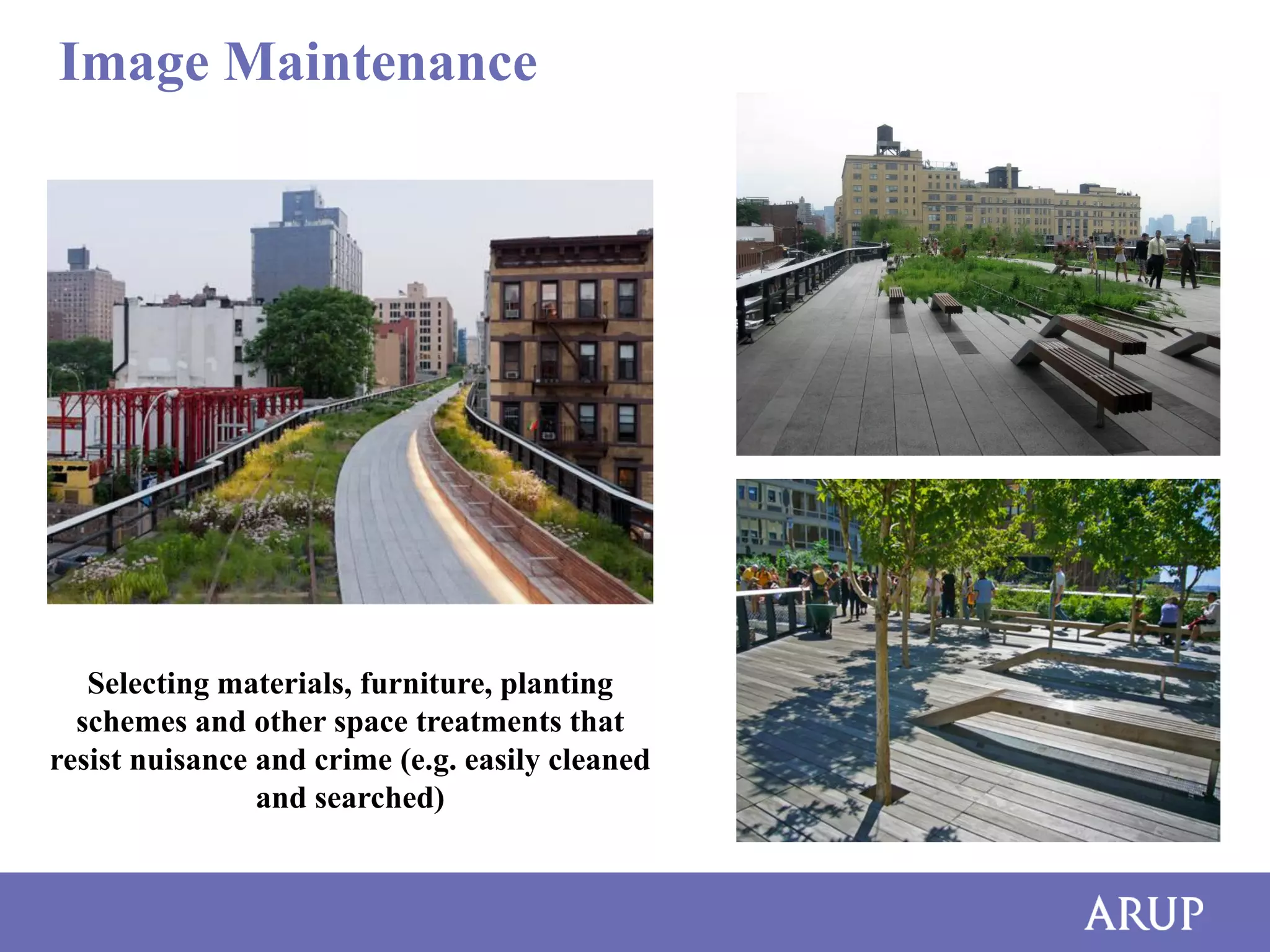
Image Maintenance
Activity Support
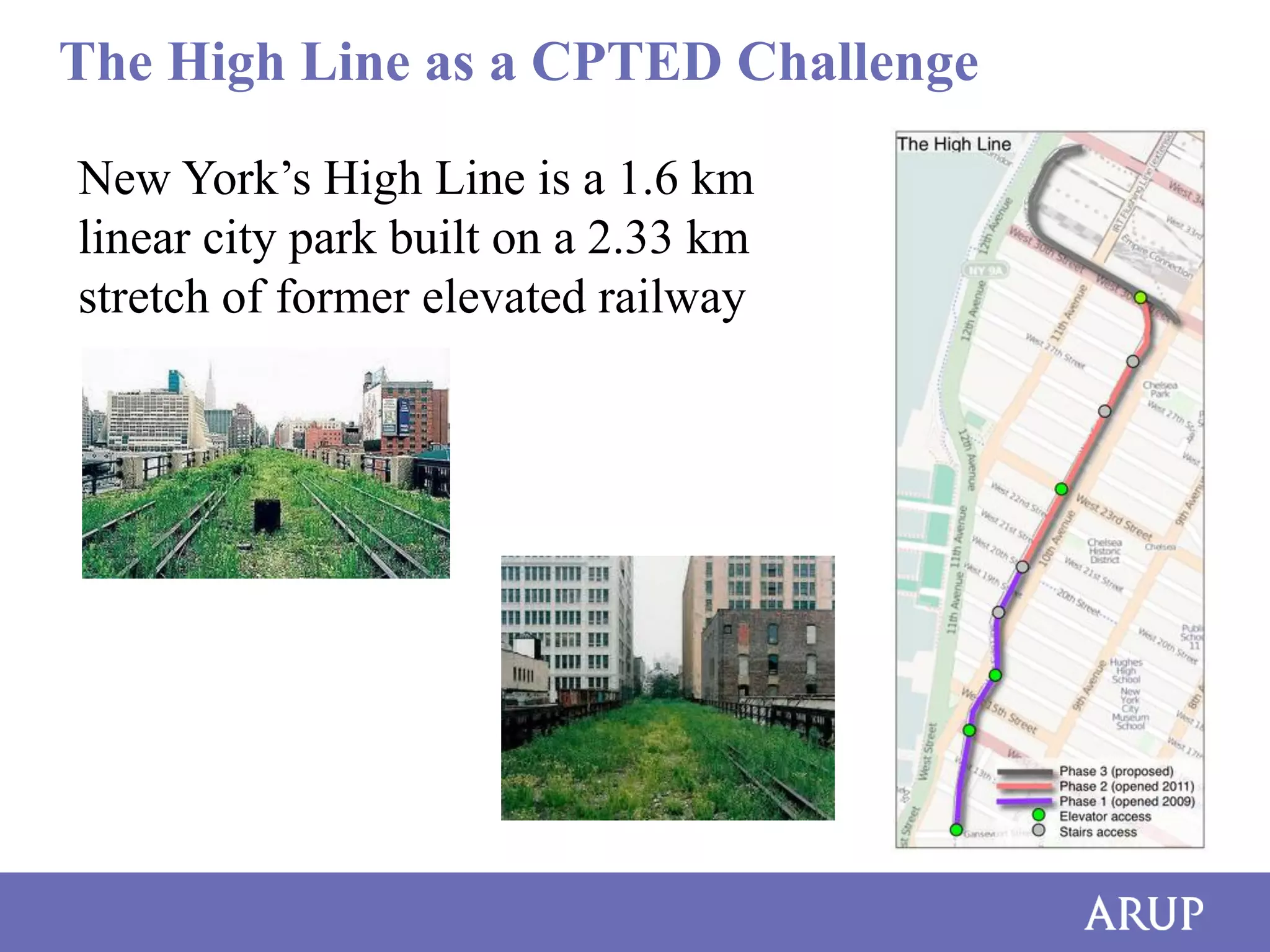
The High Line as a CPTED Challenge
New York’s High Line is a 1.6 km
linear city park built on a 2.33 km
stretch of former elevated railway
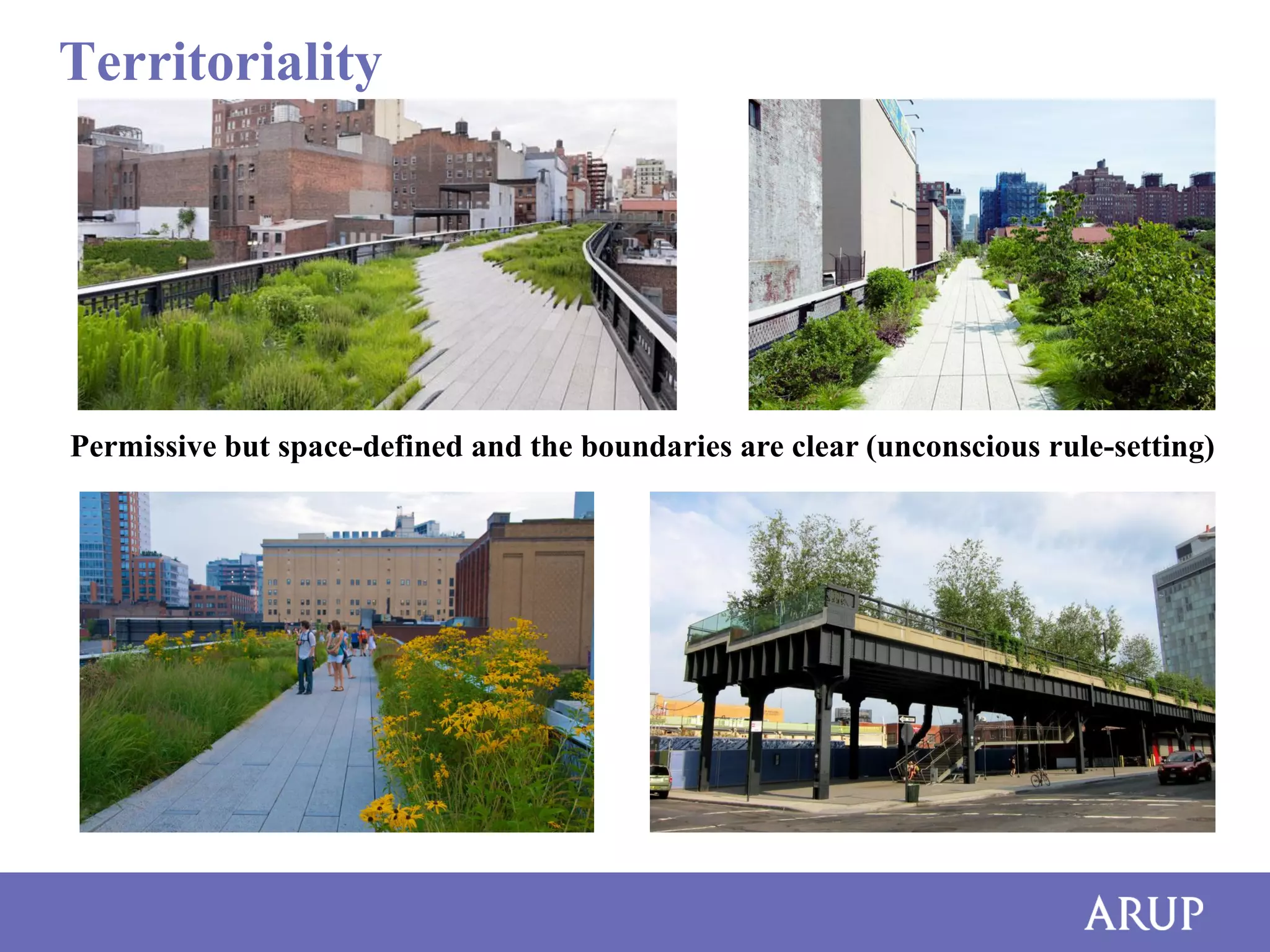
Territoriality

Permissive but space-defined and the boundaries are clear (unconscious rule-setting)
Natural Surveillance

See and be seen – a key fear of crime
mitigation
Access Control

Using the park’s design to add in
controls where needed – in this case
pre-existing access points to the
elevated railway route.
Target Hardening

Hardening the streetscape, potential
conflict zones modified and
increasing technical security density
(e.g. CCTV) where needed
Image Maintenance

Selecting materials, furniture, planting
schemes and other space treatments that
resist nuisance and crime (e.g. easily cleaned
and searched)
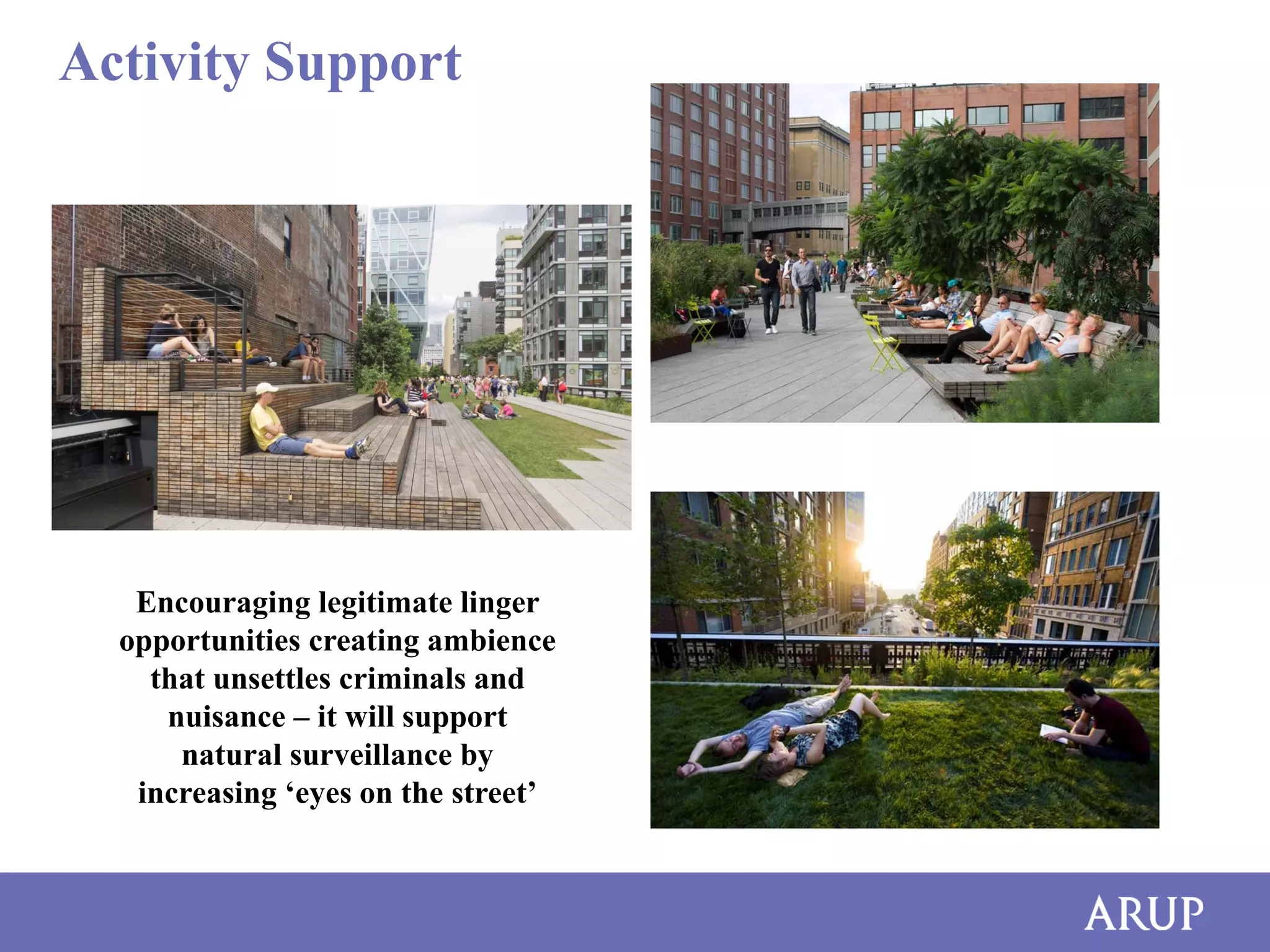
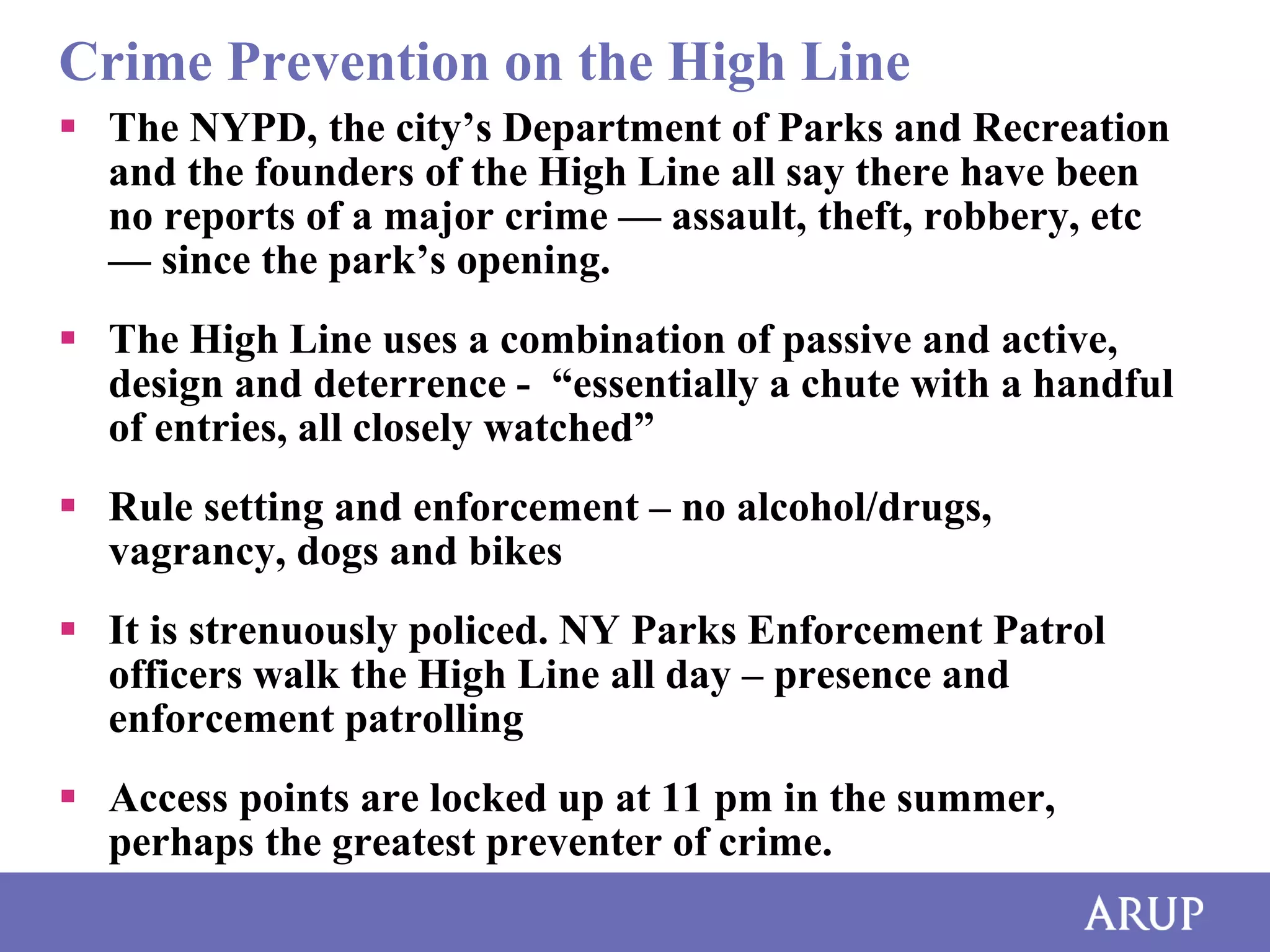
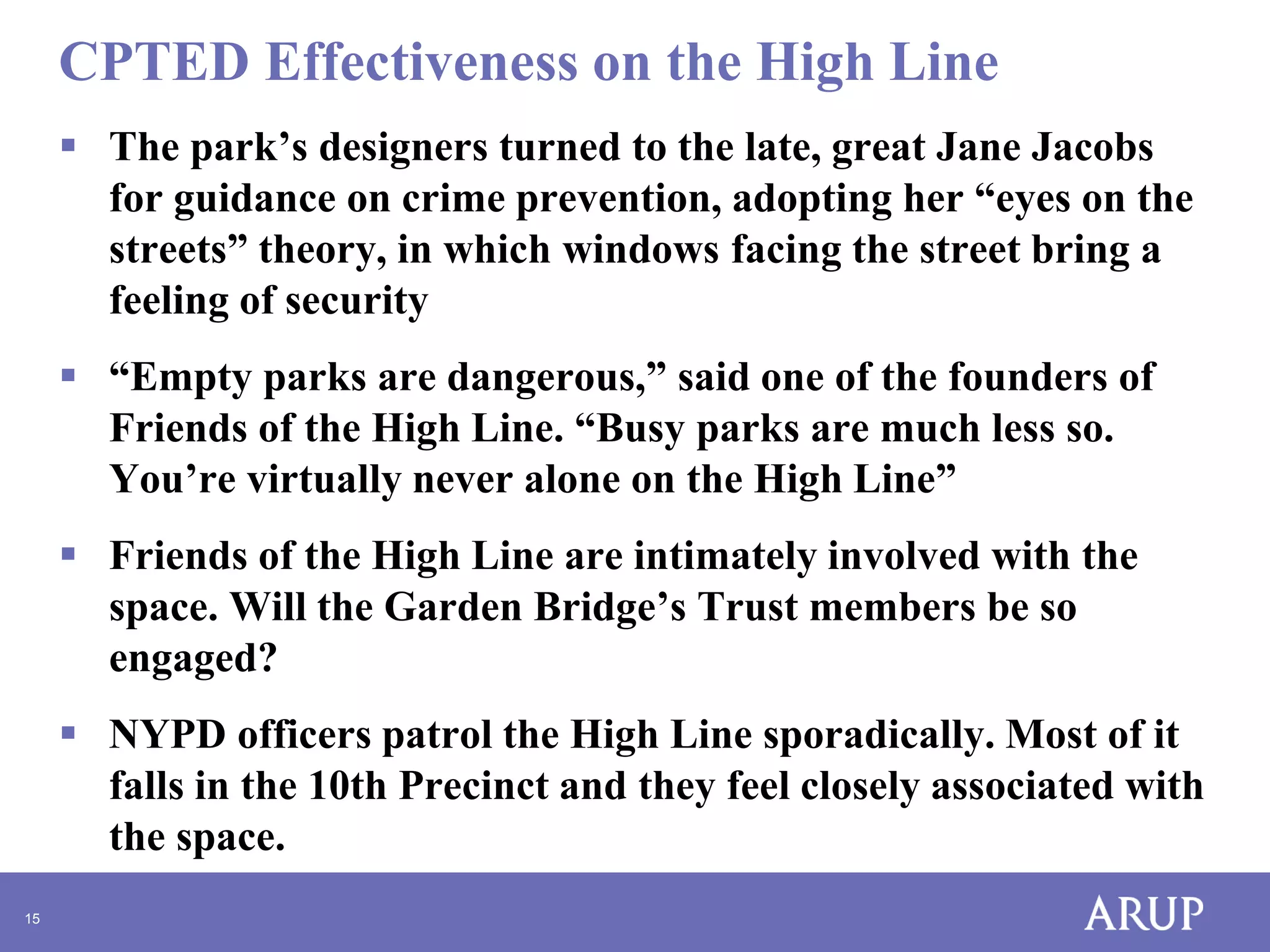
Activity Support

Encouraging legitimate linger
opportunities creating ambience
that unsettles criminals and
nuisance – it will support
natural surveillance by
increasing ‘eyes on the street’
Crime Prevention on the High Line
 The NYPD, the city’s Department of Parks and Recreation
and the founders of the High Line all say there have been
no reports of a major crime — assault, theft, robbery, etc
— since the park’s opening.
 The High Line uses a combination of passive and active,
design and deterrence - “essentially a chute with a handful
of entries, all closely watched”
 Rule setting and enforcement – no alcohol/drugs,
vagrancy, dogs and bikes
 It is strenuously policed. NY Parks Enforcement Patrol
officers walk the High Line all day – presence and
enforcement patrolling
 Access points are locked up at 11 pm in the summer,
perhaps the greatest preventer of crime.
CPTED Effectiveness on the High Line
 The park’s designers turned to the late, great Jane Jacobs
for guidance on crime prevention, adopting her “eyes on the
streets” theory, in which windows facing the street bring a
feeling of security
 “Empty parks are dangerous,” said one of the founders of
Friends of the High Line. “Busy parks are much less so.
You’re virtually never alone on the High Line”

 Friends of the High Line are intimately involved with the
space. Will the Garden Bridge’s Trust members be so
engaged?
 NYPD officers patrol the High Line sporadically. Most of it
falls in the 10th Precinct and they feel closely associated with
the space.
15
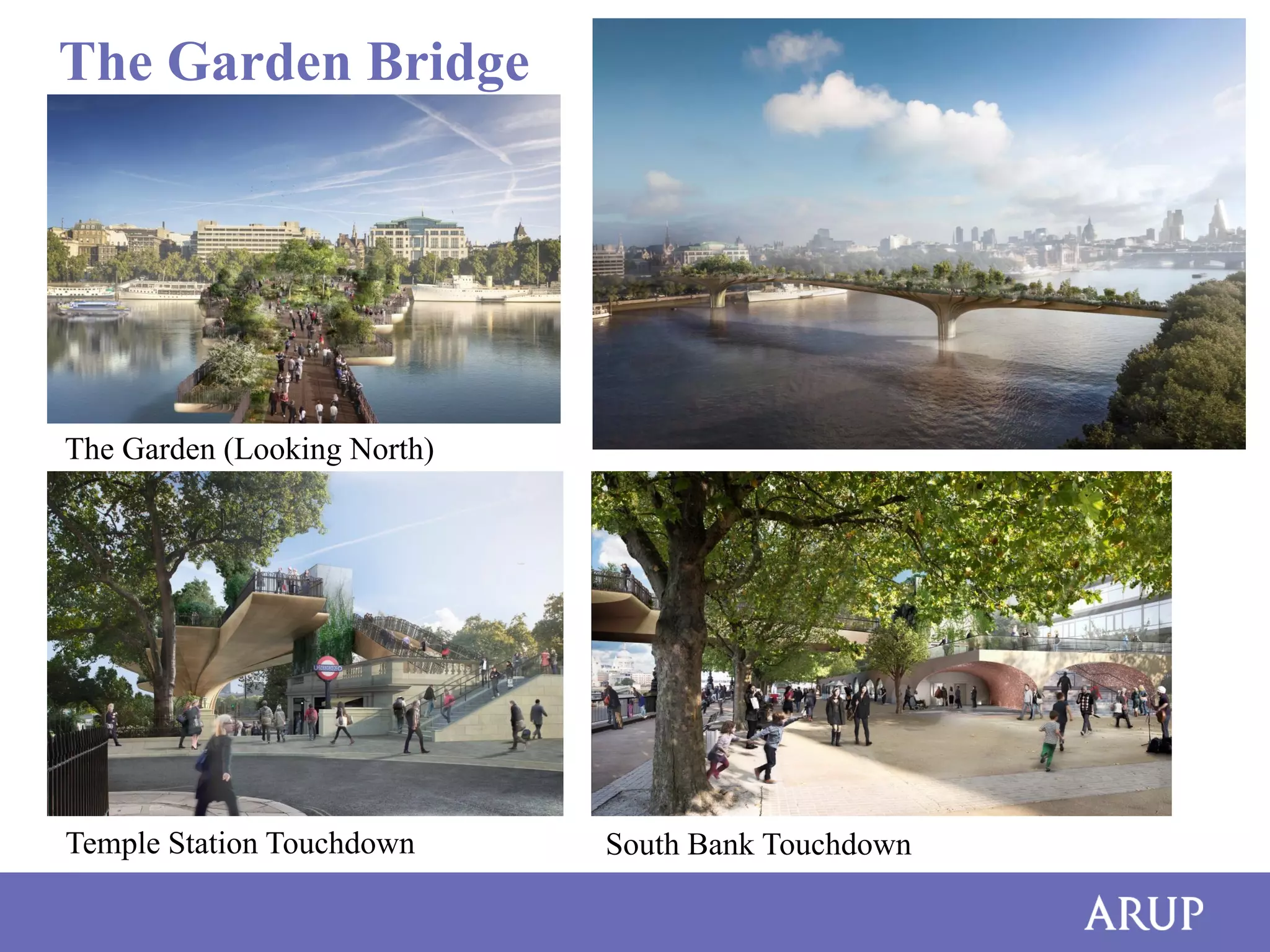
The Garden Bridge

The Garden (Looking North)

Temple Station Touchdown

South Bank Touchdown
Final Thoughts
 Implementing what we already know about CPTED and
ensuring its early integration in built space design has
benefits as it will mitigate threats, whilst producing less
‘fortified’ places – but do it early in design
 Given that policing in the UK will come under more and
more financial pressure; it makes sense to design out crime
and nuisance opportunities to help reduce the policing
burden
 Losing a place to real or perceived crime threats is hard to
correct and will be expensive; doing the best to design space
to reduce fear keeps places animated and used
 People tend to overlook the ‘Carbon Cost of Crime’; so
promoting strategies that bear down on the CO2 associated
with crime and nuisance has to be a sustainability-enabler.
Any Questions?

chris.tomlinson@arup.com

CPTED Presentation given to London First

  • 1.
    Crime Prevention Through EnvironmentalDesign - CPTED An Urban Linear Park Example Chris Tomlinson Arup Resilience, Security and Risk
  • 2.
    My Agenda  Backgroundto CPTED - Design and how it affects crime and fear-of-crime Is it risk appropriate Arup’s view of CPTED treatment CPTED’s ethos  An Example – a liner public park - New York’s High Line and comparing it with the proposed Garden Bridge over the Thames  Some Final Thoughts.
  • 3.
    Design Influencing Crimeand Nuisance “The first thing to understand is that the public peace – the sidewalk and the street peace – of cities is not kept primarily by the police, necessary as police are. It is kept primarily by an intricate, almost unconscious , network of voluntary controls and standards among the people themselves, and enforced by the people themselves”. Jane Jacobs 1961 “The proper design and effective use of the built environment that can lead to a reduction in the fear and incidence of crime and an improvement in the quality of life. The goal of CPTED is to reduce opportunities for crime that may be inherent in the design of structures or in the design of neighbourhoods”. Tim Crowe 2001
  • 4.
    CPTED’s Ethos  Itis based on a simple idea i.e. that crime results partly from the opportunities presented by a physical environment – as well as tempting targets and a lack of capable guardianship.  It is the design or re-design of an environment to reduce crime opportunity and fear of crime through layout, structural and physical means.  It is best applied with a multi-disciplinary approach i.e. engaging planners, designers, architects, landscapers, law-enforcement and (ideally) residents/space users  It must be risk-appropriate and tuned to the milieu of the space and its users/activities – not fortifying built environments.
  • 5.
    Think Offender &Nuisance Context
  • 6.
    CPTED Principles –Arup’s View Territoriality Natural Surveillance Access Control Target Hardening Image Maintenance Activity Support
  • 7.
    The High Lineas a CPTED Challenge New York’s High Line is a 1.6 km linear city park built on a 2.33 km stretch of former elevated railway
  • 8.
    Territoriality Permissive but space-definedand the boundaries are clear (unconscious rule-setting)
  • 9.
    Natural Surveillance See andbe seen – a key fear of crime mitigation
  • 10.
    Access Control Using thepark’s design to add in controls where needed – in this case pre-existing access points to the elevated railway route.
  • 11.
    Target Hardening Hardening thestreetscape, potential conflict zones modified and increasing technical security density (e.g. CCTV) where needed
  • 12.
    Image Maintenance Selecting materials,furniture, planting schemes and other space treatments that resist nuisance and crime (e.g. easily cleaned and searched)
  • 13.
    Activity Support Encouraging legitimatelinger opportunities creating ambience that unsettles criminals and nuisance – it will support natural surveillance by increasing ‘eyes on the street’
  • 14.
    Crime Prevention onthe High Line  The NYPD, the city’s Department of Parks and Recreation and the founders of the High Line all say there have been no reports of a major crime — assault, theft, robbery, etc — since the park’s opening.  The High Line uses a combination of passive and active, design and deterrence - “essentially a chute with a handful of entries, all closely watched”  Rule setting and enforcement – no alcohol/drugs, vagrancy, dogs and bikes  It is strenuously policed. NY Parks Enforcement Patrol officers walk the High Line all day – presence and enforcement patrolling  Access points are locked up at 11 pm in the summer, perhaps the greatest preventer of crime.
  • 15.
    CPTED Effectiveness onthe High Line  The park’s designers turned to the late, great Jane Jacobs for guidance on crime prevention, adopting her “eyes on the streets” theory, in which windows facing the street bring a feeling of security  “Empty parks are dangerous,” said one of the founders of Friends of the High Line. “Busy parks are much less so. You’re virtually never alone on the High Line”  Friends of the High Line are intimately involved with the space. Will the Garden Bridge’s Trust members be so engaged?  NYPD officers patrol the High Line sporadically. Most of it falls in the 10th Precinct and they feel closely associated with the space. 15
  • 16.
    The Garden Bridge TheGarden (Looking North) Temple Station Touchdown South Bank Touchdown
  • 17.
    Final Thoughts  Implementingwhat we already know about CPTED and ensuring its early integration in built space design has benefits as it will mitigate threats, whilst producing less ‘fortified’ places – but do it early in design  Given that policing in the UK will come under more and more financial pressure; it makes sense to design out crime and nuisance opportunities to help reduce the policing burden  Losing a place to real or perceived crime threats is hard to correct and will be expensive; doing the best to design space to reduce fear keeps places animated and used  People tend to overlook the ‘Carbon Cost of Crime’; so promoting strategies that bear down on the CO2 associated with crime and nuisance has to be a sustainability-enabler.
  • 18.